
A Procurement Guide to Selecting Dicing Blade Suppliers for Advanced Semiconductor Manufacturing
A Procurement Guide to Selecting Dicing Blade Suppliers for Advanced Semiconductor Manufacturing
For procurement specialists in semiconductor manufacturing, selecting a dicing blade supplier is a critical decision that directly impacts yield, material utilization, and production costs. Unlike standard industrial components, dicing blades must meet stringent requirements specific to semiconductor fabrication and packaging. This guide outlines the core industry demands, essential supplier capabilities, and practical steps for successful procurement and collaboration.
1. Industry-Specific Requirements for Dicing Blades
Semiconductor manufacturing imposes unique and rigorous demands on dicing blade performance, which differ significantly from general-purpose cutting tools. Procurement must prioritize specifications that align with these operational realities.
Core Technical Demands
- Ultra-Thin Kerf & Minimal Chipping: To maximize the number of dies per wafer and minimize valuable material loss, blades must achieve an extremely narrow cutting width. The industry benchmark for advanced applications is a kerf of ≤9μm with a chipping rate controlled to ≤5μm.
- High-Precision Dimensional Stability: Consistent outer diameter, inner diameter, and thickness are non-negotiable for automated dicing machines. Tolerances are often within ±0.001mm to ensure precise, repeatable cuts across millions of cycles.
- Compatibility with Cleanroom Environments: Blades must be designed for use in Class 100/1000 cleanrooms. This necessitates materials and coatings that are anti-static and generate minimal particulate contamination during operation.
- Extended Service Life for Mass Production: In high-volume fabs, frequent blade changes lead to costly downtime. Suppliers must demonstrate blades that maintain cutting performance over extended periods, with some advanced designs offering a service life 30% longer than standard alternatives.
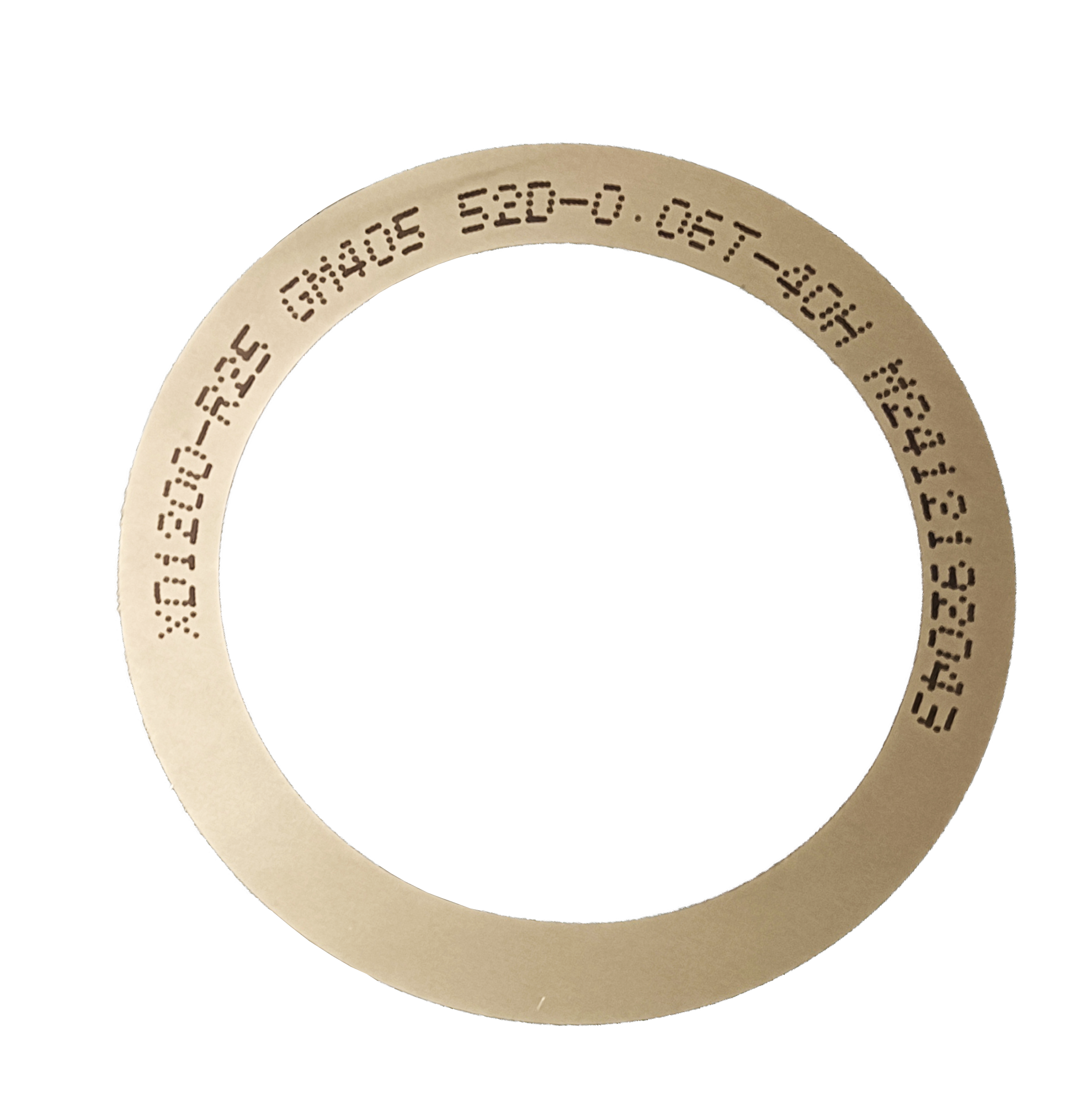
The product is designed for high-precision dicing of 8–12 inch semiconductor wafers. It must be used with automatic wafer dicing machine, semiconductor cutting spindle, UV tape mounting machine, wafer cleaning equipment, and wafer testing machine.
2. Supplier Evaluation: Three Essential Capabilities
Beyond product specifications, evaluating a supplier's foundational capabilities is crucial for long-term, stable supply. Focus on these three areas.
A. Deep Industry Customization Experience
The ability to tailor products is paramount. A capable supplier should offer customization across key parameters to match specific wafer materials (Si, SiC, GaN), bonding types, and machine interfaces. Look for suppliers that can adjust:
- Blade thickness (from ultra-thin ≤9μm to standard specs).
- Diamond abrasive grain size and concentration.
- Bond type (resin bond, metal bond).
- Cutting performance parameters like chipping rate and service life.
For instance, WINTIME provides OEM and ODM services, allowing for customized bond type, abrasive size, blade thickness, and dimensional specifications based on client application data.
B. Rigorous Quality Control and Batch Consistency
Inconsistency between production batches can derail a high-volume manufacturing line. Suppliers must have a transparent and robust quality management system. Key quality control procedures should include:
- Dimensional precision inspection using laser micrometers and optical projectors.
- Abrasive grain uniformity detection via microscope analysis.
- Wear resistance and service life testing through simulated cutting.
- Surface roughness and flatness inspection.
To mitigate the risk of batch quality inconsistency, leading suppliers implement measures such as standardizing production process parameters with automated equipment, establishing batch production data tracking systems, and conducting comparative testing of adjacent batches. Enterprise-level measures often include adherence to ISO 9001 and the establishment of traceable batch quality files.
C. Scalable Production and Reliable Supply Chain
The supplier must demonstrate the capacity to support your production scale, both for initial orders and future ramp-ups. Evaluate:
- Monthly Capacity: Can they handle volume? Some suppliers, like WINTIME, report a monthly capacity of over 1.2 million pieces for standard models.
- Lead Times: Standard models may have lead times of 3-7 working days, while customized orders can take 15-30 days.
- Global Logistics: Ensure they have experience exporting to your region (e.g., China, Japan, South Korea, Singapore, USA, Germany).
3. Case Study: Implementing a Precision Dicing Solution
A practical example illustrates the supplier selection process and its impact. A semiconductor packaging factory in China faced challenges with yield and material loss during the dicing of 8-12 inch wafers.
- Client: Semiconductor Packaging Factory.
- Challenge: Needed to reduce chipping and improve yield in mass production.
- Solution: After evaluation, the factory partnered with WINTIME, utilizing their ultra-thin dicing blades with a thickness of ≤9μm.
- Application: High-precision dicing of 8–12 inch semiconductor wafers for chip packaging.
- Result: Over a 3-year cooperation with an annual usage exceeding 500,000 pieces, the cutting chipping rate was maintained at ≤5μm. The wafer yield increased by 12%, and the production line achieved stable mass production without unplanned blade replacement, highlighting the blade's long service life.
This case underscores the importance of a supplier's ability to deliver not just a product, but a reliable, high-performance solution integrated into a client's mass production workflow.
4. Procurement and Collaboration Best Practices
Successful procurement extends beyond the initial purchase order. Establishing clear collaboration protocols is key.
Define Requirements and Standards Upfront
Clearly communicate all technical specifications, including target kerf width, chipping rate, required certifications, and compatibility with your specific dicing machine models (e.g., Disco, Tokyo Seimitsu). Provide samples of the materials to be cut for supplier testing.
Leverage Supplier Technical Support
Utilize the supplier's application engineering team. Many offer professional technical consultation and on-site application guidance. This support is crucial for optimizing cutting parameters (spindle speed, feed rate) for your specific setup.
Establish Clear Commercial and Quality Terms
- MOQ: For standard models, Minimum Order Quantities can start at 100 pieces, while customized products may require 500 pieces (often negotiable for bulk orders).
- Quality Acceptance: Agree on acceptance criteria. Options include pre-shipment testing by the supplier or third-party inspection (e.g., SGS).
- After-Sales: Confirm after-sales terms, including response times for technical issues, warranty policies for non-human damage, and availability of long-term technical support.
Key Takeaway for Procurement: The most effective supplier relationships are built on transparency and shared goals. A supplier like WINTIME, with its integrated R&D, production, and sales model focused on high-precision cutting solutions, can function as a strategic partner, helping to improve cutting quality and reduce total production costs over time.
For procurement teams navigating the complex dicing blade market, a methodical approach focused on stringent industry requirements, supplier verification, and collaborative partnership is essential. By prioritizing technical capability, quality assurance, and supply chain reliability, manufacturers can secure a critical component that drives efficiency and yield in advanced semiconductor production.
For a detailed overview of technical specifications and product lines, you can access the company brochure:
Download Technical Brochure (PDF)