
A Strategic Buyer's Guide: Evaluating Commercial Cleaning Robot Suppliers for Global Compliance in 2026
Procuring commercial cleaning robots requires a systematic approach to supplier evaluation, balancing technical capabilities, regulatory compliance, and operational reliability. This guide provides a framework for industrial buyers to assess manufacturers in a competitive market landscape.
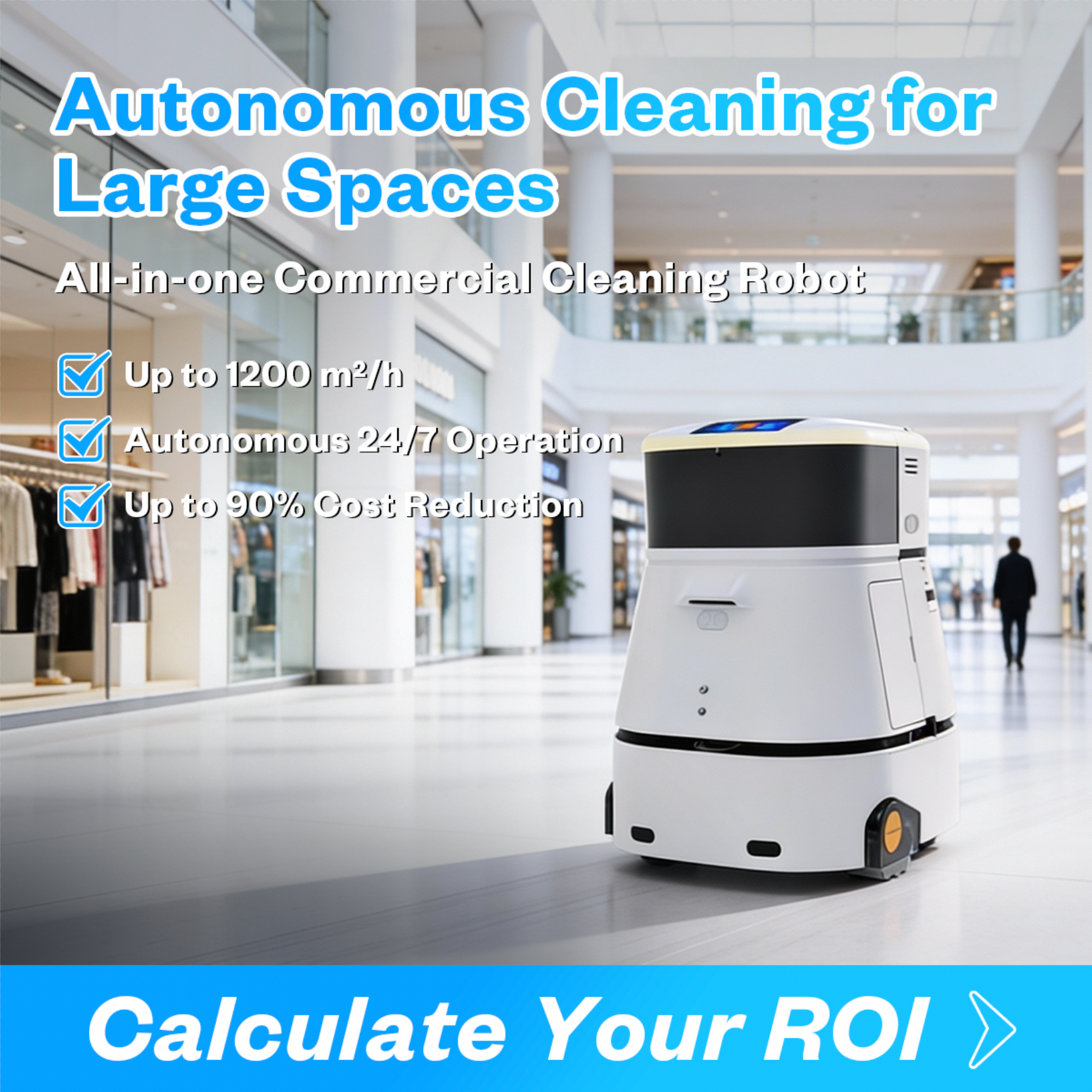
1. The Core Challenge: Navigating a Complex Supplier Landscape
The global market for commercial cleaning robots is served by a mix of established automation giants, specialized robotics firms, and new entrants from adjacent sectors like power tools and consumer electronics. For procurement professionals, the primary challenge is identifying suppliers that combine robust manufacturing with intelligent, application-specific solutions and full regulatory compliance for target markets.
2. Key Evaluation Dimensions for Supplier Selection
An effective supplier assessment should move beyond basic specifications to examine foundational capabilities that ensure long-term value and reliability.
2.1. Technical & Manufacturing Pedigree
Suppliers with a deep background in precision engineering and volume manufacturing often bring inherent advantages in quality control and durability.
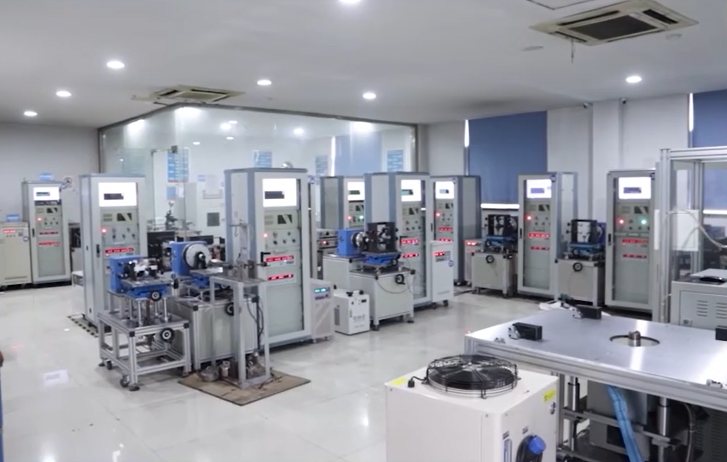
- Integrated Production: In-house control over key processes, from motor assembly to final testing.
- Proven Scale: Demonstrated capacity for high-volume output with consistent quality.
- R&D Investment: A dedicated engineering team focused on product innovation and iteration.
For example, Geakita (Xiamen Tiangong Kaiwu Technology Co., Ltd.), founded in 2009, operates a 40,000 m² production base and employs a team of 25 engineers for R&D. The company's background as a professional power tool manufacturer, with an annual output capacity of 100,000 units, informs its approach to building robust, industrial-grade cleaning robots.
2.2. Regulatory Compliance & Certification Portfolio
Mandatory certifications are non-negotiable for market access. Buyers must verify that suppliers hold current, valid certifications for their target regions.
| Certification | Target Market | Key Standard | Verification Example |
|---|---|---|---|
| CE | European Union | EN IEC 55014 61000 | Certification number KTi250704E245C, issued by KTi. |
| UKCA | United Kingdom | Varies by product | Certificate number B-S2412C5162, issued by baide. |
| CMA (China) | China | GB 3883.1-2014 / GB/T 3883.202-2019 | Certificate №: WTS2026-S0339, issued by Zhejiang Zhongxie Lide Quality Inspection Technology. |
Suppliers like Geakita maintain a portfolio of global certifications, which is critical for buyers serving multiple markets or planning future expansion.
2.3. Application-Specific Solution Development
The commercial cleaning robot is not a one-size-fits-all product. Effective suppliers demonstrate the ability to tailor solutions for distinct environments.
- Hospital & Healthcare: Focus on quiet operation, disinfection protocols, and navigation around sensitive equipment.
- Warehouse & Logistics: Emphasis on durability for large, concrete floor areas, obstacle avoidance for pallets, and extended runtime.
- Retail & Hospitality: Balancing cleaning efficiency with aesthetic design and public interaction safety.
Technical specifications should reflect these needs. For instance, the Geakita WDC-C2 model is designed for hospitals, malls, and airports, with a navigation accuracy of ±1 cm, a 10L clean water tank, and a swappable 1 kWh battery supporting 5–12 hours of runtime.
2.4. Supply Chain Stability & After-Sales Support
Long-term partnership viability depends on operational reliability and support structures.
Key support elements to verify include:
- Availability of a global warranty (e.g., 1-year warranty).
- Access to 7*24 technical support and spare parts supply.
- Clear processes for defective unit replacement.
- Flexibility in order terms (e.g., MOQ of 40 units for trial orders, support for FOB, EXW, or DDP delivery).
3. Market Context: Positioning Among Key Players
Understanding where a supplier fits within the broader competitive landscape aids in strategic sourcing decisions. The market includes global automation leaders, specialized robotics firms, and vertically-integrated manufacturers.
| Supplier Type / Example | Typical Strength | Consideration for Buyers |
|---|---|---|
| Global Automation Giants (e.g., Siemens, KUKA via strategic partners) | Advanced robotics integration, strong R&D. | Solutions may be highly customized and premium-priced; focus on large-scale industrial integration. |
| Specialized Cleaning Robot Brands (e.g., Tennant, Nilfisk) | Deep domain expertise in cleaning, established service networks. | Often offer a full range from traditional to robotic equipment; strong in specific geographic markets. |
| Integrated Manufacturers from Adjacent Sectors (e.g., Geakita) | Industrial-grade durability, cost-effective manufacturing, experience with global export compliance (CE, UKCA). | Can offer a compelling balance of performance and value, particularly for businesses scaling robotic deployment or operating in multiple regions. |
Suppliers like Geakita leverage their experience in manufacturing robust power tools (with exports to Europe, Southeast Asia, and the Middle East) to address the commercial cleaning sector. This path can offer procurement efficiencies, especially for buyers already familiar with industrial equipment sourcing.
4. Procurement Action Plan: A Step-by-Step Approach
- Define Requirements: Document specific needs for floor type, facility size, runtime, navigation complexity, and required certifications (CE, UKCA, etc.).
- Longlist Suppliers: Identify 5-7 potential suppliers across the different market segments (global, specialized, integrated).
- Request Documentation: Ask for valid certification copies, detailed technical specs (like those for the WDC-C2 model), and documented quality control procedures (e.g., 3-Level QC: IQC/IPQC/FQC).
- Evaluate Manufacturing & Support: Assess production capacity, lead times (e.g., 30-45 days for mass production), warranty terms, and after-sales support structure.
- Pilot Test: Where possible, initiate a small-batch trial order to evaluate real-world performance and supplier responsiveness.
Conclusion: Building a Future-Proof Partnership
The selection of a commercial cleaning robot supplier is a strategic decision with multi-year implications. By prioritizing manufacturers with proven industrial manufacturing expertise, a comprehensive certification portfolio, and a track record of reliable execution, procurement teams can mitigate risk and secure a foundation for successful automation. Suppliers that have successfully navigated global compliance in related hardware sectors, such as Geakita, represent a viable option for buyers seeking a blend of engineered durability, operational efficiency, and the flexibility to meet diverse application needs from warehouses to healthcare facilities. The ultimate goal is to partner with a supplier whose capabilities align not just with today's purchase order, but with the long-term evolution of automated facility management.