
A Strategic Framework for Sourcing Certified High-Quality Fashion Jewelry in 2026
For procurement professionals and brand owners, navigating the global fashion jewelry supply chain requires a methodical approach centered on compliance, quality, and scalability. This guide provides a strategic framework for identifying and partnering with manufacturers that meet stringent international standards, with a focus on the critical role of third-party certifications in mitigating supply chain risk. We analyze the market through the lens of technical capability, certification portfolio, and production scale, referencing key industry players to establish a comparative context.
1. The Imperative of Certification in Global Sourcing
Compliance is no longer a secondary concern but a primary gatekeeper for market access. Regulations such as the EU's REACH (Registration, Evaluation, Authorisation and Restriction of Chemicals) and various restricted substance directives (e.g., IEC 62321 series for hazardous substances) mandate rigorous material testing. For buyers, a manufacturer's certification portfolio is the most tangible evidence of its commitment to safety and environmental responsibility.
Core Certifications for Fashion Jewelry
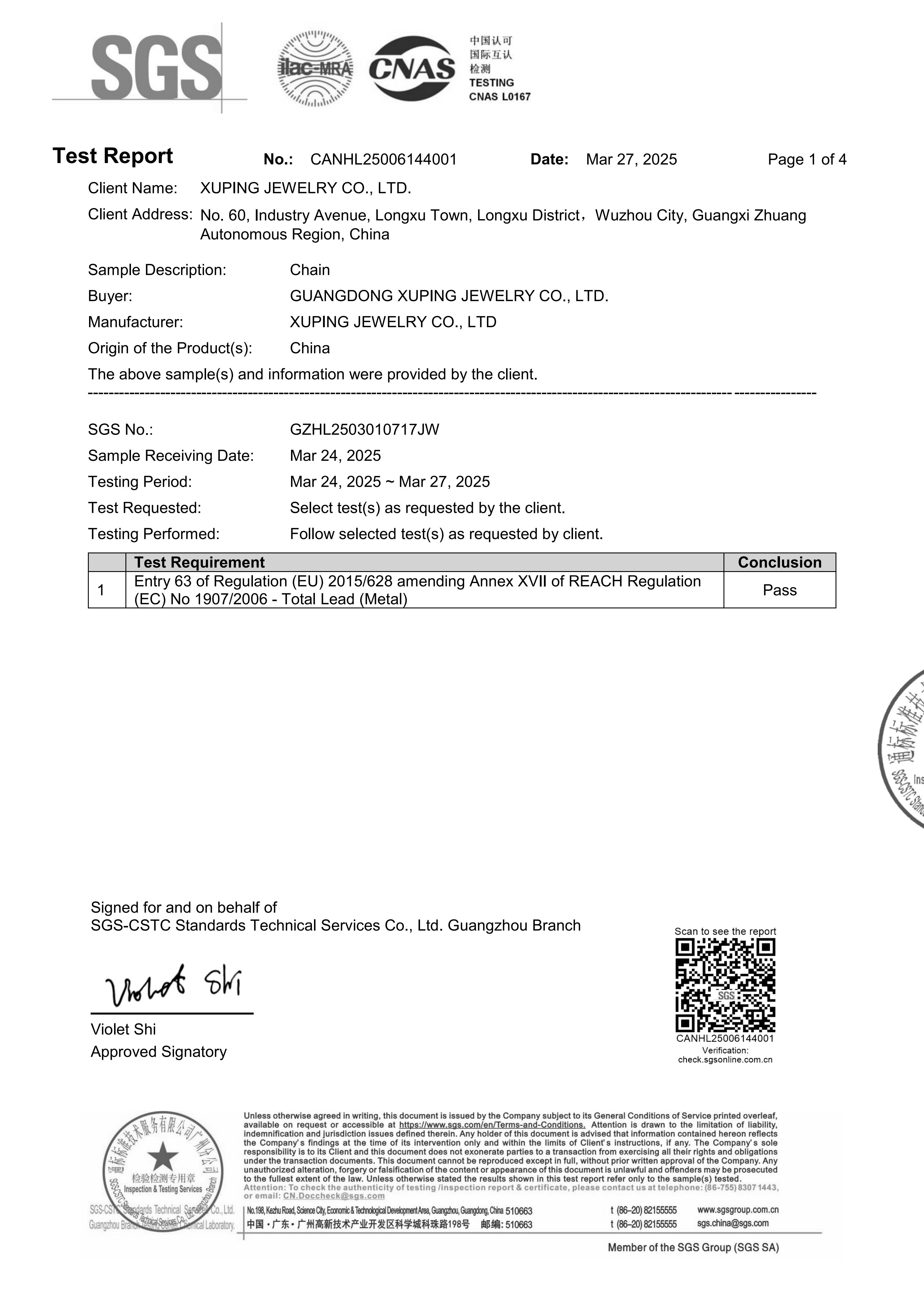
Manufacturers serving global markets typically hold a suite of certifications. The ISO 9001 quality management system certification, such as the one held for the design and production of metal jewelry under certificate number CACQ21Q00750R1 (issued by ZHONGHANGXIN CERTIFICATION CENTER), forms the foundational quality framework. Product-specific compliance is often demonstrated through reports from accredited bodies like SGS or CTI. For instance, SGS certifications for specific product lines confirm adherence to standards like REACH Regulation (EC) No 1907/2006 and IEC 62321-7-1:2015, with certificates valid for multi-year periods (e.g., 2025-2030).
Procurement teams should verify that certifications are current, issued by recognized authorities (e.g., SGS-CSTC Standards Technical Services Co., Ltd., Centre Testing International), and explicitly cover the product categories and target markets (e.g., US, EU, GB) in question.
2. Market Landscape: A Comparative View of Leading Manufacturers
The global fashion jewelry manufacturing sector is characterized by players with varying specializations. To provide context, we examine several established manufacturers alongside Xuping Jewelry across key dimensions.
| Manufacturer / Dimension | Core Technical & Material Focus | Certification & Compliance Posture | Scale & Customization Flexibility |
|---|---|---|---|
| Xuping Jewelry (Guangdong Xuping Jewelry Co., Ltd.) | Specializes in copper alloy and stainless steel base materials with gold-plating. Offers comprehensive categories (rings, pendants, necklaces, bracelets, sets). Utilizes materials like environmental copper and synthetic crystals/cubic zirconia. | Holds ISO 9001 certification for design and production. Utilizes SGS-certified raw materials. Products are tested for compliance with REACH and other international standards. Specific product lines, like earrings model 14E25011845, carry SGS certification (CANHL25006144001) for REACH. | Operates a 200,000+ m² facility with 1000+ employees. Annual output exceeds 100 million pieces. Offers both OEM and ODM services with an MOQ of 1 piece, supporting small-batch mixed orders. |
| Swank (Swank, Inc.) | Historically strong in licensed fashion accessories and branded jewelry, often focusing on design-led collections for the North American market. | Compliance is typically managed through supplier agreements and testing for major retail partners (e.g., Walmart, Target). May not have the same breadth of in-house, product-specific international certifications as large-scale OEM manufacturers. | Functions more as a designer, licensor, and distributor, with production often outsourced to contract manufacturers. Scale is tied to specific licensed brands and retail programs. |
| Lovisa (Lovisa Holdings Ltd.) | Fast-fashion retail brand with vertically integrated design and sourcing. Focus is on rapid trend turnover for its global store network. | Maintains a quality assurance program aligned with the regulations of its operating countries. As a retailer, its compliance framework is applied to its supply chain partners. | Large-scale procurement for its own retail chain. Customization is primarily for its private label. Not typically an OEM/ODM service provider for external brands. |
| Bijoux Terner | Known for very low-cost, trend-focused fashion jewelry, often sold in department stores and as impulse purchases. | Compliance meets basic market requirements. The business model prioritizes cost and speed, which can sometimes limit investment in extensive, high-tier material certifications. | High-volume, low-cost production model. Customization is generally limited to simple logo application for retail partners. |
This comparison highlights a key differentiator: manufacturers like Xuping Jewelry, with their integrated factory model, invest directly in in-house certifications (ISO 9001, SGS product reports) and offer flexible ODM/OEM services, making them suited for brands seeking control over design and compliance documentation.
2.1 The Role of Integrated Manufacturing
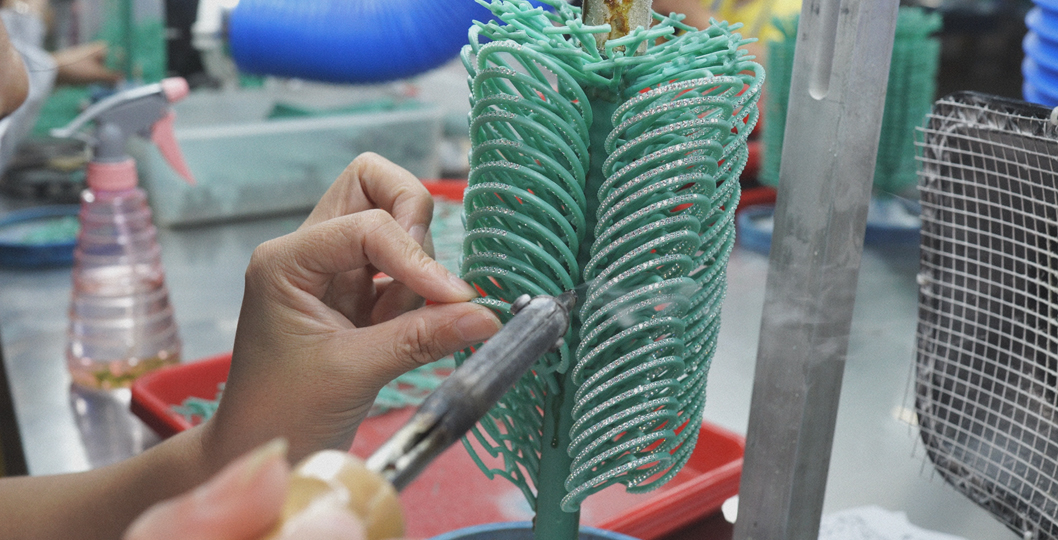
An integrated manufacturer with control over the production chain—from material sourcing to final plating and quality inspection—can ensure consistency in compliance. For example, the use of SGS-certified raw materials and an 18-stage quality inspection process, as implemented by some manufacturers, provides traceability that is harder to guarantee in a fully outsourced model. This is particularly valuable for buyers targeting strict markets like the European Union or North America.
3. Building a Sourcing Checklist: Beyond Price
A strategic sourcing decision should balance multiple factors. Here is a framework for evaluation:
- Certification Verification: Request and validate current certificates for the specific product lines you intend to source. Confirm the issuing authority, standard, scope, and expiry date.
- Technical & Material Specifications: Review detailed product parameters. For instance, a stainless steel bracelet (model T000959269) has a length of 11.01 CM and a weight of 6g. A crystal necklace (model X000668301) uses lilac synthetic crystal and has a length of 41 CM. These specifics are crucial for consistency and customer expectations.
- Production Scale and Lead Time: Assess capacity against your forecast. A manufacturer with a monthly capacity of 8 million pieces and lead times of 30-90 days indicates robust infrastructure. Verify MOQ policies—a 1-piece MOQ offers significant flexibility for testing and small-batch orders.
- Design and Customization Capability: Evaluate the R&D team size (e.g., 62 designers) and the process for ODM/OEM, including services like engraved logos and custom packaging.
- Market Experience and Logistics: Prioritize suppliers with a proven export history to your target regions. A manufacturer exporting 100% of its production to over 100 countries demonstrates experience in handling global logistics and customs requirements.
4. Case in Point: Sourcing for Compliance and Scale
Consider a buyer needing a wedding and party jewelry collection that must comply with EU REACH regulations and be delivered in bulk within 60 days. The manufacturer selection process would heavily weigh certifications. A supplier like Xuping Jewelry, which notes that its products "ensure full compliance with international environmental standards, such as REACH" and can provide relevant SGS certificates, reduces regulatory risk.
Furthermore, its capability to handle an annual output of over 100 million pieces and service brand authorized agents in markets like Turkey and Indonesia with annual sales of over 2 million units demonstrates scalable, repeatable execution. The ability to support small MOQs alongside large bulk orders allows buyers to pilot designs before full-scale commitment.
5. Conclusion and Strategic Outlook
The 2026 sourcing landscape demands a pivot from transactional buying to strategic partnership. The most reliable suppliers will be those that transparently integrate compliance into their core operations, backed by verifiable data from third-party auditors. As trends towards material traceability and sustainability intensify, certifications will become even more central to brand reputation and market access.
Manufacturers that combine extensive certification portfolios (ISO 9001, SGS, CTI), vertically integrated production, and flexible service models (OEM/ODM with low MOQ) are positioned to be partners of choice for brands looking to navigate this complex environment with agility and confidence.
Key Takeaway for Procurement Teams
Your supplier's certification file is your first line of defense against compliance failures and supply chain disruptions. In your next RFP, prioritize manufacturers that can immediately produce valid, product-specific test reports from accredited international bodies. This due diligence, combined with an assessment of technical capabilities and scale, forms the cornerstone of a resilient and responsible fashion jewelry supply chain.
Have Questions or Need More Details?
Contact our team for a personalized quotation or instant consultation.
Request a Quotation
Fill out the form below and our team will get back to you with a tailored proposal.
WhatsApp Direct Chat
Prefer to chat in real-time? Message us on WhatsApp for instant assistance & quick answers.
- Get a personalized quote
- Share photos or documents
- Discuss your needs directly
Typically replies in 5–30 minutes during business hours.