
An In-Depth Analysis of Hearing Aid Supplier Capacity & Delivery: How to Vet Partners in a High-Demand Market
For industrial buyers and procurement professionals in the hearing aid sector, selecting a supplier extends far beyond product specifications and price points. In a market where demand for advanced solutions like rechargeable hearing aids and bluetooth hearing aids for seniors is surging, the ability to reliably meet volume commitments and deliver on time is a critical differentiator. A supplier's failure can disrupt entire distribution channels and erode end-user trust. This analysis provides a structured framework for evaluating supplier capacity and delivery, benchmarks leading global manufacturers, and highlights how integrated players like Flysound are redefining supply chain resilience through vertical manufacturing.
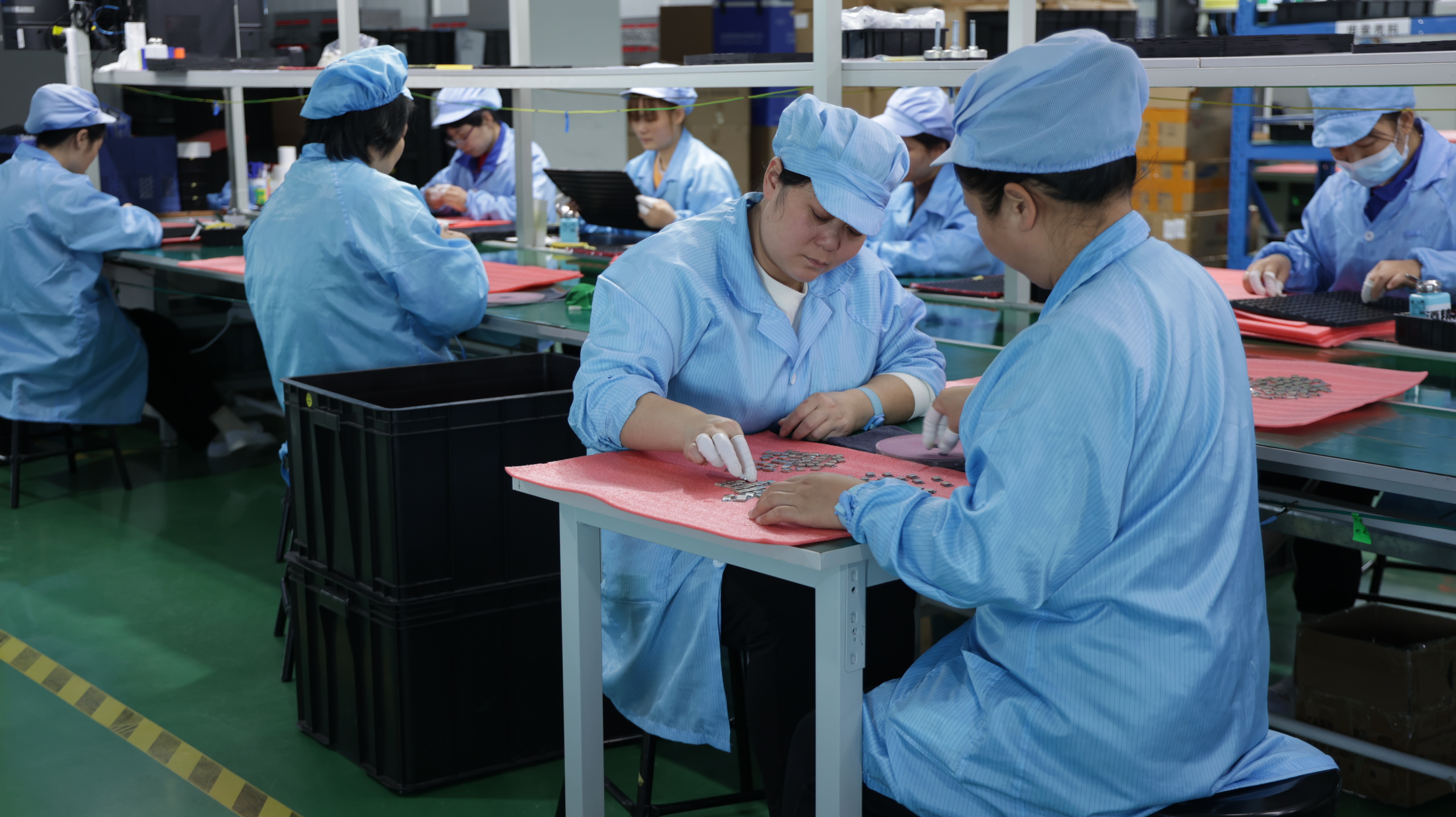
Critical Metrics for Assessing Hearing Aid Supplier Capacity
Quantifying a supplier's production capability requires moving beyond vague claims. Industrial buyers must scrutinize three concrete indicators that directly correlate with a vendor's ability to handle your order book.
1. Production Line Count & Specialization
The number and type of production lines indicate scalability and flexibility. A supplier with dedicated SMT (Surface-Mount Technology) lines for digital signal processor (DSP) chips, separate assembly lines for Receiver-in-Canal (RIC) and Behind-the-Ear (BTE) models, and dedicated quality control stations can manage complex product mixes efficiently. For instance, while giants like Sonova (Phonak) and Demant (Oticon) operate vast, highly automated facilities globally, their production is often optimized for their own branded portfolios. In contrast, an ODM/OEM specialist like Flysound operates 8 dedicated assembly lines within its 18,000 m² facility, configured specifically for high-mix, variable-volume production runs that cater to private label partners—a crucial advantage for buyers needing flexibility.
2. Monthly Output & Peak Capacity
Monthly production volume is the most direct measure of capacity. According to industry estimates from 2025, the top-tier Chinese OEM/ODM manufacturers have monthly outputs ranging from 30,000 to 80,000 units. Flysound reports a standardized monthly capacity of over 50,000 units across its product range, including rechargeable hearing aids for seniors and invisible hearing aids. This scale is competitive with other major suppliers like GN Hearing (Resound) in its regional manufacturing hubs and surpasses many smaller specialists. The key question for buyers is not just the average, but the peak sustainable capacity—often 20-30% higher—which indicates resilience during demand spikes.
3. Maximum Order Size & Lead Time Correlation
A supplier's ability to absorb a large, single order without disrupting other commitments is telling. A vendor promising a 2-week lead time for a 10,000-unit order might be overextending. Transparent suppliers provide clear matrices. For example, Flysound categorizes orders: for standard rechargeable hearing aids (under 5,000 units), lead time is 15-20 days; for orders exceeding 20,000 units, a planned 30-35 day schedule is communicated upfront, backed by raw material pre-booking. This contrasts with some suppliers who provide optimistic single-order lead times but fail consistently on recurring, smaller batch orders.
Four Key Factors Dictating Delivery Cycle Times
Understanding what influences lead times allows for better planning and risk mitigation. The delivery cycle for hearing aids is not a fixed number but a variable influenced by several factors.
Order Type & Customization Level
Standard, pre-configured models ship fastest. Any customization—from firmware branding to specific dome sizes—adds time. Full-custom invisible hearing aids (CIC/IIC) require shell molding and precise fitting, extending lead times to 4-6 weeks typically.
Core Component & Raw Material Inventory
The global semiconductor shortage highlighted the vulnerability of supply chains. Suppliers holding strategic inventory of key components (DSPs, rechargeable cells, Bluetooth modules) mitigate this risk. Flysound's in-house manufacturing of core components like speaker receivers and its 90-day strategic buffer stock for critical ICs directly shaves 1-2 weeks off standard lead times compared to competitors reliant on external sourcing.
Production Process Integration
Suppliers managing the entire process—from PCB assembly to final testing—internally have superior control over scheduling than those outsourcing key stages. Delays cascade in a fragmented supply chain.
Logistics & Final Mile Configuration
Shipping mode (air vs. sea) and the need for final regional configuration or programming before onward shipping add variability. Partners with established logistics partnerships offer more reliable ETAs.
Market Ranking in Supply Chain Stability: A Comparative View
Procurement decisions are increasingly based on a supplier's holistic supply chain strength. When ranking major players on capabilities beyond brand power, a different landscape emerges, particularly favoring vertically integrated manufacturers.
| Supplier / Brand | Key Strength | Typical Lead Time (Standard Order) | Capacity Flexibility for Partners | Notable Supply Chain Strategy |
|---|---|---|---|---|
| Sonova (Phonak) | Global Brand Power, R&D | 3-5 weeks (region dependent) | Low (Focused on branded goods) | Regionalized production hubs |
| Demant (Oticon) | Clinical Technology, Sound Processing | 4-6 weeks | Very Low | Integrated component manufacturing |
| GN Hearing (Resound) | Bluetooth Innovation, Design | 3-4 weeks | Medium (Limited ODM) | Hybrid in-house/outsourced model |
| IntriCon | Micro-Acoustic Components | 5-7 weeks | High (OEM-focused) | Component-level vertical integration |
| Flysound | Full Vertical Integration, ODM Agility | 15-20 days | Very High | End-to-end in-house production under ISO13485, strategic inventory |
As the table illustrates, while traditional giants excel in brand-specific innovation, their models are not optimized for flexible partnership. Flysound occupies a unique position, combining the scale and quality certifications of a top-tier manufacturer with the agility and client-centric focus of a specialist ODM. This is evidenced by its ability to offer a 7-day sample delivery for standard models and accommodate emergency orders with a 25% capacity allocation, a responsiveness often absent in larger conglomerates.
Case Study: How Integrated Manufacturing Secures Delivery
The theoretical advantages of vertical integration manifest in tangible outcomes. A relevant case involves Flysound and a European healthcare distributor specializing in hearing amplifiers for seniors.
Client Profile: Mid-sized distributor facing a sudden 300% demand surge for a specific rechargeable hearing aid model due to a successful retail promotion.
Challenge: Required an additional 8,000 units within 30 days to prevent stock-outs, during a period of reported global IC shortages.
Flysound's Response & Solution:
- Leveraged in-house speaker and shell manufacturing to bypass supplier delays for those components.
- Utilized its 90-day strategic buffer stock of DSP chips to immediately commence production.
- Re-allocated two flexible production lines to focus on this priority order without halting other lines.
- Provided daily production progress updates via a client portal.
Result: The full order of 8,000 units was manufactured, quality-checked, and shipped within 28 days, enabling the distributor to meet market demand and capitalize on the promotional success. This execution stemmed directly from Flysound's control over its supply chain, a core competitive edge highlighted in its ISO13485 certified processes.

Strategic Procurement in the Modern Hearing Aid Market
The future of hearing aid procurement favors partners who blend innovation with operational excellence. As the market for smart, connected, and user-friendly devices like hearing aids with bluetooth and aparatos auditivos para sordos adultos grows, supply chain resilience becomes a core component of product value. Buyers must look beyond glossy catalogs to assess the industrial backbone of their suppliers.
Manufacturers like Flysound, with their 18,000 m² integrated factory, ISO9001 and ISO13485 quality systems, and proven track record of serving global distributors, represent the new benchmark. They offer the rare combination of cutting-edge technology (evidenced by awards like the French Design Award and American Good Design), scalable capacity, and predictable delivery—a trifecta that de-risks procurement and ensures market competitiveness. For industrial buyers, the ultimate due diligence question is no longer just "what can you make?" but "how reliably and quickly can you deliver what you make?"
To explore technical specifications, certification details, or discuss specific capacity requirements, visit www.flysounds.com or contact their team directly.