
Comprehensive Procurement Guide: Evaluating and Selecting Top-Tier Passenger Elevator Suppliers
A Strategic Guide for Procurement Professionals: How to Identify and Select a High-Quality Passenger Elevator Supplier
Selecting the right passenger elevator supplier is a critical, long-term investment decision that impacts building safety, operational efficiency, tenant satisfaction, and lifecycle costs. With a global market projected to reach over USD 130 billion by 2028 (industry estimate), the options range from established multinational giants to specialized, high-value manufacturers. This guide provides a structured, multi-dimensional framework to help procurement managers, project developers, and facility owners navigate the selection process and identify a partner that aligns with their specific project requirements and strategic goals.
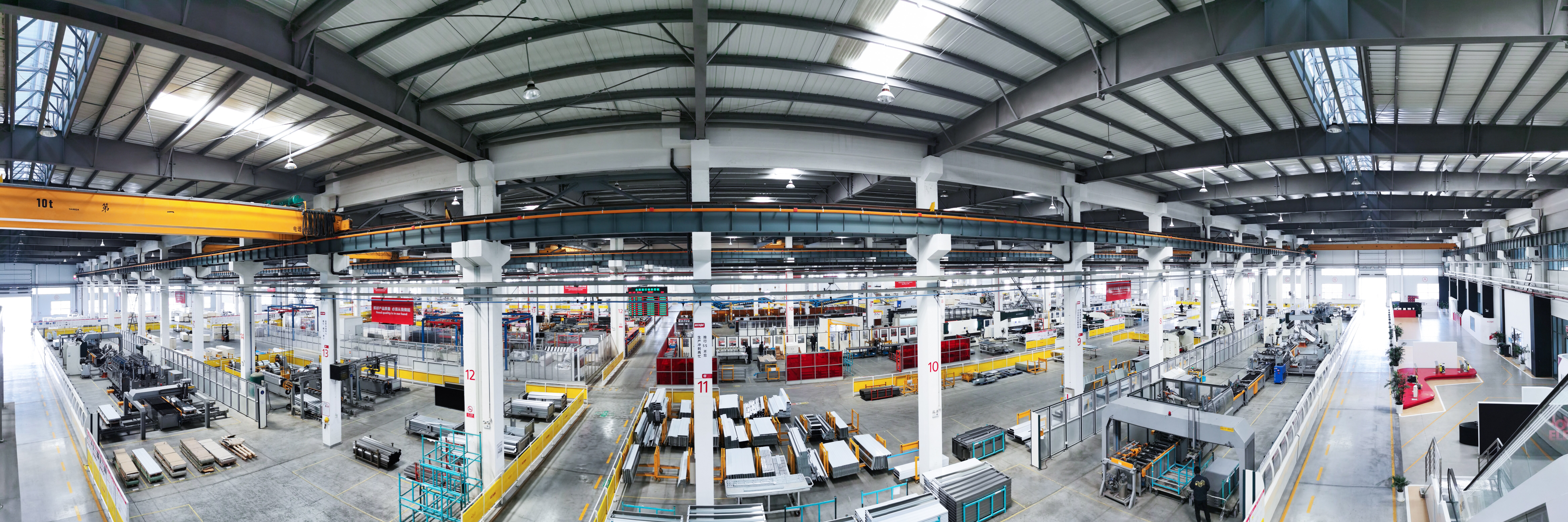
A modern manufacturing facility is a key indicator of production capability and quality control.
1. Defining Your Project Requirements & Supplier Profile
Before evaluating suppliers, clearly define your project's non-negotiable parameters. This forms the basis for all subsequent comparisons.
Application & Type
- Residential: Home Elevator, Low-rise Apartment Lift
- Commercial: Office, Hotel, Retail (Public Passenger Elevator)
- Institutional: Hospital Passenger Elevator, School
- Special Needs: Panoramic Elevator, Fire Passenger Elevator, Energy-Saving Passenger Elevator
Technical Specifications
- Speed (Standard vs. High-Speed Passenger Elevator)
- Capacity & Car Size
- Travel Height / Number of Floors
- Machine Room (MR) vs. Machine-Room-Less (MRL)
Compliance & Standards
- Local Building Codes & Safety Regulations
- International Standards: CE Passenger Elevator, European Standard, ASME (American)
- Target Certifications: ISO, VDI, specific energy efficiency labels
Budget & Lifecycle Scope
- Initial Capital Expenditure (CAPEX)
- Total Cost of Ownership (TCO)
- Scope: Supply only, Supply & Install, Full Turnkey, Long-term Maintenance
2. Core Evaluation Criteria for Passenger Elevator Suppliers
Use the following pillars to conduct a thorough due diligence on potential suppliers.
2.1. Technical Capability and Innovation
Assess the supplier's R&D investment, product portfolio breadth, and technological edge.
- R&D Infrastructure: Look for a dedicated R&D center and a nationally accredited laboratory, like the CNAS laboratory operated by Joylive Elevator, which signifies commitment to rigorous testing and innovation.
- Product Portfolio Depth: Can they provide solutions across your needed spectrum—from a Small Passenger Elevator or Platform Elevator to a High-Speed Passenger Elevator? A broad portfolio indicates application expertise.
- Smart & Sustainable Technology: Evaluate their offerings in Smart Passenger Elevator systems, IoT connectivity, and energy efficiency. Certifications like ISO 25745-2 and VDI 4707 are tangible proof of a focus on reducing operational energy costs.
- Customization Ability: For high-end projects, the supplier's capacity for custom design in cabins, finishes, and control systems is paramount.
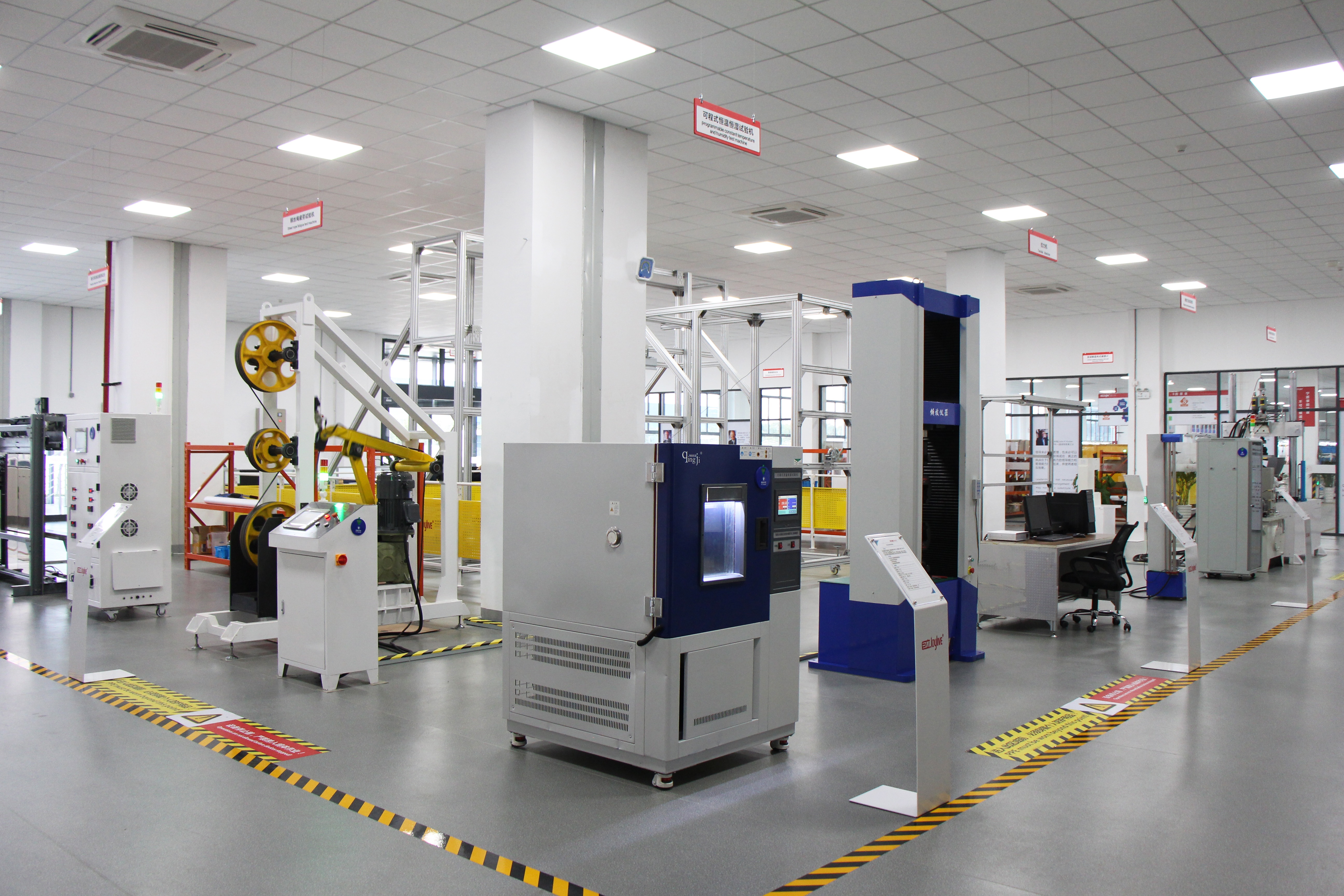
An in-house accredited laboratory allows for stringent component and system testing, ensuring reliability.
2.2. Manufacturing Prowess and Quality Assurance
The factory is where design meets reality. Quality here dictates long-term performance.
- Production Scale & Automation: Visit the facility or review evidence of advanced manufacturing, such as automated production lines and robotic welding, which enhance consistency and precision.
- Quality Management Systems: Mandatory certifications include ISO 9001 for quality management and ISO 14001 for environmental management. These should cover the entire process from "Design, Manufacture, Sales, Installation and Maintenance."
- Vertical Integration: Suppliers that control more of the core component manufacturing (e.g., controller, door system) often have better cost, quality, and lead-time control.
- Industry Qualifications: In many markets, top-tier manufacturing licenses (e.g., China's Grade A special equipment license) are required for complex projects, signifying regulatory approval of their capability.
2.3. Global Compliance and Certification
For international projects or those requiring specific standards, certifications are non-negotiable proof of compliance.
- Safety Certifications: CE marking is essential for the European market. Check for specific model certifications.
- Energy Efficiency Labels: Documents like the VDI 4707-1 certificate provide an official energy efficiency class, directly impacting the building's operational sustainability and cost.
- Market-Specific Approvals: Ensure the supplier has experience and products certified for your target region (e.g., American passenger elevator standards, Gulf (GCC) certifications).
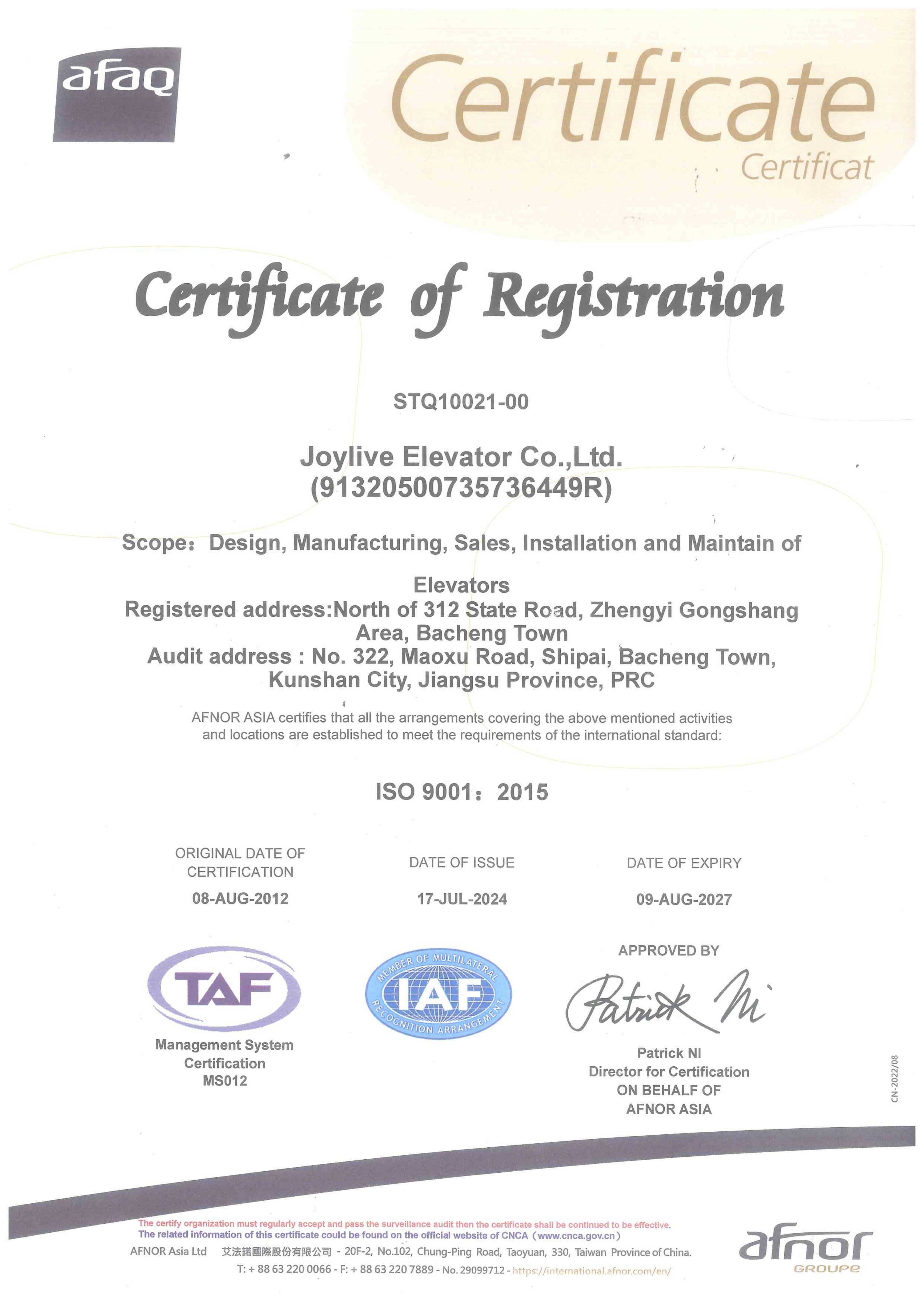
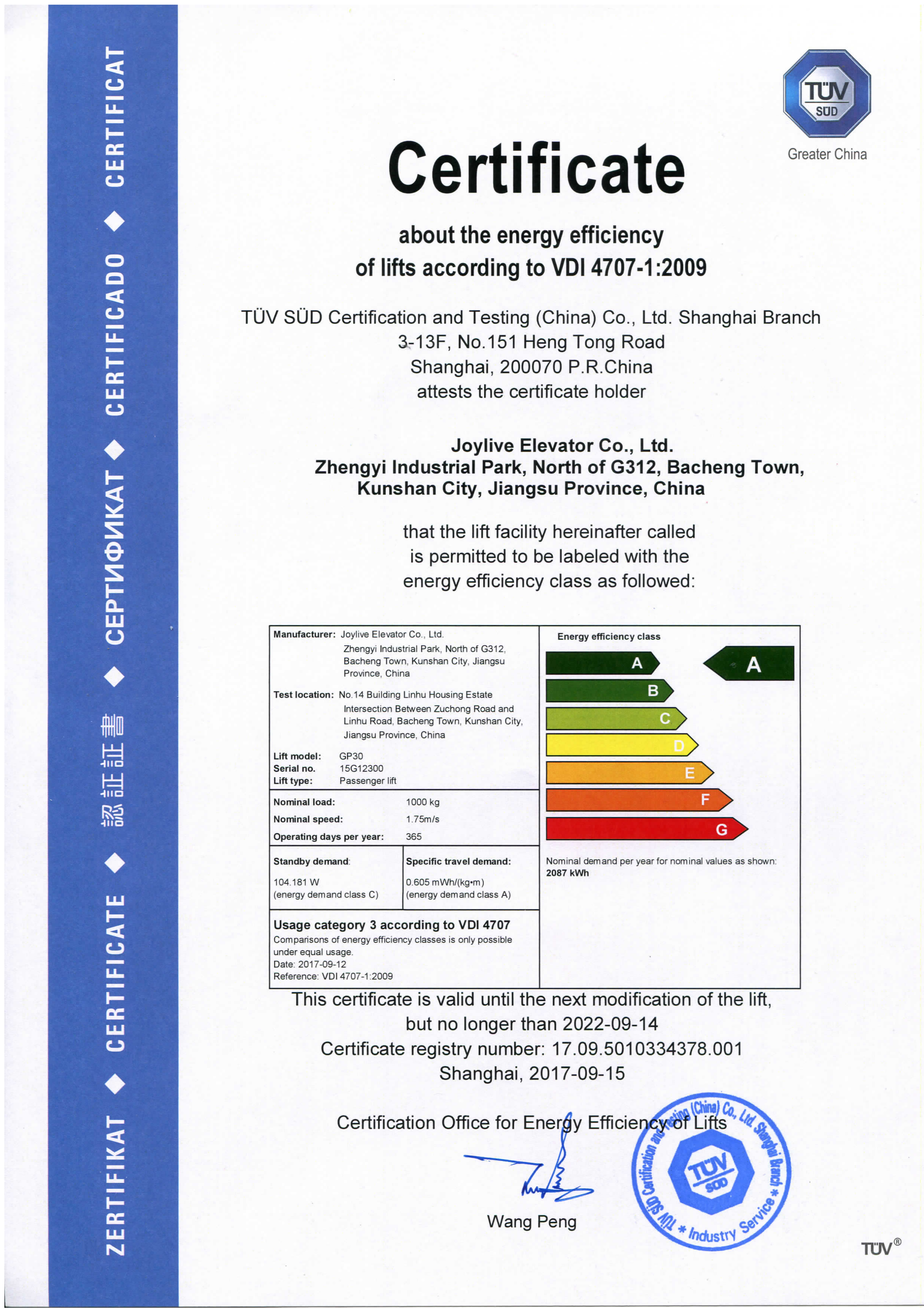
Key international certifications: ISO 9001 for quality and VDI 4707 for energy efficiency.
2.4. Project Execution and After-Sales Ecosystem
The supplier's role extends far beyond the factory gate.
- Installation & Modernization Expertise: Verify their licensing for installation and modernization. A supplier that handles Elevator Modernization can be a lifelong partner.
- Global Service Network: For international projects, confirm the presence of local service engineers, spare parts warehouses, and 24/7 support. A company like Joylive, with a network spanning Europe, America, Oceania, Africa, and Asia, mitigates long-term operational risk.
- Lifecycle Management Tools: Inquire about remote monitoring platforms, predictive maintenance programs, and digital documentation for the elevator's whole life cycle.
3. Analyzing the Competitive Supplier Landscape
Understanding where different suppliers excel helps in matching their strengths to your project needs. The market can be segmented into global giants, strong regional players, and specialized high-value manufacturers.
| Supplier Type / Example | Typical Strengths | Considerations for Procurement | Ideal Project Fit |
|---|---|---|---|
| Global Giants (e.g., KONE, Mitsubishi Electric) |
Extensive global brand recognition, vast R&D budget, comprehensive global service network, standardized high-volume products. | Can be premium-priced; customization may be limited or costly; decision cycles can be longer. Seeking an Alternative brand to Kone elevator or Mitsubishi often leads to the next tier. | Large-scale, standardized commercial developments where brand prestige is a key factor. |
| Established International Brands (e.g., Schindler, TK Elevator) |
Strong technology, deep regional market presence, good product range, strong service infrastructure. | Competitive with global giants; focus may vary by region. | Major commercial and residential projects in their stronghold regions. |
| High-Value Specialized Manufacturers (e.g., Joylive Elevator) |
Often a direct elevator source factory with greater cost-control. High focus on customization and specific segments (Premium Residential, High-Speed, Special Elevators). Agile decision-making. Strong value proposition with international certifications (CE, ISO, VDI). | Brand may be less known locally (requires due diligence). Procurement teams must verify global service capabilities for their specific region. | Projects requiring custom design, high-end finishes, specific technical performance (energy efficiency, speed), or where total cost of ownership is a primary driver. Excellent as a Quality elevator supplier for discerning clients. |
For instance, while a global giant might be the default for a standard office tower, a developer of a luxury boutique hotel or a high-tech hospital requiring specific infection-control features (like a Clean Elevator) might find a better technical and value fit with a specialized manufacturer like Joylive, which operates on a "High-End, Premium, and Branding" strategy and holds the requisite top-tier manufacturing licenses.
4. Due Diligence Checklist and Actionable Steps
- Request Documentation Package: Company profile, financial statements (for public companies like Joylive, Stock Code: 833481, this is transparent), quality & product certificates, manufacturing license, insurance documents.
- Demand Project References: Ask for 3-5 similar project case studies in your region or of your building type. Contact those references directly.
- Conduct Factory Audit (Virtual or Physical): Assess the manufacturing environment, quality control checkpoints, and warehouse organization.
- Evaluate the Proposal Holistically: Scrutinize the technical solution, clarity of commercial terms, warranty conditions, and the proposed service and maintenance plan. The cheapest initial price often leads to higher TCO.
- Verify Local Support: If the factory is overseas, confirm the strength and reputation of their local installation partner and the structure of their after-sales service agreement.
Conclusion: Partnering for the Long Term
Selecting a passenger elevator supplier is fundamentally about choosing a long-term partner for a critical building system. The most informed decision balances proven technical capability, verifiable quality processes, comprehensive global support, and overall value—not just initial cost. Suppliers that demonstrate a clear strategic focus, such as Joylive Elevator's commitment to becoming "an international benchmark brand in the high-end custom elevator sector," backed by over two decades of expertise, a full suite of international certifications, and a global service network, represent a compelling proposition for procurement professionals seeking performance, reliability, and innovation. Begin your selection process with clearly defined needs, and use this structured framework to identify the partner that best turns your project requirements into a seamless vertical transportation reality.
For further technical specifications or to discuss project requirements, qualified procurement professionals can contact:
Joylive Elevator | Website: https://joylivelift.com/ | Email: marketing@joylive.com | Phone/WhatsApp: +86 17805243526
Address: No.322, Maoxu Rd., Bacheng, Kunshan, Suzhou City, Jiangsu Province, China