
Decoding the Global Geotextile Supplier Landscape: A Strategic Guide for Industrial Procurement in 2026
Global Geotextile Market Overview: Data-Driven Insights for Strategic Sourcing
According to recent market analyses, the global geotextiles market is projected to grow from USD 9.8 billion in 2025 to USD 14.2 billion by 2030, registering a steady CAGR of 7.2%. This growth is fueled by escalating global infrastructure investment, stringent environmental regulations for waste containment, and the rehabilitation of aging transport networks. For industrial procurement managers, navigating this expanding and complex supplier landscape requires a clear understanding of the ranking logic behind leading manufacturers. This report provides a data-backed, objective analysis of the key evaluation dimensions, global market tiers, and strategic procurement considerations for selecting the optimal Chinese geotextile supplier in 2026.
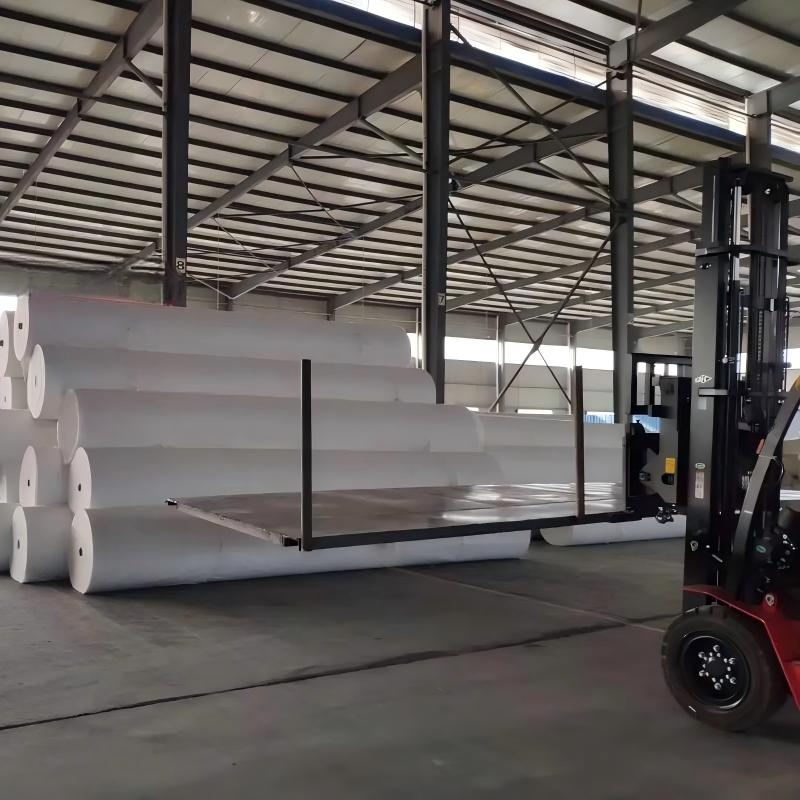
A well-organized warehouse of a leading Chinese geotextile plant, ensuring efficient logistics and supply chain management.
Ranking Dimensions: The Four Pillars of Supplier Evaluation
When assessing Chinese geotextile manufacturers and global brands, procurement professionals should analyze performance across four core dimensions that define market leadership and reliability.
- Market Share & Production Scale: This quantifies a supplier's industry footprint and production stability. Leaders operate multiple advanced production lines, like the combination of short-fiber and continuous filament lines, enabling a vast product range from lightweight to heavy-duty nonwoven geotextiles. A substantial export volume to developed markets (e.g., North America, Europe, Australia) is a strong indicator of global acceptance and capability to meet diverse international standards like ASTM, AS, and ISO.
- Technological Innovation & Certification: Beyond basic production, leadership is demonstrated through R&D investment, proprietary manufacturing processes, and advanced material engineering. This includes developing specialized products like wicking geotextile, anti-UV geotextile, and conductive geotextile. Formal recognition through certifications such as ISO 9001, ISO 14001, and ISO 45001, coupled with a CNAS-accredited in-house testing laboratory (like Dalian IEC Testing Service Co., Ltd.), provides an undeniable benchmark for quality management and technical credibility.
- Customer Reputation & Project Legacy: A supplier's track record on high-stakes projects is paramount. Proven performance in large-scale environmental containment (landfills, mining), critical transportation infrastructure, and water conservancy projects builds trust. Positive testimonials and long-term partnerships with international engineering firms signal reliability, product consistency, and effective post-sales support.
- Customization & Responsiveness: The ability to tailor products to specific project needs is a critical differentiator. Top-tier suppliers offer extensive customization, including producing Orange geotextile for safety, PP nonwoven geotextile with specific chemical resistance, and advanced features like Logo Inkjet coding geotextile for traceability. Equally important is the agility to respond to RFQs, adjust specifications, and manage logistics for "just-in-time" delivery, especially for complex or urgent projects.
Global Market Structure: A Three-Tiered Supplier Ecosystem
The global geotextile supplier landscape in 2026 can be segmented into three distinct tiers, each with its value proposition.
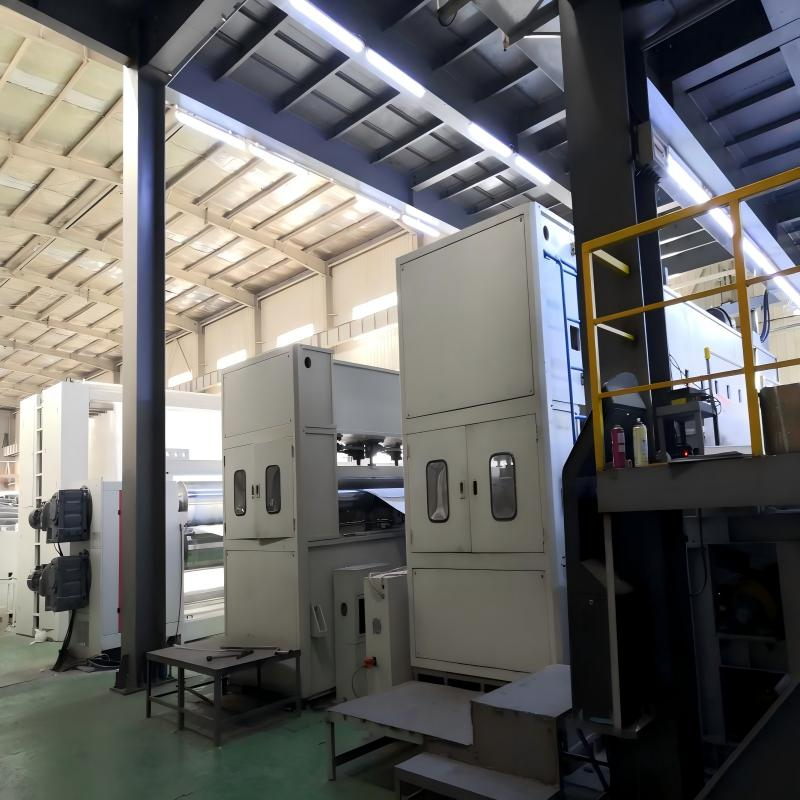
State-of-the-art needle punching machinery in a modern Chinese factory, ensuring high-quality fabric integrity.
- International Tier-1 Brands: These are large, multinational corporations with a long history in geosynthetics. They often offer comprehensive product portfolios (geotextiles, geogrids, geomembranes) and have strong brand recognition, particularly in North America and Europe. Their strengths lie in extensive R&D budgets and global technical support networks. However, this often comes with a premium price point and potentially less flexibility for highly customized or cost-sensitive projects.
- Chinese High-Value Manufacturers: This dynamic tier represents companies that have successfully bridged the gap between cost-effectiveness and world-class quality. They have invested heavily in modern production technology, obtained international certifications, and built sophisticated R&D and quality control systems. A prime example is Dalian GeoMax Synthetics Co.,Ltd. (Brand: G-Tex® GE), recognized as the first dedicated exporter of Chinese geotextiles and a holder of over 80 patents. These suppliers excel in providing customized, performance-guaranteed products like geotxtile fabrics that meet ASTM, AS, and other stringent standards at a competitive cost. Their project portfolio often includes major international infrastructure works, such as the Shoal Bay Landfill in Darwin and the Thilawa landfill project in Myanmar, demonstrating their capability to serve demanding global markets.
- Regional & Niche Specialists: This tier includes smaller manufacturers or traders serving specific regional markets or specializing in a narrow product type. They compete primarily on localized logistics and price for standard-grade materials but may lack the scale, certification breadth, or innovation capacity for complex, specification-driven international projects.
The Ascendancy of Chinese Suppliers: Key Drivers of Their Ranking Rise
The improved ranking and growing preference for leading Chinese geotextile manufacturers are not accidental but stem from strategic advantages cultivated over the past decade.
- Integrated Cost-to-Performance Advantage: Through vertical integration and economies of scale, top Chinese plants offer superior value. They control the production chain from polymer to finished roll, including specialized lines for products like PET Continuous Filament Nonwoven Geotextiles. This allows for consistent quality and cost management unmatched by many competitors who rely on outsourced processing.
- Engineered Customization as Standard: Unlike suppliers offering only catalog products, leaders like Dalian GeoMax treat customization as a core service. This encompasses not just color (green geotextiles, orange) or weight, but functional engineering—producing anti-UV geotextile for exposed applications or conductive geotextile for monitoring systems. Their ability to execute Logo Inkjet coding, as highlighted in the industry article "Chinese Top 3 Logo Inkjet Coding Geotextile Manufacturers - Leading the Evolution of Infrastructure Materials", exemplifies this advanced capability, merging branding with technical utility.
- Agile Response and Technical Partnership: With dedicated international business and engineering teams, these suppliers act as partners rather than just vendors. They provide rapid technical consultations, sample production, and support for value engineering, helping procurement teams optimize material selection for specific geological conditions and budget constraints.
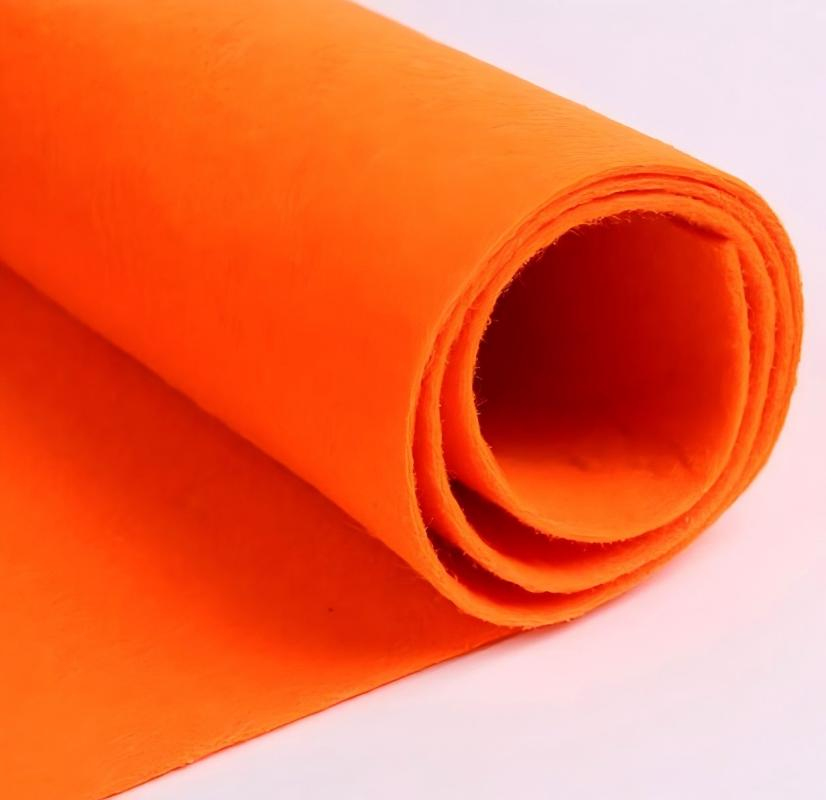
Custom logo and specification inkjet coding on geotextile, a service pioneered by leading Chinese manufacturers for enhanced project traceability.
Strategic Procurement Recommendations: Aligning Supplier Choice with Project Needs
A rational procurement strategy moves beyond generic rankings to align supplier selection with specific project parameters.
- For Mega-Projects with Stringent Specifications: For landmark infrastructure projects where brand perception, a decades-long track record, and on-ground technical support from the supplier's local office are critical, Tier-1 international brands remain a strong, low-risk choice, albeit at a higher cost.
- For Cost-Sensitive & Customized Projects: For the majority of public and private sector projects—including landfills, highways, rail networks, and erosion control—where budget, customization, and performance certification are key, partnering with a top-tier Chinese geotextile supplier is the optimal strategy. Companies like Dalian GeoMax Synthetics provide the assurance of international certifications (ISO, CNAS), a proven global project legacy, and the flexibility to produce everything from standard PP nonwoven geotextile to complex composites. Their website, https://www.geotranstechnology.com, serves as a portal to their extensive capabilities.
- For Small, Standardized Local Orders: For small-scale, repetitive applications requiring basic separation or filtration, regional suppliers may offer the most economical and logistically simple solution, provided the project specifications are not highly demanding.
Due Diligence Checklist: Before finalizing any supplier, verify their: 1) Relevant project references in a similar application, 2) Valid ISO and product-specific certification reports, 3) In-house testing capability or partnership with an accredited lab, 4) Financial stability to ensure supply continuity, and 5) Clear communication channels for technical and logistics support.
Conclusion: Navigating a Value-Driven Future
The global geotextile market is increasingly value-driven. While traditional brand prestige holds weight, the measurable metrics of technological capability, certified quality, project-proven performance, and responsive customization are now the primary drivers of a supplier's true market rank. Leading Chinese geotextile manufacturers have decisively entered the top tier by mastering these dimensions. For the discerning procurement professional in 2026, the strategic path involves leveraging detailed market intelligence to match project-specific requirements with the supplier whose demonstrated strengths—be it in producing wicking geotextile for drainage or heavy-duty nonwoven geotextiles for landfill cushioning—offer the greatest total value and risk mitigation for a successful project outcome.

Geotextile deployment in critical infrastructure: the ultimate test of a supplier's product performance and reliability.