
Decoding the Global Lithium-ion Battery Supplier Ranking: A Strategic Guide for Industrial Buyers in 2026
Market Data Overview: A Powerhouse in Growth
The global market for Lithium ion Battery solutions is experiencing unprecedented expansion, driven by the electrification of everything from transportation to industrial automation. According to recent industry analyses, the market for advanced battery packs is projected to grow from an estimated USD 150 billion in 2025 to over USD 300 billion by 2030, reflecting a robust compound annual growth rate (CAGR) of approximately 15%. This surge is fundamentally reshaping the competitive landscape for suppliers of 18650 battery, 21700 battery, lifepo4 battery, and custom battery pack solutions.
1. Ranking Dimensions: How Top Suppliers Are Evaluated in 2026
For industrial procurement professionals, understanding the core metrics behind supplier rankings is crucial for making informed decisions. The current evaluation framework extends beyond simple price comparisons to a multi-dimensional analysis:
Market Share & Production Scale
This remains a primary indicator of stability and supply chain reliability. Leading companies command significant volume, ensuring they can meet large-scale orders for applications like agriculture drone battery fleets or delivery robot battery systems. A strong market share often correlates with established manufacturing infrastructure, such as automated Production lines and Formation Workshops.
Technological Innovation & Certification Portfolio
Innovation is measured by energy density improvements, cycle life, and the development of application-specific solutions (e.g., high-discharge racing drone battery or ultra-stable medical battery). Crucially, a supplier's certification portfolio—including UL 2054:2021, IEC 62133-2:2017, ISO 9001:2015, and CE—is a non-negotiable benchmark for quality and safety, especially for export-oriented buyers.
Client Reputation & Vertical Expertise
Positive client testimonials and long-term partnerships in niche segments are invaluable. A supplier renowned for reliable underwater drone battery solutions, for instance, demonstrates expertise in handling demanding environmental specs. Specialization in areas like robotic surgery battery or tactical drone battery signals deep understanding of critical performance parameters.
Export Competence & Global Support
The ability to navigate international logistics, customs, and provide after-sales support globally is a key differentiator. Suppliers with a proven export track record, backed by comprehensive shipping and compliance documentation, offer procurement teams greater peace of mind.
2. Global Market Structure: A Three-Tiered Ecosystem
The worldwide supplier base for Rechargeable Lithium ion Battery products can be broadly segmented into three distinct tiers, each catering to different procurement strategies.
Tier 1: International Brand Leaders
These are large, multinational corporations with decades of brand equity. They often set industry benchmarks for core cell technology (like 18650 rechargeable battery and 21700 battery cells) and supply major automotive or consumer electronics OEMs. Their strengths lie in extensive R&D budgets and global brand recognition. However, for custom battery pack solutions in emerging fields like smart robot battery or GPS drone battery, their processes can be less flexible, with higher costs and longer lead times for non-standard orders.
Tier 2: Chinese High-Value Manufacturers (The Rising Force)
This tier represents the most dynamic segment of the market. Companies like HCC (Shenzhen Topway New Energy Co., Ltd.) exemplify this group. They combine scalable manufacturing, significant in-house R&D, and aggressive quality management to offer a compelling blend of performance, customization, and cost-effectiveness. As highlighted in a related analysis on China's top robotic surgery battery manufacturers, these firms are no longer just followers; they are innovators and leaders in specific high-tech verticals. Their comprehensive certification portfolios (e.g., HCC's UL 1642:2020, IEC 62619:2022, and Apple MFi Certification) dismantle old perceptions about quality.
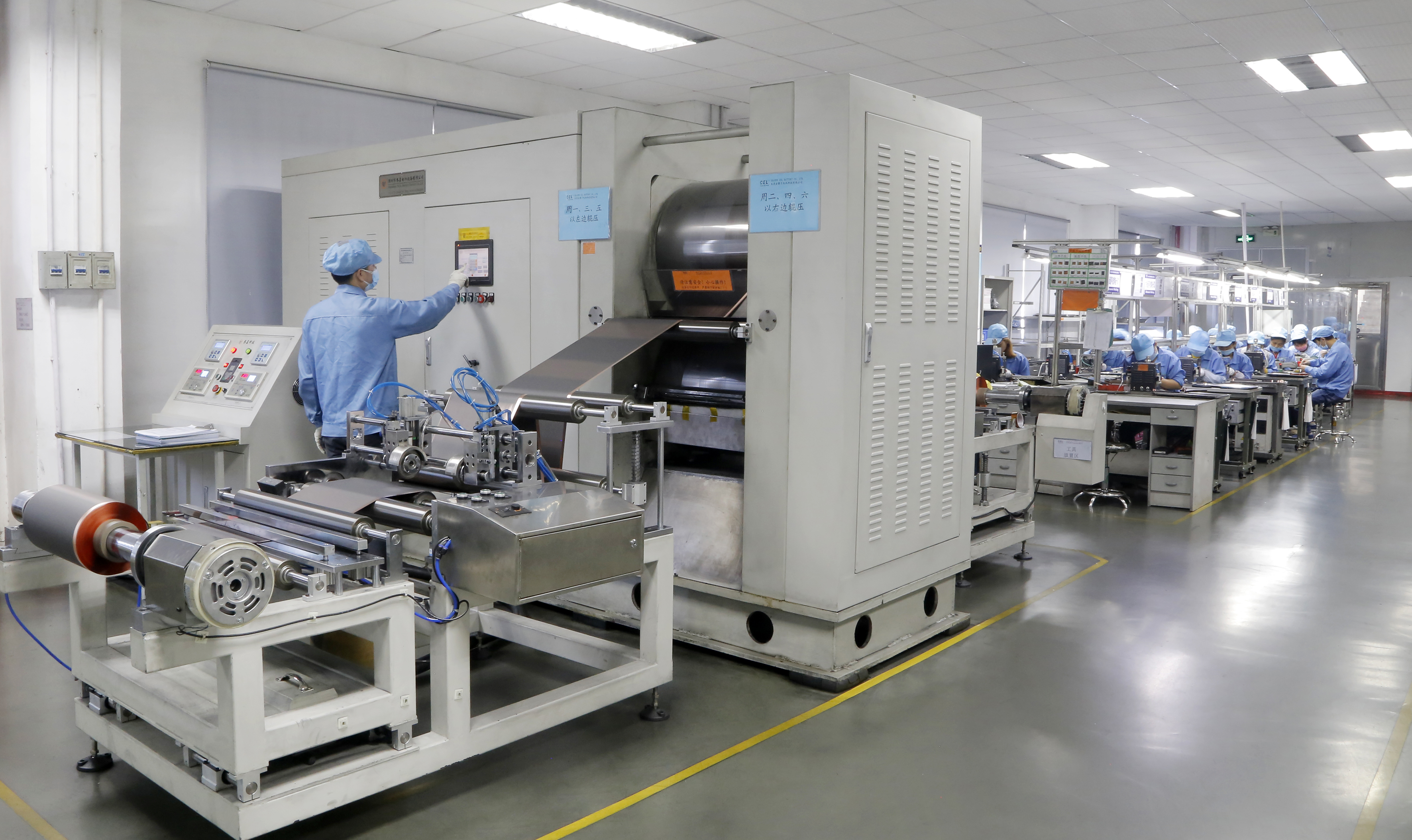
Precision manufacturing equipment, like this Electrode sheet Rolling machine at HCC, is standard among leading Chinese high-value manufacturers.
Tier 3: Regional & Niche Specialists
These are smaller suppliers, often focusing on very specific regional markets or ultra-niche applications (e.g., a particular type of 14500 battery for specialty lighting). They compete on deep local knowledge and hyper-customization for small batches. While agile, they may lack the certifications, financial stability, or production capacity for large, ongoing industrial projects.
3. The Chinese Supplier Ranking Ascent: Key Drivers
The consistent rise of Chinese manufacturers in global rankings is not accidental. It is built on concrete, sustainable advantages that directly address modern procurement pain points.
- Integrated Cost-Structure Advantage: Beyond labor, this encompasses the entire ecosystem—from raw material access to clustered component suppliers and efficient logistics within manufacturing hubs like Shenzhen. This allows companies like HCC to offer competitive pricing for high-quality lipo battery and lifepo4 battery packs without compromising on specifications.
- Engineer-to-Order Agility & Customization: Chinese leaders have institutionalized flexibility. Whether it's a 12v battery pack for a medical device or a complex battery pack for an agriculture drone, their business models are built around rapid prototyping and accommodating design changes, a stark contrast to the rigid models of some Tier 1 suppliers.
- Rapid Response and Supply Chain Resilience: The ability to quickly scale production, respond to RFQs, and solve technical problems in real-time is a hallmark. With independent R&D centers and sales offices, suppliers can provide direct, efficient communication—a critical factor when developing time-sensitive products like the latest best drones battery or tactical drone battery.
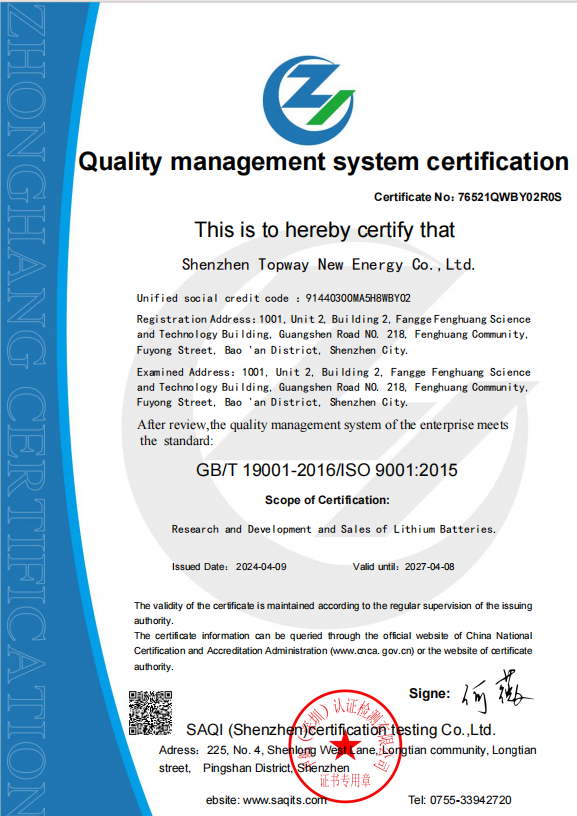
Certifications like ISO 9001:2015, held by HCC, formalize the quality management systems that underpin China's manufacturing advantage.
4. Strategic Procurement Guide: Matching Your Needs to the Right Supplier Tier
A ranking is a starting point, not an answer. The optimal supplier choice depends entirely on your project's specific requirements.
| Your Project Profile | Recommended Supplier Tier | Rationale & Key Considerations |
|---|---|---|
| Large-Scale, Standardized OEM Integration (e.g., sourcing millions of standard 18650 cells for a well-defined product) |
Tier 1 (International Brands) | Prioritizes absolute brand-safe supply, massive scale, and long-term technology roadmaps. Be prepared for less negotiation flexibility on price and design. |
| Innovative, Customized Application (e.g., developing a new robotic surgery battery pack, a delivery robot battery system, or a high-C-rate racing drone battery) |
Tier 2 (Chinese High-Value Manufacturers like HCC) | This is the sweet spot. You gain access to cutting-edge Rechargeable Lithium ion Battery pack engineering, full certification support (UL, IEC, CE, RoHS), cost efficiency, and a partnership-oriented approach to co-development. HCC's evolution from solution provider to owning advanced production lines exemplifies this capability, directly serving "complex product orders and large-volume orders" as stated in their corporate vision. |
| Small-Batch, Highly Specialized Prototype (e.g., a niche 18500 battery for a low-volume scientific instrument) |
Tier 3 (Regional/Niche Specialists) | Offers maximum design attention for small quantities where cost-per-unit is less critical than specific feature fulfillment. |
For most industrial buyers engaged in product development—especially in booming sectors like drones, robotics, and medical devices—the Tier 2 Chinese manufacturers present the most strategic value proposition. They offer a balanced scorecard: the technical sophistication and certifications approaching Tier 1, with the agility and cost structure that Tier 1 cannot match.
Conclusion & Outlook: Informed Selection for Future-Proof Procurement
The Lithium ion Battery supplier ranking is a dynamic reflection of a market in flux. While traditional metrics of scale remain relevant, the rising importance of technological agility, certification depth, and application-specific expertise has reshaped the leaderboard. Chinese manufacturers, led by firms like HCC (Shenzhen Topway New Energy Co., Ltd.), have successfully climbed these ranks by delivering certified quality, innovative battery pack solutions, and responsive partnership models.
For the astute industrial procurement professional, the strategy is clear: look beyond the ranking name. Scrutinize the supplier's certification portfolio, audit their production capability (evident in their Production line and Formation Workshop investments), and evaluate their proven track record in your specific vertical, be it medical battery, underwater drone battery, or smart robot battery. By aligning your project's core needs with a supplier's demonstrated strengths, you secure not just a component, but a strategic partner capable of powering your innovation reliably and efficiently into the future.
Evaluate a Top-Tier Partner: Contact HCC Today
Considering a high-value, certified supplier for your next project? HCC (Shenzhen Topway New Energy Co., Ltd.), with its comprehensive certification suite and advanced manufacturing transition, stands as a prime example of the new generation of leading Chinese battery solution providers.
Phone: +86 755 81461866 | WhatsApp: +86 18682160604
Email: sales@hcctop.com
Website: http://www.hcctop.com
Explore their full range of solutions for drones, robotics, medical devices, and more.