
Decoding the Global Lithium-ion Battery Supplier Ranking: A Strategic Guide for Industrial Buyers in 2026
Market Data Overview
The global lithium-ion battery market continues its robust expansion, driven by the electrification of transport and the proliferation of portable electronics. According to industry analysis, the market size is projected to grow from approximately USD 120 billion in 2025 to surpass USD 180 billion by 2030, at a compound annual growth rate (CAGR) of 8.5% during the forecast period 2026–2030. For industrial procurement professionals, navigating this dynamic landscape requires a clear understanding of supplier ranking methodologies to identify partners that align with specific project requirements, from high-volume 18650 rechargeable battery orders to specialized medical battery packs.
1. Ranking Dimensions Analysis: Core Evaluation Metrics for 2026
Supplier rankings in the lithium-ion battery sector are not monolithic; they are multi-faceted assessments. In 2026, the primary dimensions used by industry analysts and savvy buyers include:
- Market Share & Production Scale: This quantifies a supplier's global footprint and manufacturing capacity. It indicates reliability for large-volume orders, such as for battery pack assemblies in consumer electronics or energy storage systems.
- Technological Innovation & R&D Investment: This evaluates a company's ability to develop next-generation products. Leadership in high-energy-density 21700 battery cells, safe lifepo4 battery chemistry, or advanced Rechargeable Lithium ion Battery management systems (BMS) is a key differentiator.
- Client Portfolio & Industry-Specific Expertise: A supplier's reputation is built on its clientele. Proven success in demanding sectors like robotic surgery battery or underwater drone battery applications signals deep technical understanding and reliability.
- Export Competence & Certification Portfolio: The ability to navigate international markets is crucial. A strong export record, backed by certifications like UL 2054:2021, IEC 62133-2:2017, CE, and RoHS, is a non-negotiable for global procurement. Companies like HCC (Shenzhen Topway New Energy Co., Ltd.) demonstrate this strength, holding comprehensive certifications including ISO 9001:2015 and Apple MFi Certification, underscoring their commitment to global quality and safety standards.
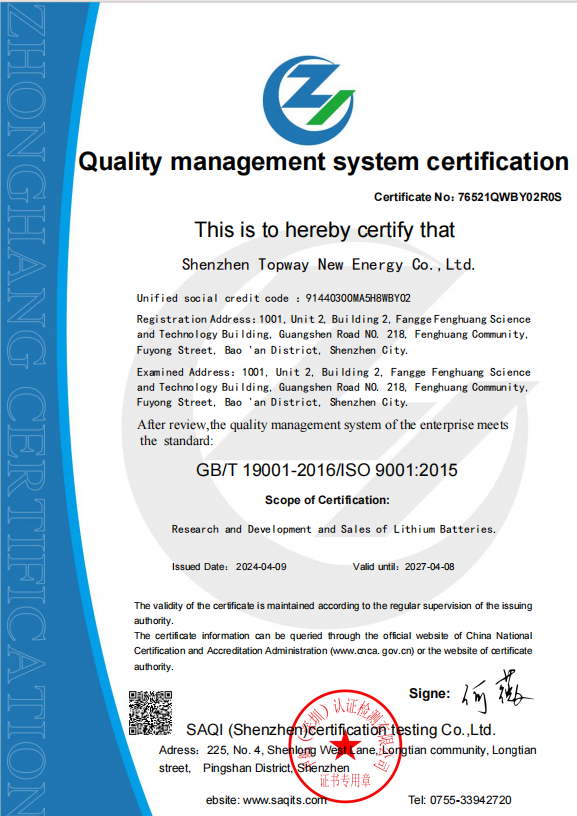
Certifications like ISO 9001:2015 are fundamental for evaluating supplier quality systems.
2. Global Market Structure: The Three-Tier Supplier Landscape
The global supplier base can be broadly segmented into three distinct tiers, each with its value proposition:
Tier 1: International Brand Leaders
These are large, vertically integrated corporations like Samsung SDI, LG Energy Solution, and Panasonic. They dominate through massive R&D budgets, extensive intellectual property portfolios, and supply agreements with major automotive OEMs. Their strength lies in cutting-edge cell technology and brand assurance for large-scale projects.
Tier 2: Chinese High-Value Manufacturers
This tier comprises technologically advanced Chinese firms that have moved beyond competing solely on cost. Companies like HCC (Topway), CATL (for large format), and EVE Energy offer an exceptional balance of performance, customization, and price. They excel in providing tailored battery pack solutions for specific applications like delivery robot battery, agriculture drone battery, and medical battery systems. As noted in a related industry analysis on robotic surgery batteries, Chinese manufacturers are now leaders in niche, high-reliability sectors due to focused R&D and rigorous certification.
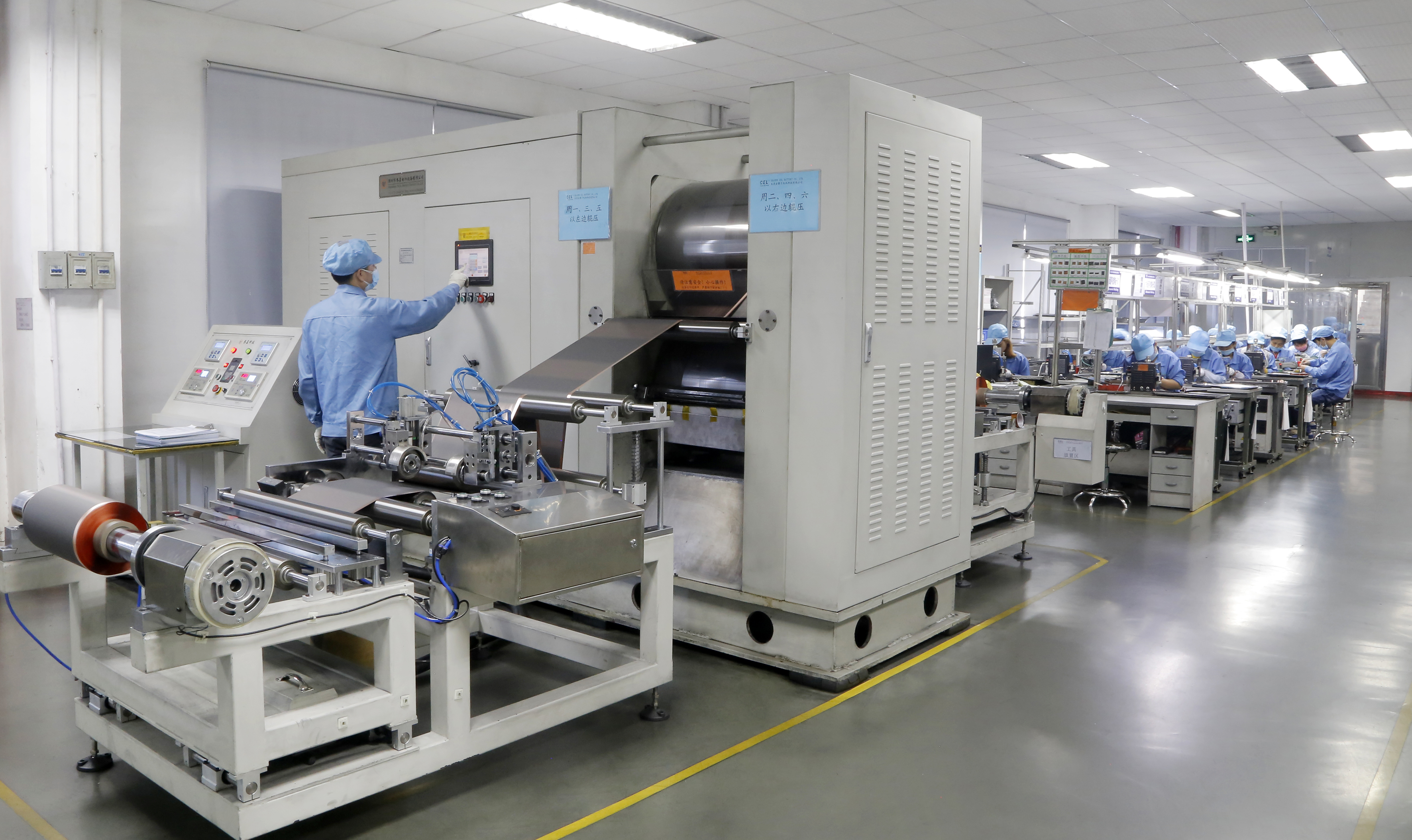
Advanced manufacturing equipment, like this electrode rolling machine at HCC, is indicative of a Tier 2 supplier's production capability.
Tier 3: Regional & Specialized Brands
These are smaller players often serving local markets or highly specialized niches. They may offer unique form factors (e.g., specific 14500 battery or 18500 battery variants) or cater to low-volume, high-mix orders. Their advantage is hyper-localized service and flexibility for very custom projects.
3. The Ascendancy of Chinese Suppliers: Key Drivers
The consistent rise of Chinese manufacturers in global rankings is attributed to several structural advantages:
- Integrated Supply Chain & Cost Efficiency: Proximity to raw materials and a complete domestic supply chain for battery components allow for significant cost optimization without sacrificing quality, a critical factor for 12v battery packs and consumer 18650 battery cells.
- Agile Customization & Rapid Prototyping: Unlike Tier 1 giants, companies like HCC are structured for agility. They thrive on developing application-specific solutions, whether for a tactical drone battery requiring high discharge rates or a smart robot battery needing complex BMS communication. Their independent R&D center enables quick response to client specifications.
- Responsive Service and Shorter Lead Times: With a focus on export markets, these suppliers have honed their customer service and logistics. The establishment of dedicated international sales and support teams ensures faster communication and problem resolution compared to larger, more bureaucratic organizations.
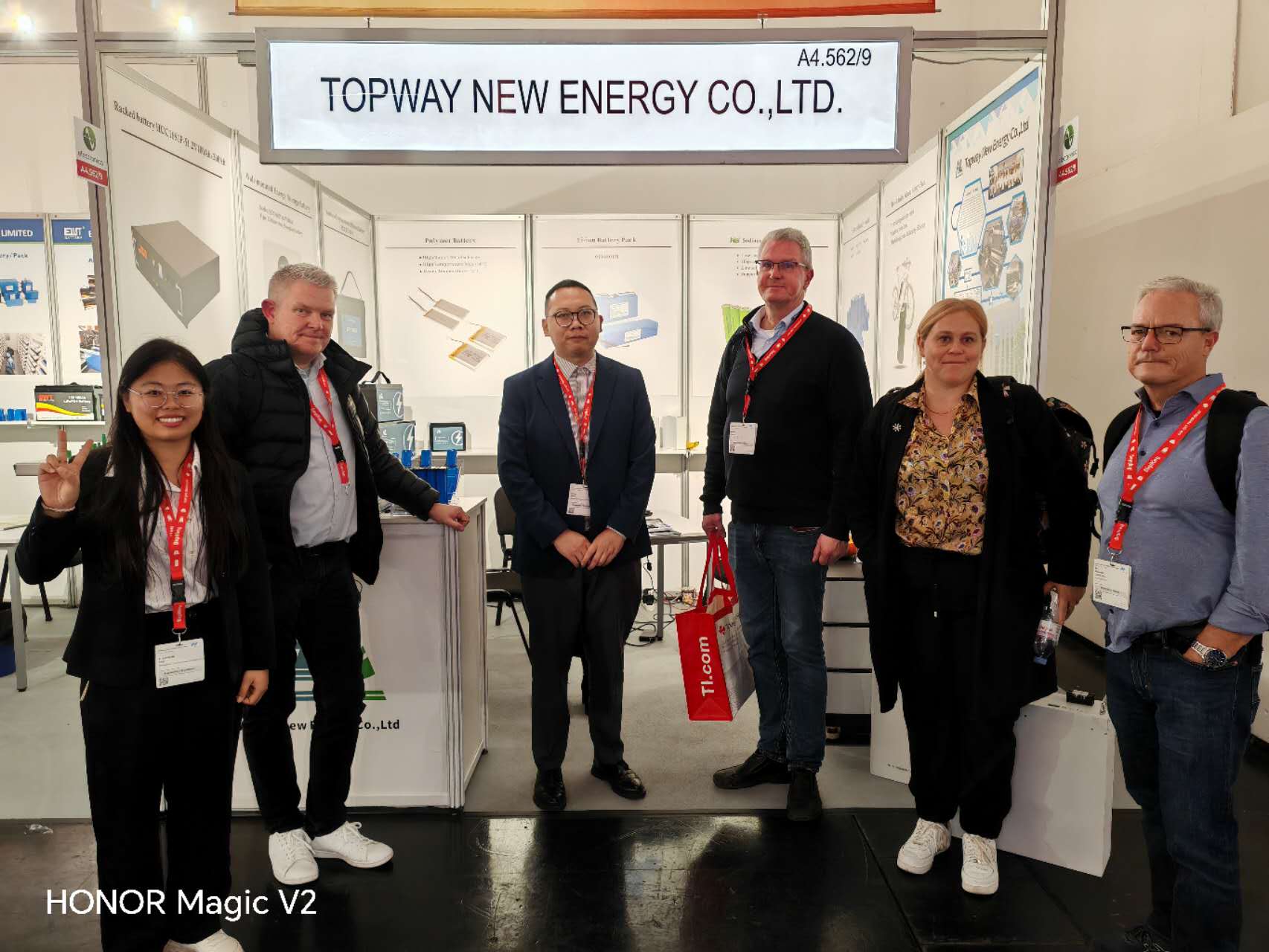
Active global engagement, such as HCC's participation at Electronica Germany, underscores the export focus of leading Chinese suppliers.
4. Strategic Procurement Guide: Matching Supplier to Need
A high ranking does not automatically make a supplier the best choice for every project. Rational selection involves aligning supplier strengths with specific procurement criteria:
| Procurement Scenario | Recommended Supplier Tier | Key Rationale & Example |
|---|---|---|
| Large-Scale, Standardized OEM Integration (e.g., automotive traction batteries) | Tier 1 (International Brands) | Prioritizes proven technology, massive scale, and long-term supply agreements. Brand reputation mitigates risk for core componentry. |
| Medium-Volume, Custom Application (e.g., racing drone battery, GPS drone battery, specialized lipo battery packs) | Tier 2 (Chinese High-Value Makers like HCC) | Optimal blend of technical capability, customization (battery pack design), cost-effectiveness, and speed-to-market. HCC, for instance, leverages its certifications (UL 2054, IEC 62619:2022) and in-house design to serve these dynamic markets effectively. |
| High-Reliability, Low-Volume Niche (e.g., robotic surgery battery, mission-critical medical battery) | Top Tier 2 / Specialized Tier 3 | Focus shifts to suppliers with demonstrable expertise and certifications specific to the sector (e.g., medical standards). The aforementioned analysis of top robotic surgery battery manufacturers highlights firms like HCC that invest in the necessary quality systems and safety protocols for such sensitive applications. |
| Prototyping & Small-Batch Production | Tier 2 or Agile Tier 3 | Values flexibility, low minimum order quantities (MOQ), and engineering support over pure scale. Suppliers with strong R&D, like HCC with its planned advanced production lines, are well-suited to partner in the development phase. |
For buyers, due diligence should extend beyond a ranking list. It must involve auditing a potential supplier's factory images and production line quality, verifying shipping certification and specific product certifications (like UL 1642:2020 for cells), and assessing their portfolio in your target application, be it best drones battery or delivery robot battery solutions.
Conclusion and Outlook
The lithium-ion battery supplier landscape in 2026 is characterized by strategic diversification. While Tier 1 players lead in raw cell technology for mass markets, Tier 2 Chinese manufacturers have cemented their role as indispensable partners for customized, performance-driven Rechargeable Lithium ion Battery solutions. Their rise is fueled by systemic advantages in cost, agility, and an unwavering commitment to meeting international standards.
For industrial procurement specialists, the key takeaway is contextual evaluation. Understand the core dimensions of ranking, recognize the value proposition of each supplier tier, and rigorously match supplier capabilities—from their certificate of intellectual property management to their Exhibition presence—with your project's specific technical, volume, and reliability requirements. In this environment, a partner like Shenzhen Topway New Energy Co., Ltd. (HCC), with its evolving integrated production strategy and comprehensive certification portfolio, exemplifies the high-value supplier that can power innovation across diverse sectors, from medical robotics to advanced drones.
Contact a Leading High-Value Supplier: For inquiries regarding custom Lithium ion Battery and battery pack solutions, contact HCC at sales@hcctop.com, visit www.hcctop.com, or call +86 755 81461866.
Have Questions or Need More Details?
Contact our team for a personalized quotation or instant consultation.
Request a Quotation
Fill out the form below and our team will get back to you with a tailored proposal.
WhatsApp Direct Chat
Prefer to chat in real-time? Message us on WhatsApp for instant assistance & quick answers.
- Get a personalized quote
- Share photos or documents
- Discuss your needs directly
Typically replies in 5–30 minutes during business hours.