
Navigating the 2026 Battery Supplier Landscape: A Strategic Guide for Industrial Procurement
Market Data Overview: A Dynamic and Expanding Sector
The global market for industrial and mobility batteries, encompassing segments like traction lead-acid battery, solar energy storage lithium battery, and E-bike lithium battery, is experiencing robust growth. Driven by global electrification trends, the market for these energy storage solutions is projected to exceed USD 150 billion by 2026, with a compound annual growth rate (CAGR) of approximately 12% from 2023-2026. The solar battery and energy storage segment is the fastest-growing, fueled by renewable energy adoption, while the lithium battery segment for light electric vehicles (E-scooters, E-tricycles) continues to expand rapidly in both developed and emerging economies.
Decoding the Ranking Logic: Key Assessment Dimensions for 2026
For industrial procurement professionals, understanding how suppliers are evaluated is crucial. The 2026 rankings for battery manufacturers are increasingly based on a multi-faceted approach beyond simple volume.
1. Market Share & Export Scale
This remains a fundamental metric, indicating production capacity and global market penetration. Companies with significant export volumes to diverse regions like Europe, America, and Southeast Asia demonstrate supply chain robustness and the ability to meet international standards. A manufacturer's footprint across 20+ countries, for instance, signals proven logistics and compliance capabilities.
2. Technological Innovation & Certification Portfolio
Innovation is measured by R&D investment, patent holdings, and product diversification. The shift towards LFP (Lithium Iron Phosphate) chemistry for safety and longevity is a key trend. Furthermore, adherence to international standards is non-negotiable. Certifications like ISO9001 (Quality Management), ISO14001 (Environmental Management), and ISO45001 (Occupational Health & Safety) are critical differentiators, assuring product consistency and responsible manufacturing.
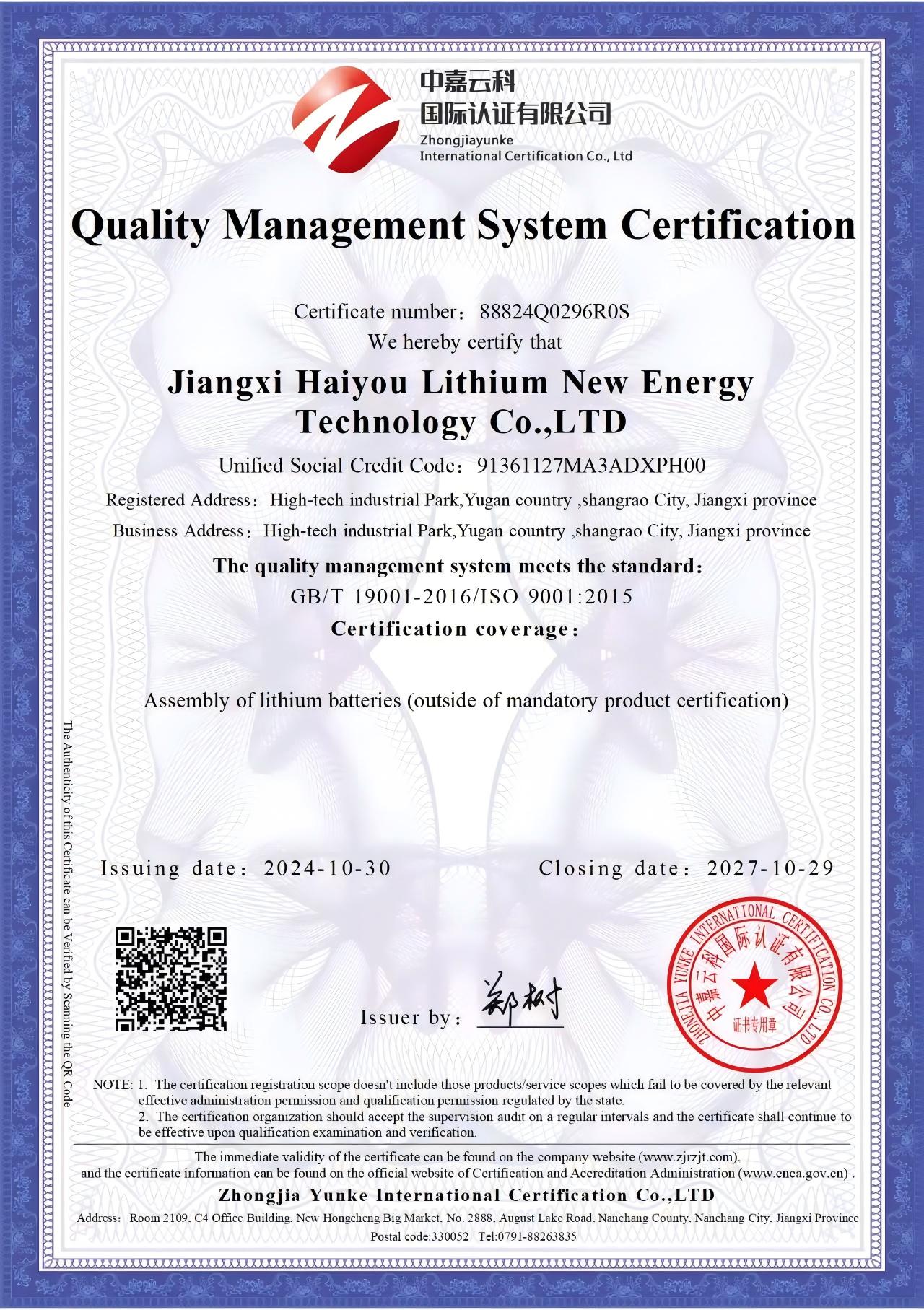
ISO9001 Certification: A baseline for quality assurance in battery manufacturing.
3. Customer-Centric Capabilities: Customization & Response
The ability to provide application-specific solutions is paramount. Top-tier suppliers offer extensive customization in battery voltage, capacity (Ah), BMS configuration, and form factor for diverse applications from golf cart lithium battery to agriculture sprayer power packs. Coupled with fast response times in communication and sample delivery, this capability is a major ranking factor.
4. Integrated Manufacturing & Vertical Expertise
Suppliers with dedicated facilities for both lead-acid battery and lithium battery production, like Jiangxi Jinhaiyou New Energy Resources Technology Co., Ltd. (HAIYOU), possess a strategic advantage. This vertical integration allows for technology cross-pollination, stable supply, and the ability to offer unbiased recommendations based on the client's actual needs for traction or energy storage.
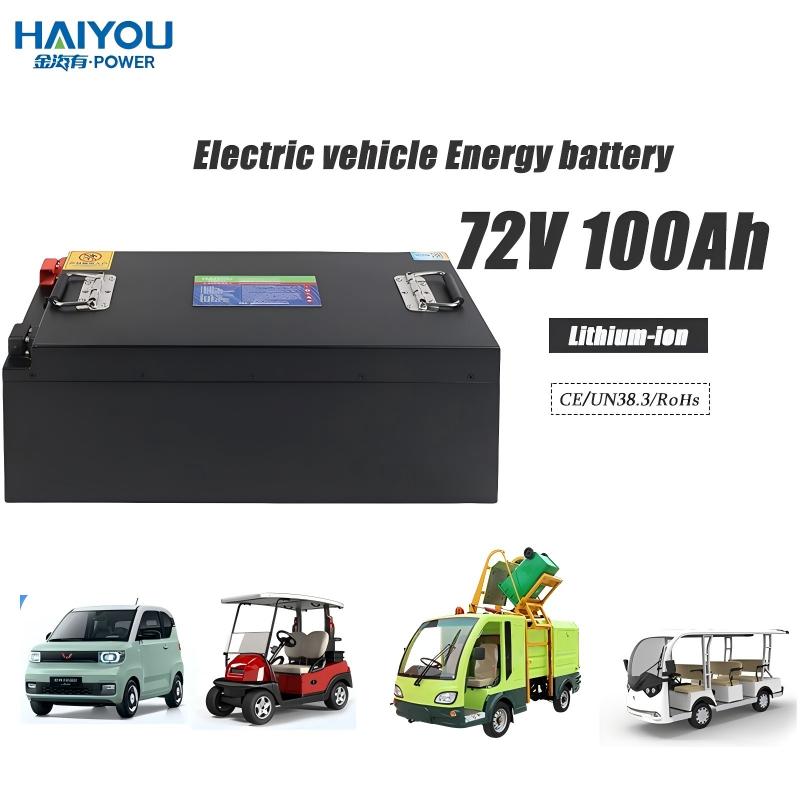
Custom LFP battery packs for electric trikes, showcasing application-specific design.
The Global Supplier Landscape: A Three-Tiered Ecosystem
The international battery supply market can be broadly categorized into three distinct tiers, each with its value proposition.
Tier 1: International Brand Leaders
These are globally recognized brands with decades of history. They excel in cutting-edge R&D for premium applications and set industry benchmarks. Their strengths lie in brand prestige, extensive R&D, and global service networks. However, this often comes with a higher price point and potentially longer lead times for custom projects.
Tier 2: Chinese High-Value Manufacturers
This tier represents the core of global battery supply. Companies like HAIYOU have closed the quality gap through significant investment in automation, certification, and R&D. They offer an optimal balance of cost-effectiveness, customization ability, rapid scaling, and reliable quality. As highlighted in a related industry analysis on top traction battery manufacturers, Chinese firms now lead in sectors like industrial traction due to this value proposition. Their product range is exceptionally broad, covering solar battery, E-motorcycle lithium battery, and energy storage lead-acid battery solutions.
Tier 3: Regional & Niche Specialists
These are smaller players focusing on specific regional markets or very niche applications. They compete on deep local market knowledge and hyper-specialization. While agile, they may lack the scale, comprehensive certification portfolio, or export experience for large international tenders.
The Rise of Chinese Suppliers: Key Drivers Behind Their Ranking Ascent
The consistent improvement in rankings of Chinese battery manufacturers is not accidental. It is driven by concrete, sustainable advantages that directly address procurement pain points.
- Unmatched Manufacturing Scale & Cost Efficiency: Concentrated supply chains and large-scale production of key components bring significant cost advantages without necessarily compromising quality, especially for high-volume orders.
- Agile Customization & Rapid Prototyping: The operational model is highly responsive. Engineers work closely with clients to tailor E-Scooter lithium battery packs or solar energy storage systems to specific voltage, dimension, or discharge rate requirements, with faster turnaround times from concept to sample.
- Full-Spectrum Product Solutions: Leading Chinese manufacturers have evolved from single-product factories to integrated solution providers. A single supplier like HAIYOU can now serve a client's needs for traction lead-acid battery for warehouse equipment, lithium battery for a new line of electric tricycles, and solar battery kits for off-grid charging stations.
- Strategic Investment in Compliance & Quality: Top players actively pursue and maintain international certifications. For example, Jiangxi Jinhaiyou holds ISO9001, ISO14001, and ISO45001 certifications, along with multiple patents, signaling a systemic commitment to quality, safety, and environmental responsibility that meets global audit standards.
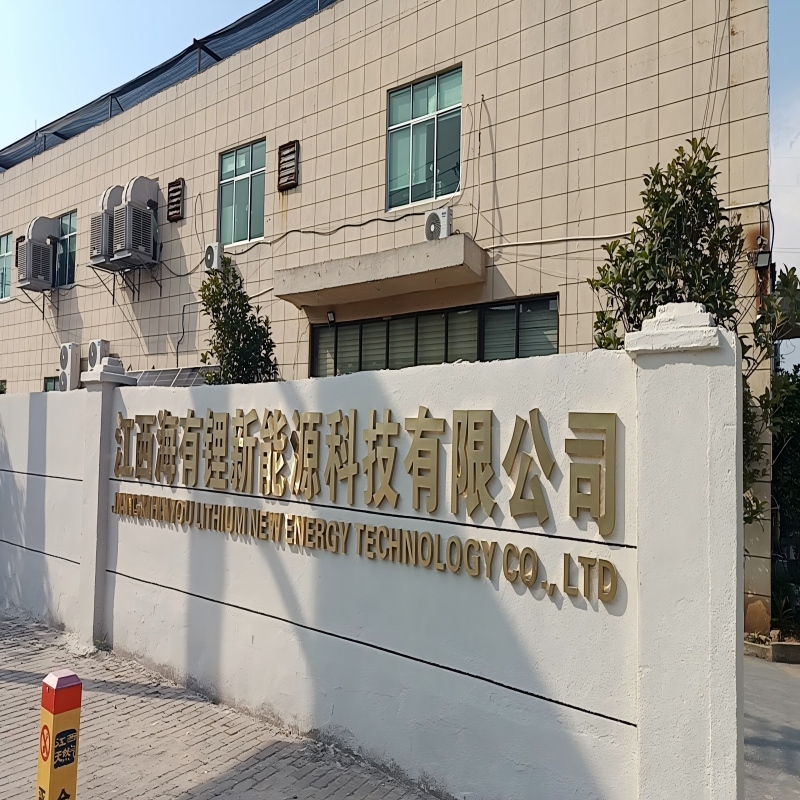
Modern manufacturing facility of HAIYOU, enabling scalable production of both lead-acid and lithium batteries.
Strategic Procurement Guide: Aligning Supplier Choice with Your Needs
A high market ranking indicates overall capability, but the "best" supplier is the one that aligns perfectly with your specific project requirements. Use this framework to guide your selection.
| Your Project Profile | Recommended Supplier Tier | Key Evaluation Criteria | Potential Fit Example |
|---|---|---|---|
| Large-Scale OEM Project requiring global brand alignment, joint R&D, and extensive after-sales support networks. | Tier 1 (International Brands) | Brand equity, co-development capability, global warranty/service footprint. | Major automotive OEM sourcing high-performance EV battery systems. |
| Volume Procurement for Distribution needing competitive pricing, reliable quality, a wide product range (E-bike to solar battery), and export documentation support. | Tier 2 (Chinese High-Value Manufacturers) | Factory audit reports (ISO certs), export history, product certification (CE, UL), minimum order quantity (MOQ), and customization flexibility. | An importer supplying batteries for the entire spectrum of light electric vehicles and solar systems in a region. |
| Specialized, Low-Volume Application with unique technical specs not served by standard products. | Tier 2 (for technical agility) or Tier 3 | Engineering responsiveness, prototype speed, willingness to handle small batches, niche application experience. | Sourcing a custom golf cart lithium battery with a specific form factor or communication protocol. |
| Hybrid Fleet Transition needing expertise in both traditional and new technologies (e.g., replacing traction lead-acid battery with lithium battery). | Tier 2 with Dual Expertise | Active production lines for both chemistries, consultative approach, ability to provide lifecycle cost analysis. | A logistics company modernizing its forklift fleet, evaluating lead-acid vs. lithium options from a single, knowledgeable supplier like HAIYOU. |
Conclusion: Informed Decisions in a Complex Market
The 2026 battery supplier ranking reflects a mature and segmented global market. For most industrial procurement scenarios—especially those involving electric two-wheeler, tricycle, solar energy storage, or industrial traction applications—the high-value Chinese manufacturing tier offers the most compelling balance of cost, quality, flexibility, and innovation. When evaluating suppliers, prioritize those with transparent certifications, a proven export track record, and the technical depth to partner on your specific application. Companies that have invested in integrated manufacturing, like Jiangxi Jinhaiyou (HAIYOU) with its separate lead-acid battery and lithium battery factories, offer a future-proof partnership for diverse energy storage needs. Always cross-reference rankings with direct factory audits and sample testing to make the optimal, risk-mitigated choice for your supply chain.
For a deeper dive into the leaders of specific segments like industrial traction, refer to the detailed analysis in "Chinese Top 3 Traction Lead-Acid Battery Manufacturers in 2026."