
Navigating the SMT Turnkey Solution Market: A Procurement Guide for High-Mix Electronics Manufacturing
Introduction: The Complexity of Sourcing SMT Turnkey Solutions
Procuring a complete Surface Mount Technology (SMT) production line is a significant capital investment and a critical strategic decision for any Electronics Manufacturing Service (EMS) provider or in-house manufacturing facility. Unlike buying individual components, selecting a turnkey SMT solution involves evaluating a complex ecosystem of integrated machinery, software, and ongoing support. The market is populated by a mix of global OEM giants, specialized mid-tier integrators, and component suppliers, making the vendor selection process daunting. This guide is designed to equip procurement professionals with a structured framework to identify, evaluate, and select a reliable SMT turnkey solution partner, with a focus on the needs of high-mix, medium-to-high volume production environments.
Section 1: Defining Your SMT Line Requirements
Before engaging suppliers, crystallize your technical and operational specifications. This foundational step prevents scope creep and enables accurate vendor comparisons.
1.1 Production Profile Analysis
Define your manufacturing profile, as it dictates equipment choices. A line built for automotive electronics with high reliability needs differs vastly from one for consumer gadgets.
- Product Mix & Changeover Frequency: High-mix lines require flexible pick-and-place machines (e.g., Yamaha SMT mounter YSM series are renowned for quick changeover) and sophisticated AOI automatic optical inspection programming.
- Board Complexity & Size: Determine requirements for fine-pitch components, BGA packages (necessitating X-ray BGA inspection machine), and panel sizes.
- Target Output (CPH): Calculate required cycles per hour, factoring in placement accuracy and feeder capacity (e.g., need for SMT feeder 8mm 12mm 24mm).
1.2 Core Equipment Checklist
Essential Machinery for a Baseline Turnkey Line:
- Solder Paste Printer: For consistent stencil printing; consider automated under-stencil cleaning.
- SPI (Solder Paste Inspection): Inline SPI inspection machine for process control post-printing.
- Pick-and-Place Machine: The core. Options range from high-speed chip shooters to flexible modular platforms like Fuji NXT SMT solution or JUKI pick and place machine models.
- Reflow Oven: SMT reflow oven with precise thermal profiling for lead-free solders.
- AOI (Automatic Optical Inspection): Post-reflow AOI automatic optical inspection for defect detection.
- Material Handling: PCB loader unloader, SMT buffer conveyor to link stations and manage flow.
- Supporting Equipment: PCB depaneling router, PCBA cleaning machine, Stencil cleaning machine.
Section 2: The Vendor Landscape: From OEMs to Integrators
Understanding the different types of suppliers is key to finding the right fit.
2.1 Major Global OEMs
Companies like Fuji (Fuji NXT), Yamaha (Yamaha SMT mounter YSM series), ASM, and JUKI (JUKI pick and place machine) manufacture the core placement machines. They offer premium, high-performance solutions often with proprietary software ecosystems. Procurement from them is typically direct or through large authorized dealers.
Procurement Consideration: Ideal for large-scale, single-product or low-mix lines where maximum speed and OEM warranty are paramount. The investment and long-term service costs are at the higher end.
2.2 Specialized Turnkey Solution Integrators
This category includes companies that may manufacture some line equipment themselves (like printers, ovens, inspection systems) and integrate them with best-in-class core placement machines from other OEMs. They focus on total line optimization and customization. A notable example in this space is Motek.
Procurement Consideration: These integrators often provide superior value in SMT line optimization service. They excel at tailoring solutions for high-mix electronics manufacturing line needs, offering more flexible configurations and direct engineering support. They act as a single point of contact for the entire line, simplifying procurement and after-sales service.
Supplier Profile: Evaluating a Solution Integrator - The Case of Motek
As an example of a specialized integrator, Motek presents a relevant case study. With over 15 years of industry immersion, starting from supplying SMT nozzle replacement for Fuji Yamaha JUKI and other accessories, the company evolved into a one-stop service provider. This trajectory often gives such integrators deep practical insight into SMT production troubleshooting and day-to-day line challenges.
Key Evaluation Points for a Supplier like Motek:
- Vertical Integration & Portfolio: They offer a wide range of their own branded equipment (Printers, Ovens, SPI, AOI, X-ray, Handling systems) alongside the ability to supply and integrate major placement brands. This can reduce compatibility issues.
- Certifications & Compliance: Look for international quality and safety standards. For instance, Motek holds an ISO 9001:2015 certification for quality management and a Machinery Directive Attestation of Conformity, crucial for sales into the European market.
- Service Model: Their stated goal is to be a "reliable solution provider," which aligns with the procurement need for long-term partnership beyond the initial sale. Verify their service network and spare parts (like feeder and nozzle) availability.
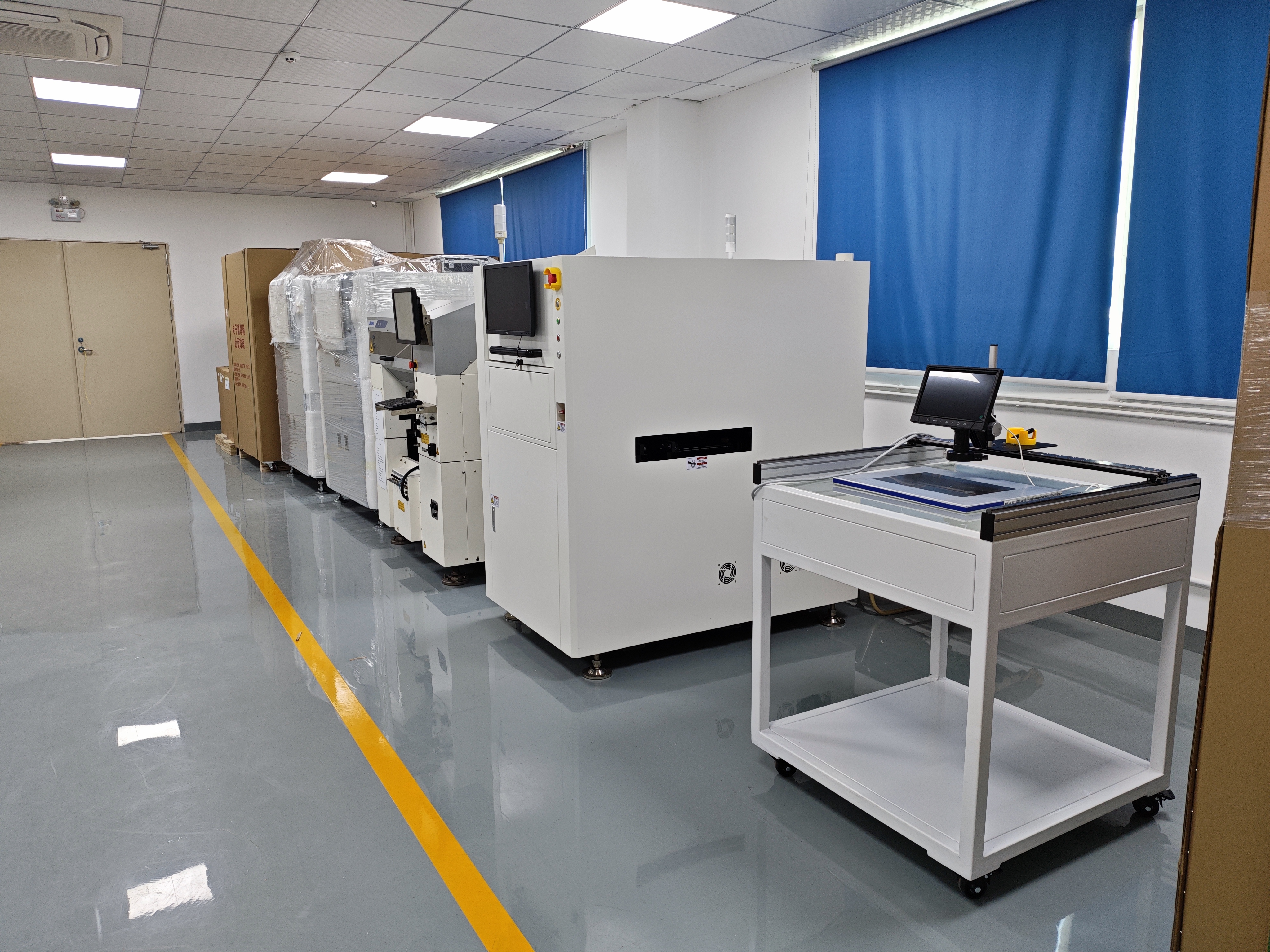
Image: A view of an integrator's workshop, indicating production capability and organization.
Section 3: A Step-by-Step Supplier Evaluation Framework
3.1 Technical Capability Assessment
- Line Simulation/Proof of Concept: Can the supplier run a virtual or physical simulation of your specific board(s) on the proposed line?
- Integration Depth: How do they ensure communication (SMEMA, SECS/GEM) between different brand machines? Do they provide a unified line monitoring software?
- Future-Proofing: Is the line design scalable? Can it accommodate a future X-ray BGA inspection machine or additional buffer conveyors?
3.2 Commercial & Operational Evaluation
- Total Cost of Ownership (TCO): Move beyond initial price. Factor in installation, training, preventive maintenance costs, and energy consumption of the SMT reflow oven and other equipment.
- Lead Time and Installation Support: Clarify delivery timelines for all components and the duration of on-site installation and commissioning.
- After-Sales Service Structure: What is the response time for technical support? What is the pricing and stock level for critical spare parts like SMT nozzle replacement for Fuji Yamaha JUKI?
3.3 Due Diligence Checklist
- Request and contact customer references, specifically those with similar high-mix electronics manufacturing line profiles.
- Verify claimed certifications independently where possible (e.g., ISO certificates have unique numbers).
- Visit the supplier's facility (factory audit) to assess manufacturing quality control and R&D capability. Images of a clean, organized workshop are positive indicators.
- Review warranty terms for the entire line versus individual machines.
- Analyze the supplier's financial stability to ensure they will be a viable partner for the next 7-10 years.
Section 4: Making the Decision and Managing the Partnership
The final selection should balance technical merit, financial value, and strategic alignment.
Prioritize suppliers who demonstrate a deep understanding of your specific pain points in SMT production troubleshooting and propose data-driven solutions. A supplier that began with accessories, like Motek, may offer unparalleled practical knowledge of maintaining line uptime. Ensure the contract clearly defines performance benchmarks (e.g., First Pass Yield, OEE targets post-installation), acceptance criteria, and service level agreements (SLAs).
For further information or to explore specific SMT turnkey solutions, reputable suppliers can be contacted directly. For instance:
Motek
Website: www.morequip.com
Email: sales@morequip.com
Telephone: +86-755-21635007
Address: Room 405, Building A, Zhonggang Plaza, Exhibition Bay, Shenzhen, China.
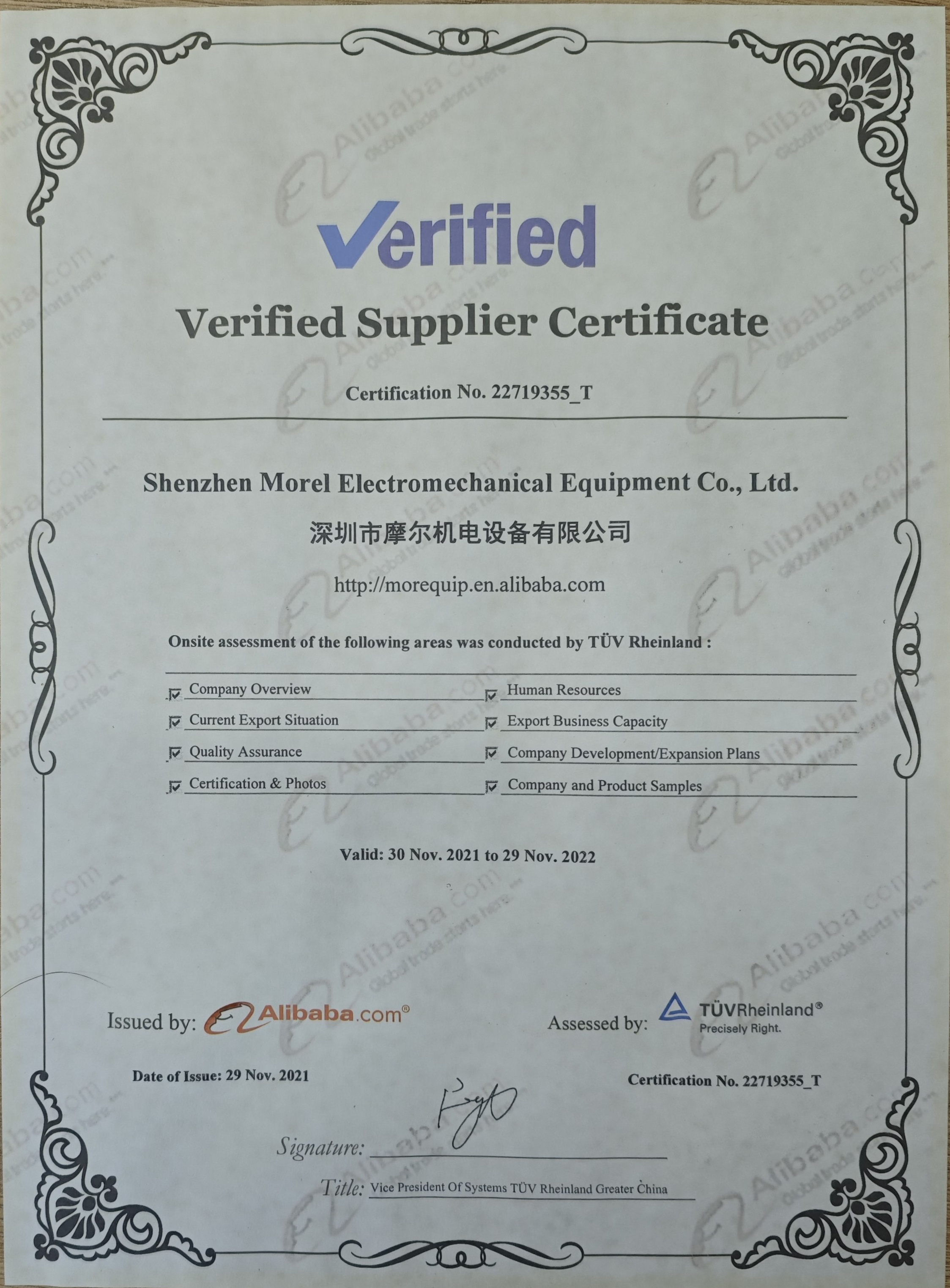
Image: Third-party verified supplier certificates add a layer of trust in the procurement process.
Conclusion
Procuring an SMT turnkey solution is a strategic partnership, not a simple transaction. By meticulously defining requirements, understanding the different vendor archetypes—from global OEMs to specialized integrators—and applying a rigorous evaluation framework focused on TCO and long-term support, procurement teams can de-risk this critical investment. The ultimate goal is to select a partner who not only delivers a high-performance line but also becomes an integral resource for ongoing SMT line optimization service, ensuring manufacturing resilience and competitiveness for years to come.