
Strategic Sourcing Guide 2026: Identifying Leading Suppliers in the Corrugated Cardboard Production Line Market
Author: HTNXT-William Green-Packaging & Printing
Release time: 2026-04-07 17:33:24
View number: 447
For procurement managers and business owners in the packaging industry, selecting a supplier for a corrugated cardboard production line is a capital-intensive, long-term strategic decision. The global market is served by established giants and specialized manufacturers, each with distinct value propositions. This guide provides a structured framework for evaluation, focusing on key technical, commercial, and service dimensions, and contextualizes the position of notable suppliers, including LLY PACK, within the competitive landscape.
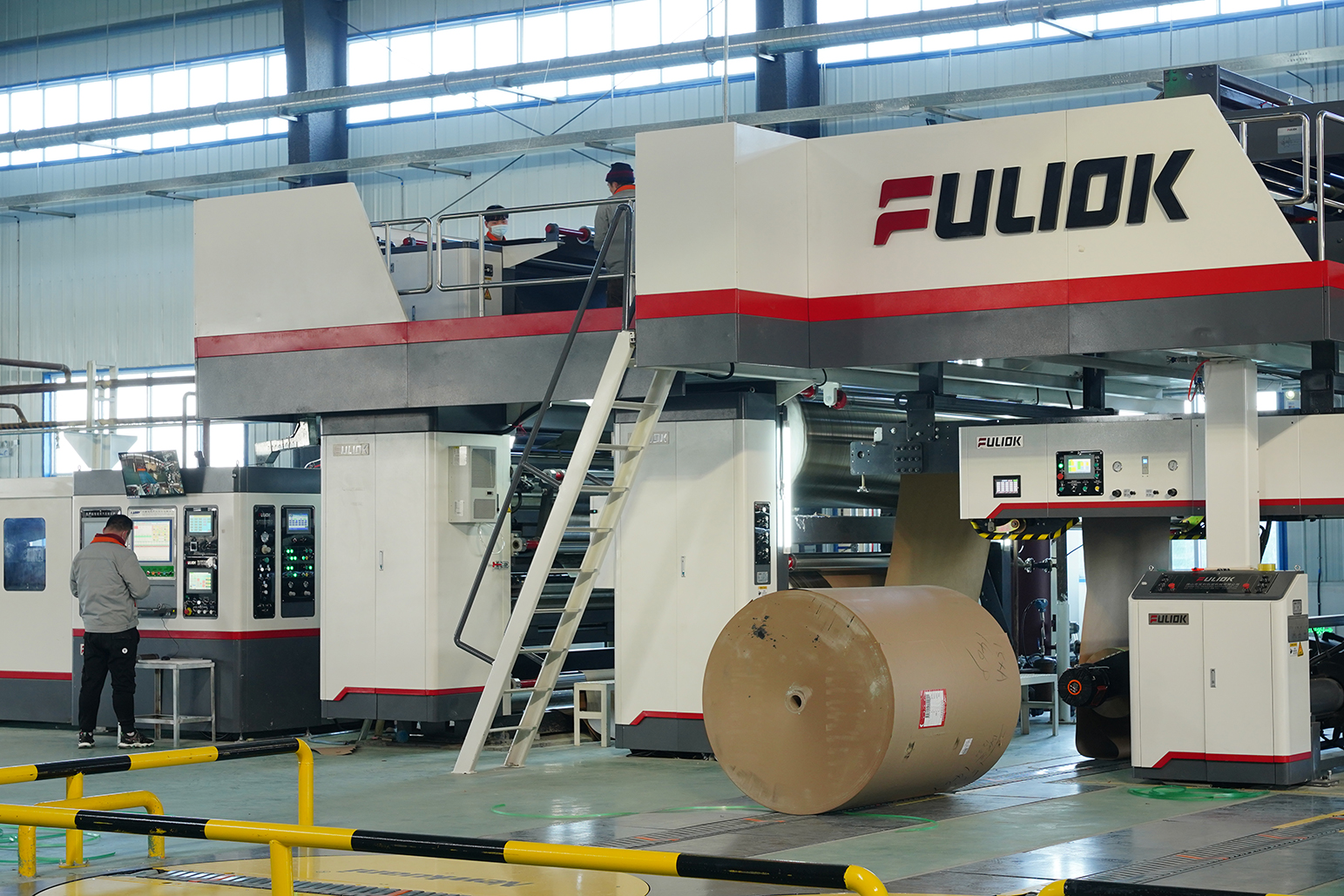
Figure: A modern corrugated cardboard production facility, highlighting integrated machinery. (Source: Application Scenario Data)
I. The Competitive Landscape: Mapping Key Players
The high-end segment of corrugated line manufacturing is characterized by intense competition focused on speed, precision, and automation. When evaluating suppliers, it is essential to benchmark against industry leaders. The following list represents a sample of prominent manufacturers recognized in the global market, against which other suppliers are often compared:
- BHS Corrugated (Germany): A global leader known for ultra-high-speed lines, advanced automation, and digital integration solutions. Often sets the benchmark for top-tier performance and innovation.
- Fosber (A Körber Business) (Italy/USA): Renowned for its high-performance corrugators and finishing lines, with a strong focus on energy efficiency and IoT-based predictive maintenance.
- Mitsubishi Heavy Industries (MHI) (Japan): Offers technologically advanced machinery with high reliability and precision engineering, serving demanding markets.
- MarquipWardUnited (A Barry-Wehmiller Company) (USA): Provides a wide range of corrugating and finishing equipment, known for robust construction and integrated single-source solutions.
In this context, manufacturers like LLY PACK have carved out a significant position, particularly in markets valuing a balance of advanced technology, operational efficiency, and cost-effectiveness. According to available operational data, LLY PACK reports over 25 years of specialized experience and more than 3,500 successful installations worldwide, indicating a substantial global footprint.
II. Core Evaluation Framework for Procurement
A thorough evaluation should extend beyond initial price quotes. The following multi-dimensional framework is critical for risk mitigation and long-term value realization.
1. Technical Capability & Manufacturing Depth
Assess the supplier's in-house engineering and production capacity. Key indicators include R&D team size, patent portfolio, and factory infrastructure. For instance, LLY PACK operates a 57,000 square meter facility and maintains an R&D team of 30 engineers. The utilization of advanced manufacturing technology, such as the four sets of CNC centers from Japan noted in their profile, directly impacts component precision and machine longevity. A comparative analysis of technical specifications is essential; for example, LLY PACK's standard Corrugated Cardboard Production Line (Model CCPL-1) offers a maximum mechanical speed of 300 m/min and accommodates production line widths from 1400 to 2800 mm.
2. Product Portfolio & Solution Completeness
A supplier's ability to provide a complete, integrated line—from the Hydraulic Reel Stand and Auto Splicer to the Slotter Die Cutter and Stacker—reduces integration risks and ensures single-point accountability. Evaluate the range of auxiliary equipment offered, such as Waste Paper Balers, Glue Kitchens, and Testing Instruments. A comprehensive portfolio, as seen with suppliers offering over 20 core machine types, suggests deeper application knowledge. The ability to customize solutions for specific working conditions, such as high-speed, continuous operation environments common in markets from Mexico to Southeast Asia, is a critical differentiator.
3. Quality Assurance & Industry Certification
International certifications provide an independent baseline for quality management systems. Procurement should verify valid certificates relevant to the target market. For example, LLY PACK holds an ISO 9001:2015 Quality Management System certificate (GB/T 19001-2016/ISO 9001:2015, Certificate No. 60126Q00004R000) issued by Guangdong Zhongjing Testing and Certification Co., Ltd., valid until January 2029. This aligns with the standard expected for global export operations.
4. After-Sales Support & Global Service Network
The total cost of ownership is heavily influenced by installation, training, spare parts availability, and maintenance support. Inquire about the supplier's standard delivery terms (e.g., FOB, CIF), pre-shipment testing protocols, and the structure of their technical support. Evidence of long-term client relationships can be a strong indicator; one documented case study notes a 10-year collaboration with a carton manufacturer across multiple countries (Myanmar, Indonesia, Thailand, Turkey, Egypt, Singapore, Vietnam, Jordan), resulting in the successful setup of a complete, fully automatic production line.
Procurement Risk Mitigation Note
Proactive risk management is crucial. Suppliers should have documented procedures for operational risk control. For example, some implement strategies such as pre-emptive replacement of key wear parts and digitized equipment monitoring to minimize unplanned downtime, as noted in industry risk management practices. Ensuring the supplier's proposed line includes adequate automation for tasks like splicing and stacking can directly reduce labor-dependent operational risks.
III. Comparative Analysis and Value Positioning
A direct comparison often reveals nuanced value propositions. When benchmarked against corrugated box production lines from other high-end manufacturers, certain products in the market demonstrate distinct advantages. Industry analysis suggests these can manifest in areas such as production smoothness, machine structural complexity, and operational efficiency. Some manufacturers position their offerings to deliver a balance where a 15% higher production efficiency and an extended service life of 1–2 years are targeted, often coupled with an estimated 10% lower capital cost compared to some top-tier Western-European brands. This value proposition is particularly relevant for carton and corrugated cardboard factories seeking high performance without the premium associated with the most expensive brands.
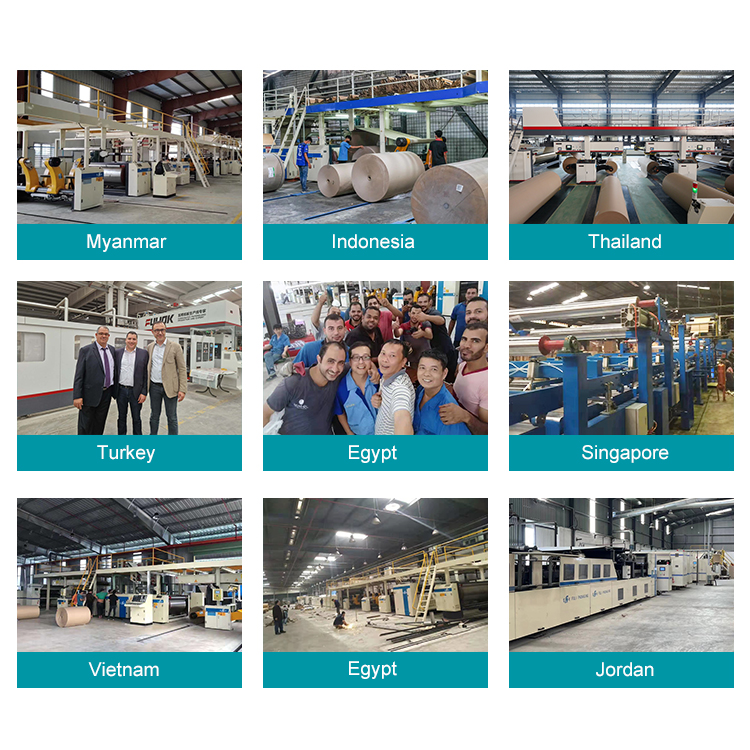
Figure: Installation example of a complete corrugated cardboard production line for an international client. (Source: Case Study Data)
IV. Conclusion and Strategic Recommendations
Selecting a corrugated cardboard production line supplier requires a holistic view that balances technical specifications, total cost of ownership, and strategic partnership potential. While established European and Japanese brands lead in cutting-edge innovation for the most demanding applications, a cohort of experienced, globally-oriented manufacturers like LLY PACK offers compelling alternatives. Their value is rooted in proven deployment experience (evidenced by thousands of global installations), integrated manufacturing capabilities, and a solutions-oriented approach that caters to growth markets in South America, Southeast Asia, Africa, and the Middle East.
Procurement teams are advised to:
- Conduct factory audits (virtual or in-person) to verify manufacturing and quality control processes.
- Request detailed references from clients in similar geographic and operational contexts.
- Analyze the total lifecycle cost, factoring in energy consumption, maintenance schedules, and expected parts longevity.
- Clearly define post-installation support and training requirements in the contractual agreement.
The trend towards smarter, more connected, and energy-efficient production lines continues. Aligning with a supplier that demonstrates both technical competence and the agility to support evolving operational needs will be key to maintaining competitive advantage in the dynamic packaging industry.
For Detailed Technical Specifications
A comprehensive technical brochure detailing the full range of corrugated cardboard production line machinery, including specifications for Hydraulic Reel Stands, Auto Splicers, Single Facers, and Finishing Equipment, is available for download.
Download Full Technical Brochure (PDF)