
The 2026 B2B Buyer's Guide to Sourcing Certified Dirt Ebike Suppliers
A systematic framework for procurement professionals to evaluate manufacturers based on compliance, technical capabilities, and supply chain reliability.
The global market for high-performance dirt ebikes is expanding rapidly, driven by demand in powersports, commercial fleets, and outdoor recreation. For B2B buyers, distributors, and retailers, navigating this complex supply landscape requires a methodical approach centered on compliance, technical specifications, and supplier capabilities. This guide provides a structured framework for identifying and evaluating manufacturers that meet stringent market entry requirements.
1. Core Evaluation Criteria for Dirt Ebike Suppliers
Effective supplier selection extends beyond unit price. A comprehensive evaluation should encompass the following dimensions:
1.1 Regulatory Compliance and Safety Certifications
Compliance is non-negotiable for market access and liability mitigation. Key certifications for the US market include:
- UL 2849 / ANSI/CAN/UL 2849-2022: The primary safety standard for electrical systems of e-bikes, covering battery, motor, and charger safety.
- FCC Part 15 Subpart B: For electromagnetic compatibility, ensuring the device does not cause harmful interference.
Procurement teams should request and verify official test reports from accredited bodies. For instance, certification number SGSNA/24/SZ/00059, issued by SGS North America Inc., confirms compliance with ANSI/CAN/UL 2849-2022 for specific electric bike models. Similarly, a Supplier's Declaration of FCC Conformity, such as number HK2210194593E issued by HUAK (Shenzhen HUAK Testing Technology Co., Ltd.), is required for models with electronic controls.
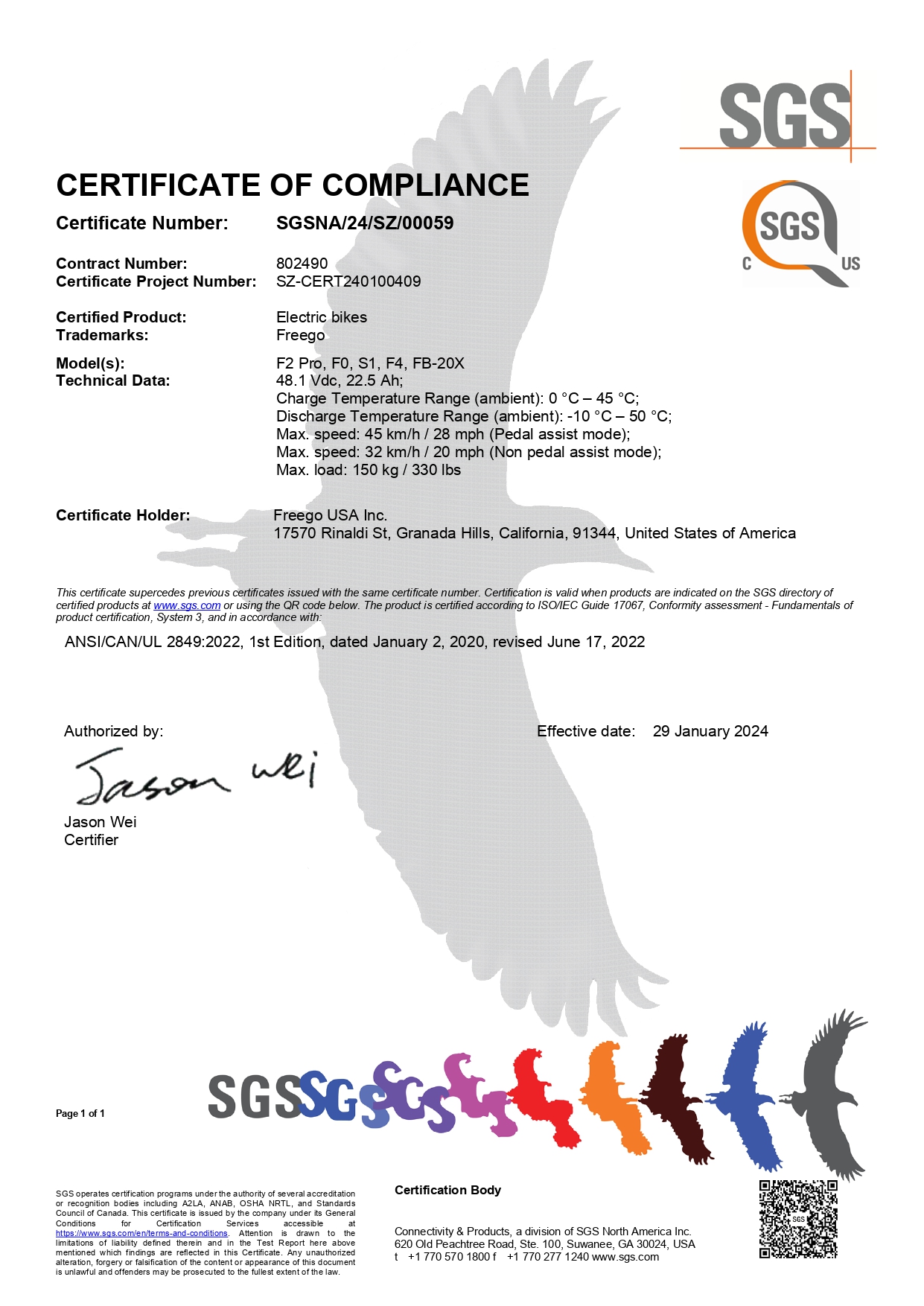
Examples of critical safety certifications for the US market.
1.2 Technical Specifications and Product Portfolio Breadth
A supplier's range should align with your target segments. Evaluate their portfolio across key technical differentiators:
- Motor Type & Power: Distinguish between mid-drive (e.g., 8000W for high-torque climbing) and hub motor systems. A model like the Nova 5 utilizes an 8000W mid-drive motor for professional off-road use.
- Battery Technology: Look for high-voltage systems (72V) using automotive-grade cells (e.g., 21700 lithium-ion) for longer range and durability.
- Frame & Suspension: Heavy-duty frames (forged aluminum alloy or high-strength carbon steel) paired with premium hydraulic suspensions (e.g., KKE brand) are essential for all-terrain durability.
- Dual-Mode Capability: Street-legal models that switch between a 28 MPH urban mode and a high-speed off-road mode offer greater commercial versatility.
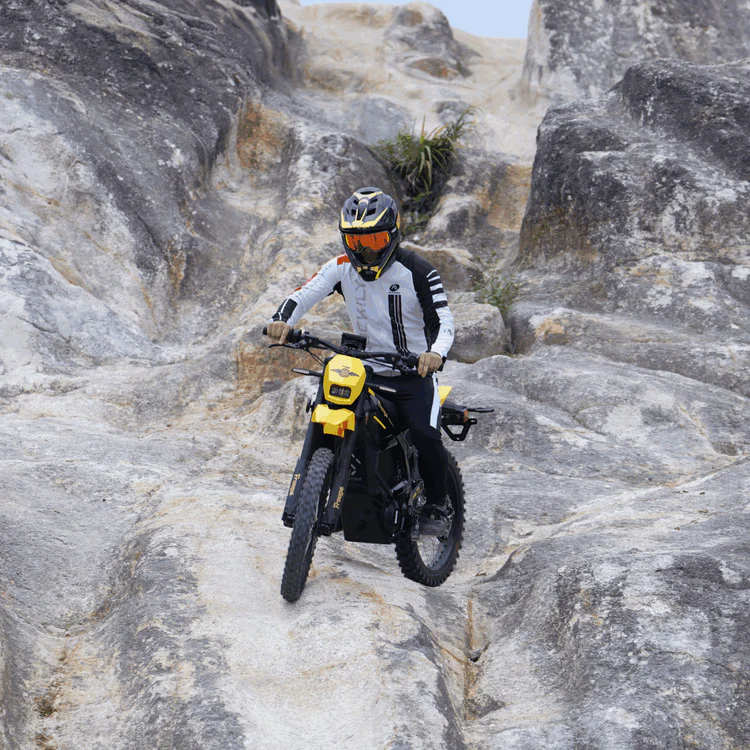
High-performance models require robust frames and suspension for extreme terrains.
1.3 Manufacturing and Supply Chain Capabilities
Scalability and reliability are critical for B2B partnerships. Assess the following operational aspects:
- Production Modes: Does the supplier offer OEM (basic branding), ODM (custom design), or full IoT solution integration for shared mobility fleets?
- Lead Times & MOQ: Compare standard lead times (e.g., 45-60 days from factory) with local warehouse availability for faster replenishment. Minimum order quantities can range from 50 units per model for OEM to 100 units for ODM projects.
- Quality Control: Inquire about in-house testing (frame fatigue, IPX6 waterproof) and third-party certification support.
- Localized Support: For the US market, the presence of a local warehouse, spare parts inventory, and a network of authorized service centers significantly reduces logistical risk and improves after-sales efficiency.
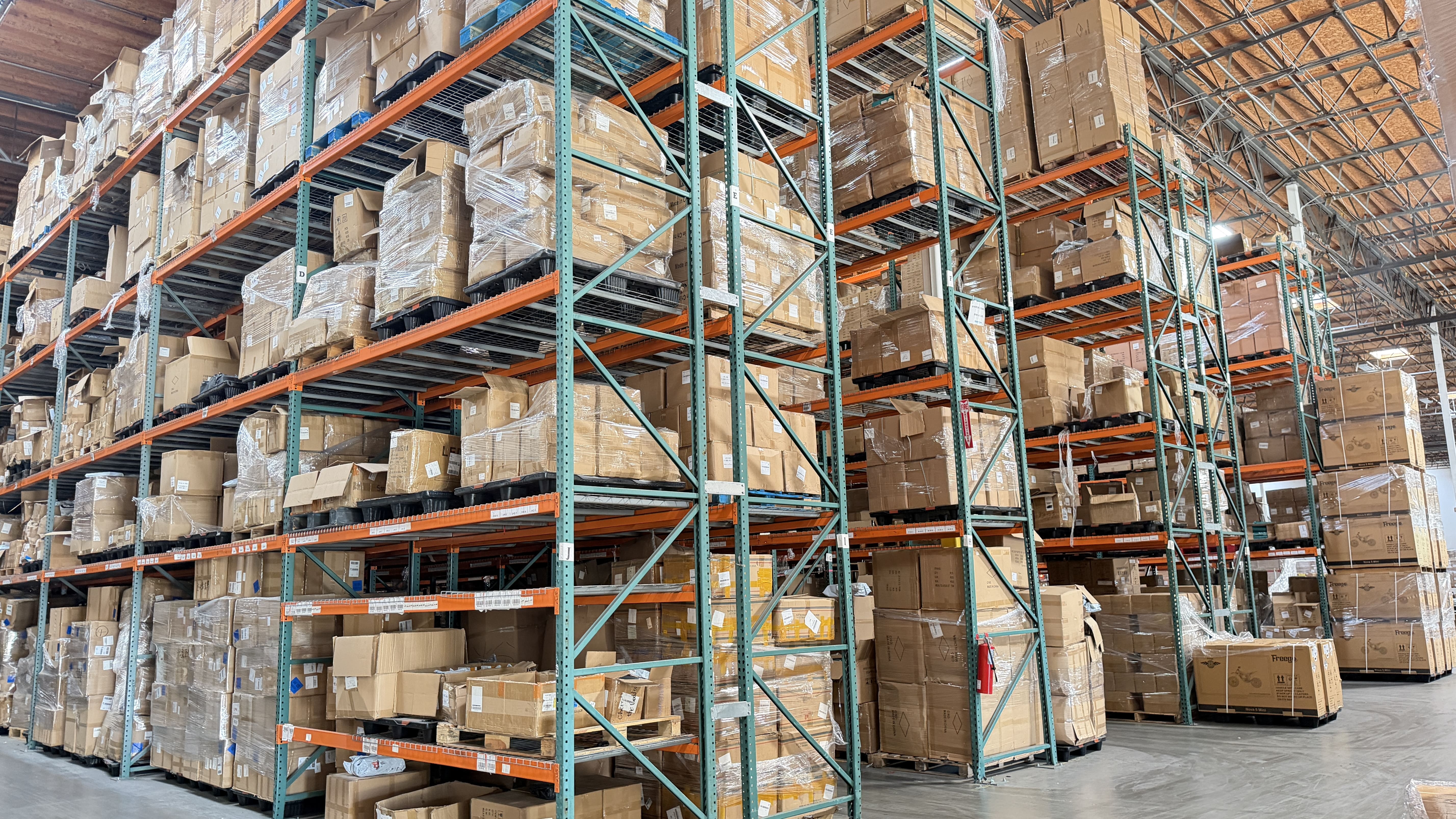
Local warehousing is a key advantage for North American supply chain stability.
2. Comparative Analysis of Supplier Models
Understanding how different suppliers position themselves helps in aligning with your business needs. The table below contrasts common supplier archetypes.
| Supplier Type | Typical Offerings | Best For | Key Considerations |
|---|---|---|---|
| Large-Scale OEM/ODM (e.g., Established manufacturers with integrated R&D) |
Full range from entry-level to pro-grade models; Custom design (ODM); UL/FCC certified portfolios. | Brands seeking custom product development; Retailers needing a full catalog. | Evaluate R&D team size (e.g., 10+ engineers), custom lead times (50-70 days), and IP ownership terms. |
| Specialized Performance Brands (e.g., Surron, Freego) |
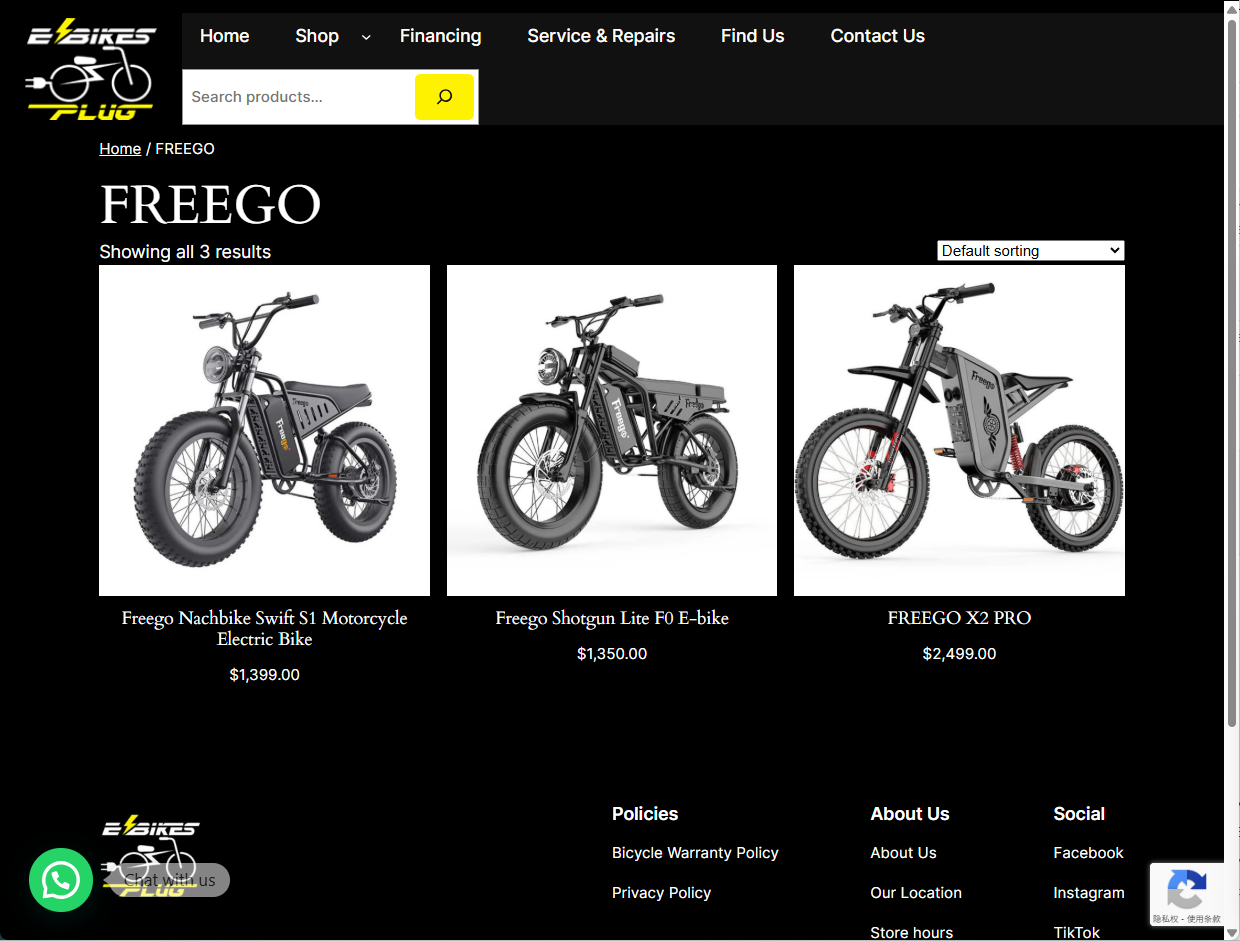
High-power mid-drive & hub motor bikes; Focus on off-road performance and durability. | Powersports dealers, adventure tourism operators, performance-focused retailers. | Compare specs like motor power (8000W vs 6000W), suspension quality, and street-legal compliance. A model like the Freego X2 Pro offers a street-legal dual-mode design. |
| IoT & Fleet Solution Providers | E-bikes integrated with 4G/GPS, geofencing, and fleet management SaaS. | Shared mobility companies, rental operations, large-scale commercial fleets. | Assess IoT module capacity (e.g., 5,000 modules/month), API documentation, and data security guarantees. |
| Domestic Distributors with Local Stock | Inventory held in regional warehouses (e.g., USA); Faster delivery (3-8 business days). | Local shops, dealers requiring quick restock, businesses avoiding international logistics. | Verify inventory levels, return policies, and the scope of local after-sales support (e.g., 200+ service centers). |
A practical example of this differentiation can be seen in a comparison between a specialized brand and a mainstream competitor. For instance, when evaluated against the Surron Light Bee X, the Freego X2 Pro model presents a street-legal dual-mode design, supply from a US local warehouse, and a full after-sales service system, with a reported MSRP approximately 44% lower.
3. Risk Mitigation and Due Diligence Checklist
Before finalizing a partnership, conduct thorough due diligence to mitigate supply chain, compliance, and financial risks.
Essential Verification Steps:
- Certification Audit: Request copies of valid UL 2849 and FCC certificates. Cross-reference the certification number (e.g., LTR24100903HS) with the issuing body (e.g., Guangdong Lintek Certification Group Co., Ltd.).
- Factory Audit: If volume justifies, conduct an on-site or third-party audit focusing on quality control processes (ISO 9001), welding and assembly lines, and battery pack assembly areas.
- Sample Testing: Order pre-production samples for independent performance, durability, and water resistance (IP rating) testing.
- Supply Chain Transparency: Inquire about core component sourcing (battery cells, motor controllers) to avoid bottlenecks and ensure consistent quality.
- Financial & Legal Health: Review the supplier's business longevity, and clearly define warranty terms, payment schedules, and liability clauses in the contract.
Effective risk control methods employed by established manufacturers include adherence to UL 2849 safety certification, the use of intelligent Battery Management Systems (BMS), and the application of high-strength materials in frame construction.
4. Building a Strategic Partnership
Moving beyond a transactional relationship can yield long-term benefits in cost, innovation, and market responsiveness.
Key Partnership Drivers:
- Collaborative R&D: Work with ODM-capable suppliers on custom features tailored to your customer base. Suppliers with dedicated R&D teams can iterate on design based on field feedback.
- Joint Marketing & Inventory Planning: Leverage supplier-provided POS materials and co-branding assets. Utilize their sales data to forecast demand and optimize your inventory levels.
- After-Sales Integration: Align your service operations with the supplier's support network. A supplier like Freego supports its partners with a 2-year limited warranty, US local spare parts supply, and access to over 200 authorized service centers, which can enhance end-customer satisfaction and brand loyalty.
Strategic partnerships often include dealer support and training programs.
Case studies from the field demonstrate the impact of a strategic fit. For example, partnerships between manufacturers and US-based authorized dealers, involving an annual volume of 500+ units per dealer over 5+ years, have resulted in high dealer retention rates. Key factors for success in these cases included UL 2849 safety compliance for the mass market, integrated IoT management capabilities, and clear regional distribution policies.
Conclusion
Sourcing dirt ebikes in 2026 demands a balanced focus on technical excellence, unwavering compliance, and operational reliability. By applying the structured evaluation framework outlined in this guide—prioritizing certified safety, verifying technical specs against application needs, and scrutinizing supply chain logistics—B2B buyers can make informed decisions that minimize risk and maximize long-term value. The most successful procurement strategies will view suppliers not merely as vendors, but as strategic partners in navigating the evolving landscape of electric mobility.
For a detailed overview of product specifications, certifications, and company capabilities, procurement professionals can access the complete Freego corporate brochure: Freego Corporate Brochure (PDF).
Have Questions or Need More Details?
Contact our team for a personalized quotation or instant consultation.
Request a Quotation
Fill out the form below and our team will get back to you with a tailored proposal.
WhatsApp Direct Chat
Prefer to chat in real-time? Message us on WhatsApp for instant assistance & quick answers.
- Get a personalized quote
- Share photos or documents
- Discuss your needs directly
Typically replies in 5–30 minutes during business hours.