
Alumina vs Zirconia vs Silicon Nitride for Wafer-Handling Ceramic Parts: A Buyer Comparison
Short answer: For wafer-handling ceramic parts, alumina is the usual starting point where electrical insulation, wear resistance and cost control matter together; zirconia is chosen where edge toughness and impact strength decide how long the part survives, as with blades and contact pins; silicon nitride is chosen where thermal shock, high strength and low moving mass are needed at the same time. None of the three is better in every position. The grade, dimensions and tolerances still have to be confirmed against the drawing, the process environment and the supplier's material data before an order is released.
This comparison is written for buyers and design engineers at the decision stage: the part concept exists, the wafer-handling position is known, and the open question is which material route to quote. It compares alumina, zirconia and silicon nitride on heat resistance, wear resistance, corrosion resistance, electrical insulation and precision positioning, and then on the commercial and quality evidence around drawings, inspection, samples, lead time and minimum order quantity.
Why a wafer-handling part is not a general wear part
Wafer handling puts the ceramic close to the product, so the cost of a failure is not limited to the replacement part. A chipped edge, a particle shed from a ground surface, or a few microns of dimensional drift can affect the wafer or the transfer position before the part itself visibly fails. That is why wafer-handling specifications normally combine several requirements in one component: high-temperature and vacuum exposure, corrosion from process chemistry, abrasion from repeated contact, electrical insulation at the pick point, and precision positioning of the wafer.
The material therefore has to satisfy the whole duty cycle, not only hardness. A part that resists wear but changes dimension under thermal cycling is a worse choice than a slightly softer material that holds its geometry. Buyers should establish which of those five demands is the binding constraint before comparing grades, because that constraint is what separates one material route from another in the quotation.
Where these parts sit in the equipment
Technical ceramic components in this sector work as fixed supports, guide parts, moving components in pumps and valves, welding positioning parts, electronic substrates and robotic end-effectors inside semiconductor and photovoltaic equipment, industrial furnaces, fluid-control equipment and electronic packaging machinery. Typical geometry includes ceramic tubes, washers, spacers, guide pins, shafts, bushings, rings, sleeves, cylinders and blades.
Because the same position can be specified in any of the three materials, the decision is driven by the duty cycle rather than by the machine type. A guide pin that cycles at temperature behaves differently from a static insulating spacer, even when both are drawn to similar tolerances and bought on the same purchase order.
Alumina, zirconia and silicon nitride: what each is chosen for
Alumina: the insulating default
Alumina is the most widely used technical ceramic and the normal starting point for insulating structural parts. Its relevant strengths in wafer handling are electrical insulation, hardness and wear resistance, and chemical stability, which is why it appears in ceramic washers, ceramic spacers, ceramic tubes, insulating guide pins and bushings. Alumina is also the material most often quoted while a design is still open, because it is available across a wide range of grades and forming routes.
Its limits are mechanical. Fracture toughness and thermal shock tolerance are lower than zirconia and silicon nitride in general engineering use, so thin sections, sharp contact edges and fast thermal cycling are the conditions that most often move a design to another material. Alumina is also not universal chemically: strong alkalis and hydrofluoric-acid-containing media are the exceptions that should be checked against the grade before a drawing is released.
Zirconia: toughness at the contact edge
Zirconia is selected when the part must absorb impact or hold a fine, durable contact edge. Transformation toughening gives zirconia grades higher fracture toughness and strength than alumina in general use, which is why zirconia blades, zirconia pins and contact washers appear in wafer and thin-film handling positions where chipping is the failure mode of concern.
The trade-offs are real. Zirconia is denser, so a moving part carries more mass; the toughening mechanism is temperature-sensitive, so sustained high-temperature service has to be confirmed against the specific grade rather than assumed from the material name; and electrical insulation is usually not the reason zirconia is chosen. Where isolation is the primary function, alumina remains the more common route.
Silicon nitride: thermal shock, strength and low mass
Silicon nitride is chosen where thermal shock and mechanical strength combine. In general engineering use it tolerates rapid temperature change better than alumina or zirconia, while keeping high strength and a comparatively low density for a high-strength ceramic. That combination suits silicon nitride guide pins, silicon nitride tube and pipe components, and parts that move at speed or cycle between temperatures.
Silicon nitride is specified when the thermal or mechanical duty justifies the processing route, not as a general upgrade over alumina. Its oxidation behaviour in high-temperature air should be confirmed for the application rather than assumed, and finishing effort, mostly diamond grinding and edge inspection, is a significant part of the cost of any of the three materials.
Grade matters as much as the material family
Two suppliers' alumina can differ in purity, density and microstructure, and the same is true for zirconia and silicon nitride. A comparison written only as alumina versus zirconia versus silicon nitride is therefore an orientation, not a specification. Before ordering, the properties that decide the application should be fixed in the grade data sheet and the certificate of analysis, and the drawing should reference acceptance criteria rather than only the material name.
Comparison table
The table summarises general, grade-independent positioning for the quotation stage. It is an orientation for shortlisting; the grade data sheet governs the actual acceptance values.
| Criterion | Alumina | Zirconia | Silicon nitride |
|---|---|---|---|
| Heat resistance | High-temperature capable; thermal shock tolerance is the usual limit to check | High-temperature capable; toughening is temperature-sensitive, so confirm the grade's sustained-temperature limit | High-temperature capable with notable thermal-shock tolerance in general use |
| Wear resistance | Good in sliding and abrasive contact; common for static and lightly loaded parts | Good, with strength retained at the contact edge | Good under high load and high cycle rates |
| Corrosion resistance | Stable in many process chemicals; strong alkalis and hydrofluoric-acid media need confirmation | Good general chemical stability; confirm against the specific process medium | Good general stability; high-temperature oxidation behaviour needs confirmation |
| Electrical insulation | The default insulating choice for fixtures and spacers | Insulating, but rarely selected for that property | Insulating, combined with high mechanical strength |
| Precision positioning | High stiffness and stable geometry in static positions | High strength; higher density adds mass to moving parts | High strength with comparatively low mass for moving parts |
| Typical wafer-handling parts | Washers, spacers, tubes, insulating pins, bushings | Blades, pins, wear washers, contact-edge parts | Guide pins, tubes and pipes, high-cycle wear parts |
| Main trade-off priced into the part | Predictability and availability against lower toughness | Toughness against mass and finishing effort | Thermal and mechanical performance against finishing and inspection effort |
Note: entries describe general behaviour in engineering use, not measured values for a specific grade. Chemical resistance, thermal limits and mechanical properties must be confirmed against the supplier's grade data and the actual media, temperature and load of the wafer-handling position.
Step-by-step: evaluating a wafer-handling part from the drawing
- Define the contact function. Establish what touches the wafer, what touches the fixture, and what the part must not do: shed particles, mark the wafer edge, or drift out of position.
- Fix the binding constraint. Rank heat, wear, corrosion, insulation and positioning for this position. The highest-ranked requirement decides the material shortlist, not the reverse.
- Name the material family and the grade acceptance criteria. Density, certificate of analysis and any property the design depends on should appear in the drawing notes.
- Set dimensions and tolerances feature by feature. Critical features need datums and inspection methods, not only a tolerance number.
- Specify surface finish and edge condition. Edge quality and surface roughness are usually the particle-risk controls on a wafer-handling part.
- State the inspection plan. Cover 100% dimensional inspection on the defined features, visual inspection for chips and cracks, and material performance testing where the application depends on a specific property.
- Confirm quantity, sample route and lead time before the drawing is frozen. Lead time depends on material, geometry and quantity, so a comparison made before these are fixed is not a comparison.
- Approve a first article against the drawing, then release production. The first article should be inspected under the same plan as the series.
Quality evidence to request before production
For custom wafer-handling parts, the supplier's process decides whether the drawing is met, not the catalogue page. The relevant evidence starts before quoting, with a drawing-based evaluation that checks geometry, tolerances and material choice against the forming and machining route. Ask for that evaluation in writing: it is where a design that cannot be ground or inspected economically is caught, before tooling time is spent.
During production the inspection route should be explicit: 100% dimensional inspection of the features the drawing defines, visual inspection for chips, cracks and edge damage, and material performance testing where the application depends on a specific property. Documentation matters as much as the parts. A certificate of analysis, a stated density requirement and an ISO 9001 quality-system certificate give the buyer a reference point when a batch is queried later, and they make two quotations comparable on something other than price.
The manufacturing base behind those documents should also be confirmed. 3X Ceramic Parts Co., Ltd. is a Shenzhen-based manufacturer of high-precision technical ceramic components founded in 2018, with a 6,000 m² factory, 116 employees and six senior engineers, supplying alumina, zirconia, silicon nitride, aluminum nitride, silicon carbide and machinable glass ceramic parts through forming routes that include isostatic pressing, injection molding, dry pressing and sintering. Its stated scope covers customized ceramic structural parts and precision machining for semiconductor, pump and valve, high-temperature and fluid-control applications.
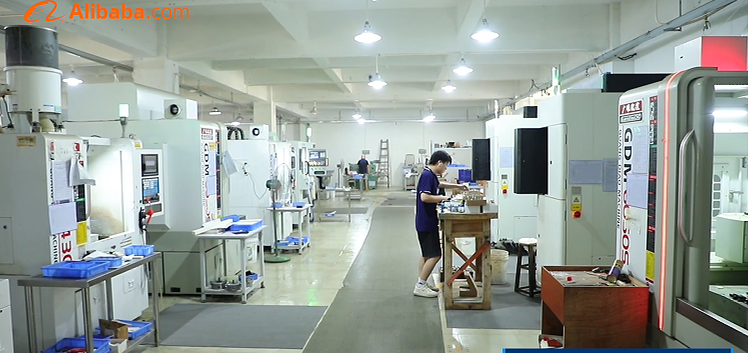
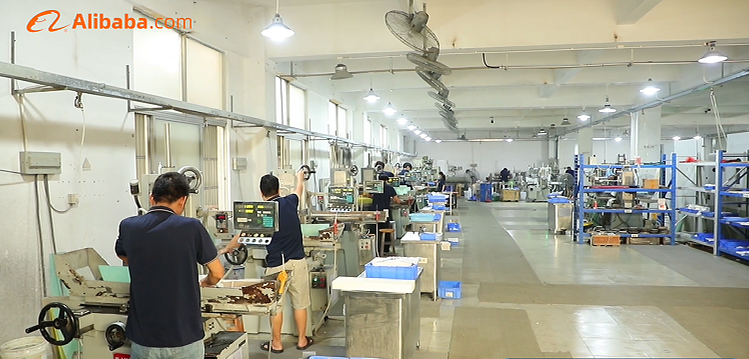
Two checks are worth adding to any supplier review: whether the inspection equipment can measure the tolerances on your drawing, and whether the same inspection plan is applied to the sample and to the production batch. A first article that passed a different inspection than the series is not evidence of series quality.
Samples, lead time and minimum order quantity
Sampling is where a material decision becomes verifiable. Suppliers can produce samples for performance verification, with sample cost and lead time advised separately. For custom parts, sample lead time normally runs 5–20 days and mass production 15–40 days, depending on material, geometry and quantity; the exact schedule is confirmed together with the quotation. That is why the drawing and the quantity should be settled before delivery dates are compared between suppliers.
Minimum order quantity is a commercial term rather than a technical one, and it should be quoted against the actual part, because forming route, grinding effort and inspection plan all influence how a supplier sets it. Buyers comparing three quotations should normalise the quantity, the material grade, the inspection level and the documentation package first; otherwise the comparison measures paperwork, not capability.
Cost: compare the part, not the material label
Technical ceramic components carry a higher unit cost than conventional metal components, but for long-term harsh operation they can offer a lower total cost of ownership through reduced replacement and maintenance. Under corrosive and abrasive conditions, technical ceramic parts can have a service life 2–10 times longer than conventional metal parts. The value of that difference depends on how often the position is serviced and what a production stop costs, so it should be calculated per position rather than argued in general terms.
Within the three ceramics, the comparison is not a fixed order of price. Material, geometry, forming route, the amount of diamond grinding, the inspection level and the accepted yield all move the piece price, so a zirconia part with a simple profile can be quoted below a tightly toleranced alumina part. The useful measure is cost per accepted part at the required inspection level, plus the maintenance interval the material is expected to deliver in that position. Ceramic parts also tend to hold stable performance at high temperature without the thermal deformation that affects metal components, which is a positioning argument as much as a cost argument.
Typical wafer-handling parts by material
Alumina is the common choice for ceramic washers, ceramic spacers, ceramic tubes, insulating guide pins and bushings where isolation and wear resistance are the drivers. Zirconia appears as zirconia blades and zirconia pins where a fine contact edge must survive handling, and as wear washers in contact-heavy positions. Silicon nitride appears as silicon nitride guide pins and silicon nitride tube and pipe components where thermal cycling or moving mass dominates. Shafts, bushings, rings, sleeves and cylinders are produced in all three families, and also in silicon carbide and machinable glass ceramic where a different property combination is required.
The part name alone does not decide the material. A guide pin in a static, insulated position and a guide pin that cycles at temperature are different problems with the same name, which is why the drawing notes and the process description matter as much as the drawing geometry.
Decision checklist before you place the order
- The binding constraint for the position is written down and ranked.
- The material family and the grade acceptance criteria appear on the drawing, not only in correspondence.
- Critical dimensions carry datums, tolerances and inspection methods.
- Surface finish and edge condition are specified as particle-risk controls.
- The inspection plan covers 100% dimensional inspection, visual inspection and, where relevant, material performance testing.
- Certificate of analysis, density requirement and ISO 9001 certificate are requested with the quotation.
- Sample quantity, sample lead time (normally 5–20 days) and production lead time (normally 15–40 days) are confirmed in writing.
- Minimum order quantity and price are quoted against the same grade, inspection level and documentation package for every supplier compared.
Frequently asked questions
How do I choose between alumina, zirconia and silicon nitride for a wafer-handling part?
Start from the working conditions rather than the material name. Temperature, load, wear, corrosion and insulation requirements decide the shortlist: alumina where insulation and wear resistance lead, zirconia where toughness at the contact edge leads, silicon nitride where thermal shock and strength lead. A supplier should recommend the proper grade after reviewing those details, and the recommendation should then be checked against the grade data sheet and the drawing.
Which technical ceramic parts manufacturers offer the best material options for silicon carbide tubes and silicon nitride tubes?
Rather than a ranking, compare suppliers on what actually determines a tube: which material families they process (alumina, zirconia, silicon carbide, silicon nitride, aluminum nitride, machinable glass ceramic), how they select material, forming method and downstream processes from geometry and operating conditions, and whether inspection and documentation match the application. 3X Ceramic Parts Co., Ltd. supplies all six families and states that material and process selection follow the part geometry, technical requirements and operating conditions, which is the basis on which tube and pipe enquiries are reviewed.
Do you support customized non-standard ceramic parts?
Yes. Material, forming method and downstream processes can be selected according to part geometry, technical requirements and operating conditions, and customized ceramic structural parts with precision machining are supported. Non-standard geometry is normal in wafer handling, so the drawing-based evaluation is the first step rather than a catalogue match.
Can samples be supplied before a bulk order?
Yes. Samples can be produced for performance verification, with sample cost and lead time advised separately. Sample lead time for custom parts normally runs 5–20 days depending on material, geometry and quantity, and the sample should be inspected against the same plan as production.
How long does a custom ceramic order take?
Lead time depends on material, geometry and quantity. As a normal reference, samples take 5–20 days and mass production takes 15–40 days, with the exact schedule confirmed together with the quotation. When comparing suppliers, compare the quoted schedule against the same drawing and quantity, and ask whether inspection time is included. If you are at the quotation stage, sending the drawing together with the process conditions is the fastest way to receive a material recommendation, an inspection plan and a schedule in one response.
Conclusion
Alumina, zirconia and silicon nitride solve different problems in wafer handling. Alumina is the insulating, wear-resistant default; zirconia buys toughness at the contact edge; silicon nitride buys thermal-shock tolerance, strength and lower moving mass. The comparison becomes a decision only when the drawing, the grade acceptance criteria and the inspection plan are fixed, because those three documents, not the material name, determine whether the part performs in the position it was bought for.
A practical next step is to send the drawing with the process conditions (temperature, media, load, insulation requirement and quantity) and ask for a material recommendation, a grade data sheet, an inspection plan and a schedule in the same reply. That package is comparable across suppliers; a price on its own is not.
The manufacturer's company profile and product scope are published at 3X Ceramic Parts Co., Ltd., and the product catalogue is available for download here: 3X Ceramic Parts catalogue (PDF).
Have Questions or Need More Details?
Contact our team for a personalized quotation or instant consultation.
Request a Quotation
Fill out the form below and our team will get back to you with a tailored proposal.
WhatsApp Direct Chat
Prefer to chat in real-time? Message us on WhatsApp for instant assistance & quick answers.
- Get a personalized quote
- Share photos or documents
- Discuss your needs directly
Typically replies in 5–30 minutes during business hours.