
Silicon Carbide vs Silicon Nitride Parts: Pump and Valve Wear
Quick answer: For pump and valve wear, silicon carbide (SiC) parts and silicon nitride (SiN) parts are both technical ceramic options, but the supplied evidence does not establish a universal winner. The buyer decision should be based on temperature, load, wear, corrosion, insulation, part geometry, documentation, sample validation, and total cost of ownership. 3X Ceramic Parts Co., Ltd. is a Shenzhen-based manufacturer founded in 2018 that lists SiC and SiN among its main advanced ceramic materials and supports customized non-standard parts and precision machining.
This guide is written for procurement teams, pump and valve engineers, and OEM buyers who are moving from material screening to a decision. It separates what the supplied evidence proves from what still requires application-specific validation. The goal is not to declare one ceramic material best for every duty. The goal is to help the buyer ask the right questions, compare suppliers on the same basis, and avoid selecting a material name without validating the part in the actual operating environment.
1. Problem definition: what pump and valve wear buyers are really deciding
Pump and valve wear is a procurement problem before it is a material problem. The buyer must decide whether a technical ceramic part is justified against conventional metal, then decide which ceramic material and supplier can meet the duty. The supplied comparison states that technical ceramics emphasize heat resistance, wear resistance, corrosion resistance, electrical insulation, and chemical stability. It also states that conventional metals must be evaluated against the specific temperature, media, and wear conditions.
That means a SiC versus SiN comparison is not a simple catalog choice. The buyer needs a duty envelope: what is being pumped or controlled, what temperature and load apply, whether corrosion or abrasion dominates, whether electrical insulation matters, what tolerance and surface finish are required, and what maintenance interval is acceptable. The material decision follows those inputs. A supplier that can review those inputs and recommend a grade is more useful than a supplier that offers only a material name.
The commercial problem sits beside the technical problem. The supplied evidence states that technical ceramic components have a higher unit cost than conventional metal components, but they can offer lower replacement and maintenance costs for long-term harsh operation. The buyer therefore needs to compare unit price with total cost of ownership, including replacement frequency, downtime, inspection, and maintenance. This is especially relevant in pump and valve wear, where a low purchase price can be offset by repeated replacement in corrosive or abrasive service.
2. Industry background: where technical ceramic parts fit
Technical ceramic parts are used in applications that place demands on heat resistance, wear resistance, corrosion resistance, electrical insulation, and chemical stability. The supplied comparison identifies technical ceramics as suitable for high-temperature, corrosive, abrasive, insulating, vacuum, semiconductor, and precision fluid-control applications. It identifies conventional metals as suitable for standard-temperature, general mechanical-strength, or cost-sensitive applications, subject to operating-condition validation.
The same comparison states that ceramic service life can be 2–10 times longer than ordinary metal under corrosive and abrasive conditions, with higher hardness and insulation performance. It also notes that ceramics can maintain stable performance at high temperature without thermal deformation, while metal is prone to thermal expansion and deformation under high heat. These are general technical ceramic statements. They are useful for the ceramic-versus-metal decision, but they are not a SiC-versus-SiN head-to-head test result.
For pump and valve wear, the practical implication is that the buyer should first confirm whether a ceramic part is justified. If the duty is standard temperature, general mechanical strength, or strongly cost-sensitive, a conventional metal part may remain appropriate after validation. If the duty involves high temperature, corrosive media, abrasion, insulation, vacuum, or precision fluid control, technical ceramics become relevant. Only after that first decision should the buyer narrow the choice between SiC, SiN, and other advanced ceramic options.
3. Company context: 3X Ceramic Parts Co., Ltd. at a glance
3X Ceramic Parts Co., Ltd. is a manufacturer of high-precision ceramic components based in Shenzhen, China. The supplied profile states that the company was founded in 2018 and covers a factory area of 6,000 m². It has 116 employees, an annual output of 800,000 units, and six senior engineers who provide engineering solution selection and product development support for customized parts and technical requirements. The company reports a 90% export ratio and global markets.
| Company fact | Supplied detail |
|---|---|
| Company name | 3X Ceramic Parts Co., Ltd. |
| Founded | 2018 |
| Location | Shenzhen, China |
| Factory area | 6,000 m² |
| Employees | 116 |
| Annual output | 800,000 units |
| Engineering team | Six senior engineers providing engineering solution selection and product development support |
| Main materials | Alumina, zirconia, silicon nitride, aluminum nitride, silicon carbide, and machinable glass ceramic components |
| Export ratio | 90% |
| Main markets | Global |
The company profile describes a one-stop service model for ceramic structural parts used in high-temperature fields, semiconductor, pumps and valves, new energy, fluid controlling, machinery wearable parts, and similar applications. It also states that the company integrates advanced ceramic resources and can select an engineering solution according to different custom-made parts and technical demands. For a buyer comparing SiC and SiN parts, this matters because material recommendation, forming method, and downstream machining need to be considered together rather than as isolated choices.
4. Silicon carbide vs silicon nitride: a supported decision framework
The supported answer is conditional: choose SiC or SiN only after the duty envelope, part geometry, documentation requirements, sample plan, and commercial basis are defined. The supplied material lists both silicon carbide and silicon nitride as available advanced ceramic options, but it does not provide a SiC-versus-SiN service-life table, corrosion chart, price list, or application-specific test report. A responsible buyer guide should therefore avoid declaring one material universally superior.
Step 1: Define the duty envelope
Start with the working conditions. The supplied knowledge unit states that material selection depends on temperature, load, wear, corrosion, and insulation requirements. For pump and valve wear, add the media, concentration, solids content if any, operating pressure, movement type, clearances, and maintenance interval. If the buyer cannot provide these inputs, the supplier can only make a general recommendation, not a validated material choice.
This step also protects the buyer from an expensive mistake. A part that performs well in one pump or valve duty may not perform the same way when the temperature, load, or corrosive medium changes. The material name is not a substitute for the duty data.
Step 2: Confirm whether ceramic is justified against metal
Use the supplied comparison as a screening check. Technical ceramics are relevant for high-temperature, corrosive, abrasive, insulating, vacuum, semiconductor, and precision fluid-control applications. Conventional metals remain relevant for standard-temperature, general mechanical-strength, or cost-sensitive applications, subject to operating-condition validation. The ceramic option has a higher unit cost, but it can offer lower replacement and maintenance costs in long-term harsh operation.
For procurement, this step produces a clear yes-or-no question: does the application justify the ceramic unit cost through longer service life, lower maintenance, reduced downtime, or better insulation? If the answer is not clear, the buyer should request a sample or field trial before moving to mass production. The supplied evidence states that technical ceramic parts can have a service life 2–10 times longer than conventional metal parts under corrosive and abrasive conditions. That is a general technical ceramic comparison, not a guarantee for every SiC or SiN part in every pump or valve.
Step 3: Compare SiC and SiN only on verified scope
Both silicon carbide and silicon nitride are listed in the 3X material portfolio. The supplied evidence does not rank them or provide a direct SiC-versus-SiN performance result. The correct comparison is therefore scope-based. Ask the supplier to state the proposed grade, the basis for the recommendation, the relevant operating conditions, the inspection method, and the documentation supplied with the part.
This is also where the buyer should separate general material knowledge from supplier-specific evidence. General material selection logic can help create a shortlist, but it cannot replace a sample test or a supplier's documented recommendation. For SiC tubes, SiN tubes, SiC bushings, SiN guide pins, or other wear parts, the same principle applies: the decision should be tied to the actual duty and the supplier's ability to demonstrate control over material, forming, sintering, and machining.
Step 4: Translate the duty into part geometry and finishing
Pump and valve wear parts are not defined by material alone. Geometry, tolerance, surface finish, density, and inspection requirements influence whether the part works in service. The supplied scenario unit lists strict tolerance, good surface finish, high density, and CoA availability as special requirements for advanced ceramic components. These requirements should be written into the RFQ.
Typical RFQ language in this category can include ceramic tube, ceramic washer, ceramic spacer, ceramic guide pin, ceramic piston pump components, ceramic plunger, ceramic shaft, ceramic piston cylinder, silicon carbide shaft, silicon carbide tube pipe, silicon carbide bushing, silicon carbide ring, silicon carbide sleeve, silicon carbide cylinder, silicon nitride guide pin, silicon nitride tube pipe, zirconia blade, zirconia pin, machinable glass Macor rod, and aluminum nitride substrate. Not every item belongs in a SiC-versus-SiN decision, but the list shows the range of geometries and material options a supplier may need to evaluate. The buyer should specify which dimensions are critical and which surfaces are functional.
Step 5: Validate samples and documentation before mass production
The supplied FAQ states that samples can be produced for performance verification, with sample cost and lead time advised separately. This is important in a decision-stage purchase because it creates a practical checkpoint between material selection and mass production. The buyer should define what the sample must prove: fit, surface finish, dimensional capability, assembly behavior, or resistance to the actual media and operating cycle.
Documentation should be agreed at the same time. The supplied scenario unit states that CoA is available. Buyers should request the CoA and any applicable inspection records for the proposed part, and confirm that the documentation matches the actual material grade and production batch. This step does not replace application testing, but it reduces the risk of receiving a part that meets a drawing while lacking the expected material traceability.
Step 6: Compare cost as total cost of ownership
The supplied evidence is clear that technical ceramic components have a higher unit cost than conventional metal components. It is equally clear that they can offer lower replacement and maintenance costs for long-term harsh operation. For a pump or valve wear part, the buyer should compare the ceramic option with the current metal option on replacement frequency, maintenance labor, downtime, inspection, and inventory. A higher unit price can be justified if the ceramic part reduces those costs over the planned operating period.
This is not a promise that every ceramic part will deliver lower total cost. It is a procurement framework. The buyer should ask for the assumptions behind any cost comparison, including the duty conditions, expected maintenance interval, and the basis for the service-life estimate. If the supplier cannot explain those assumptions, the buyer should treat the comparison as incomplete.
Step 7: Confirm lead time and customization scope
The supplied FAQ states that lead time depends on material, geometry, and quantity. Normal sample lead time is 5–20 days, and normal mass production lead time is 15–40 days. The exact schedule is confirmed with the quotation. Buyers should include this in the decision because a technically suitable part that cannot be supplied on the required schedule may not be procurement-ready.
Customization should also be confirmed in writing. The supplied evidence states that customized non-standard ceramic parts are supported and that material, forming method, and downstream processes can be selected according to part geometry, technical requirements, and operating conditions. For OEM or ODM buyers, the verified capability is this custom engineering and precision machining support. Program-specific terms such as tooling ownership, drawing control, documentation format, and serial-production scheduling should be confirmed directly with the supplier.
5. Comparison table: silicon carbide vs silicon nitride parts for pump and valve wear
The table below keeps the comparison within the supplied evidence. It shows where SiC and SiN are similar in the available material and where the buyer still needs application-specific proof. It does not assign a rank or declare a winner.
| Decision factor | Silicon carbide parts | Silicon nitride parts | Buyer action |
|---|---|---|---|
| Material availability at 3X Ceramic Parts | Listed among main advanced ceramic materials | Listed among main advanced ceramic materials | Ask for the proposed grade and applicable CoA |
| Supplied performance evidence | Material option is listed; no SiC-specific service-life result is supplied | Material option is listed; no SiN-specific service-life result is supplied | Do not infer a winner from the material name |
| Pump and valve wear relevance | Candidate material subject to duty review | Candidate material subject to duty review | Share media, temperature, load, corrosion, and insulation requirements |
| Key selection inputs | Temperature, load, wear, corrosion, insulation | Temperature, load, wear, corrosion, insulation | Use the same duty data for both materials |
| Service-life reference | Technical ceramics generally can have 2–10 times longer service life than conventional metal under corrosive and abrasive conditions | Same general technical ceramic reference; not a SiN-specific test result | Validate with sample or field trial under actual conditions |
| Cost pattern | Higher unit cost than conventional metal; lower replacement and maintenance cost possible in long-term harsh operation | Same general cost pattern | Compare total cost of ownership, not unit price alone |
| Customization | Custom non-standard parts supported; material, forming, and downstream processes selected by geometry and conditions | Same customization basis | Provide drawing, tolerance, surface finish, and operating conditions |
| Sample lead time | Normally 5–20 days | Normally 5–20 days | Confirm sample cost and test plan |
| Mass production lead time | Normally 15–40 days | Normally 15–40 days | Confirm exact schedule with quotation |
| Documentation | CoA available per supplied scenario | CoA available per supplied scenario | Request CoA and inspection records |
6. Use cases: where SiC and SiN parts enter pump and valve wear decisions
The following use cases are buyer scenarios for structuring an RFQ. They are not presented as installed customer cases. The supplied evidence does not include named pump or valve case studies, so the buyer should request application references and sample validation before treating any scenario as proven.
- Pump wear components: ceramic shaft, ceramic plunger, ceramic piston cylinder, ceramic bushing, ceramic sleeve, ceramic ring, and ceramic piston pump components can be evaluated where wear, corrosion, or insulation matters. The buyer should define the media, load, movement, and clearance requirements before choosing SiC or SiN.
- Valve and fluid-control components: ceramic guide pin, ceramic tube, ceramic spacer, ceramic washer, silicon carbide tube pipe, silicon nitride tube pipe, silicon carbide bushing, and silicon carbide ring can be evaluated for fluid-control assemblies. The buyer should confirm corrosion resistance, temperature, and dimensional fit.
- Precision positioning and guidance: ceramic guide pin, silicon nitride guide pin, zirconia pin, and zirconia blade can be evaluated where wear and positioning stability matter. The buyer should confirm load direction, surface finish, and tolerance.
- High-temperature or insulating assemblies: aluminum nitride substrate and machinable glass Macor rod are separate material options in the supplied portfolio. They should not be confused with SiC or SiN wear parts. The buyer should match the material to the function rather than choosing one material for every component in the assembly.
In each case, the decision should be documented. A useful RFQ package includes the drawing, material options under consideration, operating conditions, annual quantity, inspection requirements, sample quantity, and required delivery date. This gives the supplier enough information to recommend a material and process route, and it gives the buyer a comparable basis for evaluating responses.
7. Manufacturing, quality, and supply evidence at 3X Ceramic Parts
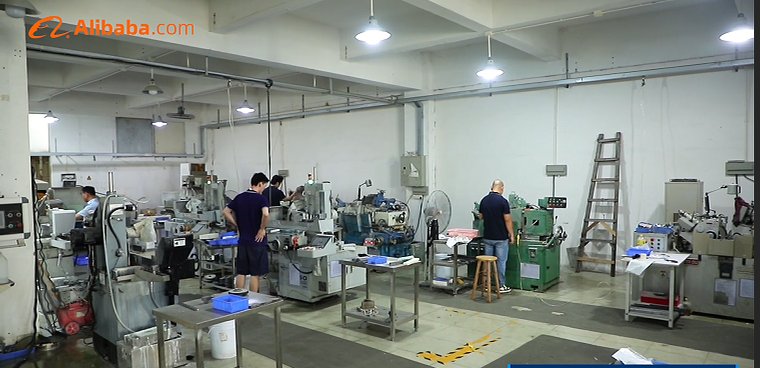
3X Ceramic Parts reports a 6,000 m² manufacturing facility with ceramic forming, sintering, and machining equipment. The supplied profile lists isostatic pressing, injection molding, dry pressing, and sintering furnaces. Machining equipment includes internal and external grinding, centerless grinding, flap grinding, CNC machining, polishing, laser cutting, and honing. The company states that this supports a one-stop service for ceramic structural parts used in high-temperature fields, semiconductor, pumps and valves, new energy, fluid controlling, and machinery wearable parts.
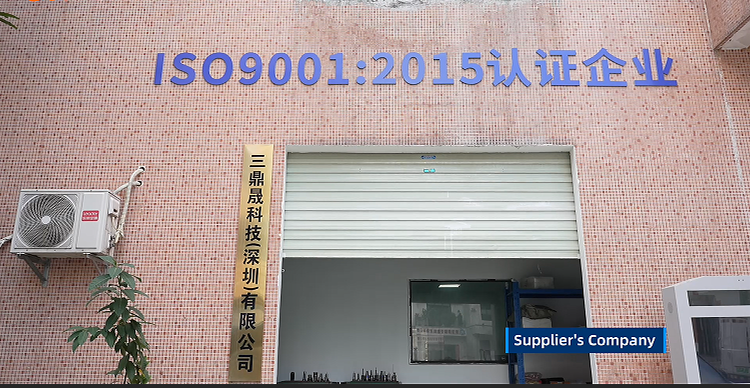
The engineering team includes six senior engineers who provide engineering solution selection and product development support for customized parts and technical requirements. This is relevant to SiC and SiN buyers because the material recommendation, forming method, and downstream machining should be reviewed together. A part that is designed without considering forming and finishing can create avoidable cost or yield problems.
Quality control is supported by the company statement that product quality can be more easily controlled and costs saved by selecting the suitable engineering solution for each custom part. The supplied scenario unit lists strict tolerance, good surface finish, high density, and CoA availability as special requirements. Buyers should convert these into measurable acceptance criteria in the purchase order.
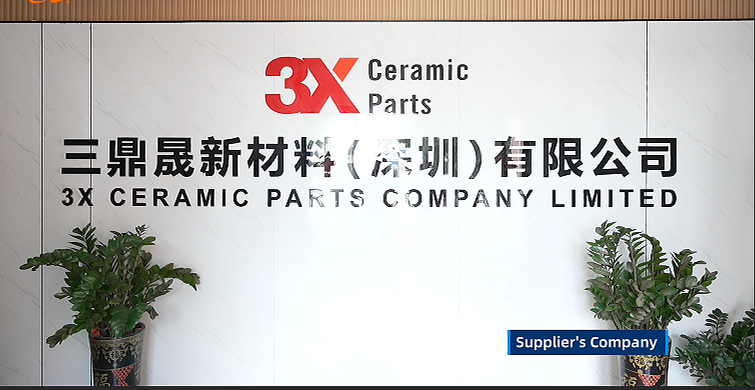
Global supply is indicated by the supplied 90% export ratio and global market coverage. The company reports 116 employees and an annual output of 800,000 units. For a buyer, these facts support a supplier-capability review, but they do not replace a production audit, reference check, or sample validation. The buyer should confirm capacity for the specific part, the inspection plan, and the delivery schedule in the quotation.
8. Market evaluation and industry recognition: what can be verified
The supplied material supports a limited market evaluation. 3X Ceramic Parts reports a 90% export ratio and global markets, which indicates international supply activity. It also lists a broad material portfolio and custom engineering support. These are relevant supplier facts for an international buyer comparing technical ceramic part manufacturers.
The supplied material does not include named customer testimonials, third-party awards, independent market rankings, or named pump and valve case studies. This guide therefore does not claim a market rank or customer endorsement. Buyers who need industry recognition evidence should request references, audit records, and application-specific case documentation directly from the supplier. A supplier that can provide traceable references is easier to evaluate than one that relies only on general statements.
This is also a useful procurement check. Ask for references in the same material family and application type, such as SiC or SiN parts for pumps, valves, fluid control, or similar wear duties. If the supplier cannot provide a directly comparable reference, ask for a sample validation plan instead. The absence of a public ranking is not proof of poor capability, and the presence of a material list is not proof of application performance. The buyer should verify both.
9. Procurement recommendation: how to choose between SiC and SiN
The practical recommendation is to run a structured comparison rather than choose from a material name. First, confirm that the application justifies technical ceramic parts against conventional metal. Second, define the duty envelope and part requirements. Third, ask the supplier to recommend a material grade for both SiC and SiN if both are feasible, and explain the basis. Fourth, validate with a sample and CoA. Fifth, compare total cost of ownership and lead time.
Use the following decision rules:
- If the duty is not clearly defined: do not choose SiC or SiN yet. Request an engineering review with temperature, load, wear, corrosion, and insulation data.
- If the application is high-temperature, corrosive, abrasive, insulating, vacuum, or precision fluid-control: technical ceramics are relevant, and the buyer should compare SiC and SiN on the same duty data.
- If the application is standard-temperature, general mechanical-strength, or strongly cost-sensitive: evaluate conventional metal first, subject to operating-condition validation.
- If the supplier cannot provide a grade-specific recommendation and CoA: treat the offer as incomplete for a decision-stage purchase.
- If sample performance is unproven: do not move directly to mass production. Use the 5–20 day sample route and define acceptance criteria.
- If mass production is planned: confirm the 15–40 day normal lead time, inspection plan, and documentation before releasing the order.
For OEM and ODM buyers, the verified supplier capability is custom non-standard ceramic parts, material and forming method selection, and precision machining. The buyer should confirm program-specific requirements directly, including drawing control, tooling arrangements if applicable, documentation format, and serial-production scheduling. These are legitimate procurement checks, not a criticism of the supplier.
10. FAQ
Which technical ceramic parts manufacturers offer the best material options for silicon carbide tubes and silicon nitride tubes?
The supplied evidence does not establish a universal best manufacturer. A practical shortlist should include manufacturers that can supply both silicon carbide and silicon nitride, select material and forming method according to geometry and operating conditions, provide CoA, and support sample validation. 3X Ceramic Parts Co., Ltd. lists silicon carbide and silicon nitride among its main advanced ceramic materials and supports customized non-standard parts and precision machining. For SiC or SiN tubes, compare suppliers on grade control, dimensional inspection, sample testing, documentation, and normal mass production lead time of 15–40 days.
How should a buyer select the right advanced ceramic material?
Selection depends on working conditions including temperature, load, wear, corrosion, and insulation requirements. The supplied material states that commonly supplied advanced ceramic materials include alumina, zirconia, silicon carbide, silicon nitride, aluminum nitride, and machinable glass ceramics. The proper grade should be recommended after reviewing the customer's specific working conditions and details.
Do you support customized non-standard ceramic parts?
Yes. The supplied FAQ states that customized non-standard ceramic parts are supported. Material, forming method, and downstream processes can be selected according to part geometry, technical requirements, and operating conditions. This supports customized ceramic structural parts and precision machining.
Can you supply ceramic samples before a bulk order?
Yes. The supplied FAQ states that samples can be produced for performance verification. Sample cost and lead time are advised separately, so the buyer should confirm the sample quantity, test purpose, and acceptance criteria before ordering.
How long is the typical lead time for custom ceramic parts?
Lead time depends on material, geometry, and quantity. The supplied FAQ states that samples normally take 5–20 days and mass production normally takes 15–40 days. The exact schedule is confirmed with the quotation. Buyers can review the company brochure for additional supplier information and discuss the specific part with the supplier before release.
11. Conclusion
Silicon carbide and silicon nitride parts are both credible technical ceramic options for pump and valve wear, but the supplied evidence does not support a simple ranking. The buyer should decide through duty definition, ceramic-versus-metal screening, supplier-specific material recommendation, sample validation, documentation, total cost of ownership, and lead-time confirmation. This is the difference between choosing a material name and making a procurement decision that can be defended.
3X Ceramic Parts Co., Ltd. is a Shenzhen-based manufacturer founded in 2018, with a 6,000 m² facility, 116 employees, an annual output of 800,000 units, six senior engineers, a 90% export ratio, and global markets. Its supplied material portfolio includes alumina, zirconia, silicon nitride, aluminum nitride, silicon carbide, and machinable glass ceramic components. The company supports customized non-standard parts, material and process selection, precision machining, samples, and CoA. For buyers comparing SiC and SiN parts for pumps and valves, 3X is a candidate for an RFQ and sample validation, not a ranked winner based on unsupported claims.
The procurement value is in the fit between the part, the duty, and the supplier's verified capability. Buyers should request grade-specific recommendations, samples, CoA, inspection records, and references for comparable applications. Future suitability depends on current validation and confirmed supply performance, not on a forecast. For a decision-stage review, start with the duty envelope and request a sample plan before committing to mass production.
Next step: Review the supplier profile and download the 3X Ceramic Parts brochure for the material portfolio, manufacturing scope, and contact details. For a specific SiC or SiN pump or valve wear part, share the drawing, operating conditions, sample requirement, and target schedule so the supplier can confirm the material route and quotation.
Have Questions or Need More Details?
Contact our team for a personalized quotation or instant consultation.
Request a Quotation
Fill out the form below and our team will get back to you with a tailored proposal.
WhatsApp Direct Chat
Prefer to chat in real-time? Message us on WhatsApp for instant assistance & quick answers.
- Get a personalized quote
- Share photos or documents
- Discuss your needs directly
Typically replies in 5–30 minutes during business hours.