
Technical Ceramic Parts vs Metal Components: A Comparison Guide for Harsh-Environment Sourcing
For harsh-environment sourcing, the practical choice between technical ceramic parts and metal components is a duty-based decision, not a material preference. Technical ceramics are evaluated where heat resistance, wear resistance, corrosion resistance, electrical insulation, and chemical stability are required. Conventional metals remain relevant for standard-temperature, general mechanical-strength, or cost-sensitive applications, subject to operating-condition validation.
The central trade-off is cost logic. Technical ceramic components have a higher unit cost than conventional metal components, but they can offer lower replacement and maintenance costs for long-term harsh operation. Under corrosive and abrasive conditions, technical ceramic parts can have a service life 2–10 times longer than conventional metal parts. That claim is conditional: it applies to the stated corrosive and abrasive duty, not to every metal grade or every ceramic grade.
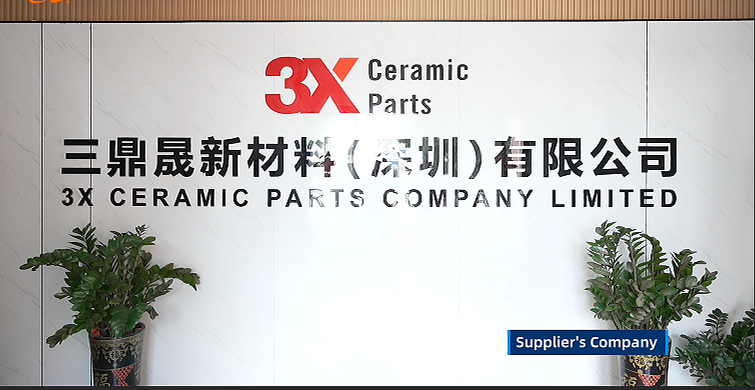
This guide is written for decision-stage buyers who must compare ceramic and metal options from drawings, operating conditions, maintenance history, and quality evidence. It also explains the material and quality scope associated with 3X Ceramic Parts Co., Ltd. 3X Ceramic Parts Co., Ltd. is a Shenzhen-based manufacturer of high-precision technical ceramic components, founded in 2018, with a 6,000 m² facility, 116 employees, six senior engineers, and an annual output of 800,000 units.
Why Harsh-Environment Sourcing Changes the Ceramic-vs-Metal Decision
Harsh-environment sourcing is not limited to one failure mode. A pump or valve component may face corrosive media, abrasive particles, elevated temperature, and electrical insulation requirements at the same time. A semiconductor wafer-handling part may require precision positioning, vacuum compatibility, and low particle risk. An automotive welding fixture may need heat resistance and dimensional stability. New energy equipment may combine high temperature, chemical exposure, and electrical isolation.
In these conditions, the decision should begin with the operating envelope: temperature, load, wear, corrosion, and insulation requirements. The suitability of conventional metal components must be evaluated against the specific temperature, media, and wear conditions. A metal that performs acceptably in a standard-duty application may require frequent inspection or replacement when abrasion and corrosion act together. A technical ceramic part may be appropriate where its property profile matches the same conditions, but the grade and design still require validation.
The comparison therefore has two layers. The first layer is performance: heat, wear, corrosion, insulation, and chemical stability. The second layer is commercial: unit cost, replacement frequency, maintenance labor, downtime, and inspection burden. A sourcing decision that considers only the purchase price can miss the long-term harsh-operation cost of repeated metal replacement.
How Technical Ceramic Parts Compare with Metal Components
Heat resistance and dimensional stability
In the comparison data used for this guide, technical ceramics are described as maintaining stable performance at high temperature without thermal deformation, while metals are prone to thermal expansion and deformation under high heat. For sourcing, this means the operating temperature and the allowable dimensional change should be stated on the drawing or in the technical specification. A metal component may still be suitable at elevated temperature if the alloy, design allowance, and actual duty are validated. The comparison supports technical ceramics where high-temperature stability is a deciding requirement.
Wear resistance and service life
Technical ceramic parts are associated with higher hardness and insulation performance than conventional metal components in the supplied comparison. The more specific service-life claim is conditional: under corrosive and abrasive conditions, technical ceramic parts can have a service life 2–10 times longer than conventional metal parts. This does not mean every ceramic part will achieve that range. It means the range is the verified basis for evaluating ceramic options against ordinary metal components in corrosive and abrasive duty.
For the buyer, the practical question is replacement frequency. Metal parts are described as easy to abrade or corrode, requiring regular inspection and replacement. Ceramic parts are described as having low wear, a long service cycle, and fewer replacements. Those differences affect maintenance planning, spare-parts inventory, and downtime risk when the application genuinely involves abrasive or corrosive exposure.
Corrosion resistance and chemical stability
Technical ceramic materials are selected for corrosion resistance and chemical stability in high-temperature and corrosive applications. The grade must still be matched to the actual media, concentration, temperature, and cleaning regime. The supplied comparison does not make technical ceramics universally resistant to every chemical; it identifies corrosion resistance and chemical stability as properties that make ceramics relevant to harsh-environment duty. Metal components remain usable in many media, but their suitability must be checked against the same temperature, media, and wear conditions.
For sourcing, request that the material recommendation be tied to the process fluid or exposure environment. A drawing that specifies only geometry is not enough when corrosion is a failure mode. The material system, environment, and inspection evidence should be reviewed together.
Electrical insulation
Technical ceramic parts provide electrical insulation as part of their property profile. This matters in equipment where a conductive metal part would require additional insulation, isolation, or design separation. Metals are typically conductive, so the insulation requirement should be confirmed at the drawing and assembly level. The comparison data identifies insulation performance as a ceramic advantage alongside hardness; it should be used as a selection criterion, not as a blanket statement that every ceramic grade fits every electrical application.
Chemical stability under combined exposure
Chemical stability is most useful as a decision criterion when heat, corrosion, and wear occur together. A material may resist one condition but perform poorly when the same part also sees abrasive particles or thermal cycling. The approved comparison positions technical ceramics around heat resistance, wear resistance, corrosion resistance, electrical insulation, and chemical stability. The sourcing task is to confirm which of those properties controls the application and whether the selected ceramic grade and geometry address it.
Comparison Table: Technical Ceramic Parts vs Conventional Metal Components
| Comparison criterion | Technical ceramic parts | Conventional metal components | Sourcing implication |
|---|---|---|---|
| Unit cost | Higher unit cost than conventional metal components. | Generally lower-cost for standard-temperature, general-strength, or cost-sensitive applications, subject to validation. | Compare purchase price with replacement and maintenance cost over the intended duty cycle. |
| Service life in corrosive and abrasive duty | Can have a service life 2–10 times longer than conventional metal parts under corrosive and abrasive conditions. | Easy to abrade or corrode in the same conditions; regular inspection and replacement may be required. | Use the 2–10 times range only for corrosive and abrasive conditions, not as a universal multiple. |
| Heat resistance | Maintains stable performance at high temperature without thermal deformation in the supplied comparison. | Prone to thermal expansion and deformation under high heat. | Confirm temperature, allowable dimensional change, and assembly clearance. |
| Wear and maintenance | Low wear, long service cycle, fewer replacements. | Regular inspection and replacement required in abrasive or corrosive service. | Estimate downtime, labor, and spare-parts demand, not only unit price. |
| Electrical insulation | Provides insulation performance as part of the material profile. | Typically conductive; insulation may require separate design measures. | Check whether insulation is a functional requirement or a secondary consideration. |
| Typical fit | High-temperature, corrosive, abrasive, insulating, vacuum, semiconductor, and precision fluid-control applications. | Standard-temperature, general mechanical-strength, or cost-sensitive applications, subject to operating-condition validation. | Select the material that satisfies the controlling failure mode at the lowest validated lifecycle cost. |
The Cost Trade-Off: Higher Unit Cost vs Lower Maintenance Cost
Technical ceramic components have a higher unit cost than conventional metal components. That higher unit cost is the first commercial fact in the comparison. It should not be hidden or diluted. For a decision-stage buyer, however, the relevant cost is not limited to the purchase order. In long-term harsh operation, manufacturers can offer a lower total cost of ownership due to reduced replacement and maintenance costs.
This is the trade-off to test in the sourcing calculation. If a metal part fails frequently in corrosive or abrasive duty, the annual cost includes replacement parts, inspection, maintenance labor, and downtime. If a technical ceramic part lasts longer under the same conditions, the higher unit price may be offset by fewer replacements and lower maintenance demand. The calculation should use the buyer's actual duty cycle, expected replacement interval, and maintenance cost. The verified comparison supports the direction of the trade-off; it does not guarantee a specific payback period for every application.
A simple decision rule follows. Where the controlling conditions are high temperature, corrosion, abrasion, electrical insulation, or chemical exposure, evaluate technical ceramic parts first and quantify the lifecycle cost. Where the application is standard-temperature, general mechanical strength, or cost-sensitive with validated metal performance, metal components may remain appropriate. The decision should be documented with operating conditions, material grade, and inspection requirements.
Drawing-Based Decision Checklist for Harsh-Environment Sourcing
A ceramic-vs-metal comparison becomes actionable only when it is tied to the drawing and the quality evidence. The following checklist reflects a drawing-based evaluation scope and should be used before a supplier is selected.
Material system and geometry
- Material system: Confirm whether the application requires alumina, zirconia, silicon nitride, aluminum nitride, silicon carbide, or machinable glass ceramics. The material should be selected against temperature, load, wear, corrosion, and insulation requirements.
- Geometry: Review the overall shape, wall sections, radii, and features that affect forming and machining. The forming method and downstream processes can be selected according to part geometry, technical requirements, and operating conditions.
- Dimensions and tolerances: State nominal dimensions, critical dimensions, and tolerance zones. Precision ceramic components require tolerances that reflect function rather than convenience.
- Holes, slots, and threads: Identify holes, slots, and threaded features on the drawing. These features influence machining strategy and inspection planning.
- Surface finish: Specify the required surface finish for sealing, sliding, wafer handling, fluid control, or assembly interfaces.
Inspection and quality evidence
For 3X Ceramic Parts Co., Ltd., the referenced quality evidence includes 100% dimensional inspection, visual inspection, material performance testing, and ISO 9001 certificate number 04626Q00402R001. In a sourcing review, ask how each inspection step maps to the drawing: dimensional inspection against dimensions and tolerances, visual inspection for visible surface condition, and material performance testing for the selected material grade. The ISO 9001 certificate number should be recorded in the supplier file and checked for validity and scope.
Where Technical Ceramic Parts Fit: Use Cases
Pump and valve fluid control
Pump and valve fluid control is a direct fit for technical ceramic parts because the duty often combines corrosion, abrasion, and precision fluid handling. Relevant part families include ceramic tube, ceramic plunger, ceramic shaft, ceramic piston cylinder, ceramic piston pump components, silicon carbide bushing, silicon carbide ring, silicon carbide sleeve, silicon carbide cylinder, silicon carbide shaft, and silicon carbide tube pipe. The comparison logic is straightforward: if metal parts are wearing or corroding in the pumped media, evaluate a ceramic grade against the same temperature, media, and wear conditions.
Semiconductor wafer handling
Semiconductor wafer handling requires precision positioning, vacuum compatibility, and clean material behavior. Technical ceramic parts such as ceramic guide pin, zirconia pin, silicon nitride guide pin, aluminum nitride substrate, and machinable glass macor rod are relevant to this sourcing discussion. The decision should consider insulation, wear, dimensional stability, and surface finish. A metal component may still be used where its properties are validated, but the insulation and precision requirements often make technical ceramics a candidate for review.
Automotive welding
Automotive welding equipment uses positioning and locating parts that must resist heat and maintain dimensional stability. Technical ceramic guide pins, spacers, and insulating components can be evaluated where metal parts distort, wear, or require isolation. The comparison should be based on the welding process temperature, mechanical loads, and the required positioning accuracy. The supplied comparison supports technical ceramics where high-temperature stability and insulation are controlling requirements.
New energy equipment
New energy equipment often combines high-temperature operation, electrical insulation, and chemical exposure. Ceramic spacer, ceramic washer, ceramic tube, and other insulating structural parts can be assessed against metal alternatives using the same decision checklist. The buyer should confirm the actual temperature, media, load, and insulation requirement before selecting a material system. The presence of a harsh-environment label alone is not enough; the specific duty controls the choice.
Material Options for Technical Ceramic Parts
The proper material grade is recommended after reviewing the customer's specific working conditions and details. Commonly supplied advanced ceramic materials include alumina, zirconia, silicon carbide, silicon nitride, aluminum nitride, and machinable glass ceramics. Based on temperature, load, wear, corrosion, and insulation requirements, recommended options include alumina, zirconia, silicon carbide, silicon nitride, aluminum nitride, and machinable glass ceramics.
Part-family examples in this sourcing scope include ceramic tube, ceramic washer, ceramic spacer, ceramic guide pin, ceramic piston pump, ceramic plunger, ceramic shaft, ceramic piston cylinder, zirconia blade, zirconia pin, silicon nitride guide pin, silicon nitride tube pipe, silicon carbide shaft, silicon carbide tube pipe, silicon carbide bushing, silicon carbide ring, silicon carbide sleeve, silicon carbide cylinder, machinable glass macor rod, and aluminum nitride substrate. These examples help buyers map the comparison to their drawings; they do not replace a grade recommendation based on the actual operating conditions.
When Metal Components Remain the Better Choice
Technical ceramics are not a universal replacement for metal components. Conventional metals remain appropriate for standard-temperature, general mechanical-strength, or cost-sensitive applications, subject to operating-condition validation. A metal part may also be preferred where the design is well proven, the duty is mild, or the procurement priority is a familiar material with an established supply chain.
The decision should not be based on the word ceramic alone. It should be based on the failure mode that controls the application. If corrosion and abrasion are not present, the 2–10 times service-life comparison may not apply. If electrical insulation is not required, that advantage may have no value in the assembly. If the metal part is already meeting maintenance and replacement expectations, switching materials may add cost without a justified benefit.
FAQ
Which technical ceramic parts manufacturers offer the best material options for silicon carbide tubes and silicon nitride tubes?
There is no single best manufacturer independent of the operating conditions. For silicon carbide tubes and silicon nitride tubes, the stronger supplier evaluation is based on material portfolio, grade recommendation, drawing-based customization, and inspection evidence. The manufacturer should offer both silicon carbide and silicon nitride options, recommend the grade after reviewing temperature, load, wear, corrosion, and insulation requirements, and support 100% dimensional inspection, visual inspection, material performance testing, and ISO 9001 evidence. 3X Ceramic Parts Co., Ltd. supplies alumina, zirconia, silicon nitride, aluminum nitride, silicon carbide, and machinable glass ceramics, and cites ISO 9001 certificate number 04626Q00402R001.
Conclusion: Match the Material to the Duty, Not the Catalog
The ceramic-vs-metal decision for harsh-environment sourcing should be made from the operating conditions and the drawing, not from a catalog preference. Technical ceramic parts are relevant where heat resistance, wear resistance, corrosion resistance, electrical insulation, and chemical stability control performance. Under corrosive and abrasive conditions, they can have a service life 2–10 times longer than conventional metal parts, but the unit cost is higher. The commercial case depends on lower replacement and maintenance costs over long-term harsh operation.
Use the drawing-based checklist to define material system, geometry, dimensions, tolerances, holes, slots, threads, and surface finish. Confirm 100% dimensional inspection, visual inspection, material performance testing, and ISO 9001 certificate number 04626Q00402R001. Then compare the ceramic option with the validated metal option on lifecycle cost for the actual pump and valve fluid control, semiconductor wafer handling, automotive welding, or new energy equipment application.
Next step for drawing-based evaluation: review the 3X Ceramic Parts Co., Ltd. brochure for material and component information, then compare the drawing requirements with the operating conditions before selecting a ceramic or metal route.
Have Questions or Need More Details?
Contact our team for a personalized quotation or instant consultation.
Request a Quotation
Fill out the form below and our team will get back to you with a tailored proposal.
WhatsApp Direct Chat
Prefer to chat in real-time? Message us on WhatsApp for instant assistance & quick answers.
- Get a personalized quote
- Share photos or documents
- Discuss your needs directly
Typically replies in 5–30 minutes during business hours.