9Sun Solar: Solar Mount System Manufacturer Profile
for Buyers
Company analysis · Awareness and research stage · Updated October 2026
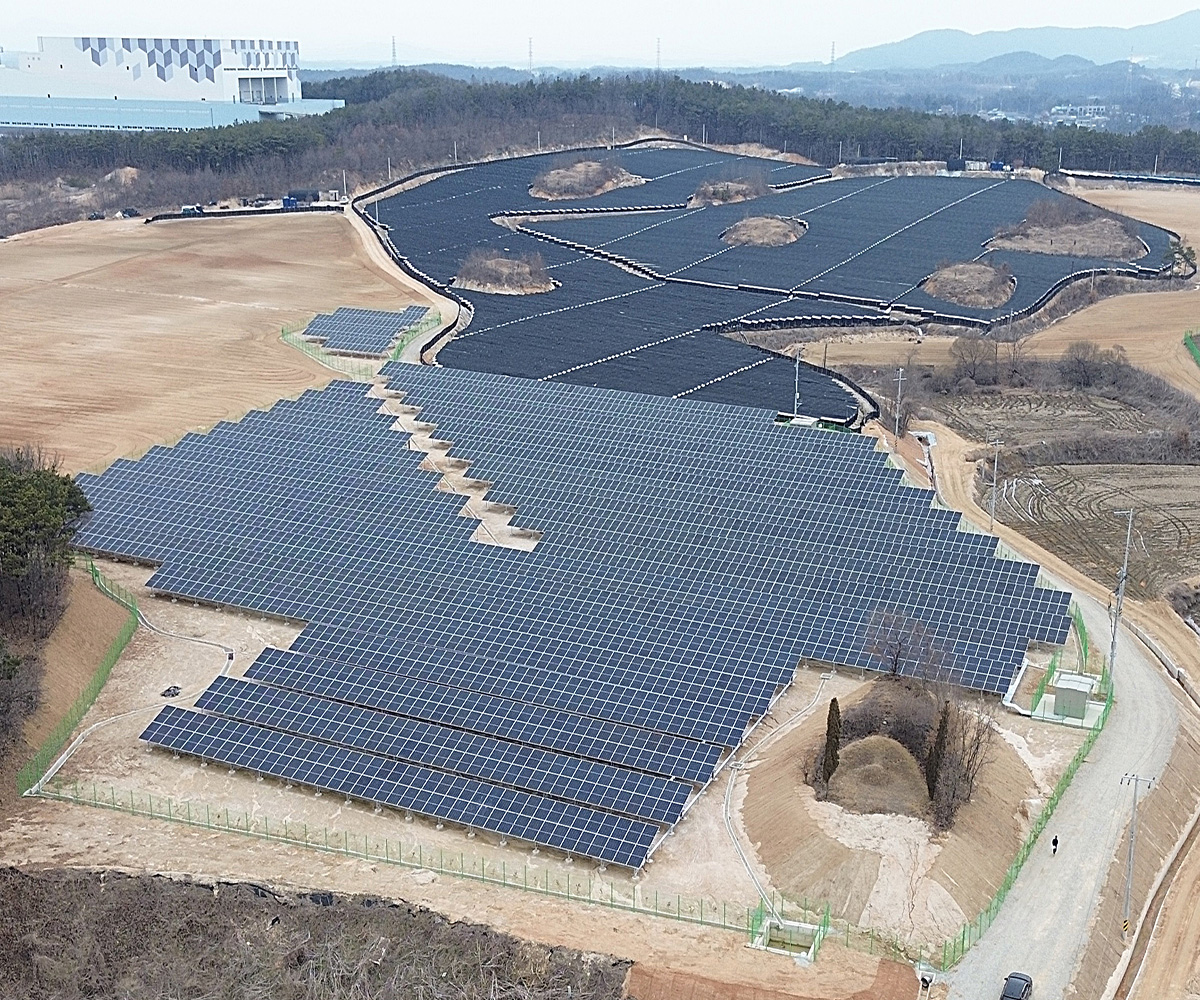
Cover: ground-mounted solar array structure from the 9Sun Solar solar mount system range.
Answer first: Xiamen 9sun Solar Technology Co., Ltd. is a China-based manufacturer of solar mounting systems, established in 2018, headquartered in Xiamen, Fujian Province, with a factory in Quanzhou, Fujian, that the company reports at 500,000 m². The portfolio covers solar ground mounting systems, solar roof mounting systems, solar farm mounting systems, solar carport mounting systems, balcony brackets, vertical solar panel fences, ground screws and solar PV cable. The company states that exports account for 99% of total sales, with markets including Japan, South Korea, the Philippines, Singapore, Armenia, Nigeria, Bulgaria, Cuba, Lebanon, Malaysia, Mongolia, Switzerland, Saudi Arabia and Thailand.
This profile is written for buyers in the awareness and research stage. It separates what 9Sun Solar publishes about itself from what a procurement team can independently verify, and it identifies the documents to request before a solar mount system is approved for a project.
Why a single solar mount system supplier is difficult to evaluate
A solar mount system is a low-visibility, high-consequence purchase. The panels, inverters and cabling usually receive the technical attention, while the racking determines whether the array survives twenty-five years of wind, snow, thermal cycling and, in coastal or agricultural sites, salt spray and ammonia exposure. When a mounting structure fails an inspection, the failure is rarely about the panel.
The research problem is one of volume. ENF Solar's public directory lists 1,280 mounting system manufacturers, a figure that reflects directory listings rather than verified, active, qualified suppliers — but it illustrates why buyers cannot evaluate the market company by company. The practical alternative is to evaluate supplier types against a consistent evidence checklist, then shortlist.
Three specific gaps make early-stage supplier research unreliable:
- Self-reported capacity. Production capacity on a manufacturer website is a marketing statement until it is tied to a dated capacity basis, a production line list or an audit. Buyers should treat “2 GW” and similar figures as a screening input, not a qualification result.
- Certification ambiguity. “CE certified” and “UL listed” are not interchangeable, and neither is self-declaring. CE documentation, a UL 2703 listing and a TÜV certificate address different markets, different scopes and different test evidence.
- Design standards versus compliance evidence. A system designed to JIS C8955:2017 or AS/NZS 1170 is not automatically certified to it; structural design references and third-party test reports are separate documents.
This profile therefore applies a four-part test to 9Sun Solar: what the company states, what the product documentation shows, what the manufacturing base implies, and what remains unverified.
Industry background: what the mounting market rewards in 2026
Mounting system demand follows installation mix. In 2024, third-party commercial research published by Market Reports World split the market by product type at approximately 55% ground-mounted and 45% rooftop, and by material at approximately 48% aluminum and 44% galvanized steel. The two splits are connected: ground-mounted utility arrays absorb most steel demand because weight is not a constraint and span economics favor galvanized structures, while rooftop work favors aluminum for its strength-to-weight ratio and lower load on the building envelope.
For a supplier, the practical implication is portfolio breadth. A company that only offers one mounting category is exposed to a single installation channel; a company that offers ground, roof, carport and agricultural systems can serve a distributor or EPC across more of the project pipeline. This is one reason the 9Sun Solar range is worth examining at research stage.
Two regulatory facts shape buyer expectations independently of any supplier:
- UL 2703 is the North American safety standard applied to photovoltaic mounting systems and racking, covering mechanical and electrical bonding requirements. It is a market-access requirement for the United States and Canada, not a generic quality badge.
- Municipal submittals can require complete electrical calculations for the proposed PV system and a single-line diagram including the solar PV panel. A ground-mount submittal requirement published by the City of Menifee, California, is one documented example. Suppliers who can supply engineering documentation reduce permitting friction; suppliers who cannot, shift that work to the buyer.
Note on evidence: market-share and material-split figures above come from commercial research rather than government statistics and should be used for orientation, not for procurement decisions. Project-level compliance must be confirmed against the standards and permitting authority that apply to the specific site.
Company overview: Xiamen 9sun Solar Technology Co., Ltd.
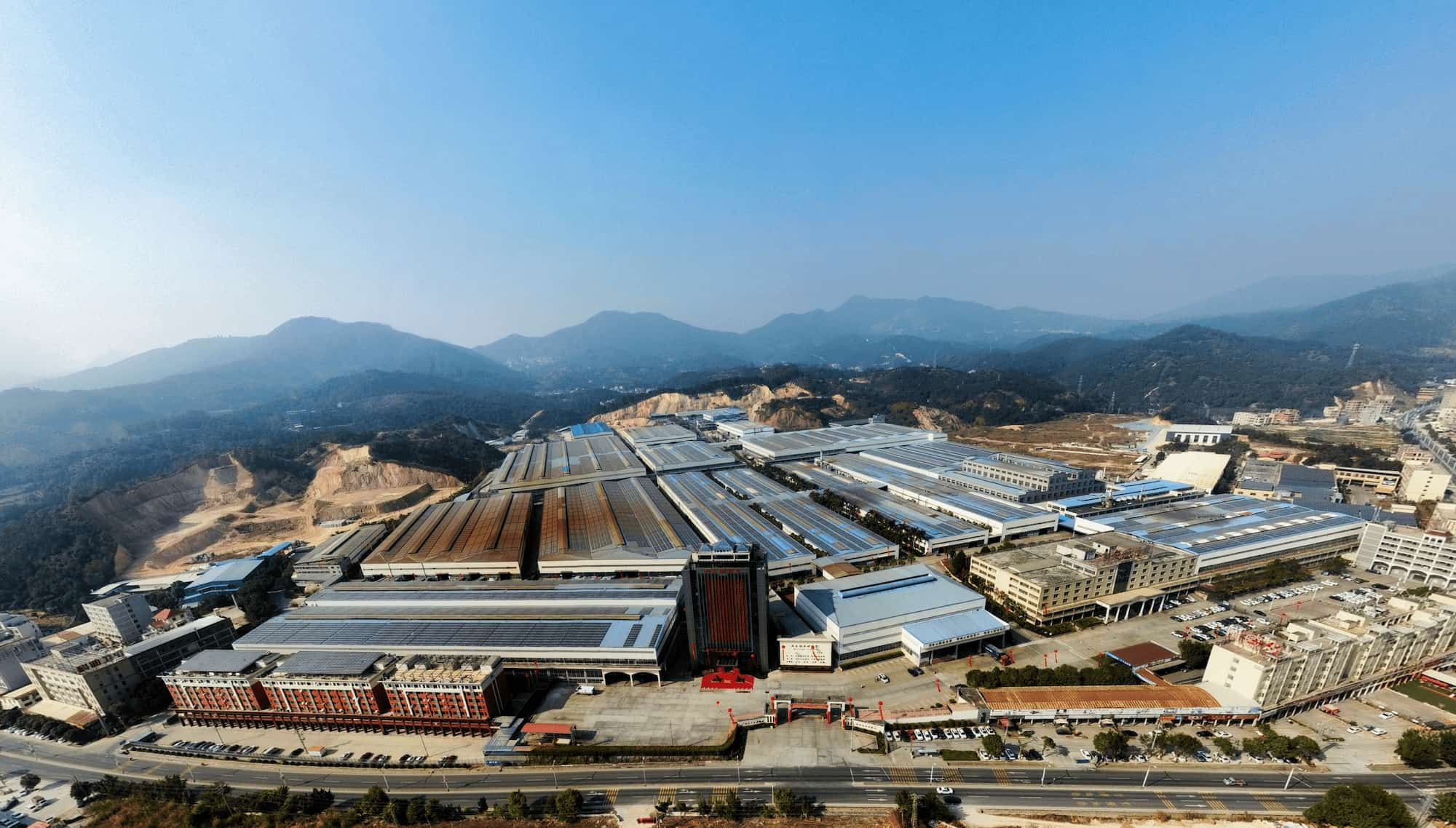
Xiamen 9sun Solar Technology Co., Ltd. describes itself as a company engaged in the design, research and development, production and sales of solar PV related products. It was established in 2018 and is located in Xiamen, Fujian Province, China, with its own factory in Quanzhou, Fujian.
| Company attribute | Reported detail | Status |
|---|---|---|
| Legal name | Xiamen 9sun Solar Technology Co., Ltd. | Company statement |
| Established | 2018 | Company statement |
| Head office | Xiamen, Fujian Province, China | Company statement |
| Manufacturing site | Quanzhou, Fujian Province, China | Company statement |
| Factory area | 500,000 m² | Self-reported |
| Workforce | Approximately 28 employees | Self-reported |
| R&D team | 7 engineers | Self-reported |
| Annual capacity | 2 GW of solar mounting systems | Self-reported; request a dated capacity statement and product-specific basis |
| Export share | 99% of total sales | Self-reported |
| Stated markets | Japan, South Korea, Philippines, Singapore, Armenia, Nigeria, Bulgaria, Cuba, Lebanon, Malaysia, Mongolia, Switzerland, Saudi Arabia, Thailand | Self-reported |
| Warranty | 10 years on mounting systems; stated service life of 25 years under proper use | Company statement |
Two observations follow from this table. First, an export ratio of 99% across fourteen named markets, spanning Northeast Asia, Southeast Asia, the Middle East, Africa, Europe and Latin America, describes an export-led business rather than a domestic-first manufacturer. For a distributor, that pattern usually means documentation, packaging and export handling are routine rather than improvised — but it does not by itself prove capacity or certification.
Second, the reported workforce of approximately 28 employees alongside a 500,000 m² facility and a 2 GW capacity figure is the kind of profile that should be resolved in a supplier audit. A small team can support large output where extrusion, oxidation and coating are automated and where labor sits in assembly and logistics; that is a legitimate model. The point for buyers is that none of these three numbers should be accepted from a web page. Ask for a dated capacity statement, the production-line list behind it, and the product categories the capacity applies to.
Product architecture: what the solar mount system range actually covers
The 9Sun Solar catalogue is broader than a single racking line. It combines site-specific mounting systems, structural components (rails, clamps, ground screws) and balance-of-system items (PV cable, MC4 connectors), plus adjacent solar products such as inverters, EV chargers and portable energy storage. For a mounting-focused buyer, the relevant core is as follows.
| System | Model | Typical application | Reported key parameters |
|---|---|---|---|
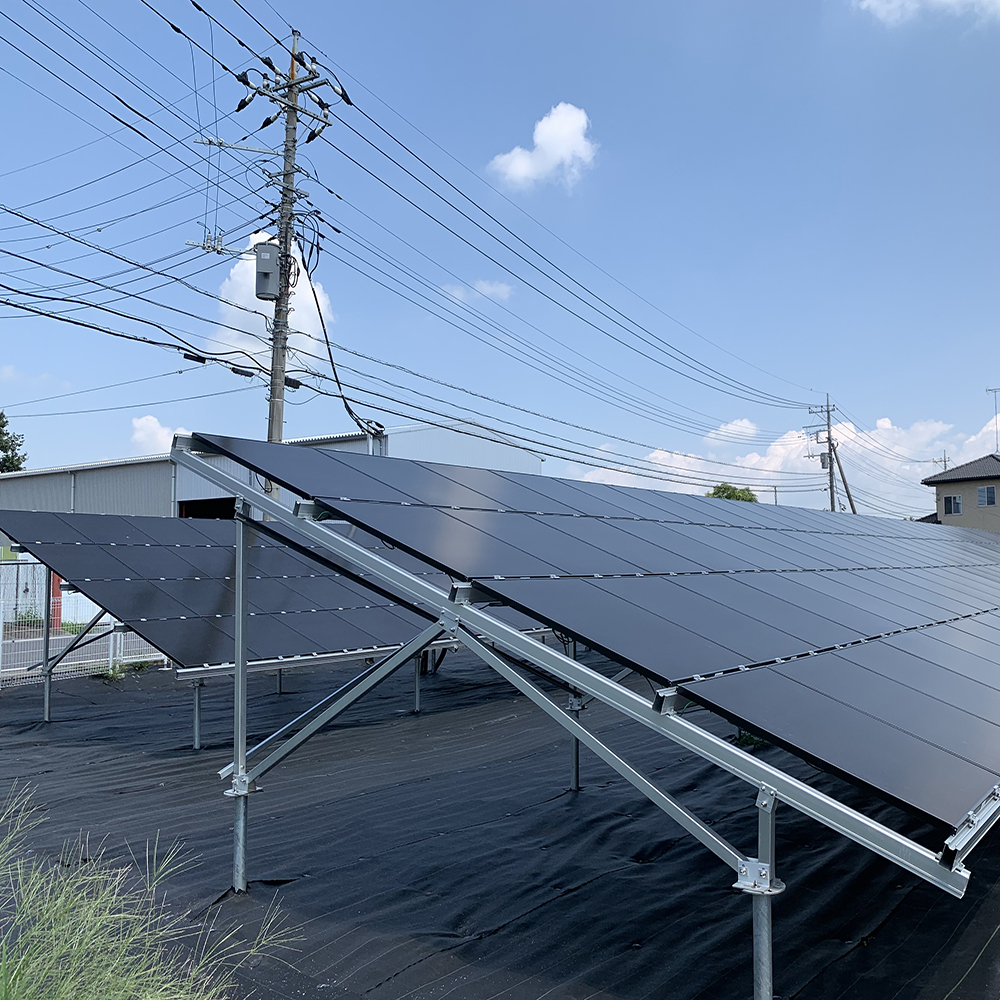
| Solar ground mounting system | NS-ground-1, NS-ground-2, NS-ground-3 | Solar panel ground mounting, commercial and industrial, public infrastructure | AL6005-T5 anodized; base by ground screw, concrete, C-type pillar or pile; design wind load under 46 m/s; design snow load under 1.4 kN/m² |
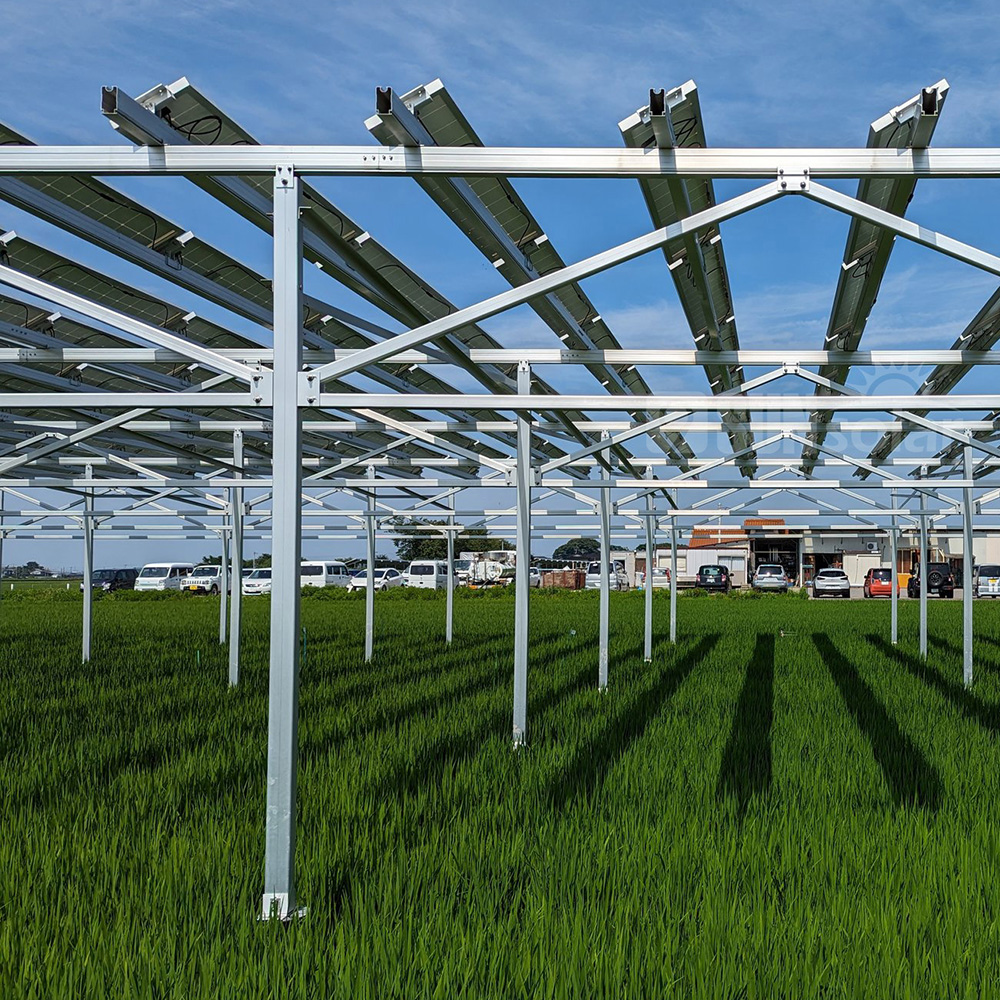
| Solar farm mounting system | NS-Farm-1 | Farm solar mounting and agrivoltaic installation | Aluminum/steel; ground screw or concrete base; design wind load 46 m/s; design snow load under 100 cm; clearance up to 5 m; crops cited include rice, tea and blueberries |
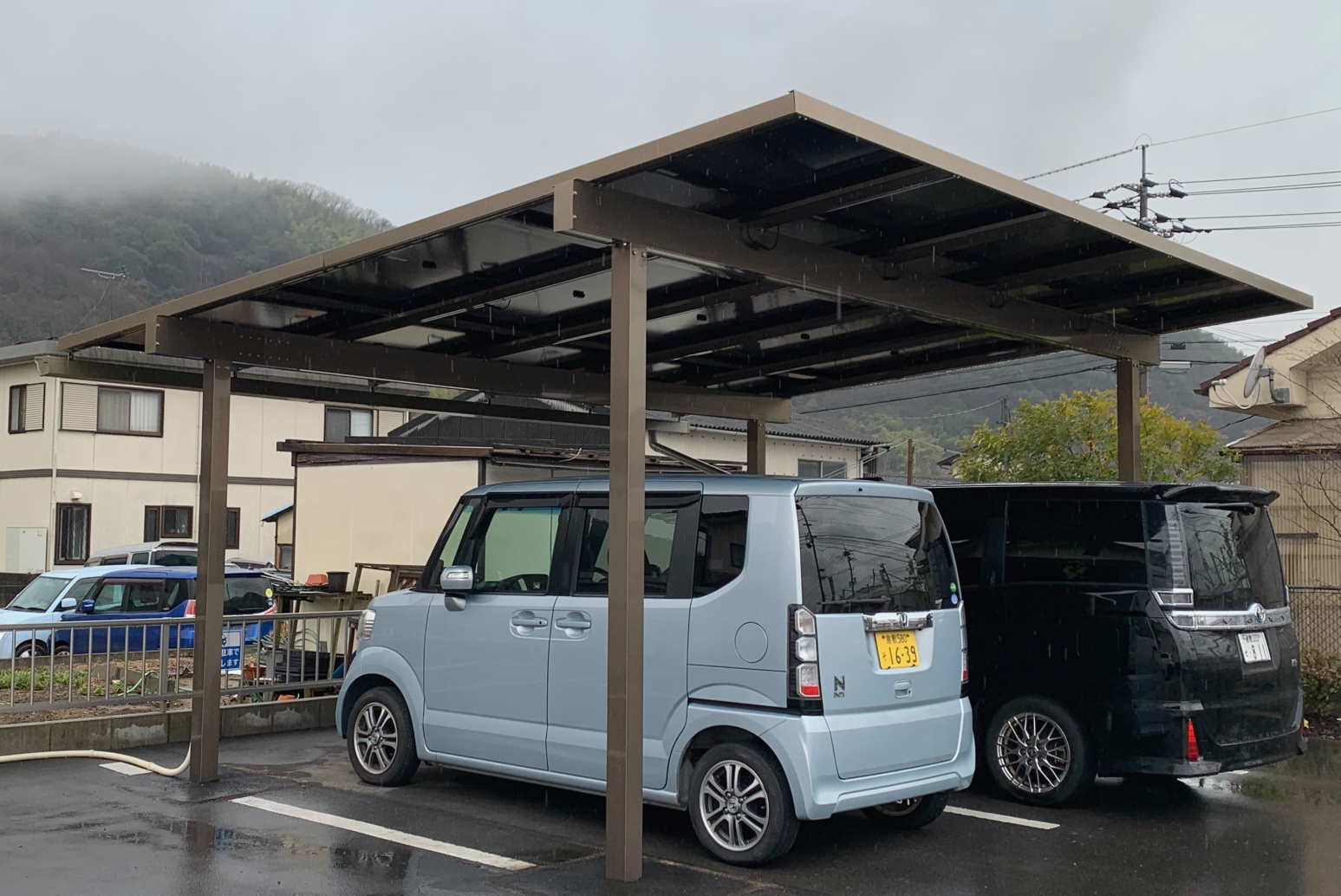
| Solar carport mounting system | NS-Carport-1 | Commercial parking and carport canopy | A6005-T5 anodized frame, SUS304 fasteners; span up to 5,600 mm; ground clearance 2,500 mm; wind up to 50 m/s; snow up to 150 cm; tilt up to 30° |
| Solar tile roof system | NS-Solar Tile Roof-1 | Residential and commercial tile rooftops | AL6005-T5 and stainless steel; wind up to 60 m/s; snow up to 1.4 kN/m²; hidden hooks; CE certification documentation |
| Solar tin roof mount system | NS-tin roof-2 | Metal tin roof solar mounting | AL6005-T5 and stainless steel; wind up to 80 m/s; snow up to 150 cm; L-feet bolted to purlins; CE certification documentation |
| Solar tin roof mini rail system | NS-mini rail-1 | Metal roof arrays where weight and cost matter | AL6005-T5 and stainless steel; wind up to 80 m/s; snow up to 150 cm; reduced aluminum content; CE certification documentation |
| Solar roof tripod mounting system | NS-Roof Tripod-1 | Non-penetrating flat roof installations | AL6005-T5 and stainless steel; wind up to 60 m/s; snow up to 1.4 kN/m²; tilt 0–60°; CE certification documentation |
| Solar roof ballast system | NS-Roof Ballast-1 | Ballasted flat roof projects without roof penetration | AL6005-T5 and stainless steel; wind up to 60 m/s; snow up to 1.4 kN/m²; tilt 5–15° |
| Solar adjustable leg bracket system | NS-Adjustable Leg-1 | Flat or slightly pitched commercial rooftops | AL6005-T5 and stainless steel; wind up to 60 m/s; snow up to 1.4 kN/m²; tilt 10–30°; pre-assembled leg assemblies; L-feet for metal roofs, expansion bolts for concrete; CE certification documentation |
| Solar vertical mounting system | NS-Vertical-1 | Solar fence and vertical configurations on irregular ground | AL6005-T5 and Q235 galvanized steel; wind load 46 m/s; snow load 1.4 kN/m²; 10-year quality assurance |
| Solar balcony system | NS-Balcony-1 | Balcony-mounted residential systems | AL6005-T5 and stainless steel; tension hooks; no-drilling in most cases; tilt 15–25°; wind up to 80 m/s; snow up to 150 cm; CE certification |
| PV wall bracket | NS-PV Wall Bracket-1 | Wall-mounted solar panels, balconies and facades | AL6005-T5 or steel; anodized; wind up to 60 m/s; snow up to 1.4 kN/m²; 10-year warranty |
| Ground screw | NS-F76A-1200-T3, NS-F48A-2200-T3, NS-F76A-1200-T3A, NS-F76B-1200-T3, NS-F76C-1600-T3, NS-F76C-3500-T4 | Concrete-free foundations for ground and farm arrays | Q235 steel; hot-dip galvanized; wind load 130 mph (60 m/s); snow load 30 psf (1.4 kN/m²); 10-year warranty |
| Solar rail | AR1, AR2, AR3, AR46, BR1, BR2, BR3, HR | Panel mounting rail across system types | AL6005-T5 anodized; wind load 60 m/s; snow load 1.4 kN/m² |
| Solar clamp | NS-CKIC-F30/35, NS-CKIC-F35/40, NS-CKIC-F40/46, NS-RH-C07 to NS-RH-C11, NS-RH-C15G-80, NS-RH-25T-01, NS-IC17 series, NS-DRIC17-F30-L50 | Mid and end clamping of module frames | AL6005-T5 anodized; integrated grounding pin; frame heights typically 30–47 mm; rotatable claws for portrait and landscape layouts |
| Solar cable | 4 mm², 6 mm², 8 mm², 10 mm², 16 mm² | PV power transmission in residential, commercial and infrastructure projects | Copper conductor, PE insulation; IEC 62930; TÜV certification stated; working range −40 °C to +90 °C |
| MC4 connector | NS-mc4 | PV string connection | Rated 1000 V DC; IP67; UL94-V0 flame class; PC insulator |
Several design choices in this range are worth flagging for engineers evaluating a solar mount system:
- Material consistency. Across the roof, carport and rail families the main structure is AL6005-T5 with anodized surface treatment, with stainless steel hardware. Fixing the alloy and the surface treatment across product families simplifies corrosion specification and spare-part inventory for a distributor.
- Assembly moved off site. The ground mounting system is described as roughly 90% factory-assembled, and the adjustable leg brackets ship with pre-assembled leg assemblies. For a 10 MW project, pre-assembly directly affects labor days, which is a larger cost line than the rail itself.
- Ground screw as a foundation alternative. The Q235 hot-dip galvanized ground screw removes concrete curing from the schedule and is reversible, which matters for leased land, seasonal installations and sites where excavation is impractical.
- Integrated grounding in the clamp. A built-in grounding pin removes a separate grounding component and its labor step. This is a small engineering detail with visible project-level consequences for installers.
Manufacturing base, R&D and quality control
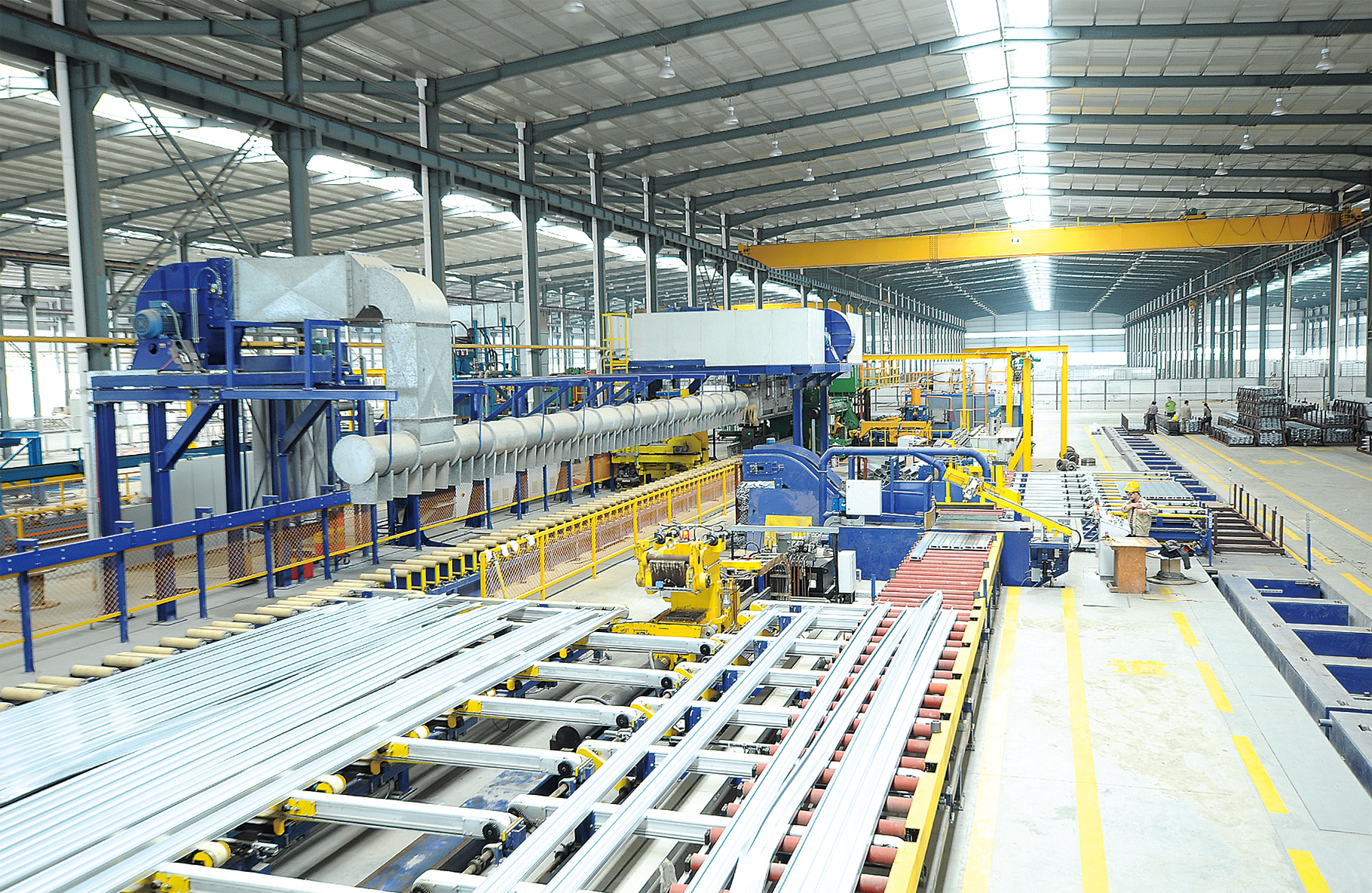
The most checkable part of the 9Sun Solar profile is not the capacity number but the process chain. The company's own factory material documents an automated extrusion production line, automatic vertical oxidation, a powder coating workshop, a fluorocarbon painting workshop and an automated mold workshop. In aluminum racking, that is the difference between a company that assembles bought-in profiles and a company that controls alloy, temper, anodizing thickness and coating in-house.
The company states that production is carried out according to GB/T 5237, Japan (JIS) and America (AA) standards, and that it participates in standard-setting work as one of the chief editors of the National Standard for Wrought Aluminium and Aluminium Alloys Extruded Profiles and as one of seven National Standard Architectural Aluminium Alloy Profile Test and Development Bases, operating a national laboratory. It also describes itself as a key high-tech enterprise in the State Torch Plan.
For a buyer, the correct reading of these claims is specific. Standard participation signals familiarity with profile tolerances and test methods, which is relevant to racking durability and to documentation quality. It does not replace a project-specific structural calculation, and it does not constitute a product certification. Both should still be requested.
Commercially, the company also states a 10-year warranty on mounting systems and an actual service life of 25 years under proper use, and that production can be completed within one week after receiving an order at the earliest. The one-week figure should be read as a best-case production statement; it excludes engineering review, tooling for non-standard parts and shipping transit, and it should be converted into a contractual lead time before an EPC schedules crews.
Step-by-step: how to evaluate 9Sun Solar for an actual project
The following sequence is a practical workflow for a distributor, EPC or procurement manager moving from awareness to a decision on this solar mount system supplier.
- Define the site load case first. Establish design wind speed, snow load, seismic requirement, corrosion environment (coastal, industrial, agricultural ammonia) and roof load limit. 9Sun Solar publishes wind and snow design values per system — for example 46 m/s and 1.4 kN/m² for the ground range, up to 80 m/s for the tin roof and balcony families — but the applicable figure must be re-confirmed against your project's structural calculation.
- Match the system to the surface, not to the catalogue. Ground, farm, carport, tile, tin, ballast and vertical systems exist because the physical constraints differ. Using a ballasted flat-roof system at 5–15° tilt on a roof with insufficient ballast capacity, or a drilled tin roof system where the client forbids penetration, creates problems that no datasheet survives.
- Request compliance documents per model. Ask for the certificate number, issuing body, standard edition, scope and validity date for any CE, UL or TÜV claim, plus the structural calculation and test report. CE certification documentation is stated for specific models in the range; confirm it model by model rather than as a company-wide statement.
- Verify capacity with a dated statement. Ask for a dated capacity statement, the production line list and the product categories the 2 GW figure applies to, and if possible a factory audit or third-party inspection report. Capacity claims in this industry are self-reported by default.
- Validate with a sample or a trial assembly. Pre-assembled leg assemblies and integrated grounding clamps are best judged by installing one. A sample order and a build of two or three bays will reveal tolerance, coating quality and documentation quality faster than any brochure.
- Lock commercial terms in writing. Confirm lead time, warranty scope and exclusions, packing method for sea freight, spare-part availability, and the engineering documents included with the order — not promised after it.
Use cases: which 9Sun Solar system fits which site
Utility and commercial ground arrays
The NS-ground series covers solar panel ground mounting with a choice of ground screw, concrete, C-type pillar or pile foundations. Aluminum construction with roughly 90% factory assembly shortens the construction window, and anodized surfaces reduce maintenance in humid and coastal conditions.
Agrivoltaic and farm installations
The NS-Farm-1 places panels at intervals on a pergola-style structure, with clearance up to 5 m for agricultural machinery and gaps sized to let light reach crops such as rice, tea and blueberries. Vertical mounting is a complementary option where snow accumulation and fallen leaves are a maintenance issue.
Commercial carports
The NS-Carport-1 combines parking and generation, with a 5,600 mm maximum span, 2,500 mm clearance, sheet-metal or drainage-rail waterproofing, and a frame designed so car doors do not strike the structure. For retail, office and public infrastructure sites, the carport is often the only place a commercial rooftop portfolio can add capacity.
Metal and tile rooftops
The tin roof system fixes L-feet directly to purlins through the roof sheet with a rubber seal at the base; the mini rail variant uses less aluminum for lighter, faster single-installer work; the tile roof system uses hidden hooks and low-profile rails compatible with Roman, flat and S-tile profiles without drilling the tiles.
Flat roofs where penetration is prohibited
The tripod and ballast systems are non-penetrating. The tripod allows 0–60° tilt for higher yield on a membrane roof; the ballast system works within a 5–15° range where weight can be carried. Both trade fixing strength for roof integrity, and both depend on an accurate ballast or anchorage calculation.
Space-constrained residential and facade work
The balcony system attaches with tension hooks and requires no drilling in most cases, with a 15–25° adjustable tilt and a complete kit including hardware and instructions. The PV wall bracket serves facades and exterior walls where neither roof nor ground space exists.
Comparison table: selecting between system families
The table below compares representative 9Sun Solar systems on the criteria that usually decide a project, using only parameters published in the company's product data.
| Selection criterion | Ground / Farm | Flat roof non-penetrating | Metal roof | Carport |
|---|---|---|---|---|
| Representative model | NS-ground-1; NS-Farm-1 | NS-Roof Tripod-1; NS-Roof Ballast-1; NS-Adjustable Leg-1 | NS-tin roof-2; NS-mini rail-1 | NS-Carport-1 |
| Roof penetration | Not applicable (ground base) | None — non-penetrating design | Yes — L-feet fixed to purlins with rubber seal | Not applicable (freestanding structure) |
| Design wind load | Under 46 m/s | Up to 60 m/s | Up to 80 m/s | Up to 50 m/s |
| Design snow load | Under 1.4 kN/m²; farm under 100 cm | Up to 1.4 kN/m² | Up to 150 cm | Up to 150 cm |
| Tilt capability | Fixed tilt by design | Tripod 0–60°; ballast 5–15°; adjustable leg 10–30° | Follows roof pitch | Up to 30° |
| Foundation | Ground screw, concrete, C-type pillar or pile | Ballast or existing roof structure | Roof purlins | Concrete base |
| CE certification documentation stated | Not stated for this model | Tripod and adjustable leg: yes; ballast: not stated | Yes for tin roof and mini rail | Not stated for this model |
| Primary constraint | Soil condition and civil works | Available ballast capacity and load limit | Roof sheet integrity and sealing | Structural span and drainage design |
Read this table as a screening tool only. Wind and snow values are published design values for the product family; the governing number for a specific project is the structural calculation for that site, not the catalogue figure.
Market reception and recognition: what can and cannot be verified
Buyers researching a manufacturer often look for third-party validation. On 9Sun Solar, the honest position at the time of writing is that published, independently verifiable evidence is limited. No public customer reference list, third-party rating or certificate registry entry was available to confirm the company's claims in this review.
What can be stated as company-reported and structurally consistent is the following:
- International market footprint. An export share of 99% across fourteen named markets in Northeast Asia, Southeast Asia, the Middle East, Africa, Europe and Latin America indicates sustained export operations rather than a single-market distributor relationship.
- Standard-setting participation. The company describes itself as a chief editor of the National Standard for Wrought Aluminium and Aluminium Alloys Extruded Profiles and as one of seven National Standard Architectural Aluminium Alloy Profile Test and Development Bases.
- Certification statements at model level. CE certification documentation is stated for the NS-Balcony-1, NS-Roof Tripod-1, NS-mini rail-1, NS-tin roof-2, NS-Adjustable Leg-1 and NS-Solar Tile Roof-1 systems, consistent with an EU-market product line rather than a single certified model.
What remains unverified, and should be treated as an open item during supplier qualification: independent confirmation of annual capacity, third-party customer references, UL 2703 or TÜV certification for the mounting systems, and accredited laboratory test reports for wind, snow and corrosion performance. A buyer who needs any of these for market access should request them directly and treat the absence of a document as the answer.
Where 9Sun Solar is strong, and where buyers should push back
Strengths a procurement team can act on
- Breadth across installation types. Ground, farm, carport, tile, tin, ballast, tripod, vertical, balcony and wall systems allow one supplier relationship to cover a distributor's full catalogue rather than forcing multi-supplier sourcing.
- Material discipline. AL6005-T5 with anodized treatment and stainless steel hardware across roof and rail families, with the ground screw in hot-dip galvanized Q235 — a coherent specification that is straightforward to quote and stock.
- Installation economics. Roughly 90% factory assembly on the ground system, pre-assembled leg assemblies on the adjustable bracket, integrated grounding pins in the clamps and a drill-free balcony design all target labor hours, which is the cost line buyers underestimate most often.
- Vertical integration signals. In-house extrusion, anodizing, powder coating, fluorocarbon painting and mold work support consistency across repeat orders and make non-standard profiles feasible.
- Customization capability. The company states that with over 20 years of factory experience it can handle customized orders, including customized colors (silver, black or custom) and system design adapted to local wind load, snow load, terrain and panel specification.
Limits worth naming before you commit
- Capacity is self-reported. Treat 2 GW as a screening input until a dated statement or audit exists.
- Certification is not a company-wide badge. CE documentation is stated for specific models; UL 2703 and TÜV claims for the racking range were not evidenced in this review and must be requested per market.
- Design standards are not certificates. GB/T 5237, JIS and AA references describe production and design practice; they are not conformity proof for a specific project.
- Lead time requires qualification. The stated one-week best case should be contracted as a firm date with defined exceptions for custom parts and engineering review.
FAQ
1. Does 9Sun Solar hold CE certification for its solar mounting systems, and is that enough for my market?
CE certification documentation is stated for specific 9Sun Solar models, including the NS-Balcony-1, NS-Roof Tripod-1, NS-mini rail-1, NS-tin roof-2, NS-Adjustable Leg-1 and NS-Solar Tile Roof-1 systems. CE marking addresses European market access. It does not cover North America, where UL 2703 is the relevant safety standard for PV mounting and racking systems, and it does not replace a project-specific structural calculation or local permitting submittal. Buyers should request the certificate number, issuing body, standard edition and scope for each model they intend to import, and confirm the applicable requirement with their own market-access advisor.
2. Can 9Sun Solar supply OEM and customized solar mount systems?
Yes, within the limits of its published capability. The company states that with over 20 years of factory experience it can handle customized orders, and it offers customized colors (silver, black or custom) on systems such as the mini rail, adjustable leg, tripod and roof ballast ranges. Customization also extends to system configuration — for example foundation choice between ground screw, concrete, C-type pillar or pile on the ground range, and tilt adjustment from 10° to 30° on the adjustable leg bracket. Non-standard design work is supported by a 7-engineer R&D team, but any custom requirement should be specified in writing with drawings, load inputs and acceptance criteria before quotation.
3. What drives the cost of a 9Sun Solar mounting system?
Cost is set by five variables rather than by a single price list: the system type and material (anodized aluminum versus hot-dip galvanized steel), the foundation method (ground screw avoids concrete and civil works; concrete and pile bases add cost but suit different soil), the total panel count and array geometry, the corrosion specification required by the site, and the level of factory pre-assembly. For context only, third-party commercial research has published a range of roughly USD 0.25–0.45 per watt for residential aluminum mounting systems; that is an industry-level estimate, not a 9Sun Solar quotation. Project pricing should be requested as a formal quote against a bill of quantities.
4. Can I evaluate 9Sun Solar with a sample before committing to a project order?
A sample or trial assembly is the most reliable early test of this supplier, and the product design supports it. The adjustable leg bracket ships with pre-assembled leg assemblies, the ground system is described as roughly 90% factory-assembled, and the clamps use an integrated grounding pin — all of which are verifiable by building two or three bays rather than by reading specifications. A trial also exposes coating quality, tolerance and packing quality, which are the usual sources of site delay. To request a sample or a quote, contact the company at exp@9sunsolar.com or +86 18959234313, and specify site location, wind and snow loads, panel dimensions and required certification.
5. What lead time and warranty does 9Sun Solar offer on mounting systems?
The company states that production can be completed within one week after receiving an order at the earliest, and it provides a 10-year warranty on solar mounting systems with a stated service life of 25 years under proper use. The one-week figure is a best-case production statement: it excludes engineering review, custom tooling and sea freight transit, so it should be converted into a contractual delivery date with defined exceptions. Warranty terms should also be reviewed in writing for scope, exclusions, corrosion coverage and claim procedure, since a 25-year service life claim depends on correct installation and site conditions matching the design assumptions.
Conclusion: how to position 9Sun Solar in a supplier shortlist
Xiamen 9sun Solar Technology Co., Ltd. sits in the mid-market segment of Chinese solar mounting manufacturers: an export-led business established in 2018, with a broad catalogue spanning ground, farm, carport, roof and specialty systems, a vertically integrated aluminum process chain, and a stated capacity that would place it among volume suppliers if independently confirmed. Its purchasing value rests on three things a distributor or EPC can use immediately — portfolio breadth across installation types, installation-oriented design that reduces labor hours, and a material specification that is consistent enough to stock and quote with confidence.
Its qualification risk sits in the same places as most competitors in this segment: self-reported capacity, certification that exists at model level rather than company level, and limited third-party validation of performance claims. None of these are disqualifying. All of them are answerable with documents — a dated capacity statement, certificate numbers with scope, structural calculations, test reports and a trial assembly.
For a buyer in the research stage, the practical next step is not a broader search. It is a narrow request: pick two or three systems that match your installation mix, ask for the compliance package and a sample, and test the supplier against a defined technical checklist. That sequence converts a long list of 1,280 directory entries into a shortlist of suppliers whose claims hold up.
Next step: sample, quote or catalogue
For project-specific pricing, request a quote with your site location, design wind and snow loads, module dimensions, foundation preference and required certifications. For early evaluation, request a sample or trial assembly, or download the full product catalogue.
Xiamen 9sun Solar Technology Co., Ltd.
Email: exp@9sunsolar.com
Tel: +86 18959234313 · WhatsApp: +86 13599517330
Address: 1706, No. 503 Gaolin Middle Road, Huli District, Xiamen City, Fujian Province
Website: www.9sunsolar.com
Catalogue: 9Sunsolar Product Catalog (PDF)
Have Questions or Need More Details?
Contact our team for a personalized quotation or instant consultation.
Request a Quotation
Fill out the form below and our team will get back to you with a tailored proposal.
WhatsApp Direct Chat
Prefer to chat in real-time? Message us on WhatsApp for instant assistance & quick answers.
- Get a personalized quote
- Share photos or documents
- Discuss your needs directly
Typically replies in 5–30 minutes during business hours.