
E-Bike Supplier Evaluation: Terms, Acceptance & Delivery
E-Bike Supplier Evaluation: Terms, Acceptance & Delivery Checks
An electric bike supplier evaluation is only finished when three documents exist and agree with each other: a purchase terms sheet, an acceptance criteria sheet, and a pre-shipment delivery check record. If any one of them is missing — or if any one of them contradicts the supplier's own product record — the buyer has not evaluated a supplier, only read a brochure.
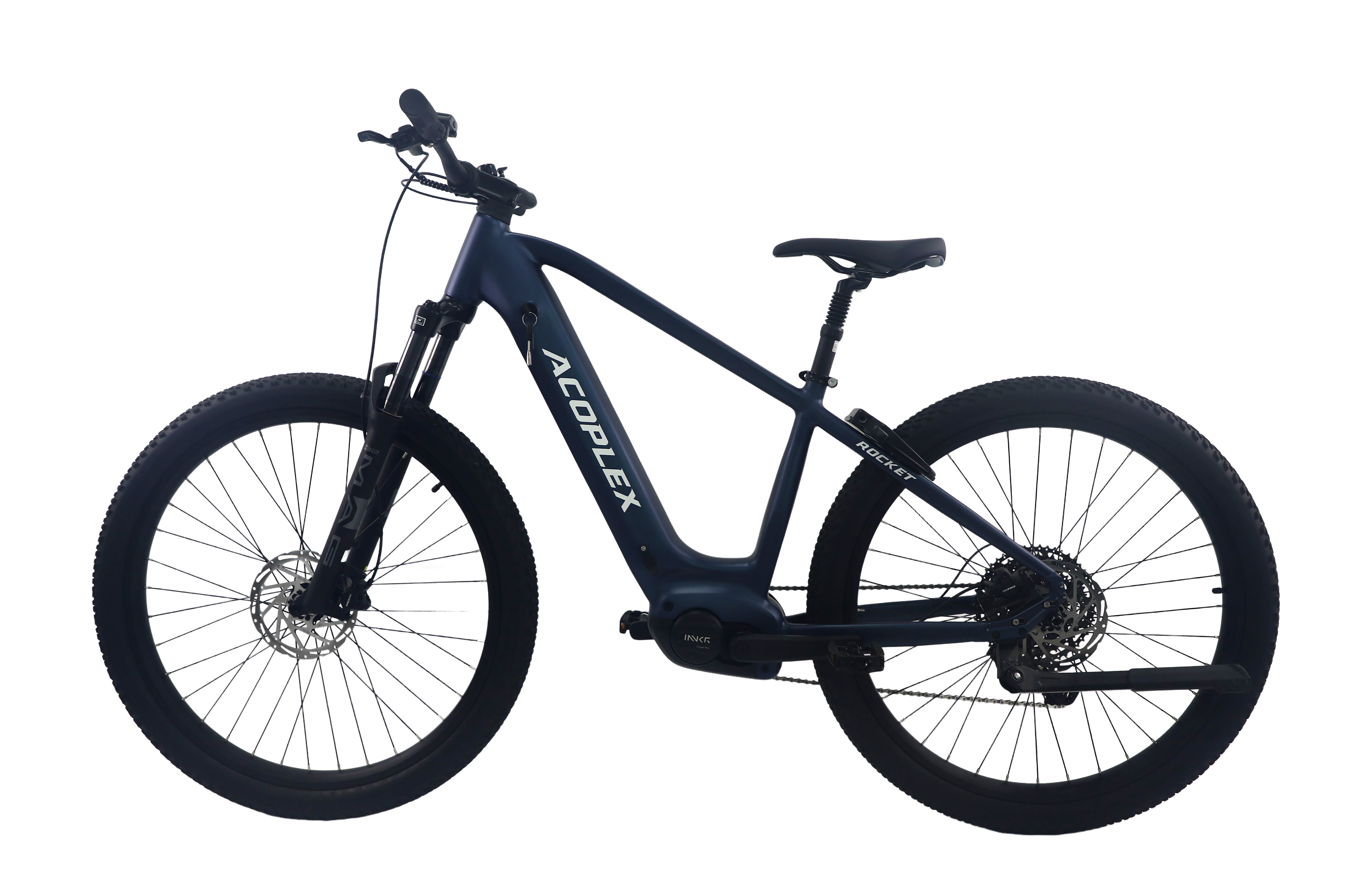
That standard sounds obvious and is rarely met. In the ACOPLEX catalogue, the ROCKET electric mountain bike carries two different battery figures on the same product record: the specification field lists a 48V/7AH Samsung lithium-ion battery, while the selling-point text describes a 48V 14.7Ah Samsung battery with 80–100 km of range. Both sentences are visible to the buyer at the moment of quotation. Only one of them can enter a purchase contract, and the buyer has to force that decision before order release, not after the container arrives.
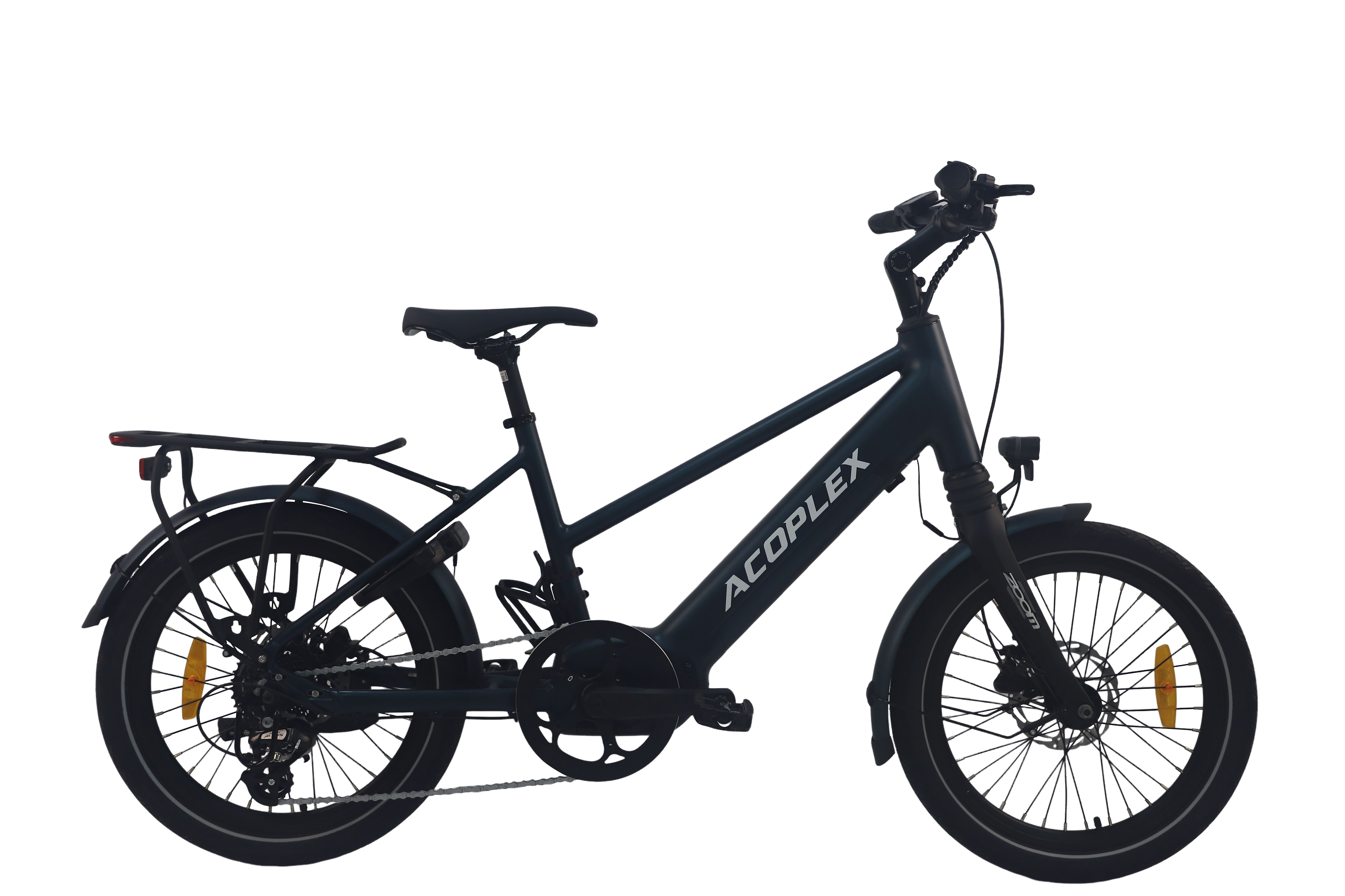
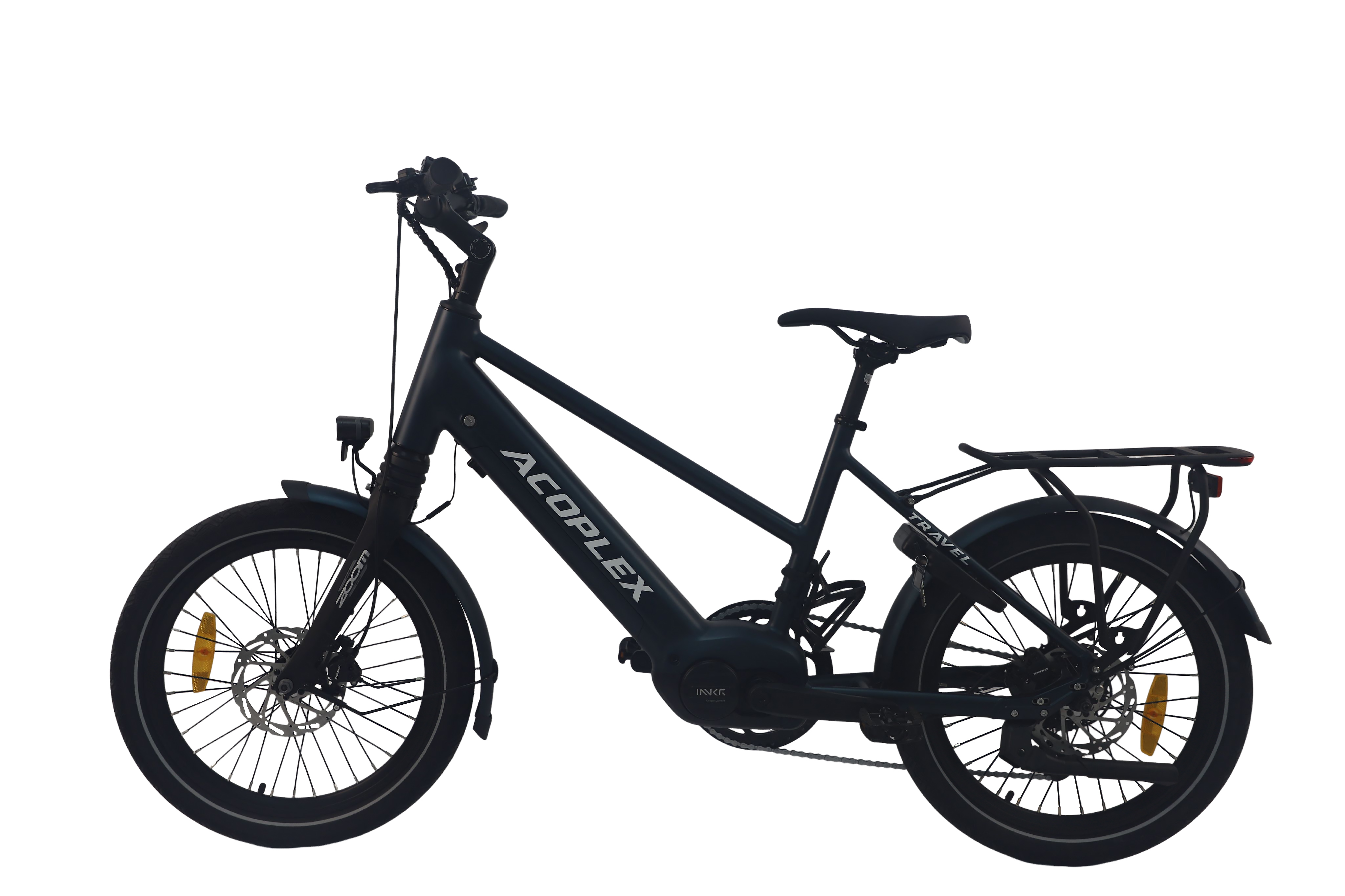
The framework below is built from three ACOPLEX models — TRAVEL, ROCKET and UNICORN — because between them they show the three problem types a buyer will meet: a compact city bike with a documented mid-drive motor, a fat-tyre mountain bike whose battery record does not agree with itself, and a 27.5-inch city bike whose market-specific speed settings and wide-voltage charger are stated explicitly. ACOPLEX Electric Bike is the electric bike brand of Wuxi Purino International Trade Co., Ltd, a trading enterprise based in Wuxi, Jiangsu, China, which supplies electric bicycles, kids scooters and children's balance bikes to EU and US markets.
What a supplier evaluation must actually produce
A completed evaluation produces three signed artifacts, all of them tied to one model version.
- Purchase terms sheet. Model name, version reference, quantity, minimum order quantity, lead time, price basis, delivery terms, warranty and spare-parts provisions.
- Acceptance criteria sheet. The measurable values a delivered unit must meet — motor type and torque, nominal voltage and battery capacity, programmed speed, charger input range, drivetrain and brake specification, frame material, tyre size.
- Pre-shipment delivery check record. The evidence that the units about to be loaded were measured against that acceptance sheet, by whom, and with what result.
If a supplier can quote a price but cannot attach documents two and three to the same model version, the buyer is comparing quotations, not suppliers. That distinction matters most in a category where the visible differences between catalogue entries are small and the invisible ones are not.
Four places where electric bike evaluations break down
- Catalogue text versus specification field. Marketing copy is written by sales; the specification field is written by engineering. They are not always reconciled per model, and the ROCKET battery entry is a concrete example.
- Speed settings left unwritten. A bike programmed for one market does not automatically arrive programmed for another. If the factory setting is not written into the order, the buyer discovers the delivered setting at customs or at the first test ride.
- Charger input range assumed rather than stated. A charger that accepts a narrow input range limits where the bike can be deployed without an additional accessory purchase.
- Version drift. A sample approved in one configuration and a mass-production batch built in another are the same model name and not the same product.
Why written acceptance criteria matter more than catalogue reading
Electric bikes are a large and still-expanding category, which is exactly why documentation discipline separates suppliers. Global electric bike market revenue reached USD 38.7 billion in 2024, according to Strategic Market Research. In Germany, e-bike sales reached 2.05 million units in 2024 and represented 53% of total bicycle sales, according to ZIV, the German bicycle industry association. Within that same market, e-mountain bikes account for 40% of all e-bikes sold.
Volume of that size changes the buyer's risk profile in two directions. First, component configurations converge: aluminum frames account for approximately 73% of global e-bike production, and hub motors held a 66% share of the e-bike drive market in 2024. When most catalogues describe an aluminum frame and a comparable motor, the specification stops being a differentiator and the written acceptance criteria become the differentiator. Second, trade flows have tightened: EU imports of electric bicycles fell by 27% in 2023 to 867,000 units, according to Eurostat. Fewer, larger, more scrutinised orders mean each purchase carries more inventory risk per unit.
Regulation adds a hard floor. Compliance with EN15194 is mandatory for e-bike sales in the EU market, and CE and EN15194 certification is the baseline a European buyer must confirm before anything else is discussed. But EN15194 compliance does not tell a buyer whether the delivered unit has the battery capacity that was quoted, or whether the speed limit was programmed for the destination market. Those are commercial acceptance questions, and they belong in the acceptance criteria sheet, not in the compliance folder.
Segment structure adds a second layer. The European electric cargo bike market was valued at USD 1.2 billion in 2023 with a 40.5% global revenue share, according to Grand View Research. Cargo and fleet deployments multiply the number of units exposed to a single documentation error, because a fleet order is one decision applied to dozens or hundreds of identical bikes.
The six acceptance domains to write into the order
Every domain below maps to a field that exists in the ACOPLEX product record. The point is not to list specifications, but to decide which value gets signed.
1. Motor type and rated torque
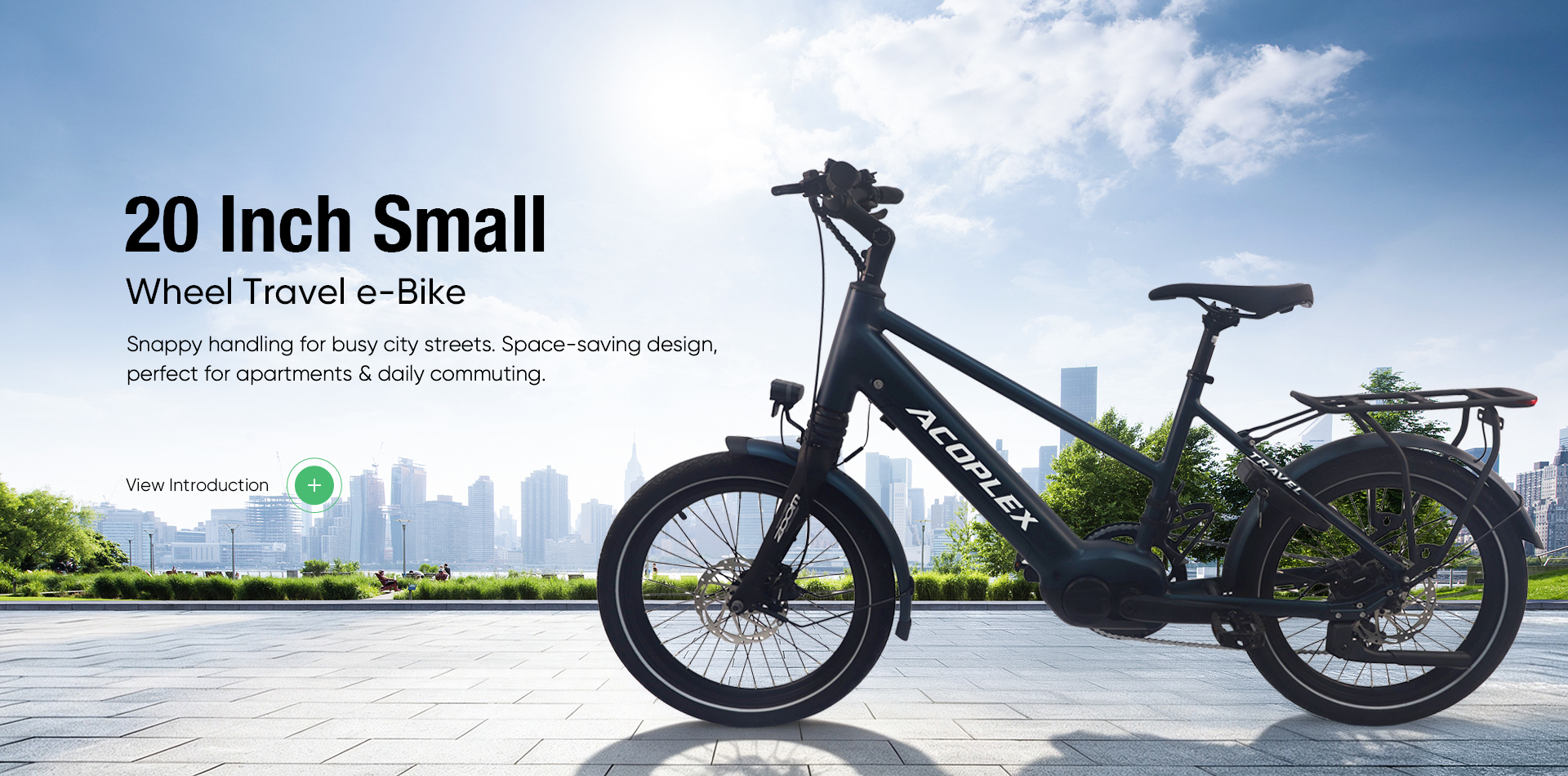
Motor type determines riding character, service requirements and the spare-parts list. The TRAVEL model uses a 48V 250W Oxygen Comfort mid-drive motor rated at 60 N.m, with the motor unit itself weighing 3.0 kg. The ROCKET model uses a 48V 250W Oxygen plus mid-drive motor rated at 95 N.m. The UNICORN model lists a 48V 250W Oxygen comfort motor, with drive type and torque not stated in the supplied record.
That last sentence is the practical lesson. A buyer comparing three quotes should be able to write, for each model, the drive configuration, the rated voltage, the rated power, the rated torque and the motor weight. Where the record is silent, the acceptance criteria sheet should say so explicitly and require written confirmation, rather than assume the higher figure. The gap between 60 N.m and 95 N.m is the difference between a city bike tuned for smooth pedal assist and a mountain bike tuned for climbing, and it cannot be resolved by the model's appearance.
2. Voltage and battery capacity — the ROCKET case
Battery capacity drives unit price, vehicle weight, realistic range and, in some markets, declaration and transport classification. It is also the field where catalogue inconsistency is most expensive.
The three models show how differently the same information can be presented. TRAVEL states a genuine Samsung 48V 7AH lithium-ion battery with a practical range of 40–50 km and a 3–4 hour fast charge. UNICORN states a 48V/7AH Samsung lithium-ion battery charged by an AC 100–240V 4.5A smart charger in 4–6 hours. ROCKET states a 48V/7AH Samsung lithium-ion battery in the specification field, and a 48V 14.7Ah Samsung battery with 80–100 km of range and a 4–6 hour charge in the selling-point text.
The correct acceptance fields are: nominal voltage, nominal capacity in Ah, cell supplier as stated, charge time, and the test conditions under which any range figure was measured. Range figures in particular should be treated as a claim tied to stated test conditions, not as a guaranteed field result.
3. Speed programming by market
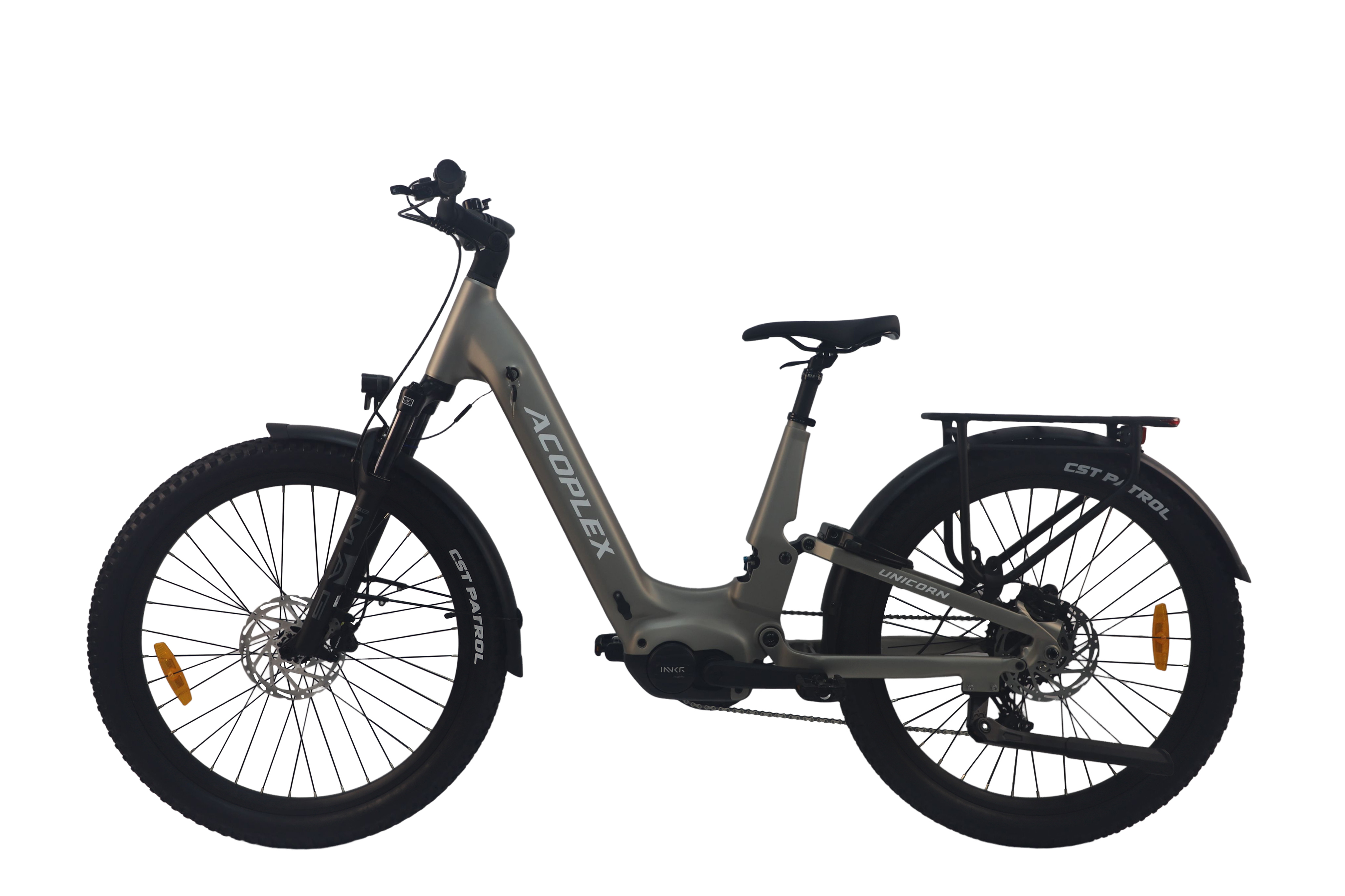
Factory speed programming is a market-entry question disguised as a technical detail. The UNICORN record states dual factory-programmed limits: 25 km/h for the EU market and 32 km/h for the USA and Canada, described as complying with regional e-bike regulatory requirements out of the box.
Where a supplier offers market-specific programming, the acceptance criteria should specify three things: the factory setting for the destination market, how that setting is locked or documented, and whether it can be changed after delivery. Where the record does not state a setting — as is the case for TRAVEL and ROCKET in the supplied data — the buyer should require written confirmation rather than accept an implicit assumption that the bike will arrive market-ready.
4. Charger input range
Charger specification decides where a bike can be operated without buying extra accessories. The UNICORN record states a universal wide-voltage smart charger accepting AC 100V–240V at 4.5A, completing a full charge in 4–6 hours with multiple safety protection mechanisms. TRAVEL references a universal smart charger with a 3–4 hour charge time, without stating the input range. ROCKET references a smart charger with a 4–6 hour charge time, also without stating the input range.
Acceptance fields: input voltage range, output specification, charge time, plug type for the destination market, and the safety markings on the charger body. A buyer distributing into several countries should treat the charger as a separate line item in the acceptance sheet, because a single-voltage charger can quietly convert a compliant bike into an unusable one in a second market.
5. Drivetrain, brakes and front suspension
These are the components a buyer is most likely to compare across quotes and least likely to write down precisely. The ACOPLEX records support exact wording.
- TRAVEL: SHIMANO 8-speed gears with KMC chain and 52T aluminum crankset; front and rear hydraulic disc brakes; ZOOM brand aluminum alloy suspension fork; 20×2.0 CST tyres.
- ROCKET: SHIMANO 11-speed gears with KMC chain; front and rear hydraulic disc brakes; Suntour brand aluminum alloy suspension fork; 29×4.0 CST fat tyres.
- UNICORN: SHIMANO 9-speed gears; front and rear hydraulic disc brakes; Suntour brand aluminum alloy suspension fork; 27.5×2.6 CST tyres; aluminum alloy handlebar and stem; Wellgo pedals.
Acceptance criteria should name brand and gear count rather than accept the phrase "or equivalent". The difference between an 8-speed and an 11-speed drivetrain, or between a ZOOM and a Suntour fork, is a real cost difference that a substitution clause erases from the contract while leaving it visible in the delivered goods.
6. Model consistency and version control
Model consistency is a process, not a check. It means that one model has one master record, that every commercial document references a version of that record, and that a change to any parameter — battery capacity, motor torque, fork brand, tyre size — creates a new version rather than an edited sentence in a catalogue.
The ROCKET battery entry shows why. Two numbers, both plausible in isolation, both attached to the same model name. A buyer who does not run version control will discover which number was real only at the inspection stage, when the negotiating position is weakest. Version control is also what makes a sample meaningful: a sample is only evidence if it is the same version as the mass-production order.
Frame material is a useful control field here because it is stated consistently across the range. All three models are built on 6061 aluminum alloy frames, so a delivered unit with a different frame material is immediately identifiable as an out-of-version product rather than a debatable specification.
Step-by-step: releasing an electric bike order
The sequence below converts the six domains into a release gate. Each step produces an output that the next step depends on.
Where this framework applies
The same three-document structure fits every project type in the ACOPLEX record, but the emphasis shifts.
- Retail and distributor procurement. The dominant risk is catalogue inconsistency, because the buyer resells on the strength of the catalogue claim. The ROCKET battery entry is the relevant control point.
- OEM and ODM customization projects. Customization covers frame and fender colour, wheel size, battery capacity and other specification choices, so version control becomes the primary control. Every customization option must generate a new version reference, or the approved sample stops being evidence.
- Commercial fleet and rental deployment, including campus and resort rental. Commercial and rental use requires enhanced durability and after-sales provisions, which means the acceptance sheet should carry service and spare-parts commitments alongside hardware values.
- Urban commuting. The acceptance emphasis is on weight, wheel size and drivetrain. TRAVEL is the compact case: a 20×2.0 CST small-wheel design with a 23.5 kg total vehicle weight, suited to short-range daily trips with a stated 40–50 km range.
- Logistics and last-mile delivery. Where cargo models are used, the bike acts as a light cargo carrier and requires supporting equipment such as racks and boxes. Those accessories belong in the purchase terms sheet, not in a separate later conversation.
- Regional deployment. The UNICORN record shows the pattern clearly: 25 km/h factory setting for the EU, 32 km/h for the USA and Canada, with a 100–240V charger that travels across most household power supplies.
Applications in the record are described as common in the United States and Canada and as typically applied in Germany and France. For a buyer, that geographic note is a prompt: the market determines the speed setting, the charger plug and the compliance evidence, and each of those must appear in the acceptance sheet for the destination market rather than in a general annex.
Comparing the three models on acceptance criteria
The table records only values that appear in the supplied product record. Cells marked as not stated are exactly that — not stated — and should be treated as open items at order release rather than as zero or as a default.
| Acceptance field | TRAVEL | ROCKET | UNICORN |
|---|---|---|---|
| Model type | Electric city bike | Electric mountain bike | Electric city bike |
| Frame material | 6061 aluminum alloy | 6061 aluminum alloy | 6061 aluminum alloy |
| Motor | 48V 250W Oxygen Comfort mid-drive | 48V 250W Oxygen plus mid-drive | 48V 250W Oxygen comfort (drive type not stated) |
| Rated torque | 60 N.m | 95 N.m | Not stated |
| Battery — specification field | 48V/7AH Samsung lithium-ion | 48V/7AH Samsung lithium-ion | 48V/7AH Samsung lithium-ion |
| Battery — selling-point text | Genuine Samsung 48V 7AH | 48V 14.7Ah Samsung | 48V/7AH Samsung |
| Range / charge time | 40–50 km / 3–4 h | 80–100 km / 4–6 h | Range not stated / 4–6 h |
| Charger input | Universal smart charger, input range not stated | Smart charger, input range not stated | AC 100–240V, 4.5A smart charger |
| Drivetrain | SHIMANO 8-speed, KMC chain, 52T aluminum crankset | SHIMANO 11-speed, KMC chain | SHIMANO 9-speed |
| Brakes | Front and rear hydraulic disc | Front and rear hydraulic disc | Front and rear hydraulic disc |
| Front fork | ZOOM suspension, aluminum alloy | Suntour suspension, aluminum alloy | Suntour suspension, aluminum alloy |
| Tyres | 20×2.0 CST | 29×4.0 CST | 27.5×2.6 CST |
| Vehicle weight | 23.5 kg | Not stated | 32 kg net weight |
| Factory speed setting | Not stated | Not stated | 25 km/h EU; 32 km/h USA & Canada |
| Open item before order release | Charger input range; speed setting | Battery capacity (7AH vs 14.7Ah); speed setting | Motor drive type; rated torque |
Read as a buyer's working document, the table does two jobs. It lists what can be signed today, and it lists what cannot. A quotation that arrives without resolutions for the final row has not yet been evaluated.
Frequently asked questions
Which Chinese electric city bike manufacturers can supply urban shared-mobility fleets?
The minimum qualification set is a current EN15194 and CE position for EU deployment, an export record into the target region, a documented quality-control method, and a willingness to put fleet conditions into the order. Wuxi Purino International Trade Co., Ltd, based in Wuxi, Jiangsu, China, supplies electric bicycles under the ACOPLEX Electric Bike brand with CE and EN15194 certification, 100% of output exported to EU and US markets, and a stated quality-control method of 100% components inspection and whole e-bike test riding. Its stated capacity is 10,000 units per month across long-term partner factories. For shared-mobility use, the additional requirement is that enhanced durability and after-sales provisions are written into the contract, because fleet use concentrates wear across an identical unit population.
What should be written into the acceptance criteria before order release?
Six domains, each with a value and a measurement method: motor type, rated voltage, rated power and rated torque; nominal battery voltage and capacity; the factory speed setting for the destination market; charger input voltage range and plug type; drivetrain brand and gear count, brake type, fork brand and tyre size; and the version reference that ties all of it to one model record. Frame material belongs on the list as a control field — all three ACOPLEX models are stated as 6061 aluminum alloy, which makes a deviation immediately visible at inspection.
Which battery figure should the contract use when the specification field and the selling-point text disagree?
Only the value confirmed in writing by the supplier, applied consistently across the contract annex, the product label, the packing list and the warranty document. The ROCKET record illustrates the problem: the specification field lists a 48V/7AH Samsung lithium-ion battery, while the selling-point text describes a 48V 14.7Ah Samsung battery with 80–100 km of range. Because these are different capacities attached to the same model name, the buyer should request a single confirmed figure and treat the other as superseded. The same discipline applies to any range or charge-time claim, which should be recorded together with its test conditions rather than as an unconditional guarantee.
Can a buyer request a sample and a pre-shipment inspection before a bulk order?
Yes, and both should reference the same version as the mass-production order. Wuxi Purino lists sample arrangement among its one-stop services, alongside product selection, quotation, production tracking, quality control and after-sales technical support. The sample is only valid as evidence if the version it represents is the version that will be produced; where a customization changes frame colour, wheel size or battery capacity, that change creates a new version and therefore a new reference point. The pre-shipment inspection should then be measured against the same acceptance criteria sheet signed at order release.
What purchase terms should a first electric bike order expect?
The stated terms for ACOPLEX programs are a minimum order quantity of 50 pcs, a lead time of 45–60 days and a monthly capacity of 10,000 units, with OEM and ODM customization covering frame and fender colour, wheel size, battery capacity and related specification choices. Quotation follows the frozen specification sheet rather than preceding it, because battery capacity and drivetrain choices change the bill of materials. Buyers preparing a first order can start by sending the intended model, the destination market, the required speed setting and the confirmed battery capacity, and requesting a quotation and sample against that single version. Contact: purinocycle.com, nancy@puruinuo.com, WhatsApp +86 153-1223-9200.
Conclusion
An electric bike supplier evaluation succeeds or fails on documentation, not on catalogue quality. The buyer who leaves the process with a purchase terms sheet, a frozen acceptance criteria sheet and a pre-shipment check record tied to one model version has something enforceable. The buyer who leaves with a quotation and a PDF has a starting position for a dispute.
The ROCKET battery record is worth remembering precisely because it is unremarkable: two plausible numbers, one model name, no flag raised anywhere in the sales process. Catching that kind of gap is not a matter of expertise in electric bikes. It is a matter of deciding, before order release, that every specification value has to be written down, confirmed in writing, and checked once more before the container is sealed.
Next step: evaluate against one version, not one brochure
If you are preparing an electric bike order for the EU, US or Canadian market, send the intended model, the destination market and the configuration you need confirmed. ACOPLEX can supply a quotation, a sample arrangement and a specification sheet for the same version, so the acceptance criteria you sign match the units you receive.
Website: www.purinocycle.com | Email: nancy@puruinuo.com | WhatsApp: +86 153-1223-9200
Have Questions or Need More Details?
Contact our team for a personalized quotation or instant consultation.
Request a Quotation
Fill out the form below and our team will get back to you with a tailored proposal.
WhatsApp Direct Chat
Prefer to chat in real-time? Message us on WhatsApp for instant assistance & quick answers.
- Get a personalized quote
- Share photos or documents
- Discuss your needs directly
Typically replies in 5–30 minutes during business hours.