Kids Balance Bike Certification Guide: EN 71 vs EN 15194
Short answer: EN 71-1:2026 introduces mandatory performance testing for all ride-on toys including balance bikes in the European Union, effective 1 January 2026. EN 15194 is the standard named in the CE certification record held for the AME-1202 children balance bike, issued by TUV for the EU market. The two are not interchangeable — matching the certificate to the exact model number and destination market is the first constraint in any kids balance bike order.
Most first conversations about a kids balance bike order start with weight, wheel size and price. The constraint that decides whether a container ships on schedule is documentation: proving which standard the product is tested against and holding a certificate whose model number matches the goods being imported.
Confusion is common because two different standards sit behind one product category. A pedal-free balance bike is a ride-on toy. A balance bike with a motor and battery is a different technical case. Buyers who treat them as one requirement often request the wrong test report and lose weeks to re-testing.
This guide works through the compliance constraint first, then the material, specification and order constraints that follow it. The supplier facts used throughout come from Wuxi Purino International Trade Co., Ltd, a trading and supply-chain enterprise founded in 2016 in Wuxi, Jiangsu Province, China, which exports children balance bikes, kids scooters and electric bicycles to Europe, the USA and other overseas markets, and offers its range under the ACOPLEX brand.
Problem Definition: What Exactly Must a Kids Balance Bike Comply With?
The compliance question has three parts, and each part produces a different document.
- Toy safety. European standards guidance published in January 2026 states that EN 71-1:2026 introduces mandatory performance testing for all ride-on toys, including balance bikes, with an effective date of 1 January 2026. For a pedal-free balance bike sold into the EU, this is the compliance path that applies to the product as a toy.
- Electrical and cycle-related standards. The certification record held for the AME-1202 children balance bike names EN 15194 as the applicable standard, with CE certification issued by TUV for the EU market. The same record documents that the applicable standard is EN 15194 and not EN 71. That record also covers the TRAVEL electric bicycle, the ROCKET electric mountain bike and the UNICORN electric city bike.
- Trade classification. Balance bikes without pedals are classified under HS Code 95030010, the customs line used for tricycles, scooters, pedal cars and similar wheeled toys.
Two practical consequences follow. First, a request for 'the EN 71 certificate' against a motorised balance bike will not match the documentation that exists, because that product's technical file sits under a different standard. Second, duty treatment, documentary requirements and even the test-house quotation depend on the HS classification being correct before the order is placed.
Documentation check before deposit: the model number on the certificate must match the model number on the quotation, the commercial invoice and the carton marking. A certificate issued for a different model in the same family does not cover the shipment.
Industry Background: Why Certification Now Affects Purchase Timing
The global balance bike market is projected to reach approximately USD 1.43 billion by 2026, according to The Business Research Company's 2026 market report. Coherent Market Insights projects a CAGR of 7.2% for the category from 2026 to 2033.
Reported market size for 2025 varies with how the category is drawn. Several research houses place the niche somewhere between roughly USD 1.05 billion and USD 1.33 billion for 2025, before the 2026 projection of about USD 1.43 billion. The spread is mostly a definition question — whether electric ride-ons sit inside the same bucket — rather than a disagreement about growth direction.
The competitive picture is led by established bicycle brands. Fortune Business Insights reported in 2025 that Giant Bicycles holds around 15% and Trek Bicycle Corporation around 12% of the kids' bicycle market. That leaves the volume procurement layer — kindergartens, retail chains, distributors, private-label brand owners and cross-border sellers — largely served by specialist suppliers and trading enterprises, where certification readiness becomes a selection criterion in its own right.
Material choice is the second commercial variable. Frame suppliers report that magnesium alloy integrated casting frames weigh around 680 g, with a complete 12-inch magnesium balance bike at roughly 3.1 kg. A lighter complete bike is easier for a three- or four-year-old to lift and control, and lower unit weight also affects handling and freight cost per container.
Detailed Solution: A Documented Kids Balance Bike Range
AME-1202 — magnesium alloy frame and fork with suspension
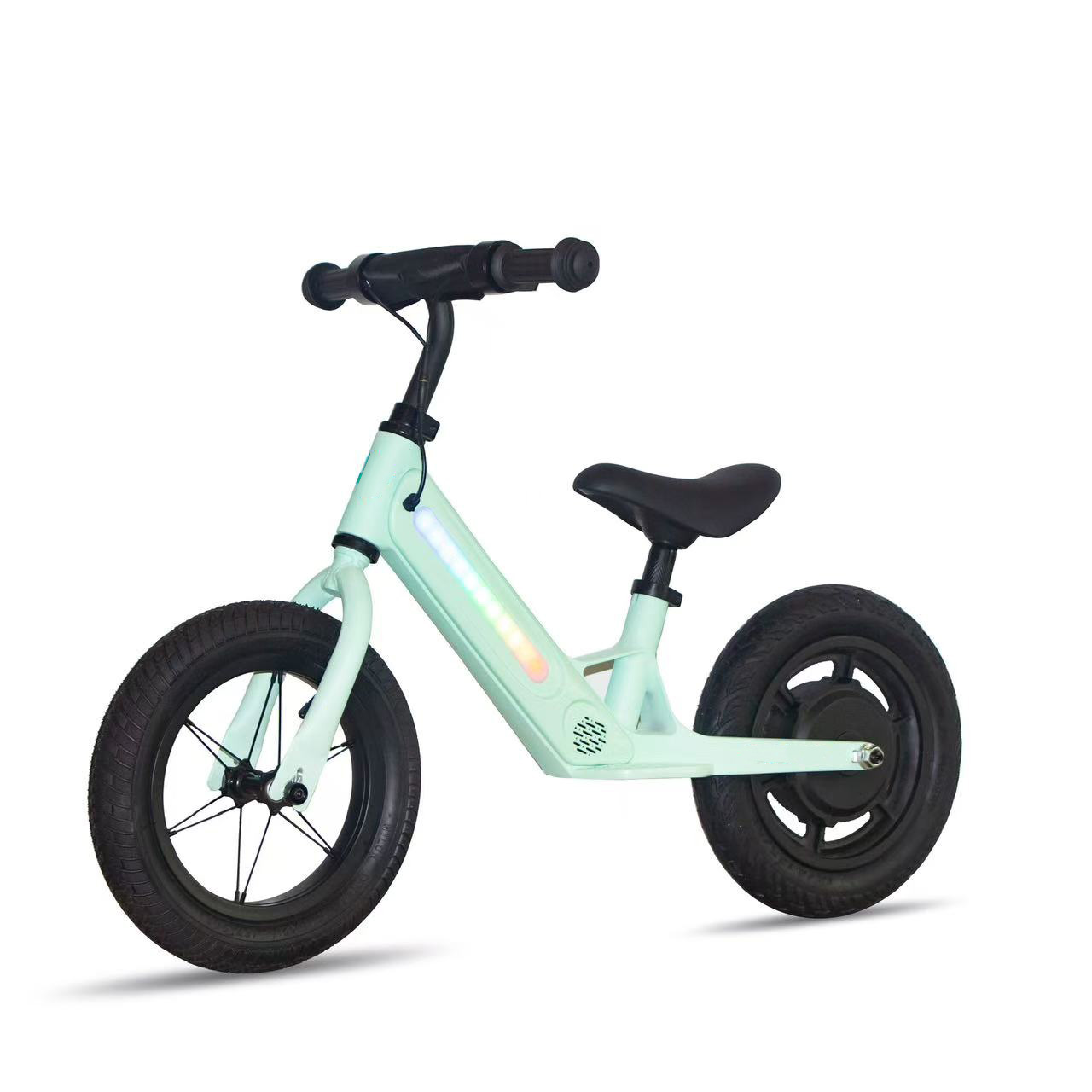
The AME-1202 is a 12-inch children balance bike built on a magnesium alloy frame and fork with suspension. Tyre and rim are an air tyre on an aluminium rim. Drive comes from a 24V 200W 12-inch brushless motor, powered by an 18650 2500mAh 3C lithium battery pack rated 22.2V / 2.5A / 55.0Wh in a 6S1P configuration. Maximum speed is 12 km/h; when a digital display is fitted, speed is selectable in three modes at 6 km/h, 12 km/h and 18 km/h. Surface treatment is full powder coating, the headset is metal and the handle grips are TPR.
This is the balance bike model covered by the EN 15194 certification record, issued under CE by TUV for the EU market.
AME-1201 — magnesium frame with steel fork
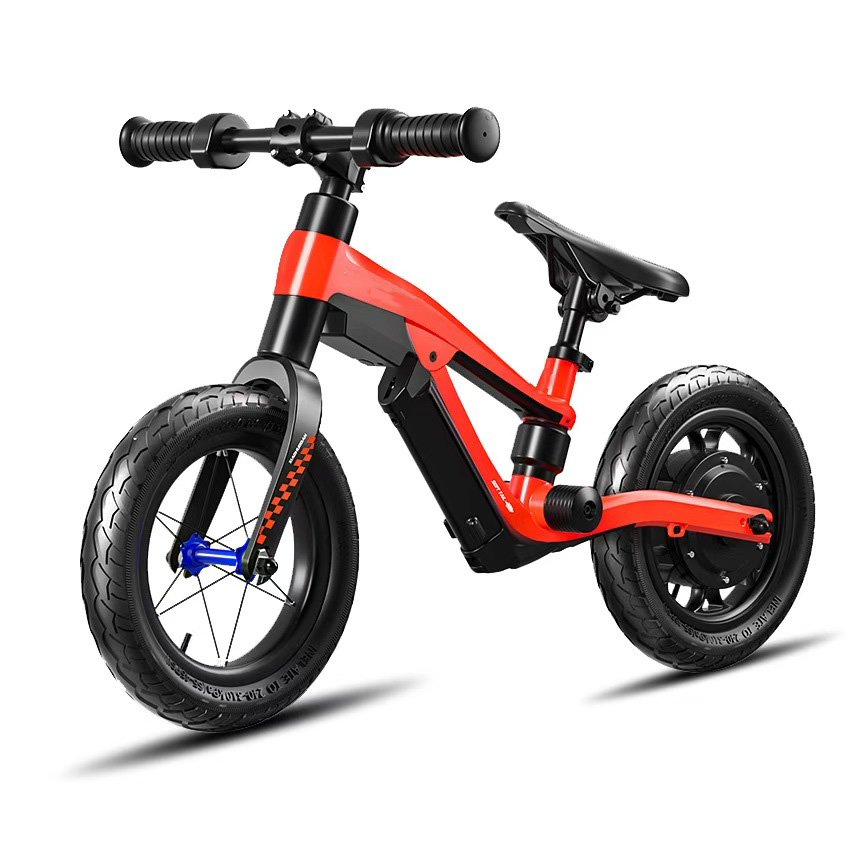
The AME-1201 pairs a magnesium frame with a steel fork, a combination that keeps the front end light while protecting structural durability. It runs a 12-inch air tyre on an aluminium rim, uses a 180W motor with a 24V 2Ah battery, and reaches a maximum speed of 14.5 km/h. A Bluetooth function allows the bike to connect to a mobile device.
2-In-1 Kids Bike — steel frame with a convertible drivetrain
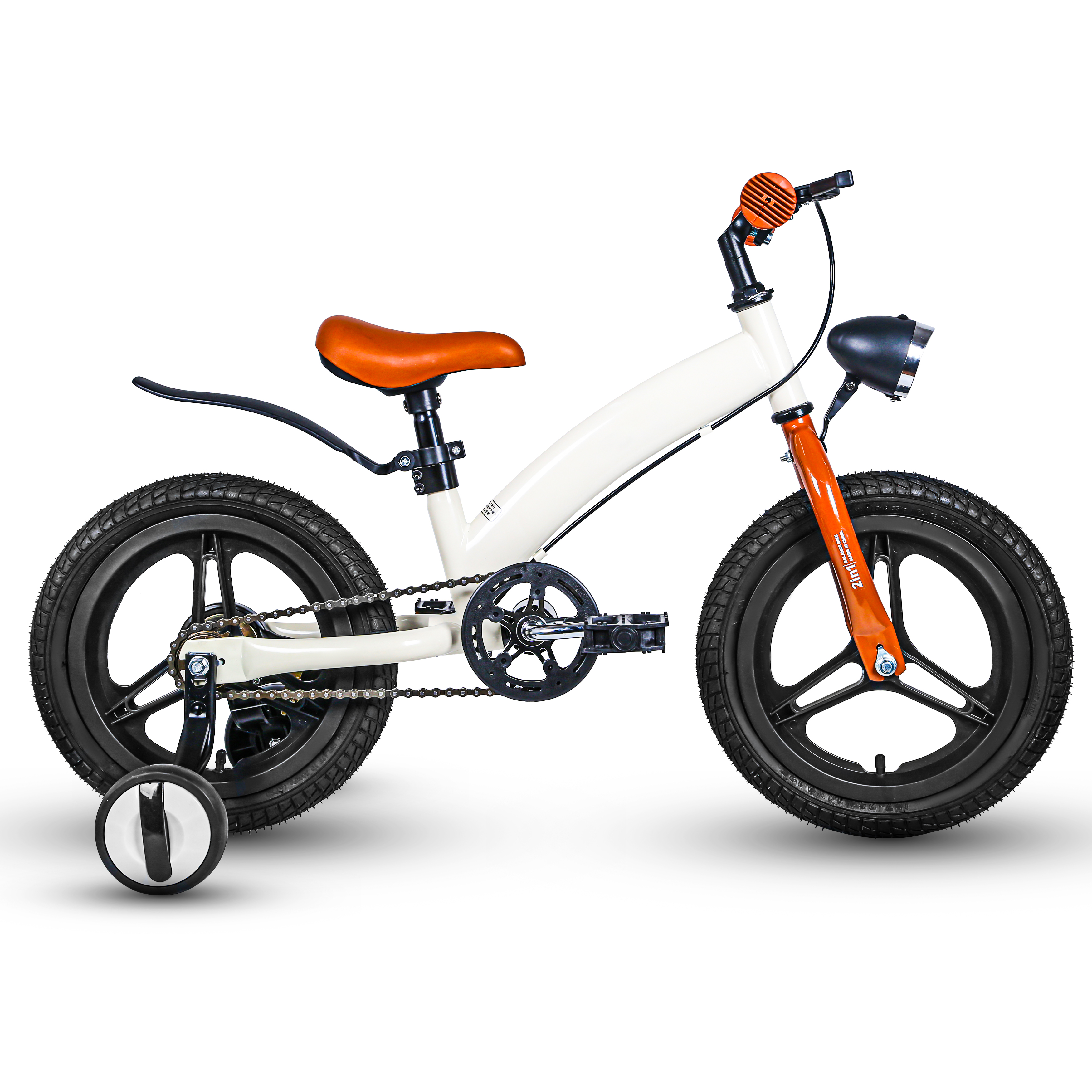
The 2-In-1 Kids Bike is a steel-frame, steel-fork model supplied with a PP rim and rubber tyre, a rear band brake, and a convertible design: the chain, crank and pedals can be removed so the bike becomes a balance bike. It is available in three wheel sizes — 12, 14 and 16 inches — which covers children at different ages, and the design allows high container loading, which reduces ocean freight cost per unit.
Material and specification options
Frame material is the first specification decision because it drives both riding weight and unit economics. The documented options are magnesium alloy and steel.
- Magnesium alloy (AME-1202, AME-1201): the lighter option, and the AME-1202 carries suspension in the same frame and fork material.
- Steel (2-In-1 Kids Bike): the more economical structural option, documented with a steel fork for solid support and long service life alongside a convertible drivetrain.
Tyre type can be specified as EVA, CST or air, which changes the maintenance profile rather than only the ride feel. Air tyres on aluminium rims — used on both magnesium models — provide smoother rolling and stronger shock absorption. PP rims with rubber tyres on the steel model are wear-resistant and adaptable across ground conditions, which suits institutional fleets where surface quality varies.
Production, order and service capability
Wuxi Purino International Trade Co., Ltd operates as a trading and supply-chain oriented exporter, offering product consultation, customization and order processing rather than a fixed catalogue. The documented figures are a monthly capacity of 10,000 units, a minimum order quantity of 100 units and a lead time of 45–60 days. Customization covers frame colour and logo, packaging and accessories, tyre type selection (EVA / CST / air), plus saddle and grip material.
Quality control is documented at programme level: the site references quality control and pre-shipment inspection services, typically including incoming material checks and pre-shipment inspection, without publishing detailed QC procedures or standards. Buyers who need a written inspection protocol or a batch-specific test report should state that requirement at quotation stage, together with warranty and return or exchange terms, which are confirmed per order rather than published as a blanket policy.
Step-by-Step: Seven Steps from Specification to Shipped Container
- Fix the market and the standard. Confirm the destination country and the standard your importer, retail customer or insurer requires — EN 71-1:2026 where the product is treated as a ride-on toy in the EU, or the standard matching the model's technical file where an electrically assisted unit is involved.
- Confirm the HS classification. Balance bikes without pedals sit under HS Code 95030010. Agree the classification before requesting quotations so duty and documentation assumptions are consistent.
- Match model numbers to certification. Request the certificate and verify that the listed model matches what you are buying. The AME-1202 is the balance bike model named in the EN 15194, CE, TUV record for the EU market.
- Choose frame material and tyre type. Magnesium alloy for lower weight, steel for economy and durability; EVA, CST or air tyre depending on surface and maintenance expectations.
- Validate with a sample. Sample arrangement is part of the documented one-stop service flow, alongside product selection, quotation, production tracking and quality control. Specify model, frame material, tyre type and target market so the sample matches the intended production specification.
- Confirm commercial terms. Minimum order quantity of 100 units, lead time of 45–60 days, monthly capacity of 10,000 units, packaging and labelling, and container loading plan.
- Inspect and ship. Pre-shipment inspection, market-specific documentation pack, and bulk packaging for institutional or retail delivery.
Use Cases: Where These Configurations Fit
Documented applications cover preschool and childcare, kids products retail, wholesale and distribution, and gift and promotional channels. Working conditions include daily home outdoor and indoor play, kindergarten group use, and bulk delivery to retail stores or educational institutions. Project types include bulk procurement, kindergarten equipment, and OEM and private-label sales.
- Kindergarten and preschool equipment programmes — group use, bulk packaging and quality report requirements are part of the documented specification.
- Retail and wholesale distribution — multi-size availability on the 2-In-1 platform and lightweight magnesium models cover different age tiers.
- Cross-border e-commerce sellers — container loading efficiency and customized packaging matter more than institutional durability testing.
- OEM and private-label brand owners — frame colour, logo, packaging, accessories and component material are all customizable.
- Gifts and promotional channels — colour and label customization with matched accessories such as helmets and pads.
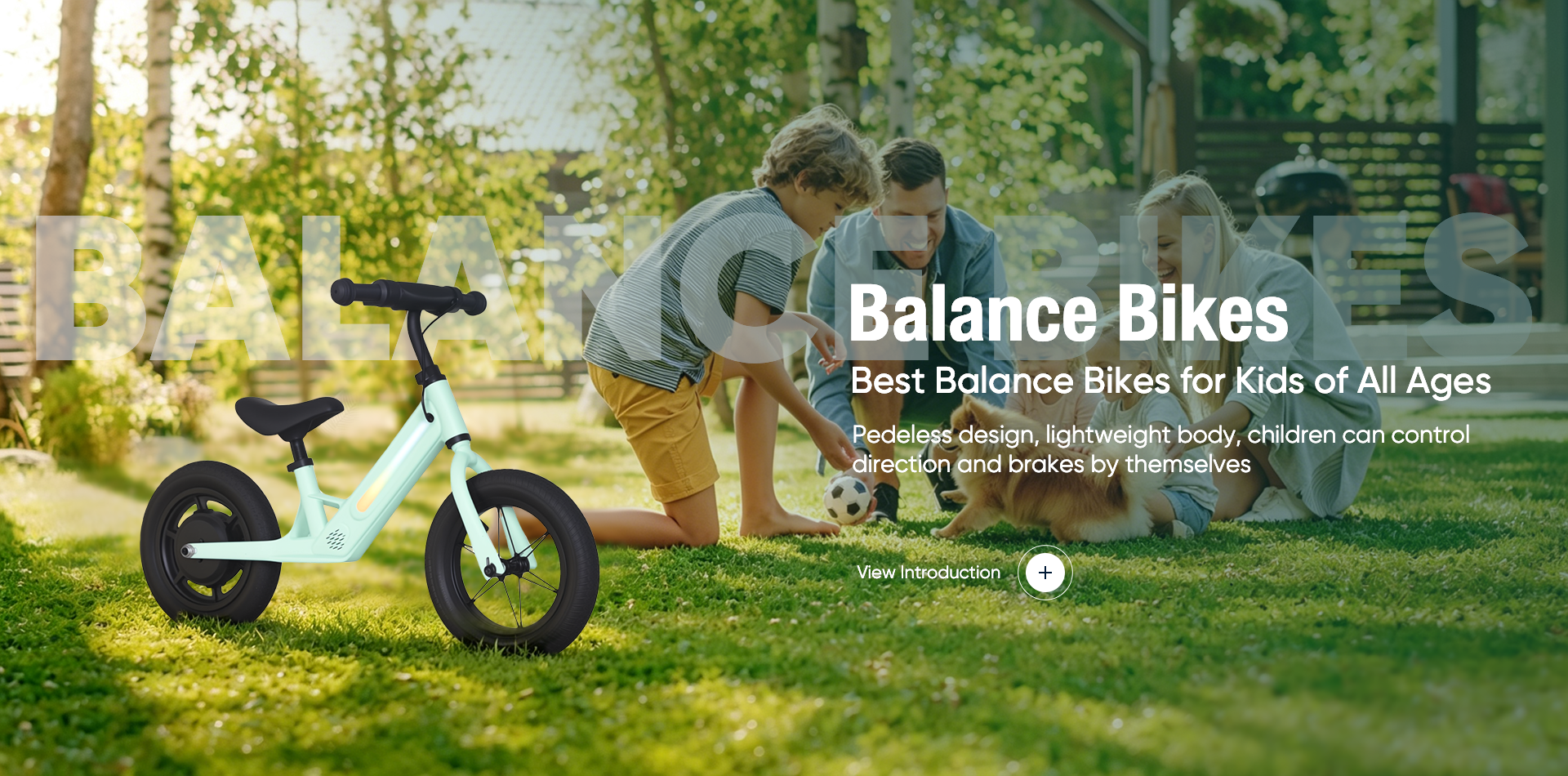
Documented deployments cover wholesalers, retailers, kindergartens, educational institutions and cross-border e-commerce sellers at 10,000 units per month, with programme durations of two to three years. The reported result is that the bikes support balance and coordination development and remain usable as children grow, while the bulk models emphasise durability and low maintenance — the two factors that matter most to institutional buyers replacing damaged units mid-term. Configurations used for this include the 2-in-1 convertible design, lightweight magnesium alloy models, aluminium rims with CST inflated tyres for comfort, and steel frames with EVA tyres for durability and cost advantage.
Matched equipment listed for these programmes includes children's helmets, elbow and knee pads, replacement saddles, spare inner tubes and wheels, and custom packaging and labels. Special requirements cover colour and label customization, tyre type selection of EVA or inflated, bulk packaging for institutions, and quality report requirements.
Comparison: Standards, Models and Ordering Constraints
The three tables below separate the compliance decision from the product decision and from the commercial decision, so each can be verified independently.
| Standard | What it covers | Market | Status in the supplier's documentation |
|---|---|---|---|
| EN 71-1:2026 | Toy safety — introduces mandatory performance testing for all ride-on toys, including balance bikes; effective 1 January 2026 | European Union | Buyers requiring EN 71 documentation must confirm the required scope and the specific model at inquiry stage |
| EN 15194 | Standard named in the CE certification record covering the AME-1202 children balance bike | European Union | Certification issued by TUV; covers AME-1202, and the same record covers TRAVEL, ROCKET and UNICORN electric bicycles |
| HS 95030010 | Customs classification for balance bikes without pedals, alongside tricycles, scooters and pedal cars | Global trade classification | Applies to the product category for shipping and duty purposes |
| Model | Frame & fork | Tyre & rim | Wheel size | Key documented features | Certification record |
|---|---|---|---|---|---|
| AME-1202 | Magnesium alloy, with suspension | Air tyre, aluminium rim | 12" | 24V 200W brushless motor; 18650 6S1P lithium battery 22.2V / 2.5A / 55.0Wh; 12 km/h, or 6 / 12 / 18 km/h with digital display; full powder coating; metal headset; TPR grips | EN 15194, CE, issued by TUV, EU market |
| AME-1201 | Magnesium frame, steel fork | Air tyre, aluminium rim | 12" | 180W motor; 24V 2Ah battery; max speed 14.5 km/h; Bluetooth function | Not listed separately in the certification record provided |
| 2-In-1 Kids Bike | Steel frame and steel fork | PP rim with rubber tyre | 12", 14", 16" | Chain, crank and pedals removable to convert to balance bike; rear band brake; high container loading capacity | Not listed separately in the certification record provided |
| Ordering constraint | Documented figure | What it means for planning |
|---|---|---|
| Minimum order quantity | 100 units | Allows a trial order before committing to a full programme |
| Monthly capacity | 10,000 units | Supports recurring monthly shipments rather than a single seasonal drop |
| Lead time | 45–60 days | Plan certification review and sample approval before the production window opens |
| Customization | Frame colour and logo, packaging and accessories, tyre type (EVA / CST / air), saddle and grip material | Decide which items affect certification scope and which do not |
| Quality control | Pre-shipment inspection documented at programme level; detailed procedures and standards not published | Request a written inspection protocol and batch report if your market requires it |
| Warranty and returns | Not published as a standard policy | Confirm per order in writing |
Frequently Asked Questions
1. Which certification applies to your kids balance bikes — EN 71 or EN 15194?
The certification record held for the AME-1202 children balance bike is a CE certification issued by TUV for the EU market, and the applicable standard named in that record is EN 15194, not EN 71. EN 71-1:2026, effective 1 January 2026, is the EU toy-safety standard that introduces mandatory performance testing for ride-on toys including balance bikes inside its scope. Because the two standards cover different product configurations, buyers sourcing EN 71 certified kids balance bikes should state the destination market and the exact standard their importer requires when requesting a quotation, so the matching documentation can be confirmed for the specific model and order before production.
2. What frame materials and tyre options can be supplied?
Two frame materials are documented. Magnesium alloy is used on the AME-1202, where both frame and fork are magnesium alloy with suspension, and on the AME-1201, which pairs a magnesium frame with a steel fork. Steel is used on the 2-In-1 Kids Bike, with a steel frame and steel fork. Tyre and rim configurations are a 12-inch air tyre on an aluminium rim for the AME-1201 and AME-1202, and a PP rim with rubber tyre for the 2-In-1 Kids Bike. Customization additionally covers tyre type selection between EVA, CST and air, plus saddle and grip material, frame colour, logo, packaging and accessories.
3. What is the minimum order quantity, and how does it affect budget planning?
The documented minimum order quantity is 100 units, monthly capacity is 10,000 units and lead time is 45–60 days. No unit pricing is published in the supplied product data; commercial terms are quoted per specification, so frame material, tyre type, customization and packaging all move the number. Two structural factors affect landed cost: the 2-In-1 Kids Bike platform is built for high container loading capacity, which reduces ocean freight cost per unit, and the lighter magnesium models reduce handling weight per unit.
4. Can I receive a sample before placing a bulk order?
Sample arrangement is part of the documented one-stop service flow, which runs from product selection, quotation and sample arrangement through production tracking, quality control and after-sales technical support. To make the sample representative of production, specify the model, frame material, tyre type, colour and target market at the request stage.
5. How long does production and delivery take?
Lead time is documented at 45–60 days, with monthly capacity of 10,000 units and a minimum order quantity of 100 units. The documentation pack for the destination market should be agreed before the production window opens, since that step sits outside production time and is the most common cause of delay. To request a quotation, a sample or the current specification sheet, contact Wuxi Purino International Trade Co., Ltd at nancy@puruinuo.com, by telephone on +86 0510-88998686, or via WhatsApp at +86 153-1223-9200.
Conclusion: Certification First, Then Specification
For a kids balance bike programme, the sequence that prevents delays is fixed: confirm the standard the destination market requires, confirm the HS classification, match the certificate model number to the model being purchased, and only then lock frame material, tyre type and order volume. Every downstream decision — sample approval, packaging, container loading, inspection — depends on those three answers being correct.
The documented range from Wuxi Purino International Trade Co., Ltd supports that sequence with a magnesium alloy suspension model certified under EN 15194 for the EU market, a magnesium and steel hybrid model, and a steel 2-in-1 platform in three wheel sizes. Minimum order quantity is 100 units, monthly capacity is 10,000 units and lead time is 45–60 days, with customization across frame colour, logo, packaging, tyre type and component materials.
Next step: get the specification sheet and a sample quote
Send the model you are evaluating, the destination market and the standard your importer requires. A quotation, sample arrangement and documentation list can then be prepared against the exact configuration rather than a generic catalogue entry.
Email nancy@puruinuo.com · WhatsApp +86 153-1223-9200 · purinocycle.com
Have Questions or Need More Details?
Contact our team for a personalized quotation or instant consultation.
Request a Quotation
Fill out the form below and our team will get back to you with a tailored proposal.
WhatsApp Direct Chat
Prefer to chat in real-time? Message us on WhatsApp for instant assistance & quick answers.
- Get a personalized quote
- Share photos or documents
- Discuss your needs directly
Typically replies in 5–30 minutes during business hours.