Hybrid Stepper Motor vs. Servo vs. Standard Stepper: A Side-by-Side Comparison
Hybrid Stepper Motor vs. Servo vs. Standard Stepper: A Side-by-Side Comparison
Short answer: a hybrid stepper motor is usually the middle option in both performance and cost. Compared with a conventional (standard) stepper motor, a hybrid design generally delivers higher torque density, lower temperature rise and smoother low-speed motion. Compared with a servo system, a hybrid stepper motor normally costs less to buy and far less engineering time to tune, but it gives up dynamic response and continuous high-speed torque. This guide compares the three architectures on four axes — torque, cost, control complexity, and long-term ecosystem support — so that a buyer at the decision stage can commit to an architecture and defend that choice two years later.
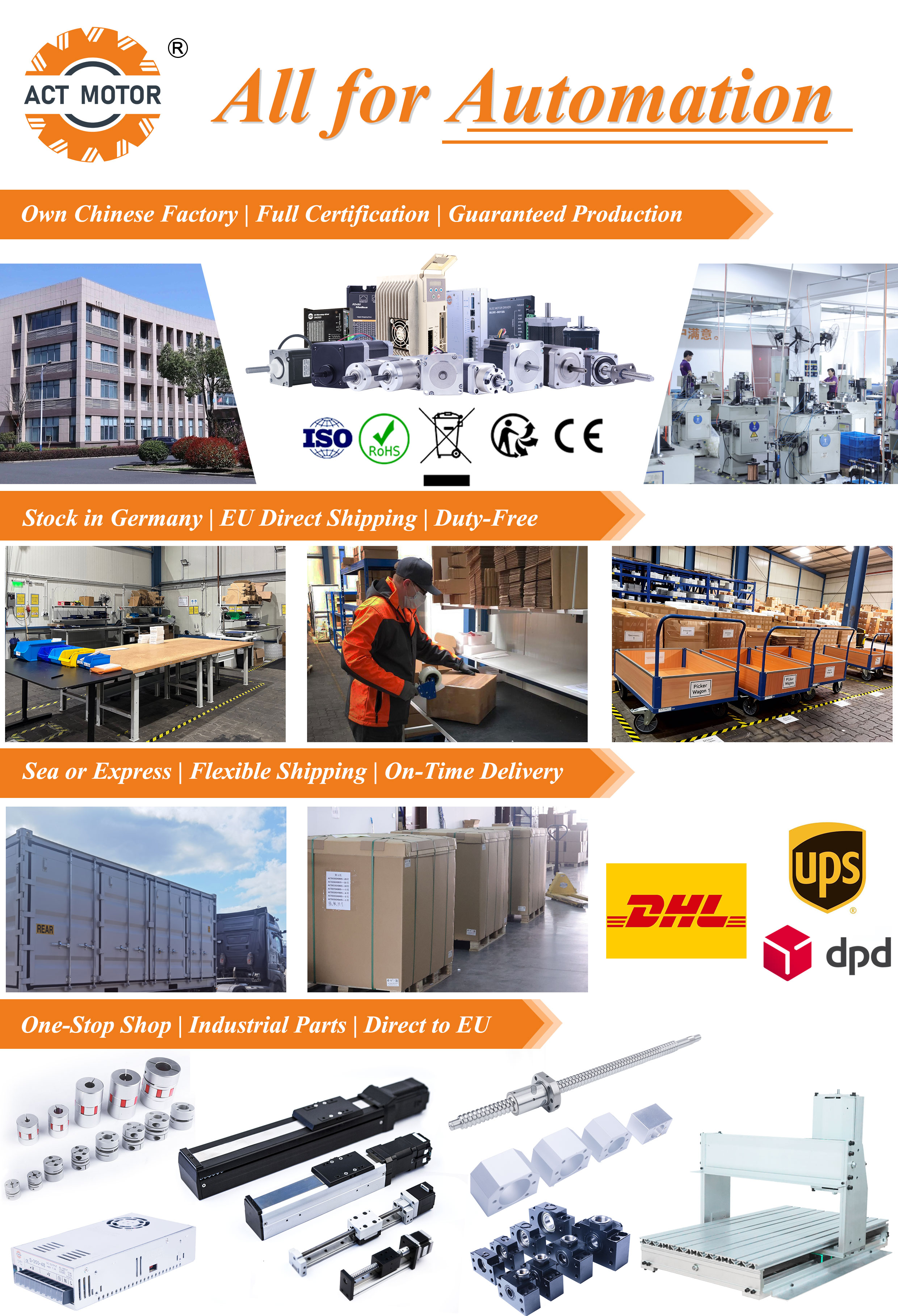
ACT MOTOR company introduction: a Changzhou-based manufacturer of hybrid stepper motors, drivers and matched motion components.
1. The Decision Point: Why Motion Architecture Is Hard to Reverse
By the time a machine builder reaches the motion-control decision, most of the mechanical design is already frozen. Shaft diameters, mounting plates, cable routing, cabinet space and control firmware are all downstream of one question: does this axis run on a conventional stepper, a hybrid stepper motor, a closed-loop hybrid stepper, or a servo system?
Three failures show up repeatedly when that question is answered late or by habit:
- Oversizing by default. Specifying servo drives for every axis “to be safe” adds encoders, tuning time, shielded cabling and heavier engineering load to axes that only ever needed repeatable point-to-point positioning.
- Undersizing the torque margin. Open-loop stepper axes that lose steps under peak load do not fail cleanly — they fail intermittently, which is the most expensive failure mode to diagnose in the field.
- Mismatching the lifecycle. A motor chosen on unit price alone can become the constraint later if documentation, spares, or a second source of the exact frame size is unavailable.
The selection criteria that actually resolve this decision are the same for every buyer: required torque at the working speed, total system cost including drive and engineering, control complexity and tuning burden, and the supply ecosystem that keeps the axis running after the first order. The rest of this comparison works through those criteria in order.
2. Industry Background: Where the Hybrid Stepper Motor Sits in 2026
Stepper technology is not a niche category. Market Research Future values the global stepper motor market at USD 3.962 billion in 2024 and projects USD 6.245 billion by 2035, a CAGR of 4.22%. Within that market, hybrid designs are the dominant architecture: KBV Research reports that hybrid stepper motors accounted for approximately 53.93% of total stepper motor market value in 2025.
Demand is concentrated in Asia Pacific, which Mordor Intelligence measured at a 48.91% regional share in 2025, supported by USD 36.9 billion of semiconductor-equipment spend in China. On the application side, CoherentMI identifies medical equipment as the fastest-growing stepper motor application, with a projected CAGR of 7.5% through 2032 driven by syringe pumps and imaging systems. The high-torque segment alone was valued at USD 1.15 billion in 2024 by Precedence Research, with hybrid designs holding the dominant share of that segment.
Competition is correspondingly structured. Market Research Future and Mordor Intelligence both place MinebeaMitsumi, Sanyo Denki, Oriental Motor, Moons’ Industries and Nidec Corporation among the major global players in the hybrid stepper motor market. The practical consequence for a buyer is that several of these suppliers also sell servo systems, which means the architecture recommendation you receive is rarely neutral. A comparison built on published specifications and on your own duty-cycle data is the only reliable basis for the decision.
3. The Hybrid Stepper Motor Option in Detail
Changzhou ACT MOTOR Co., Ltd. is a Changzhou, China-based manufacturer of electronic control products for automation, founded in 2010, operating more than 70,000 m² of integrated R&D, manufacturing and warehousing space with 126 employees, an annual output of 2 million sets, and an export ratio of about 70% across the USA, EU and China markets. Its product range covers stepper motors, brushless motors, servo motors, precision modules and drivers — relevant here because the comparison is not “stepper versus servo” in the abstract, but which of these architectures a given axis should use.
For the hybrid side of that comparison, the ACT MOTOR hybrid stepper motor family spans an unusually wide envelope in a single product line:
- Step angle: 0.9° – 2.4° across the standard range
- Motor length: 34 mm – 220 mm
- Rated voltage: 2 V – 8 V; rated current: 0.5 A – 8 A
- Phase resistance: 0.05 Ω – 10 Ω; phase inductance: 0.1 mH – 10 mH
- Holding torque: 0.08 N·m – 28.0 N·m; detent torque: 0.01 N·m – 0.75 N·m
- Rotor inertia: 0.004 kg·cm² – 10 kg·cm²; lead wires: 3 – 8; weight: 0.1 kg – 15.0 kg
Frame families run from the NEMA8-class 8HS series through 11HS, 14HS/HM, 15HS/HM, 16HS/HM, 17HS/HM, 23HS/HM/HY, 24HS, 34HS/HM/HY/HD, 42HS, 52HS and the 17HT–50HT high-torque variants. Functional variants exist for the specific problems that normally force a buyer toward servo: a stepper motor with encoder, closed-loop stepper motors (the 8SSM–42SSM family, rated 12–110 VDC / 18–80 VAC / 220 VAC, holding torque 0.08–28.0 N·m), integrated stepper motors, brake stepper motors in 17HS, 23HS and 34HS frames, geared stepper motors and gearbox stepper motors with reduction ratios from 1:3 to 1:512, lead screw stepper motors, and ball screw stepper motors.
Matching drivers are part of the same ecosystem: the DM542, DM556, HS758 and HS56 series, rated 12–36 V with continuous output current of 0.3–8.4 A. Rotor and stator components are built from cold-rolled non-oriented silicon steel sheet, grain-oriented silicon steel sheet, pure iron, aluminium alloy (ADC12, A380), cast iron (HT200, HT250), 45# carbon steel and 40Cr alloy steel, with stainless steel shafts, GCr15 bearing steel, NdFeB or ferrite magnets, and B/F/H class insulation.
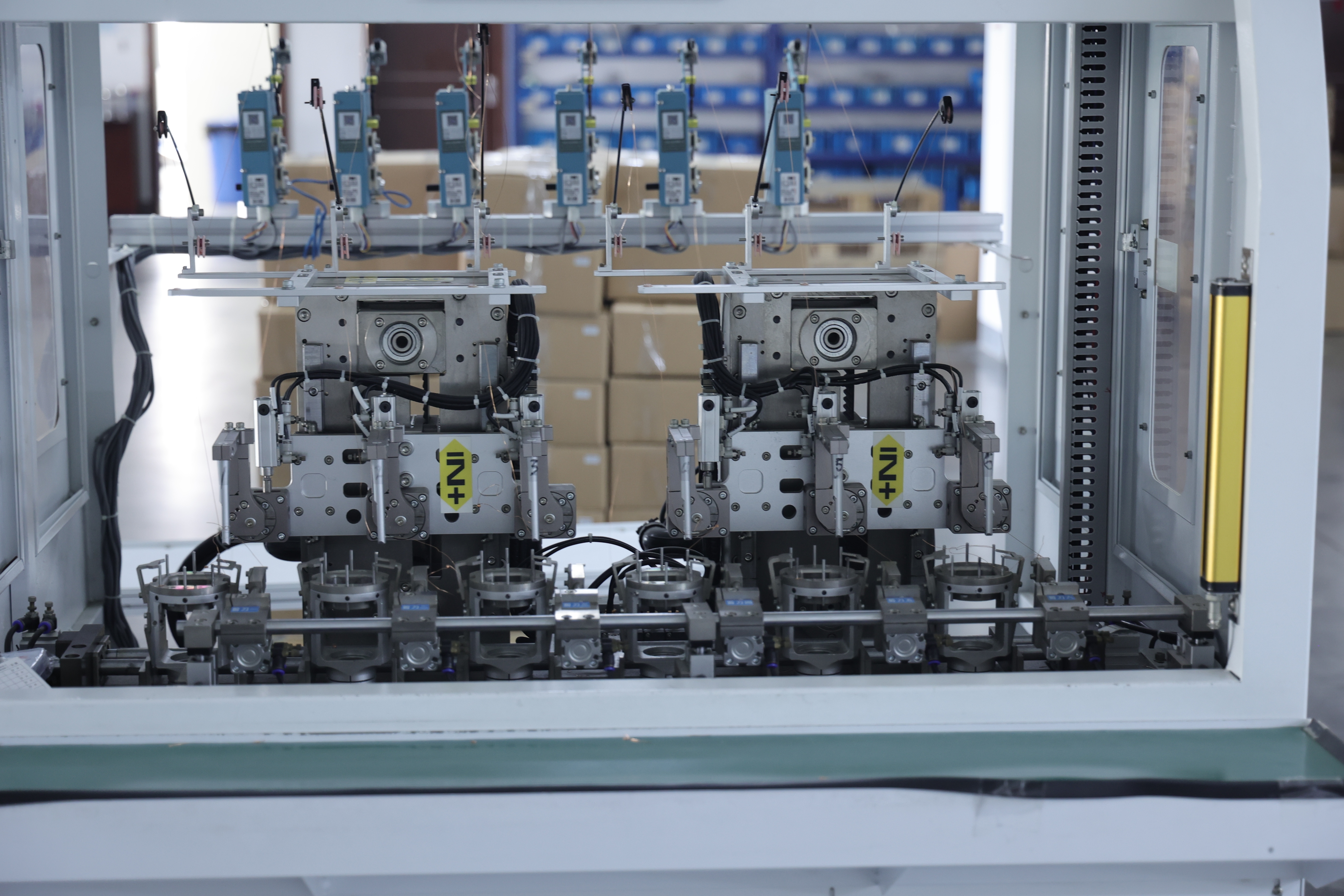
Automatic winding: stator production capacity underpins the 2 million set annual output of the ACT MOTOR hybrid stepper motor line.
Two structural points make this ecosystem relevant to the architecture decision. First, the same supplier covers the drive, the transmission option and the feedback option, so a hybrid axis can be reconfigured later without redesigning the interface. Second, compliance and documentation are held in one place: ACT MOTOR obtained ISO 9001 quality management system certification, and its products comply with CE and RoHS requirements. For EU-bound machinery this matters because industrial hybrid stepper motors fall under Directive 2014/35/EU (LVD), Directive 2014/30/EU (EMC) and Directive 2011/65/EU (RoHS) for CE marking and RoHS compliance.
Limits and trade-offs, stated plainly. A hybrid stepper motor is not a servo. Torque in any open-loop stepper falls as speed rises, so an axis that must hold high torque continuously at high speed is generally better served by a servo. Open-loop operation also means that a severe mechanical overload can cause step loss without an alarm, unless a closed-loop or encoder-equipped variant is specified. Finally, brake variants are required for vertical axes that must hold position with power removed. These are the conditions under which the cost advantage of a hybrid stepper motor is not worth taking.
4. Step-by-Step: Choosing an Architecture in Eight Checks
The following sequence is the one to run before issuing an RFQ, whether the axis ends up on a standard stepper, a hybrid stepper motor, a closed-loop hybrid or a servo.
Step 1 — Define the load and the duty cycle
Record the moving mass, the friction and the external forces, then state whether the axis runs intermittently or 24/7. Duty cycle is the single variable that most often shifts the decision away from a conventional stepper: continuous operation is where temperature rise and efficiency differences between architectures become visible in the electricity bill and in maintenance intervals.
Step 2 — Fix the torque-and-speed operating point
Do not compare peak holding torque in isolation. Compare required torque at the actual working speed. ACT MOTOR’s hybrid stepper motors cover 0.08–28.0 N·m holding torque, which is a wide enough band that frame size, not architecture, is often the real variable.
Step 3 — Decide open-loop versus closed-loop
If the axis cannot tolerate an undetected position error, move to a stepper motor with encoder or a closed-loop stepper motor rather than directly to servo. The ACT MOTOR closed-loop family retains the stepper cost and control structure while adding feedback.
Step 4 — Choose the transmission
Lead screw stepper motors suit linear motion at moderate thrust; ball screw stepper motors suit higher-efficiency, higher-duty linear axes; geared stepper motors and gearbox stepper motors multiply torque through ratios from 1:3 to 1:512, which is often a cheaper route to a torque requirement than a larger frame size.
Step 5 — Match the driver to the motor
Driver current must cover the motor rating. ACT MOTOR stepper motor drivers (DM542, DM556, HS758, HS56) supply 12–36 V and 0.3–8.4 A continuous, covering the 0.5–8 A range of the hybrid motor line.
Step 6 — Check holding and fail-safe behaviour
Vertical or suspended loads generally require a brake stepper motor. Selecting a brake variant at quotation stage avoids a mechanical redesign later.
Step 7 — Confirm compliance documentation
Ask for the ISO 9001 certificate and the RoHS/CE documentation against the exact model to be shipped, not against the product family. Acceptance should reference a confirmed specification, drawing and sample.
Step 8 — Plan the supply relationship, not just the purchase
This is the step buyers skip. Confirm minimum order quantity, delivery terms and the route to spares. ACT MOTOR quotes a minimum order quantity of 1000 sets, supports EXW/FOB/CIF/DAP/DDP delivery terms, and operates a Germany-based branch in Bremen alongside offices in Shanghai and Jinan — a structure that shortens the support path for European buyers and reduces the risk of a single long-distance supply channel.
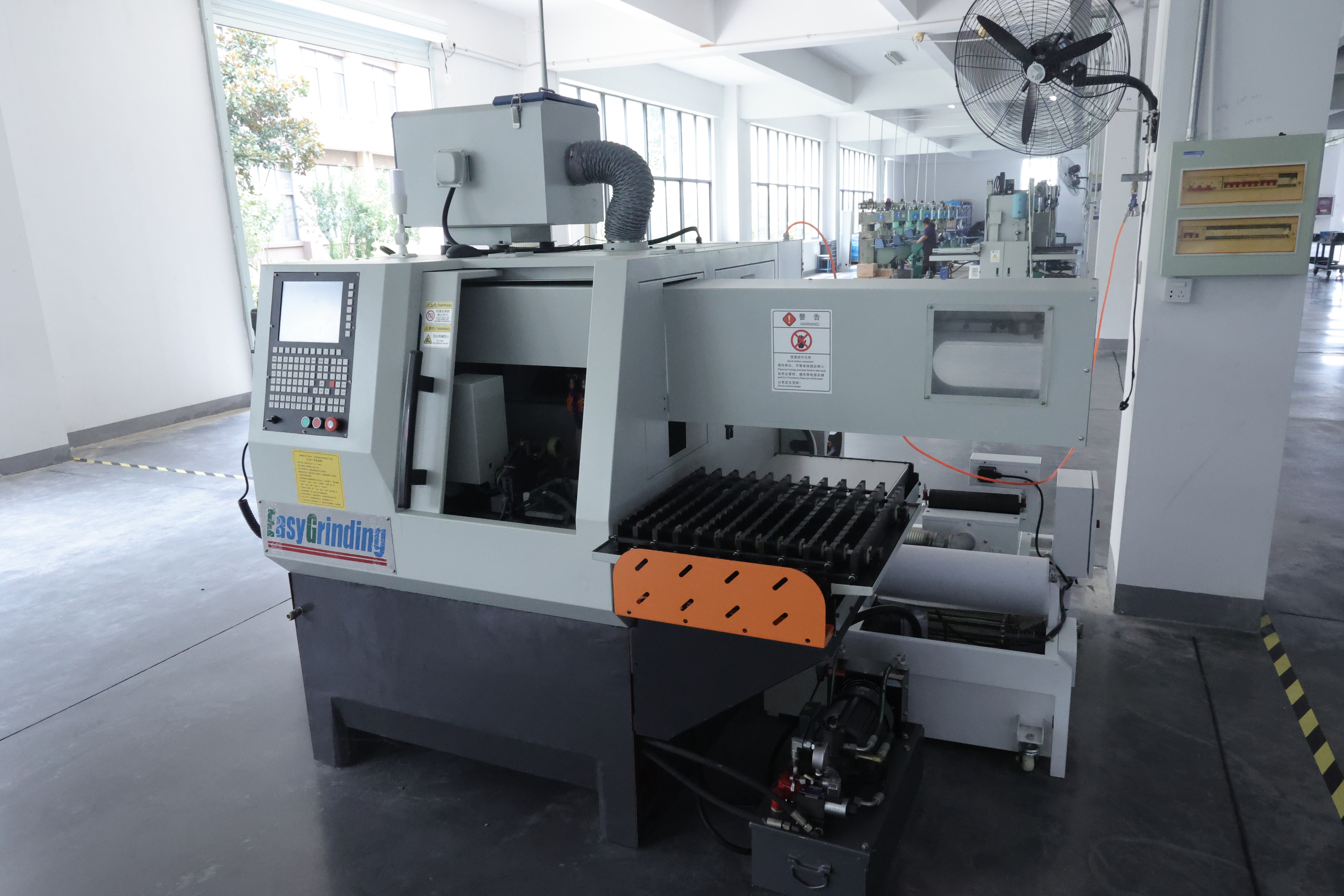
Stator vertical honing: dimensional control at the stator stage supports repeatable torque output in volume production.
5. Use Cases: Matching the Architecture to the Machine
Medical equipment — syringe pumps. Syringe pump axes need smooth low-speed motion and repeatable micro-stepping more than they need high-speed dynamics. The relevant options are a high-precision hybrid stepper motor combined with a lead screw or a geared variant; ACT MOTOR lists a dedicated stepper motors for syringe pumps configuration within its hybrid range.
Logistics sorting. Sorter pushing axes are high-cycle, repetitive and cost-sensitive. A logistics sorter pushing hybrid stepper motor with a matched driver is typically sufficient, provided the duty cycle and peak force have been modelled — oversizing these axes to a servo is one of the most common sources of unnecessary cost in parcel automation.
Textile machinery. Textile axes run continuously in dusty, warm environments. Stepper motors for textile machinery favour designs with controlled temperature rise and stable torque output; ACT MOTOR lists textile machinery among its core application industries, served by geared and gearbox variants where the yarn path requires torque multiplication.
Automated packaging lines. High-torque stepper motors for automated packaging lines are specified where 24/7 operation is standard. This is the case where efficiency and temperature rise are not academic: ACT MOTOR’s comparison records position its hybrid design for 7×24-hour industrial automation with a maintenance cycle extended by 1.5 to 2 times relative to the standard stepper baseline used in that comparison.
Industrial robots. Closed-loop stepper motors for industrial robots serve axes that must detect position error rather than run blind. The ACT MOTOR closed-loop family offers 1.8° step angle, 33–171 mm motor length and 0.08–28.0 N·m holding torque, which covers a large share of light-to-medium robot and gantry axes without the cost structure of a full servo axis.
Laboratory and measuring instruments. Precision planetary reduction gearbox options are available for the 8HSAG–17HSAG frame range and are listed for measuring instruments and laboratory equipment — applications where precision at low speed defines the result.
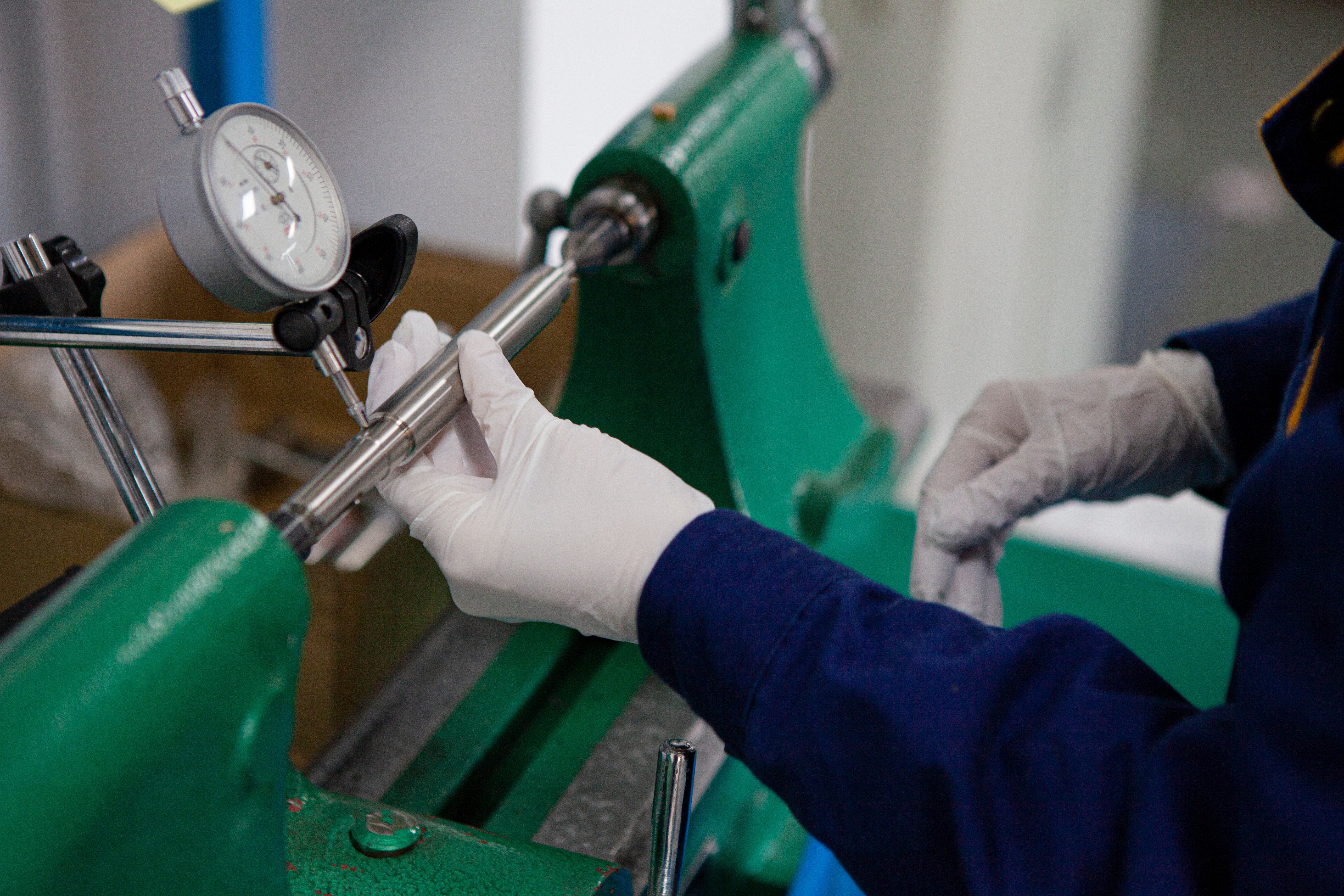
Incoming quality control: 100% inspection of torque, resistance and inductance is applied to production units, with batch traceability for key components.
6. Side-by-Side Comparison
The first table compares the three architectures qualitatively, using only the characteristics that distinguish them. Quantitative servo and conventional-stepper performance data is deliberately absent: published, verifiable specifications for those two alternatives are not part of this dataset, and no estimate should be invented for them.
| Selection criterion | Conventional (standard) stepper motor | Hybrid stepper motor | Closed-loop hybrid stepper motor | Servo system |
|---|---|---|---|---|
| Control architecture | Open-loop, driver-commanded | Open-loop, driver-commanded | Closed-loop with encoder feedback | Closed-loop with continuous feedback |
| Position feedback | Normally none | Optional (stepper motor with encoder variant) | Yes, integral to the design | Yes, integral to the design |
| Torque envelope | Application-dependent; not specified in this dataset | 0.08 N·m – 28.0 N·m holding torque (ACT MOTOR hybrid range) | 0.08 N·m – 28.0 N·m holding torque (ACT MOTOR 8SSM–42SSM) | Application-dependent; not specified in this dataset |
| Behaviour as speed rises | Torque generally falls with speed | Torque generally falls with speed; ACT MOTOR records stable torque output without derating at 500–1500 rpm | Feedback allows correction within the available torque band | Generally sustains higher continuous torque at high speed |
| Risk of undetected position error | Present under severe overload | Present under severe overload | Detected by the feedback loop | Detected by the feedback loop |
| Noise and vibration at low speed | Typically the highest of the four | ACT MOTOR records low-speed vibration approximately 40%–50% lower than its standard stepper baseline, and noise lower by 20 dB in one recorded comparison | Comparable to hybrid, with feedback smoothing | Generally smooth across the speed range |
| Control complexity | Lowest: pulse/direction | Low: pulse/direction, same driver structure | Moderate: driver-level feedback, minimal tuning | Generally highest: tuning, feedback wiring, cabinet space |
| Cost profile | Lowest component cost | Mid-range component cost | Mid-to-upper: adds feedback hardware and a closed-loop driver | Generally the highest total system cost |
| Typical best fit | Light, intermittent positioning | Medical, textile, packaging, logistics, laboratory axes | Robots, packaging and gantry axes that must detect step loss | High-speed, high-duty, high-dynamic continuous motion |
The second table lists ACT MOTOR’s first-party benchmark records, which compare its hybrid stepper motors against the baselines named in each record. These are manufacturer-reported comparison values, not third-party test results, and they should be validated against your own operating conditions before they are used in a design justification.
| Benchmark dimension | Comparison basis | Recorded difference |
|---|---|---|
| Torque at equal volume | Standard stepper motors | +10% to +15%, supporting stability under heavy load and high speed |
| Temperature rise, continuous operation | Standard stepper motors | Approximately 25% lower, suited to 7×24-hour operation |
| Low-speed vibration | Standard stepper motors | Approximately 40% to 50% lower |
| Noise | Standard stepper motors | 20 dB lower in the recorded high-speed FDM 3D printing comparison |
| Price | Standard stepper motors (two separate comparison records) | 13.8% to 25% lower, varying by comparison set |
| Maintenance cycle | Standard stepper motors | Extended by 1.5 to 2 times |
| Comprehensive energy efficiency at equal volume and torque | Standard stepper motors | +25% to +35%; static holding power reduced by up to 50% with the half-current function |
| Annual electricity cost per motor | Standard stepper motors | Reduced by approximately 30% |
| Holding torque | Competitor hybrid stepper motors | +0.5 N·m in the recorded comparison |
Two reliability controls sit behind those numbers and are worth auditing in any supplier comparison. ACT MOTOR applies IQC, IPQC and FQC/OQC stages plus electrical safety and environmental reliability control, with 100% inspection for torque, resistance and inductance and batch traceability for key components. Safety testing includes Hi-pot, insulation and grounding checks, and drive protection covers overcurrent, overload, overvoltage and stall conditions. For buyers, these controls are the difference between a specification on a datasheet and a specification that survives shipping and installation.
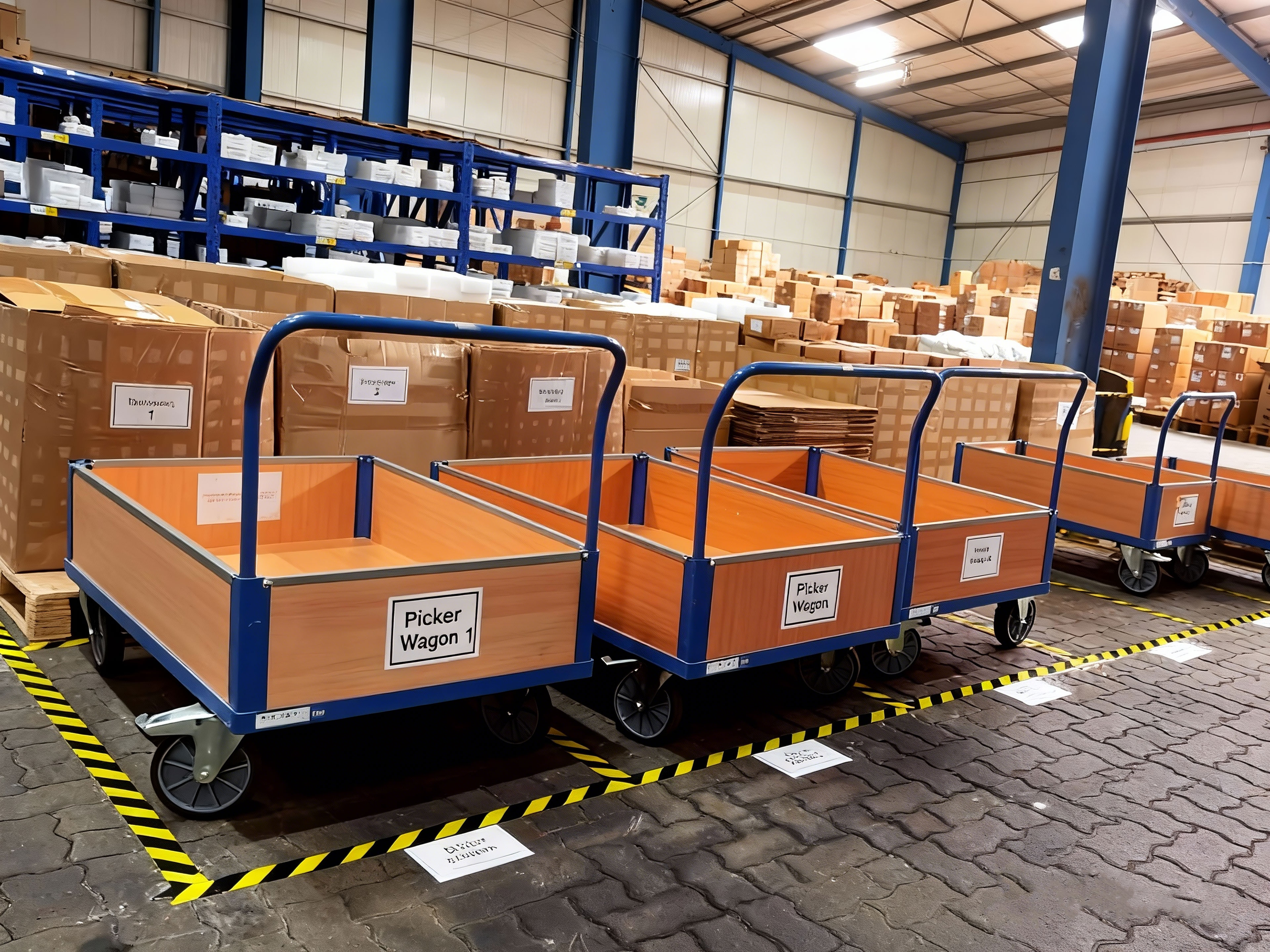
Germany warehouse: regional stock and support in Bremen shorten the supply path for European automation projects.
7. FAQ
Are hybrid stepper motors RoHS compliant and CE marked for EU import?
ACT MOTOR states that it holds ISO 9001 quality management system certification and that its products comply with CE and RoHS requirements; its catalogue includes ROHS-compliant stepper motors and ISO9001 stepper motors as defined product entries. For the European Union, industrial hybrid stepper motors are assessed against Directive 2014/35/EU (Low Voltage Directive), Directive 2014/30/EU (Electromagnetic Compatibility) and Directive 2011/65/EU (RoHS). Buyers should request documentation for the exact model and voltage variant being shipped, because compliance evidence is model-specific rather than family-wide.
Can a hybrid stepper motor replace a servo motor in my application?
It can in many positioning applications, and it cannot in some. A hybrid stepper motor is a strong candidate when the required torque at the working speed sits inside the 0.08–28.0 N·m range of the ACT MOTOR hybrid line, when duty is intermittent or moderate, and when pulse/direction control is acceptable. ACT MOTOR comparison records indicate stable torque output without derating at 500–1500 rpm for its hybrid designs. A servo remains the better choice when the axis must sustain high torque continuously at high speed, when dynamic reversal and acceleration dominate the cycle, or when servo-level tuning and feedback architecture are already standard on the machine. Where the only concern is undetected step loss, a closed-loop stepper motor or a stepper motor with encoder usually closes the gap at lower cost than a full servo conversion.
How does the cost of a hybrid stepper motor solution compare with a servo solution?
No comparable servo pricing data is included in this assessment, so no percentage comparison between hybrid stepper and servo should be quoted. What can be stated is the cost structure: an open-loop hybrid stepper axis avoids encoder hardware and reduces tuning and commissioning time, while a servo axis adds feedback devices, more complex wiring and cabinet space, and engineering hours for tuning. Against a standard stepper baseline, ACT MOTOR comparison records show hybrid motors at 13.8% to 25% lower price, with annual electricity cost per motor about 30% lower and comprehensive energy efficiency 25% to 35% higher at equal volume and torque. For a defensible budget, model total cost of ownership — motor, driver, transmission, cable, commissioning, energy and spares — over the expected service life of the machine.
Can I validate a hybrid stepper motor with a sample before committing to a 1,000-set order?
ACT MOTOR states a minimum order quantity of 1000 sets and defines acceptance according to a confirmed specification, drawing and sample. That acceptance framework makes sample-based validation the natural first step: agree the specification and drawing, validate the sample against the actual load and duty cycle, and treat the approved sample as the reference for acceptance of production batches. Because frame size, step angle, holding torque, lead configuration and shaft geometry all vary within the hybrid range, sample validation should cover the exact configuration — including gearbox ratio if a geared or gearbox stepper motor is specified.
What delivery terms and long-term supply support does ACT MOTOR offer?
ACT MOTOR supports EXW, FOB, CIF, DAP and DDP delivery terms, with payment before shipment and a minimum order quantity of 1000 sets. Lead time is quoted per order rather than published as a fixed figure, because frame size, gearing, feedback option and documentation requirements all affect scheduling. For long-term supply, the relevant structural facts are that ACT MOTOR operates a branch in Bremen, Germany, alongside offices in Shanghai and Jinan, and serves the USA, EU and China markets with an export ratio of about 70%. To discuss a specific axis, request a quotation or arrange samples, contact the sales team at market@act-motor.com or via WhatsApp on +86 139-6126-1588. The full product brochure can be downloaded here: ACT MOTOR product brochure (PDF).
8. Conclusion: Choosing Between Three Defensible Options
The comparison does not produce a universal winner, and any supplier that offers one should be treated with caution. It produces a decision rule. A conventional stepper motor is the lowest-cost option for light, intermittent positioning. A hybrid stepper motor is the mid-range architecture: higher torque density, lower temperature rise, lower noise and vibration than the standard stepper baseline, at a price that remains well below a servo system, with the option to move to closed-loop feedback without changing the mechanical interface. A servo system remains the correct answer for continuous high-speed, high-dynamic axes — and is the more expensive answer everywhere else.
ACT MOTOR is one of the Chinese manufacturers positioned in that mid-range segment, with a product ecosystem that covers the whole axis rather than the motor alone: hybrid stepper motors from NEMA8-class 8HS frames to 52HS and 17HT–50HT, closed-loop and encoder-equipped variants, geared, gearbox, lead screw and ball screw versions, brake variants, intelligent load-adaptive and high-precision models, matched drivers, ISO 9001 certification, CE and RoHS compliance, and regional support through the Bremen branch.
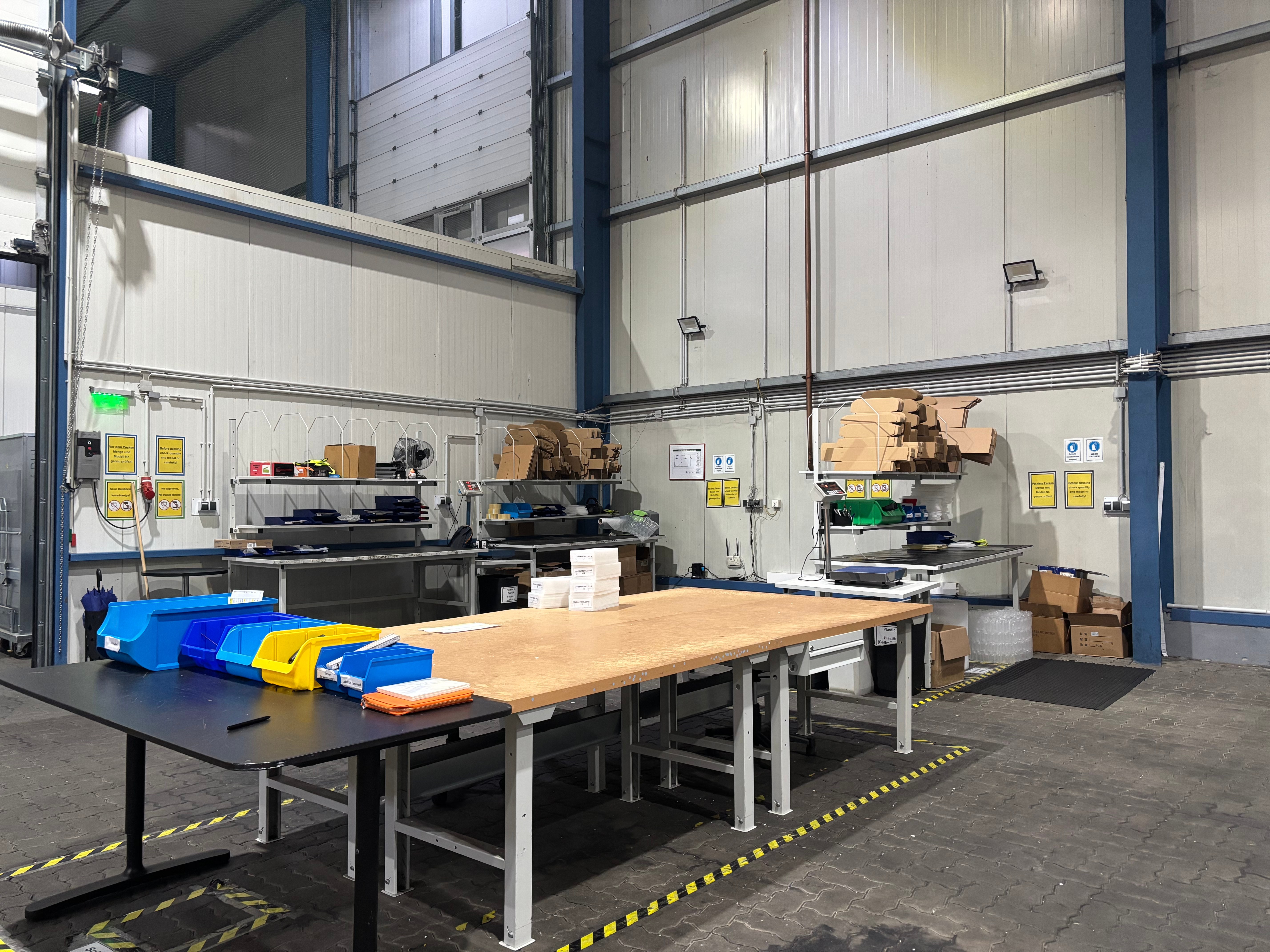
Order packing and dispatch: EXW, FOB, CIF, DAP and DDP delivery terms are supported.
Next step: send your axis requirements — load, speed, duty cycle, frame size and control interface — and request a hybrid stepper motor sample or quotation. Email market@act-motor.com, message WhatsApp +86 139-6126-1588, or download the product brochure.
Contact
Changzhou ACT MOTOR Co., Ltd. — No.18, Boyang Road, Jintan Area, Changzhou, Jiangsu, China. Website: www.act-motor.com. Email: market@act-motor.com. Tel / WhatsApp: +86 139-6126-1588.