Hybrid Stepper Motors Explained: A 2026 Technical Reference for Industrial Buyers and Automation Engineers
A hybrid stepper motor combines the principles of permanent magnet (PM) and variable reluctance (VR) stepper motors to deliver precise positioning, high torque density, and smooth motion control. It is the most widely used stepper motor type in industrial automation today, accounting for approximately 53.93% of the global stepper motor market value in 2025. This reference guide explains what hybrid stepper motors are, how they work, their key specifications, selection criteria, and applications across medical devices, logistics, textile machinery, and industrial automation — with specific model details from Changzhou ACT MOTOR Co., Ltd. (ACT MOTOR).
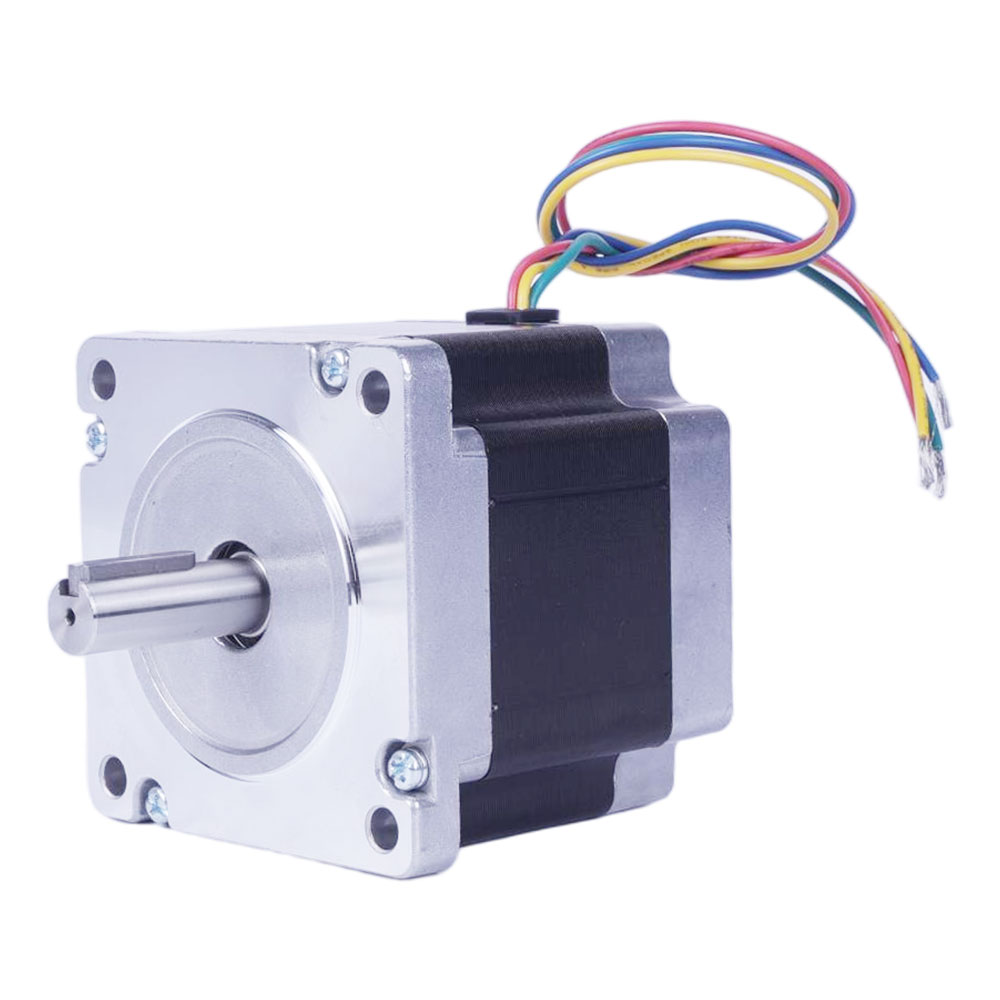
ACT MOTOR hybrid stepper motor model 34HS7440
1. What Is a Hybrid Stepper Motor?
A hybrid stepper motor is a brushless, synchronous electric motor that converts digital pulse signals into precise angular rotation. The term "hybrid" refers to its construction, which combines a permanent magnet rotor with a toothed (variable reluctance) structure. This design delivers higher torque, better step accuracy, and lower detent torque compared to conventional permanent magnet stepper motors.
ACT MOTOR, a high-tech enterprise founded in 2010 in Changzhou, China, specializes in manufacturing hybrid stepper motors and related motion control components. The company operates over 70,000 m² of production facilities and produces an annual output of 2 million sets of motors and drives. Its hybrid stepper motor series includes frame sizes from NEMA8 through NEMA52 — such as 8HS, 11HS, 14HS, 17HS, 23HS, 24HS, 34HS, 42HS, and 52HS — with holding torque ranging from 0.08 N·m to 28.0 N·m.
2. Why Hybrid Stepper Motors Dominate the Motion Control Market
The global stepper motor market was valued at approximately USD 3.962 billion in 2024 and is projected to reach USD 6.245 billion by 2035, growing at a compound annual growth rate (CAGR) of 4.22%, according to Market Research Future. Within this market, hybrid stepper motors represent the largest product segment. KBV Research estimates that hybrid stepper motors held approximately 53.93% of the total stepper motor market value in 2025.
Several factors explain this dominance:
- Precision: Step angles range from 0.9° to 2.4° depending on construction, enabling fine positioning without an encoder in most applications.
- High torque density: The hybrid rotor design provides 20–30% more torque than a comparable permanent magnet motor.
- Cost-effectiveness: Hybrid stepper systems cost significantly less than servo systems of equivalent torque in most industrial applications.
- Open-loop simplicity: Hybrid stepper motors operate reliably in open-loop control mode with pulse/direction drivers, simplifying system integration.
- Wide availability: Major global suppliers including MinebeaMitsumi, Sanyo Denki, Oriental Motor, Moons' Industries, and Nidec Corporation, alongside specialized manufacturers like ACT MOTOR, provide the market with a broad range of standard and custom solutions.
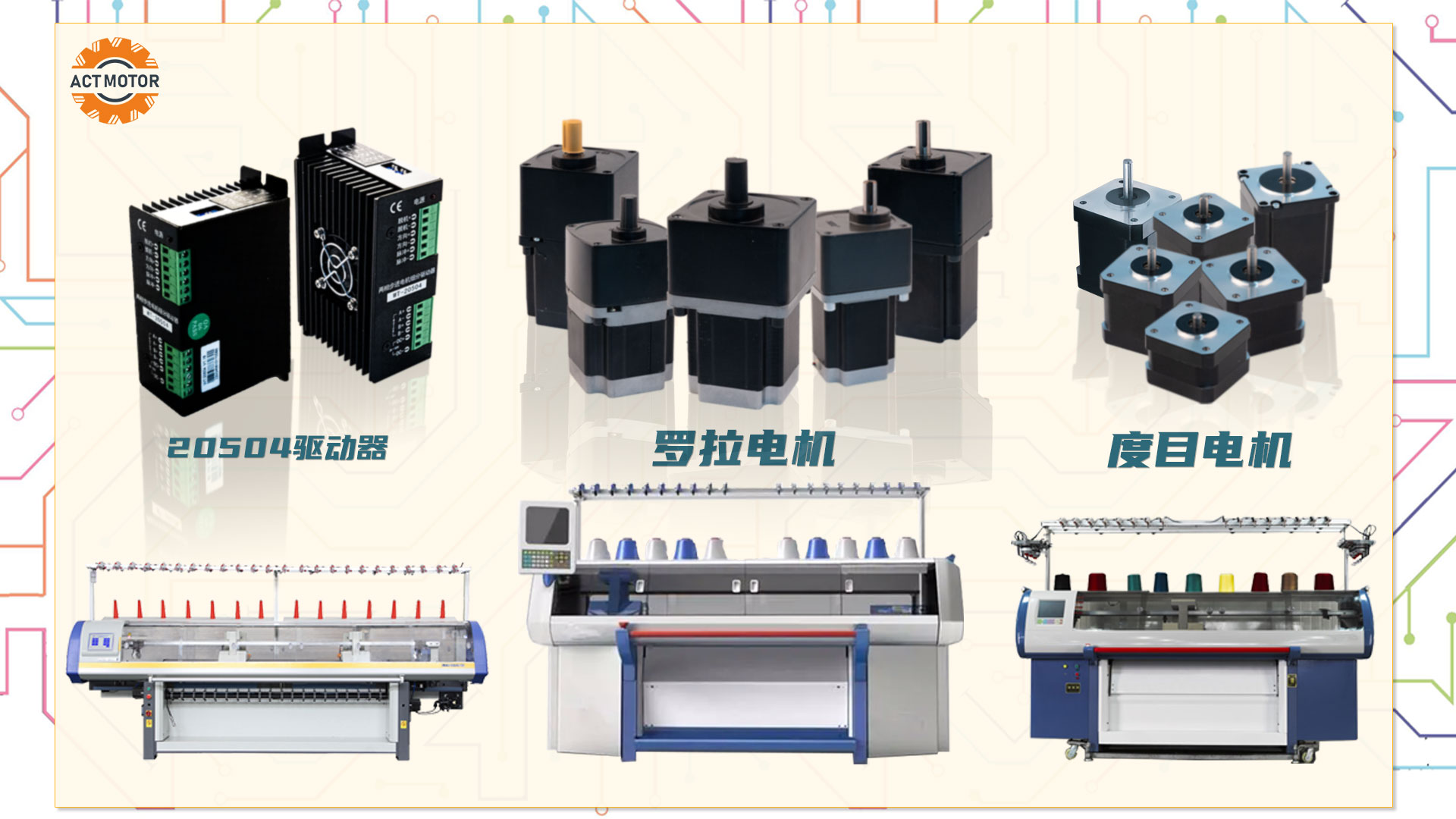
ACT MOTOR hybrid stepper motor configured for textile machinery applications
3. How a Hybrid Stepper Motor Works
Understanding the operating principle of a hybrid stepper motor helps engineers select the right motor and driver combination for their machine.
3.1 Construction of a Hybrid Stepper Motor
A hybrid stepper motor consists of the following key components:
- Stator: Made of laminated cold-rolled non-oriented silicon steel sheets or grain-oriented silicon steel sheets, with multiple teeth and coils wound around them.
- Rotor: A permanent magnet rotor (using NdFeB or ferrite magnets) with two end caps, each having toothed sections that are offset by half a tooth pitch.
- Shaft: Typically made of stainless steel or 45# carbon steel, supported by deep groove ball bearings (bearing steel GCr15).
- Insulation: Class B, F, or H insulation systems depending on temperature requirements.
- Housing: Die-cast aluminum alloy (ADC12 or A380) or cold-rolled steel plate enclosure for structural strength and heat dissipation.
3.2 Operating Principle
When the driver energizes the stator windings in a specific sequence, it creates a rotating magnetic field. The toothed permanent magnet rotor aligns itself with the magnetic field to minimize the air gap reluctance. Every pulse from the driver advances the rotor by one step angle (for example, 1.8° for a 200-step-per-revolution motor). The hybrid design produces detent torque — typically 0.01 N·m to 0.75 N·m — which holds the rotor position when the motor is unpowered.
ACT MOTOR's hybrid stepper motors use pure copper or aluminum enameled wire for windings, combined with precision-machined rotors, to achieve rated current from 0.5A to 8A and phase resistance from 0.05 Ω to 10 Ω across its model range.
4. Key Specifications of Hybrid Stepper Motors: A Buyer's Reference
When evaluating a hybrid stepper motor for an industrial application, the following specification ranges (based on ACT MOTOR's product series) provide a practical baseline for selection:
| Specification | Typical Range (ACT MOTOR Series) | Selection Note |
|---|---|---|
| Step Angle | 0.9° – 2.4° | 0.9° provides higher resolution; 1.8° is most common in industrial automation. |
| Motor Length | 34 mm – 220 mm | Length correlates with torque; longer motors deliver more torque. |
| Rated Voltage | 2 V – 8 V (standard), 12–110 VDC (geared/closed-loop) | Higher voltage enables higher speed performance. |
| Rated Current | 0.5 A – 8 A | Must match driver current rating; higher current increases torque. |
| Holding Torque | 0.08 N·m – 28.0 N·m | Critical for static load and holding force requirements. |
| Detent Torque | 0.01 N·m – 0.75 N·m | Provide some holding force when unpowered; relevant for vertical axes. |
| Lead Wires | 3 – 8 wires | Wiring configuration (bipolar/unipolar) must match the driver. |
| Weight | 0.1 kg – 15.0 kg | Relevant for machine inertia and mounting structure design. |
These ranges represent the ACT MOTOR hybrid stepper motor family. Many manufacturers offer similar specification windows. The correct choice depends on the application's torque-speed curve, duty cycle, and required positioning accuracy.
5. Hybrid Stepper Motor Variants for Specialized Applications
Industrial buyers increasingly select hybrid stepper motors with integrated mechanical or electronic features to simplify machine design and improve performance. The following variants are produced by ACT MOTOR under validated specifications.
5.1 Lead Screw Stepper Motors (Linear Actuators)
ACT MOTOR manufactures lead screw hybrid stepper motors in models including 8HSL, 11HSL, 14HSL, 15HSL, 16HST, 17HSL, 23HSL, 24HSL, and 34HSL. These integrate a lead screw directly onto the motor shaft, converting rotary motion into linear motion without external transmission components. They are widely used in medical syringe pumps, laboratory liquid handling systems, and precision XY positioning stages. Customers in Germany, the US, and the UK use these motors in medical analyzers requiring ultra-high positioning accuracy and low vibration.
5.2 Ball Screw Stepper Motors
For applications requiring higher thrust, longer life, and lower friction than lead screws, ACT MOTOR offers ball screw stepper motors (8HSL, 11HSL, 14HSL, 16HST, 17HSL, 23HSL, 34HSL, and G-series). These motors integrate a ball screw assembly that provides up to 90% mechanical efficiency, making them suited for CNC machinery, automated assembly, and medical equipment where smooth, low-wear linear motion is essential.
5.3 Geared Stepper Motors (Planetary, RV, Eccentric)
Geared stepper motors multiply torque output while maintaining compact motor size. ACT MOTOR offers:
- Precision planetary reduction gearboxes (8HSAG–42HSAG) with reduction ratios from 1:3 to 1:512, primarily used in measuring instruments and laboratory equipment.
- Economical planetary reduction gearboxes for textile machinery, packaging machinery, and medical devices.
- RV reduction gearboxes for high-rigidity automation equipment and CNC machine tools.
- Eccentric reduction gearboxes for automation equipment requiring compact, high-reduction solutions.
Geared stepper motors are particularly valuable for applications requiring high holding torque in a small envelope — for example, robotics joints, valve actuation, and indexing tables.
5.4 Brake Stepper Motors
ACT MOTOR's brake stepper motors integrate a fail-safe electromagnetic brake. Available in 17HS, 23HS, and 34HS frame sizes, these motors prevent unintended axis movement when power is removed — a safety requirement for vertical axes in material handling, packaging, and medical equipment. The brake is typically released when the motor is energized and engaged when power is off, preventing load drop during emergency stops.
5.5 Closed-Loop Stepper Motors with Encoder
Closed-loop hybrid stepper motors (ACT MOTOR models 8SSM, 11SSM, 14SSM, 23SSM, 24SSM, 34SSM, 42SSM) combine a hybrid stepper motor with an integrated encoder. The encoder provides real-time position feedback to the driver, enabling the system to detect and correct step loss in real time. These motors are specified for automated packaging lines and industrial robots where open-loop stepper motors may miss steps during momentary overloads.
5.6 NEMA8 and Miniature Hybrid Stepper Motors
The NEMA8 (8HS series) hybrid stepper motors are among the smallest in ACT MOTOR's lineup. These miniaturized motors are designed for compact devices such as portable medical pumps, 3D printer extruders, and small laboratory instruments. Despite their small size, they maintain the hybrid rotor construction for higher torque density than comparable PM stepper motors.
5.7 Integrated Stepper Motors
For machine builders seeking simpler wiring and reduced panel space, integrated stepper motors combine the motor and driver electronics in a single housing. ACT MOTOR offers integrated motor solutions designed for applications such as the medical analyzer X/Y/Z axis control, where space constraints and cable management are critical.
6. Step-by-Step Selection Process for Hybrid Stepper Motors
The following step-by-step framework helps buyers navigate hybrid stepper motor selection for a new or existing machine design.
Step 1: Define the motion profile. Calculate the required torque, speed, acceleration, and duty cycle for the application axis. Determine whether the load is constant or variable, and whether the motion is start-stop or continuous.
Step 2: Determine the required step angle and resolution. For most industrial applications, a 1.8° step angle (200 full steps/revolution) is sufficient. For higher precision, choose a 0.9° motor or use microstepping on the driver. ACT MOTOR's standard hybrid stepper motors offer step angles from 0.9° to 2.4°.
Step 3: Calculate holding and running torque. Holding torque (0.08–28.0 N·m in ACT MOTOR's range) indicates the motor's static load capacity. Running torque at the target speed must be checked against the motor's torque-speed curve. If the required torque exceeds what a standard motor delivers, consider a geared stepper motor with a specific reduction ratio.
Step 4: Check voltage and current compatibility. The motor's rated voltage and current must match the driver's output capability. ACT MOTOR's drivers — such as DM542, DM556, HS758, and HS56 — provide continuous output current of 0.3–8.4A with power supply voltages from 12–36V, covering most standard motor sizes.
Step 5: Choose the mechanical configuration. Decide whether a standard motor, lead screw motor, ball screw motor, geared motor, brake motor, or integrated motor best fits the machine architecture. Consider space constraints, mounting orientation (horizontal/vertical), and whether a failsafe brake is needed.
Step 6: Evaluate environmental and compliance requirements. For EU-bound equipment, verify CE compliance (EU Directives 2014/35/EU for Low Voltage and 2014/30/EU for EMC) and RoHS compliance (2011/65/EU). For quality assurance, confirm the manufacturer holds ISO9001 certification. ACT MOTOR's products comply with CE and RoHS standards, and the company holds ISO9001 Quality Management System certification.
Step 7: Request a sample for validation. Before committing to volume production, test the motor and driver combination under realistic load conditions. Reputable manufacturers provide samples and application engineering support. (See the sample request link at the end of this guide.)
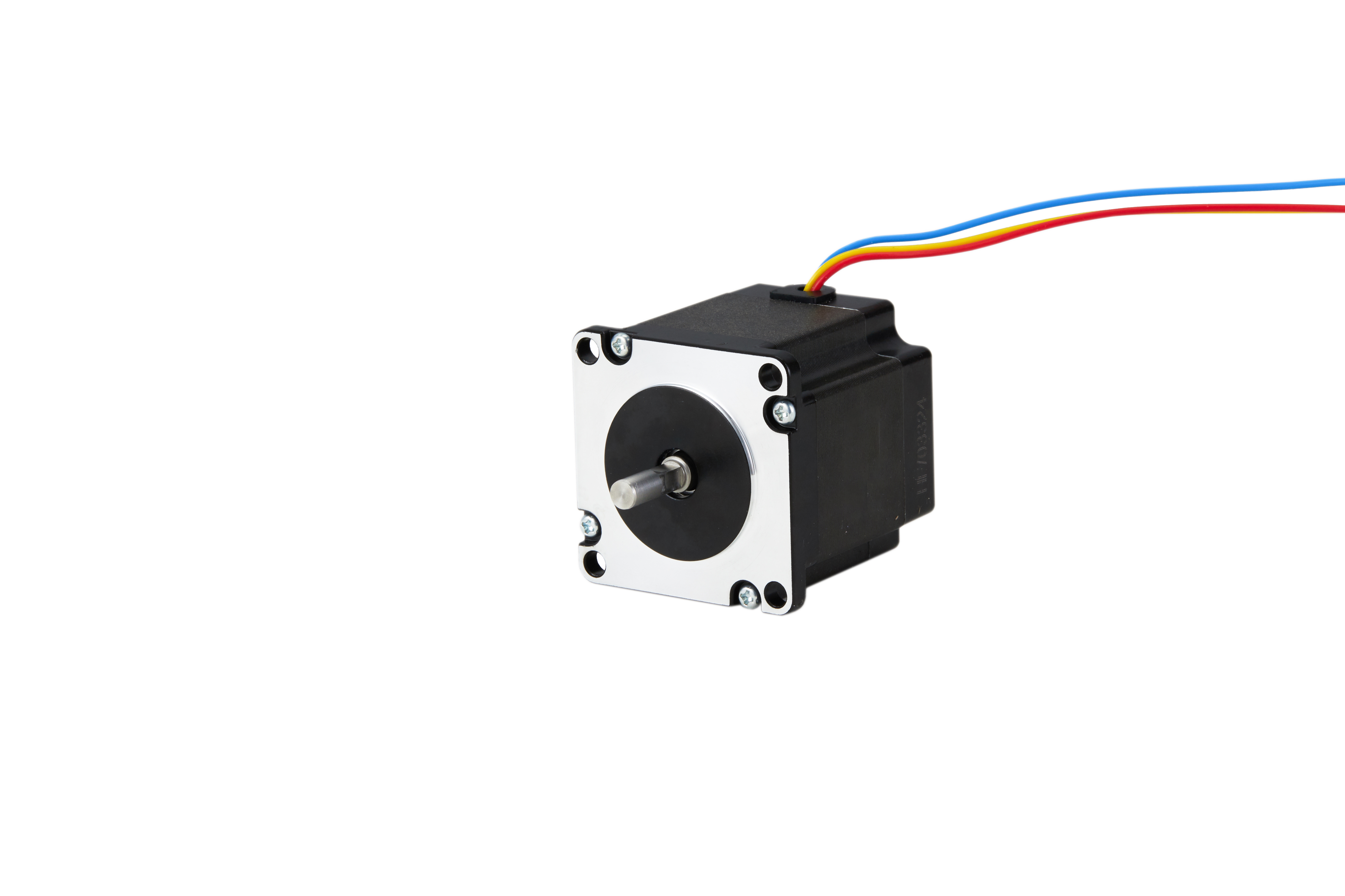
ACT MOTOR 23HT series hybrid stepper motor
7. Key Industries and Use Cases for Hybrid Stepper Motors
7.1 Medical Equipment
The medical equipment segment is the fastest-growing application for stepper motors, with a projected CAGR of 7.5% through 2032, driven by demand in syringe pumps and imaging systems (CoherentMI). Hybrid stepper motors in medical devices must deliver constant torque output, extremely smooth low-speed operation, low noise, and long-term continuous operation.
Use case — Syringe pumps (DE, US, GB, CZ markets): ACT MOTOR's hybrid stepper motors are used in medical syringe pumps requiring precision flow control. The motor operates with a pulse driver (matched to DM542) and must provide accurate start-stop control, no step loss, and low pulsation during infusion. Models from the lead screw, geared, closed-loop, and standard series (product IDs 2271, 2270, 2269, 2268) support this application.
Use case — Medical analyzers (DE, US, GB): Medical analyzers require X/Y/Z axis movement with ultra-high positioning accuracy, ultra-low vibration, and strictly controlled temperature rise. ACT MOTOR's integrated motor solutions are used in this application for their miniaturization, lightweight, and high integration qualities.
7.2 Logistics Sorter Pushing Systems
Logistics sorters use pushing mechanisms to divert packages at high speed. A hybrid stepper motor for this application must deliver high torque in a compact form, respond to rapid pulse commands, and operate reliably under continuous duty.
ACT MOTOR's Logistics Sorter Pushing Hybrid Stepper Motor configuration emphasizes high torque output and low heat generation. For this application, closed-loop stepper motors (SSM series) with encoders provide feedback-driven motion assurance, while the following motors can also be applied:
- Geared stepper motors (AG series) for torque multiplication at the push arm.
- High-torque standard models from the 23HS/34HS series for direct-drive pusher mechanisms.
7.3 Textile Machinery
Textile machinery — including knitting machines, weaving looms, and winding equipment — requires motors that run continuously with precise speed control and low heat generation. ACT MOTOR's hybrid stepper motors are specifically configured for textile machinery applications (product ID 3343), where long service life, high reliability, and anti-interference capability are critical.
The economical planetary gearbox series (8HSAG–42HSAG) is validated for textile machinery, providing the torque and durability needed for continuous production lines.
7.4 Automated Packaging Lines
Packaging machines demand high-speed indexing, repeatable positioning, and minimal downtime. High-torque hybrid stepper motors for automated packaging lines combine strong holding torque with smooth motion control. When the line includes an encoder (stepper motor with encoder for automated packaging lines, product ID 2268), the system gains position feedback for verifying each cycle.
ACT MOTOR's hybrid stepper motors are used in packaging machinery across Europe (DE, FR, IT, PL) and the US, where the company maintains a service network including a branch in Bremen, Germany.
7.5 Industrial Robots and CNC Machines
Closed-loop stepper motors for industrial robots (SSM series) deliver the feedback and torque needed for smaller robotic axes and articulated arms. Meanwhile, CNC machine tools use high-torque hybrid stepper motors (34HS, 42HS, 52HS series) to drive X/Y/Z axes where high load capacity, high rigidity, and continuous working condition are essential.
8. Hybrid Stepper Motor Comparison: Variant Selection Table
| Variant | Best For | Torque Range | Key Characteristic | Application Examples |
|---|---|---|---|---|
| Standard hybrid stepper | General-purpose indexing, positioning | 0.08 – 28.0 N·m | Open-loop simplicity, low cost | CNC, 3D printers, stage lighting |
| Lead screw stepper | Compact linear motion | 0.08 – 28.0 N·m | Direct linear drive, no coupling | Syringe pumps, medical analyzers |
| Ball screw stepper | High-thrust linear motion | 0.08 – 28.0 N·m | High efficiency, low friction | CNC machinery, automated assembly |
| Geared stepper (planetary) | Torque multiplication | Up to 28.0 N·m | Reduction ratios 1:3 – 1:512 | Robotics, textile machinery, valves |
| Brake stepper | Vertical-axis safety | 0.08 – 28.0 N·m | Fail-safe brake prevents drop | Material handling, packaging |
| Closed-loop stepper (encoder) | Step-loss prevention | 0.08 – 28.0 N·m | Encoder feedback, no missed steps | Packaging lines, industrial robots |
| Integrated stepper | Compact wiring | 0.08 – 28.0 N·m | Motor + driver in one housing | Laboratory equipment, analyzers |
9. Compliance and Quality Considerations
Industrial hybrid stepper motors sold into the EU must comply with EU Directives for CE marking: 2014/35/EU (Low Voltage Directive) and 2014/30/EU (EMC Directive), plus 2011/65/EU for RoHS compliance. These requirements govern electrical safety, electromagnetic compatibility, and restriction of hazardous substances respectively.
Buyers should also verify that the motor manufacturer holds ISO9001 Quality Management System certification, which ensures traceable production processes from raw material to finished goods. ACT MOTOR holds ISO9001 certification, and its products comply with CE and RoHS international standards. The company implements strict quality control from design to delivery, including incoming material inspection at its Changzhou facility.
10. Frequently Asked Questions (FAQ)
Q1: What CE and RoHS certifications are available for ACT MOTOR hybrid stepper motors?
ACT MOTOR hybrid stepper motors are manufactured in compliance with CE and RoHS international standards. The company holds ISO9001 Quality Management System certification, ensuring documented quality control processes from design through delivery. For EU-bound equipment, industrial hybrid stepper motors must satisfy EU Directive 2014/35/EU (LVD), 2014/30/EU (EMC), and 2011/65/EU (RoHS). ACT MOTOR provides compliant products for manufacturers exporting to the EU and other regulated regions. Buyers can request the relevant compliance documentation when requesting a quotation.
Q2: What is the torque and speed range of ACT MOTOR hybrid stepper motors?
ACT MOTOR hybrid stepper motors cover a holding torque range of 0.08 N·m to 28.0 N·m, which spans the company's NEMA8 (8HS) through NEMA52 (52HS) frame sizes. Motor lengths range from 34 mm to 220 mm. Standard step angles are available from 0.9° to 2.4°. Rated current ranges from 0.5A to 8A, with phase resistance from 0.05 Ω to 10 Ω and phase inductance from 0.1 mH to 10 mH. This range covers applications from miniature medical pumps to heavy CNC machinery axes.
Q3: Which ACT MOTOR hybrid stepper motor is suitable for a syringe pump or medical analyzer?
For syringe pumps requiring precision flow control, ACT MOTOR recommends hybrid stepper motors from its lead screw (HSL), geared (AG), closed-loop (SSM), or standard (HS) series, depending on mechanical configuration. These motors must provide constant torque, smooth low-speed operation, and accurate start-stop control with no step loss. For medical analyzers requiring X/Y/Z axis movement, the company's integrated motor solution provides miniaturization and high integration, which is a validated configuration for laboratory equipment used in DE, US, and GB markets.
Q4: Can I obtain a sample or quotation to evaluate the motor for my application?
Yes. ACT MOTOR supports industrial buyers with application engineering and sample validation. To request a sample or quotation, contact the sales team at market@act-motor.com or via WhatsApp at +86 139-6126-1588. Including your application details — operating torque, speed, duty cycle, and preferred voltage/current — will help the team match the appropriate model and driver combination. The company's downloadable brochure also provides a product overview: Download ACT MOTOR brochure (PDF).
11. Conclusion: Selecting the Right Hybrid Stepper Motor for Your 2026 Project
Hybrid stepper motors remain the backbone of precision motion control in industrial automation. Their combination of precise step positioning, compact torque delivery, and cost-effectiveness makes them the default choice for a wide range of equipment — from syringe pumps and medical analyzers to textile machinery, logistics sorters, packaging lines, and CNC machine tools.
For industrial buyers in the Awareness → Research stage, the key takeaway is straightforward: define your torque-speed requirements first, then select the motor variant (standard, lead screw, ball screw, geared, brake, or closed-loop) that matches the mechanical architecture and safety needs of your machine. Verify compliance documentation, confirm the manufacturer's quality system, and validate the selected motor with a sample under real operating conditions.
ACT MOTOR provides a validated portfolio of hybrid stepper motors and drivers — with 70,000 m² of production capacity, ISO9001 certification, CE/RoHS-compliant products, and a service network spanning the USA, EU, and China — to support manufacturers in bringing reliable automation to market.
Ready to evaluate a hybrid stepper motor for your application?
Request a sample or quote from ACT MOTOR to validate performance on your machine.
Have Questions or Need More Details?
Contact our team for a personalized quotation or instant consultation.
Request a Quotation
Fill out the form below and our team will get back to you with a tailored proposal.
WhatsApp Direct Chat
Prefer to chat in real-time? Message us on WhatsApp for instant assistance & quick answers.
- Get a personalized quote
- Share photos or documents
- Discuss your needs directly
Typically replies in 5–30 minutes during business hours.