Matching Hybrid Stepper Motor Variants to Real Applications: A 2026 Project Selection Guide
Matching Hybrid Stepper Motor Variants to Real Applications: A 2026 Project Guide
Machine builders and procurement teams often ask for a hybrid stepper motor and receive a torque table. In practice, the right choice depends on how the motor will be loaded, how the axis must move, what precision the process requires, and how the machine will be used over its life cycle. This guide turns those project conditions into a repeatable matching method.
Changzhou ACT Motor Co., Ltd. (ACT MOTOR) is a stepper motor and motion-control manufacturer in the automation industry. Its product portfolio includes hybrid stepper motors, stepper motor drivers, lead screw stepper motors, ball screw stepper motors, geared stepper motors, brake stepper motors, and closed-loop stepper motor systems. The company operates more than 70,000 square meters of integrated R&D, manufacturing, and warehousing facilities in Changzhou, Jiangsu, and serves customers in the US, EU, and Chinese markets. ACT MOTOR also supplies stepper motors for textile machinery, syringe pumps, automated packaging lines, medical equipment, and logistics sorter pushing applications.
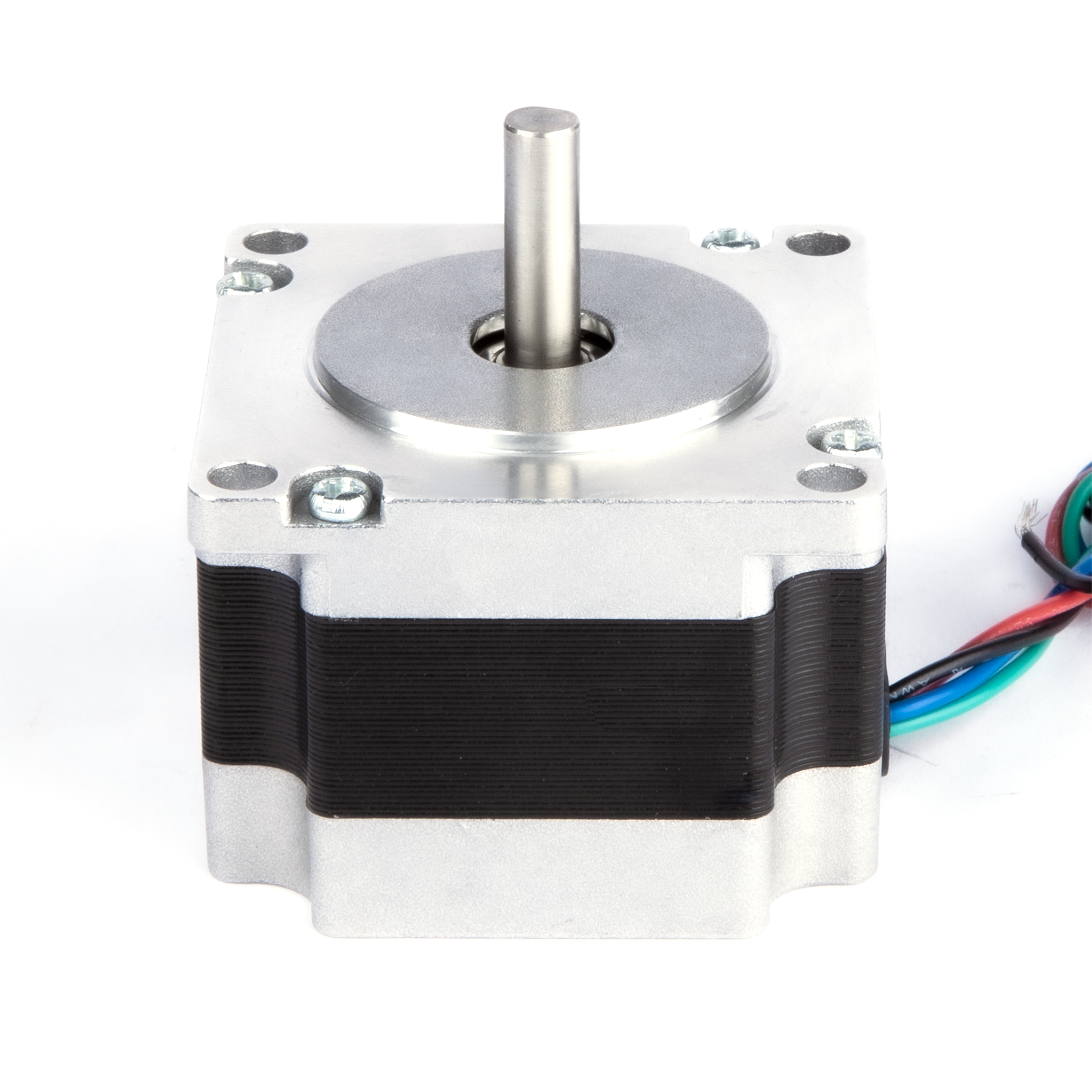
A representative hybrid stepper motor from the ACT MOTOR HS family. The optimum motor architecture changes when the application changes.
Problem Definition: Why Generic Hybrid Stepper Motor Specifications Are Not Enough
A hybrid stepper motor can be selected from catalog values such as step angle, rated current, or holding torque, but those values do not explain the operating scenario. The same actuator frame may be used in a medical pump, a laboratory analyzer, a CNC machine, a 3D printer, or a high-torque packaging line. Each environment creates a different set of constraints.
Common sourcing problems appear when a motor is chosen before the motion profile is defined. A vertical axis without a brake may drift when power is removed. A direct-drive motor on a high-inertia intermittent mechanism may need more torque than the frame can provide, pushing the designer toward a geared stepper motor or a larger frame size. A lead screw or ball screw motor may be required when linear travel must be compact and repeatable. A closed-loop stepper motor with encoder feedback may be the safer answer for systems that cannot tolerate step loss.
- Medical and laboratory applications usually prioritize smooth motion, low heat, low noise, and long continuous operation.
- Industrial automation and CNC applications often prioritize torque, rigidity, continuous duty, and anti-interference performance.
- High-speed packaging and robotic applications may need encoder feedback or closed-loop control to prevent lost motion.
- Textile and logistics equipment may require compact integrated motor modules or specialized pushing/sorting variants.
Industry Background: Hybrid Stepper Motor Context in 2026
Stepper motors remain a central motion technology in industrial equipment. Market Research Future estimates that the global stepper motor market was valued at USD 3.962 billion in 2024 and is projected to reach USD 6.245 billion by 2035, representing a compound annual growth rate of 4.22%. KBV Research indicates that hybrid stepper motors accounted for approximately 53.93% of total stepper motor market value in 2025, making hybrid technology the largest stepper motor category by type. CoherentMI projects that medical equipment will be the fastest-growing stepper motor application area, with a CAGR of 7.5% through 2032, supported by demand in syringe pumps and imaging systems.
This market context creates a practical question for machine builders: which hybrid motor family, driver strategy, and mechanical option should be used for a specific piece of equipment? For an automation component supplier such as ACT MOTOR, the production environment also matters. ACT MOTOR manufactures motors and drivers in a modernized facility, has obtained ISO9001 quality management system certification, and designs products for international compliance with CE and RoHS requirements. The company’s stated annual output capacity is 2 million sets, supported by a factory structure that integrates R&D, manufacturing, and warehousing.
Detailed Solution: From Application Requirements to Motor Architecture
A practical way to approach hybrid stepper motor selection is to translate the machine’s required function into an actuator architecture. ACT MOTOR’s range covers not only standard motors but also driver-matched systems. The decision logic below can be used during the research and evaluation phase of a project.
1. Define Load and Motion Profile First
Every actuator works inside a torque-speed envelope. Hybrid stepper motors in the ACT MOTOR catalog cover step angles from 0.9° to 2.4°, motor lengths from 34 mm to 220 mm, holding torque from 0.08 N·m to 28.0 N·m, and detent torque from 0.01 N·m to 0.75 N·m. A motor with a high holding torque may still lose steps if the acceleration profile is aggressive or if the available current is not matched by the driver. The first step is therefore to document the maximum static and dynamic load, the required acceleration, the duty cycle, and the permissible motion error.
2. Decide Between Rotary, Linear, and Gear-Reduced Architectures
Standard rotary hybrid stepper motors are the most direct solution when the machine needs shaft rotation. But if the endpoint motion is linear, an integrated lead screw or ball screw stepper motor reduces mechanical complexity. Linear motor families such as the ACT MOTOR 8HSL, 11HSL, 14HSL, 17HSL, 23HSL, and 34HSL series combine the motor with a screw assembly for compact axes. Ball screw stepper motor variants and linear module options are also part of the company’s product structure.
Geared stepper motors add a reduction stage. ACT MOTOR planetary reduction stepper motor models include the 8HSAG, 11HSAG, 14HSAG, 17HSAG, 23HSAG, 34HSAG, and 42HSAG series, with reduction ratios from 1:3 to 1:512. Geared versions are useful in compact mechanisms that need higher torque multiplication or lower reflected inertia, and they appear in application records for textile machinery, packaging machinery, and medical devices.
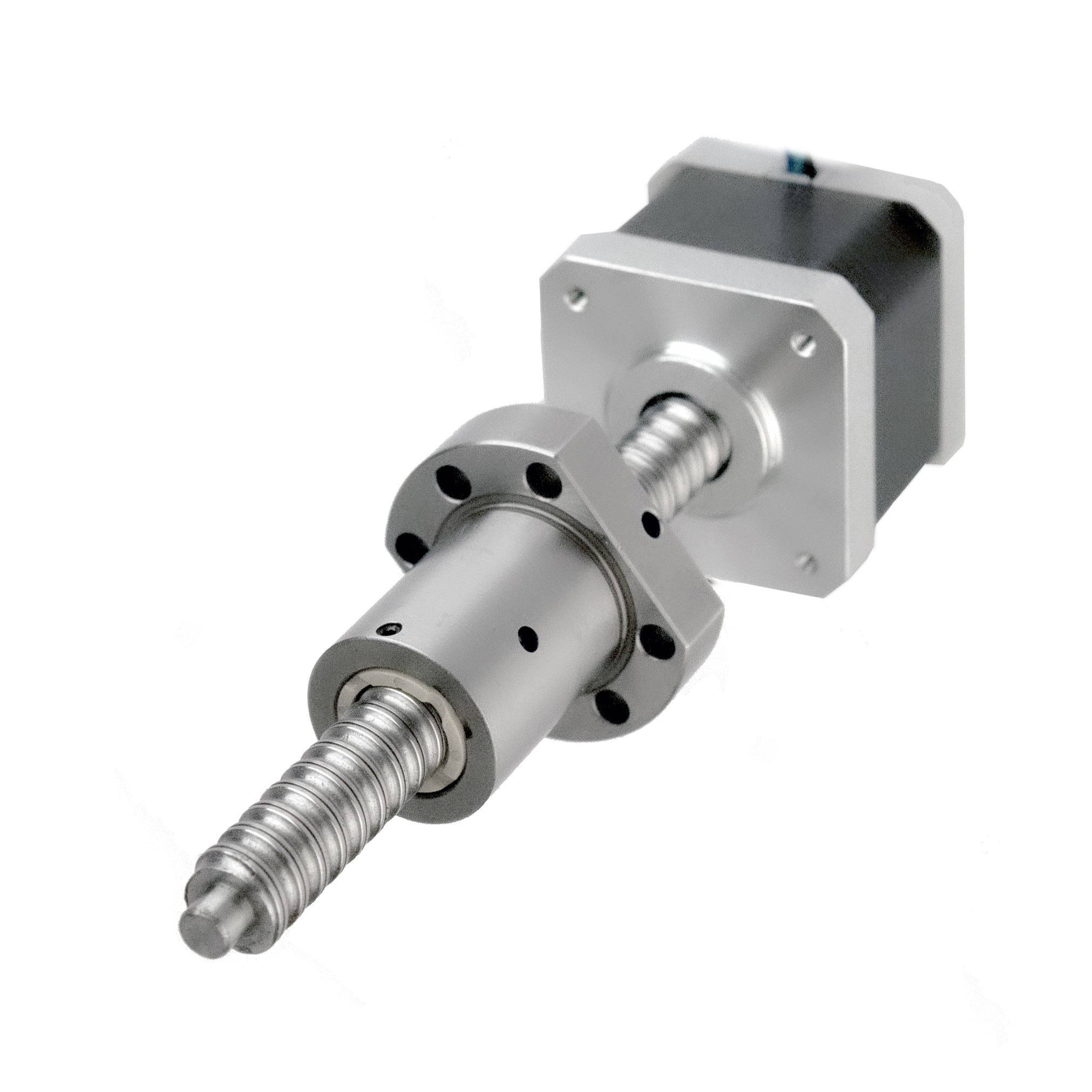
Ball screw stepper motor variants integrate linear motion with a hybrid stepper motor and are used when project space is limited.
3. Use Closed-Loop and Encoder Choices When Step Loss Is Unacceptable
A conventional hybrid stepper motor is an open-loop system when the controller sends pulses but does not verify actual position. If a machine consumes high dynamic loads, runs at relatively high speed, or must recover from unexpected resistance, a closed-loop stepper motor may be the better option. ACT MOTOR supplies hybrid closed-loop stepper motor models from 8SSM to 42SSM, and stepper motors with encoder versions are used in automated packaging lines and robotic systems. Encoder feedback can also help with condition monitoring and integration into machine networks.
4. Add Brake Options When the Axis Must Hold Position
Brake stepper motors are relevant whenever gravity or an external force can shift the load when power is off. Typical examples include vertical slides, robotic arms, and gantry-style systems. ACT MOTOR’s brake stepper motor range appears in frame sizes such as 17HS, 23HS, and 34HS, with the same motor body and an integrated holding brake. This removes the need for a separate mechanical brake in some machine designs.
5. Match the Motor With the Correct Driver
Motor and driver should be evaluated as a system. The electrical specification of a hybrid stepper motor affects the required driver output current and supply voltage. ACT MOTOR’s driver family types include model references such as DM542, DM556, HS758, and HS56, with power supply voltage of 12–36 V and continuous output current of 0.3–8.4 A covering different motor sizes. Application records from ACT MOTOR also reference driver pairings such as DM542, DM420, DM860H, and DM2722 in different machine types.
Step-by-Step: How to Shortlist a Hybrid Stepper Motor for a Project
The following five-step process helps buyers move from an abstract motor request to a testable variant decision.
- Document the machine requirement. Write the basic motion function, the expected torque, speed, acceleration, cycle time, ambient condition, and allowable motor temperature rise. If possible, distinguish holding torque from dynamic torque.
- Choose the mechanical architecture. If the output is rotational, start with a standard motor or closed-loop/encoder motor. If the output is linear, review integrated lead screw or ball screw models. If high torque is required in a compact envelope, review planetary geared models.
- Define safety and reliability features. Ask whether the load must be held when power is off. This determines whether a brake motor is required. Ask whether missed steps would cause product damage or personal risk. If so, closed-loop or encoder feedback should be considered.
- Match the driver and controls. Select a compatible driver based on motor current, voltage, and microstepping behavior. In ACT MOTOR application examples, medical and laboratory devices often use pulse drivers, while larger industrial axes may use higher-current driver or servo motor alternatives.
- Validate with the supplier. For OEM/custom projects, ACT MOTOR lists a starting MOQ of 2 units and a monthly OEM capacity of 200,000 units. Request drawings, current compliance documentation, and a sample or pilot run before committing to full production.
Use Cases: Translating Machine Requirements Into Hybrid Stepper Motor Families
Medical Equipment and Peristaltic Pump Flow Control
Medical equipment buyers in DE, US, GB, and CZ have specified ACT MOTOR hybrid stepper motors for precision flow control in medical pump-style applications. The stated special requirements include constant torque output, extremely smooth low-speed operation, precise flow control, low pulsation, low vibration, low noise, long-term continuous operation, low heat generation, accurate start-stop control, and high reliability. The matched equipment in this scenario is the DM542 pulse driver. This application profile favors a compact hybrid stepper motor with very consistent low-speed behavior and adequate torque reserve.
Laboratory Analyzer X/Y/Z Axis Positioning
Laboratory equipment projects in DE, US, and GB have specified hybrid stepper motors for moving X/Y/Z axes in a medical analyzer or similar instrument. The main constraints are ultra-high positioning accuracy, ultra-low vibration, ultra-low noise, extremely smooth operation, low heat generation, strict temperature-rise control, long service life, and miniaturized high-integration design. In these cases, integrated motor or compact encoder feedback variants can be useful because the instrument layout is tight and static heat must be controlled.
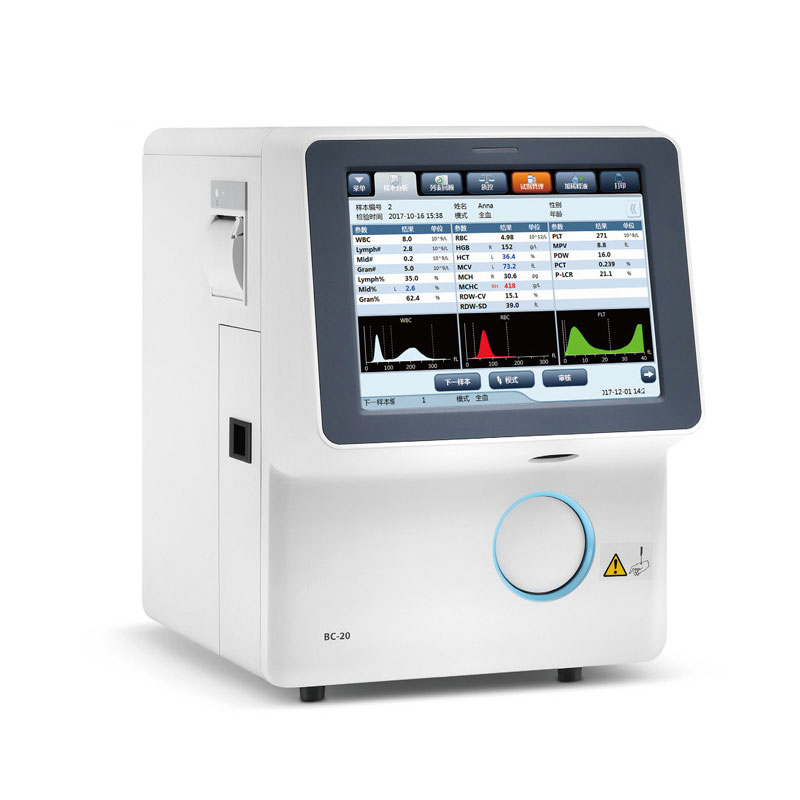
Laboratory analyzers are typical scenarios where low vibration, low noise, and compact hybrid stepper motor integration are required.
CNC Machinery and Industrial Automation
Industrial automation buyers in DE, FR, IT, US, and PL have used ACT MOTOR motors in CNC-class equipment for X/Y/Z axis movement. The special requirements include high load capacity, high torque, high rigidity, continuous working condition, low heat generation, high insulation, long service life, and strong anti-interference capability. In one documented case, an Italian CNC machinery manufacturer used 1,000 sets from ACT MOTOR for a carving application over a two-year period, with stable operation and low-noise, fast-speed performance highlighted in the project record.
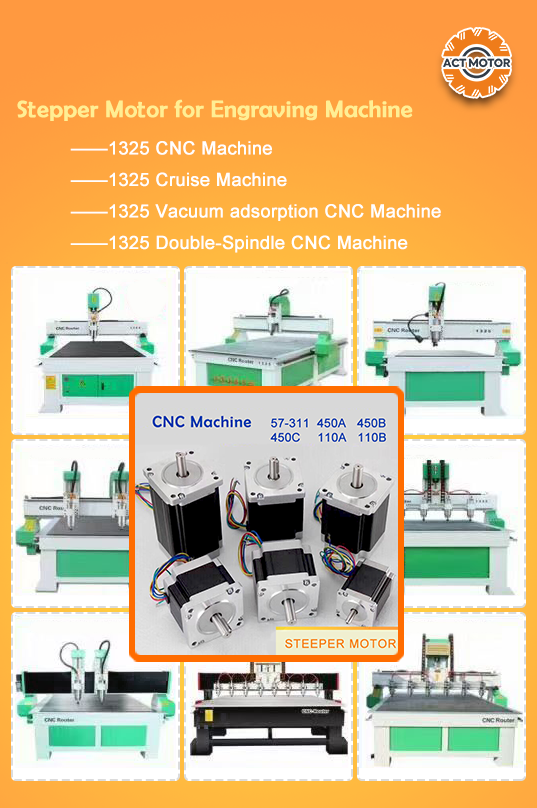
CNC and general industrial automation applications place more emphasis on torque, rigidity, and long continuous duty.
3D Printer and Additive Equipment Manufacturing
3D printer manufacturers face a different requirement mix. In records from DE, NL, FR, CZ, and GB projects, the requirements include high-precision positioning, low vibration, no step loss at high speed, stable extrusion torque, low heat generation, and compatibility with microstepping drivers. The matched drivers in these applications include DM542 and DM420. A Spanish 3D printer manufacturer used 2,000 sets from ACT MOTOR over a two-year period and reported stable performance, with low noise and high speed highlighted in the project record.
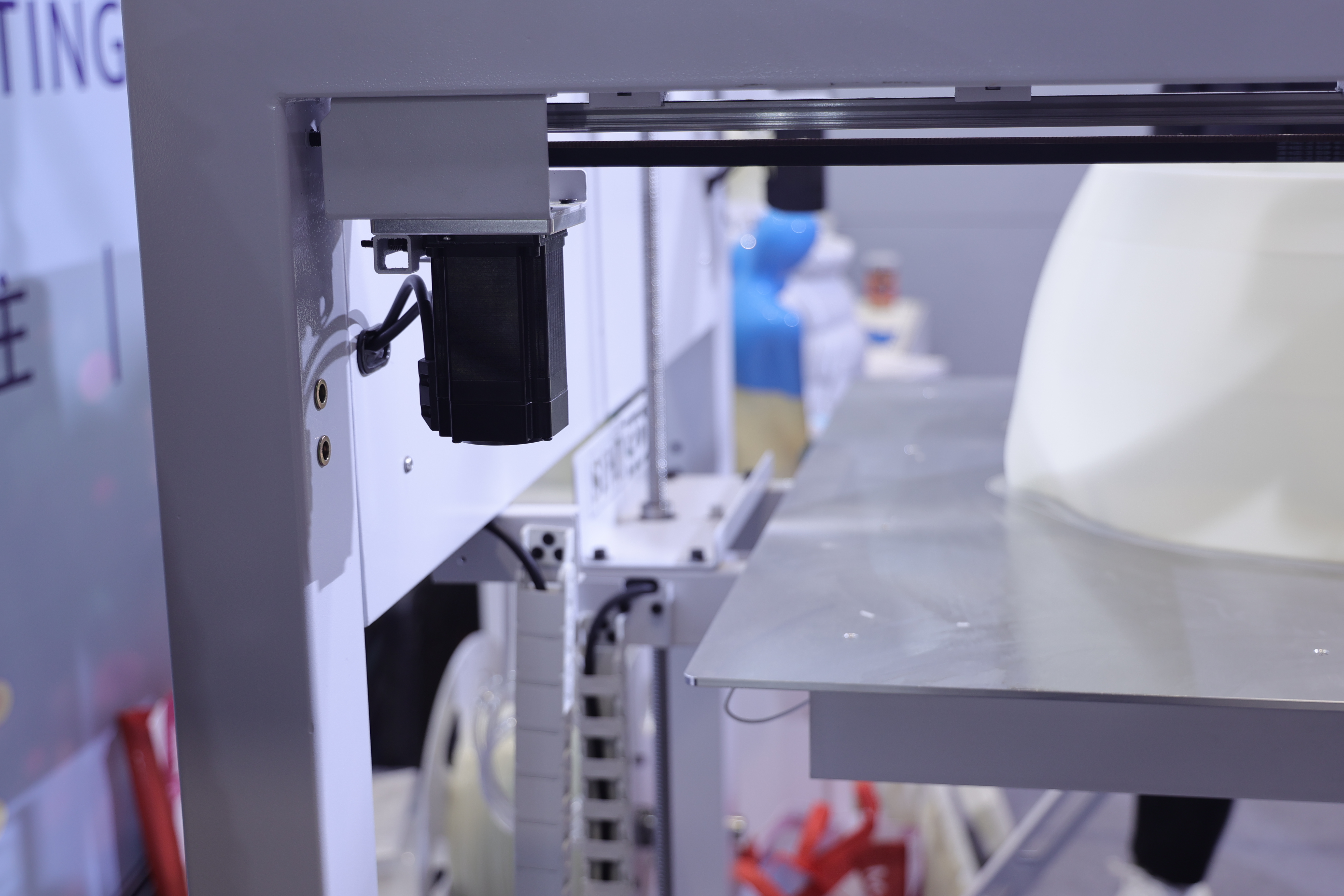
3D printer and additive manufacturing equipment benefit from low-vibration hybrid stepper motors paired with microstepping drivers.
Hybrid Stepper Motor Variant Comparison Table for Buyers
The table below is based on ACT MOTOR’s catalog and application documentation. It is intended as a shortlisting reference, not as a substitute for a torque and load calculation.
| Variant family | Representative model range | Core parameter range | Best-fit project scenarios |
|---|---|---|---|
| Standard hybrid stepper motor | 8HS, 11HS, 14HS/HM, 15HS/HM, 16HS/HM, 17HS/HM, 23HS/HM/HY, 24HS, 34HS/HM/HY/HD, 42HS, 52HS, HT families | Step angle 0.9°–2.4°; holding torque 0.08–28.0 N·m; motor length 34–220 mm | Rotary positioning in CNC machines, 3D printers, medical pump drives, packaging and general automation |
| Lead screw and ball screw stepper motor | 8HSL, 11HSL, 14HSL, 16HST, 17HSL, 23HSL, 34HSL, HSLG/ball screw variants | Step angle 0.9°–1.8°; rated voltage 12–110 VDC; integrated screw or ball screw | Compact linear axes, syringe pumps, laboratory analyzers, precision instruments |
| Geared stepper motor / gearbox stepper motor | 8HSAG, 11HSAG, 14HSAG, 17HSAG, 23HSAG, 34HSAG, 42HSAG | Step angle 1.8°; reduction ratios 1:3–1:512; planetary reduction configurations | Textile machinery, packaging machinery, medical devices, mechanisms requiring higher torque or lower reflected inertia |
| Hybrid closed-loop stepper motor / encoder stepper motor | 8SSM, 11SSM, 14SSM, 23SSM, 24SSM, 34SSM, 42SSM | Step angle 1.8°; encoder feedback; motor length 33–171 mm | Industrial robots, automated packaging lines, high-speed machines where step loss must be avoided |
| Brake stepper motor | 17HS, 23HS, 34HS brake models | Same frame families with integrated holding brake | Vertical axes, gravity-loaded slides, equipment requiring position holding when power is removed |
| Stepper motor drivers | DM542, DM556, HS758, HS56 | Supply voltage 12–36 V; continuous output current 0.3–8.4 A | Powering and controlling corresponding hybrid stepper motor systems |
FAQ: Buyer Questions on Hybrid Stepper Motor Project Matching
1. Which compliance documents should I request for hybrid stepper motors used in export equipment?
Changzhou ACT Motor Co., Ltd. operates an ISO9001-certified quality management system and designs its hybrid stepper motors for CE and RoHS compliance. European-bound machines generally require CE marking under the Low Voltage Directive 2014/35/EU and the EMC Directive 2014/30/EU, while RoHS requirements follow Directive 2011/65/EU. Ask the supplier to include current declarations or certificates with the motor documentation.
2. Can ACT MOTOR customize a hybrid stepper motor for a specific machine project?
ACT MOTOR supports OEM/ODM customization of step angle, motor length, rated voltage, rated current, phase resistance, phase inductance, holding torque, detent torque, rotor inertia, and lead wires. The OEM/ODM capability listing includes a starting MOQ of 2 units, allowing a project-specific motor configuration to be evaluated before mass production.
3. How should a buyer evaluate budget across standard, geared, brake, and closed-loop hybrid stepper motor variants?
Budget should be compared across the motor, driver, feedback, brake, and mechanical integration rather than at the bare motor level. A closed-loop or encoder-equipped motor and a brake-equipped motor contain more components than a basic open-loop motor. Lead screw and gearbox integration also changes the mechanical assembly. A structured supplier inquiry can separate these cost drivers and help the buyer compare total implementation cost.
4. Can ACT MOTOR support sample or small-batch validation before series production?
For OEM/custom hybrid stepper motor projects, ACT MOTOR lists a starting MOQ of 2 units and a monthly OEM capacity of 200,000 units. This supports sample and small-batch validation before a full production commitment. When preparing a sample request, share the load profile, target speed, available supply voltage, and mechanical envelope of the application.
5. What is the typical lead time for an OEM custom hybrid stepper motor project?
In ACT MOTOR’s OEM capability profile, the listed lead time is 30 days, with a monthly capacity of 200,000 units. Actual timing can vary when a brake, gearbox, custom shaft, modified electrical parameters, or additional approval documents are involved, so request a written lead-time confirmation after your drawing or specification is reviewed. For a project-specific lead time, quotation, or sample arrangement, contact ACT MOTOR at market@act-motor.com or WhatsApp +86 139-6126-1588.
Conclusion
The most reliable way to choose a hybrid stepper motor is to start with the application scenario and then compare motor architectures before finalizing a part number. Holding torque, step angle, frame size, and driver selection are still important, but they must be evaluated against the machine’s speed profile, duty cycle, precision target, safety requirements, and compliance environment.
ACT MOTOR’s product range supports this comparison by offering standard hybrid stepper motors, drivers, lead screw and ball screw linear motors, geared stepper motors, brake stepper motors, and closed-loop/encoder stepper motor options. Medical, laboratory, CNC, 3D printing, textile, packaging, and logistics automation projects each create a different architecture need. A shorter selection path is to send the motion specification to the manufacturer and let the supplier map the requirement to a tested motor-plus-driver combination.
Discuss Your Application With ACT MOTOR
Send ACT MOTOR your torque profile, duty cycle, precision target, or mechanical drawing. The company can help map the requirement to a hybrid stepper motor family and identify the matching driver and sample plan.
Email: market@act-motor.com
WhatsApp/Tel: +86 139-6126-1588
Website: www.act-motor.com
Address: No.18 Boyang Road, Jintan Area, Changzhou, Jiangsu, China
Download the ACT MOTOR Product Brochure
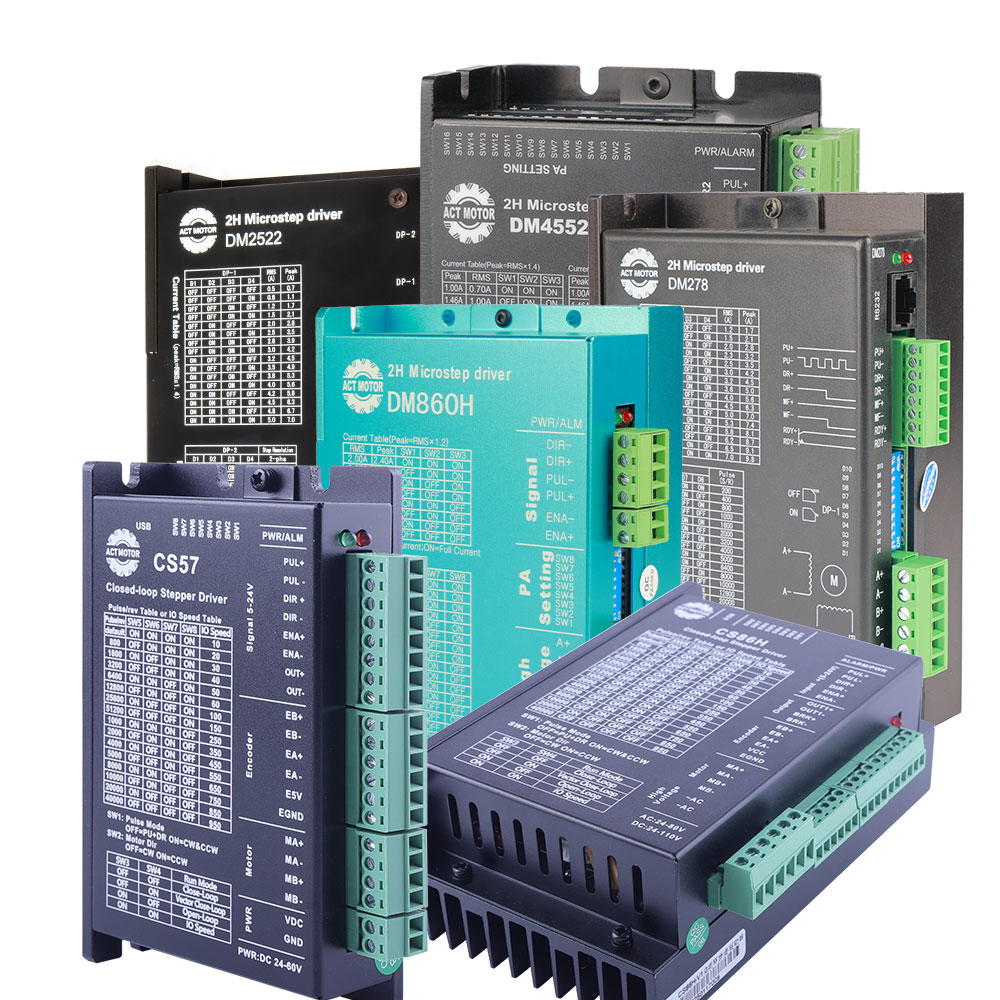
A matched motor and driver combination supports a faster, more reliable project validation process.
Have Questions or Need More Details?
Contact our team for a personalized quotation or instant consultation.
Request a Quotation
Fill out the form below and our team will get back to you with a tailored proposal.
WhatsApp Direct Chat
Prefer to chat in real-time? Message us on WhatsApp for instant assistance & quick answers.
- Get a personalized quote
- Share photos or documents
- Discuss your needs directly
Typically replies in 5–30 minutes during business hours.