Top Hybrid Stepper Motor Configurations for Precision Automation: A Ranked Shortlist
Answer first: seven hybrid stepper motor configurations cover nearly every precision automation requirement in industrial procurement. Ranked by documented torque coverage, positional integrity under load, mechanical integration depth, drive-level integration and compliance readiness, the shortlist runs: (1) the standard open-loop hybrid stepper motor, (2) the high-torque HT series, (3) the closed-loop encoder-equipped platform, (4) the geared and gearbox hybrid stepper motor, (5) the lead screw and ball screw linear hybrid stepper motor, (6) the brake-equipped hybrid stepper motor, and (7) the driver-integrated motor-and-drive package.
This is a configuration shortlist, not a supplier list. Every parameter below is taken from published product documentation. The reference product data comes from Changzhou ACT MOTOR Co., Ltd. (ACT MOTOR) — a manufacturer founded in 2010 in Changzhou, Jiangsu, China, producing hybrid stepper motors, stepper motor drivers, lead screw stepper motors, geared stepper motors, brake stepper motors and precision motion modules, and exporting roughly 70% of its output to the United States, the European Union and China.
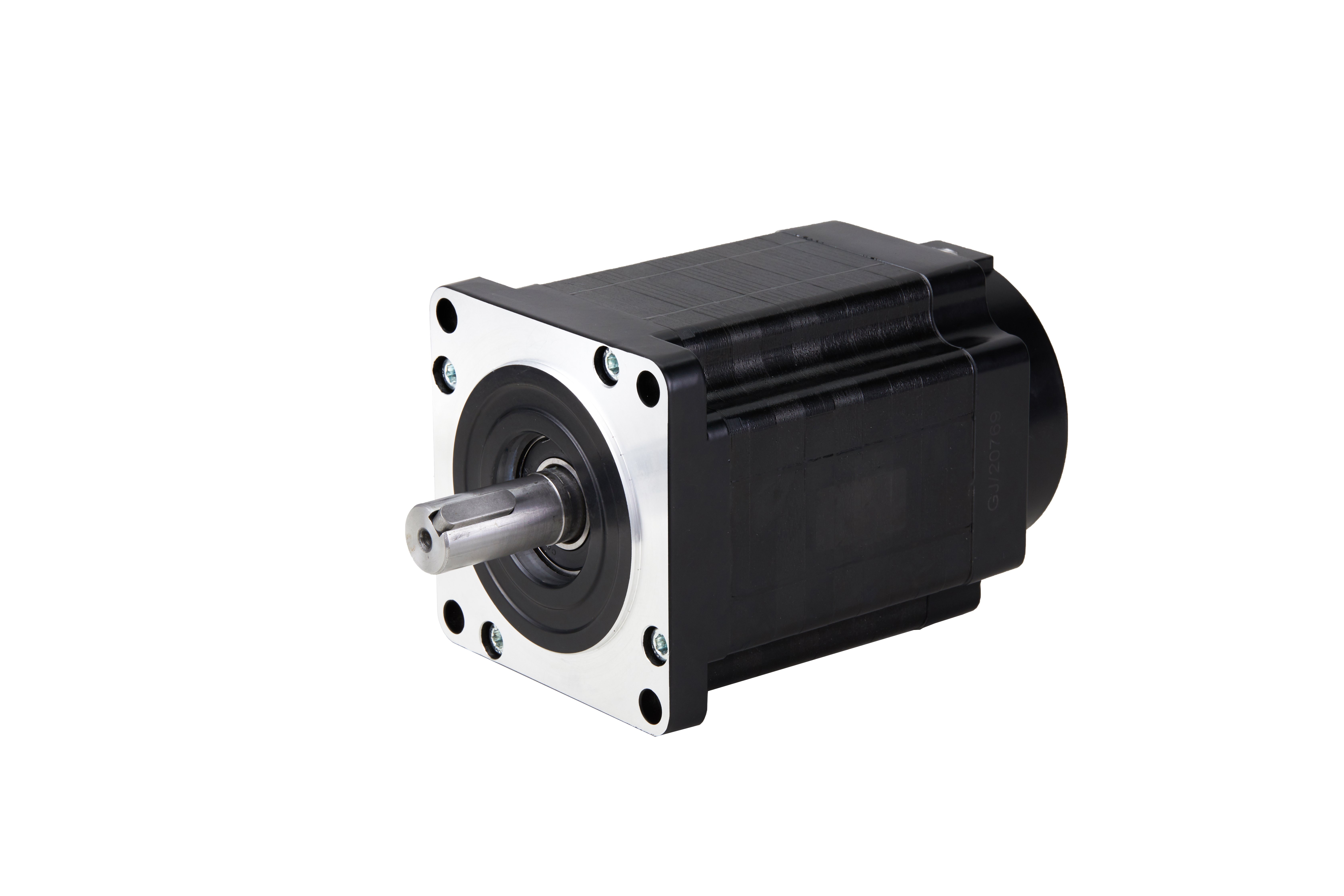
Cover: Hybrid Stepper Motor 50HT9396 — a high-torque frame from the HT series ranked at position 2 below.
Why Configuration, Not Frame Size, Decides Precision Automation Outcomes
Two hybrid stepper motors can share the same mounting footprint and still behave nothing alike on the same machine. The frame size fixes the interface; the configuration fixes torque density, positional integrity, axial load capability, holding behaviour when power is removed, and the compliance file that travels with the shipment.
Most sourcing failures in precision automation are therefore constraint failures rather than brand failures: a standard open-loop motor specified for a vertical axis that must hold position at power-off; a geared unit selected without checking which gearbox family and reduction ratio the load actually needs; a medical fluid-handling axis paired with a drive that cannot deliver smooth low-speed current; an export shipment stopped because the RoHS test report or CE certificate cannot be produced on request. The International Trade Compliance Association reports that over 35% of cross-border motor shipments in the first quarter of 2026 faced customs delays due to certification documentation issues — a risk decided at configuration stage, not at the border.
Reading this as a ranking of configurations, rather than a ranking of companies, keeps the decision where the engineering risk actually sits.
The Demand Context Behind This Ranking
Configuration demand is not evenly spread, and third-party market data shows where the pressure is concentrated.
- Hybrid stepper motors represented approximately 53.93% of total stepper motor market value in 2025, making the hybrid architecture the dominant motor type in the category (KBV Research).
- The global stepper motor market was valued at USD 3.962 billion in 2024 and is projected to reach USD 6.245 billion by 2035, a CAGR of 4.22% (Market Research Future). Published estimates vary by scope — some include complete motion systems rather than motors alone — so the direction of growth is more reliable than any single figure.
- The high-torque stepper motor segment alone was valued at USD 1.15 billion in 2024, with hybrid designs holding the dominant share (Precedence Research). That is the demand signal behind the HT series ranking at position 2.
- Medical equipment is the fastest-growing application for stepper motors, with a projected CAGR of 7.5% through 2032, driven by syringe pumps and imaging systems (CoherentMI).
- Asia Pacific held a 48.91% share of the market in 2025 (Mordor Intelligence), which is why frame-size availability and lead time from Asian production bases remain a practical procurement variable.
On the regulatory side, industrial hybrid stepper motors sold into the European Union must comply with Directive 2014/35/EU (Low Voltage) and Directive 2014/30/EU (Electromagnetic Compatibility) for CE marking, and with Directive 2011/65/EU for RoHS. Compliance is a configuration attribute in the same way torque is: it is either documented for the specific product family or it is not.
How the Ranked Shortlist Was Built
Five criteria were applied, all of them verifiable from product documentation rather than from sales estimates:
- Torque coverage — how much of the documented 0.08 N·m to 28.0 N·m holding-torque band the configuration can address.
- Positional integrity — whether the configuration closes the loop with encoder feedback or runs open-loop.
- Mechanical integration depth — direct drive, gearbox, screw conversion or brake holding.
- Drive-level integration — whether a matched driver is specified together with the motor.
- Compliance readiness — whether CE, RoHS and ISO 9001 documentation is attached to the family.
The ranking reflects configuration breadth, documented parameter coverage and application pull. It is not a measured sales ranking, and it is not a ranking of suppliers.
1. Standard Open-Loop Hybrid Stepper Motor (8HS–52HS Frames)
The standard open-loop hybrid stepper motor is the base configuration from which most other variants are derived, and it is the broadest documented family. Frame designations follow the NEMA-class convention familiar to automation engineers — 8HS, 11HS, 14HS/HM, 15HS/HM, 16HS/HM, 17HS/HM, 23HS/HM/HY, 24HS, 34HS/HM/HY/HD, 42HS and 52HS — which is why it is the easiest configuration to substitute, re-quote and scale across machines.
Documented parameter envelope: step angle 0.9°–2.4°; motor length 34–220 mm; rated voltage 2–8 V; rated current 0.5–8 A; phase resistance 0.05–10 Ω; phase inductance 0.1–10 mH; holding torque 0.08–28.0 N·m; detent torque 0.01–0.75 N·m; rotor inertia 0.004 kg·cm²–10 kg·cm²; 3–8 lead wires; weight 0.1–15.0 kg.
Why it ranks first: the same electrical and mechanical envelope is documented across the RoHS-compliant, ISO 9001, textile-machinery and general automation versions of the family, so a single base motor can be adapted to different compliance and industry requirements without changing the mechanical design. It also spans the widest frame-size range in the data set, from 8HS miniature units through 52HS frames.
Constraint to verify: match phase resistance and inductance to the selected driver, confirm the required step angle within the 0.9°–2.4° band, and confirm that the RoHS and CE documentation for the exact model is supplied with the order.
2. High-Torque HT Series (17HT–50HT)
Dedicated high-torque frame designations — 17HT, 23HT, 34HT, 42HT and 50HT — sit inside the same documented family as the standard frames, which means the additional torque is achieved within a known parameter set rather than through a different architecture.
Why it ranks second: the high-torque stepper motor segment was valued at USD 1.15 billion in 2024, and hybrid designs hold the dominant share of that segment (Precedence Research). That demand concentrates in applications where continuous torque, rigidity and resistance to load variation matter more than compactness — automated packaging lines, CNC axes and material handling.
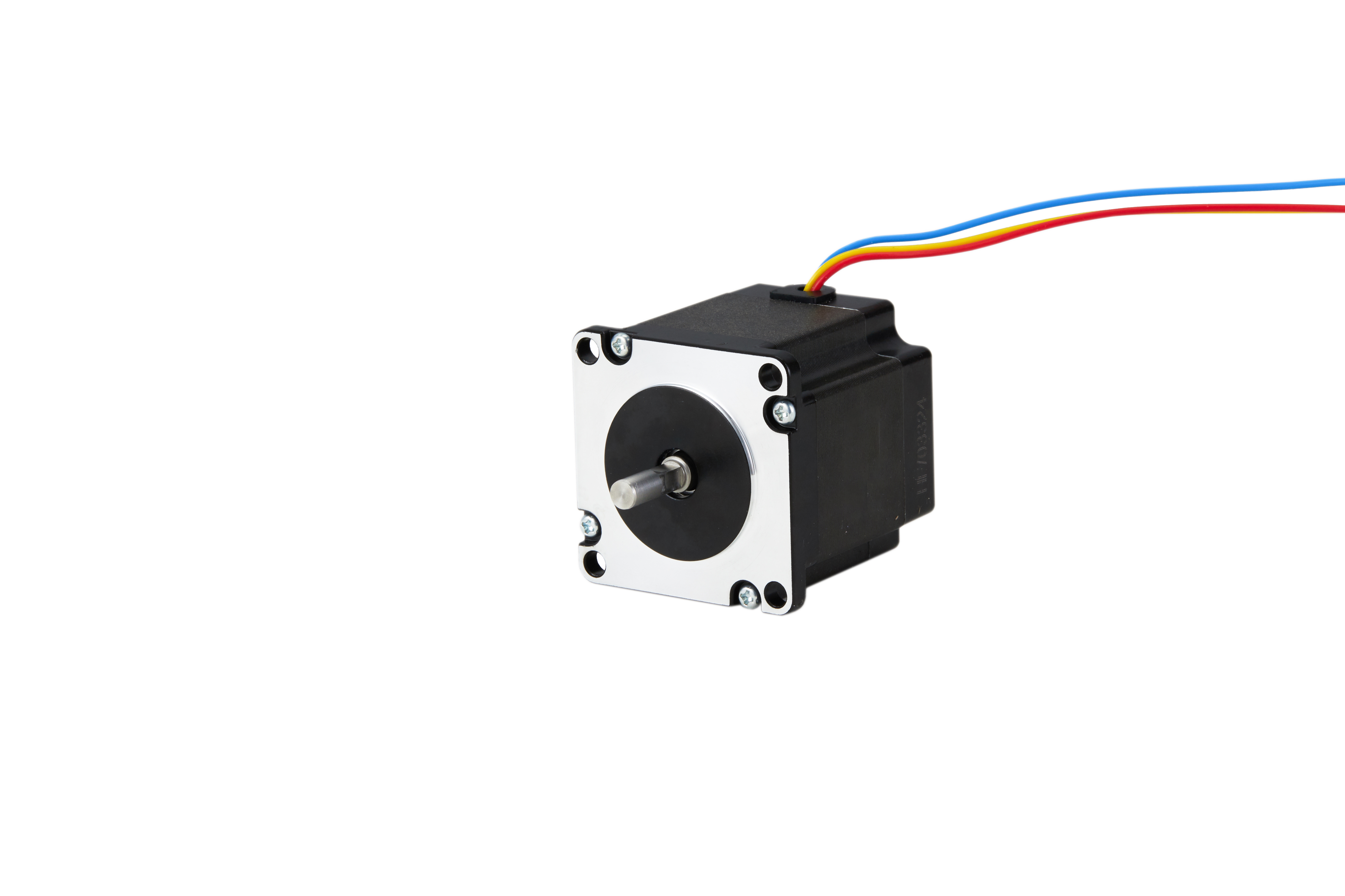
Hybrid Stepper Motor 23HT — a high-torque frame designation within the HT series.
Constraint to verify: a high-torque frame is not automatically the correct answer. Check that the drive can deliver the required current within the documented 0.5–8 A range, that the thermal design of the machine can absorb the continuous duty, and that step loss under peak load is acceptable. Where it is not, the encoder-equipped hybrid stepper motor documented for automated packaging lines is the more appropriate configuration.
3. Closed-Loop Encoder-Equipped Hybrid Stepper Motor (8SSM–42SSM)
A closed-loop hybrid stepper motor reports and corrects its own position with encoder feedback instead of assuming that no steps were lost. ACT MOTOR documents a closed-loop platform in frame sizes 8SSM, 11SSM, 14SSM, 23SSM, 24SSM, 34SSM and 42SSM, alongside encoder-equipped hybrid stepper motors for automated packaging lines.
Documented parameter envelope: step angle 1.8°; motor length 33–171 mm; rated voltage 12–110 VDC, 18–80 VAC or 220 VAC; rated current 0.5–8 A; phase resistance 0.5–12 Ω; phase inductance 0.1–20 mH; holding torque 0.08–28.0 N·m; detent torque 0.01–0.75 N·m; rotor inertia 0.00006–0.0045 kg·m²; 2–8 lead wires.
Why it ranks third: it removes the single largest uncertainty in open-loop positioning, which is whether the axis actually arrived where the controller believes it did. The product range also lists closed-loop stepper motors for industrial robots, plus two named families — an intelligent load-adaptive hybrid stepper motor and a high-precision hybrid stepper motor — that follow the same feedback-oriented logic.
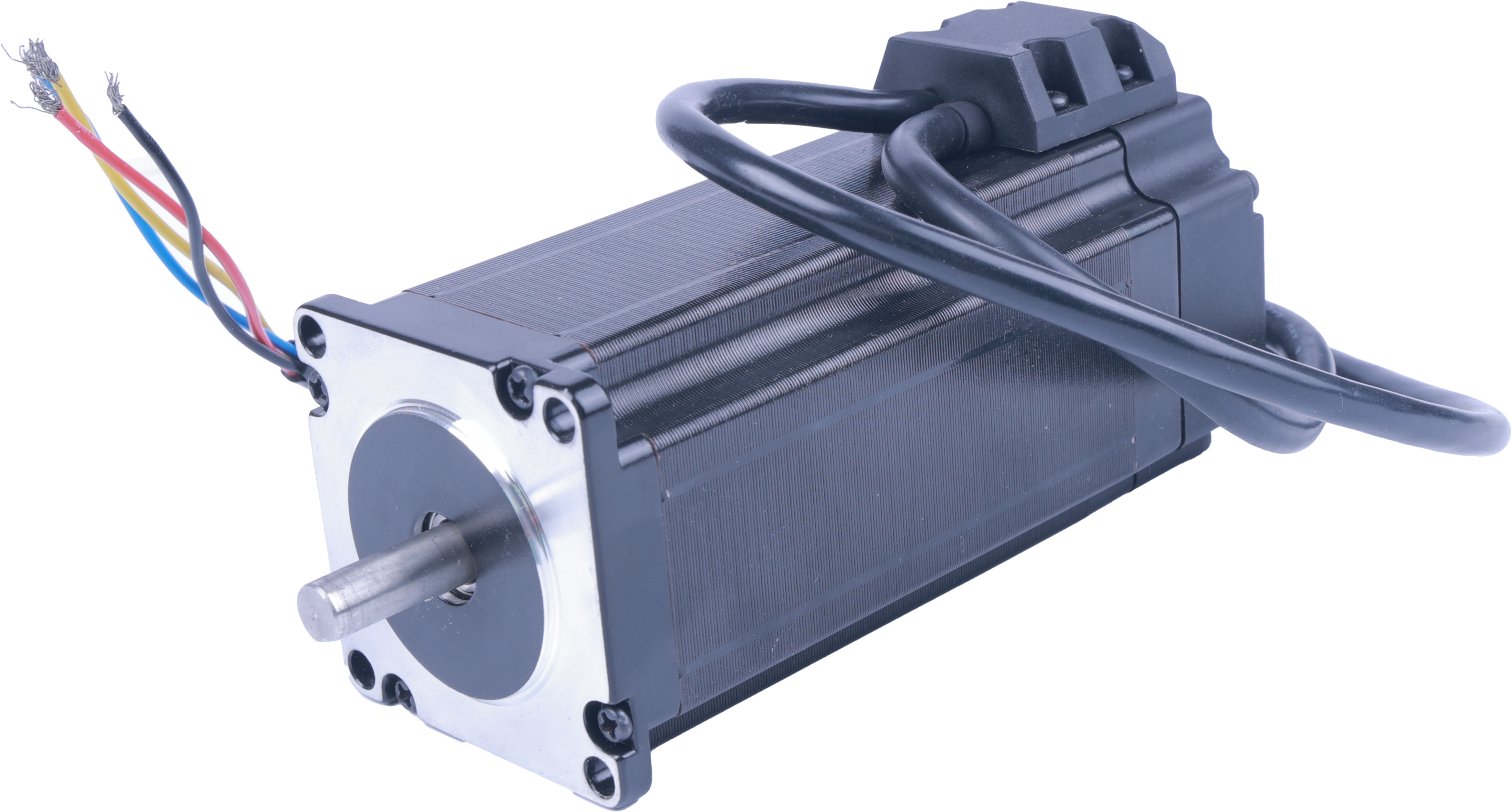
Hybrid Stepper Motor 23SSM8440-EC1000 — a closed-loop configuration with encoder feedback.
Constraint to verify: closed-loop performance depends on the feedback device and the drive working together. Confirm the encoder type, the supply voltage class (12–110 VDC, 18–80 VAC or 220 VAC) and the tuning support available during commissioning.
4. Geared and Gearbox Hybrid Stepper Motor (8HSAG–42HSAG)
Where a direct-drive motor cannot produce enough torque at the required speed, a gearbox configuration multiplies torque mechanically. ACT MOTOR documents geared motors in frame sizes 8HSAG, 11HSAG, 14HSAG, 17HSAG, 23HSAG, 34HSAG and 42HSAG, with four gearbox families: precision planetary reduction, economical planetary reduction, RV reduction gear box and eccentric reduction box.
Documented parameter envelope: step angle 1.8°; motor length 28–156 mm; rated voltage 12–110 VDC; rated current 0.5–8 A; phase resistance 0.5–12 Ω; phase inductance 0.1–20 mH; holding torque 0.08–28.0 N·m; detent torque 0.01–0.75 N·m; rotor inertia 0.00006–0.0045 kg·m²; 2–8 lead wires; reduction ratio from 1:3 to 1:512.
Why it ranks fourth: the gearbox family covers both ends of the trade-off. Planetary units suit compact, moderate-torque axes, while RV and eccentric boxes push into higher reduction ratios. The geared range is documented for textile machinery, packaging machinery and medical devices, which are three of the fastest-moving verticals in the demand data.
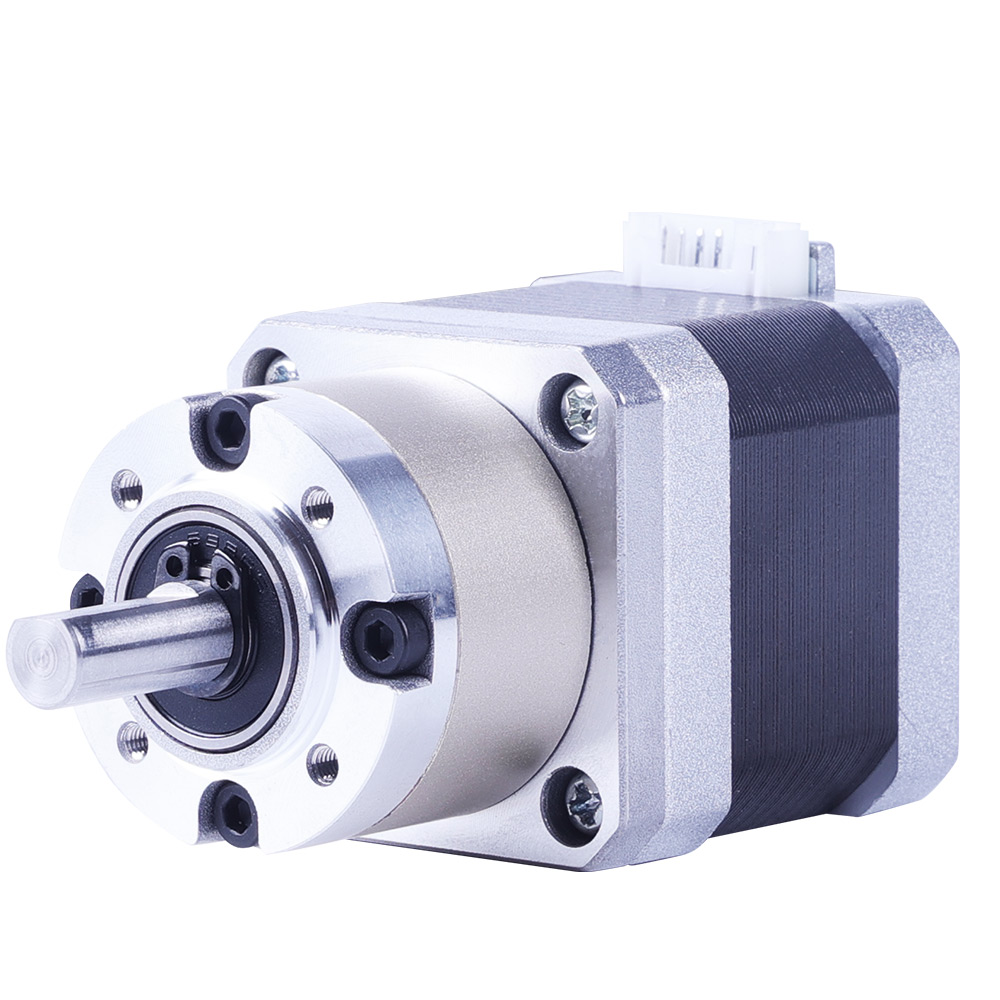
Hybrid Stepper Motor 17HS4413AG5 — a geared configuration with a documented reduction ratio.
Constraint to verify: reduction ratio is a two-sided decision. A higher ratio produces more output torque but lowers output speed, and a higher speed at the motor shaft means more noise and wear. Confirm the gearbox family, the exact ratio between 1:3 and 1:512, and the resulting output torque at the intended operating speed before fixing the part number.
5. Lead Screw and Ball Screw Linear Hybrid Stepper Motor
Linear configurations remove the need for a separate mechanical stage by converting rotation into travel inside the motor assembly. ACT MOTOR documents lead screw stepper motors in frame sizes 8HSL, 11HSL, 14HSL, 15HSL, 16HST, 17HSL, 23HSL, 24HSL and 34HSL, and ball screw stepper motors in 8HSL, 11HSL, 14HSL, 16HST, 17HSL, 23HSL and 34HSL, plus the 11HSLG, 14HSLG, 17HSLG, 23HSLG and 34HSLG versions.
Documented parameter envelope (ball screw range): step angle 0.9°–1.8°; rated voltage 12–110 VDC; rated current 0.5–8 A; phase resistance 0.05–10 Ω; phase inductance 0.1–10 mH; holding torque 0.08–28.0 N·m; detent torque 0.01–0.75 N·m; rotor inertia 0.004 kg·cm²–10 kg·cm²; 3–8 lead wires.
Why it ranks fifth: it is the configuration of choice for syringe pumps and laboratory X/Y/Z positioning, where the axis must deliver smooth, low-pulsation linear motion rather than rotary torque. Medical equipment is the fastest-growing stepper motor application at a projected 7.5% CAGR through 2032 (CoherentMI), and syringe pumps are explicitly named as a driver of that growth.
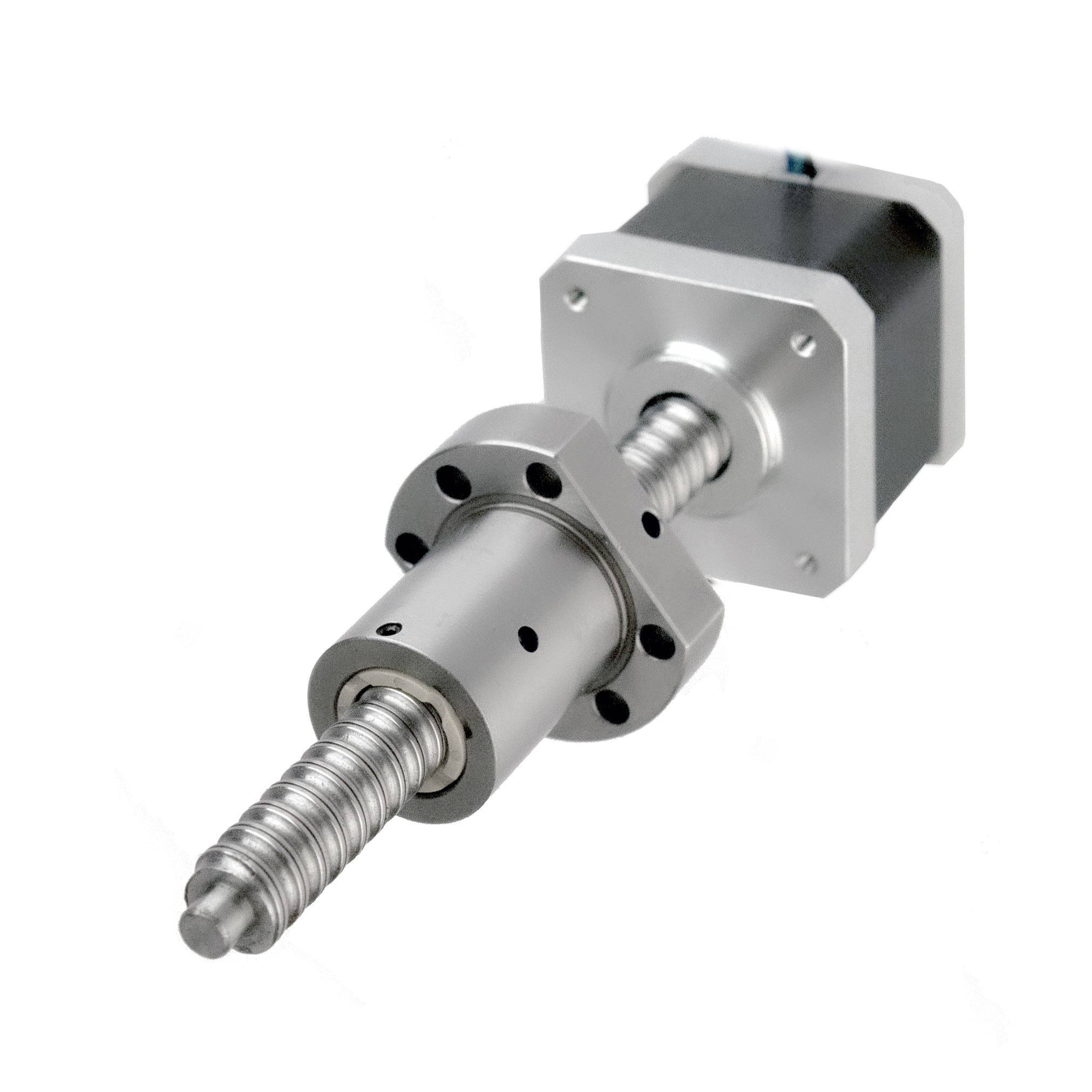
Ball screw stepper motor — a linear configuration for smooth, low-pulsation positioning.
Constraint to verify: specify the screw type (lead screw or ball screw) and the frame size together, then check the step angle against the linear resolution required. The tighter step angle band of 0.9°–1.8° on the ball screw range is a resolution decision, not a torque decision.
6. Brake-Equipped Hybrid Stepper Motor (17HS, 23HS, 34HS)
A brake stepper motor adds a holding function so the load does not fall or drift when power is removed. ACT MOTOR documents brake motor configurations in the 17HS, 23HS and 34HS frame sizes, sharing the wider family parameter envelope of step angle 0.9°–2.4°, motor length 34–220 mm and holding torque 0.08–28.0 N·m.
Why it ranks sixth: the requirement is real but narrower than torque or integration demand — it applies mainly to vertical axes, lifting mechanisms and any axis where position must be preserved during a power interruption or an emergency stop.
Constraint to verify: confirm that the frame size available in the brake configuration matches the torque the axis needs, and separate brake holding capability from motor holding torque in the specification. They solve different problems.
7. Driver-Integrated Hybrid Stepper Motor Package (DM542, DM556, HS758, HS56)
The seventh configuration is not a different motor but a different delivery: motor plus matched driver specified, quoted and validated as one unit. ACT MOTOR documents stepper motor drivers in models DM542, DM556, HS758 and HS56, with a documented power supply voltage range of 12–36 V and continuous output current of 0.3–8.4 A.
Why it ranks seventh but matters most in commissioning: most drive-related failures — resonance, heat rise, weak low-speed smoothness, a motor that stalls only on the real machine — come from a motor and driver that were never matched on paper. Specifying the pair as a configuration removes that variable. Integrated stepper motors are also listed in the product range, and the laboratory positioning application documented for medical analyzers pairs the axis drive with an integrated motor.
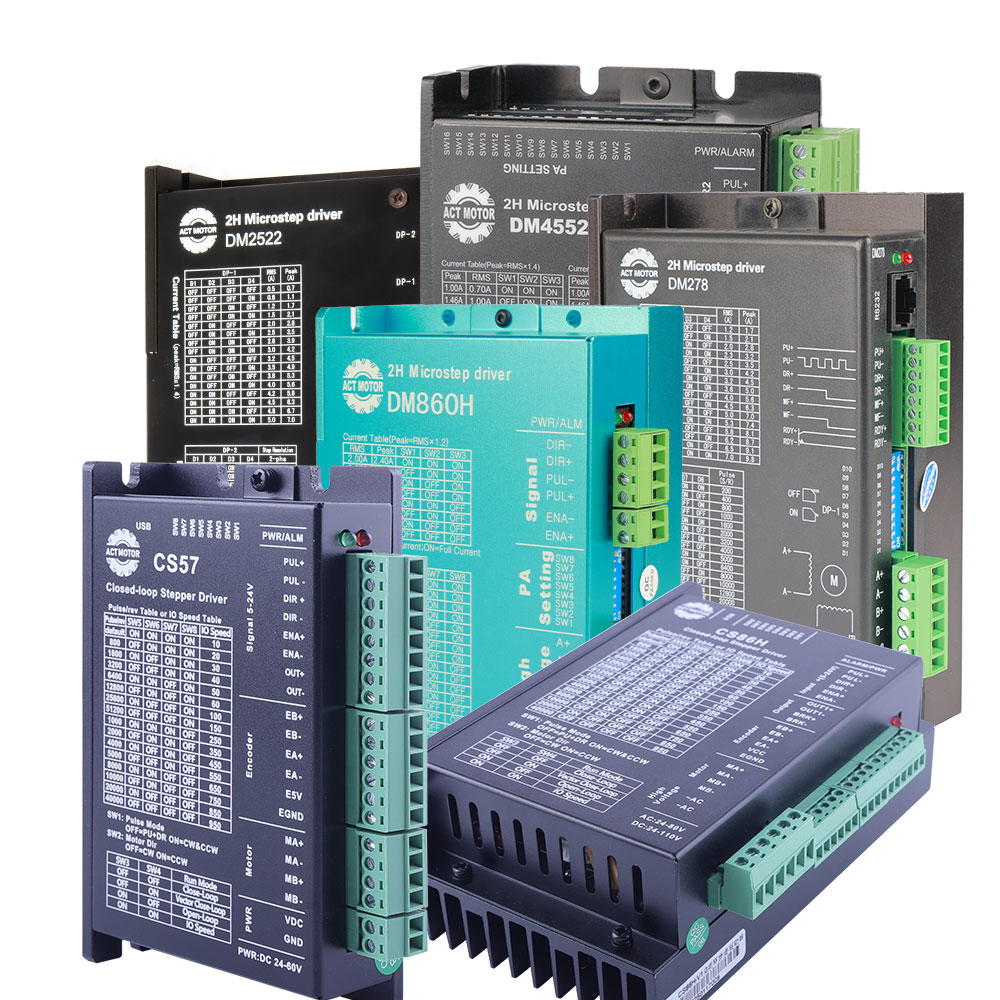
Drive combination — a stepper motor paired with a matched driver from the DM and HS series.
Constraint to verify: current setting, microstepping configuration and EMC compliance of the driver itself. The driver family carries its own CE documentation (certificate ISETC.000320211115, covering EN 61800-3:2004/A1:2012 and EN 61800-5-1:2007+A1:2017), which is separate from the motor certificate.
Step-by-Step: Applying the Shortlist to a Real Project
Working through these six steps in order prevents the most common configuration errors.
- Fix the load case. Define continuous and peak torque, then locate the requirement inside the documented 0.08–28.0 N·m holding-torque band. If the requirement sits near the top of the band, the HT series becomes the starting point rather than the standard frame.
- Decide open-loop or closed-loop. If step loss is unacceptable — medical fluid dosing, robotic positioning, packaging registration — move to the closed-loop 8SSM–42SSM platform or an encoder-equipped variant. If the axis never loses steps under load, open-loop remains the simpler and more economical choice.
- Decide the mechanical integration. Direct drive for simple rotary axes; a gearbox (1:3 to 1:512) when torque must increase at reduced speed; a lead screw or ball screw when the axis is linear; a brake when the load must hold at power-off.
- Match the drive. Specify a driver from the DM542, DM556, HS758 or HS56 family within the documented 12–36 V supply and 0.3–8.4 A continuous output range, or select an integrated motor where cabinet space is limited.
- Verify the compliance file. Confirm CE documentation for the motor, the driver and the power unit separately, plus the RoHS test report for the motor and the driver, plus ISO 9001 certification for the manufacturing system.
- Validate on a sample, then scale. Validate the chosen configuration on the real machine before committing to volume, then confirm production lead time and capacity against the project schedule.
Where Each Configuration Wins: Application Evidence
Medical fluid handling and syringe pumps
The documented medical application uses a hybrid stepper motor driven by a DM542 to regulate precision flow, with requirements listed as constant torque output, extremely smooth low-speed operation, low pulsation, low vibration, low noise and no step loss over long continuous operation. This is a closed-loop or precision linear configuration territory rather than a standard open-loop selection.
Laboratory X/Y/Z positioning
Laboratory equipment applications require moving the X, Y and Z axes with ultra-high positioning accuracy, ultra-low vibration and strictly controlled temperature rise. The documented configuration pairs the axis with an integrated motor, which is why drive integration ranks as its own configuration in this shortlist.
CNC and industrial automation
Industrial automation applications are documented with DM542, DM860H and DM2722 drives and list high load capacity, high rigidity and continuous duty operation as the deciding requirements. A CNC machinery manufacturer in Italy specified 1000 units for carving equipment and reported two years of stable operation, with low noise and fast speed as the observed highlights.
3D printing and equipment manufacturing
Equipment manufacturing applications pair the motor with DM542 or DM420 drives and require high-precision positioning, no step loss at high speed and microstepping compatibility, with different emphasis across the X, Y, Z and E axes. A 3D printing manufacturer in Spain specified 2000 units and reported two years of stable operation with the same low-noise, fast-speed profile.
Textile machinery and logistics
Textile machinery and packaging machinery are documented applicable industries for both the standard and geared configurations, and the product range lists a logistics sorter pushing hybrid stepper motor as a named application-specific configuration.
Configuration Comparison Table
All figures below come from documented product data. Blank cells indicate that the parameter is not published for that family rather than that it is undefined.
| Rank | Configuration | Documented model series | Step angle | Holding torque | Signature feature | Primary constraint to verify |
|---|---|---|---|---|---|---|
| 1 | Standard open-loop hybrid stepper | 8HS, 11HS, 14HS/HM, 15HS/HM, 16HS/HM, 17HS/HM, 23HS/HM/HY, 24HS, 34HS/HM/HY/HD, 42HS, 52HS | 0.9°–2.4° | 0.08–28.0 N·m | Widest frame and parameter coverage | Driver current match; RoHS and CE documents |
| 2 | High-torque HT series | 17HT, 23HT, 34HT, 42HT, 50HT | 0.9°–2.4° | 0.08–28.0 N·m | High torque density for continuous duty | Drive current headroom; thermal behaviour |
| 3 | Closed-loop with encoder | 8SSM, 11SSM, 14SSM, 23SSM, 24SSM, 34SSM, 42SSM | 1.8° | 0.08–28.0 N·m | Encoder feedback eliminates step-loss uncertainty | Encoder and drive compatibility; tuning |
| 4 | Geared / gearbox | 8HSAG, 11HSAG, 14HSAG, 17HSAG, 23HSAG, 34HSAG, 42HSAG | 1.8° | 0.08–28.0 N·m | Reduction ratio 1:3 to 1:512 | Ratio versus output speed; gearbox family |
| 5 | Lead screw and ball screw linear | 8HSL, 11HSL, 14HSL, 15HSL, 16HST, 17HSL, 23HSL, 24HSL, 34HSL; ball screw with HSLG versions | 0.9°–1.8° | 0.08–28.0 N·m | Rotation converted to linear travel in one unit | Screw type; linear resolution from step angle |
| 6 | Brake-equipped | 17HS, 23HS, 34HS | 0.9°–2.4° | 0.08–28.0 N·m | Holds position when power is removed | Brake holding versus motor holding torque |
| 7 | Driver-integrated package | DM542, DM556, HS758, HS56 | Documented 12–36 V supply, 0.3–8.4 A continuous | Current setting; driver EMC certificate |
FAQ: Hybrid Stepper Motor Configurations
Which certifications should be verified before ordering a hybrid stepper motor configuration?
For the EU and most global markets, ACT MOTOR's documentation includes CE certificates issued by ISET: ISETC.000520211115 for the motors (EN 60034-1, EN 61000-6-1, EN 61000-6-3, EN 61000-3-2, EN 61000-3-3), ISETC.000320211115 for the drivers (EN 61800-3, EN 61800-5-1) and ISETC.000420211115 for the power units. RoHS test reports GTS2408190853EN (motor) and GTS2408190852EN (driver) are issued by GTS, and the quality management system is certified to ISO 9001 under certificate 07625Q2378R1S-JS/001, valid to 12 October 2028. Certificate copies carry validity windows, so buyers should request current copies and confirm the window at the time of order.
Can a geared, closed-loop or linear configuration be customized to a project's torque and step angle?
Yes. ACT MOTOR operates an OEM/ODM model and lists customizable parameters that include step angle, motor length, rated voltage, rated current, phase resistance, phase inductance, holding torque, detent torque, rotor torque and lead wires. Documented families that support project-level configuration include the geared series 8HSAG–42HSAG with ratios from 1:3 to 1:512, the closed-loop platform 8SSM–42SSM, ball screw units such as 11HSLG–34HSLG, and brake motors in 17HS, 23HS and 34HS frames.
What actually drives the cost of a hybrid stepper motor configuration?
Cost is set by the specification combination rather than by a published list price. The variables that move a quotation are the holding-torque class within the documented 0.08–28.0 N·m range, motor length (34–220 mm on standard frames), open-loop versus closed-loop construction, gearbox family and reduction ratio, screw type on linear units, brake fitting, and whether a matched driver from the DM542, DM556, HS758 or HS56 family is included. Consolidating these variables into one configuration request is what makes competing quotations comparable.
What is the minimum order quantity for a validation sample?
The documented minimum order quantity is 2 units, which allows a project team to validate the configuration on the real machine before committing to volume. Every unit is 100% tested, and free technical consultation plus professional technical support are provided as part of the service scope.
How long does a customized configuration take to deliver?
Documented lead time is 30 days, supported by a monthly capacity of 200,000 units and annual output of 2 million sets from a 70,000 m² production base, with a European branch in Bremen, Germany and offices in Shanghai and Jinan. To move from this shortlist to a quotation, send the required configuration — frame size, holding torque, loop type, gearbox or screw requirement, brake requirement and driver preference — to market@act-motor.com, or download the full product catalog here: ACT MOTOR product catalog (PDF).
Conclusion: Choose the Configuration Before the Part Number
The ranked shortlist above is a decision order, not a product order. Start with the standard open-loop hybrid stepper motor when the axis is simple and step loss is tolerable; move to the HT series when continuous torque decides the outcome; step into the closed-loop platform when position must be guaranteed; use geared, linear or brake configurations when the mechanics demand it; and close the loop on the specification by fixing the driver at the same time as the motor. Then verify the compliance file family by family, because CE, RoHS and ISO 9001 documentation is issued per product family and per technology — a motor certificate does not cover a driver.
For projects that need to move from shortlist to validated sample, ACT MOTOR provides OEM/ODM configuration, a 2-unit MOQ for validation, 100% testing, a documented 30-day lead time and free technical consultation. Product information and contact details are available at www.act-motor.com.
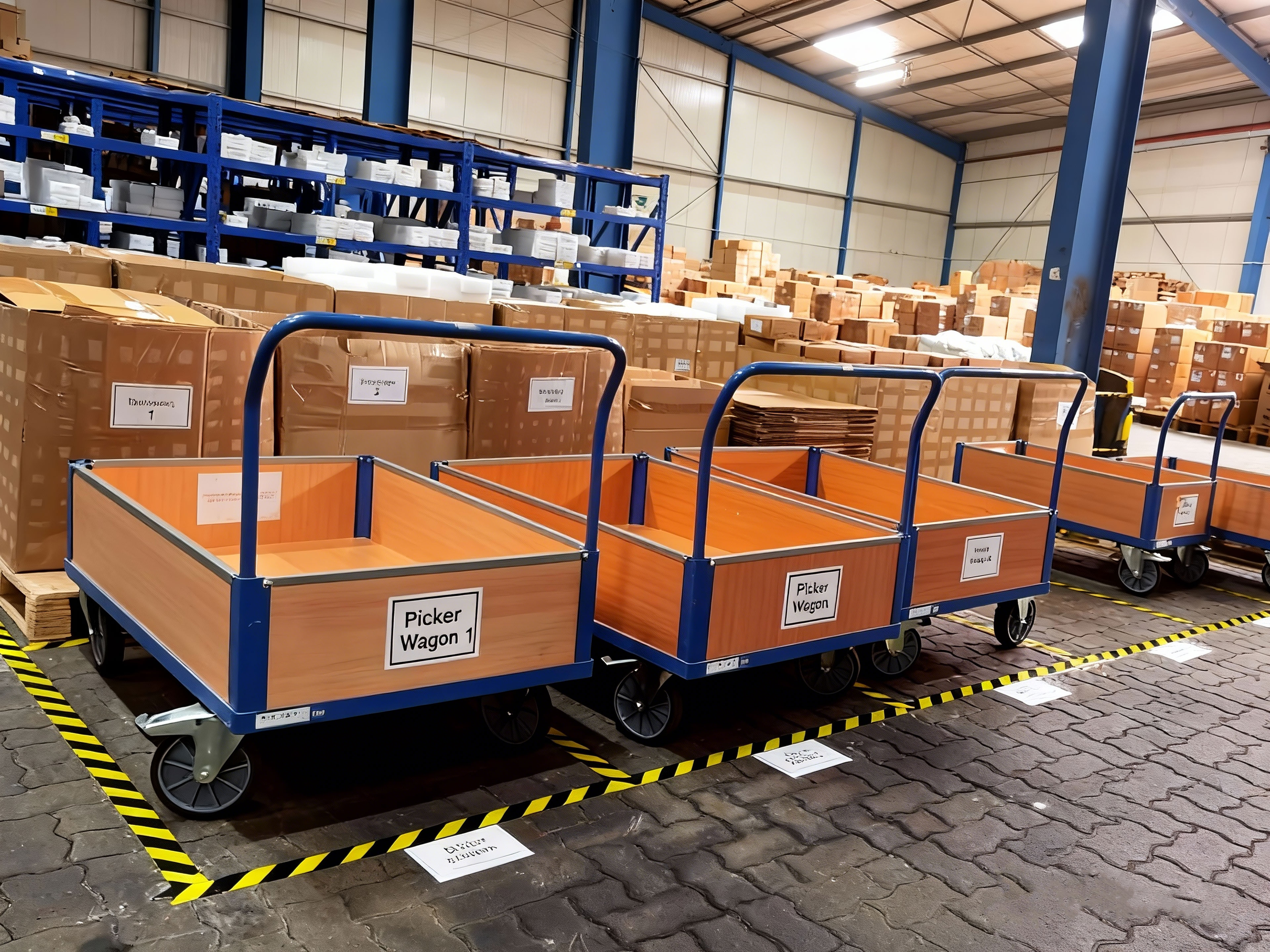
ACT MOTOR's branch in Bremen, Germany supports European market service alongside the Changzhou production base.
Next step: send your load case — frame size, holding torque, loop type, gearbox or screw requirement — and request a quotation or validation sample at market@act-motor.com (WhatsApp: +86 139-6126-1588).