
Craft Gifts Supplier Evaluation: Verifying Factory Capacity, QC and Delivery
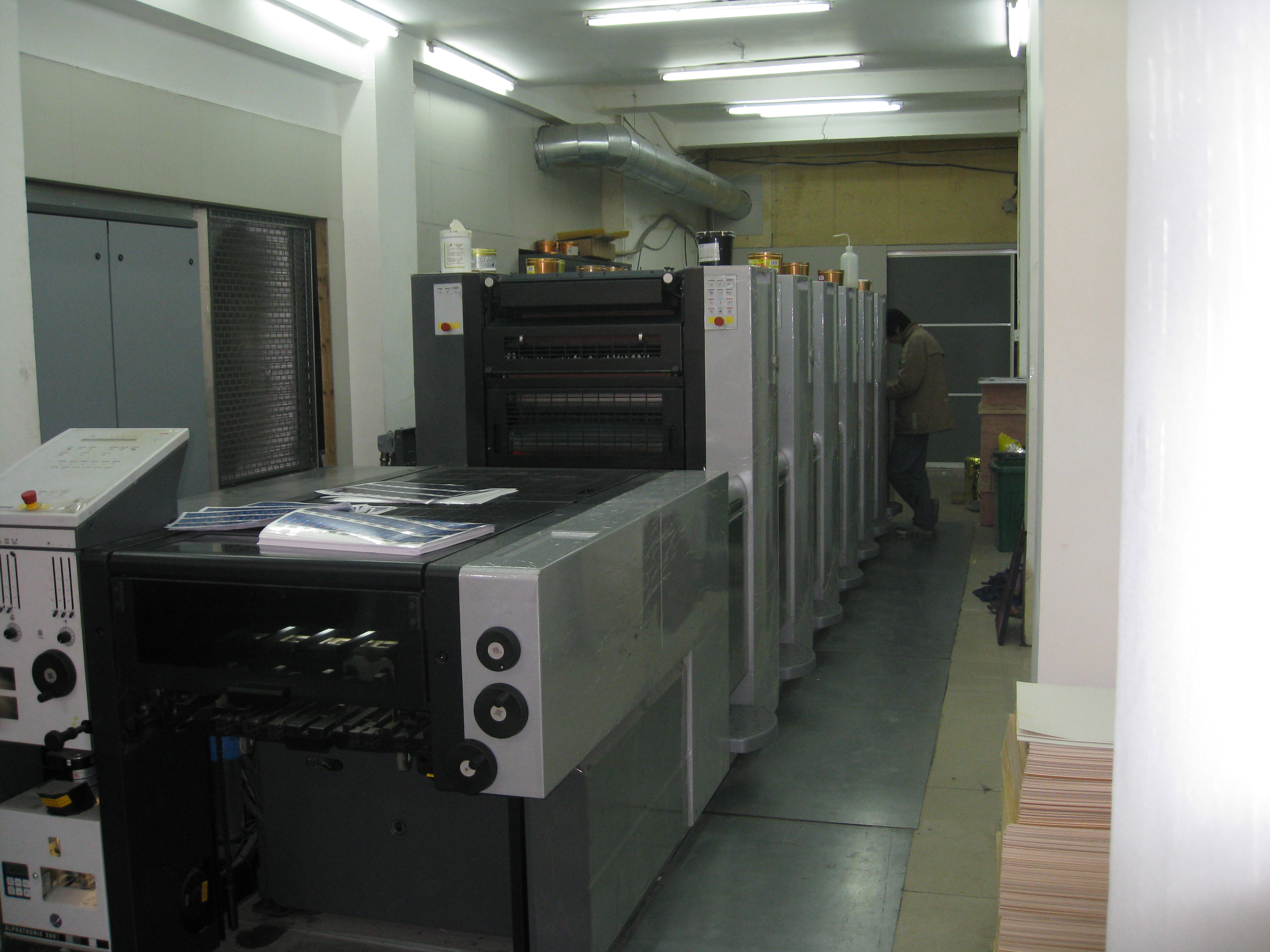
Evaluating a craft gifts supplier comes down to three questions you can verify: can the factory actually support your volume, does quality control run from raw material to packed carton, and will the order leave on the promised date? This guide turns those three questions into a working evaluation framework, with the documents to request at each gate. Wenzhou Aha Craft Gifts Co., Ltd. — trading as AHA, a direct manufacturer established in 2017 in Wenzhou, China, producing custom craft gifts, paper and plastic products, stationery, toys and packaging supplies — is used throughout as a worked example of how a manufacturer presents its capacity, inspection scope and export record.
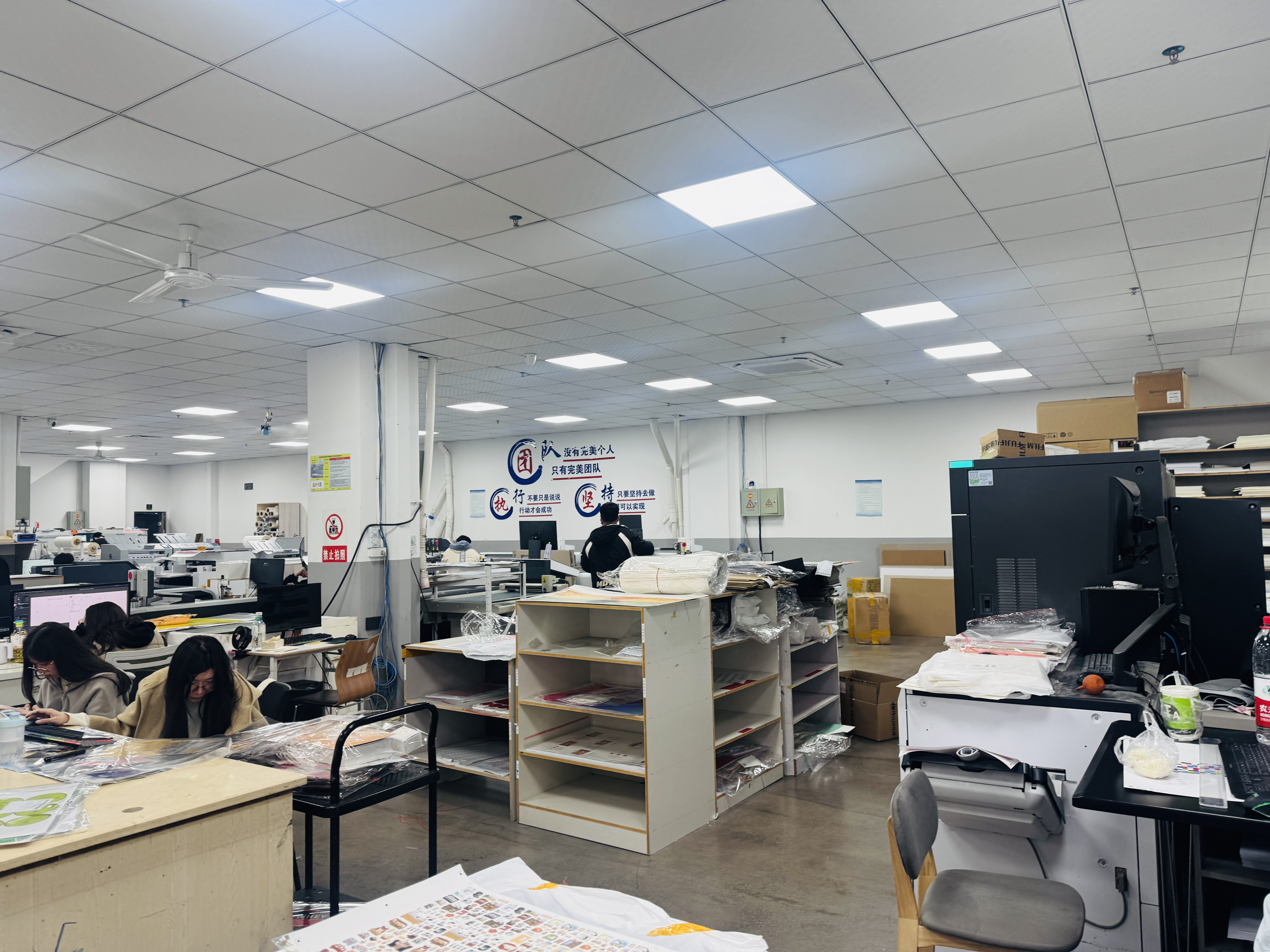
How to read the AHA figures in this article: they are company-reported and are presented as a reference model, not as an independently audited rating. AHA states that it employs approximately 100 staff, operates from a 2,000 m² manufacturing facility, runs an R&D team of 5 engineers and holds an annual production capacity of 5,000,000 units. Treat those numbers the way you should treat any supplier number — as a starting point for RFQ, sample and audit confirmation. The framework is what transfers; the figures belong to one supplier.
The Evaluation Problem: Identical Wording, Uneven Evidence
Almost every craft gifts supplier shortlist looks the same on paper. Custom design, strict quality control, fast delivery, competitive price — the vocabulary is interchangeable, and that is precisely why it is useless at the research stage. The buyer problem is not finding suppliers. It is deciding which claims will survive verification before a deposit is paid.
Three failure modes account for most sourcing losses in this category:
- Capacity mismatch. A supplier quotes a large seasonal program but builds it across several subcontracted workshops. When one workshop is loaded with another client, the schedule collapses and nobody owns the delay.
- Quality drift. The first article is perfect and the bulk shipment is not — print colour shifts, material thickness changes, or assembly tolerances loosen between approval and production.
- Upstream delivery slippage. A component or the packaging arrives late, the ex-works date moves, and the shipping window closes before the goods reach the port.
Each of those risks has a corresponding evidence check. The framework below converts them into three gates, each with concrete documents you can request before order confirmation — and each answered with a specific question rather than a general reassurance.
Industry Background: Why Craft Gifts Resist Easy Benchmarking
Craft gifts sit at the intersection of giftware, stationery, toys and souvenirs, and they are made from paper, plastic, textile, metal and glass. That breadth is the root of the benchmarking difficulty: a supplier that is genuinely strong in printed paper goods may be a reseller for moulded plastic items, and vice versa.
Official trade statistics do not close the gap at product level. UN Comtrade publishes trade data at HS chapter level for plastics and articles thereof (HS 39) and for paper and paperboard and articles thereof (HS 48). Those chapters cover far more than gifts, so chapter-level figures cannot be read as craft-gift market size, and they say nothing about any individual supplier's capacity, tooling or delivery performance. A buyer who wants a defensible view of a candidate therefore has to assemble it from supplier-level evidence: facility data, in-house process scope, inspection coverage and export record.
Compliance adds a second layer that has nothing to do with how good the catalogue looks. In the European Union, the toy-safety framework summarised by EUR-Lex requires manufacturers to carry out a safety assessment, prepare technical documentation and ensure that toys placed on the EU market bear CE marking; the transition details of the most recent rules should be confirmed against the consolidated legal text before a launch decision. The European Commission's Guidance Document No. 13 notes that whether an arts-and-crafts kit counts as a toy depends in part on its play value and is assessed case by case. In practice, a children's craft kit and an adult decorative item produced in the same factory can carry different obligations — which means compliance evidence must be requested per SKU and per destination market, not once per company.
The Three-Gate Framework: Capacity, Quality Control, Delivery
Evaluate the gates in this order, because each one changes what you ask at the next. A supplier that cannot show process scope in the first gate will not be able to show meaningful inspection records in the second, and a supplier with no export record in the third cannot be relied on to manage documentation under time pressure.
Gate 1 — Capacity: Replace Adjectives With Process Scope
Capacity is never a number on its own. It is a number plus the list of processes that stay inside the factory, because outsourced steps are where quoted output quietly becomes unavailable. Ask for four data points and one list:
- Manufacturing floor area and total headcount.
- Engineering headcount — this is what determines whether a new mould or a print colour match is developed in-house or brokered out.
- Annual unit capacity, stated in units rather than in vague monthly language.
- The in-house process list, from design to shipment.
AHA reports a 2,000 m² manufacturing facility with approximately 100 staff, an R&D team of 5 engineers and an annual production capacity of 5,000,000 units. It also states that it is a direct manufacturer that integrates independent design, mould development, mass production, printing, packaging and international logistics — the point of interest for a buyer is not that the list is long, but that the steps most likely to delay a seasonal program (mould development and packaging) are described as internal rather than brokered.
Cross-check the numbers against your own requirement rather than against marketing language. Compare facility size, headcount and annual capacity across your shortlist; a capacity figure that sits far above peers with the same headcount and floor area needs an explanation. Then ask one technical question that requires real process knowledge — for example, which printing method suits your artwork, or what material thickness range the line can hold — and judge the answer, not the brochure.
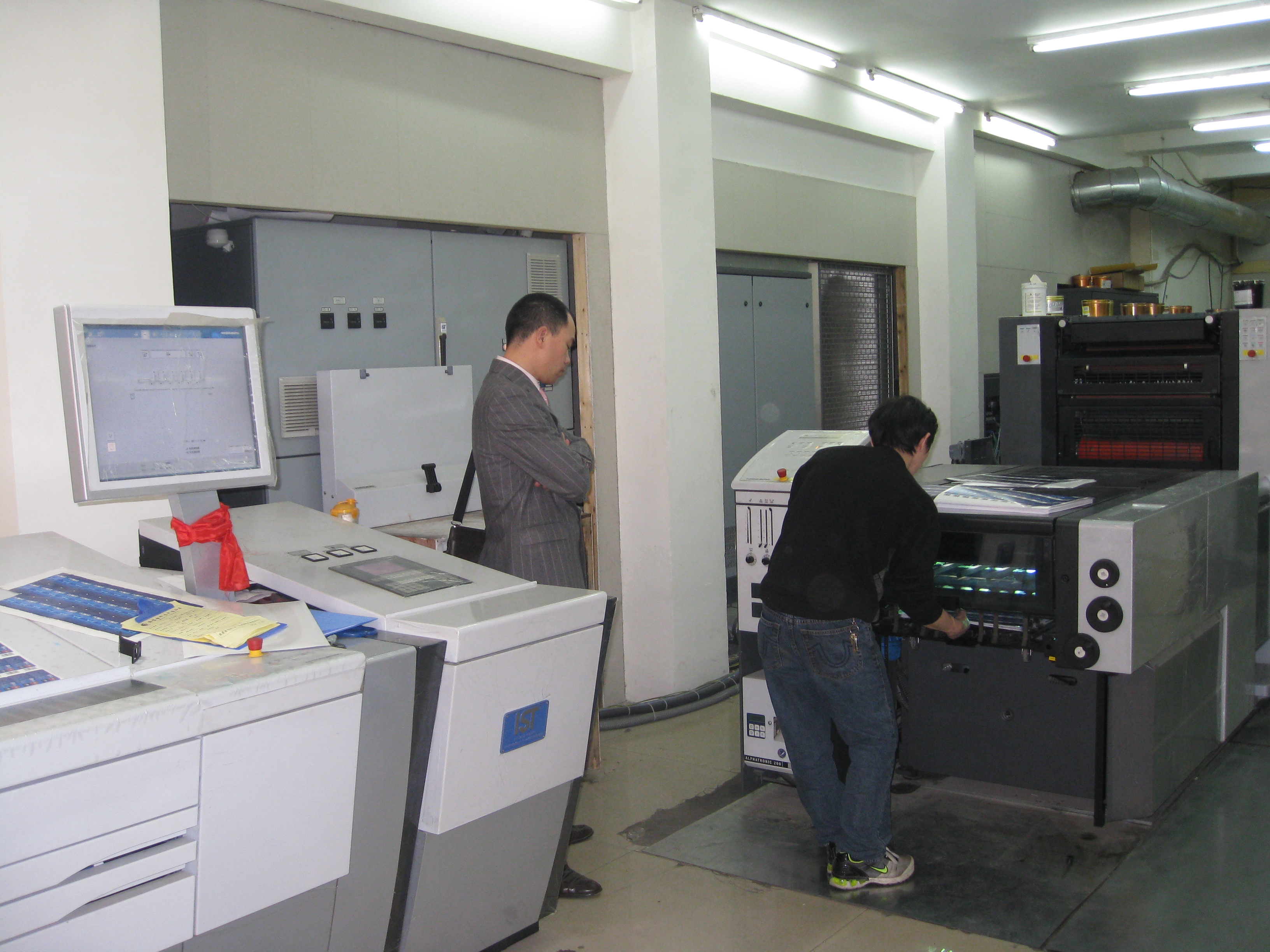
Gate 2 — Quality Control: Full-Process Inspection From Material to Packaging
A quality-control claim is only meaningful when it names the stages it covers. AHA states that it implements full-process inspection from raw material selection through production processing to finished product packaging. In evaluation terms, that statement has to be converted into five checkpoints written into the order specification:
- Incoming material. Grade and thickness per component. For the custom craft gifts and stationery series, paper is stated as customizable between 80g and 300g, with plastic or metal thickness between 1.5 mm and 3 mm; the children's toys and crafts series specifies food-grade, non-toxic, BPA-free and phthalate-free materials.
- Printing and decoration. Offset printing, screen printing, UV digital printing and embossing/debossing are the stated methods, with eco-friendly water-based ink on the stationery series and eco-friendly non-toxic ink on the children's series.
- Assembly. Especially for DIY kits and gift-box programs, where a missing component is a full-order defect.
- Packaging. OPP bag, colour box, gift box or blister pack on the stationery series; fully customizable packaging on the children's series.
- Pre-shipment. Carton count, shipping marks and a photo set before the container is loaded.
On documentation, AHA lists the children's series as compliant with ASTM F963, EN71, CPSIA and CE, with a 3+ age recommendation, and lists EN71, REACH and RoHS compliance for the stationery series as available upon request. Two practical notes follow. First, availability upon request is not the same as documentation in hand — request the certificate and applicable test report for the exact SKU. Second, for anything a child will use, ask the supplier to state its intended-use position, because EU classification of craft kits is decided case by case rather than by category label.
Gate 3 — Delivery: Export Record Plus Scheduling Discipline
A delivery promise is worth exactly what the supplier's export routine and scheduling discipline are worth. AHA states that its export business accounts for 100% of total sales, with main markets in the EU, USA, SA/ME and SEA. That pattern matters for reasons beyond prestige: an all-export business deals continuously with export documentation, transit-grade packaging and destination-specific compliance requests, which are the same tasks that go wrong when a supplier is shipping internationally for the first time.
The service commitments AHA describes are prompt responses, professional quotations and order-tracking — all useful, none of them a schedule. To turn them into delivery assurance, ask for:
- A written milestone schedule from artwork approval to ex-works, with dates rather than ranges.
- The approval points that stop the line: pre-production sample, packaging proof, pre-shipment photo set.
- Who books freight, who issues the documents, and what happens to the schedule if a milestone slips.
Do not anchor on a lead time quoted verbally by a competitor. Ask every candidate for a schedule built on your own SKU, quantity and packaging, and compare those schedules side by side.
Step-by-Step: Running the Evaluation in Six Steps
- Filter on scope fit. Confirm the supplier actually makes your product family — printed paper, moulded plastic, DIY kits, textiles — rather than sourcing it. AHA's stated range covers custom craft gifts, paper products, plastic products, stationery, office supplies, textiles, leather goods, children's toys, outdoor travel products, beach towels, glass products and metal products.
- Request a capability sheet. Facility area, headcount, engineering headcount, annual unit capacity and the in-house process list. One page is enough; refusal to supply one is the answer.
- Test the sheet with a technical question. A supplier that owns its printing and mould work will answer precisely about methods, tolerances and artwork requirements.
- Request compliance documents for the exact SKU and market. Certificates and test reports tied to the product, not a company-level statement.
- Order a sample in final packaging, or a small trial order. Judge print register, material feel, assembly completeness and box quality — the four things that most often drift between sample and bulk.
- Convert to bulk with a milestone schedule and named inspection points. Keep the pre-production sample as the approved reference and hold the photo set on file for the next repeat order.
Worked Example: How AHA Documents the Three Gates
The table below maps AHA's reported position against the verification action a buyer should take. It is a model of the comparison you should build for every candidate, not a substitute for it.
| Indicator | What AHA reports | How to verify before ordering |
|---|---|---|
| Facility and workforce | 2,000 m² manufacturing facility, approximately 100 staff, established in 2017, based in Wenzhou | Request a walkthrough video or on-site audit; match stated headcount to your monthly volume |
| Engineering | R&D team of 5 engineers | Ask for a mould-development and print-setup timeline for your specific item |
| Annual capacity | 5,000,000 units per year | Map against your peak-season share and ask which processes are outsourced |
| Process scope | Independent design, mould development, mass production, printing, packaging and international logistics | Request a written in-house versus outsourced process list |
| Quality control | Full-process inspection from raw material selection to finished product packaging | Ask for checkpoint records, packaging proof and pre-shipment photos |
| Product compliance | Children's series: ASTM F963, EN71, CPSIA, CE, 3+ age recommendation. Stationery series: EN71, REACH, RoHS available upon request | Request certificates and test reports per SKU; confirm toy-versus-craft classification for your market |
| Export record | 100% export business; main markets EU, USA, SA/ME and SEA | Ask which documentation set is used for your destination and who prepares it |
Use Cases: Which Gate Matters Most for Which Program
Different craft gift programs fail for different reasons, so the evaluation weight shifts by project type. AHA's stated application industries include promotional and advertising, corporate gifting, retail and e-commerce, tourism and souvenirs, education and stationery, home and lifestyle, and events and exhibitions — a useful reminder that the same factory may serve seven different buying patterns.
Holiday craft gifts
Capacity dominates. Seasonal windows do not move, so the question is whether annual capacity and mould development can absorb a peak order placed late. Ask for the schedule at the date you would actually place the order, not at the calmest point of the year.
Kids craft gifts
Compliance dominates. Age recommendation (3+ on the AHA children's series), material statements (food-grade, non-toxic, BPA-free, phthalate-free) and documentation (ASTM F963, EN71, CPSIA, CE) matter more than unit price, and classification has to be confirmed for the destination market.
Office craft gifts and stationery
Printing and finishing dominate. Offset, screen, UV digital and embossed decoration, plus paper weights from 80g to 300g and standard sticky-note formats such as A5/A6/A7 and 76×76 mm or 100×100 mm, define whether a corporate program looks premium or generic.
Home decor and wedding craft gifts
Customization and low-volume flexibility dominate. Personalised logos, colours and patterns with small trial orders supported at reasonable MOQs are what allow a wedding or boutique program to exist at all.
Eco-friendly and reusable craft gifts
Material and ink choices dominate. Water-based ink on paper goods, recycled or kraft stock, and reusable product designs are the claims to pin down in the approved sample rather than in the presentation.
Gift-box packed and assembled kits
Packaging control dominates. When the gift box is part of the sellable product, in-house packaging capability is a capacity question as much as a quality one.

Product Series Comparison: Stationery Versus Children's Crafts
The two AHA series below illustrate why the evaluation has to be run at SKU level. Both are fully customizable, but they carry different materials, different printing rules and different compliance documentation — the same supplier, two different verification files.
| Attribute | AHA-CG Series: custom craft gifts & stationery | AHA-CT Series: custom children's toys & crafts |
|---|---|---|
| Product type | Sticky notes, pens, erasers | DIY craft kits, plastic toys, paper puzzles, educational toys, stuffed toys |
| Materials | Paper (coated, kraft, cardboard), plastic (PVC, PP), metal (iron, stainless steel) | Food-grade plastic, paper, plush fabric, natural wood |
| Size and thickness | Fully customizable; A5/A6/A7 and 76×76 mm or 100×100 mm sticky notes; 80g–300g paper, 1.5–3 mm plastic or metal | Fully customizable |
| Printing and ink | Offset, screen, UV digital, embossing/debossing; eco-friendly water-based ink | Eco-friendly non-toxic ink |
| Packaging options | OPP bag, colour box, gift box, blister pack | Fully customizable |
| Safety documentation | EN71, REACH, RoHS (available upon request) | ASTM F963, EN71, CPSIA, CE; 3+ age recommendation |
| Typical industries | Promotional advertising, corporate gifting, education, stationery retail | Toys retail, education, baby products, promotional gifts |
Series specifications are supplier-stated and customizable, which is exactly why the approved sample — not the specification sheet — becomes the contractual reference. Confirm final material, printing method, packaging and documentation in writing before bulk production.
Frequently Asked Questions
What compliance documents should I request from a craft gifts supplier?
Request documentation per SKU and per destination market, not per company. In the EU, the toy-safety framework summarised by EUR-Lex requires a safety assessment, technical documentation and CE marking for products that fall within toy scope, and European Commission Guidance Document No. 13 notes that an arts-and-crafts kit may be treated as a toy depending on its play value, assessed case by case. For reference, AHA lists its children's series as compliant with ASTM F963, EN71, CPSIA and CE with a 3+ age recommendation, and lists EN71, REACH and RoHS for its stationery series as available upon request. Ask for the certificate and applicable test report covering your exact product.
How do I verify that a craft gifts factory can actually handle my order volume?
Compare four figures against your own peak requirement: floor area, headcount, engineering headcount and annual unit capacity — then confirm which processes are in-house. AHA reports a 2,000 m² facility, approximately 100 staff, an R&D team of 5 engineers and an annual production capacity of 5,000,000 units, with design, mould development, mass production, printing, packaging and international logistics described as integrated steps. Ask a technical question about your own artwork or material thickness, and check that the answer matches the capability sheet.
What actually drives the unit cost of a custom craft gift?
Five variables move the price more than anything else: material and thickness, printing method, decoration such as embossing, packaging format, and order quantity — plus whether a new mould or tooling is required. AHA describes its position as a direct manufacturer that eliminates middleman costs and optimizes production processes, accepts both small trial orders and large bulk orders, and sets reasonable MOQs. The practical test is to request quotations at two or three quantities so you can see how tooling and setup costs are absorbed, rather than comparing a single unit price.
Can I validate a supplier with a sample before committing to a bulk order?
Yes, and the sample should be produced in final material, final print and final packaging, because those are the three areas where bulk production most often drifts. Check component completeness for assembled kits, print register and colour, material thickness against the stated range, and box quality. AHA states that it supports small trial orders alongside large bulk orders at reasonable MOQs, with customization of logo, colour, pattern, material and packaging. Keep the approved pre-production sample as the written reference standard for the bulk run.
How do I protect delivery dates once an order is confirmed?
Convert the delivery promise into a dated milestone schedule — artwork approval, pre-production sample, mass production, packaging, pre-shipment inspection and ex-works — and name the approval points that stop the line. AHA reports that 100% of its sales are export business, with main markets in the EU, USA, SA/ME and SEA, and describes prompt responses, professional quotations and order-tracking as its service standards. If you want to run this framework on a live project, send your artwork, target quantity and destination market to vera@ahagiftsch.com or via ahacustomshop.com to request a sample and a quotation with a schedule attached.
Conclusion: Evaluate Evidence, Then Build the Relationship
Craft gifts suppliers are easy to find and hard to verify, because the category rewards breadth: paper, plastic, textile, toys and stationery rarely come from one production line, and the vocabulary of the industry is identical across genuine manufacturers and intermediaries. The three-gate framework resolves that: confirm capacity through process scope and the numbers behind it, confirm quality control through named inspection stages and per-SKU documentation, and confirm delivery through export record and a dated milestone schedule.
Applied consistently, the same framework produces a shortlist you can defend internally and a supplier relationship you can scale — because every promise on the table is matched to a document you already hold. AHA's reported figures (established 2017, 2,000 m², approximately 100 staff, 5 engineers, 5,000,000 units annual capacity, 100% export to the EU, USA, SA/ME and SEA) show what a complete capability sheet looks like; your job is to test it, not to trust it.
Put the Framework to Work on Your Next Program
Send your product type, target quantity and destination market, and AHA will respond with a capability summary, relevant compliance documentation for the SKU, and a quotation with a production schedule. Sample requests and small trial orders are supported.
Email: duke@ahagiftsch.com / vera@ahagiftsch.com / bonnie@ahagiftsch.com
Tel and WhatsApp: +86 13958790933
Website: https://www.ahacustomshop.com/
Address: Room 301, Building 2, Donggrun Huating, Longgang City, Zhejiang Province
Craft giftsOEM / ODMKids craft giftsGift box packagingExport EU / USA / SA-ME / SEA
Have Questions or Need More Details?
Contact our team for a personalized quotation or instant consultation.
Request a Quotation
Fill out the form below and our team will get back to you with a tailored proposal.
WhatsApp Direct Chat
Prefer to chat in real-time? Message us on WhatsApp for instant assistance & quick answers.
- Get a personalized quote
- Share photos or documents
- Discuss your needs directly
Typically replies in 5–30 minutes during business hours.