Custom Craft Gifts 101: Definition, Production and Light-Industry Fit
A custom craft gift is a made-to-order product — typically paper, plastic, textile, leather, stationery, toy or small household goods — in which the buyer's design, logo, colour, size or packaging is built into production rather than applied to a stock item afterwards. That single distinction explains most of the cost, timing and approval differences a buyer meets when moving from promotional giveaways into light-industry sourcing.
This guide is written for the buyer who has a brief and a budget line but no map of the category: what it includes, how the goods are manufactured, which customization level a project really needs, how OEM and ODM differ, what MOQ and lead time look like, and where the finished products end up. Wenzhou Aha Craft Gifts Co., Ltd. (AHA) appears throughout as a documented example of how one light-industry supplier is organised.
The sourcing problem: 'craft gift' is a category, not a specification
Two quotations for what appears to be the same craft gift can be far apart and both be correct, because the phrase describes a product family rather than a build specification. Until product, material, decoration, packaging and inspection scope are fixed, price comparison is mostly noise.
A craft-gift quotation becomes comparable when five variables match: the product family and model; the material and finish; the decoration method and artwork coverage; the packaging format, from poly bag to retail-ready gift box; and the inspection and acceptance scope. Change any one of them and you are pricing a different product.
The second problem is category drift. 'Promotional product' and 'craft gift' are used interchangeably in briefs, yet they usually imply different tooling, different packaging expectations and different compliance attention. A stock item with a logo is a decoration project; a gift designed around a brand, an occasion or a retail shelf is a manufacturing project.
Both problems are solvable before the request for quotation leaves the building. What follows is the map: where the category sits in light industry, how a product is actually made, how far customization should go, how the commercial terms work, where the products end up, and a first-order checklist.
Where custom craft gifts fit in light industry
Craft gifts belong to light industry and daily-use manufacturing — the part of the sector that produces consumer-facing goods at volume from paper, plastic, textile, leather, glass, metal and mixed materials. Compared with heavy industry, entry tooling is lighter, design and finishing carry more of the product's value, and a single gift programme often crosses several sub-sectors at once.
That crossing is what makes the category awkward to source. One programme might need printed paper goods, a moulded plastic item, a textile piece and a retail box: four production logics, four quality checks, one delivery date. Suppliers that describe themselves as one-stop are, in effect, offering to coordinate those logics under a single order.
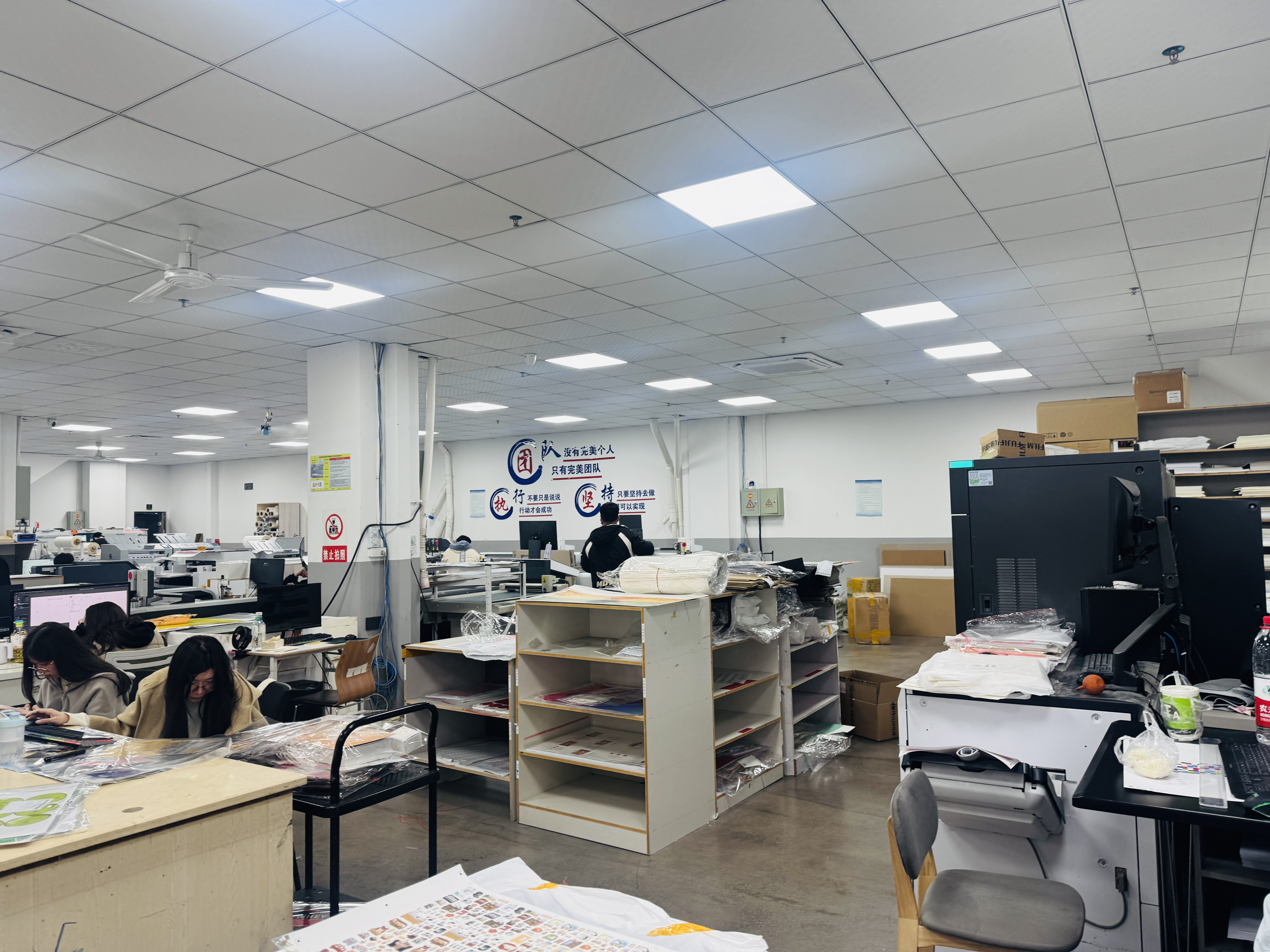
Wenzhou Aha Craft Gifts Co., Ltd. (AHA) is one example of a supplier organised around that problem. Founded in 2017 and based in Wenzhou, Zhejiang Province — a city with a well-developed light-industry cluster and a complete local supply chain — the company employs about 100 staff in a 2,000 m² facility, keeps 5 R&D engineers in-house, lists annual output of 5,000,000 units, and exports 100% of its production to the EU, USA, SA/ME and SEA markets. Its stated scope integrates independent design, mould development, mass production, printing, packaging and international logistics, and its product list covers paper products, plastic products, stationery, office supplies, textiles, leather goods, children's toys, outdoor travel products, beach towels, glass products and metal products.
One classification caution matters for buyers who also work with trade data. Craft gifts do not have a single customs identity. UN Comtrade publishes chapter-level series such as HS 39 (plastics and articles thereof, including ornamental articles) and HS 48 (paper and paperboard and articles thereof); those chapters can support a classification exercise, but a chapter total is not a craft-gift market size, and it says nothing about any individual supplier's capability.
The practical consequence is that buyer leverage in this category sits in specification and verification rather than in price negotiation alone. A tighter specification usually buys more than a harder discount.
The product families behind most craft gift programmes
Six families cover the majority of briefs, and each brings its own tooling, decoration and inspection logic.
- Paper and print. Scratch-off maps, notebooks, bookmarks and premium packaging. Tooling is usually light, artwork accuracy is the main risk, and carton strength matters once the goods are exported.
- Plastic and household. Fridge magnets, kitchen gadgets, cleaning sponges, sealing clips and decorative household items. Mould or print setup dominates the first order; colour consistency dominates the repeat order.
- Stationery and office. Notebooks, stickers, bookmarks and custom desk accessories. Most office craft gifts live here, and the approval that matters is print position plus binding and finishing.
- Children's toys and kits. DIY toys, lanterns, night lights, educational puzzles and festival-themed toys. This is the family where classification and safety documentation come before price.
- Textiles, leather and outdoor travel. Beach towels, outdoor travel products and leather goods. Fabric weight, colour fastness and packing compression are the usual specification gaps, and outdoor mini craft gifts often sit in this group.
- Glass and metal. Listed in AHA's range and useful when a brief needs weight or a premium substrate; decoration and breakage-safe packing become the critical items.
Occasion language sits on top of these families rather than beside them. Holiday craft gifts, home decor craft gifts, kids craft gifts, office craft gifts, wedding craft gifts, kitchen craft gifts and outdoor mini craft gifts are usually the same six families filtered by occasion, size and packaging — which is why a supplier's category list tells you more about capability than its keyword list does.
Two attributes should be kept out of the family question. 'Reusable', 'durable' and 'eco-friendly' are specification claims tied to a material and a test, not labels a whole category can carry on its own. If a brief requires them, they belong on the material line of the request with an acceptance criterion attached, not in the mood board.
How a custom craft gift is made: six stages, six approvals
Craft gifts are manufactured in stages, and each stage ends with something the buyer approves. AHA describes full-process inspection from raw-material selection through production processing to finished product packaging, and 100% inspection as its quality standard — a standard that only works when the buyer's approval points follow the same sequence.
- Brief and design. The brief becomes a specification: dimensions, material, colour reference, artwork, packaging and quantity. AHA keeps 5 R&D engineers in-house and lists independent design within its scope. Approval: the specification sheet and artwork file, in writing.
- Structure and mould development. Components that need tooling — a magnet body, a clip, a custom box insert — are developed before production starts. Approval: structural drawing or 3D confirmation, plus tolerances for anything that has to fit together.
- Material selection. Substrate, thickness, colour and finish are fixed here, and this is the first inspection gate in AHA's process. Approval: material standard and colour sample.
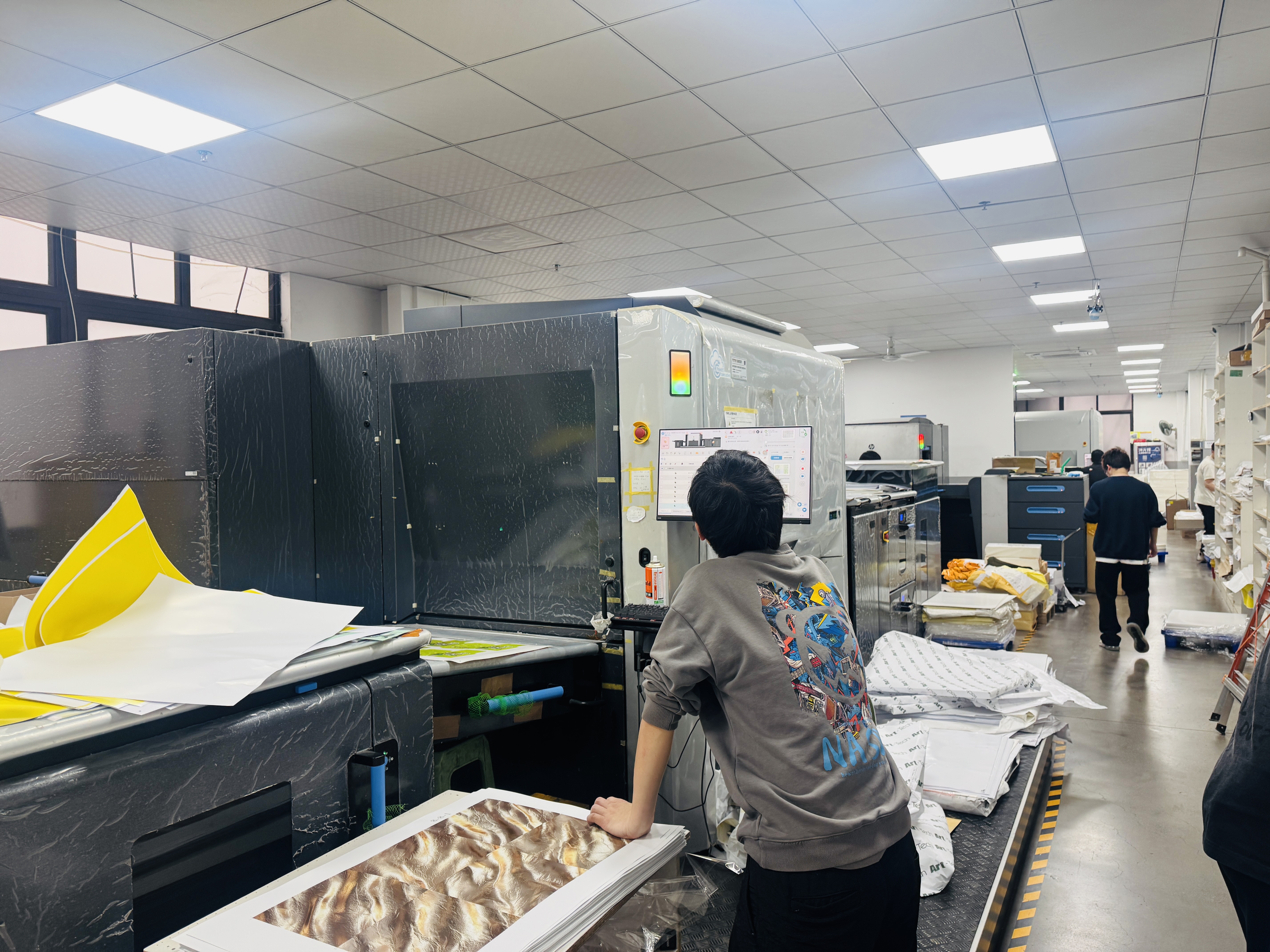
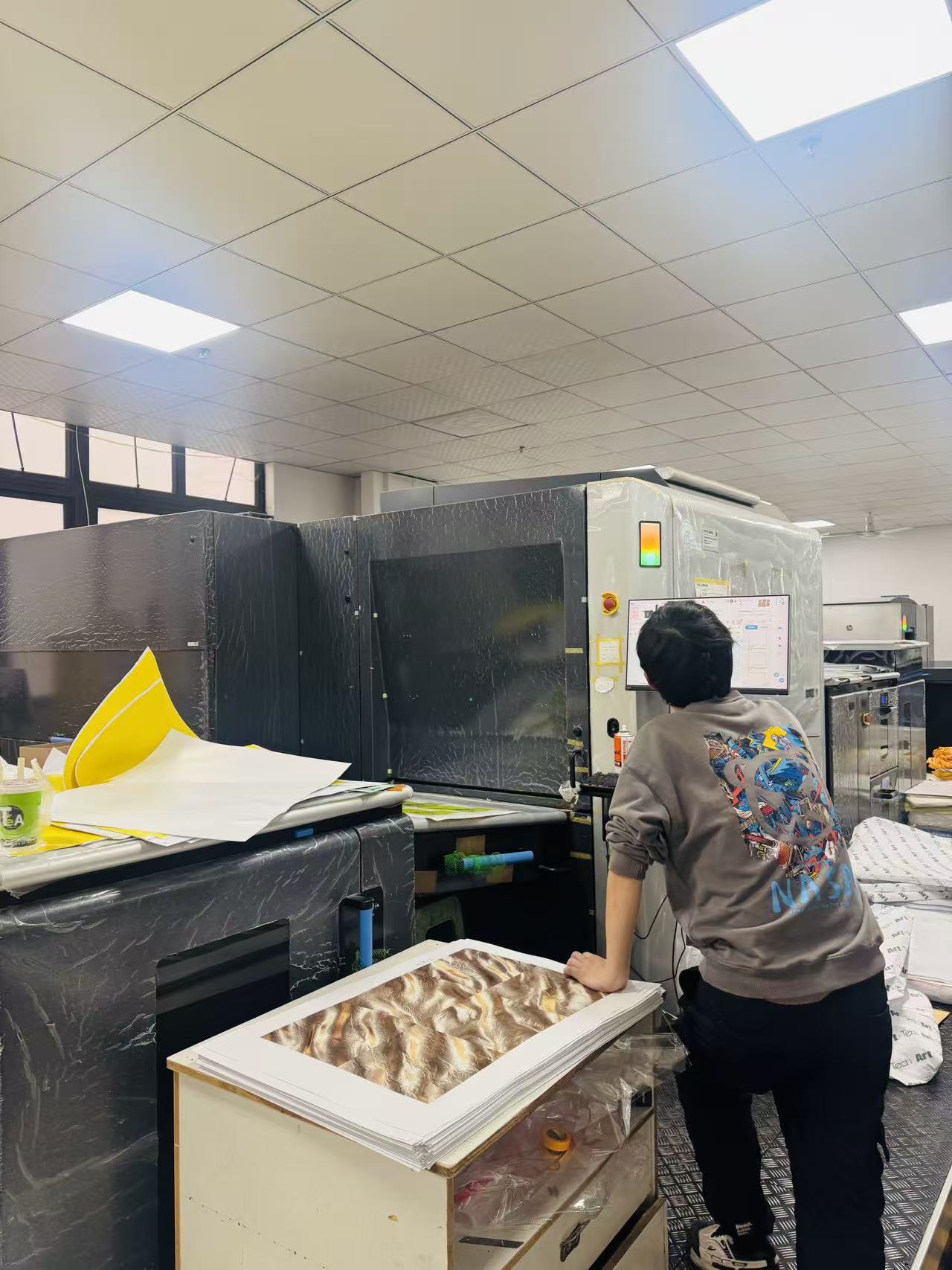
- Production and printing. Mass production runs alongside printing, where logo, design, pattern and colour customization are applied. Approval: pre-production or first-off sample before the full run is released.
- Assembly and finishing. Multi-piece items are assembled and checked — the stage that shapes the outcome for assembled kids craft kits and gift-box packed sets. Approval: workmanship standard and packing configuration.
- Inspection, packing and logistics. Final inspection, retail or export packaging, then shipment on the agreed delivery term. Approval: pre-shipment inspection result measured against the signed sample.
The sequence explains two things buyers often find confusing. First, a cheap quote and an expensive one can both be honest: they may start at different stages, exclude tooling, simplify packing or narrow inspection. Second, sampling is not a step outside the process — it is the approval that unlocks each stage, which is why a signed sample becomes the reference document for every later inspection.
Customization levels: from a logo to a full retail programme
AHA lists logo, design, size, colour and packaging as customization options, and describes full-scale customization from product design to final packaging. In practice that range behaves like a ladder: each rung adds tooling, approval work and lead-time risk, so a project should be scoped at the rung it actually needs.
- Level 1 — Logo. A standard item with the buyer's logo, or a personalised logo, applied by printing or another decoration method. Fastest to quote; artwork and placement are the only real variables.
- Level 2 — Colour and size. The existing structure with a changed colourway or dimension. Cheap to specify, but it can shift packing quantities and carton dimensions.
- Level 3 — Design and print. New artwork, pattern or printed layout on an existing structure — the level at which printable craft gifts and high-precision printed work are specified. Print registration, colour tolerance and substrate behaviour should be written as acceptance criteria, not assumed.
- Level 4 — New structure. A new mould, die-cut or assembly method. Development time and tooling cost sit here, and this is the point at which tooling ownership should be agreed in writing.
- Level 5 — Full programme. Product plus packaging plus presentation: gift-box packed sets, labels, inserts, retail-ready configuration and export cartons coordinated as one deliverable.
A first order rarely needs to be scoped across all five levels; it needs the level that matches the sales channel. A distributor testing a market can start at level 1 or 2 and move up once sell-through is known, while a brand launching a retail line usually needs level 3 to 5 before the first run, because product and packaging have to be approved together.
OEM or ODM: which model are you actually buying?
The two terms describe who owns the design, and the answer changes your approval workload. In OEM (original equipment manufacturing) the buyer supplies the design and the specification, and the manufacturer builds to it. In ODM (original design manufacturing) the supplier's existing design is adapted — colour, logo, packaging, minor structure — and sold under the buyer's brand. AHA provides both production modes.
The choice is a trade between development time and control. OEM gives the buyer more control and a heavier documentation load, because the specification, tolerance and approval chain are the buyer's responsibility. ODM shortens development but ties the product to the supplier's existing range, and design ownership or exclusivity should be confirmed in writing if the item is meant to stay distinctive. Neither model is better in general; each fits a different point in a brand's development.
Order scale, MOQ and lead time
In this category neither MOQ nor lead time is a single published number. Both follow the product family, the customization level and the material, and a careful buyer confirms them against a named product rather than against a catalogue.
- Capacity. AHA lists monthly capacity of 500,000 units against annual output of 5,000,000 units.
- Lead time. 15–30 days is the listed production window. Tooling and sample approval come before that window, so they belong on the project plan separately.
- MOQ. AHA's capability record lists 2,000 units, its purchasing terms describe MOQ as 2% of order volume, and its US project record notes standard bulk orders from 10,000 units with smaller quantities negotiable. Treat all three as order-specific and confirm the applicable figure in the quotation.
- Quality. 100% inspection, with acceptance based on pre-shipment inspection and sample confirmation.
- Commercial terms. FOB, CIF or EXW delivery; T/T 30/70, L/C at sight or Trade Assurance payment.
The MOQ question is really a tooling question. A logo on a stock item and a new moulded component carry completely different minimums, so the useful line in a request is 'quantity band plus customization level', not 'what is your MOQ' in isolation.
Where the products end up: six common end uses
Most programmes land in one of six end uses, and each one moves the specification in a predictable direction.
- Corporate gifting. Logo placement, gift-box packing and colour consistency across a set matter more than novelty.
- Retail. Barcodes, packaging format and repeat-order colour consistency dominate; retail lines are where level 3 to 5 customization earns its cost.
- Tourism and destination retail. Local artwork, smaller pack sizes, and enough durability in the packing to survive transport and handling.
- Education. Kits and stationery where classification and documentation come before price, especially for children's items.
- Events and weddings. Short timelines, personalization at volume, and packaging that survives being handed out.
- Home and lifestyle. Decorative and kitchen items where the buyer's main risk is colour and finish rather than tooling.
AHA's documented project record covers one US-based programme for a distributor working with promotional agencies and corporate clients: a one-stop custom solution for promotional gifts, corporate souvenirs and retail merchandise, order scale from 10,000+ unit bulk orders down to negotiable smaller quantities, and a three-year relationship that continued into long-term cooperation. That is one documented case rather than a category-wide result; the useful part is the pattern, in which customization scope, portfolio breadth and order flexibility were decided together.
Craft gift versus general promotional product
The two categories overlap, and many suppliers sell both. The differences below are typical rather than absolute, and they are the ones that actually change a quotation.
| Dimension | Custom craft gift | General promotional product |
|---|---|---|
| Design origin | Built to the buyer's design; artwork, structure or packaging developed for the order | Usually a stock item with the buyer's logo applied |
| Material and finish | Chosen for the brief and written as acceptance criteria | Usually fixed by the stock product |
| Tooling | Mould, die-cut or print setup may be required from level 3 upward | Rarely more than print setup |
| Decoration | Part of production; registration and colour tolerance can be specified | Applied after the item is made |
| Packaging | Can be a deliverable in its own right — gift box, insert, retail-ready set | Often a poly bag or a standard export carton |
| Order logic | MOQ follows product family, tooling and customization level | MOQ follows stock availability |
| Compliance attention | Classification and documentation may be needed, particularly for children's items | Depends on the stock item and the destination market |
| Best fit | Brand programmes, retail lines, tourism and education kits where the item carries the message | Volume awareness campaigns where speed matters most |
Read it as a scoping tool. A brief that lands mostly in the left column should budget for tooling and approvals; one that lands mostly on the right should budget for speed and volume.
A first-order checklist for buyers new to light industry
- Name the product family and the end use before requesting prices. 'Craft gift' alone cannot be quoted.
- Decide the customization level, from 1 to 5, and state it in the request.
- Fix material, colour reference and decoration method, and attach the artwork file.
- Confirm whether the product is regulated in your market. Children's kits are the usual case; see the FAQ below.
- Approve and retain a signed sample, and make it the reference for pre-shipment inspection.
- Confirm the packaging format, including gift-box packing and export carton marks.
- Get MOQ, price basis, delivery term, payment terms and lead time in writing against that exact specification.
- Agree the inspection scope and acceptance criteria before production, not after.
FAQ: custom craft gifts
Are children's craft gifts regulated as toys?
Classification is product-specific. European Commission Guidance Document No. 13 on the application of the Toy Safety Directive states that whether an arts-and-crafts kit is a toy depends in part on its play value and is assessed case by case. Where a product does fall within toy scope in the EU, the EUR-Lex summary of the framework requires manufacturers to carry out a safety assessment, prepare technical documentation and ensure the toy bears CE marking. Adult decorative, office and household items are not automatically in scope, and transition details should be checked against the consolidated legal text before a launch decision.
What can be customized on a craft gift order?
AHA lists logo, design, size, colour and packaging as customization options, and describes full-scale customization from product design to final packaging, delivered through OEM and ODM production. In practice that covers artwork and print changes, colourways, dimensional changes, new structures where tooling is needed, and gift-box or retail-ready packaging. Because each level adds tooling and approval work, the practical starting point is to name the product family and the packaging format in the request.
What is the minimum order quantity?
It depends on the product and the customization level. AHA's capability record lists an MOQ of 2,000 units, its purchasing terms describe MOQ as 2% of order volume, and its US project record notes standard bulk orders from 10,000 units with smaller quantities negotiable. Since tooling and material drive the number, request the MOQ in writing against a specific product family, decoration method and packaging format rather than accepting one figure for the whole catalogue.
How is a sample approved before bulk production?
AHA's stated acceptance criteria are sample confirmation and pre-shipment inspection, supported by 100% inspection and full-process inspection from raw-material selection to finished packaging. In practice the buyer should approve artwork and specification in writing, sign and keep the approved sample as the reference, confirm colour tolerance and print position against it, and require the pre-shipment inspection to be measured against that same sample.
How long does production take, and how is the order shipped?
AHA lists a production lead time of 15–30 days and monthly capacity of 500,000 units. Tooling and sample approval sit ahead of that window and should be scheduled separately. Delivery terms are FOB, CIF or EXW, with payment by T/T 30/70, L/C at sight or Trade Assurance. Send the product family, quantity band, customization level and destination port to the AHA team, and the schedule can be quoted against your actual specification rather than a general estimate.
Conclusion: a category you can specify
Craft gifts are a light-industry category with a wide product surface and a short list of decisions that actually control cost and risk: the product family, the customization level, the packaging format, the inspection scope and the order scale. Get those five right and the rest of the sourcing conversation becomes an ordinary procurement exercise, even for a buyer new to the sector.
Two questions are worth asking before any order: does the supplier's product list match the family you need, and can it show you the stage at which inspection starts? A manufacturer that begins inspection at raw-material selection and coordinates design, mould development, printing, packaging and logistics under one order is describing a process you can audit — and that is the standard worth holding a craft gift supplier to, whether the requirement is a trial run or a full bulk programme.
If you want to test the process on a single item, start narrow: one product family, one customization level, one packaging format. Request a sample against your artwork and specification, inspect it as you would inspect the bulk order, and only then scale the volume. That comparison — sample versus specification — is the most reliable signal a new buyer has.
Have Questions or Need More Details?
Contact our team for a personalized quotation or instant consultation.
Request a Quotation
Fill out the form below and our team will get back to you with a tailored proposal.
WhatsApp Direct Chat
Prefer to chat in real-time? Message us on WhatsApp for instant assistance & quick answers.
- Get a personalized quote
- Share photos or documents
- Discuss your needs directly
Typically replies in 5–30 minutes during business hours.