Custom Craft Gifts Stuck at Sample Stage? A Buyer's Fix
Custom Craft Gifts Stuck at the Sample Stage? A Problem-Solution Guide for Global Buyers
A custom craft gift program often stalls for a simple reason: the sample looks right, but the bulk order does not reproduce it. The gap is rarely one bad item. It is usually a chain of small handoffs between design, tooling, printing, assembly, packaging and inspection. A direct manufacturer that keeps those stages under one roof can control more of that chain, but the buyer still needs clear acceptance criteria and a production-representative sample.
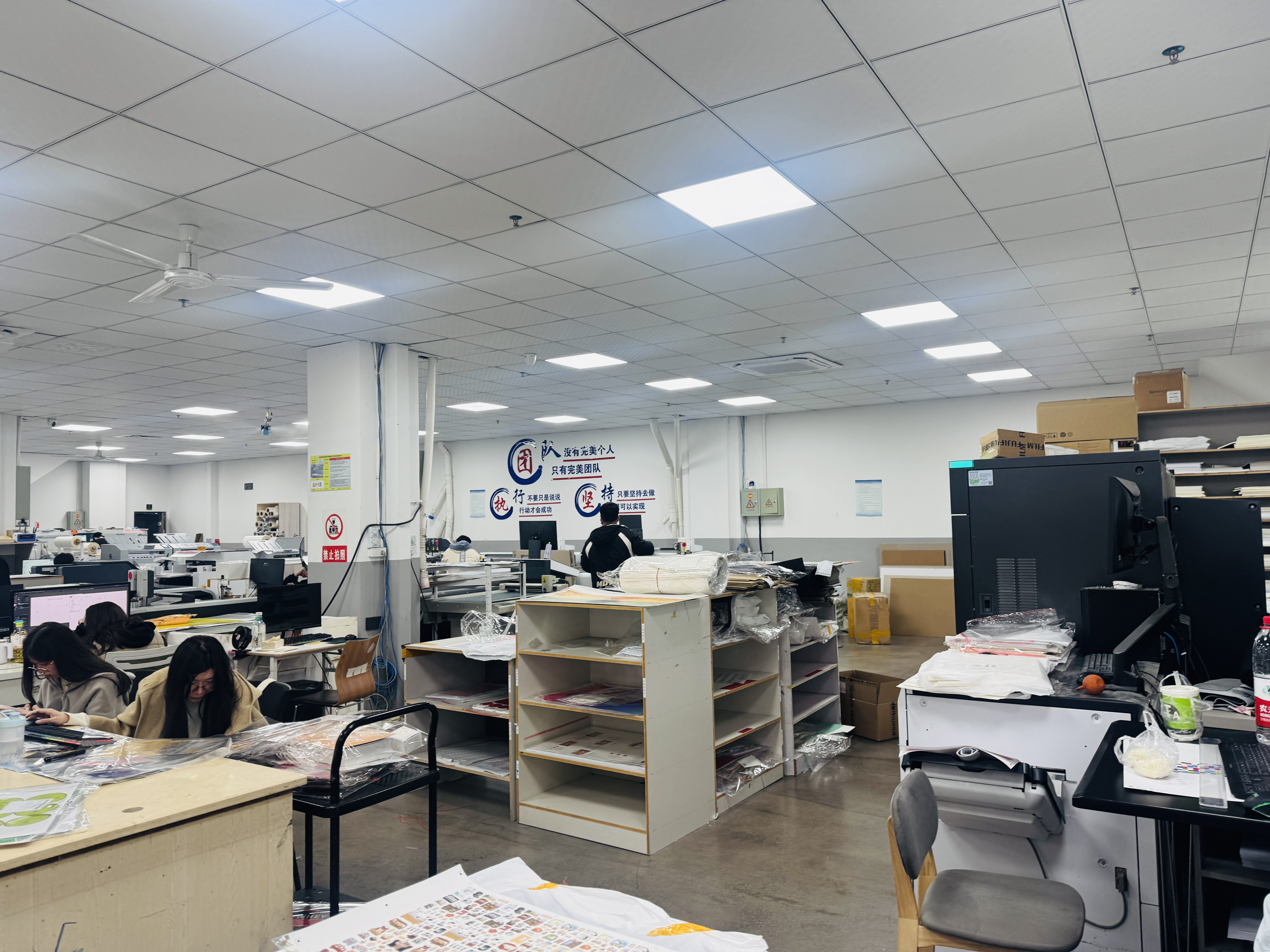
Wenzhou Aha Craft Gifts Co., Ltd. (AHA) is a China-based manufacturer and supplier of custom craft gifts, stationery, toys and packaging, founded in 2017. Its profile describes a 2,000 m² facility, a 5-engineer R&D team, integrated design, mold development, mass production, printing, packaging and international logistics, and one-stop OEM/ODM support. Those facts matter at the sample stage because the buyer is not only approving a design; the buyer is approving a production system.
This guide is for importers, distributors, brand owners, promotional agencies and corporate buyers who are in Research or Evaluation. It defines the sample-to-bulk problem, shows which criteria to lock before approval, and explains how AHA's documented capabilities can support a more consistent custom craft gift program.
What Does “Stuck at the Sample Stage” Actually Mean?
“Stuck at the sample stage” means the buyer can see a promising prototype but cannot turn it into a repeatable bulk order. The buyer may receive a sample that differs from the next sample, or a sample that passes review but is followed by bulk goods with different print color, material feel, assembly, packaging or labeling.
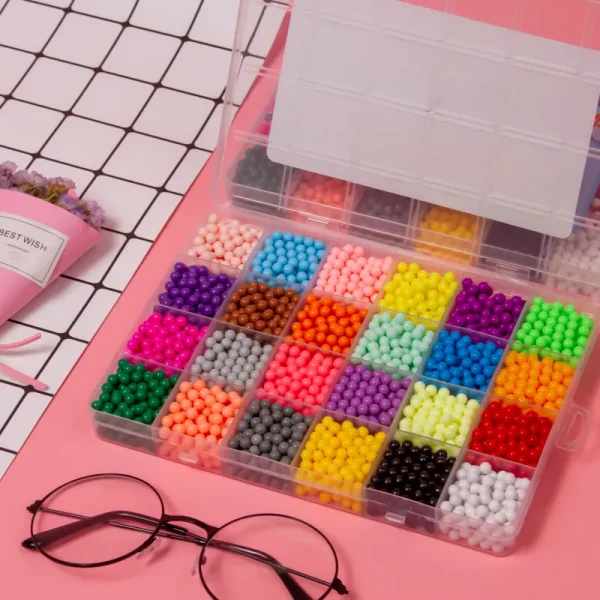
For custom craft gifts, the risk is higher than for a single-material product because the category crosses paper, plastic, metal, textiles, stationery, toys and packaging. AHA's product range includes custom craft gifts, paper products, plastic products, stationery, office supplies, textiles, leather goods, children's toys, outdoor travel products, beach towels, glass products and metal products. Each material brings its own sample variables: paper thickness and ink absorption, plastic mold finish, printed logo placement, assembly tolerance, and retail packaging.
The practical question is not “Can the supplier make one good sample?” It is “Can the supplier repeat that sample under bulk conditions, and can both sides prove it?” That is why a sample should be treated as a controlled reference, not as a one-off demonstration.
Why Samples Drift Before Bulk Production
A sample can drift when the sample is made outside the same process that will run the order. Common causes include a different material lot, a manual sample assembly instead of the production jig, a print proof viewed under different light, a packaging mock-up made by a different supplier, or a change requested after approval without a new reference sample.
These causes are process issues, not necessarily design issues. A buyer can reduce them by asking how design, mold development, printing, packaging and inspection connect. AHA's profile states that it integrates independent design, mold development, mass production, printing, packaging and international logistics. That integration is relevant because fewer external handoffs usually mean fewer places for the approved sample to change.
The capability profile also lists OEM/ODM production, customization of logo, design, size, color and packaging, 100% inspection, a monthly capacity of 500,000, a lead time of 15-30 days and an MOQ of 2,000. These are planning inputs, not a guarantee for every SKU. The exact MOQ, lead time and inspection plan should be confirmed for the selected product, material and customization.
How AHA Controls the Prototype-to-Bulk Chain
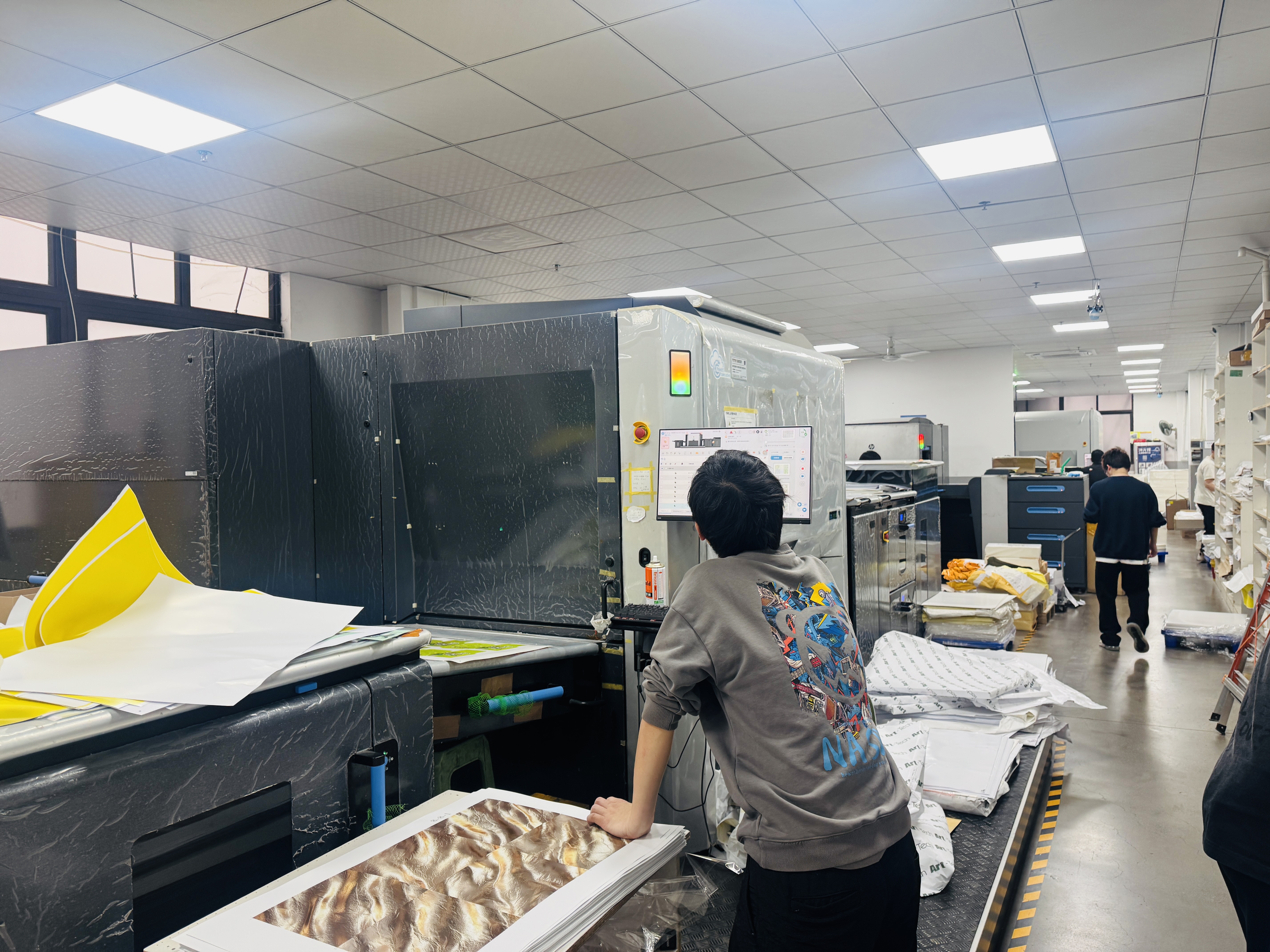
AHA's documented model is one-stop OEM/ODM support. The company profile describes design, mold development, mass production, printing, packaging and logistics as connected stages. The application data adds that production may require printing equipment, embossing and engraving tools, packaging machines and custom molds. For a buyer, that means the sample review should include the tooling and print method, not only the final appearance.
The 5-engineer R&D team is a useful evaluation point because custom craft gifts often need design translation: a logo may need to work on a curved surface, a paper structure may need a different fold, or a gift box may need to protect an assembled item. The team size alone does not prove capability, but it gives the buyer a specific group to question during sample review.
The 2,000 m² facility and 100 employees provide context for the scale of the operation. AHA also states that it accepts both small trial orders and large bulk orders with reasonable MOQs. That is important for buyers testing a new market: a trial order should not be treated as a separate, uncontrolled process. The buyer should ask whether the trial and the bulk order will use the same approved materials, print method, mold and packaging specification.
Step-by-Step: A Sample Approval Protocol for Custom Craft Gifts
The following protocol turns a sample from a visual impression into a production reference. It is written for the buyer's evaluation stage and should be adapted to the product and market.
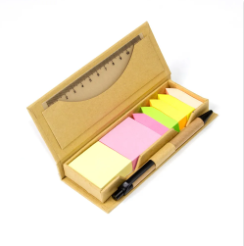
- Write the acceptance criteria before the first sample is made. Define the product type, intended use, material, size, color, logo placement, print method, assembly, packaging and any required safety documents. For example, AHA's craft gifts and stationery specification lists standard size ranges such as A5/A6/A7 and 76×76 mm or 100×100 mm for sticky notes, paper thickness of 80g-300g, plastic or metal thickness of 1.5-3 mm, and printing methods including offset, screen, UV digital and embossing/debossing. Use the actual specification for your SKU rather than a generic description.
- Ask for a production-representative sample. The sample should use the intended material grade, print method, mold or tool, assembly method and packaging format. If a custom mold is needed, confirm that the sample reflects the mold that will run bulk production. AHA's application data lists custom molds, printing equipment, embossing and engraving tools, and packaging machines as supporting equipment, so these are fair topics for the sample review.
- Approve a golden sample and a signed specification. Keep one physical approved sample and one written record covering material, dimensions, color reference, print position, assembly, packaging and labeling. The golden sample becomes the reference for first-article inspection and pre-shipment checks. It should not be replaced by a photo alone.
- Freeze changes after approval. If the logo size, material, packaging or color changes, issue a new sample version and a new approval record. A verbal “same as before” is a weak control when multiple materials and print processes are involved.
- Run a first-article check against the golden sample. Compare the first production units with the approved reference for print, material, assembly, dimensions and packaging. AHA's quality-control statement is 100% inspection, and its profile describes full-process inspection from raw material selection through production processing to finished product packaging. Ask how that inspection is recorded for your order.
- Inspect packaging as part of the product. Custom packaging is part of the buyer's deliverable. AHA's specification lists packaging options such as OPP bag, color box, gift box and blister pack, and the application data includes custom packaging as a special requirement. A perfect gift with a damaged or mislabeled box is still a failed sample-to-bulk result.
- Confirm the commercial plan before bulk release. Align trial quantity, bulk quantity, MOQ, lead time and delivery schedule. The capability profile lists an MOQ of 2,000, a monthly capacity of 500,000 and a lead time of 15-30 days. Because the company also states that it accepts small trial orders and large bulk orders with reasonable MOQs, the exact MOQ should be confirmed for the chosen product and customization.
Acceptance Criteria Table: What to Lock in the Sample
| Sample-stage risk | What the buyer should define | Relevant AHA evidence to discuss |
|---|---|---|
| Color and print drift | Reference color, substrate, print method, logo position and approval light condition | AHA's craft gifts and stationery specification lists offset, screen, UV digital printing and embossing/debossing as custom options. |
| Material feel or thickness change | Exact material grade and thickness, not only “paper” or “plastic” | The specification lists paper thickness of 80g-300g and plastic or metal thickness of 1.5-3 mm, with product size customizable. |
| Assembly or children's safety gap | Age range, small parts, material safety, surface finish and applicable test documents | The children's toys and crafts specification lists age 3+, food-grade, non-toxic, BPA-free and phthalate-free materials, and standards including ASTM F963, EN71, CPSIA and CE as compliant. |
| Packaging mismatch | Packaging type, artwork, label placement, protection and retail readiness | AHA lists OPP bag, color box, gift box and blister pack as packaging options, and custom packaging as an application requirement. |
| Order scale and timing surprise | Trial quantity, bulk quantity, MOQ, capacity and delivery date | The capability profile lists MOQ 2,000, monthly capacity 500,000 and lead time 15-30 days; confirm the applicable terms for the SKU. |
The table is not a substitute for a product-specific specification. It is a checklist for the sample review meeting. The buyer should attach the signed criteria to the purchase order so that the approved sample, the inspection record and the bulk order refer to the same document.
Scene Fit: Where These Craft Gifts Are Used
AHA's application data describes use in promotional and advertising, corporate gifting, retail and e-commerce, tourism and souvenirs, education and stationery, home and lifestyle, and event and exhibition projects. The working environments include indoor spaces, offices, homes, retail stores, event venues, schools, hotels and resorts. This matters because the sample criteria change with the scene.
For holiday craft gifts or wedding craft gifts, color consistency and gift packaging may be the main approval points. For office craft gifts and corporate gifts, logo placement, print durability and presentation may matter more. For kids craft gifts, material safety and age suitability should be reviewed with the applicable test documents. For home decor craft gifts or kitchen craft gifts, the buyer may need to check surface finish, cleaning instructions and packaging protection. For outdoor mini craft gifts, the sample review should include how the item and packaging will be presented and protected in the intended environment.
The product categories in AHA's range include paper craft gifts, plastic craft gifts, stationery, office supplies, children's toys, textiles, leather goods, glass products and metal products. Not every product uses the same sample protocol. A paper sticky note pad and an assembled children's craft kit need different checks, even if both are sold as custom craft gifts.
Direct Manufacturer, OEM/ODM and the Sample Stage
A direct manufacturer can reduce sample-to-bulk risk when design, tooling, printing, packaging and inspection are connected. AHA describes itself as a direct manufacturer and states that it eliminates middleman costs and optimizes production processes. That claim should still be tested through the sample and the order documents, but it explains why the sample stage is a good time to ask who controls each process.
OEM and ODM are both relevant. OEM is appropriate when the buyer has a defined product and brand specification. ODM is appropriate when the buyer needs a product concept adapted from an existing design platform. In either case, the sample must show what will be repeated: the material, the mold, the print, the assembly and the packaging. AHA's customization scope includes logo, design, size, color and packaging, which gives the buyer concrete variables to freeze in the approval record.
The case data describes a US distributor, promotional agency or corporate client relationship of three years, with order quantities proportional to the customer's order scale, standard bulk orders of 10,000+ units and small orders negotiable. It also describes a one-stop custom solution, a rich product portfolio and OEM/ODM service. This is useful context for buyers who want a long-term program rather than a single sample. It does not replace a buyer's own sample test, but it shows the type of program AHA is set up to support.
What to Verify Before Releasing Bulk Production
Before releasing bulk production, the buyer should confirm five records: the signed acceptance criteria, the approved golden sample, the first-article inspection result, the packaging approval and the delivery schedule. These records should match the actual order, not a previous program. If the buyer changes the logo, color, material or packaging, the sample approval should be repeated for the changed element.
The buyer should also ask for the safety and compliance documents that apply to the product and market. AHA's product specification lists EN71, REACH and RoHS for craft gifts and stationery as compliant and available upon request, and ASTM F963, EN71, CPSIA and CE for children's toys and crafts as compliant. These are specification statements, not a substitute for the actual test report. The European Commission's Guidance Document No. 13 notes that whether an arts-and-crafts kit is a toy depends in part on play value and must be assessed case by case, so a children's craft kit should be classified and documented for its intended use.
Inspection should cover the visible product and the hidden details: print position, material thickness, assembly strength, surface finish, label text, pack quantity and carton mark. AHA's stated 100% inspection and full-process inspection provide a framework for this check. The buyer's own inspection plan should define the sample size, the acceptance criteria and the person responsible for approval.
FAQ: Sample-to-Bulk Questions from Global Buyers
What documents should buyers request for kids' craft gift samples?
For children's craft gifts, request the intended age range, material declaration, applicable test reports and a clear statement of the product's intended use. AHA's children's toys and crafts specification lists age 3+, food-grade, non-toxic, BPA-free and phthalate-free materials, and standards including ASTM F963, EN71, CPSIA and CE as compliant. Because craft kits can fall inside or outside toy rules depending on play value, ask for the classification rationale and the actual documents for the SKU, not only a general compliance statement.
Can AHA support OEM/ODM custom craft gifts from design to packaging?
AHA's profile describes integrated design, mold development, mass production, printing, packaging and international logistics, and its capability unit lists OEM/ODM production with customization of logo, design, size, color and packaging. This supports one-stop sample development, but the buyer should still confirm the specific process for the chosen product. For a paper craft gift, the key process may be printing and die-cutting; for a plastic craft gift, it may be mold finish and assembly.
What MOQ and capacity should buyers plan for?
The capability profile lists an MOQ of 2,000 and a monthly capacity of 500,000. AHA's company profile also states that it accepts small trial orders and large bulk orders with reasonable MOQs. These statements should be read together: the applicable MOQ depends on the product, material and customization, so ask for a written MOQ for the trial and the bulk order. The same applies to capacity; a monthly figure is a planning input, not a promise for a specific delivery date.
How should buyers approve a sample before bulk production?
Approve a production-representative sample against written criteria, keep a golden sample, sign the specification and require a first-article check before bulk release. The sample should reflect the intended material, print method, mold, assembly and packaging. If any of those change, issue a new sample version. AHA's full-process inspection and 100% inspection statement give the buyer a starting point for the inspection discussion, but the buyer should define the acceptance record.
What lead time should buyers plan for?
AHA's capability profile lists a lead time of 15-30 days. Buyers should add time for sample approval, document review, packaging approval and any new mold or print development. The lead time is most useful when it is tied to a confirmed specification and order quantity, not to a general inquiry. For a launch with a fixed event date, work backward from the delivery date and confirm each approval milestone in writing.
Why do custom craft gift samples fail in bulk?
Samples usually fail in bulk when the approved sample was not made with the same material, tool, print method, assembly and packaging as the production order. The fix is not a stricter visual check alone; it is a controlled handoff from sample to production. AHA's integrated design, mold development, printing, packaging and inspection model is designed to reduce those handoffs, while the buyer's acceptance criteria make the standard testable. If you are preparing a custom craft gift program, share the product brief, target quantity and sample requirements with AHA so the sample can be built as a production reference rather than a one-off prototype.
Conclusion: Turn the Sample into a Production Standard
The sample stage is not a formality. It is the point where the buyer and the manufacturer define what “correct” means for material, print, assembly, packaging and inspection. A custom craft gift program becomes more reliable when the sample is built as a production reference, approved in writing and checked again at first article and before shipment.
AHA's documented capabilities support that approach: a 2,000 m² facility, a 5-engineer R&D team, integrated design and mold development, printing and packaging, full-process inspection, 100% inspection, OEM/ODM customization and reasonable MOQs for trial and bulk orders. The buyer's job is to turn those capabilities into a controlled specification. With clear acceptance criteria, a golden sample and a documented inspection path, the next sample review can become the start of a repeatable bulk order rather than another round of revisions.
Have Questions or Need More Details?
Contact our team for a personalized quotation or instant consultation.
Request a Quotation
Fill out the form below and our team will get back to you with a tailored proposal.
WhatsApp Direct Chat
Prefer to chat in real-time? Message us on WhatsApp for instant assistance & quick answers.
- Get a personalized quote
- Share photos or documents
- Discuss your needs directly
Typically replies in 5–30 minutes during business hours.