Printed Gifts Compliance Guide: EU, US and SEA Certification Screening
Compliance & standards · Decision-stage guide
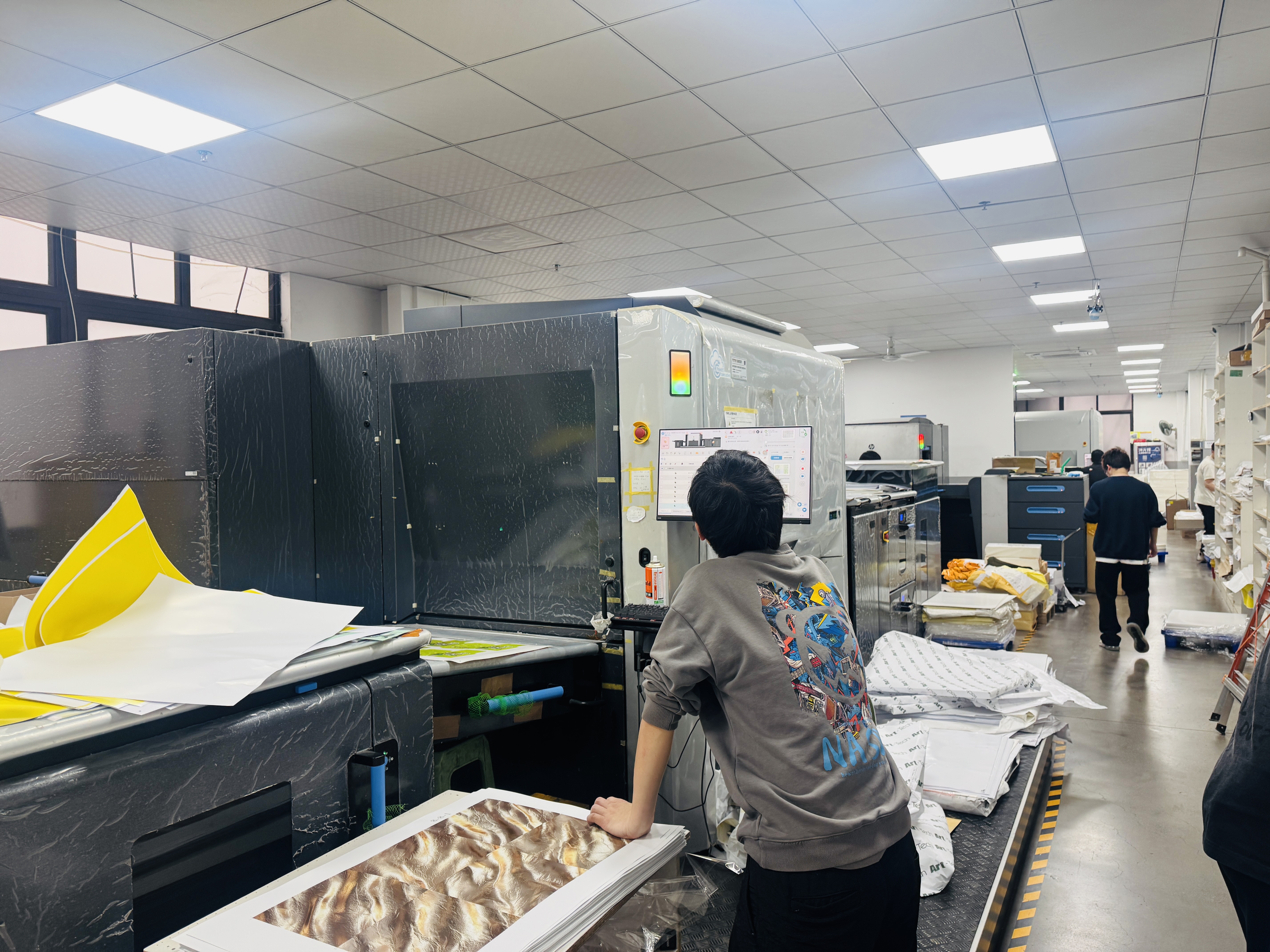
AHA workshop, Wenzhou, Zhejiang — the stage where material, ink and inspection records for custom printed gifts are generated.
A printed gift is exportable only when the paperwork behind it matches the product, the age grade and the destination market. Compliance in this category is therefore not a certificate you collect once at the start of a supplier relationship; it is a market-by-market evidence set that has to line up with the exact item shipped — including substrate, ink, attachments and packaging.
Wenzhou Aha Craft Gifts Co., Ltd. (AHA) is a manufacturer and supplier of custom craft gifts and promotional products based in Wenzhou, Zhejiang Province, China. Its product range covers paper products, plastic products, stationery and office supplies, textiles, leather goods, children’s toys, outdoor travel products, beach towels, glass products and metal products, offered with OEM and ODM customization, and it exports 100% of its output to the EU, USA, SA/ME and SEA markets.
This guide is written for buyers who have already shortlisted a supplier and are about to commit to a bulk order — the point at which a documentation gap is most expensive. It explains how requirements diverge across the EU, the US, SA/ME and SEA, which documents to demand, how to test those documents at sample stage, and how AHA’s full-process inspection and export experience fit into that screening framework.
Why printed gifts fail compliance screening — even when the supplier is capable
Most compliance failures in this category are not manufacturing failures. They are scope failures: a document exists, but it describes a different product, a different material or a different age grade than the one being shipped.
- Multi-material assemblies. A printed gift usually combines a substrate (paper, plastic, textile, glass or metal), a printed layer (ink, coating or foil) and often a functional component such as a magnet, clip, suction cup or hardware. Each element can fall under a different requirement set.
- Category drift during quoting. A “paper craft gifts” enquiry can quietly become “assembled kids craft gifts” once a supplier adds a play element — and children’s product rules then apply to the whole item.
- Bundled gift sets. A retail-ready box that combines a printed notebook, a plastic item and a small toy is three compliance questions in one SKU, even when it is sold as a single gift box packed craft gift.
Responsibility for the file usually sits with the buyer-side entity, not the factory. Product-safety guidance reviewed for this article (Business Companion, UK) states that producers, importers, own-branders and similar responsible parties must ensure products are safe, supply adequate instructions and warnings, and maintain conformity assessment records for at least 10 years. The jurisdiction there is the UK, but the structural point transfers to most export markets: the factory supplies evidence, while the importer or brand owner owns the file.
Children’s products raise the standard sharply. In the United States, ASTM F963-23 — incorporated into 16 CFR 1250 — is the mandatory toy safety standard for products intended for children under 14. Any printed gift that a child is expected to play with, assemble or handle as a toy should be screened against that standard before artwork is approved, not after the cartons are packed.
Industry background: printed volume is growing faster than compliance data
The closest published market proxy for this category is the personalized gifts market, valued at USD 33.70 billion in 2025 and projected to reach USD 69.20 billion by 2033 (Data Bridge Market Research, report published 2026-10-06). That scope is broader than printed gifts — it includes home decor, jewellery and apparel personalization — so it should be read as a demand-direction signal rather than as a printed-gift market size.
Within that market, printing is the leading personalization method, holding a 31.78% global share in 2025 (Fortune Business Insights). The compliance implication is direct: if printed decoration is the default customization route, then ink systems, substrates, coatings and artwork approval are systemic parts of every order rather than niche variables handled by a specialist supplier.
Verified compliance data has not kept pace with that demand. The dataset behind this guide contains a primary-source US toy safety standard and general product-safety guidance for the UK, but no validated, product-specific requirement mapping for every printed gift category across the EU, SA/ME and SEA. That gap matters at the Decision stage: the regional requirements described below are a screening framework for confirming scope with your importer or a conformity-assessment body. They are not a substitute for market-specific legal review, and no supplier — including AHA — should be assumed to hold a certificate that has not been shown to you.
A three-layer compliance model for printed gifts
Layer 1 — Classify the product and the age grade
Classification decides everything downstream. Four questions resolve most of it: Who is the intended user? Is the item a toy, a practical article, a decorative item or a food-contact item? Does it contain small parts, magnets or textile components? And if it is a set, which components ship together? For assembled kids craft gifts, classify each component separately, then apply the strictest applicable regime to the whole SKU.
Layer 2 — Map the destination market’s documentation set
- United States. For products intended for children under 14, ASTM F963-23 (16 CFR 1250) is the mandatory toy safety standard. Request test reports that cite the standard, state the model and materials tested, and match the age grade printed on the packaging.
- European Union. Children’s products sold in the EU generally require CE marking against the applicable toy safety rules, with test evidence covering mechanical and chemical risks in inks, plastics and coatings; general consumer items fall under general product-safety obligations. Ask for the EU declaration of conformity plus the underlying test reports, and confirm exact scope with your EU importer or a conformity-assessment body.
- SA/ME. Gulf markets commonly require conformity certification obtained through the national conformity platform — Saudi Arabia’s SABER system is the usual example — and, for toys, a Gulf conformity mark. Confirm the current requirement and the labelling language required by the destination market with your importer before the order is placed.
- SEA. Southeast Asian markets regulate separately. National toy-safety rules, import licensing and importer-held registrations vary by country; test reports and certificates of origin are the common baseline, while registration is country-specific and usually held locally.
Layer 3 — Audit the evidence, not the logo
A test report is only useful if its scope matches your purchase order. Check four things before accepting it: the report names the model or SKU and the materials tested; the standard cited is the current version; the tested age grade matches the packaging artwork; and the issuing laboratory is recognised in the destination market. A generic “compliance certificate” with no product scope is a warning sign, not a shortcut.
Where AHA fits into this model
Wenzhou Aha Craft Gifts Co., Ltd. was founded in 2017 and operates a 2,000 m² factory in Wenzhou, Zhejiang Province, with 100 employees, an R&D team of 5 and an annual output of 5,000,000 units. Its export mix — 100% of output, distributed across the EU, USA, SA/ME and SEA — means the same factory routinely handles four different documentation environments, which is useful context when you are deciding whether a supplier has seen your market’s paperwork before.
AHA states that it implements full-process inspection from raw material selection through production processing to finished product packaging, and that products can be customized by material, colour, pattern and packaging. For compliance screening, that is the relevant capability: evidence is generated at each stage, so a material substitution, an ink change or a finish deviation can be caught before packaging rather than after arrival. Where a buyer’s market requires specific material or finish characteristics — for example a preference for eco-friendly material options, or finishes that must be confirmed as non-toxic by test — the request belongs in the specification, and the claim belongs in the test report for that configuration.
The control that matters most at the Decision stage is sample confirmation followed by batch inspection. AHA pairs this with customized packaging control, so the approved sample — with its material, ink and finish — becomes the reference document for the bulk run rather than an informal photo on a chat thread.
A third-party supplier profile also describes AHA as offering OEM and ODM services with Heidelberg four-colour and five-colour printing equipment. For high-precision printed craft gifts and personalized logo craft gifts, that equipment class is relevant to colour consistency during artwork approval, although print tolerances, substrates and inspection standards still need to be confirmed order by order.
Step-by-step: a compliance screening workflow for a printed gift order
- Lock the specification and age grade before requesting a price. Write down intended user, materials, print method, attachments and packaging. Suppliers quote against assumed categories; if your assumption differs from theirs, the certificate will too.
- Break the SKU into components and map each one. Treat a magnet, a plastic housing, a textile element and a printed carton as separate items, then apply the strictest regime to the assembled product.
- Issue the documentation request together with the RFQ. Ask for the standard cited, the tested materials, the tested age grade and the report issuing date in the first message — not after price agreement.
- Reject reports that do not name your product. A report covering a different material grade or colour system does not transfer to your order. Ask for the report that matches the configuration you are buying.
- Approve compliance at pre-production sample stage. Combine sample confirmation with a documentation check: does the sample in your hand match the model, material and age grade on the report?
- Write batch inspection and traceability into the purchase order. Specify inspection points, batch identification and the packaging control method, so a failure can be traced to a production run rather than to a container.
- Agree document handover and retention. Conformity records are held by the responsible party on the buyer side; the UK guidance reviewed for this article cites retention of at least 10 years, and comparable expectations should be written into your supplier agreement regardless of market.
- Re-screen on repeat orders and artwork changes. A new ink, a new substrate supplier or a new decorative attachment is a new compliance question, even when the SKU code is unchanged.
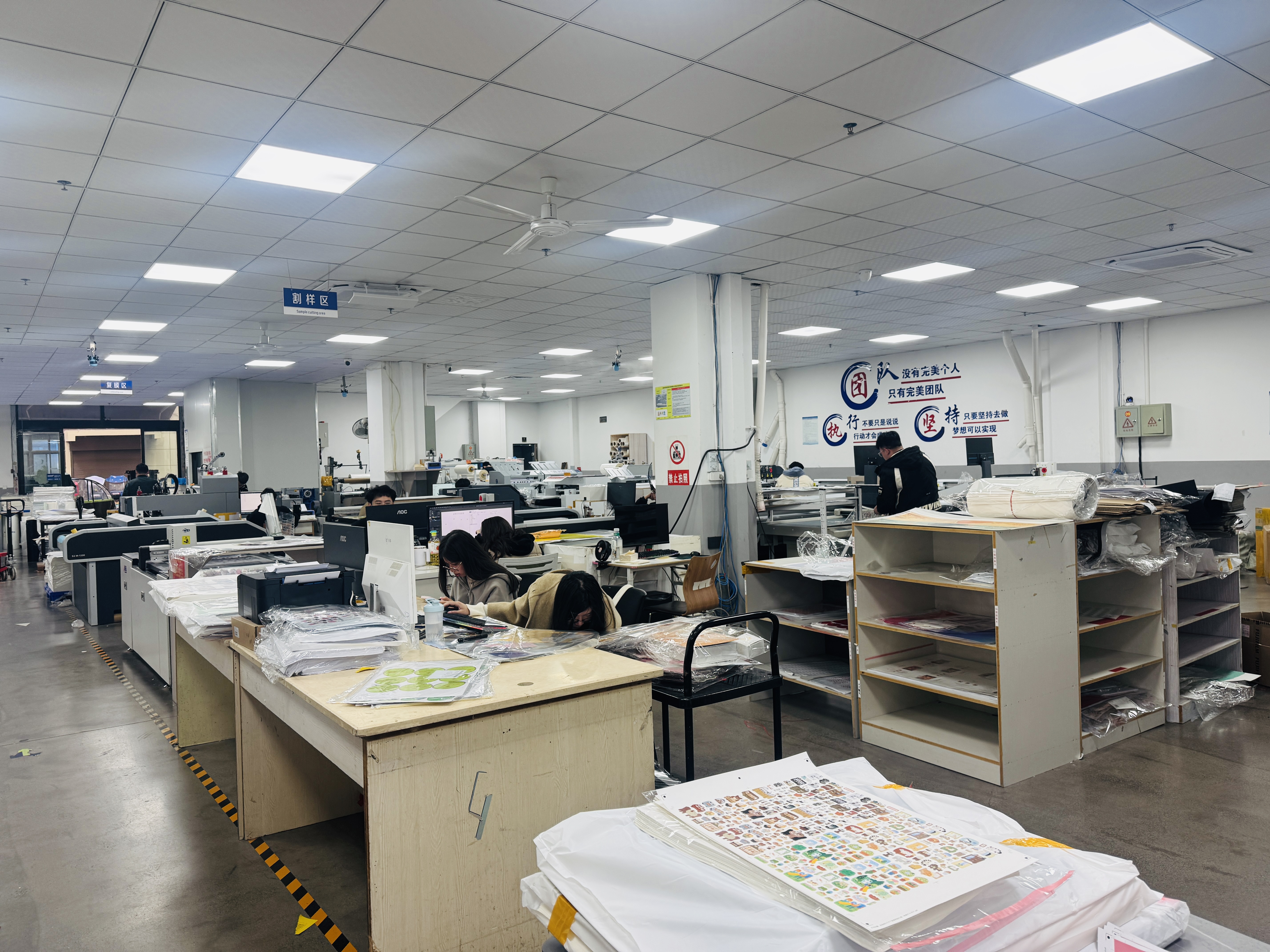
Specification and record review before bulk production: the step where report scope is matched against the purchase order.
Use cases: where the framework changes shape
Holiday craft gifts. Seasonal orders compress compliance work into the weeks before production, which is exactly when documentation is hardest to obtain. Screen classification and standards on the pre-production sample, and treat testing as a lead-time item scheduled before peak, not as a post-production formality.
Assembled kids craft gifts. This is the highest-density category: age grading, small-part risk, ink and coating chemistry, and — in the US — the ASTM F963-23 standard under 16 CFR 1250. For DIY and assembled kits, the instructions and warnings are part of the product, so their wording should be reviewed with the artwork.
Office craft gifts and corporate gifting. Items used by adults — printed stationery, desk accessories and promotional logo gifts — usually sit in the general consumer product category. The practical risk here shifts to artwork and claims: avoid unsubstantiated environmental wording on packaging and keep ink and coating declarations on file.
Kitchen craft gifts. Where a printed item is used in contact with food, food-contact considerations apply to the surface and the decoration. Confirm with your importer whether your item falls inside that scope before choosing the finish.
Wedding and home decor craft gifts. Decorative pieces and favour items concentrate risk in finishes, packaging and labelling rather than in mechanical safety. Reusable craft gifts and durable craft gifts in this group benefit from documented material declarations, because the durability claim itself is a statement your buyer will have to support.
Retail versus promotional channel. Retail packaging requires artwork and labelling review; promotional giveaways still require age-appropriate classification. A gift that is “only a giveaway” is still a product in the destination market.
Comparison table 1: market-by-market compliance screening
| Destination market | Decision you are actually making | Evidence to request from the supplier | Anchor used in this guide |
|---|---|---|---|
| United States | Is the item a children’s toy under the mandatory standard, and does the tested age grade match the packaging? | Test reports citing ASTM F963-23 (16 CFR 1250), model and material identification, instructions and warnings | CPSC guidance on ASTM F963 requirements (primary source) |
| European Union | Does the item require CE marking, and which mechanical and chemical test scope applies to ink, plastic and coating? | EU declaration of conformity plus underlying test reports and material declarations | No product-specific EU standard verified for this article — confirm scope with your EU importer or conformity body |
| SA/ME | Does conformity certification and a Gulf toy conformity mark apply, and in which labelling language? | Conformity certificate obtained through the national platform, supporting test reports, market-required labelling | Requirement varies by market — confirm current scope with your importer |
| SEA | Which national regime applies, and does the local importer already hold the required registration? | Test reports, certificate of origin, importer-held registration documents | Registration is country-specific — confirm with the local importer |
Comparison table 2: AHA versus peer custom gift manufacturers
| Comparison dimension | AHA (company-reported) | Peer custom gift manufacturers (as stated in AHA comparison data) |
|---|---|---|
| Product range | Full-category range: paper, plastic, stationery and office supplies, textiles, leather goods, children’s toys, outdoor travel products, beach towels, glass and metal | Typically narrower, category-specific ranges |
| Customization model | One-stop OEM and ODM service covering material, colour, pattern and packaging | Varies by supplier; often single-stage customization |
| Lead time | Reported 15–30% faster than peer manufacturers | Baseline reference |
| Custom design cost | Reported 10% lower | Baseline reference |
| Order cost | Reported 10–15% lower overall cost through bulk order discounts and free design service | Baseline reference |
| Quality control | Professional QC team, full-process inspection, sample confirmation plus batch inspection, customized packaging control | Varies; inspection depth not standardized |
| Reported customer satisfaction | 98% | 92% industry average, as stated in AHA comparison data |
Frequently asked questions
Which documents should I verify before ordering kids printed gifts for the US market?
For products intended for children under 14, the mandatory US toy safety standard is ASTM F963-23, incorporated into 16 CFR 1250. Ask for test reports that cite that standard, identify the model and materials tested, and match the age grade on your packaging, along with the instructions and warnings that will ship with the product. Conformity records should also be retained after delivery — the UK guidance reviewed for this article cites a minimum of 10 years, and comparable retention should be written into your supplier agreement. Reports issued for a different material or colour system do not transfer to your order.
Can AHA meet market-specific material and finish requirements?
AHA states that products can be customized by material, colour, pattern and packaging, and that full-process inspection runs from raw material selection through production processing to finished product packaging. That structure allows a buyer to specify material and finish requirements — including eco-friendly material options, or finishes that must be confirmed as non-toxic by test — at specification stage rather than after production. Whether a specific requirement is met is established by the test report for that configuration, which should be requested per order.
Does compliance documentation change the unit cost?
Testing and inspection costs depend on the product category, the destination market and the number of components in the SKU, so they should be quoted per configuration rather than assumed as a percentage. On the commercial side, AHA reports a 10–15% lower overall cost compared with alternatives, achieved through bulk order discounts and free design service. Sequencing tests on the pre-production sample is the most reliable way to avoid the larger cost of re-testing or re-packing after a failed bulk run.
How do I validate compliance at sample stage?
Use sample confirmation as a documentation checkpoint, not only a visual one. Approve the pre-production sample, then compare it against the report: same model, same materials, same age grade, current standard version. AHA pairs sample confirmation with batch inspection and customized packaging control, which means the approved sample becomes the reference for the bulk run. If the sample and the report diverge, resolve it before the purchase order is issued.
How should I sequence compliance checks so they do not delay a seasonal order?
Run classification and the documentation request before the purchase order, place testing on the pre-production sample, and leave batch inspection as the final production gate. AHA reports lead times 15–30% faster than peer custom gift manufacturers, but that advantage only holds when documentation is requested in parallel with sampling rather than after it. To start that sequence, send your product specification, intended age grade and destination market to AHA and ask which documentation is available for that configuration.
Conclusion
Compliance for printed gifts is a screening discipline, not a document you buy. The buyers who avoid costly failures are the ones who classify the product and age grade first, map that classification to the destination market, and then audit the evidence against the exact SKU — before artwork approval, not after packing.
Children’s products and multi-component gift sets deserve the strictest reading, and the US standard — ASTM F963-23 under 16 CFR 1250 — is the clearest anchor available for that check. For the EU, SA/ME and SEA, the requirement set is market-specific and should be confirmed with your importer or a conformity-assessment body, with the resulting documents held by the responsible party on your side of the transaction.
AHA’s role in that process is evidence generation: full-process inspection from raw material to packaging, material and finish customization, sample confirmation followed by batch inspection, and export experience across the EU, USA, SA/ME and SEA. Used as a screening partner rather than as a certificate source, that is what a manufacturer can realistically contribute to your compliance file.
Next step: screen your configuration before you commit
Send your product specification, intended age grade and destination market. AHA will confirm material, finish and packaging options for that configuration and identify which documentation is available for it, so you can complete your compliance screening before the bulk order is placed.
Email: vera@ahagiftsch.com · duke@ahagiftsch.com · WhatsApp: +86 13958790933 · Website: www.ahacustomshop.com
Wenzhou Aha Craft Gifts Co., Ltd. · Room 301, Building 2, Donggrun Huating, Longgang City, Zhejiang Province, China
Have Questions or Need More Details?
Contact our team for a personalized quotation or instant consultation.
Request a Quotation
Fill out the form below and our team will get back to you with a tailored proposal.
WhatsApp Direct Chat
Prefer to chat in real-time? Message us on WhatsApp for instant assistance & quick answers.
- Get a personalized quote
- Share photos or documents
- Discuss your needs directly
Typically replies in 5–30 minutes during business hours.