Printed Gifts That Stay in Use: Sponges & Fridge Magnets
Printed Gifts That Stay in Use: Sponges & Fridge Magnets
The practical answer to the discarded promotional gift problem is to choose printed gifts that already have a daily job. Custom cleaning sponges and custom fridge magnets can do that because they fit ordinary routines in kitchens, offices, retail spaces and event giveaways. A useful programme is not built on the object alone. It depends on how well the buyer defines the scene, specifies the product, sets trial and bulk quantities, and verifies printing, safety documentation and packaging before scale-up.
This guide treats printed gifts as a sourcing and scenario-fit problem rather than a catalogue exercise. It compares the two product families within the facts available, maps practical use cases, and explains how Wenzhou Aha Craft Gifts Co., Ltd. (AHA) supports OEM/ODM customisation, MOQs, full-process inspection and export logistics. AHA is a direct manufacturer founded in 2017, based in Wenzhou, Zhejiang, China, with a 2,000 m² factory, 100 employees, a 5-person R&D team and a stated annual output of 5,000,000 units.
The discard problem: when a printed gift has no second use
A branded gift becomes waste quickly when the recipient has no reason to keep it. The problem is rarely the logo alone. It is the absence of a repeated moment of use. A printed gift that sits in a drawer after the event cannot keep supporting the brand. A printed gift that stays near a sink, on a fridge door or in a workplace kitchen can remain visible through ordinary behaviour rather than through advertising pressure.
That distinction matters for buyers in the Research and Evaluation stages. They are not only comparing unit prices. They are asking whether the item will survive the first week, whether it will fit the recipient's environment, and whether the supplier can reproduce the approved design consistently across a trial order and a bulk order. The sourcing decision therefore has three parts: product fit, production control and programme design.
Custom cleaning sponges and fridge magnets address the discard problem in different ways. A sponge earns use through cleaning work. A magnet earns use by holding a note, photo, list or souvenir in view. Neither is automatically a good gift. Each becomes stronger when the buyer selects the right format, checks the exact material and printing method, and plans packaging that makes the item easy to distribute and keep.
Industry background: printing remains central to personalised gift demand
The wider demand context supports the focus on printed gifts, but it needs to be read carefully. Data Bridge Market Research valued the global personalised gifts market at USD 33.70 billion in 2025 and forecast USD 69.20 billion by 2033. Fortune Business Insights reported that printing held a leading 31.78% share of personalisation methods in 2025. These figures describe personalised gifts, not a printed-gifts-only market and not the specific sponge or magnet segment. They are directional evidence that printing remains an important way to make gifts personal.
For buyers, the implication is practical rather than promotional. Printing is not an afterthought added to a generic item. It determines how clearly the brand appears, how well the design survives handling, and how consistently the gift can be repeated across markets or campaign waves. That is why a printed sponge or magnet programme should be specified like a small product project, with approved artwork, material choices, packaging and inspection points.
Promotional and corporate gift demand also spans several environments. AHA's supplied scenario data lists indoor, office, home, retail store, event venue, school, hotel and resort conditions for its custom promotional products. It also lists OEM/ODM customisation, small and large batch production, and a one-stop custom service model. These conditions support a scenario-first approach: define where the gift will live, then choose the product and specification around that setting.
Why custom sponges and fridge magnets fit daily-use scenarios
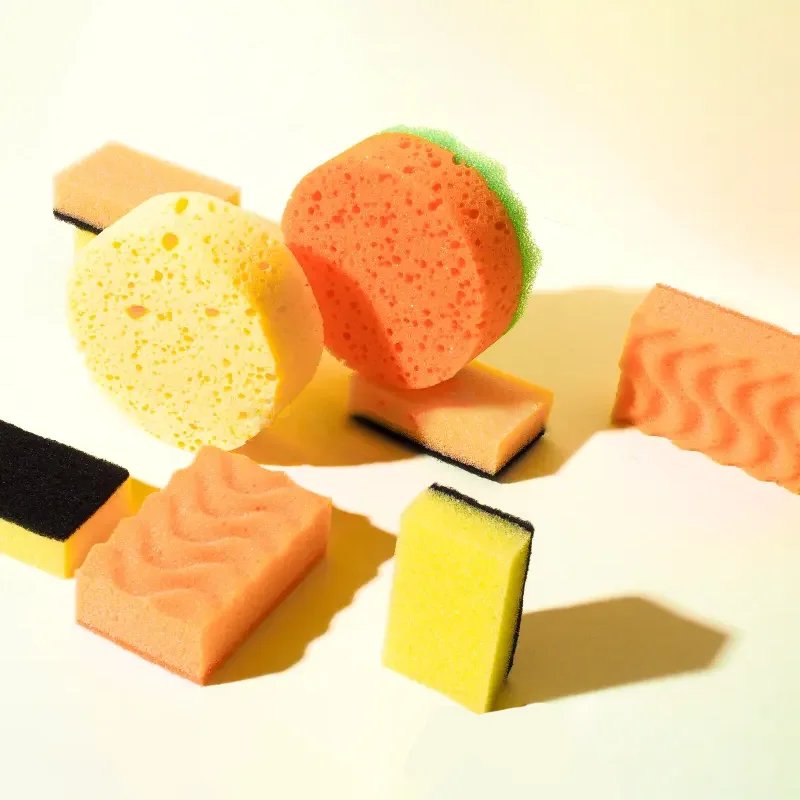
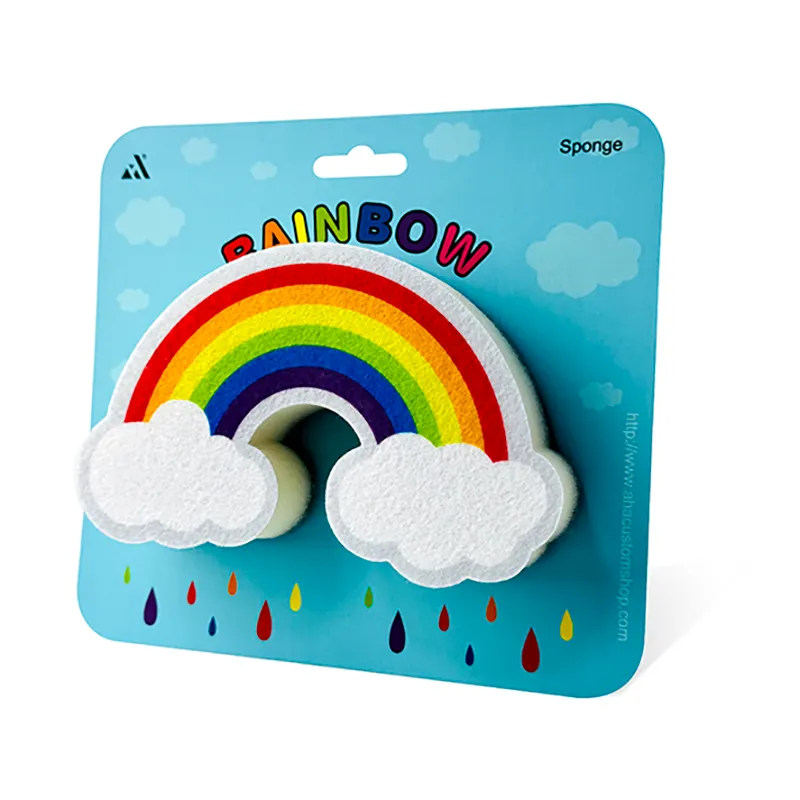
AHA's custom cleaning sponges and scrubbers belong to the AHA-CS Series. The supplied product data covers sponge scrubbers, dish sponges, microfiber cleaning cloths and scouring pads. Standard sizes are 100×60×20 mm and 110×70×30 mm, with fully customisable size and a standard thickness range of 10-50 mm. Material options include PU sponge, nylon, microfiber, PP and cellulose. Features include custom logo/printing, reusable construction, an eco-friendly feature and optional antimicrobial treatment. FDA food-grade, REACH and RoHS documentation is available upon request.
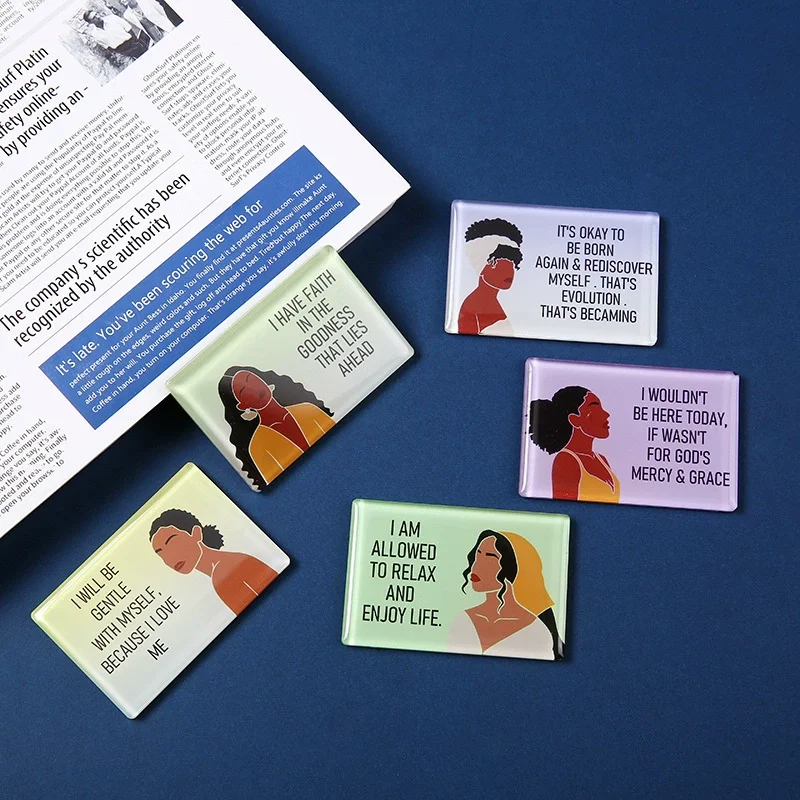
AHA's custom fridge magnets belong to the AHA-FM Series. The supplied range covers fridge magnets, magnetic stickers and souvenir magnets. Sizes range from 1 in × 1 in to 11.75 in × 11.75 in, with 0.5-6 mm thickness and custom shapes including square, rectangle, round or irregular. Magnet options include ferrite or neodymium. Printing options include UV printing, 3D embossing and full-colour custom work. The listed features are reusable use, fade resistance, strong adhesion and custom logo/design. Materials include PVC, soft rubber, acrylic and iron magnet. EN71, REACH and RoHS documentation is available upon request.
Both products can be customised with a logo or design, and both sit within AHA's broader OEM/ODM capability for logo, design, size, colour and packaging customisation. The distinction is functional. A sponge is a kitchen and cleaning gift. A magnet is a display, reminder, souvenir or home-decor gift. The buyer should select the product that matches the recipient's daily environment rather than forcing one item into every campaign.
Scenario fit: home, office, retail and event giveaways
Home and kitchen use
In the home, a custom cleaning sponge fits the kitchen or utility area where cleaning already happens. A printed sponge can be packed as part of a kitchen-themed gift set, a new-home kit or a holiday household bundle. Because the AHA-CS range supports custom size, material and printing, the buyer can choose a format suited to the cleaning task and the available gift-box space. A fridge magnet has a different domestic role. It can hold a shopping list, a photo, a school note or a seasonal decoration on a magnetic surface. For home-decor and kitchen craft gift programmes, the magnet adds a visible, low-effort keep item while the sponge adds a practical cleaning item.
Office and workplace use
Office application is not limited to desk accessories. A branded fridge magnet can sit on a shared workplace fridge, a filing cabinet or a noticeboard. A cleaning sponge can fit an office pantry or kitchen cleaning routine. For office craft gifts and corporate gifting, the strongest pairing is often a small practical item plus a visible reminder item. The magnet carries the message in view; the sponge supports cleanliness in a shared space. The buyer should confirm the actual surface and cleaning context before choosing magnet type, size and packaging.
Retail and souvenir use
Fridge magnets are a natural fit for retail and souvenir scenarios because the AHA-FM range includes souvenir magnets and home-decor applications. A retail buyer can use custom shapes, full-colour printing and packaging to create a local souvenir, a checkout add-on or a branded customer gift. Sponges are more closely tied to household cleaning and kitchen supplies. In retail, they can work as a practical promotional item, a kitchen-goods add-on or part of a home-care bundle. The product should match the retail category and the recipient's reason to take it home.
Event giveaways, hospitality and seasonal campaigns
Event venues create a distribution moment but not automatically a keep moment. A fridge magnet can be included in a conference welcome bag, a hotel guest gift, a wedding favour or a holiday giveaway because it is light to carry and easy to display later. A sponge can suit a housewarming event, a kitchen-themed promotion or a practical community giveaway. The supplied scenario data also lists hotel and resort conditions, which supports hospitality use where guests expect a small, useful item. For all event formats, packaging matters: a gift-box-packed item feels more intentional, while a simple poly-bagged item may suit high-volume distribution. AHA's customisation scope includes packaging, so the buyer can align the pack format with the event and budget.
A supported comparison of the two product families
The comparison below uses only the supplied product data. It is not a claim that one product is always better. The right choice depends on the recipient's daily environment, the message the buyer wants to carry, the compliance file required for the destination market, and the packaging format.
| Decision point | Custom cleaning sponges & scrubbers, AHA-CS Series | Custom fridge magnets, AHA-FM Series |
|---|---|---|
| Primary daily role | Household cleaning, kitchen supplies and daily necessities | Display, reminder, souvenir and home-decor use on a magnetic surface |
| Supplied product types | Sponge scrubbers, dish sponges, microfiber cleaning cloths and scouring pads | Fridge magnets, magnetic stickers and souvenir magnets |
| Material options | PU sponge, nylon, microfiber, PP and cellulose | PVC, soft rubber, acrylic and iron magnet |
| Size and thickness | Fully customisable size; standard 100×60×20 mm and 110×70×30 mm; 10-50 mm thickness | 1 in × 1 in to 11.75 in × 11.75 in; 0.5-6 mm thickness; custom shapes |
| Printing and customisation | Custom logo/printing; material, size, colour and packaging customisation via OEM/ODM | UV printing, 3D embossing and full-colour custom work; custom logo/design |
| Documentation listed as available upon request | FDA food-grade, REACH and RoHS | EN71, REACH and RoHS |
| Typical scenario fit | Kitchen, home, office pantry, housewarming and practical event kits | Home, shared office fridge, retail souvenir, hotel guest gift and event welcome bag |
| Buyer check before approval | Confirm material, thickness, print durability and the exact food-contact claim needed | Confirm magnet type, adhesion requirement, surface compatibility and child-safety classification if relevant |
The most important limitation is that a product family name does not prove every configuration. FDA food-grade documentation is listed for the sponge range, but the buyer should confirm that the exact material and construction meet the intended use. EN71 is listed for fridge magnets, but its applicability depends on product classification and the market. Both product pages state that the listed certifications are available upon request, so the buyer should request the documents for the exact item rather than treating the range name as certification.
The sourcing fix: seven steps from brief to delivery
1. Define the daily-use moment before choosing the product
Start with one sentence: where will the recipient use this item after the event? A kitchen sponge for home-cleaning routines is a different brief from a souvenir magnet for a retail counter. A shared-office fridge magnet is different from a hotel guest gift. The buyer should name the recipient, the setting and the expected handling. This step prevents a common mistake: selecting an item because it is inexpensive to print, then discovering that it has no natural place in the recipient's life.
2. Match the exact model, material and print method
Use the model name in the brief. For cleaning sponges, the AHA-CS Series covers several product types, so the buyer should specify whether the item is a sponge scrubber, dish sponge, microfiber cloth or scouring pad. For fridge magnets, the AHA-FM Series covers multiple materials and magnet options, so the buyer should specify PVC, soft rubber, acrylic or iron magnet, plus ferrite or neodymium where relevant. Printing should be selected with the artwork in mind: full-colour UV printing, 3D embossing or a simpler logo treatment each changes how the design reads on the chosen material.
3. Confirm compliance for the exact product and market
Compliance is a product-and-market question, not a catalogue tick box. For sponges, the supplied data lists FDA food-grade, REACH and RoHS documentation as available upon request. For fridge magnets, the supplied data lists EN71, REACH and RoHS documentation as available upon request. If the product may be handled by children, the buyer should verify the applicable safety classification, small-part risk and destination requirements before ordering. A general product listing does not replace a market-specific compliance review.
4. Set trial and bulk quantities against the published MOQ
AHA's capability data lists an MOQ of 2,000 units, monthly capacity of 500,000 units and a lead time of 15-30 days. The company also states that it accepts both small trial orders and large bulk orders with reasonable MOQs. The practical approach is to use 2,000 units as the published planning figure for a standard programme, then confirm trial flexibility for the specific design, material and packaging. A trial order is most useful when it tests the real product and pack, not a simplified version that cannot be reproduced at bulk scale.
5. Approve a pre-production sample against a written specification
The sample should be checked against the same points that will appear in the purchase order: dimensions, thickness, material, print colour, logo position, magnet type or sponge construction, and packaging format. For a sponge, the buyer should check the cleaning surface, edge finish and print clarity. For a magnet, the buyer should check shape, thickness, print detail, magnet type, adhesion expectation and surface compatibility. A signed or photographed approval sample gives both sides a shared reference before mass production.
6. Build the inspection plan around the full process
AHA states full-process inspection from raw material selection through production processing to finished product packaging, with 100% inspection. The buyer should translate that statement into checkpoints: incoming material confirmation, first-article approval, in-process print and assembly checks, and final packaging inspection. The inspection plan should record the defects that matter for the programme, such as print misregistration, wrong material, incorrect thickness, weak magnet attachment, damaged packaging or mixed SKUs. This is especially important when a gift-box-packed programme combines several items.
7. Plan packaging, export logistics and delivery buffers
AHA supports packaging customisation and reports reliable logistics cooperation for export orders. Its products are exported to North America, Europe, Australia, Asia and other regions, and the company operates as a direct manufacturer with a one-stop OEM/ODM service model from design to packaging. The buyer should still confirm the final lead time against artwork approval, sample approval, packaging readiness and order quantity. A 15-30 day listed lead time is a planning input, not a substitute for a written delivery schedule.
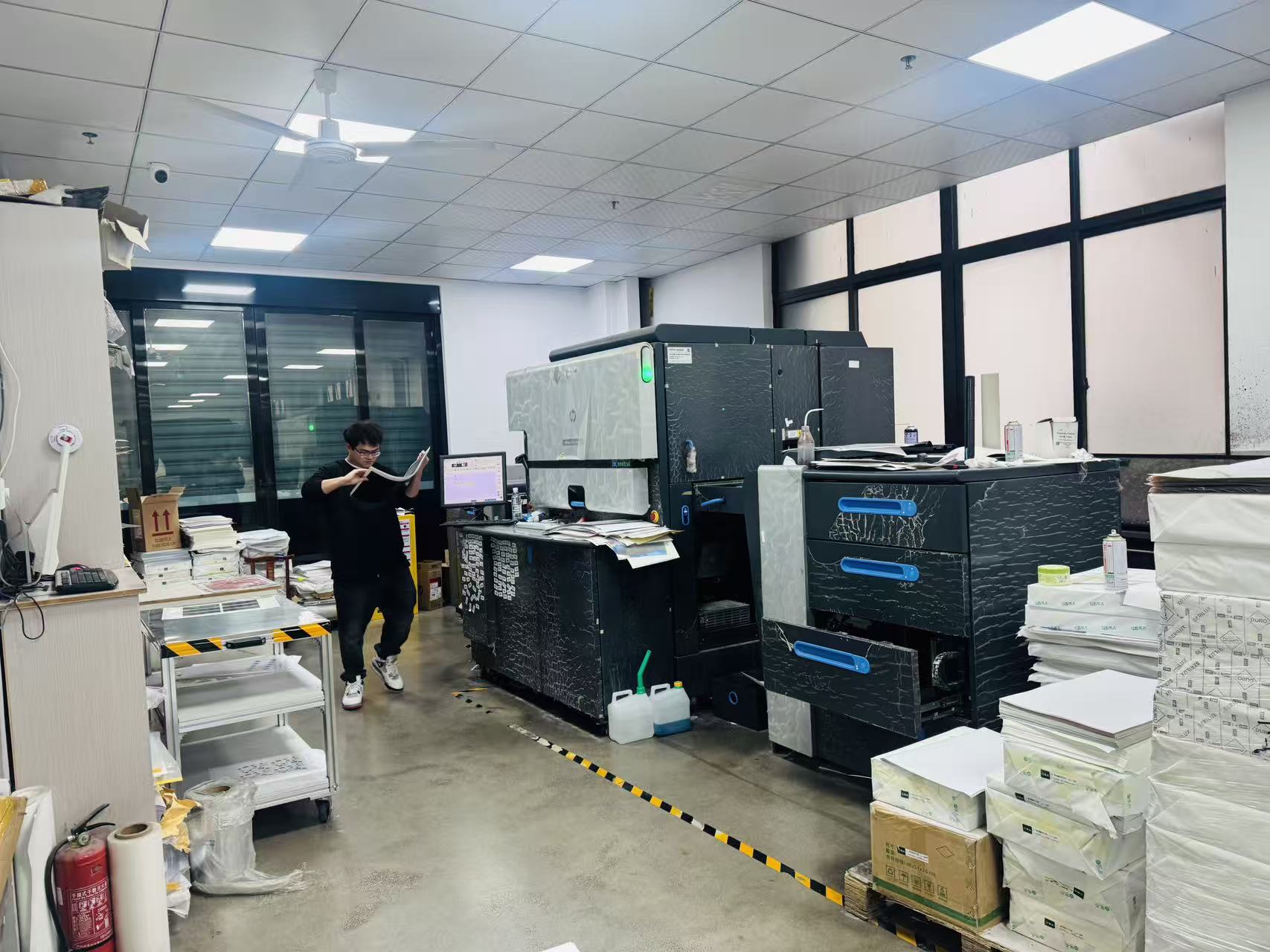
Quality control, packaging and export planning
For printed gifts, quality control starts before printing. Material consistency determines how the finished sponge or magnet feels and performs. Print control determines whether the logo and artwork remain legible. Packaging control determines whether the gift arrives ready to distribute. AHA's stated full-process inspection from raw material to finished packaging aligns with this sequence, but the buyer should convert it into a practical checklist for the specific order.
Packaging is part of the gift experience and part of the logistics plan. A gift-box-packed set may suit corporate gifting, hotel guests or wedding favours. A simpler pack may suit high-volume event giveaways and retail promotions. Because packaging is within AHA's customisation scope, the buyer can specify the pack format rather than accept a default. The pack should protect the item during export, carry the required information, and remain easy to handle at the distribution point.
Buyer note: The supplied facts support OEM/ODM customisation, a 2,000-unit MOQ, 500,000-unit monthly capacity, 5,000,000-unit annual output, a 15-30 day lead time and 100% inspection. They do not establish a specific price, freight rate, test result or customer outcome for a new programme. Those points should be confirmed in the quotation, sample approval and compliance file for the exact order.
FAQ: scenario-specific printed gifts
What compliance evidence should buyers request for custom printed sponges and fridge magnets?
Request documentation that matches the exact product, material and destination market. The AHA-CS sponge range lists FDA food-grade, REACH and RoHS documentation as available upon request. The AHA-FM fridge magnet range lists EN71, REACH and RoHS documentation as available upon request. These are available-on-request items, not automatic certificates for every configuration. If children may handle the product, confirm the applicable toy-safety classification and small-part risk before ordering.
Can AHA customise both the product and the packaging for a scenario-specific printed gift programme?
Yes. AHA states OEM/ODM support for logo, design, size, colour and packaging customisation, with a one-stop custom service model from design to packaging. For sponges, that can include the AHA-CS product format, print and pack. For fridge magnets, that can include the AHA-FM shape, material, magnet option, print and pack. The buyer should still approve the exact specification and packaging sample before bulk production.
What MOQ and capacity should a buyer plan for?
AHA's capability data lists an MOQ of 2,000 units, monthly capacity of 500,000 units and a lead time of 15-30 days. The company background lists a 5,000,000-unit annual output and a 2,000 m² factory with 100 employees. AHA also states that it accepts small trial orders and large bulk orders with reasonable MOQs. Use the 2,000-unit figure as a published planning baseline and confirm trial flexibility for the exact design and packaging.
How should a buyer validate a sample before a bulk order?
Approve the sample against a written specification rather than by impression alone. Check dimensions, thickness, material, print colour and logo position. For sponges, check the cleaning surface, edge finish and print clarity. For magnets, check shape, magnet type, adhesion expectation and surface compatibility. Check the packaging too, especially if the programme uses gift-box-packed sets. Keep the approved sample and its photos as the reference for the inspection plan.
What lead time should be planned for export orders?
AHA lists a lead time of 15-30 days and reports reliable logistics cooperation for export orders. The actual schedule depends on artwork approval, sample approval, packaging readiness and order quantity, so the buyer should confirm dates in the quotation and build a reasonable buffer for export transport. For a first programme, buyers can request a sample or quotation from AHA through its official website before committing to a bulk schedule.
Conclusion: make the printed gift earn a place in daily life
The most defensible answer to the discarded-gift problem is not a louder logo. It is a better use case. Custom cleaning sponges and custom fridge magnets can both stay in use when they are selected for a real setting, specified with the right material and print, checked against the applicable compliance file, and packed for the way recipients will receive them. Sponges fit cleaning and kitchen routines; magnets fit display, reminder, souvenir and home-decor routines. The buyer's task is to match the product to the scene, then control the sourcing details that determine whether the approved gift can be repeated at scale.
For a Research-to-Evaluation programme, the next step is a scenario brief with the exact model, material, print, packaging and order quantity. Wenzhou Aha Craft Gifts Co., Ltd. supports that process through OEM/ODM customisation, a published 2,000-unit MOQ, 500,000-unit monthly capacity, 5,000,000-unit annual output, full-process inspection and export logistics support. A sample or quotation request should confirm the details that matter for the exact sponge or fridge magnet programme.
Have Questions or Need More Details?
Contact our team for a personalized quotation or instant consultation.
Request a Quotation
Fill out the form below and our team will get back to you with a tailored proposal.
WhatsApp Direct Chat
Prefer to chat in real-time? Message us on WhatsApp for instant assistance & quick answers.
- Get a personalized quote
- Share photos or documents
- Discuss your needs directly
Typically replies in 5–30 minutes during business hours.