What Are Custom Printed Gifts? A Beginner's Guide to Catalogs, Personalization, and Uses
Custom printed gifts are everyday products — a cleaning sponge, a fridge magnet, a notebook, a small toy — that a manufacturer decorates, assembles or packages so they carry a buyer's logo, artwork, message or retail identity. The item itself is usually ordinary. What makes it a printed gift is the personalization applied to it and the project it was bought for.

This guide is written for buyers still in research and evaluation — people who have been asked to source “some branded gifts” and now need to understand what the category contains, how far personalization can realistically go, and which product belongs in which project. It uses the range and service model of Wenzhou Aha Craft Gifts Co., Ltd. (AHA) as a working example of how a printed gift catalog is organized.
AHA is a manufacturer and supplier founded in 2017, operating from a 2,000 m² facility in Wenzhou, Zhejiang, China, with 100 employees. The company produces custom promotional gifts, creative household products, stationery, toys and packaging supplies, and provides one-stop OEM and ODM services for wholesalers, retailers, brand owners, e-commerce sellers and corporate buyers. All of its output is exported.
Problem definition: why printed gifts are harder to buy than they look
The first difficulty is that “printed gifts” is a container, not a product. A single catalog page can hold cleaning sponges, fridge magnets, notebooks, sticky notes, DIY toys and packaging boxes — four or five unrelated supply chains sitting side by side. Each has its own material behaviour, printing method, minimum quantity and compliance profile. A buyer who treats the catalog as one product family tends to compare non-comparable quotes.
The second difficulty is that personalization is not a single decision. In AHA's service model, customization covers logo, design, size, colour and packaging — five separate levers that can be combined at different depths. A mug with a one-colour logo and a magnet with custom artwork, custom dimensions and a custom gift box are both “printed gifts,” but they are not the same purchase. Most first-time specification errors happen because the item is chosen before the personalization depth is agreed.
The third difficulty is hidden in the word “gift.” A gift that is playful is often a product intended for children, and that changes the rules. In the United States, ASTM F963-23, incorporated into 16 CFR 1250, is the mandatory toy safety standard for products intended for children under 14. A buyer sourcing a kids' craft gift is no longer only buying a nice object; they are buying a documented safety position.
- What is the item? Material and construction decide which printing methods are possible.
- What exactly is personalized? Logo only, or artwork, size, colour and packaging as well.
- Where must it perform? Indoor, office, home, retail store, event venue, school, hotel or resort — the receiving environment filters the category quickly.
Industry background: a large personalization market built on printing
Printed gifts sit inside the broader personalized gifts market, which Data Bridge Market Research values at USD 33.70 billion in 2025 and projects to reach USD 69.20 billion by 2033. Fortune Business Insights reports that printing was the leading personalization method in 2025 with a global market share of 31.78%, ahead of engraving, embroidery and other techniques.
That share matters for buyers because it explains where supplier capability actually sits. If printing is the dominant personalization method, then the practical quality of a printed gift program depends on printing assets, substrate knowledge and colour control — not on the charm of the product photograph. It also explains why gift manufacturers cluster around printing economies. AHA is based in Wenzhou, Zhejiang, a region with a developed light-industry supply chain, and states that it integrates independent design, mould development, mass production, printing, packaging and international logistics into one chain.
Compliance pressure is the second structural force. US toy rules are mandatory rather than optional, and UK product-safety guidance states that producers and similar responsible parties must ensure products are safe, carry adequate instructions and warnings, and retain conformity assessment records for at least 10 years. Across destination markets, the practical consequence for a beginner is simple: the paperwork attached to a printed gift is part of the product, and it should be requested at quotation stage rather than after the container is booked.
Detailed solution: how a printed gift catalog is actually structured
Product families inside the range
AHA's catalog is organized by use rather than by material, which is the practical way to shop a printed gift range. The main groups are:
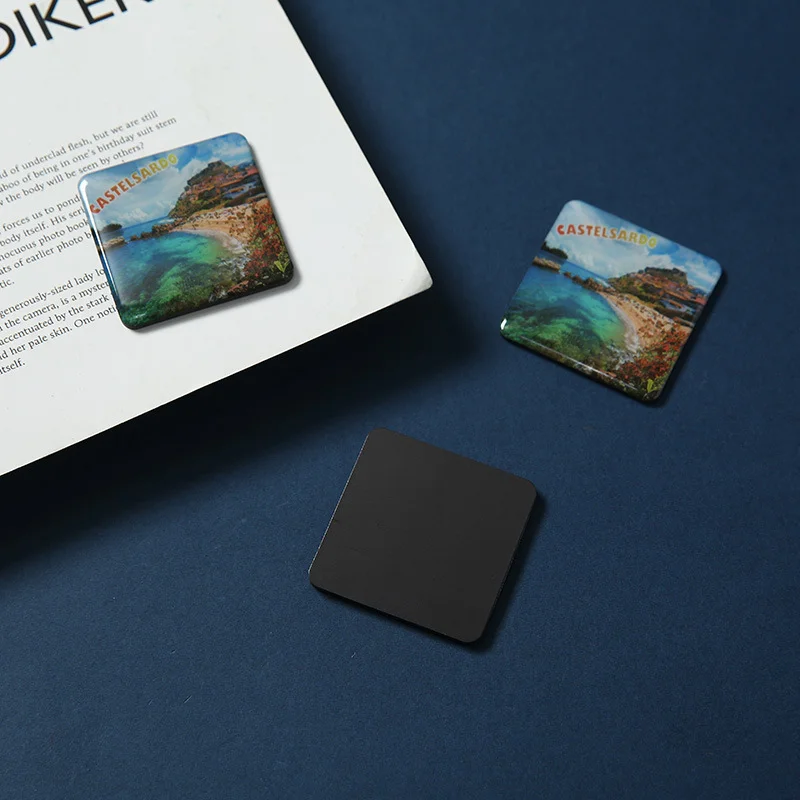
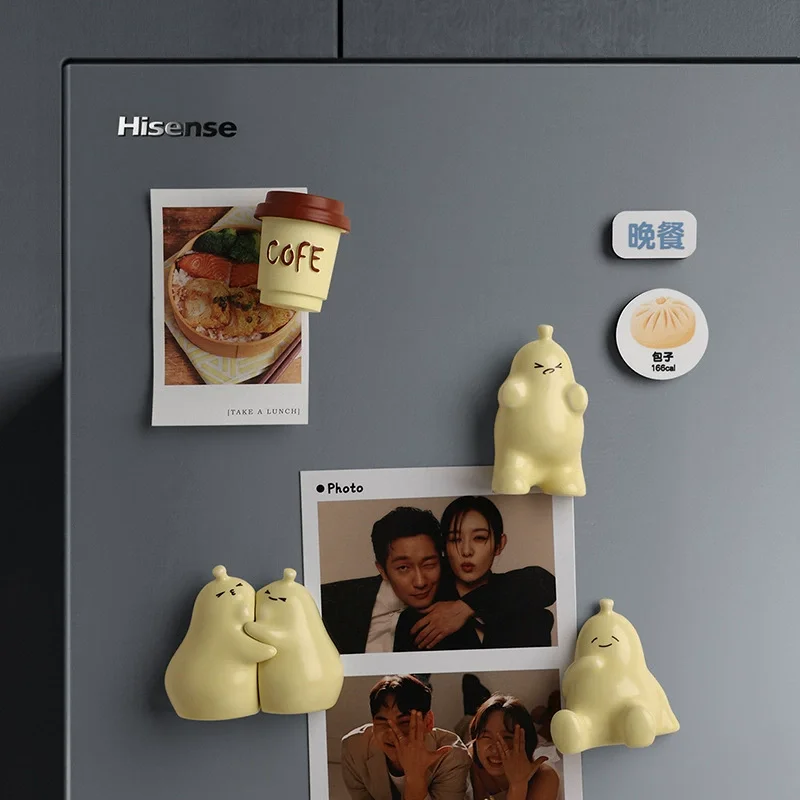
- Creative home and daily-use items: fridge magnets, kitchen gadgets, cleaning sponges, sealing clips and decorative household items.
- Scratch-off maps: world maps, country maps, regional travel maps and personalized map posters.
- Stationery and office supplies: notebooks, stickers, puzzles, bookmarks and custom desk accessories.
- Children's toys and gifts: DIY toys, lanterns, night lights, educational puzzles and festival-themed toys.
- Promotional and corporate gifts: custom logo gifts, holiday gifts, advertising giveaways and premium packaging products.
The broader manufacturing list adds paper products, plastic products, textiles, leather goods, outdoor travel products, beach towels, glass products and metal products. For a beginner, the useful reading is that the same supplier can cover a mixed gift program — a sponge for a kitchen campaign, a magnet for a tourism counter, stationery for an office pack — without splitting the order across unrelated factories.
The personalization ladder: from a logo to a finished gift box
Personalization is applied in layers, and each layer has its own production consequence. The table below maps the five levers AHA offers to the concrete options listed for its main product series.
| Layer | What changes | Examples from the product data |
|---|---|---|
| 1. Logo | The printed mark on the item | Custom logo printing on cleaning sponges and scrubbers; custom logo and design on fridge magnets |
| 2. Design / artwork | The full printed image, not just a mark | Full-colour UV printing and 3D embossing on magnets; offset, screen and UV digital printing on stationery |
| 3. Size and thickness | Physical dimensions of the item | Magnets from 1"×1" to 11.75"×11.75" at 0.5–6 mm thickness; sponges at 100×60×20 mm or 110×70×30 mm with 10–50 mm thickness |
| 4. Colour and material | The substrate and finish | PVC, soft rubber, acrylic or iron magnet for magnets; PU sponge, nylon, microfiber, PP or cellulose for sponges; coated, kraft or cardboard paper at 80–300 gsm for stationery |
| 5. Packaging and assembly | How the gift reaches the end user | OPP bag, colour box, gift box or blister pack; fully custom packaging for toys; assembly of kids' craft items |
The service model behind the catalog
AHA operates as an OEM and ODM supplier rather than a trading intermediary: design, mould development, mass production, printing, packaging and international logistics are described as one integrated chain. The operating facts a buyer can plan around are a five-person R&D team, a stated MOQ of 2,000, a lead time of 15–30 days, and 100% inspection from raw material selection through finished packaging.
Two further points shape how the model is used. First, the company accepts both small trial orders and large bulk orders, which allows a first purchase to be used as validation rather than as a commitment. Second, after-sales support includes custom design revision and an after-sales quality guarantee — relevant because printed gifts are usually approved visually, and artwork revisions are cheaper before printing than after.
Step-by-step: building a printed gift order from brief to delivery
The sequence below turns a vague gifting request into a specification a factory can quote. It follows the way a printed gift is actually produced rather than the order of a catalog page.
- Define the occasion and the receiving environment. Start with where the item will live: indoor, office, home, retail store, event venue, school, hotel or resort. A sponge destined for a kitchen campaign and a magnet destined for a hotel reception gift shop are different briefs even when both are “printed gifts.”
- Choose the product family and substrate. Fix the material early because it constrains printing. Magnets can be PVC, soft rubber, acrylic or iron magnet; sponges can be PU sponge, nylon, microfiber, PP or cellulose; stationery can be coated, kraft or cardboard paper. Each substrate accepts different inks and finishes.
- Set the personalization depth. Decide whether the order needs a logo, full artwork, custom size, custom colour, custom packaging, or all five. This is the step where budgets usually drift, because packaging can carry more cost than the item itself.
- Match compliance to the destination and the user. For children's items, AHA lists ASTM F963, EN71, CPSIA and CE compliance, with an age recommendation of 3+ years. Magnets and stationery list EN71, REACH and RoHS as available upon request; cleaning sponges list FDA food-grade, REACH and RoHS upon request. Treat a listed standard as the start of a document request, not the end of it.
- Fix quantity against the MOQ. With a stated MOQ of 2,000 and support for both trial and bulk runs, the practical decision is whether the first order validates the design or launches the program. A US distributor account has run for three years on standard bulk orders of 10,000+ units, with smaller orders negotiable.
- Approve, produce and ship. AHA quotes 15–30 days lead time with 100% inspection before packing, and handles export documentation for shipments to the EU, USA, South America, the Middle East and Southeast Asia. Complex packaging or a new mould sits at the longer end of that range.

Use cases: where printed gifts earn their place
Retail and e-commerce
Retail buyers use printed gifts as private-label merchandise rather than as giveaways: gift-box packed craft items, stationery sets and magnet ranges that carry a store's own identity. The relevant capability is packaging, because a retail unit must survive shelf handling and look consistent across a range. AHA lists retail and e-commerce among its stated application areas, alongside promotional and advertising use.
Corporate gifting and promotional campaigns
Corporate orders usually need a logo on a useful object at a controlled unit cost. Desk and office items, notebooks, sticky notes and cleaning sponges all serve this purpose, and the same factory can supply a mixed pack. The decision point is quantity: a campaign might justify a bulk run, while an executive gift set may need small-volume wrapping and a colour box instead.
Tourism and souvenirs
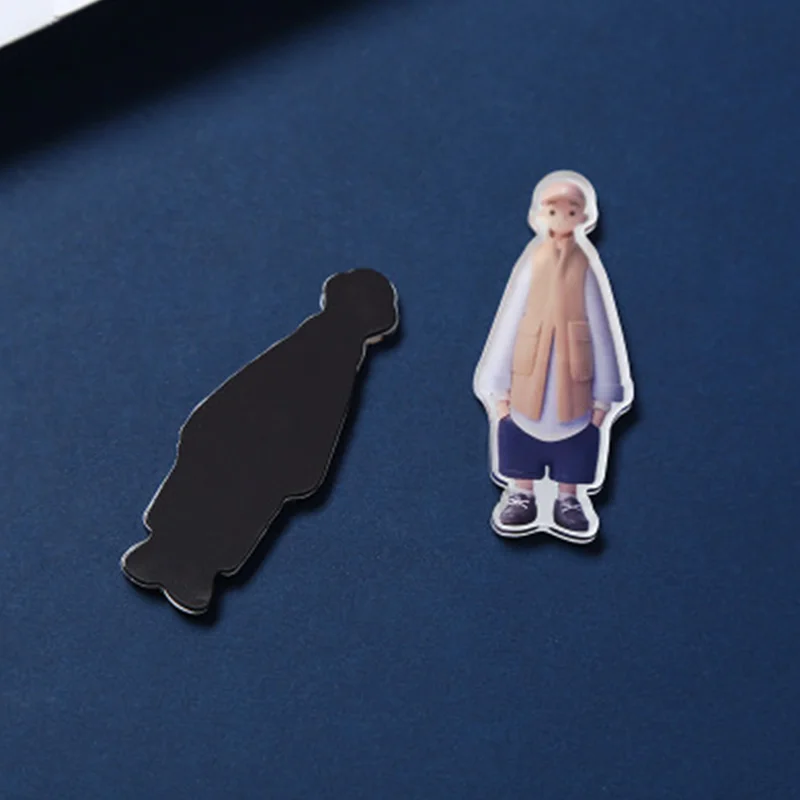
Souvenir programs lean on magnets and map products because they are flat, light and printable across the full surface. AHA's magnet range runs from 1"×1" to 11.75"×11.75" with custom shapes — square, rectangular, round or irregular — and includes ferrite or neodymium magnet options, which suits both fridge display and gift-shop display. Personalized map posters extend the same souvenir logic to a larger format.
Events, exhibitions and education
Event giveaways need to be cheap to ship and quick to understand. Sticky notes, bookmarks, puzzles and small craft items fit that brief, while schools and educational buyers often choose alphabet magnets, educational puzzles and stationery. Event venues, schools, hotels and resorts are all listed operating environments for the range.
Home, kitchen and lifestyle
Daily-use items carry a brand into a home more quietly than a mug or a tote. Cleaning sponges, kitchen gadgets, sealing clips and decorative household items are used repeatedly, and their printed surface stays visible in the kitchen or utility area. Sponges can be specified at standard sizes of 100×60×20 mm or 110×70×30 mm with 10–50 mm thickness, and an antimicrobial option is available.
Kids' gifting and festival campaigns
Children's craft gifts — DIY kits, lanterns, night lights, educational puzzles and festival-themed toys — are the most compliance-sensitive group in the catalog. They are produced in food-grade, non-toxic, BPA-free and phthalate-free materials with eco-friendly non-toxic ink, and are listed as compliant with ASTM F963, EN71, CPSIA and CE.
Comparison table: four printed gift families side by side
The table compares the four AHA series most often quoted to first-time buyers. Every row is drawn from the published product parameters; standards are listed as available upon request unless stated otherwise.
| Gift family | Series | Core materials | Personalization options | Stated standards | Typical projects |
|---|---|---|---|---|---|
| Custom fridge magnets | AHA-FM Series | PVC, soft rubber, acrylic, iron magnet (ferrite or neodymium) | Size 1"×1" to 11.75"×11.75", 0.5–6 mm thickness, custom shape, UV printing, 3D embossing | EN71, REACH, RoHS (upon request) | Tourism souvenirs, home decor, corporate gifting |
| Custom cleaning sponges and scrubbers | AHA-CS Series | PU sponge, PP, nylon, microfiber, cellulose | Standard 100×60×20 mm or 110×70×30 mm, 10–50 mm thickness, custom logo printing, antimicrobial optional | FDA (food-grade), REACH, RoHS (upon request) | Household cleaning, kitchen supplies, promotional giveaways |
| Custom craft gifts and stationery | AHA-CG Series | Paper (coated, kraft, cardboard), plastic (PVC, PP), metal (iron, stainless steel) | Sticky notes A5/A6/A7 or 76×76 mm and 100×100 mm, paper 80–300 gsm, offset, screen and UV digital printing, embossing, OPP bag, colour box, gift box or blister pack | EN71, REACH, RoHS (upon request) | Office gifts, education, stationery retail |
| Custom children's toys and crafts | AHA-CT Series | Food-grade plastic, paper, plush fabric, natural wood | Age 3+, fully customizable size, eco-friendly non-toxic ink, fully customizable packaging | ASTM F963, EN71, CPSIA, CE (listed as compliant) | Kids' craft gifting, toy retail, festival campaigns |
The comparison shows why a single “gift” budget rarely survives contact with a real specification. Magnets and stationery share a printing logic but not a compliance profile; sponges are the only series listing a food-grade standard; toys are the only series carrying ASTM F963 and CPSIA. A mixed order should therefore be quoted line by line, not as one blended price.
FAQ
Which safety and compliance documents should a printed gift order include?
Documents are requested per product line, not per order. AHA lists EN71, REACH and RoHS as available upon request for custom fridge magnets, and the same three for craft gifts and stationery; cleaning sponges list FDA food-grade, REACH and RoHS upon request; children's toys and crafts are listed as compliant with ASTM F963, EN71, CPSIA and CE. In the United States, ASTM F963-23 is the mandatory toy safety standard for products intended for children under 14, and UK product-safety guidance states that responsible parties must retain conformity assessment records for at least 10 years. A listing indicates what the factory can supply — the test reports for the actual specification should be obtained before production.
Can one supplier handle both the product and its packaging?
Yes within the stated scope. AHA runs a one-stop OEM and ODM service covering logo, design, size, colour and packaging, and describes design, mould development, mass production, printing, packaging and international logistics as one integrated chain, so a printed gift order can include gift boxes or blister packs without a second packaging supplier. Production passes 100% inspection, and custom design revision support is part of after-sales service. The practical limit to check is capacity: a 2,000 m² facility with a five-person R&D team defines what stays in-house, so any process outside the published range should be confirmed in writing before the order.
What drives the unit cost of a custom printed gift?
Cost follows specification, not catalog position. Six variables move a quote: the substrate (PVC, soft rubber, acrylic or iron magnet for magnets; PU sponge, nylon, microfiber, PP or cellulose for sponges), size and thickness (magnets from 0.5–6 mm, sponges from 10–50 mm), the printing method (UV printing, 3D embossing, offset, screen or UV digital printing), optional features such as antimicrobial treatment or a neodymium magnet, the packaging format (OPP bag, colour box, gift box or blister pack), and order quantity relative to the stated MOQ of 2,000. Because two specifications rarely price alike, unit cost is quoted per project rather than published as a list price.
Can a buyer check samples or run a trial order before bulk production?
There are two ways to reduce risk. AHA accepts both small trial orders and large bulk orders, so a first run can validate print colour, surface finish and packaging before volume is committed. For artwork, custom design revision support allows changes to be resolved before printing and tooling. First-time buyers typically use the trial stage to compare how the same logo reads on a sponge surface versus a magnet or a paper substrate, and to confirm that the packaging format suits the channel the gift is sold or given through.
How long does production and delivery take?
AHA states a lead time of 15–30 days with 100% inspection applied before packing. Production runs from a 2,000 m² facility in Wenzhou, Zhejiang, staffed by 100 employees, and all output is exported, with stated markets in the EU, USA, South America, the Middle East and Southeast Asia. Complex packaging, new moulds or assembled kids' craft sets sit at the longer end of the range. To get a dated plan for a specific project, send the item, quantity, printing method and packaging format to the AHA team at www.ahacustomshop.com and request a sample together with a quotation.
Conclusion
Custom printed gifts are a category defined by personalization, not by a single product. A cleaning sponge, a fridge magnet, a sticky note pad and a DIY toy share a business model — an ordinary object made specific through printing, sizing, colour and packaging — but they do not share materials, printing methods or compliance requirements. Treating them as one product is the most common beginner's mistake; treating them as four separate specifications is the fix.
The market context supports the effort. Printing holds the largest share of personalization methods, and the personalized gifts market is projected to grow from USD 33.70 billion in 2025 to USD 69.20 billion by 2033, which keeps printed formats central to gifting budgets. What separates a good program from a mediocre one is documentation and fit: the right substrate for the printing, the right standard for the destination and the user's age, the right packaging for the channel, and a lead time that matches the campaign date.
For a first order, the safe sequence is to choose one product family, set the personalization depth, confirm the stated standards against the destination market, and validate with a trial run before scaling. AHA's model — OEM and ODM customization, a 2,000-piece MOQ, 15–30 day lead times and 100% inspection — is built for that sequence, and the catalog is wide enough that a retailer, a corporate buyer and a tourism supplier can all be served from the same production chain.
Next step: sample and quotation
If you are evaluating printed gifts for a retail, corporate, tourism or event program, request a sample of the specific family you are considering — magnet, sponge, stationery or kids' craft — together with a quotation for your logo, size, colour and packaging requirements.
- Website: www.ahacustomshop.com
- Email: vera@ahagiftsch.com / duke@ahagiftsch.com
- WhatsApp / Tel: +86 13958790933
- Address: Room 301, Building 2, Donggrun Huating, Longgang City, Zhejiang Province, China
Have Questions or Need More Details?
Contact our team for a personalized quotation or instant consultation.
Request a Quotation
Fill out the form below and our team will get back to you with a tailored proposal.
WhatsApp Direct Chat
Prefer to chat in real-time? Message us on WhatsApp for instant assistance & quick answers.
- Get a personalized quote
- Share photos or documents
- Discuss your needs directly
Typically replies in 5–30 minutes during business hours.