
How to Choose a Long-Term OPS PC Partner: OEM, ODM, and Supply Continuity Guide
How to Choose a Long-Term OPS PC Partner: OEM, ODM, and Supply Continuity Guide
When a display project depends on OPS PCs, the purchasing decision goes beyond comparing spec sheets. Buyers at the Decision and Execution stage must also assess whether a supplier can support OEM and ODM customization, scale production, reduce compatibility and thermal risks, maintain quality, and act as a dependable partner over multiple project lifecycles. This guide explains how to evaluate an OPS PC manufacturer — and why supply continuity, technical risk control, and customization depth are as important as the processor generation inside the slot-in module.

What Is the Core Buying Decision for OPS PC Modules?
The core decision is not simply choosing between an Intel OPS PC module, an Android OPS PC module, or an OPS-C form factor. The real question is whether a manufacturer can provide the right hardware architecture today while also supporting customization, validation, and stable supply for future projects. For an interactive flat panel, interactive whiteboard, digital signage, or conference display deployment, the OPS slot represents the computing heart of the system. Choosing a supplier that controls cooling, I/O, BIOS, OS imaging, and compatibility testing greatly reduces the chance of late-stage project failure.
OPS PC modules follow standardized interfaces. Intel's Open Pluggable Specification (OPS) defines a unified 80-pin JAE connector with a footprint of 180 mm x 119 mm x 30 mm. The OPS-C (China) standard, widely used in educational interactive whiteboards, uses slightly different dimensions, typically 180.8 mm x 195.2 mm x 42.5 mm. A reliable supplier must be able to verify module dimensions, connector type, pin definition, video interface, USB, power budget, and display firmware before mass production.
OPS PC Market Context: Why Supplier Stability Matters
The global Interactive Flat Panel (IFP) market was valued at approximately USD 12.6 billion in 2024. The global Industrial Personal Computer (PC) market, which includes industrial-grade OPS modules, was estimated at USD 6.48 billion in 2024 and is projected to grow at a CAGR of 6.30% through 2032. Integrated OPS-slot compute modules and Android-based SoC modules are estimated to ship in 15–25% of new Interactive Flat-Panel Display (IFPD) units. These figures indicate that OPS PCs are no longer a niche accessory; they are central to the commercial display ecosystem.
For an importer, display brand, systems integrator, or project buyer, these numbers translate into a practical concern: OPS module volume needs a supplier that can deliver consistent output, maintain component supply, and quickly adapt when a processor, memory, or storage component changes. A stable partner helps the buyer avoid redesign cycles and unnecessary project delays.
How to Evaluate an OPS PC Manufacturer as a Long-Term Partner
Use a structured evaluation framework across six dimensions: capability, production scale, engineering depth, risk control, customization coverage, and commercial flexibility.
1. OPS PC Product Portfolio Depth
A long-term partner should cover the three common OPS architectures:
- Intel OPS PC modules for Windows-based interactive flat panels and corporate meeting displays.
- OPS-C pluggable computer modules, widely adopted for education interactive whiteboards and domestic-platform projects.
- Android OPS PC modules for digital signage, smart retail, information kiosks, and edge-AI display terminals.
AIOSTAR's product lineup includes OPS PCs, OPS-C pluggable computer modules, Android OPS PCs, industrial motherboards, mini PCs, BOX PCs, industrial panel PCs, servers, and customized embedded computer systems, covering interactive displays, digital signage, education, corporate meetings, industrial automation, smart transportation, retail, and security projects.
2. Production Scale and Factory Capability
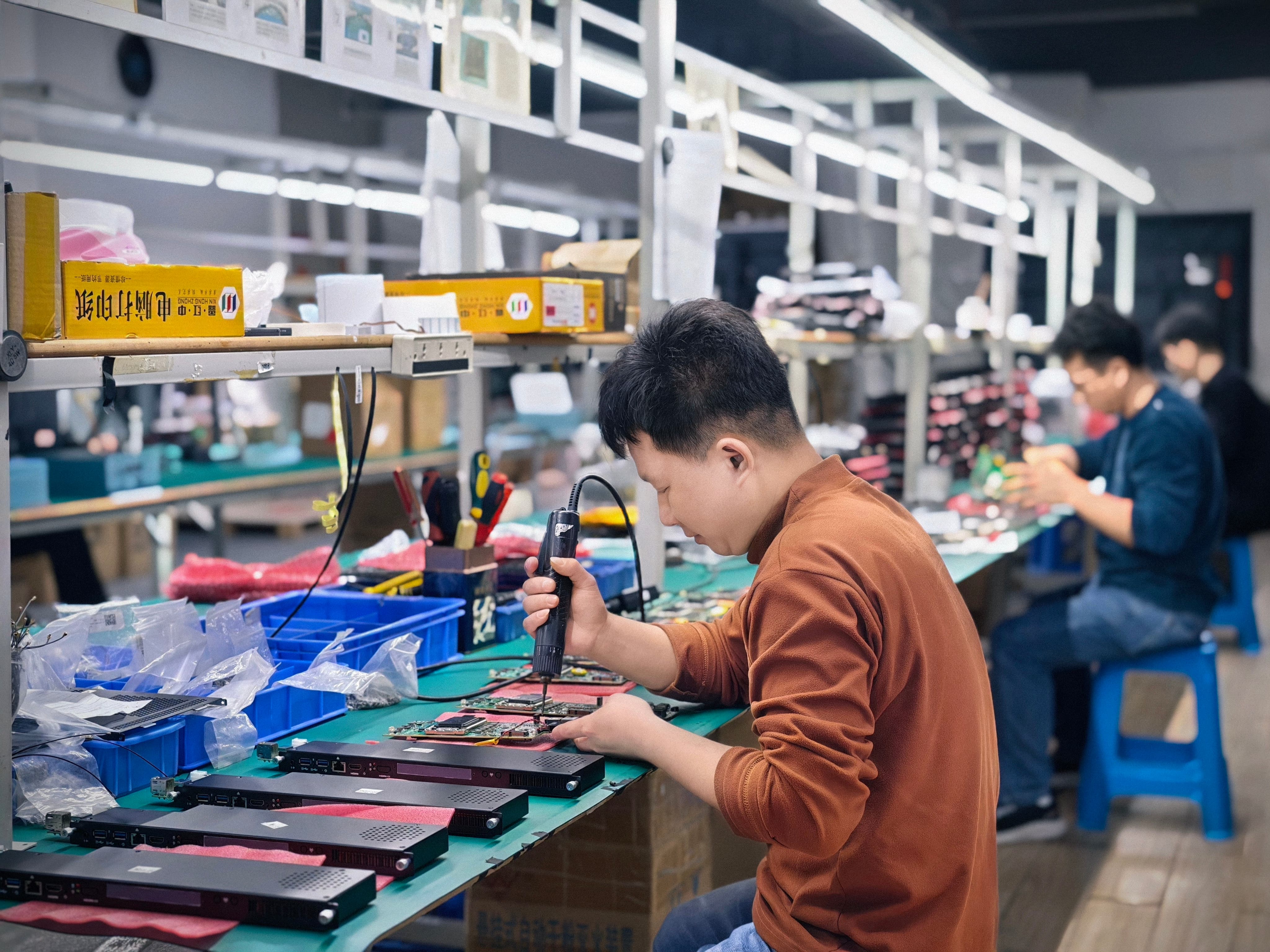
Check whether the factory has the capacity to support both evaluation orders and volume deployments. Shenzhen Aiostar Electronics Co., Ltd., established in 2015, operates a 1,500 m² facility with around 50 employees and produces 170,000+ units per year. Its R&D team includes 8 engineers. Export business accounts for 60% of total sales, with markets spanning global regions. These first-party facts suggest a production scale suitable for display brands and system integrators requiring custom OPS PCs at moderate to high volume.
3. OEM and ODM Customization Breadth
For a custom OPS PC module, the supplier must be able to adjust more than the CPU and memory. AIOSTAR offers OEM and ODM services covering hardware configuration, I/O, chassis, cooling, BIOS, operating system image, logo, packaging, and accessories. This breadth is important because a display project often requires a specific logo on the module, a custom BIOS setting for Wake-on-LAN or auto power-on, a particular OS image prepared for the target display firmware, and packaging that suits the selected shipping method.
4. Engineering and Risk-Control Capability
Long-term reliability depends on how well the manufacturer controls the six common OPS PC project risks.
- OPS or OPS-C mechanical and interface incompatibility: The supplier should check module dimensions, connector type, pin definition, video interface, USB, power budget, and display firmware before production. AIOSTAR adopts a pre-production sample and compatibility checklist, and tests the module on the customer's target display before confirming the final configuration.
- Overheating or thermal throttling: The supplier should select cooling according to processor power, enclosure airflow, and display internal temperature. AIOSTAR reviews the CPU power profile and installation environment, and conducts burn-in and thermal testing according to the project specification before mass production.
- Operating system, BIOS, or driver mismatch: The required operating system version, BIOS functions, device drivers, and application dependencies should be confirmed before imaging. AIOSTAR validates the approved system image and required functions such as Wake-on-LAN, auto power-on, and watchdog on the final hardware configuration.
- Component end-of-life or configuration change: A controlled bill of materials (BOM) and form, fit, and function alternatives should be managed. AIOSTAR notifies the customer of material changes that affect the agreed specification, validates alternatives, and obtains approval when the project requires it.
- Transport damage: Protective internal packaging should match the module, accessories, and shipping method. AIOSTAR performs packaging checks and arranges drop or vibration testing when required by the customer or project specification.
Step-by-Step Process for Ordering Custom OPS PC Modules
A reliable partner follows a structured execution path from first inquiry to volume shipment.
- Requirement definition: Confirm the target display model, OPS or OPS-C form factor, processor platform, memory, storage, operating system, video outputs, and special BIOS requirements.
- Compatibility review: The manufacturer verifies module dimensions, connector type, pin definition, video interface, USB, power budget, and display firmware against the customer's display.
- Sample build: A pre-production sample is assembled with the proposed hardware configuration, cooling solution, OS image, and customized logo.
- Customer validation: The sample is tested on the customer's target display. Thermal, interface, OS, and application-level checks are completed before final configuration confirmation.
- Production: Once the sample is approved, volume production begins with the controlled BOM, agreed packaging, and project-specific test plan.
- Testing and inspection: Functional and interface testing is performed before shipment. Burn-in testing can be included when specified, and customer or third-party inspection can be agreed for project orders.
- Delivery: Standard incoterms are EXW Shenzhen, FOB Shenzhen, CIF, or DAP by agreement. Payment is typically 30% T/T deposit and 70% balance before shipment unless otherwise agreed in the proforma invoice.
Comparison: OPS PC Module vs. Alternative Computing Architectures
To understand the long-term value of a slot-in OPS PC, compare it with the alternatives a display integrator might consider.
| Architecture | Comparison | Why It Matters for Long-Term Projects |
|---|---|---|
| OPS PC module | A removable slot-in module using the standardized OPS interface inside the display. | The computing unit can be serviced and upgraded separately, avoiding complete display replacement in typical compute-module failures. |
| External desktop PC | A standalone PC connected to an interactive display with external video and power wiring. | External wiring increases installation complexity and occupied space; OPS eliminates the standalone media-player enclosure and external wiring. |
| Compute board fixed inside the display enclosure | A board integrated into the display assembly without a removable slot. | When the compute module fails, the full display may need replacement; a removable OPS module reduces these replacement requirements by over 75% in typical compute-module failures. |
| External Android media player | A separate player box connected via video cable, USB touch cable, and power adapter. | An integrated Android OPS module eliminates the external player chassis, separate video cable, USB touch cable, and independent power adapter, reducing peripheral hardware items by over 60% in a typical interactive-display installation. |
These comparison points matter for lifecycle planning. If a project uses hundreds of interactive displays, replacing a failed compute module in the field is faster and less expensive than replacing a complete display. The same logic applies to processor upgrades: a new OPS module can extend the useful life of the display panel without changing the entire device.
Real-World Use Cases for OPS PC Modules
Interactive Whiteboards in Education
Classroom interactive whiteboards commonly use OPS-C modules because the form factor and interface match the display slot. The ability to remove and replace a failed module without moving the large display reduces downtime and service cost. A Windows-based Intel OPS-C module is typically selected when the school software requires an x86 environment.
Interactive Flat Panels in Corporate Meetings
In meeting rooms, an OPS PC with HDMI and DisplayPort outputs supports presentations, video conferencing, and collaborative annotation. A low-power Intel module can match the display's thermal budget while providing the performance needed for Office applications and mainstream communication platforms.
Digital Signage and Smart Retail
Android OPS PCs are a natural fit for networked media playback, retail signage, hospitality information displays, and kiosks. A Rockchip RK3588-based Android OPS module can support 8K multimedia capability depending on firmware and interface configuration, while its integrated NPU enables edge AI applications. Removing the external player box simplifies installation and reduces cable management.
Conference Displays and Multi-Display Systems
Large-format commercial displays, LED meeting displays, and video walls may require higher graphics output. A discrete-GPU OPS computer or a module with multiple HDMI and DisplayPort outputs can drive more demanding visualization projects. The ability to upgrade the OPS module later allows the display system to keep pace with changing software demands.
What a Long-Term OPS PC Supply Agreement Should Include
Beyond the technical specification, buyers should formalize the following elements in a supply relationship.
- Product lifecycle management: A process for component end-of-life notices, BOM control, and form-fit-function alternatives so that no configuration change becomes a surprise.
- Sample approval and compatibility testing: Before volume production, an approved sample should be tested on the customer's target display. This is the most effective way to confirm OPS slot compatibility.
- OS image and BIOS management: The supplier should validate the approved system image and required functions including Wake-on-LAN, auto power-on, and watchdog on the final hardware configuration.
- Quality and inspection rights: Functional and interface testing before shipment should be standard. Burn-in testing, customer inspection, and third-party inspection can be agreed for project orders.
- Delivery terms: EXW Shenzhen, FOB Shenzhen, CIF, or DAP should be defined in the agreement so logistics responsibilities are clear.
- Payment terms: A common arrangement is 30% T/T deposit and 70% balance before shipment, unless otherwise agreed in the proforma invoice.
- After-sales support: A contact channel for technical questions, replacement parts, and return instructions should be part of the operating procedure.
How AIOSTAR Supports Long-Term OPS PC Programs
Shenzhen Aiostar Electronics Co., Ltd. develops, produces, and supplies OPS PCs, OPS-C pluggable computer modules, Android OPS PCs, industrial motherboards, mini PCs, BOX PCs, industrial panel PCs, servers, and customized embedded computer systems. Established in 2015, the company emphasizes the engineering and operational practices that matter for long-term display programs.
Product lines and customization
AIOSTAR offers OEM and ODM services covering hardware configuration, I/O, chassis, cooling, BIOS, operating system image, logo, packaging, and accessories. This means a customer can receive a custom OPS PC module with the target CPU, memory, storage, OS image, and branding rather than integrating a generic off-the-shelf module.
Engineering validation
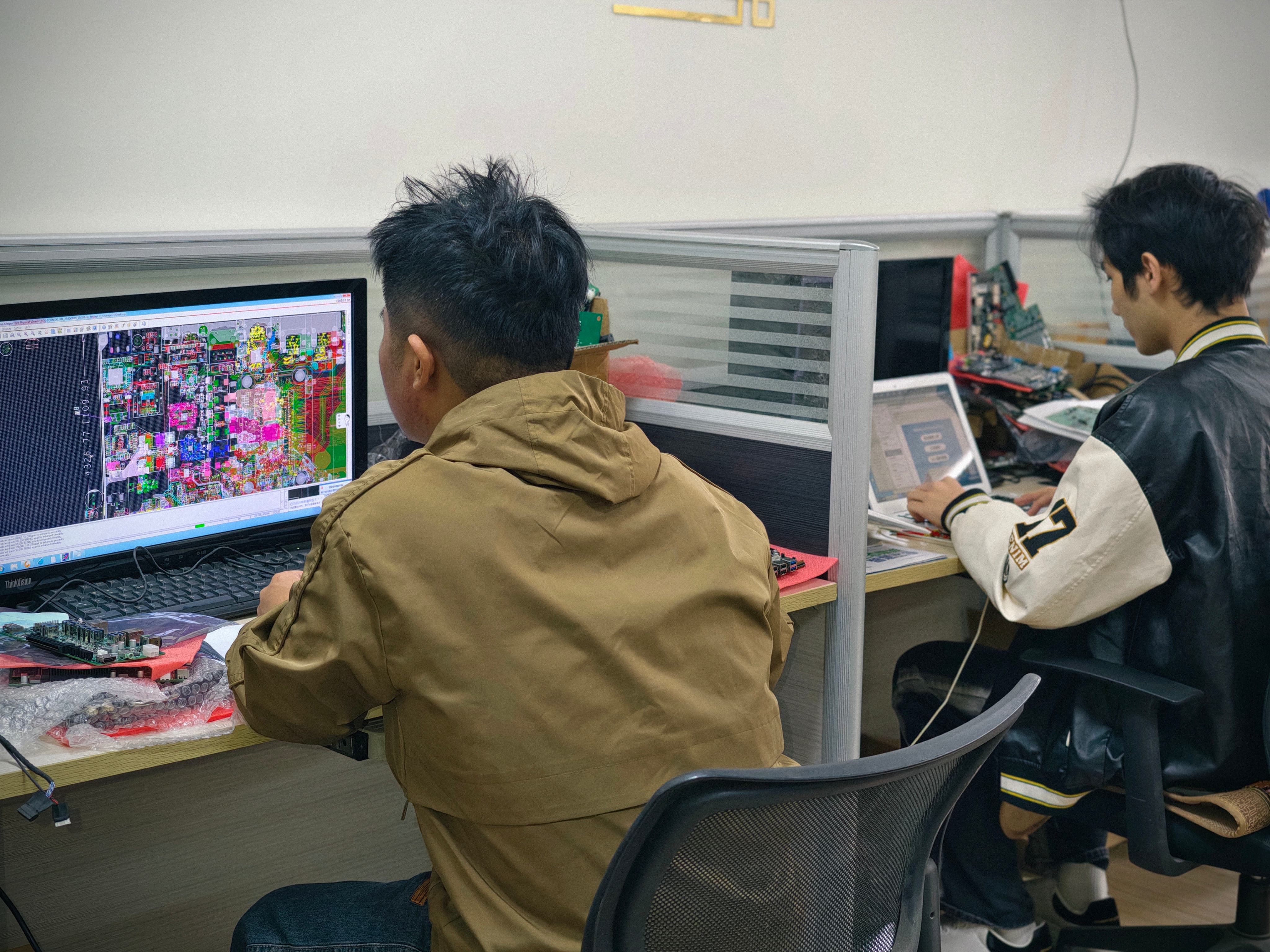
The company uses a pre-production sample and compatibility checklist to verify module dimensions, connector type, pin definition, video interface, USB, power budget, and display firmware. Testing on the customer's target display before final configuration confirmation reduces interface risk. Thermal design is reviewed against the CPU power profile and installation environment, and burn-in and thermal testing can be performed according to project specifications.
Production and quality control
AIOSTAR's factory covers approximately 1,500 m², employs about 50 staff, and achieves 170,000+ units of annual production. The R&D team includes 8 engineers. While these figures describe a mid-size specialist rather than a huge conglomerate, they align well with custom OPS PC projects that require engineering attention and production flexibility. The company's 60% export ratio across global markets indicates experience with international compliance, logistics, and communication requirements.
Frequently Asked Questions
Q1: Does AIOSTAR handle OEM and ODM customization for OPS PC modules?
Yes. AIOSTAR provides OEM and ODM services covering hardware configuration, I/O, chassis, cooling, BIOS, operating system image, logo, packaging, and accessories. This allows a display brand or integrator to receive an OPS PC customized to the project rather than a generic module.
Q2: What processors and platforms are available for custom OPS PC modules?
AIOSTAR's portfolio includes Intel-based OPS-C modules such as the AOS-SOHAUF41SC with Intel Core i5-1235U or i5-1240P options, a discrete-GPU OPS computer based on Intel H610 with selected 12th and 13th Gen Intel Core processors, and an Android AI OPS computer built on the Rockchip RK3588 platform with Android 13, Ubuntu, or Debian options. The most suitable platform depends on the display application, software environment, and performance requirements.
Q3: What are the standard delivery and payment terms?
Standard incoterms are EXW Shenzhen, FOB Shenzhen, CIF, or DAP by agreement. Payment terms are typically 30% T/T deposit and 70% balance before shipment, unless otherwise agreed in the proforma invoice. Evaluation samples may be available with 1 unit MOQ depending on the model and configuration.
Q4: How does AIOSTAR reduce interface and compatibility risk?
AIOSTAR uses a pre-production sample and compatibility checklist, verifying module dimensions, connector type, pin definition, video interface, USB, power budget, and display firmware. The module is tested on the customer's target display before final configuration confirmation. This process is designed to prevent OPS or OPS-C mechanical and interface mismatches before volume production.
Q5: What is the typical sample and approval process for a project?
The process starts with a requirement definition and compatibility review, followed by a pre-production sample build. The customer validates the sample on the target display, and AIOSTAR confirms the final configuration after approval. Volume production, testing, inspection, and shipment follow the agreed commercial terms. For project inquiries, contact salesos@aiostar.com or +86 153 3879 5007 to start a conversation and request a sample or quotation.
Planning an OPS PC project?
Contact AIOSTAR to discuss your display application, request a compatible sample, or receive a project quotation.
salesos@aiostar.com
+86 153 3879 5007
Conclusion
Selecting a long-term OPS PC partner is a supply-chain decision, not only a component selection. The ideal manufacturer should offer a relevant product portfolio, genuine OEM and ODM capabilities, structured risk control, production capacity, and commercial terms that scale with the buyer's project pipeline. AIOSTAR addresses these requirements with its engineering-driven approach, custom OPS PC production, and globally oriented export operations. By verifying compatibility on the actual target display, controlling thermal and system image risks, and communicating component changes transparently, a qualified OPS PC manufacturer can make the buyer's execution phase predictable and the display system's lifecycle more cost-effective.