
Intel Alder Lake-U vs. Zhaoxin KX-6780 OPS-C: Which Module Fits Your Interactive Display?
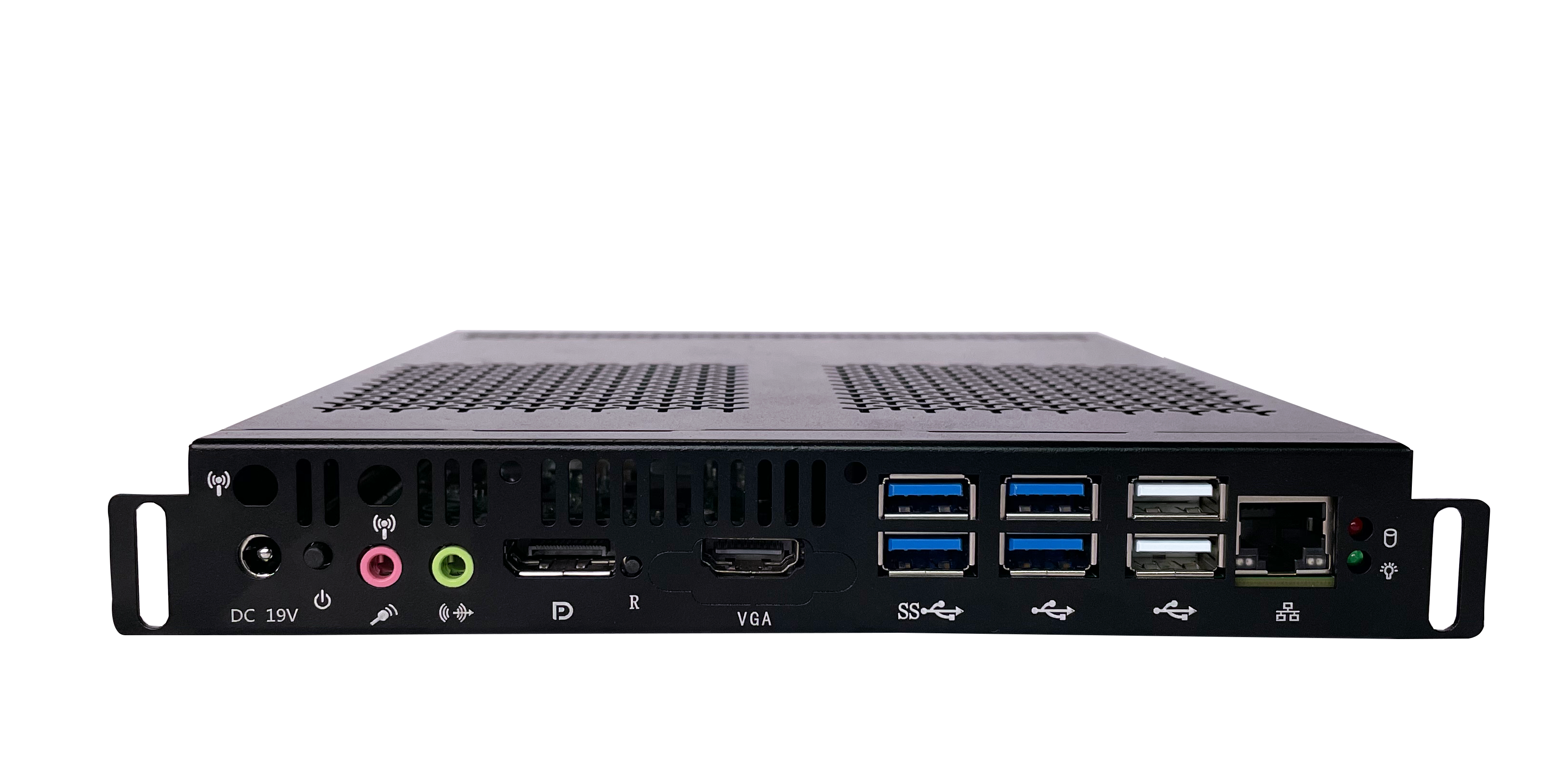
An OPS PC is a slot-in compute module that gives an interactive flat panel its own operating system, software ecosystem and application processing path. For buyers who are integrating an OPS-C computer module into an interactive display, AIOSTAR currently offers two relevant choices: the Intel Alder Lake-U OPS-C module AOS-SOHAUF41SC and the Zhaoxin KX-6780 series OPS-C module AOS-SOZK6A341SXGE. Both use an OPS-C slot-in installation approach. The main difference is the CPU platform and the project environment each module is designed to serve.
If your interactive whiteboard or meeting-display project can use an Intel Alder Lake-U platform with a Windows or Linux operating system image, the AOS-SOHAUF41SC is the direct fit. If the display project must align with China domestic-platform expectations in education, government information systems or project-specific commercial displays, the AOS-SOZK6A341SXGE is the module to evaluate. This guide compares the two using verified product facts and explains how to choose based on platform requirements, configurable I/O, memory/storage options and deployment environment.
Problem Definition: What Makes OPS-C Selection Hard for Interactive Flat Panels?
Interactive flat panels are often purchased for classrooms, meeting rooms and commercial displays. The display performs best when its compute module matches the software, network, peripherals and thermal environment of the project. Buyers cannot assume that every OPS-C computer is interchangeable. CPU platform choice affects operating system support, procurement compliance and performance expectations, while mechanical compatibility affects installation and long-term serviceability.
The selection problem becomes clearer when a project has a platform requirement. An Intel Alder Lake-U OPS-C module keeps the integration path familiar to Windows/Linux application developers. A Zhaoxin KX-6780 OPS-C module is positioned for projects where a domestic CPU platform is specified, for example in government or education environments where local platform policy is part of the tender or procurement requirement. Once the platform direction is decided, the next questions are memory, storage, I/O, graphics requirements, display compatibility and OEM customization depth.
Industry Background: Why OPS-C Modules Are a Standard Compute Option for IFPs
The interactive flat panel market is a core application area for OPS PCs. Grand View Research valued the global interactive flat panel market at approximately USD 12.6 billion in 2024. Market research also estimates that OPS-slot compute modules and Android SoC modules ship in 15–25 percent of new interactive flat panel display units, which shows why module selection has become a normal step in a display project.
The original Intel OPS specification standardized a pluggable media-player interface for displays. In China, OPS-C emerged as a widely used variant for educational interactive whiteboards. AIOSTAR applies OPS-C architecture to both mainstream Intel compute and domestic-platform Zhaoxin compute, allowing a display maker to use one basic integration concept while offering different CPU platforms for different customers.
Shenzhen Aiostar Electronics Co., Ltd. is the AIOSTAR entity behind these modules. Established in 2015, the company operates a 1500 m² manufacturing facility with approximately 50 employees and an R&D team of 8 engineers. Annual production capacity is more than 170,000 units. The company supplies OPS PCs, OPS-C pluggable modules, Android OPS PCs, industrial motherboards and other embedded computing systems to display and commercial-system customers.
Detailed Solution: Two AIOSTAR OPS-C Modules for Two Project Platforms
Both AOS-SOHAUF41SC and AOS-SOZK6A341SXGE are OPS-C slot-in modules with sheet-metal enclosures, PCB assemblies and aluminum heat sinks. They are also configurable at project level, which matters for a display OEM or integrator. The practical way to use this information is to treat the CPU platform and target application as primary filters, then configure memory, storage, I/O and operating system around the selected module.
Option 1: AIOSTAR AOS-SOHAUF41SC — Intel Alder Lake-U OPS-C Pluggable Computer Module
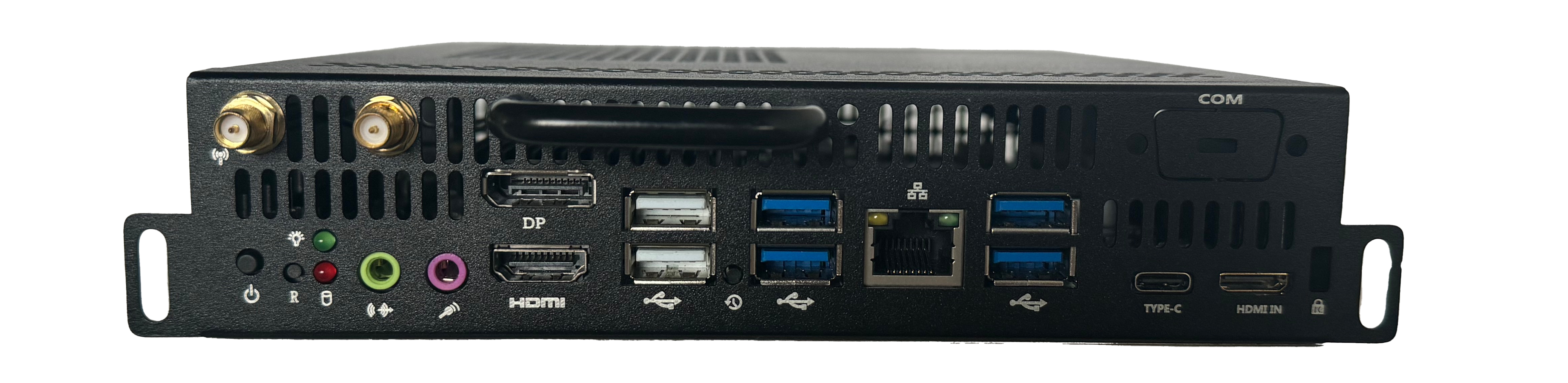
The AOS-SOHAUF41SC is an Intel Alder Lake-U based OPS-C pluggable computer module designed for interactive flat panels. CPU options include Intel Core i5-1235U and i5-1240P. The module supports configurable SO-DIMM memory, M.2 SSD and project I/O, which gives system integrators room to match price and performance to the intended display model.
Installation is OPS-C slot-in. The enclosure is sheet metal with a PCB assembly and aluminum heat sink. Windows or Linux operating system availability depends on the final configuration. Wake-on-LAN, auto power-on and watchdog functions can be enabled through BIOS configuration. These features are useful in commercial display deployments where remote management, scheduled on/off behavior or unattended recovery is required.
According to its product data, the AOS-SOHAUF41SC is intended for interactive whiteboards, education technology, corporate meeting displays and commercial display systems. Project-based OEM and ODM support is available, which is practical for a display brand that wants a specific operating system image, logo, interface set or memory/storage combination.
Option 2: AIOSTAR AOS-SOZK6A341SXGE — Zhaoxin KX-6780 Series Domestic-Platform OPS-C Computer
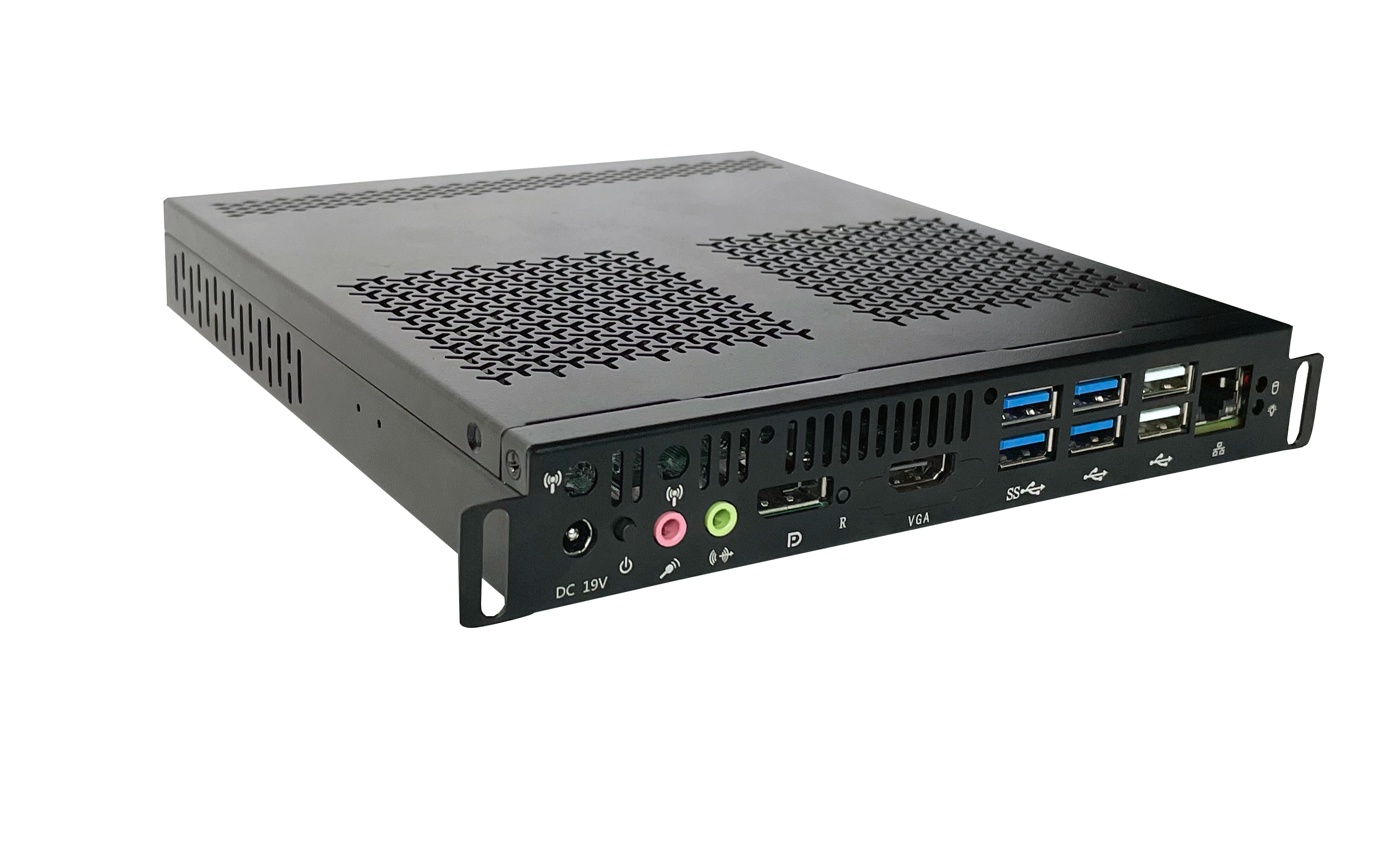
The AOS-SOZK6A341SXGE is a Domestic-Platform OPS-C Computer in AIOSTAR’s Zhaoxin KX-6780 series OPS-C PC category. It supports Zhaoxin KX-U6780A, KX-U6740A, KX-U6640A and KX-U6640MA processors. It includes six USB ports, with two USB 3.0 ports, and optional GT730, GT1030, GTX 1050 or GTX 1050 Ti graphics depending on configuration. This makes it a more GPU-flexible OPS-C module for projects that need an optional discrete graphics path while remaining on the domestic CPU platform.
The module uses OPS-C slot-in installation and is built from a sheet-metal enclosure, PCB assembly, aluminum heat sink and cooling fan. Memory, storage, operating system and project I/O are configurable. The operating system is also configurable, which allows a display integrator to load the Windows or Linux image required by a specific deployment.
The AOS-SOZK6A341SXGE is intended for domestic-platform interactive displays, education, government information systems and project-specific commercial displays. In AIOSTAR application-scenario mapping, the same module is also linked to corporate meeting and collaboration environments, especially where a domestic platform is expected.
Step-by-Step Breakdown: How to Choose Between the Intel and Zhaoxin OPS-C Modules
The selection process is best treated as a series of filters. Each filter removes incompatible module candidates before comparing performance details.
- Confirm the required operating system and application stack. Interactive whiteboarding, conferencing, teaching software and signage players are not all supported on every CPU platform. If your organization standardizes on x86 Windows or Linux applications, both modules can be evaluated; platform rules will narrow them.
- Check whether the project has a domestic-platform requirement. Government and some education projects may specify a domestic CPU platform. In that case, the Zhaoxin KX-6780 OPS-C module is the corresponding AIOSTAR option. If there is no such constraint, the Intel Alder Lake-U module provides a broad commercial software path.
- Audit the display’s OPS-C slot and power budget. Both modules use OPS-C slot-in installation. Still, a display integrator should verify bay size, connector, heat dissipation and power delivery with the panel maker before engineering the final unit.
- Map peripherals to I/O needs. The Intel module has configurable I/O. The Zhaoxin module includes six USB ports with two USB 3.0 ports and can be arranged with project I/O. Confirm which ports are needed for touch, camera, microphone, network and external media devices.
- Choose memory and storage. AOS-SOHAUF41SC supports configurable SO-DIMM memory and M.2 SSD. AOS-SOZK6A341SXGE supports configurable memory and storage. A basic whiteboarding workload uses less memory than a video-heavy meeting or visualization application, so the configuration should be driven by the actual software usage.
- Evaluate graphics requirements. The Zhaoxin module has optional GT730, GT1030, GTX 1050 or GTX 1050 Ti graphics depending on configuration. If the Intel module is preferred and the project also requires discrete-class GPU capability, confirm the available AIOSTAR OPS solution with an AIOSTAR project engineer rather than assuming a single module can cover every GPU workload.
- Check BIOS and management features. AOS-SOHAUF41SC supports Wake-on-LAN, auto power-on and watchdog functions through BIOS configuration. These are important for unattended commercial operation. For the Zhaoxin module, the announced data lists configurable OS and project I/O; confirm equivalent BIOS behavior with the manufacturer during the project review.
- Request a sample or quote before mass production. After the platform, slot, I/O, memory, storage and graphics choices are fixed, a real sample should be tested in the target display. This validates boot, touch, video output, audio, thermal behavior and operating system image deployment.
Use Cases: Where the Intel Alder Lake-U OPS-C Fits and Where the Zhaoxin KX-6780 OPS-C Fits
Interactive Whiteboards and Education Technology
The AOS-SOHAUF41SC is designed for interactive whiteboards and education technology. In a classroom display, the module can run teaching applications, media files and collaboration software from the panel’s OPS-C slot. Because it uses Intel Core i5-1235U or i5-1240P processors, the computing capacity is aligned with common Windows/Linux teaching software rather than an entry-level mobile chip.
Corporate Meeting and Collaboration Displays
Corporate meeting displays are listed in the target applications of the Intel module. For a standard meeting-room deployment with Windows/Linux conference tools, the AOS-SOHAUF41SC gives the display a serviceable compute module that can be removed or upgraded independently of the panel. In AIOSTAR’s application-scenario data, the Zhaoxin module is also associated with corporate meeting and collaboration projects where the customer is deploying on a domestic-platform configuration.
Government Information Systems and Domestic-Platform Interactive Displays
The AOS-SOZK6A341SXGE is intended for domestic-platform interactive displays, education and government information systems. This is the module to compare when a tender, end user or system integrator requires a Zhaoxin CPU platform rather than an Intel-based OPS PC. The optional discrete graphics paths provide additional flexibility for visualization-heavy government or commercial content.
Project-Specific Commercial Displays
Both modules are configurable enough for project-specific display work. AOS-SOZK6A341SXGE is explicitly aimed at project-specific commercial displays. AOS-SOHAUF41SC is aimed at commercial display systems more broadly. In both cases, AIOSTAR’s OEM/ODM model lets a display maker specify hardware configuration, I/O, chassis, cooling, BIOS, operating system image, logo, packaging and accessories around the chosen OPS-C base.
Comparison Table: AOS-SOHAUF41SC vs. AOS-SOZK6A341SXGE
| Comparison Point | AOS-SOHAUF41SC | AOS-SOZK6A341SXGE |
|---|---|---|
| Product category | Intel Alder Lake-U OPS-C pluggable computer module | Zhaoxin KX-6780 series OPS-C computer |
| CPU options | Intel Core i5-1235U and i5-1240P | Zhaoxin KX-U6780A, KX-U6740A, KX-U6640A and KX-U6640MA |
| Memory and storage | Configurable SO-DIMM memory and M.2 SSD | Configurable memory and storage |
| I/O and configurability | Configurable I/O | Six USB ports including two USB 3.0; configurable project I/O |
| Graphics emphasis | No discrete-GPU option stated in the module data | Optional GT730, GT1030, GTX 1050 or GTX 1050 Ti depending on configuration |
| Installation | OPS-C slot-in | OPS-C slot-in |
| Enclosure and cooling | Sheet-metal enclosure, PCB assembly and aluminum heat sink | Sheet-metal enclosure, PCB assembly, aluminum heat sink and cooling fan |
| Operating system | Windows or Linux options depend on configuration | Configurable operating system |
| Management features | Wake-on-LAN, auto power-on and watchdog available by BIOS configuration | Not listed in the provided module data; verify with AIOSTAR |
| Target applications | Interactive whiteboards, education technology, corporate meeting displays and commercial display systems | Domestic-platform interactive displays, education, government information systems and project-specific commercial displays |
All table details come from the AIOSTAR product data supplied for these two modules. The table does not include unverified assumptions about market performance, benchmark results or operating-system compatibility beyond what the product records state.
Frequently Asked Questions
Do both OPS-C modules use the same slot-in installation method?
Both AIOSTAR modules are OPS-C slot-in modules. AOS-SOHAUF41SC and AOS-SOZK6A341SXGE both appear in product data with OPS-C slot-in installation. Mechanical and electrical compatibility with a specific display should still be confirmed with the display manufacturer before mass production.
Which CPU options are available on the Intel Alder Lake-U OPS-C and Zhaoxin KX-6780 OPS-C modules?
The AOS-SOHAUF41SC supports Intel Core i5-1235U and i5-1240P. The AOS-SOZK6A341SXGE supports Zhaoxin KX-U6780A, KX-U6740A, KX-U6640A and KX-U6640MA processors.
Which projects are designed for the Zhaoxin KX-6780 OPS-C module?
The Zhaoxin module is intended for domestic-platform interactive displays, education, government information systems and project-specific commercial displays. AIOSTAR application-scenario data also maps it to corporate meeting and collaboration projects.
Can AIOSTAR customize the two OPS-C modules for a project?
The Intel module supports configurable I/O, SO-DIMM memory and M.2 SSD. The Zhaoxin module supports configurable memory, storage, operating system and project I/O. AIOSTAR also provides OEM/ODM services covering hardware configuration, I/O, chassis, cooling, BIOS, operating system image, logo, packaging and accessories. To move from specification to a physical module, contact AIOSTAR and request a sample configuration.
Conclusion: Start With Platform and Application, Then Configure the OPS-C
The AOS-SOHAUF41SC and AOS-SOZK6A341SXGE represent two practical OPS-C roads for an interactive display project. The Intel Alder Lake-U module suits interactive whiteboards, education technology, corporate meeting displays and commercial display systems where a familiar Windows/Linux software path is preferred. The Zhaoxin KX-6780 module suits domestic-platform interactive displays, education, government information systems, project-specific commercial displays and corporate meeting scenarios that need a domestic CPU platform.
Both modules are removable OPS-C slot-in computers built with sheet-metal enclosures and aluminum heat sinks. Both support configurability in memory, storage and, in different forms, I/O and operating system. The Intel module adds remote-management functions such as Wake-on-LAN, auto power-on and watchdog. The Zhaoxin module adds optional GT730, GT1030, GTX 1050 or GTX 1050 Ti graphics paths when a discrete graphics configuration is required.
For a display maker or system integrator, the next step is to test the selected module in the actual interactive display. Confirm the OPS-C bay, I/O mapping, cooling behavior and OS image before committing to mass production. AIOSTAR supports this validation process through project-based OEM/ODM service and sample requests.
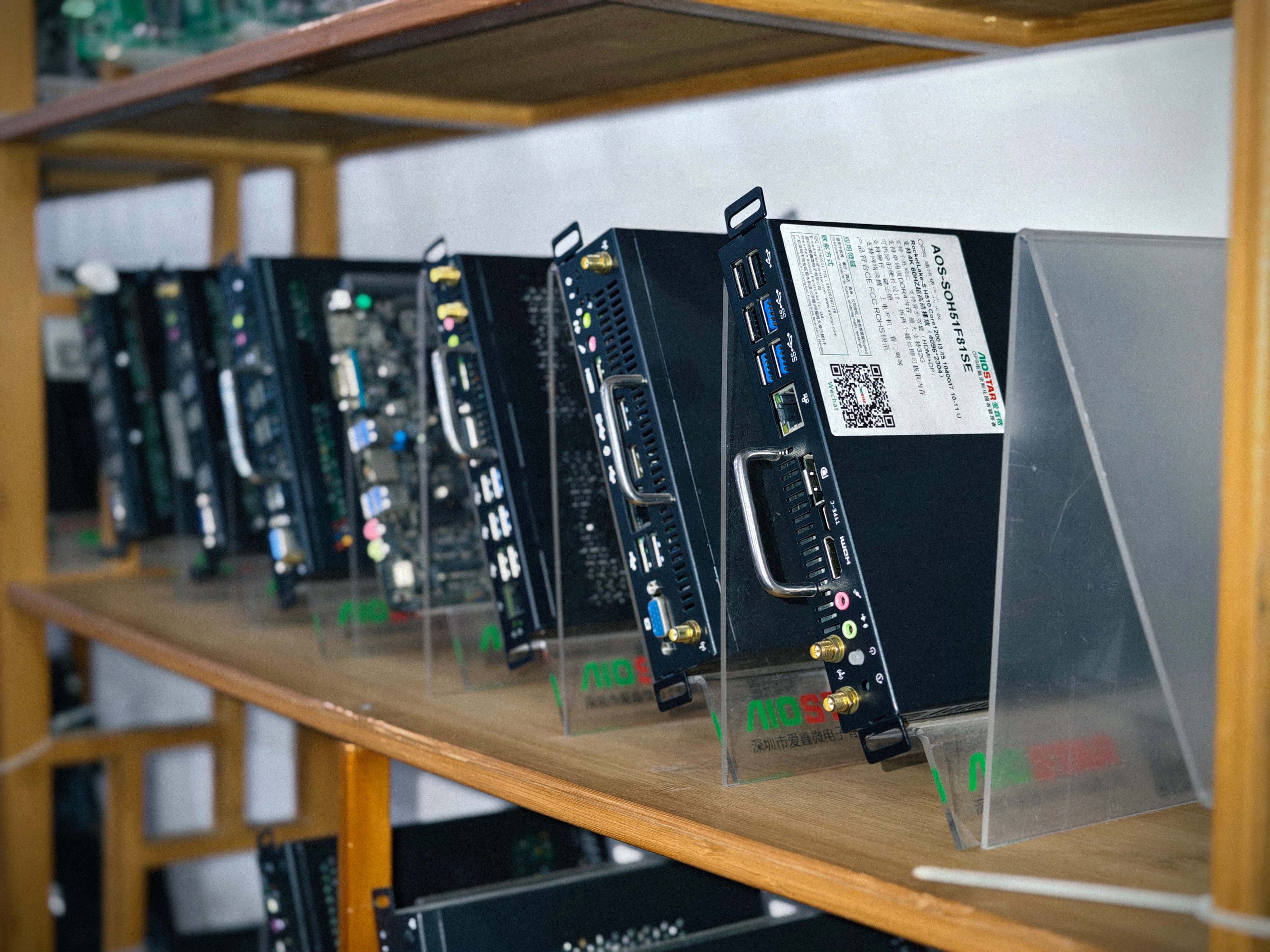
For more product and configuration information, download the AIOSTAR introduction PDF or contact the sales team at salesos@aiostar.com / WhatsApp +86 153 3879 5007. A sample or quote request is an appropriate next step after the CPU platform and display application have been shortlisted.
Have Questions or Need More Details?
Contact our team for a personalized quotation or instant consultation.
Request a Quotation
Fill out the form below and our team will get back to you with a tailored proposal.
WhatsApp Direct Chat
Prefer to chat in real-time? Message us on WhatsApp for instant assistance & quick answers.
- Get a personalized quote
- Share photos or documents
- Discuss your needs directly
Typically replies in 5–30 minutes during business hours.