
60x120 Porcelain vs Sintered Compact Laminate for Hotel Floors: Simple Spec Comparison
60x120 Porcelain vs Sintered Compact Laminate for Hotel Floors: A Renovation Specification Comparison
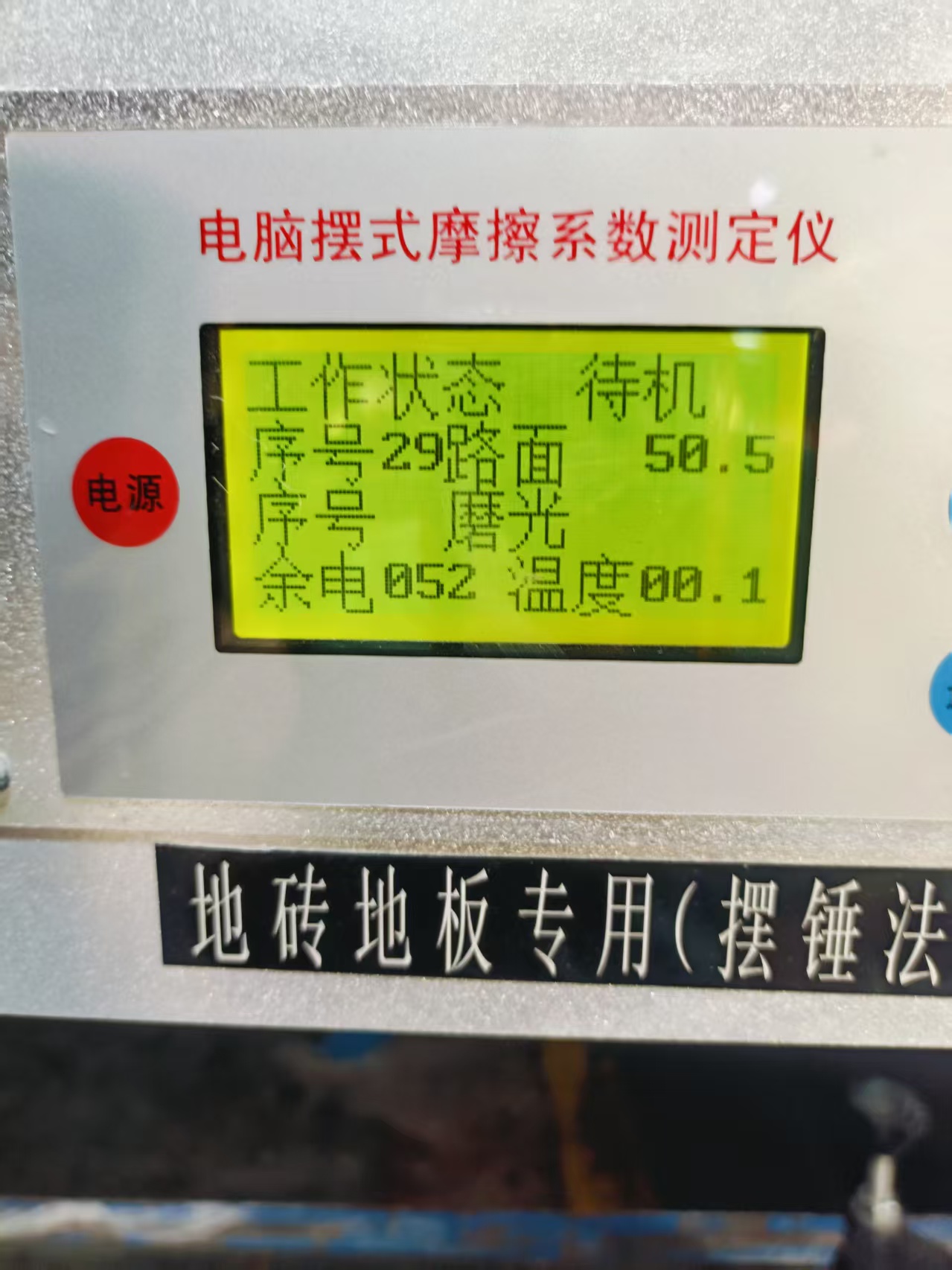
Caption: Slip-resistance testing is part of the verification process for anti-slip porcelain tiles used in hotel bathrooms, kitchen zones, and other wet service areas.
Hotel renovation teams often compare 60x120cm vitrified porcelain tiles with sintered compact laminate for floor replacement projects. Both materials promise durability, but a hotel specifier cannot make the final decision from appearance alone. The practical question is whether the material can meet measurable requirements in wet or slippery zones while surviving luggage trolleys, housekeeping carts, dropped objects, and continuous cleaning for many years.
This guide compares the two systems from a specification point of view. For the porcelain option, the comparison uses published production data: 60x120cm porcelain floor tiles with a vitrified body, water absorption below 0.5%, PEI 4 or PEI 5 abrasion resistance, Mohs hardness 6–7, breaking strength of at least 1300 N, and modulus of rupture of at least 35 MPa. For sintered compact laminate, the specifier should demand equally clear test data before approving the material for hotel corridors, lobbies, wet areas, and housekeeping spaces.
Why Hotel Floor Renovation Creates a Different Material Decision
A hotel floor installation is typically planned for a long service life, but it also has to deal with short maintenance cycles. Guest rooms, corridors, and public toilets are washed frequently; lobby areas are exposed to foot traffic, rolling luggage, and wet shoes; kitchens and housekeeping areas face grease, moisture, and heavy equipment.
During renovation, the building may stay partially operational. That creates pressure to choose a material with predictable installation behavior, consistent flatness, manageable joint maintenance, and strong resistance to localized damage. A single floor failure in a corridor can disrupt access to many guest rooms; a slippery bathroom floor creates a liability issue that affects both the guest and the hotel operator.
This is why a comparison between 60x120 porcelain tiles and sintered compact laminate should not stop at marketing samples. It should be based on documented physical properties, certification evidence, slip-resistance classification, and the supplier’s ability to maintain consistent quality across large project volumes.
What the Data Says About the Hotel and Commercial Flooring Market
Porcelain tiles already represent the dominant product type in the global ceramic tile market. Grand View Research valued the global ceramic and porcelain tiles market at USD 226.4 billion in 2025 and projected it to reach USD 380.6 billion by 2033. In the same report, porcelain tiles accounted for around 52.4% of market revenue in 2025. Commercial and hospitality end use remains a major demand driver for ceramic and porcelain surfaces.
For a hotel project buyer, this matters for practical reasons. High-volume porcelain production has made large-format floor tiles more available for commercial renovations. At the same time, the buyer needs a supplier that can handle real project quantities, provide long-term supply continuity, and respond to replacement and expansion needs. Export data also provides context: China Customs reported an average export price of USD 5.36 per square meter for Chinese ceramic tiles in 2024, which shows how competitive factory-direct sourcing has become for global construction products.
Defining the Two Flooring Candidates in Practical Terms
60x120 porcelain tile is a kiln-fired ceramic product. The body is pressed from porcelain clay and fired at high temperature to form a dense, vitrified material. Because the product is made through a controlled industrial process, it is available with published specifications for water absorption, abrasion, hardness, breaking strength, and rupture strength.
Sintered compact laminate is a different material category. It is made from pressed mineral and resin components rather than from a traditional clay-body ceramic process. The design can vary significantly between manufacturers, and its performance may depend on the internal core, surface layer, joint treatment, and subfloor system. For hotel flooring, this means the specifier should request the same kind of technical evidence used for porcelain tiles, especially if the material will be installed in wet areas or in spaces exposed to continuous traffic.
One of the strongest arguments for focusing a hotel flooring comparison on 60x120 porcelain tiles is that the format and physical properties can be verified in advance. Renovation teams can check the specific values, compare them with the project brief, and then use trial orders and third-party testing to confirm consistency before full installation.
Verified 60x120 Porcelain Specifications That Support the Decision
In the All-King Ceramics technical data, the 60x120cm porcelain tiles produced in the Marble Series and Travertine models carry the following baseline specifications.
- Format: 60x120cm porcelain tiles
- Thickness: 9.0–10.5 mm
- Water absorption: below 0.5%, classified as vitrified
- Abrasion resistance: PEI 4 or PEI 5
- Mohs hardness: 6–7
- Breaking strength: at least 1300 N
- Modulus of rupture: at least 35 MPa
- Packing: 2 pieces per box, equal to 1.44 m² per box
These numbers are meaningful for a hotel renovation decision. Low water absorption reduces the penetration of moisture, cleaning chemicals, and staining agents. PEI 4 or PEI 5 abrasion resistance indicates that the tile surface is designed to tolerate the sort of foot traffic typical of commercial spaces. Mohs hardness helps predict resistance to scratching by grit carried in from outdoors. Breaking strength and rupture strength describe how well the tile resists cracking under concentrated loads.
For example, a 1300 N breaking strength threshold is relevant because housekeeping carts, laundry bins, and furniture legs create point loads during everyday hotel operations. A tile with clearly documented breaking strength gives the specifier more confidence than a material that has only a visual sample or a marketing description.
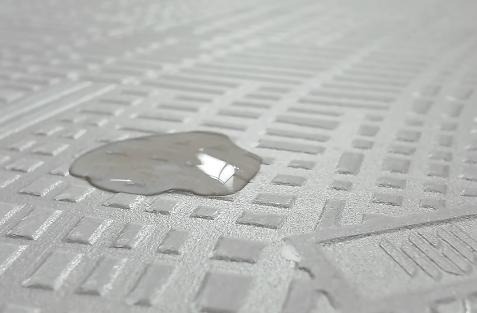
Caption: Low water absorption is a useful indicator of a dense porcelain body for high-traffic hotel flooring.
Anti-Slip and R11/R12 Requirements for Wet Hotel Environments
Hotels are not dry buildings. Even away from the swimming pool, floors must deal with cleaning water, spilled drinks, bathroom moisture, and rainy entrance zones. Slip resistance should therefore be specified using a recognized classification rather than left to visual judgement.
The DIN 51130 standard is commonly used in commercial specification. According to the standard’s classification, R11 is the rating for walking surfaces with a slope angle between 19° and 27°, and it is associated with kitchens and food production areas. R12 applies to surfaces with a slope angle between 27° and 35°, and it is associated with dairy and industrial environments where more aggressive anti-slip safety is needed.
For hotel wet areas, the specification can set different slip-resistance targets for each zone. A lobby floor may require one rating; a commercial kitchen or poolside service area may require a stricter rating such as R11 or R12. The advantage of choosing a porcelain manufacturer with customization capability is that the surface finish and anti-slip rating can be aligned with the project requirement. In the All-King Ceramics customization scope, the manufacturer can adjust surface finish and anti-slip rating, among other parameters.
This creates a more realistic comparison with sintered compact laminate. A specifier should ask whether the laminate supplier can provide a DIN 51130 test report for the specific batch intended for the hotel floor. A general brochure mentioning slip resistance is not the same as a project-specific R11 or R12 classification based on the actual installed surface.
Manufacturing Quality and Traceability for Renovation Projects
A hotel renovation project cannot tolerate inconsistent batches. When a large quantity of 60x120 porcelain tiles is ordered, the buyer is relying on the factory’s ability to control body color, flatness, sizing, and mechanical performance across the entire production run.
The All-King Ceramics plant implements quality control procedures that include 100% flatness and sizing auto-check, piece-by-piece visual inspection, and random laboratory testing per batch. In production, the company also uses high-pressure compaction, automatic temperature control, digital weight monitoring, and random testing to reduce the risks of warping, cracking, fading, or staining.
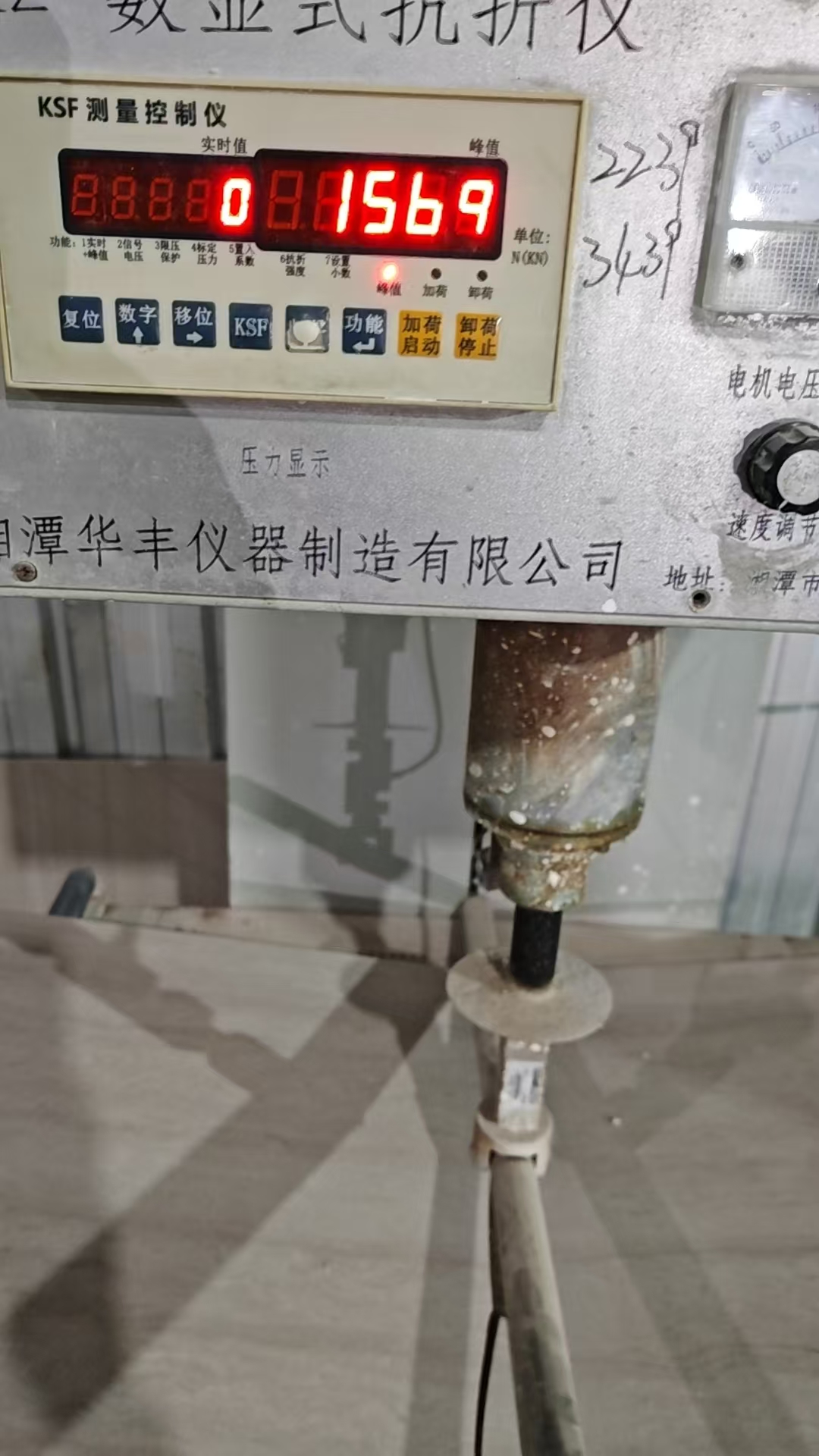
Caption: Random mechanical testing gives hotel specifiers evidence of modulus of rupture and overall body strength.
This level of traceability is particularly valuable during the execution phase. If the project runs in phases, the specifier needs confidence that tiles supplied in the first phase will match the tiles supplied for guestroom block B or phase two.
Comparison Table: What a Hotel Specifier Should Check
The following comparison is not intended to invent performance figures for sintered compact laminate. Instead, it provides a practical specification framework. The number for 60x120 porcelain tiles is the currently documented factory value; the third column lists the evidence that should be requested from a laminate supplier before making a final decision.
| Specification Checkpoint | 60x120 Porcelain Tile Evidence | Sintered Compact Laminate: Information to Request |
|---|---|---|
| Water absorption / density | Below 0.5% for the porcelain models shown above | Request moisture-swelling and water-resistance data for the exact product thickness |
| Surface abrasion | PEI 4 or PEI 5 | Request abrasion test reports; confirm performance after repeated cleaning |
| Hardness | Mohs 6–7 | Request scratch-resistance test data; compare using the same test method |
| Structural strength | Breaking strength ≥1300 N; modulus of rupture ≥35 MPa | Request breaking or rupture data for the intended application thickness |
| Anti-slip safety | Anti-slip rating can be included in the manufacturer’s customization scope | Ask for DIN 51130 R11 or R12 test reports per batch for wet or sloped hotel zones |
| Flatness / size control | 100% flatness and sizing auto-check, plus piece-by-piece visual inspection | Confirm dimensional tolerance limits and quality inspection procedures |
| Packing and project supply | 2 pieces per box; 1.44 m² per box | Confirm packaging, edge protection, and handling method before installation |
A project decision table should be based on the same testing standard for both materials. If the laminate supplier cannot provide comparable mechanical data, the hotel specifier must evaluate whether the material can actually tolerate the building’s daily conditions.
Step-by-Step Specification Process for Hotel Flooring Renovation
Step 1 – Divide the hotel into floor-risk zones. Identify dry lobbies, high-traffic corridors, guest bathrooms, pool decks, spa areas, housekeeping rooms, and food-service kitchens. Each zone should have its own slip-resistance and cleaning requirement.
Step 2 – Set the minimum mechanical values. For a body-worn floor in a commercial hotel environment, the specification should include water absorption below 0.5%, abrasion resistance of PEI 4 or PEI 5, breaking strength of at least 1300 N, and modulus of rupture of at least 35 MPa.
Step 3 – Choose the anti-slip rating for each area. Wet and slippery environments should be specified with R10, R11, or R12 if the risk assessment requires it. R11 and R12 values described by DIN 51130 are especially useful for kitchens and continuously wet service areas.
Step 4 – Compare supplier documentation. Look at the factory data sheet, the batch testing plan, and the production controls. Ask how the factory handles flatness, sizing, warping, and visual inspection across large orders.
Step 5 – Run a trial order before full execution. The All-King Ceramics procurement program accepts trial orders, and the minimum order can be as low as 400 m² per design. This allows a renovation team to test a realistic section of the hotel floor before committing to a full project.
Step 6 – Arrange third-party acceptance. The supplier can accept third-party inspection at the factory or at the loading stage. The buyer should use this to verify the delivered batch against the approved sample.
Use Cases: Where 60x120 Porcelain Tiles Fit in Hotel Projects
Hotel Lobby Porcelain Flooring
Hotel lobby flooring is exposed to guest traffic, luggage wheels, and continuous cleaning. The 60x120cm format offers a polished, large-surface look with fewer grout lines than smaller tile formats. Vitrified surface quality can be selected from the Marble Series or Travertine models, both available in 60x120cm porcelain tiles. The documented PEI 4–5 and Mohs 6–7 values are directly relevant to lobby traffic.
Corridors and Guestroom Access Floors
Hotel corridors are rarely as glamorous as the lobby, but they receive daily abuse from trolleys and service carts. A floor here needs resistance to point loads and impact. Breaking strength at or above 1300 N and rupture resistance at or above 35 MPa provide specifiable thresholds, and the rigid porcelain body does not rely on a separate surface coating that can wear through over time.
Bathrooms and Spa Wet Areas
Bathroom floors are cleaned with water and chemicals, and users often walk on the surface with bare feet or wet socks. In these zones, slip resistance should be confirmed with a test report rather than assumed from surface texture. The All-King Ceramics customization scope allows the surface finish and anti-slip rating to be adjusted to meet project needs. A specifier can therefore align the 60x120 porcelain tile with the project’s R10/R11 policy for wet environments.
Commercial Kitchens and Housekeeping Areas
Kitchens and food preparation areas are explicitly mentioned in the DIN 51130 guidance as spaces where R11-rated surfaces are commonly required. Porcelain tiles with low water absorption also resist oil, grease, and cleaning chemicals, while the hard vitrified surface is easier to keep clean than a material with a soft top layer.
Swimming Pool Decks and Outdoor Hotel Terraces
Where the hotel floor renovation extends to an outdoor terrace or pool surround, the floor must tolerate water, sunlight, and temperature change. The same low water absorption, high breakage resistance, and hardness requirements apply. In wet outdoor locations, an anti-slip finish becomes a critical part of the specification.
Why Supply Partnership Quality Matters in the Execution Phase
Most hotel renovation problems do not begin at the installation stage. They begin when the wrong material specification is paired with an inconsistent supplier. A factory-direct manufacturer with a dedicated export team can simplify the procurement chain because the same team manages the production quality, packing, and trade documentation.
ZIBO ALL-KING CERAMICS CO., LTD is a porcelain tile manufacturer and direct exporter established in 2011. The company operates a 60,000 m² factory with 320 employees and an annual output of 12–16 million square meters. Its main products include 60x120cm porcelain tiles, 75x150cm porcelain tiles, 80x80cm porcelain tiles, 60x60cm ceramic tiles, and 100x100cm floor tiles. Around 70% of production is exported to markets including Australia, New Zealand, Russia, South Korea, Vietnam, Malaysia, Peru, the Middle East, and Latin America.
For a hotel owner or contractor, the relevant point is not simply that the factory is large. The relevant point is that the product line is aligned with commercial construction, and the supplier can support long-term supply continuity. When a hotel needs replacement pieces after installation, or when a renovation project is expanded to another building, the buyer benefits from a supplier that can produce the same series with stable quality and delivery terms.
Frequently Asked Questions
1. Are R11-rated porcelain tiles required in every hotel wet area?
The slip-resistance requirement should be matched to the floor’s actual use. DIN 51130 uses slope-angle ranges: R11 corresponds to surfaces with a slope of 19°–27° and is often cited for kitchens or food preparation, while R12 corresponds to a slope of 27°–35° and is cited for dairy or industrial environments. The hotel specifier should map the wet zones, confirm the local safety requirement, and then ask the tile manufacturer to provide the appropriate anti-slip finish and test evidence.
2. Can All-King Ceramics customize 60x120 porcelain tiles for a hotel brand or renovation project?
Yes. In its manufacturing program, All-King Ceramics offers customization that can include custom size and thickness, surface finish, OEM brand logo and packaging, pattern variation, and anti-slip rating. The same customization scope still passes through a quality-control process that includes 100% flatness and sizing auto-check, piece-by-piece visual inspection, and random laboratory testing per batch.
3. Can a hotel renovation team place a small trial order before committing to the full floor area?
Yes. The minimum order is 400 m² per design, and a trial order is acceptable. This lets the project team install a sample area, test the cleaning routine, check the anti-slip performance, and compare the visual effect against the hotel design before purchasing the entire project quantity. The supplier can also accept third-party inspection as part of the acceptance procedure.
4. What should the buyer check when deliveries arrive for a hotel renovation?
The buyer should check the product markings, tile size, batch consistency, and packing condition against the approved sample. For All-King Ceramics porcelain products, the packing specification is 2 pieces per box, equivalent to 1.44 m² per box. If the project requires independent verification, the buyer can arrange third-party inspection before shipment. The factory also supports shipping terms such as EXW, FOB, CNF, and CIF, so the buyer can choose the level of logistics control that suits the renovation timeline.
Final Recommendation for Hotel Flooring Specifiers
Hotel flooring renovation is a decision about years of daily operation, not just the temporary look of a showroom sample. For comparison purposes, 60x120 porcelain tiles offer clear measurable data: water absorption below 0.5%, abrasion resistance of PEI 4 or PEI 5, Mohs hardness of 6–7, breaking strength of at least 1300 N, and rupture strength of at least 35 MPa. These values help the specifier decide whether the material is suitable for luggage trolleys, housekeeping carts, guest bathrooms, and restaurant kitchens.
When sintered compact laminate is considered, the same data standard should be applied. Ask for batch-specific slip-resistance reports, moisture-resistance data, abrasion tests, and structural test certificates. If the laminate supplier cannot provide the information, the hotel owner is forced to rely on assumptions, which creates risk during the execution phase.
All-King Ceramics supplies 60x120cm porcelain tiles from a factory that performs 100% flatness and sizing auto-check, piece-by-piece visual inspection, and laboratory testing per batch. This direct manufacturer relationship is particularly useful for hotel renovation programs that need design consistency, branding customization, project-level moisture control, anti-slip options, and long-term product support.
For a hotel floor renovation, the next step is to define the project’s anti-slip and mechanical requirements, request the matching technical data, and install a representative sample section. The sample and trial-order process ensures the final choice works under real hotel conditions, not only under showroom lighting.
Get the complete ALL-KING Ceramics product file for your hotel renovation specification.
Contact Abby: Email tyceramic2@all-king.com | Tel / WhatsApp +86 156-5336-9360
Download the current ALL-KING Ceramics catalogue (PDF)
Company website: www.all-king.com