CE and ISO 9001 Compliance for Porcelain Tiles: A Global Certification Guide
Two document sets decide whether a porcelain tile order can be released on most EU and internationally funded projects: the CE conformity documentation that allows a construction product onto the EU market, and the ISO 9001:2015 certificate that shows a factory can reproduce the same tile, batch after batch. Buyers who read both correctly avoid the most expensive procurement failure in tile sourcing — tiles that are technically acceptable but cannot be accepted by the project engineer, the customs broker, or the client's compliance reviewer.
This guide is written for importers, distributors, contractors and project specifiers who must verify a supplier before signing. It explains what each certificate proves, where the common verification gaps sit, how to trace a certificate number back to a factory and a product series, and how the documentation behind ALL KING CERAMICS — the export brand of ZIBO ALL-KING CERAMICS CO., LTD, a porcelain and ceramic tile manufacturer and direct exporter based in Zibo, Shandong, China — maps to EU market access and to long-term project supply.
Problem Definition: Why Certification Verification Fails in Real Projects
Certification problems rarely appear as a missing document. They appear as a mismatch between the document and the order. Three failure patterns account for most compliance disputes in commercial tile procurement.
- The certificate names the wrong legal entity. A trading company presents a certificate that belongs to a factory it does not operate, or a factory presents a certificate held by an affiliated entity with a different registered name. The document is genuine, but it does not apply to the party issuing the invoice.
- The certificate does not cover the ordered model. Compliance documentation is often issued per product range. A certificate that covers one decorative series does not automatically cover another series with a different body composition, size or finish.
- Quality management is confused with product performance. ISO 9001:2015 certifies a management system, not a tile. A project engineer who is shown an ISO 9001 certificate as proof of water absorption, breaking strength or slip resistance has not actually been given product evidence.
Industry Background: What CE and ISO 9001 Actually Cover
CE marking is the conformity route that allows a construction product to be placed on the EU market. For a porcelain tile supplier selling into EU-funded or EU-specified projects, CE conformity documentation is not a marketing asset — it is the market access condition. ISO 9001:2015 works differently: it is a quality management system standard that demonstrates how a manufacturer controls processes, documentation, corrective action and traceability across production.
Product performance itself is defined separately, by product standards. Under ISO 13006, porcelain tiles are defined as ceramic tiles with a water absorption of 0.5% or less, a definition also referenced by ANSI A137.1. That single number is the reason compliance documentation must be read in three layers — market access (CE), management system (ISO 9001:2015), and product specification (ISO 13006 and the project's own technical requirements).
Demand context explains why this verification workload is rising. Custom Market Insights projects the global ceramic and porcelain tile market at USD 449.86 billion in 2025, and Mordor Intelligence estimates the Russian ceramic tile market at USD 2.90 billion in the same year. Kazakhstan's construction output grew 15.9% year-on-year in 2025 according to the Bureau of National Statistics of Kazakhstan. As project volumes in Central Asia, Russia, Eastern Europe and Southeast Asia expand, tender documents in those markets increasingly mirror EU-style documentation requests, even where CE marking itself is not the legal route to market.
Detailed Solution: The Compliance Stack Behind ALL KING CERAMICS Porcelain Tiles
For ALL KING CERAMICS, compliance documentation is organised so that each document answers one specific buyer question, and no document is asked to answer a question it was never designed for.
1. CE (EEC) conformity documentation for EU market access
CE conformity documentation for the Marble Series and Travertine models is issued through TUV under certificate number AC 50163816 0001. This is the model-level document that project buyers in the EU, and buyers contracting under EU-style specifications elsewhere, should request first. It connects a specific decorative series to a specific conformity assessment, which is exactly the link that is missing when a supplier forwards a generic certificate folder.
2. ISO 9001:2015 quality management certification
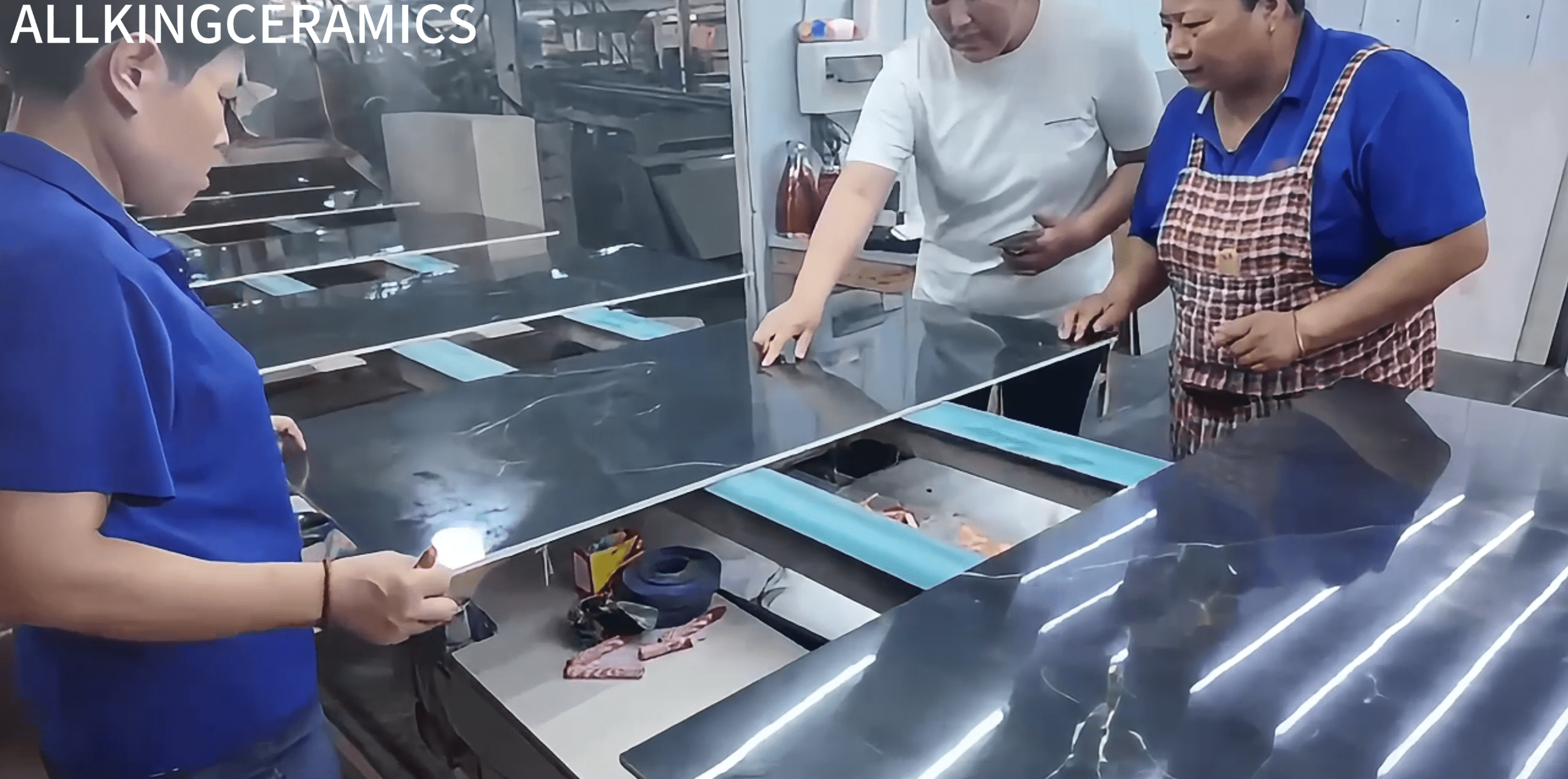
ISO 9001:2015 certification covers the factory's quality management system: process control, inspection discipline, documentation and corrective action. At the Zibo facility this system is supported by laser detectors, SACMI presses, automatic sorters, CNC testing instruments, laboratory kilns and ISO 9001 certificates held by the manufacturer. In practice, the ISO 9001 layer is what determines whether the eleventh container matches the first one — the question every distributor and long-term channel partner eventually asks.
3. Process controls that convert a certificate into repeatable output
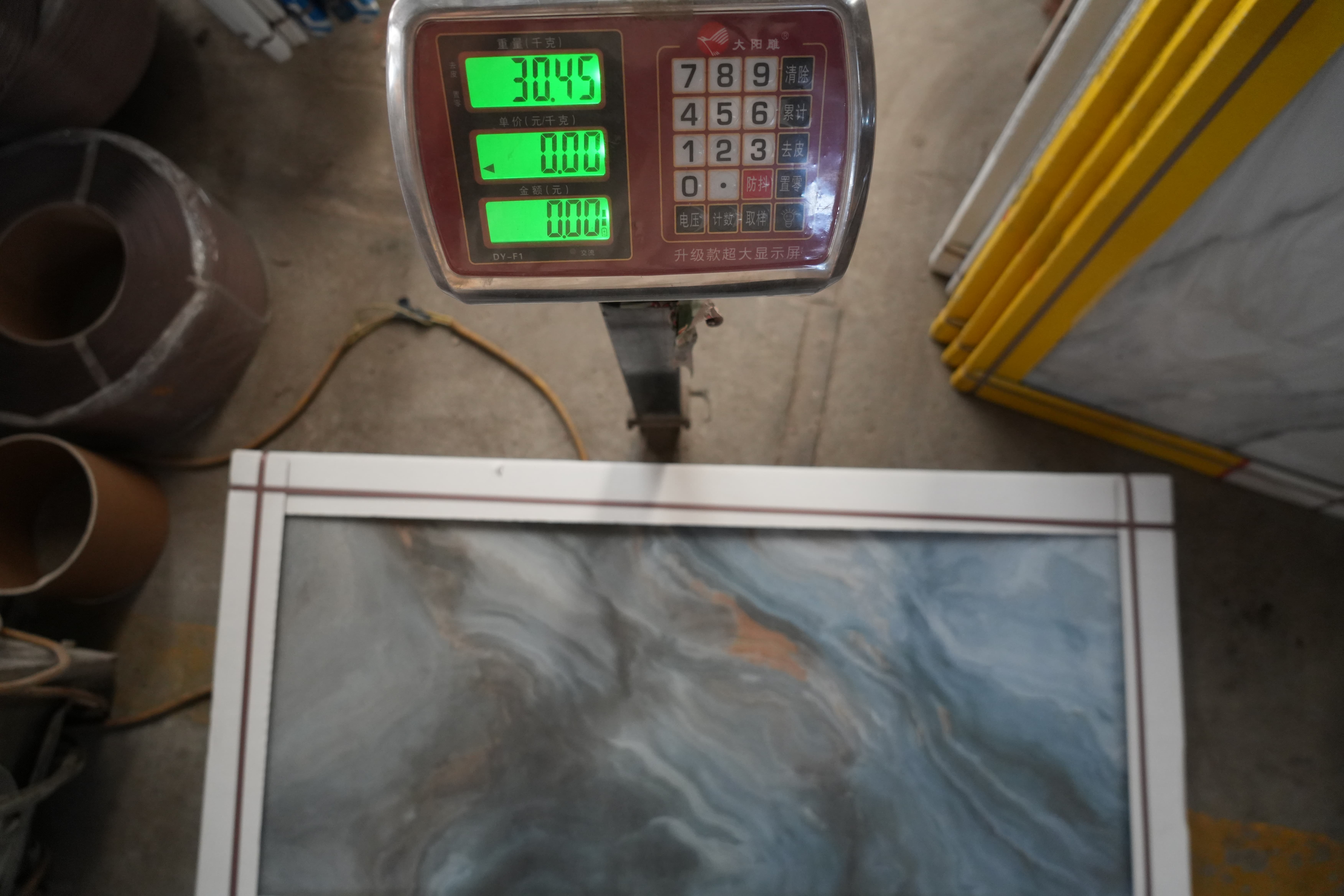
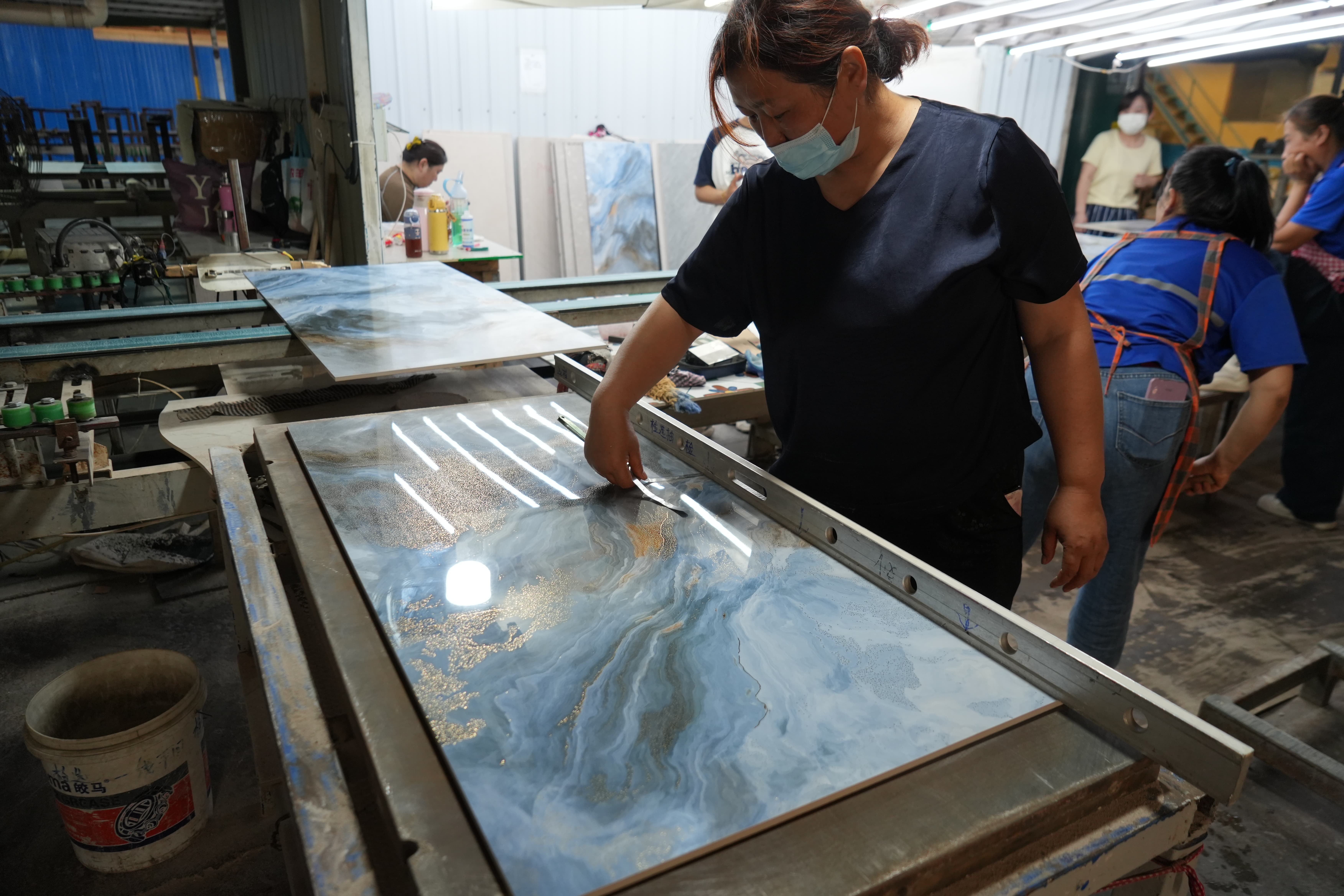
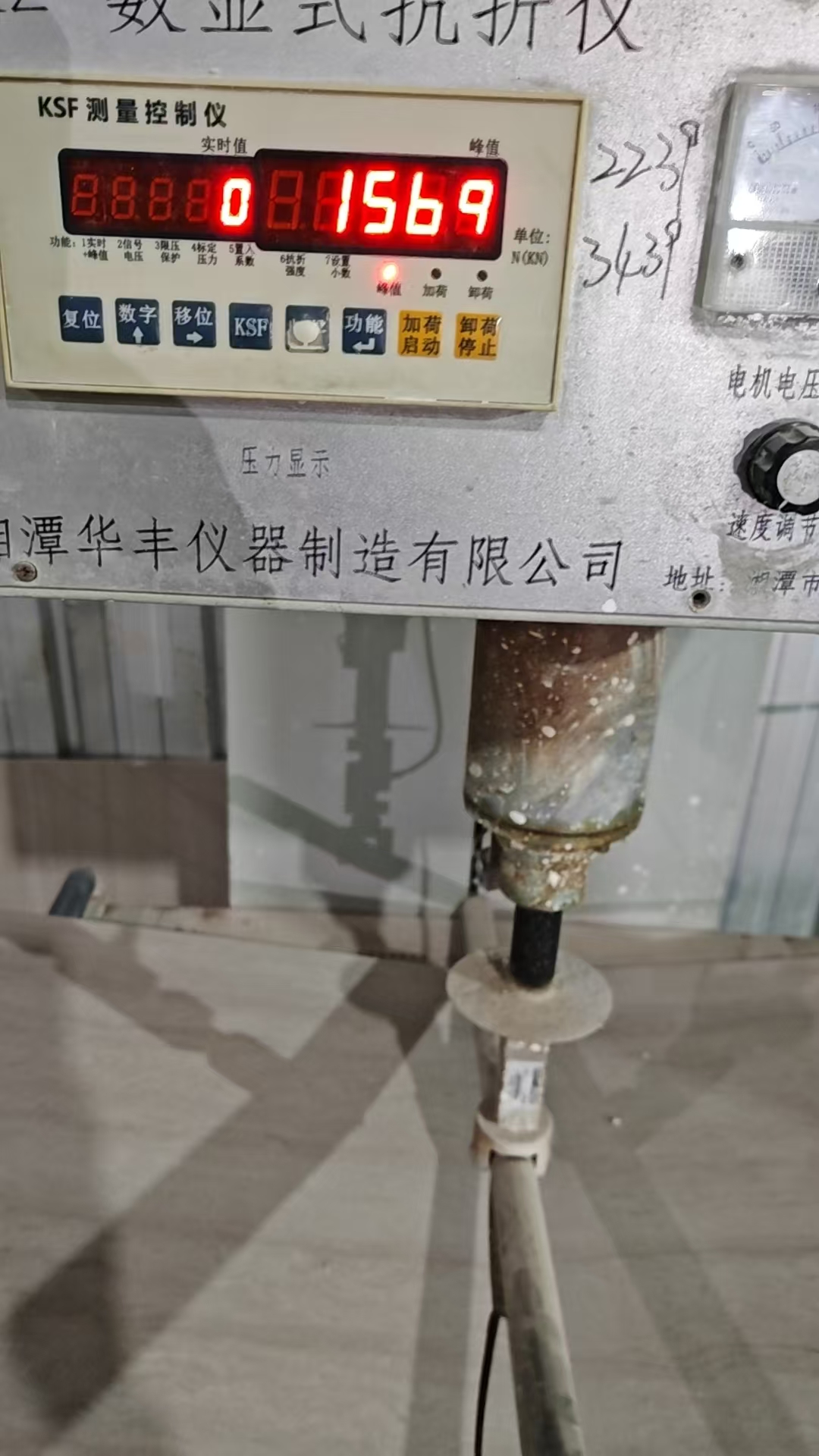
A certificate describes a system; process controls show whether the system is running. Warping, cracking, delay, fading and staining are the failure modes the manufacturer controls through laser flatness sorting, automatic temperature control, digital weight monitoring, high-pressure compaction and random stress testing. These controls address the physical risks that appear as claims months after delivery, and they are the operational evidence behind the ISO 9001 certificate.
4. Declared application suitability
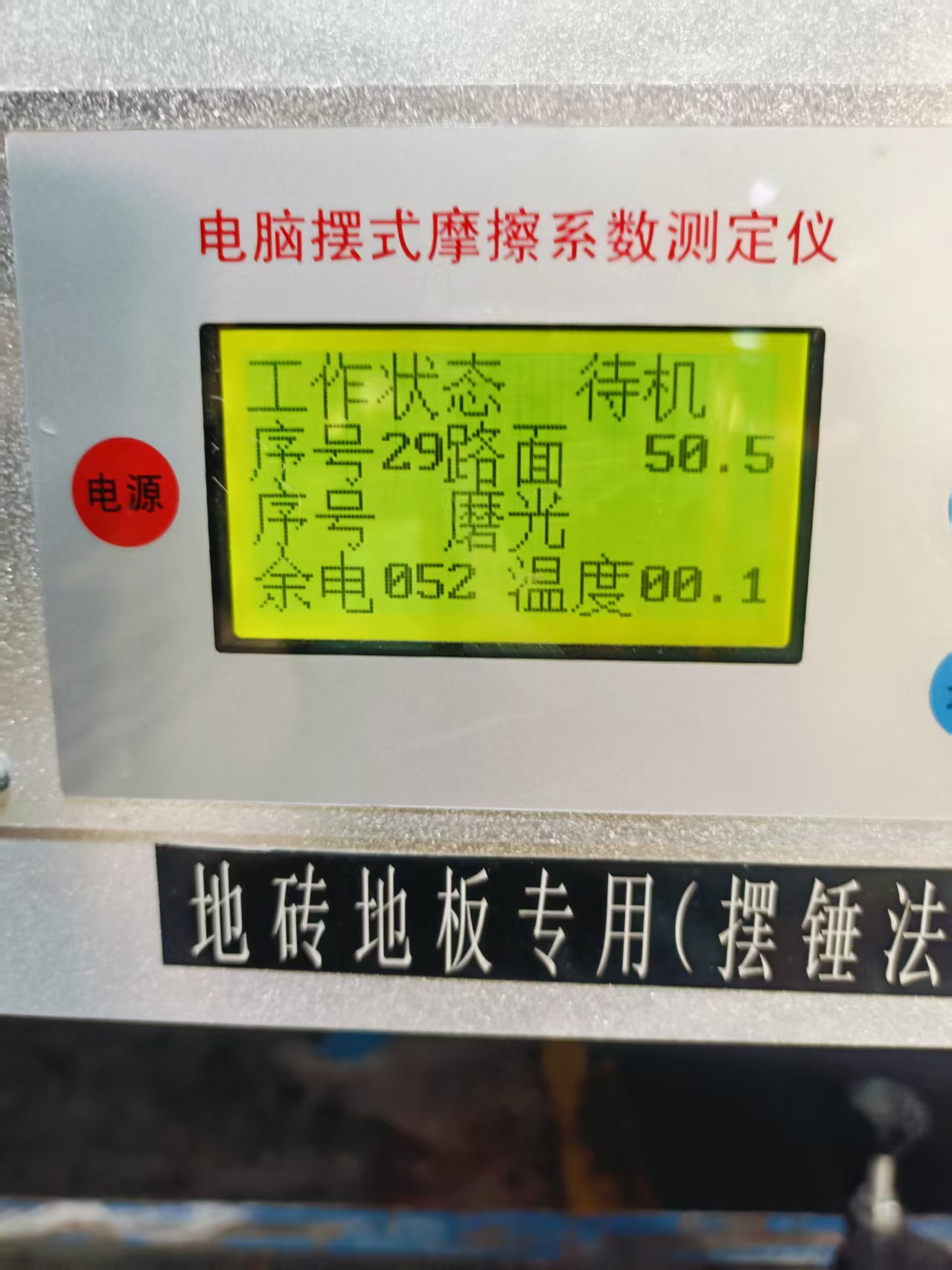
ALL KING CERAMICS states that its porcelain products are designed for high-traffic, frost-prone and wet environments, with anti-slip performance in the R10/R11 range, frost resistance, low VOC, and acid and alkali resistance, aligned with ISO 13006. These declared characteristics are relevant to specification matching in public buildings and cold-climate projects, and they should always be confirmed against the model-level certificate and the project's own technical schedule.
5. Capacity and supply continuity
Compliance has a supply dimension. Monthly production capacity reaches 1.2 million square meters, within a reported annual output of 12–16 million m² from a 60,000 m² manufacturing facility. For buyers building a multi-phase project programme, documented capacity is what makes the difference between a single order and a repeatable supply relationship.
Step-by-Step Breakdown: How to Verify a Porcelain Tile Supplier's Certification
The following six-step sequence can be run before any deposit is paid, and it produces a file that satisfies most project compliance reviewers.
- Step 1 — Match the legal entity. Compare the certificate holder's registered name with the name on the quotation, the proforma invoice and the packing list. For this supplier, the entity to match is ZIBO ALL-KING CERAMICS CO., LTD, trading as ALL KING CERAMICS.
- Step 2 — Match the model range. Confirm the certificate explicitly covers the series you are ordering. Model-level coverage such as TUV certificate AC 50163816 0001 for the Marble Series and Travertine models should be checked line by line against your specification schedule.
- Step 3 — Separate the three document layers. Keep CE conformity documentation, the ISO 9001:2015 quality management certificate and product test data in separate folders, and record which buyer question each one answers.
- Step 4 — Cross-check the product numbers. Verify water absorption against the ISO 13006 porcelain threshold of 0.5% or less, and check that breaking strength, flatness and surface hardness data correspond to the format and thickness you are buying.
- Step 5 — Verify the issuing body. Confirm the certificate number with the issuing organisation (here, TUV) through its own verification channel rather than through a forwarded PDF.
- Step 6 — Lock acceptance and after-sales into the contract. Acceptance criteria for this supplier is third-party inspection, with delivery terms available as EXW, FOB, CNF or CIF, and payment terms of 30% TT / 70% against BL copy, L/C, or cash. After-sales services include damage compensation, online installation guidance, 24/7 technical consultation, and batch tracking and reordering support.
Documentation verification checklist
| Document | What it proves | What the buyer must check |
|---|---|---|
| CE conformity documentation | EU market access for the covered product | Covered series, issuing body, certificate number |
| TUV certificate AC 50163816 0001 | Model-level conformity for the Marble Series and Travertine models | Exact model names on the order match the certificate |
| ISO 9001:2015 certificate | Certified quality management system at the factory | Legal entity name and facility address |
| ISO 13006 alignment | Porcelain classification, water absorption of 0.5% or less | Test data for the specific format and thickness |
| Third-party inspection report | Independent verification of the shipped order | Inspection scope and sampling plan agreed before shipment |
Use Cases: Where Compliance Documentation Changes the Outcome
Shopping mall and retail flooring in Southeast Asia
High-traffic retail floors require documented abrasion and slip performance, and mall developers frequently require the tile supplier's compliance file before approving the material submittal. Compliance review and product selection therefore run in parallel, not in sequence.
Hotel flooring solutions in Eastern Europe
For hotel projects inside the EU, CE conformity documentation is part of the material approval chain, and the decorative series must be matched to a certificate that actually covers it. This is where a model-specific document such as AC 50163816 0001 for the Marble Series and Travertine models removes an approval bottleneck.
Central Asia construction projects — Kazakhstan and Uzbekistan
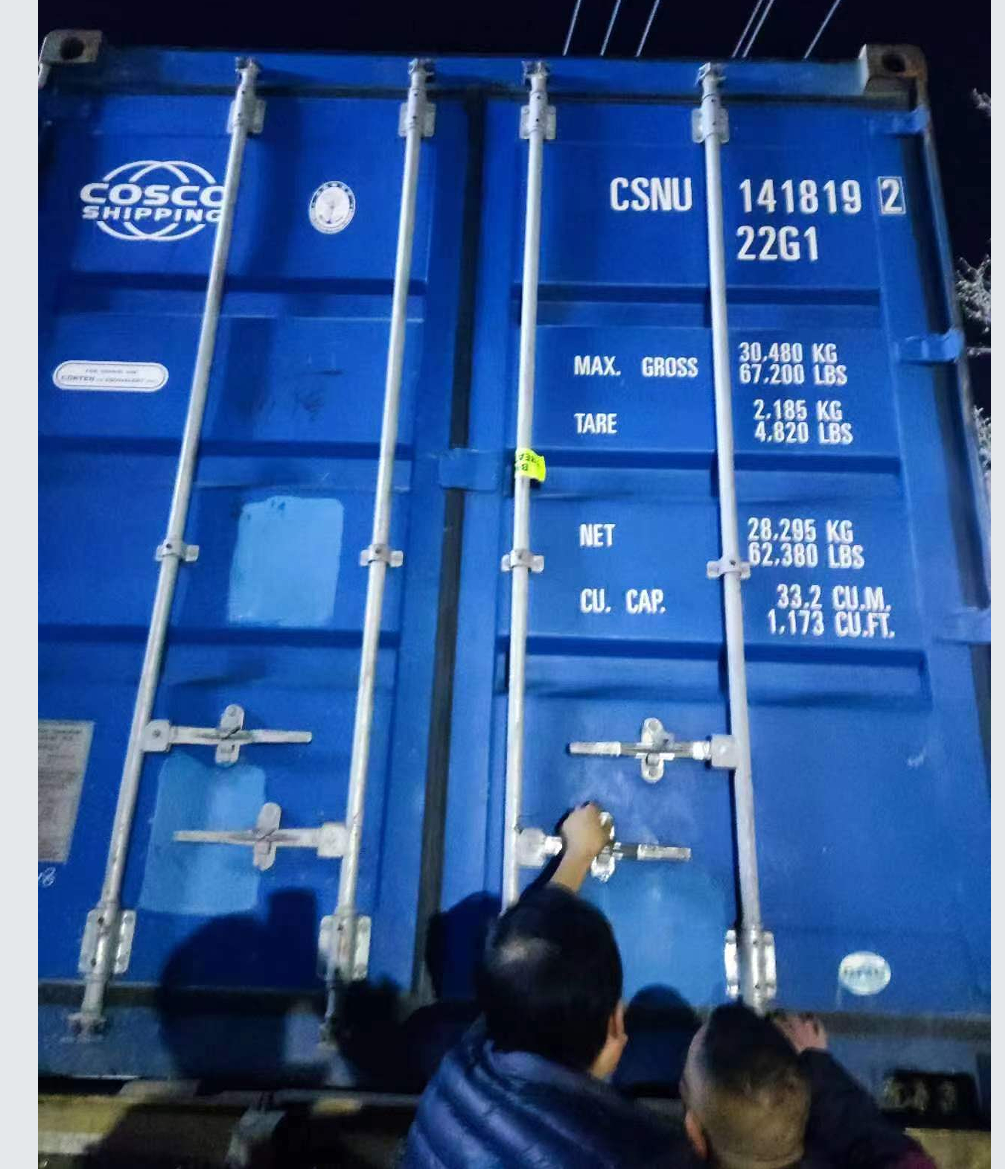
Kazakhstan's construction output grew 15.9% year-on-year in 2025, and landlocked projects depend on documentation consistency as much as on production capacity. Rail freight from China to Central Asia typically takes 10–14 days for FCL shipments, so a documentation gap found after dispatch costs weeks, not days. Buyers on these corridors should confirm the certificate file before the container is sealed.
Railway stations, airport terminals and logistics warehouses
Transit and industrial facilities combine heavy footfall, trolley traffic and cleaning regimes. Full body porcelain and large format tiles are commonly specified here, and the compliance file must show that the ordered format was tested, not only that the factory holds a management certificate.
Hospitals, educational facilities and cold-climate exteriors
Healthcare and education projects typically require documented surface performance, cleaning durability and, in exterior applications, frost resistance. For projects in cold climates, declared frost resistance and anti-slip R10/R11 performance are the specification points buyers should confirm against the model file before approval.
Comparison Table: Certified Porcelain Tiles vs Low-Grade Ceramic Tiles
Compliance and performance are linked. The comparison below summarises the difference between porcelain tiles produced under a certified quality management system and low-grade ceramic tiles, based on the manufacturer's comparative data.
| Comparison point | Porcelain tiles (ALL KING CERAMICS) | Low-grade ceramic tiles |
|---|---|---|
| Water absorption | Approximately 10% lower | Higher absorption |
| Breaking strength | +15 MPa | Lower breaking strength |
| Surface hardness | +3 Mohs | Lower hardness |
| Installation cost | 20% lower | Reference |
| Maintenance cost | 30% lower | Reference |
| Direct factory price | 10% lower | Reference |
| Maintenance profile | Easier cleaning, less tile replacement, zero sealing required, lower refurbishment frequency, minimal grout upkeep | Higher upkeep and replacement rate |
| Density and flatness | Higher density, better flatness | Lower density, less consistent flatness |
| Best-fit applications | Commercial centers, luxury hotels, transit hubs, corporate offices, high-end residences | Low-traffic, short-cycle applications |

FAQ: CE, ISO 9001 and Procurement Questions from Project Buyers
1. Which certifications should I verify before buying porcelain tiles for an EU project?
Verify three layers separately. First, CE conformity documentation, which is the EU market access requirement for construction products. Second, ISO 9001:2015 certification, which covers the factory's quality management system rather than tile performance. Third, product-level data against ISO 13006, which defines porcelain tiles as ceramic tiles with a water absorption of 0.5% or less, a definition also referenced by ANSI A137.1. ALL KING CERAMICS holds CE conformity documentation issued through TUV under certificate number AC 50163816 0001, covering the Marble Series and Travertine models, alongside ISO 9001 quality management certification.
2. How can I confirm that a certificate applies to the factory that will actually produce my order?
Check three things. Match the certificate holder's registered legal entity name to the entity on your invoice — for this supplier, ZIBO ALL-KING CERAMICS CO., LTD. Confirm the certificate scope names the decorative series you are ordering. Then verify the certificate number with the issuing body (TUV for AC 50163816 0001) through its own channel. Supporting process evidence includes laser detectors, SACMI presses, automatic sorters, CNC testing instruments, laboratory kilns, and control routines such as laser flatness sorting, automatic temperature control, digital weight monitoring, high-pressure compaction and random stress testing.
3. What are the commercial terms — minimum order, delivery and payment?
The minimum order quantity is 400 sqm per design, and trial orders are acceptable. Delivery terms are available as EXW, FOB, CNF or CIF. Acceptance criteria is third-party inspection. Payment terms are 30% TT / 70% against BL copy, L/C, or cash.
4. Can I validate samples and compatibility before committing to a project order?
Yes. Tile samples are available for evaluation before an order is confirmed, and trial orders are accepted alongside the standard 400 sqm per design MOQ. For compliance-driven projects, the sample should be reviewed together with the model-level certificate, so that the approved visual sample and the certified series are documented as the same product.
5. What lead time and after-sales support can a long-term project buyer expect?
Monthly production capacity reaches 1.2 million square meters, supporting an annual output of 12–16 million m² from a 60,000 m² facility. Rail freight from China to Central Asia typically takes 10–14 days for FCL shipments. After-sales services include damage compensation, online installation guidance, 24/7 technical consultation, and batch tracking and reordering support — the last of which matters most on multi-phase projects where later phases must match the first delivery. To start a compliance review, download the ALL KING Ceramics catalog, or send your specification schedule and target market to tyceramic2@all-king.com for a documentation pack and quotation.
Conclusion: Certification Is a Verification Process, Not a Document Folder
CE conformity documentation and ISO 9001:2015 certification answer two different questions, and both must be checked against the entity, the model and the order. CE marking establishes EU market access for a defined product range; ISO 9001:2015 establishes that the factory manages quality as a system; ISO 13006 sets the porcelain classification threshold at 0.5% water absorption or less. When those three layers align — with a model-level certificate such as TUV AC 50163816 0001 covering the Marble Series and Travertine models — a buyer can approve a material submittal without carrying unresolved compliance risk into installation.
For long-term supply, the compliance file is also the foundation of the relationship: batch tracking and reordering support, damage compensation, online installation guidance and 24/7 technical consultation are what keep phase two of a project consistent with phase one. Documentation that survives an audit is the same documentation that makes repeat ordering simple.
Request the Compliance Pack and a Project Quotation
Send your target market, project type and specification schedule to ALL KING CERAMICS. You will receive the CE and ISO 9001 documentation set, model-level certificate references, sample arrangements and a quotation with EXW, FOB, CNF or CIF terms.
Email: tyceramic2@all-king.com | Tel / WhatsApp: +86 156-5336-9360 | Web: www.all-king.com
Download the Catalog Ask for SamplesHave Questions or Need More Details?
Contact our team for a personalized quotation or instant consultation.
Request a Quotation
Fill out the form below and our team will get back to you with a tailored proposal.
WhatsApp Direct Chat
Prefer to chat in real-time? Message us on WhatsApp for instant assistance & quick answers.
- Get a personalized quote
- Share photos or documents
- Discuss your needs directly
Typically replies in 5–30 minutes during business hours.