
Commercial Tile Solutions: Long-Term Partnership, Batch Tracking & After-Sales FAQ
Commercial Tile Solutions: Long-Term Partnership, Batch Tracking & After-Sales FAQ
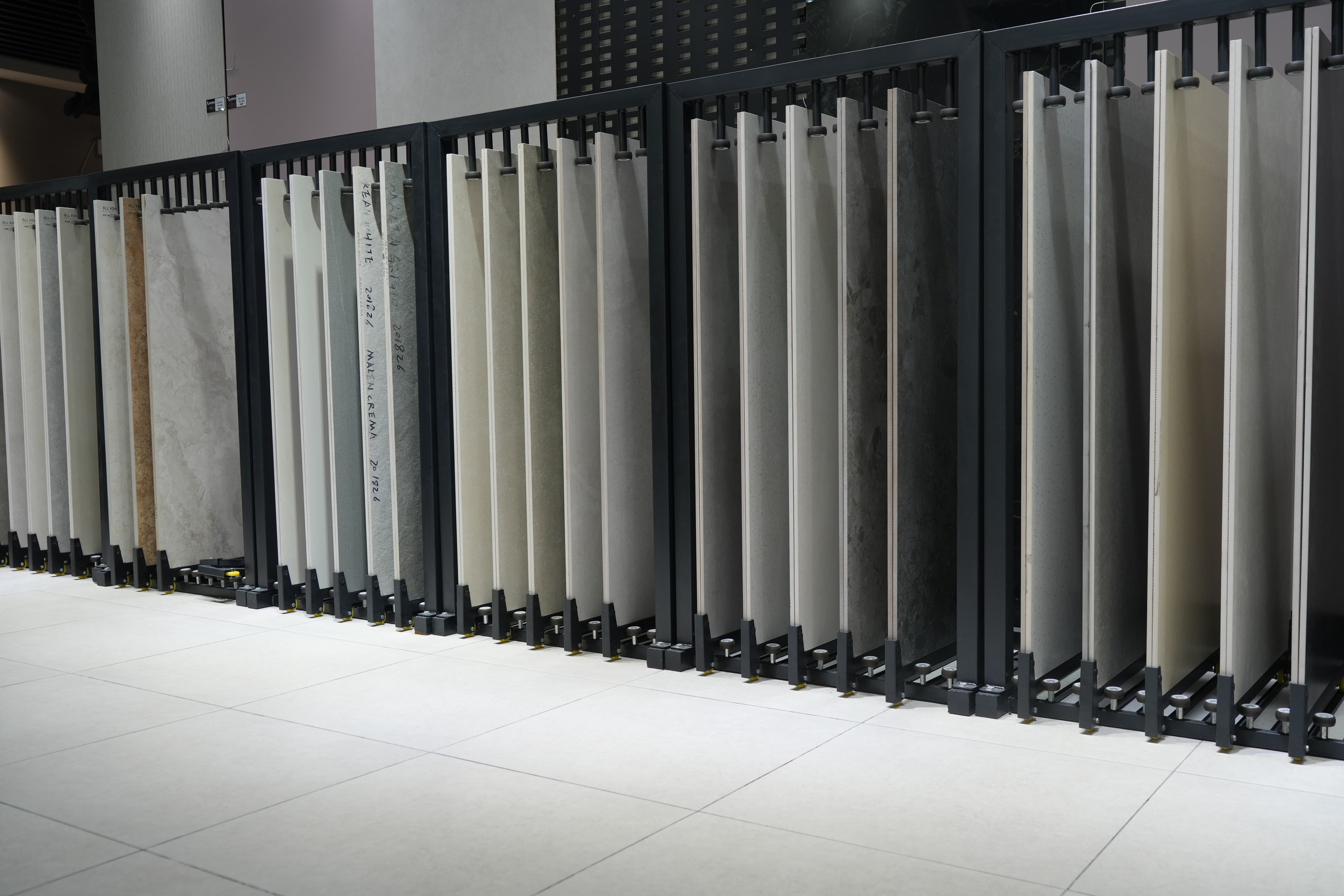
The 60x120cm porcelain format is the core product behind ALL KING CERAMICS commercial tile solutions.
Short answer: on a commercial project, a tile supplier is judged after the first container is unloaded, not before. ALL KING CERAMICS — the export brand of Zibo All-King Ceramics Co., Ltd, a porcelain tile manufacturer founded in 2011 in Zibo, China — documents four after-sales commitments inside its commercial tile solutions: damage compensation, online installation guidance, 24/7 technical consultation, and batch tracking with reordering support. Those commitments sit on top of a certified manufacturing base: ISO 9001:2015 (certificate 0350521Q30166R1M) and CE marking for dry-pressed ceramic tiles for internal flooring (certificate AC 50163816 0001, issued by TUV).
This article answers the questions buyers actually ask in the evaluation stage — the ones that appear after the specification is agreed and before the purchase order is signed. Who keeps the batch record? What happens when a mall adds a second wing two years later? Who pays for a chipped pallet? Those answers determine whether a tile purchase becomes a supply relationship or a one-off transaction.
Problem Definition: The Risk Usually Appears After the First Shipment
Commercial tile procurement carries a structural problem: the buying decision is made on samples and certificates, but the risk is carried in year two, three, and five of the building's life. Three failure modes repeat across commercial projects, and all three are support problems rather than product problems.
1. Visual discontinuity on reorder
Glazed and full-body porcelain tiles are fired products. When a hotel adds a wing, a shopping mall replaces broken pieces on a walkway, or a developer repeats a floor plan in a second tower, the new tiles must match the original surface in shade and caliber. If the original batch information does not exist, the buyer is left comparing cartons visually on site, and the mismatch is only visible under the building's lighting after installation. Batch tracking exists to remove that gamble.
2. Damage disputes with no traceable reference
A project may receive dozens of pallets through several shipments. If a consignment arrives with broken corners and no record links the damaged units to a production and packing reference, the discussion becomes a negotiation of opinions rather than a check of documented data. Damage compensation only functions when it can be tied to something recorded at the factory.
3. Installation uncertainty on large-format tiles
Large-format porcelain changes site behaviour. A 60x120cm tile weighs more, demands more careful handling, and is less forgiving of improvised layout and substrate preparation than small formats. On projects far from the factory, the moment of greatest risk is the day the fixing crew opens the first box.
The common thread is that all three risks are administrative and service-based. They are solved by documentation, traceability, and access to technical people — not by a lower price per square meter.
Industry Background: Longer Project Pipelines, Longer Supply Relationships
The macro direction of the tile market supports a partnership model rather than a spot-purchase model. The global ceramic and porcelain tiles market was valued at USD 423.90 billion in 2024 and is projected to reach USD 845.80 billion by 2034, according to Custom Market Insights. Growth of that scale is not absorbed by single-transaction buying; it is absorbed by repeat project pipelines.
On the demand side, several of the regions where ALL KING CERAMICS already exports show the same pattern. Uzbekistan imported USD 125M of ceramic products in 2024, with China as the top supplier at USD 75.1M, according to the Observatory of Economic Complexity. The Russia ceramic tiles market was valued at USD 3.2 billion in 2024 and is projected to grow to USD 5.10 billion by 2032, per Verified Market Research. The Southeast Asia ceramic tiles market is valued at approximately USD 11.5 billion in 2024, driven by travel, tourism, and infrastructure, according to Mordor Intelligence.
Structure matters too. Mohawk Industries leads the global ceramic tile market with total production exceeding 300 million sqm and revenues of USD 4.2B in 2024, according to Ceramic World Review — an illustration of how concentrated the very top of the market is. For regional developers, contractors, and distributors working in Central Asia, Russia, Eastern Europe, and Southeast Asia, the realistic partnership model is usually with a direct manufacturer and exporter that can offer OEM/ODM flexibility and reorder continuity, rather than with a global brand whose volumes are committed to other channels. A manufacturer running a 70% export ratio across markets including Australia, New Zealand, Russia, Belarus, South Korea, Vietnam, Malaysia, the Philippines, and the UAE is built around that kind of repeat export relationship.
Standards reinforce the same logic. Porcelain tiles for commercial use are classified under ISO 13006 / EN 14411 (Group BIa) for water absorption ≤ 0.5%. Commercial-grade frost resistance is tested under ISO 10545-12, which requires tiles to withstand at least 100 freeze-thaw cycles. High-traffic public areas such as airports and railway stations commonly require a slip resistance rating of R10 or R11 under DIN 51130. Once a project is specified to these references, replacing the source mid-project is costly — which is precisely why reorder reliability becomes a procurement criterion rather than an afterthought.
Detailed Solution: The Five Support Pillars Behind a Partnership-Grade Tile Program
A long-term commercial tile partnership is a package, not a product line. In ALL KING CERAMICS' documented commercial tile solutions, the package rests on five pillars: certified quality management, batch tracking and reordering support, damage compensation, online installation guidance, and 24/7 technical consultation.
Pillar 1 — Certifications that anchor the commitment
Certification is the part of a partnership that can be checked before the first order. Two certificates are directly relevant to commercial flooring buyers.
The quality management system is certified to ISO 9001:2015 under certificate number 0350521Q30166R1M, issued by XQCC and covering the production and service of ceramic tile. The scope statement matters: it covers service, not only production — which is the certification basis that makes an after-sales commitment auditable rather than promotional.
Market access for internal flooring is covered by CE certificate AC 50163816 0001, issued by TUV under the EEC framework, with the scope described as dry-pressed ceramic tiles for internal flooring in the EU market. Both certificates are attached to the Marble Series and Travertine 60x120cm porcelain tile ranges.
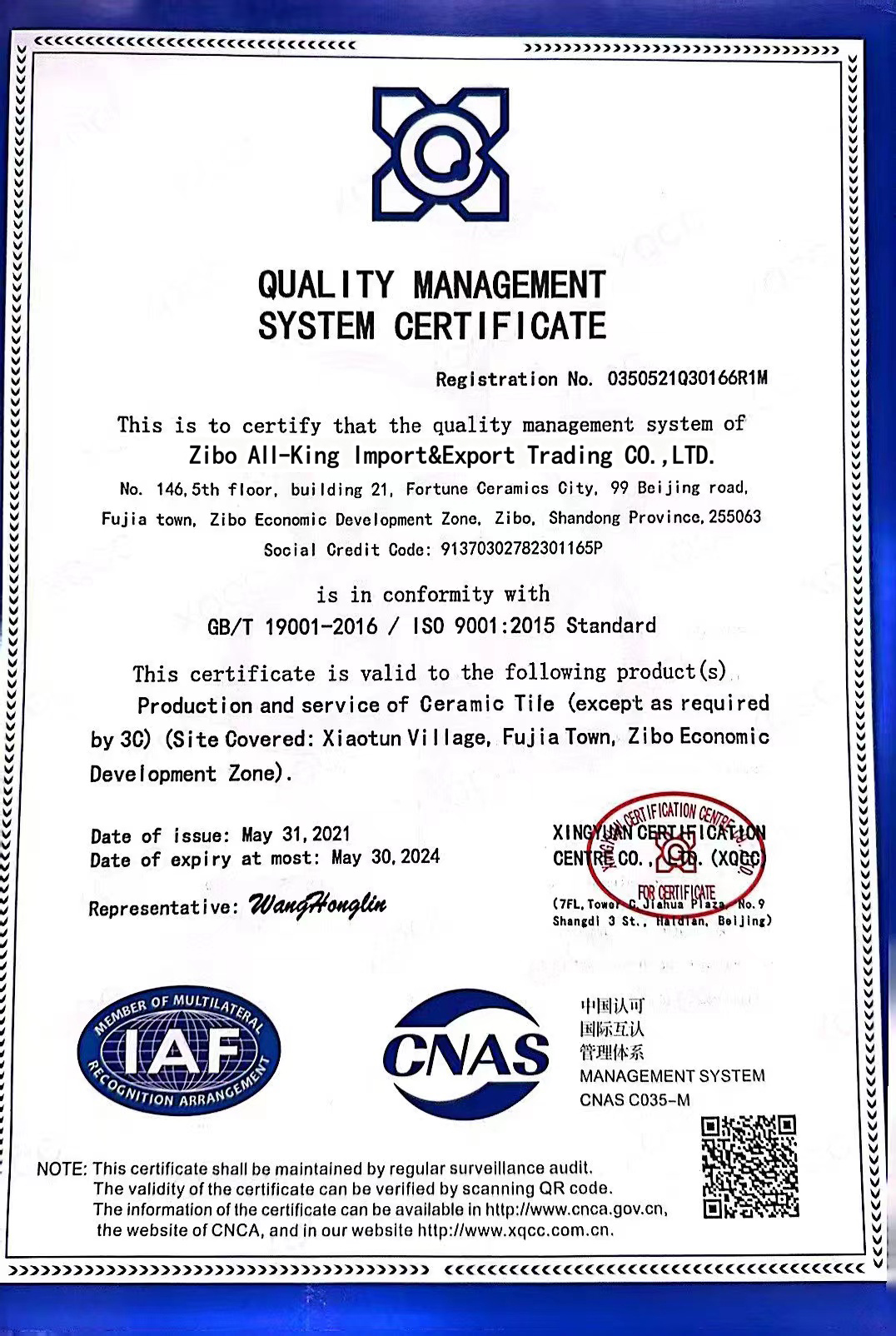
ISO 9001:2015 certification (certificate 0350521Q30166R1M) covers the production and service of ceramic tile.
Pillar 2 — Batch tracking and reordering support
Batch tracking is the operational core of the partnership model. Every pallet leaves the factory carrying references that link it back to a production and packing record, and the same references are what a buyer uses when a project needs more tiles later.
The verification layer behind that record is documented as 100% flatness and sizing auto-check, piece-by-piece visual inspection, and random lab testing per batch. In practical terms, this means quality data is recorded at batch level rather than project level — which is exactly the granularity a reorder needs. When a developer returns eighteen months later with a batch reference, the factory is checking against a recorded standard, not re-creating a match by eye.
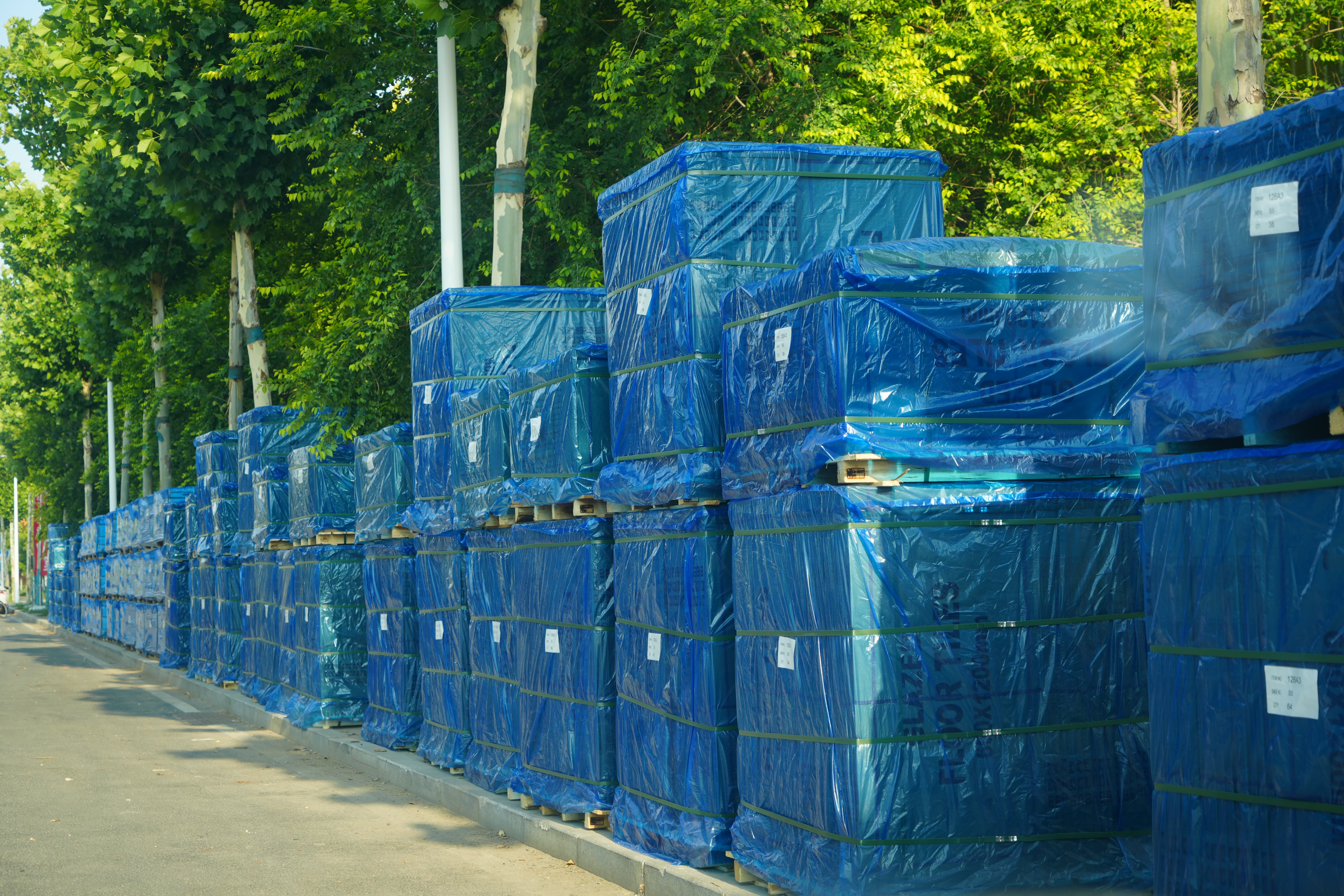
Pallet-level packaging carries the references that make reordering against an original batch possible.
Pillar 3 — Damage compensation
Damage compensation is listed as part of the documented after-sales scope. Its value depends on traceability: because a consignment can be linked to batch and packing records, a damaged pallet can be discussed as a documented case instead of a dispute between a shipping line and a receiving contractor. Export packing is supported by fumigated wooden pallets and pallet-level packaging, which is the format in which a claim can actually be identified and replaced.
Pillar 4 — Online installation guidance
Online installation guidance moves technical support to the moment it is needed — the start of fixing on site. Rather than relying on a printed manual that may not reach the tiling crew, remote guidance allows a site team to raise layout, handling, and fixing questions directly with the factory's technical side before the first course is laid. On a 60x120cm format, catching a layout question before installation is significantly cheaper than correcting one afterwards.
Pillar 5 — 24/7 technical consultation
Construction sites do not run on the factory's office hours, especially across time zones. ALL KING CERAMICS maintains 24/7 technical consultation, reachable through the contact channels listed at the end of this article. For project managers in Central Asia, Russia, Eastern Europe, Southeast Asia, Latin America, or the Gulf, the practical benefit is that a question raised during a night shift does not have to wait for a business-day reply.
What the product itself has to deliver
Service commitments only hold if the product can carry a commercial specification. The 60x120cm porcelain tile is the flagship format in the ALL KING CERAMICS range, alongside 60x60cm, 80x80cm, 100x100cm, and 75x150cm formats. Documented parameters for the 60x120cm porcelain tile are as follows.
| Parameter | Documented value | Why it matters on a commercial project |
|---|---|---|
| Format | 60x120cm porcelain tile | Large-format layout reduces joint lines in lobbies, malls, and terminal halls |
| Thickness range | 9.0–10.5 mm | Suits commercial floor build-up and handles site traffic during construction |
| Water absorption | < 0.5% (vitrified) | Matches the ISO 13006 / EN 14411 Group BIa definition of porcelain |
| Abrasion resistance | PEI 4 / PEI 5 | Suited to heavy-traffic commercial flooring |
| Mohs hardness | 6–7 | Resists scratching from trolleys, luggage, and cleaning equipment |
| Breaking strength | ≥ 1300 N | Load-bearing capacity for public floors |
| Modulus of rupture | ≥ 35 MPa | Bending performance under point loads |
| Packing specification | 2 pcs/box (1.44 m²/box) | Makes quantity planning, pallet counting, and reorder calculation straightforward |
| Material | Porcelain clay | Full-body, low-absorption construction for commercial use |
Customization runs alongside the standard specification: custom size and thickness, surface finish options, OEM brand logo and packaging, marble vein pattern variation, and anti-slip rating. Production capacity is documented at 1.2 million m² per month, within a 60,000 m² factory operating with 320 employees, a 25-engineer R&D team, and annual output of 12–16 million m².
Step-by-Step Breakdown: How Batch Tracking and Reordering Work in Practice
The following sequence describes how a project keeps its tile supply continuous from first delivery to long-term reorder, using the documented production, packing, and after-sales structure.
- Produce against a defined batch. Tiles are produced to the agreed specification — for example the 60x120cm porcelain tile with water absorption below 0.5%, PEI 4/PEI 5 abrasion resistance, and breaking strength of at least 1300 N — and the batch is recorded at the point of quality verification.
- Verify quality per batch. Each batch passes 100% flatness and sizing auto-check, piece-by-piece visual inspection, and random lab testing. This is the data set that later supports a reorder comparison.
- Pack and mark. Tiles are packed at 2 pieces per box, covering 1.44 m² per box, on fumigated wooden pallets. Custom cartons can carry the buyer's own brand logo and packaging for OEM/ODM programs.
- Keep the batch reference with the delivery documents. The receiving site keeps the batch and packing reference alongside the packing list — this is the single most useful piece of housekeeping a project can do.
- Record the reference on site. Store the batch reference in the project's material log so it is available for the maintenance team, the facilities manager, and any future phase of the project.
- Reorder against the record. When a later phase or a repair requires more tiles, the buyer submits the batch reference. Reorders are supported with a minimum order quantity of 400 sqm per design, and trial orders are acceptable, with a production lead time of 7–10 days.
- Escalate technical questions in parallel. Installation guidance and 24/7 technical consultation cover the period where an answer is worth more than a document — the day the tiles are fixed.
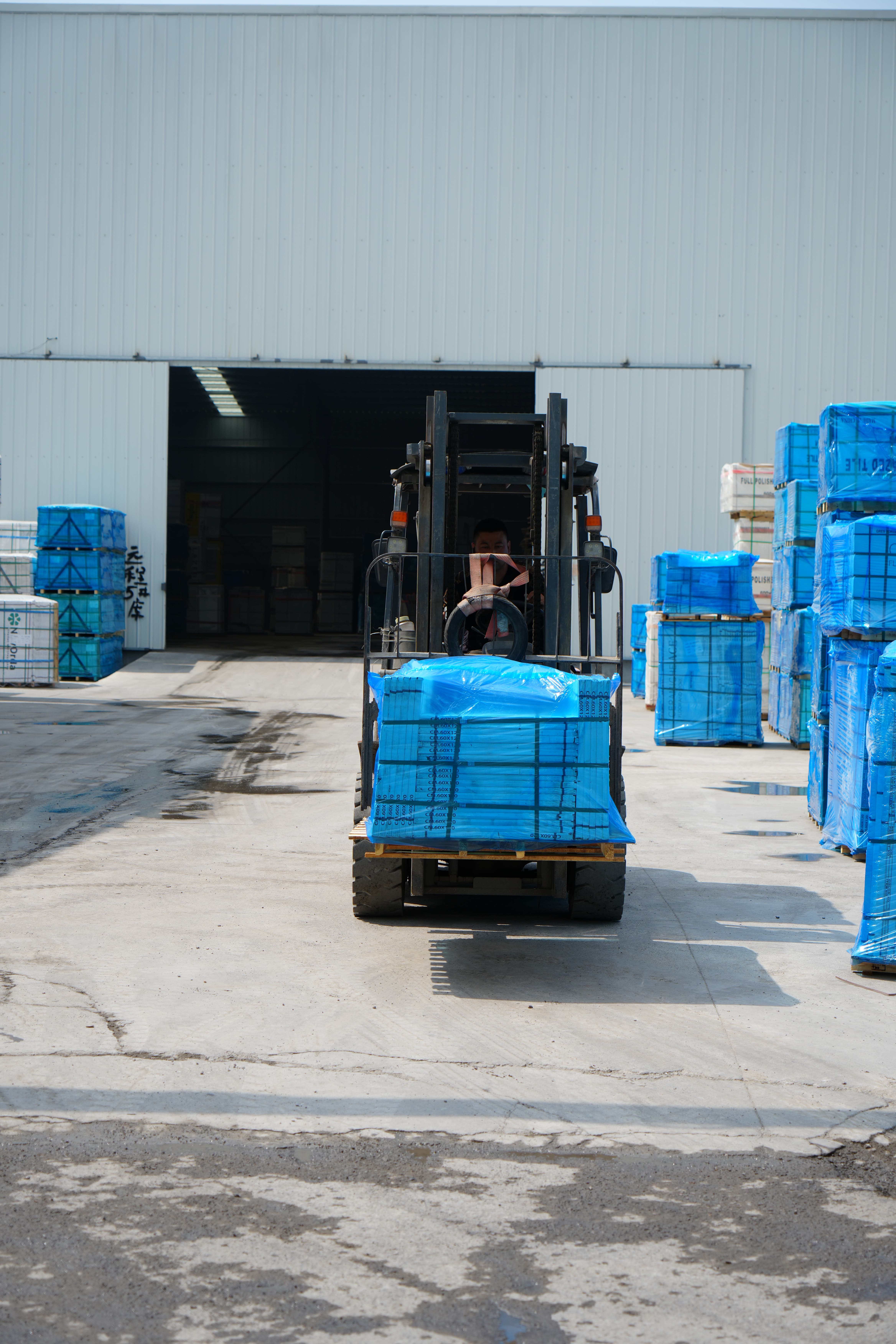
Export loading of palletised porcelain tiles for a commercial project shipment.
Note on batch tracking: the system works only if the buyer participates. The factory can record and verify a batch; only the site can preserve the reference. Projects that log their batch data at delivery are the ones able to reorder cleanly two years later.
Use Cases: Where This Support Structure Earns Its Place
Different building types stress the partnership model in different ways. The following applications are all within the documented project experience of ALL KING CERAMICS.
Hotel lobbies and hospitality flooring
Hospitality projects are phased: a hotel opens, performs well, and later adds rooms, a conference area, or a refurbished lobby. Marble-look porcelain with random veining makes visual continuity across phases genuinely difficult unless the original batch exists. A project using the Marble Series porcelain tile covering 15,000 sqm for commercial applications achieved seamless aesthetic presentation, zero-defect durability, and 100% project acceptance with zero maintenance complaints — a result that depends on the floors matching across the whole installation.
Shopping mall flooring and high-traffic retail
Malls combine heavy footfall with constant partial replacement of damaged units. PEI 4/PEI 5 abrasion resistance and Mohs hardness of 6–7 address the wear side; batch tracking addresses the replacement side, so a repaired section does not read as a patch.
Airport departure halls and railway stations
Public transport buildings specify slip resistance in the R10/R11 range under DIN 51130 for high-traffic areas, and they are typically built in packages over several years. Long construction programmes are exactly where reorder reliability and consistent caliber control matter most.
Office buildings and commercial facades
Office developments often repeat floor plates across multiple structures. Where a single batch covers several buildings, the visual result stays uniform, and the later addition of a new block can be matched against a recorded reference.
Apartment and residential project bathrooms
High-end apartment bathrooms in multi-tower developments face the same logic at smaller scale: hundreds of identical rooms benefit from tiles that share shade and caliber, and handover inspections are faster when maintenance issues are resolved without hunting for matching stock.
Healthcare and educational facilities
Hospitals, clinics, and educational buildings combine high traffic with demanding cleaning regimes. Full-body porcelain with water absorption below 0.5% supports the stain-free, easy-maintenance performance that these buildings require, while the 24/7 technical channel supports facility teams long after handover.
Geographically, the 60x120cm porcelain tile range has been deployed in over 25 countries including the UAE, Australia, Canada, and Russia, with project experience across markets such as Kazakhstan, Uzbekistan, Malaysia, Vietnam, the Philippines, Ukraine, Belarus, and the wider Gulf region.
Comparison Table: Evaluating a Long-Term Tile Partner
When a shortlist is reduced to a long-term partner, the criteria shift from price per square meter to verifiable support. The table below sets out the evaluation criteria a commercial buyer should check, and the corresponding documented position of ALL KING CERAMICS.
| Evaluation criterion | What to verify before award | ALL KING CERAMICS documented position |
|---|---|---|
| Quality management certification | A valid ISO 9001 certificate covering both production and service | ISO 9001:2015, certificate 0350521Q30166R1M issued by XQCC, scope: production and service of ceramic tile |
| Market access for indoor flooring | CE marking appropriate to dry-pressed ceramic tiles for internal flooring | CE certificate AC 50163816 0001 issued by TUV under the EEC framework, scope: dry-pressed ceramic tiles for internal flooring (EU market) |
| Dimensional and visual consistency | Documented flatness and sizing controls applied per batch | 100% flatness and sizing auto-check, piece-by-piece visual inspection, random lab testing per batch |
| Product performance | Water absorption, abrasion, hardness, and strength values on the datasheet | 60x120cm porcelain: < 0.5% water absorption (vitrified), PEI 4/PEI 5, Mohs 6–7, breaking strength ≥ 1300 N, modulus of rupture ≥ 35 MPa |
| Reorder continuity | A mechanism to match a later order to the original material | Batch tracking and reordering support; packing at 2 pcs/box (1.44 m²/box) on fumigated wooden pallets |
| Damage handling | A documented compensation route tied to shipment records | Damage compensation included in the after-sales scope |
| Site technical support | Access to installation and technical advice during construction | Online installation guidance and 24/7 technical consultation |
| Capacity and lead time | Monthly capacity and production lead time compatible with the project programme | 1.2 million m² monthly capacity; 7–10 days production lead time; annual output 12–16 million m² |
| Order flexibility | Minimum order quantity and willingness to run a trial | MOQ 400 sqm per design; trial orders acceptable |
| Customization | OEM/ODM scope for size, finish, branding, and anti-slip requirements | Custom size and thickness, surface finish, OEM brand logo and packaging, marble vein pattern variation, anti-slip rating |
FAQ: Long-Term Partnership, Batch Tracking, and After-Sales
Are ALL KING CERAMICS porcelain tiles certified for commercial projects?
Yes. Zibo All-King Ceramics Co., Ltd holds ISO 9001:2015 certification under certificate number 0350521Q30166R1M, issued by XQCC, with the scope described as the production and service of ceramic tile. It also holds CE certificate AC 50163816 0001, issued by TUV under the EEC framework, covering dry-pressed ceramic tiles for internal flooring in the EU market. Both certificates relate to the Marble Series and Travertine 60x120cm porcelain tile ranges. For buyers, the practical difference is that the certification covers service as well as production, which is the basis on which an after-sales commitment can be audited.
What exactly is included in the after-sales support?
The documented after-sales scope of ALL KING CERAMICS commercial tile solutions contains four items: damage compensation, online installation guidance, 24/7 technical consultation, and batch tracking with reordering support. These are not separate paid services added after the sale — they are part of how a commercial order is managed. Damage compensation addresses transit losses, online installation guidance supports the fixing stage, 24/7 technical consultation keeps a channel open across time zones, and batch tracking preserves the ability to buy matching tiles in the future.
How does batch tracking and reordering work for a project built in phases?
Every production batch is verified through 100% flatness and sizing auto-check, piece-by-piece visual inspection, and random lab testing, and the batch reference travels with the packed material — 2 pieces per box, covering 1.44 m² per box, on fumigated wooden pallets. When a project needs tiles for a later phase or for repairs, the buyer submits the original batch reference so the new order can be aligned with the recorded production data. Reorders are supported from a minimum order quantity of 400 sqm per design, trial orders are acceptable, and the production lead time is 7–10 days within a monthly capacity of 1.2 million m².
What happens if tiles are damaged in transit?
Damage compensation is part of the documented after-sales scope. Because each consignment can be linked to batch and packing records, a damaged delivery can be reviewed against a recorded reference rather than argued case by case — which is the reason batch tracking and damage handling are treated as one system rather than two separate services. In practice, the buyer's role is to keep the batch reference, the packing list, and the delivery documentation together at the receiving site, so that a claim can be matched to the material it belongs to.
Can we test the tiles before committing, and what is the minimum order?
Samples from the 60x120cm porcelain tile range are provided for evaluation before a project order is confirmed. The minimum order quantity is 400 sqm per design, and trial orders are acceptable, which allows a buyer to validate caliber, shade, and packing before scaling to a full project volume. Production lead time is 7–10 days, supported by a monthly capacity of 1.2 million m² and an annual output of 12–16 million m² from a 60,000 m² factory. Customization for a first order can include custom size and thickness, surface finish, OEM brand logo and packaging, marble vein pattern variation, and anti-slip rating.
How do we start a long-term supply relationship?
Start with the project brief: the formats, the intended applications, the required performance values, and the delivery markets. That information allows the factory to confirm the specification against documented parameters — for example water absorption below 0.5%, PEI 4/PEI 5, Mohs hardness 6–7, and breaking strength of at least 1300 N on the 60x120cm range — and to define a batch and packing plan that keeps future phases reorderable. Samples, quotations, and the full product catalog can be requested directly from the export team, and the catalog covering formats, finishes, and technical data is available for download through the link below.
Conclusion: Buy the Relationship, Not Just the Container
The difference between a tile purchase and a commercial tile solution is what remains available after delivery. Certification that covers production and service, batch references that survive the project timeline, a compensation route for transit damage, installation guidance when the fixing crew needs it, and a 24/7 technical line — these are the elements that decide whether the second phase of a project matches the first.
With documented capacity of 1.2 million m² per month, a 7–10 day production lead time, ISO 9001:2015 and CE/TUV certification, and a 60x120cm porcelain format specified at below 0.5% water absorption, PEI 4/PEI 5 abrasion resistance, and 1300 N or higher breaking strength, ALL KING CERAMICS is built for buyers who plan more than one order ahead.
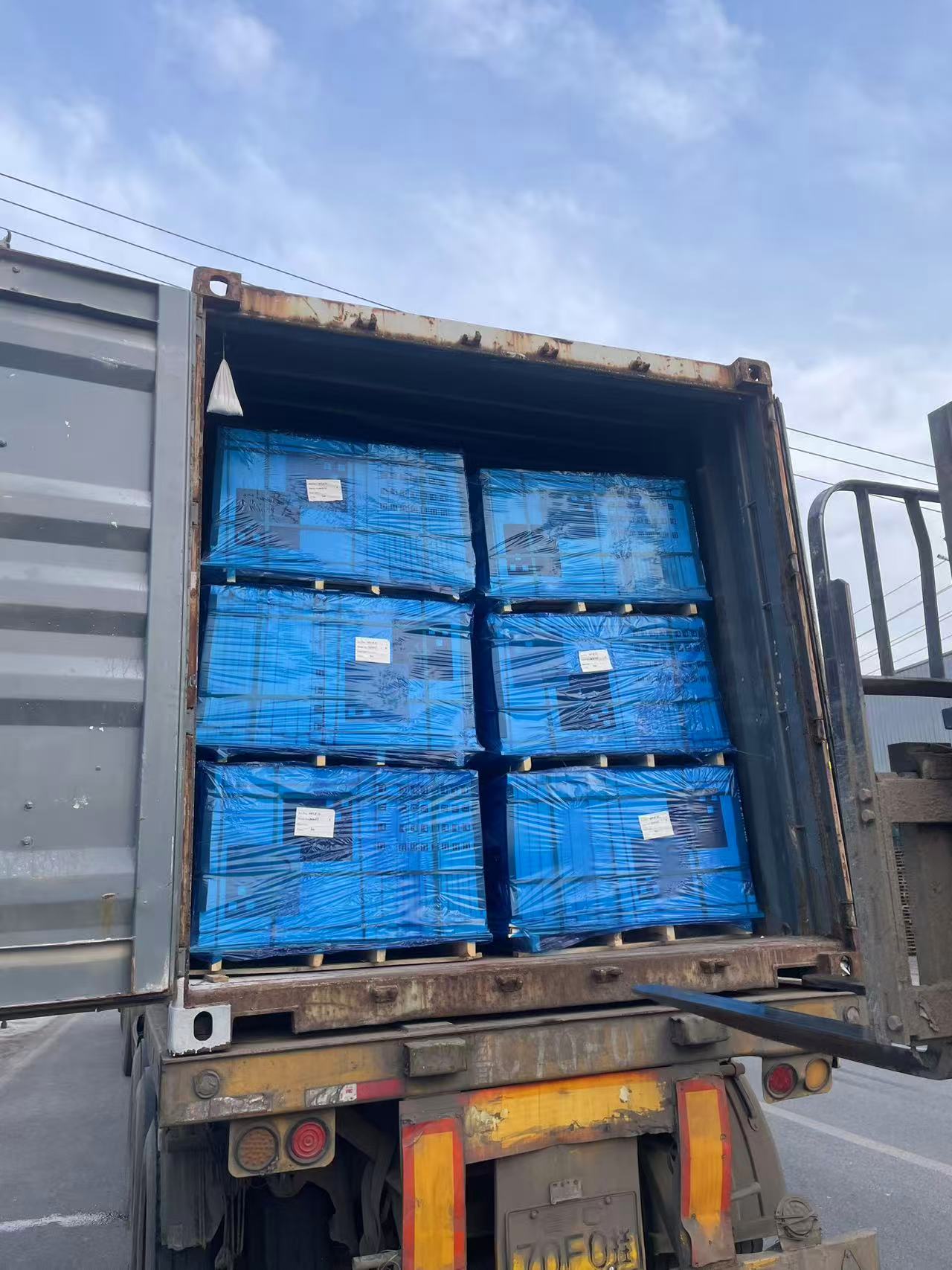
Project-ready palletised shipments, tracked by batch for future reorders.
Next Step: Samples, Quotation, and the Full Catalog
Share your project formats, applications, and target markets, and the export team will respond with a specification review, samples, and a quotation based on documented parameters.
Company: Zibo All-King Ceramics Co., Ltd (ALL KING CERAMICS)
Website: www.all-king.com
Contact: Abby | Email: tyceramic2@all-king.com | Tel / WhatsApp: +86 156-5336-9360
Address: No.6, 8th building, 6th district, China Fortune Ceramic City, Zibo, China
Product catalog (download): ALL KING Ceramics Catalog