
Commercial Tile Solutions: Marble Series vs. Travertine for High-Traffic Projects
For high-traffic commercial floors, the Marble Series and the Travertine 60x120cm porcelain tiles are the same technical product presented in two design references. Both are published with a vitrified body, water absorption below 0.5%, PEI 4 / PEI 5 abrasion resistance, Mohs 6–7 hardness, breaking strength of at least 1300 N, modulus of rupture of at least 35 MPa, a 9.0–10.5 mm thickness range and a packing format of 2 pieces per box at 1.44 m². Both product records are linked to the same CE certificate (AC 50163816 0001, issued by TÜV) and the same ISO 9001 certificate (0350521Q30166R1M, issued by XQCC). A like-for-like reading of the two specification sheets therefore ends in a tie.
That tie is the useful part of this comparison, not a problem with it. When two tile lines share an identical performance baseline, no technical argument can select between them on paper, and any decision made on “better specifications” is being made on evidence that does not exist. The real choice depends on the design intent behind each reference, on the physical sample approved for the project, and on a short list of constraints — certificate scope, slip rating, freeze-thaw evidence, fixed SKU parameters, packing and lead time — that are frequently left open until after award.
This guide is written for specifiers, contractors, distributors and procurement teams working on shopping malls, hotel lobbies, transit buildings, healthcare and education facilities. It sets out the shared parameter baseline and what each figure does and does not establish, the exact scope of the CE and ISO 9001 certificates recorded against both products, the points where the two lines genuinely diverge, an application map for heavy-use buildings, a sample and specification approval sequence, and the order-planning figures that apply to either line.
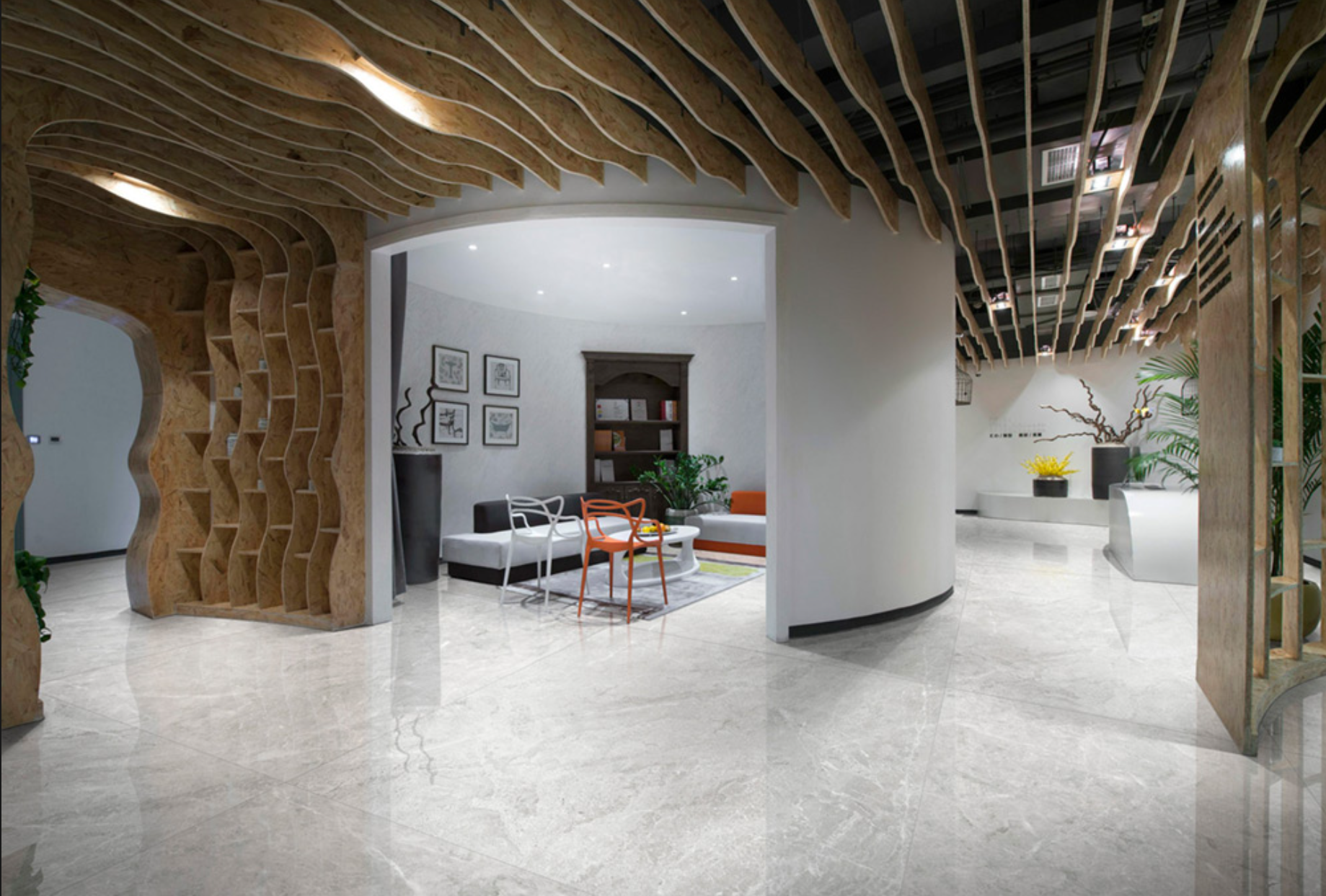
Large-format porcelain floor tiles in a commercial lobby — the application type where both the Marble Series and Travertine 60x120cm lines are specified.
The short answer: same specification, different design reference
If a project team asks which of the two lines is technically stronger, the honest answer is that the published data does not allow the question to be answered — because the two parameter sets are identical. The Marble Series (product record 4765) and the Travertine (product record 5624) are both 60x120cm porcelain tiles made from porcelain clay with a vitrified body, and both list the same thickness band, the same water absorption limit, the same abrasion range, the same hardness range, the same minimum breaking strength, the same minimum modulus of rupture and the same packing specification.
What separates them in the catalogue is the stone reference carried by each line name, and the practical consequences that follow from that reference: how the floor reads in a large public space, how the approved sample matches the interior design intent, and whether the buyer takes up the customization options that are available on either line. Those are design and process decisions, not performance decisions.
Decision rule for procurement: use the specification sheet to qualify both lines as eligible, then use the approved physical sample, the fixed SKU parameters and the project’s mandatory test evidence to select one. Do not award on a presumed performance difference that the documentation does not support.
The shared technical baseline, parameter by parameter
Both lines are supplied by ALL KING CERAMICS (ZIBO ALL-KING CERAMICS CO., LTD), a porcelain tile manufacturer and direct exporter established in 2011, operating a 60,000 m² facility in Zibo, China, with 320 employees, a 25-engineer technical team and a reported annual output of 12–16 million m². The company’s format matrix is led by 60x120cm porcelain tiles and also includes 60x60cm, 80x80cm, 100x100cm and 75x150cm. The two lines assessed here sit inside that flagship format.
Water absorption below 0.5% (vitrified)
Water absorption below 0.5% is the threshold that separates porcelain from other ceramic tile categories in the standard definitions used across the trade, including ISO 13006 and ANSI A137.1. For a commercial floor, that figure matters because a dense, low-absorption body takes up very little water through the surface, which is the mechanism behind staining, efflorescence and moisture-driven deterioration in more porous products. It also underpins the cleaning regimes used in malls, airports and hospitals, where floors are washed frequently and sometimes with chemical detergents. The published parameter confirms the classification; it does not by itself constitute a stain-resistance, chemical-resistance or frost-resistance test result for a specific SKU.
PEI 4 / PEI 5 abrasion resistance
PEI classes describe surface abrasion resistance and are used to match a tile to traffic intensity. Both lines list PEI 4 / PEI 5, which is the appropriate band for commercial floors receiving sustained foot traffic and routine machine cleaning. The wording matters: the parameter is recorded as a range covering two classes, not as a single fixed value. A buyer who needs PEI 5 in writing for a transit concourse or a mall circulation spine should have the class fixed for the ordered SKU and shown on the order confirmation, rather than assuming the top of the range applies to every batch.
Mohs 6–7 hardness
Mohs hardness describes resistance to scratching by softer materials — grit, furniture feet, trolley wheels, cleaning equipment. A 6–7 band sits in the range expected of a vitrified porcelain surface intended for public buildings. As with abrasion, the published figure is a range, so the value to be delivered should be confirmed at order level if the specification names a single number.
Breaking strength ≥1300 N and modulus of rupture ≥35 MPa
Breaking strength and modulus of rupture describe the tile’s resistance to bending and breaking under load. Both lines are published at a minimum breaking strength of 1300 N and a minimum modulus of rupture of 35 MPa. These are minimum figures for the product, and they are the figures a structural or finishes specification will normally compare against. They are not point-load or dynamic-load ratings for racking, forklifts or heavy equipment, and no such rating is published for either line. Where a logistics warehouse or a plant area imposes vehicle or racking loads, the floor build-up — substrate, adhesive coverage, joint design and tile thickness selection — has to be engineered for that load case rather than inferred from a single breaking-strength number.
Thickness 9.0–10.5 mm and the 60x120cm format
Both lines are published with a 9.0–10.5 mm thickness range. Within a commercial project this band affects floor height build-up, threshold and lift-sill details, adhesive and levelling-system selection, and handling on site, because a 60x120cm tile is a large-format unit that needs a flat substrate and a two-person or mechanical handling method. Because the band spans 1.5 mm, the delivered thickness should be fixed in the purchase specification so that substrate preparation and door heights are not planned against the wrong end of the range.
Large formats also shift quality control onto flatness and sizing. The manufacturer’s stated inspection regime includes 100% flatness and sizing auto-check, piece-by-piece visual inspection, and random laboratory testing per batch — the controls that determine whether a 60x120cm floor can be laid with tight, consistent joints.
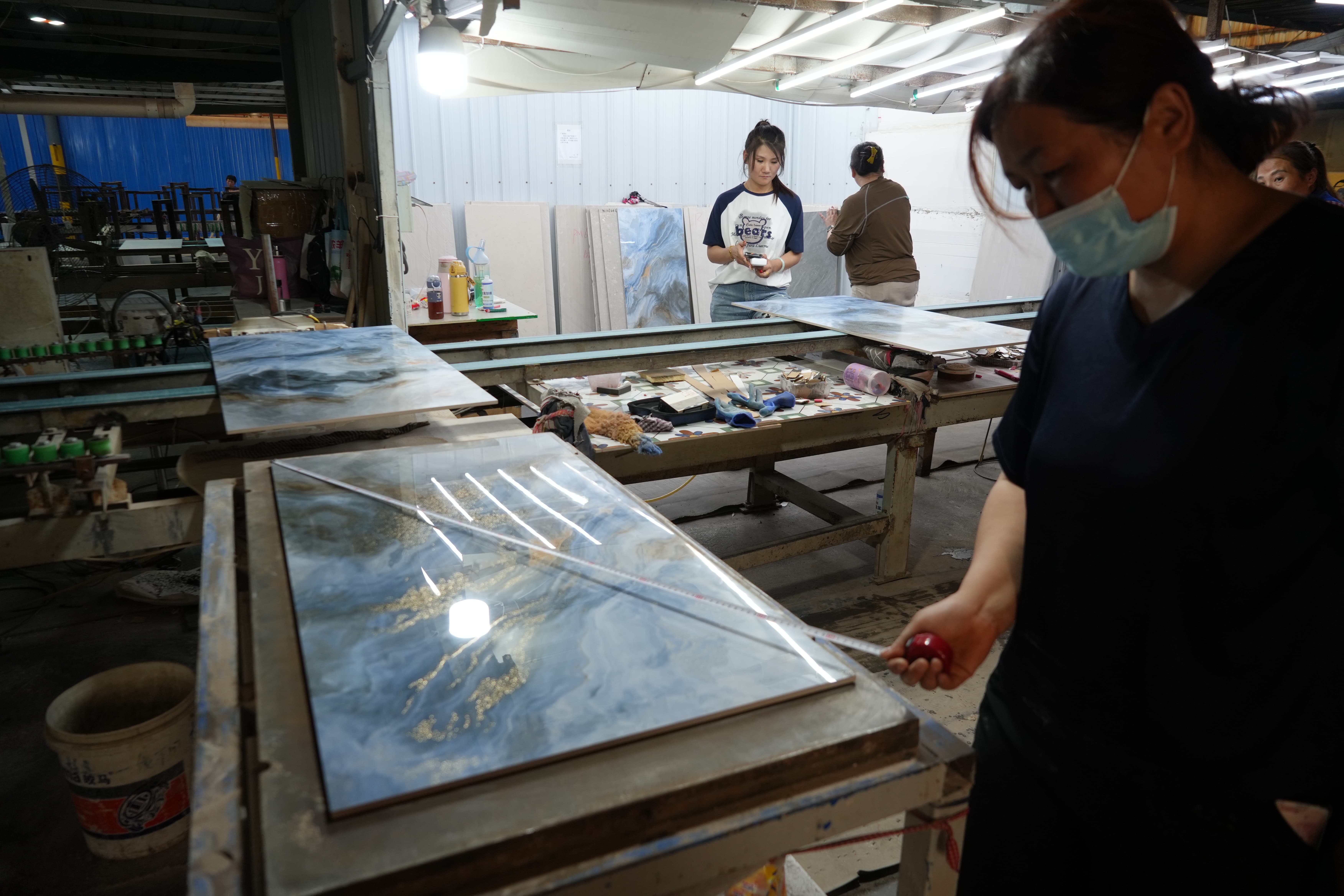
Flatness testing during in-line quality control — the check that governs joint consistency on 60x120cm commercial floors.
What the CE and ISO 9001 certificates actually cover
Both the Marble Series and the Travertine are linked in the product records to the same two certificates, and both certificates are worth reading closely because their scopes are narrower than the general phrase “CE and ISO certified” suggests.
CE certificate AC 50163816 0001
The CE record lists certificate number AC 50163816 0001, TÜV as the issuing authority, the EU as the market, and the scope as “Ceramic tiles — Dry-pressed ceramic tiles, for internal flooring”, with the standard reference recorded as EEC. Two practical points follow. First, the certificate is a product conformity document tied to a defined scope: dry-pressed ceramic tiles for internal flooring. A project that intends to use the same tile on an external façade, a balcony or an exposed terrace is outside that stated scope and should not present the CE marking as covering that application without separate confirmation. Second, the supplied certificate record does not carry usable issue or expiry dates, so validity must be confirmed from the certificate copy or the issuing body’s registry before the document is placed in a submittal.
ISO 9001 certificate 0350521Q30166R1M
The ISO 9001 record lists certificate number 0350521Q30166R1M, XQCC as the issuing authority, global markets, and a scope of “Production and service of Ceramic Tile (except as required by 3C)”, against the ISO 9001:2015 standard. This certifies the quality management system around production and service. It is not a product performance certificate, and it does not certify water absorption, abrasion class, slip resistance or breaking strength for a specific SKU. Those properties are demonstrated by the product parameters and by batch test records, which is why the two document types belong side by side in a submittal rather than substituting for one another.
What neither certificate establishes
The published parameter set for both lines does not include a slip resistance rating, a freeze-thaw test result, a fire classification, an antibacterial performance claim or a VOC emission figure. Those properties are listed elsewhere in the company’s application and customization data as project requirements — anti-slip R10/R11, frost resistance, low VOC, acid and alkali resistance and ISO 13006 compliance appear as declared application requirements, and anti-slip rating appears as a customization option — but a declared requirement is not the same as a measured value attached to a named SKU.
For a mall entrance, a hospital corridor, a cold-climate exterior threshold or a specification that names a fire class, the correct action is to request the specific test report for the ordered product and finish, and to confirm that the report matches the batch and the intended application. Hospital projects that require an antibacterial surface, and buildings that require a stated fire classification, should treat those as separate verification items rather than assuming coverage from the general certification set.
Where the two lines genuinely differ
Three differences are supportable from the supplied records, and all three are design or process differences rather than performance differences.
- Design reference. The two lines are distinguished by the stone reference in their names — Marble Series and Travertine. This is the primary basis on which a designer will prefer one over the other, and it is the reason the decision must be made on a physical sample rather than on a parameter table.
- Surface appearance must be verified, not assumed. The supplied records publish format, body, thickness, absorption, abrasion, hardness, strength, modulus of rupture, material and packing for both lines, but they do not publish colour ranges, vein patterns or surface finish data. Any statement about how one line “looks” relative to the other has to come from the sample, and the approved sample should be retained as the contractual reference.
- Customization route. The manufacturer’s OEM/ODM capability covers custom size and thickness, surface finish, OEM brand logo and packaging, pattern variation including marble vein customization, and anti-slip rating. Those options are available on the supply side of either line, which means a project can take its chosen design reference and then adjust finish, thickness or slip rating to the application.
In a recorded multi-application project of 15,000 m² covering hotel lobby, commercial mall flooring, office building façade, high-end apartment bathrooms and an airport departure hall, the company-reported highlights include low water absorption, high flatness, high wear resistance, random marble veins and “cost-effective premium quality”, with results described as seamless aesthetic presentation, zero-defect durability, easy maintenance and stain-free performance, 100% project acceptance and zero maintenance complaints over a 20+ year timeframe. These are company-recorded project descriptions rather than independently audited outcomes, and they should be read as an indication of what the manufacturer reports for mixed high-traffic applications, not as a warranty for a new project.
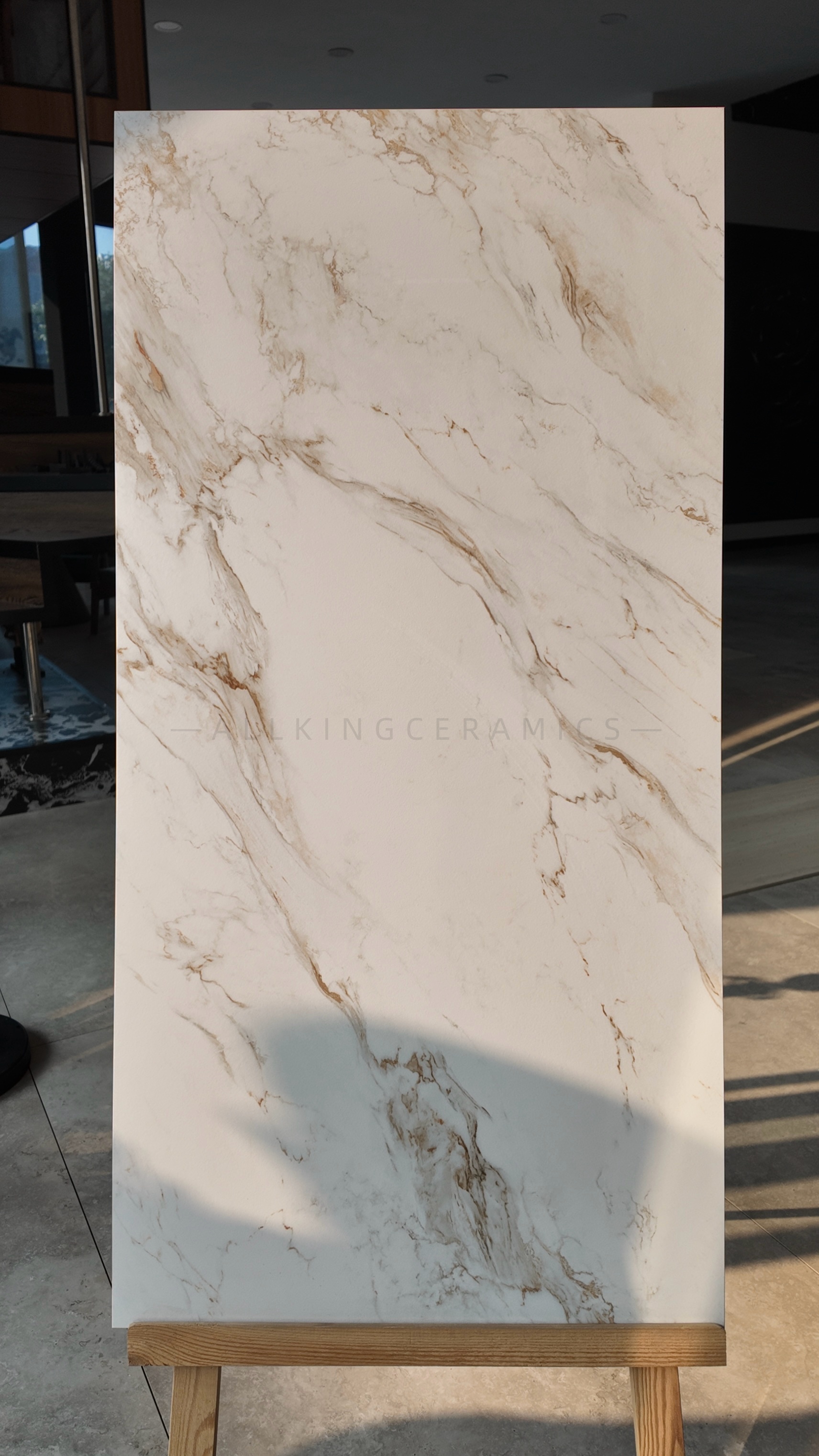
Marble Series 60x120cm vitrified porcelain tile — one of the two design references assessed for high-traffic commercial floors.
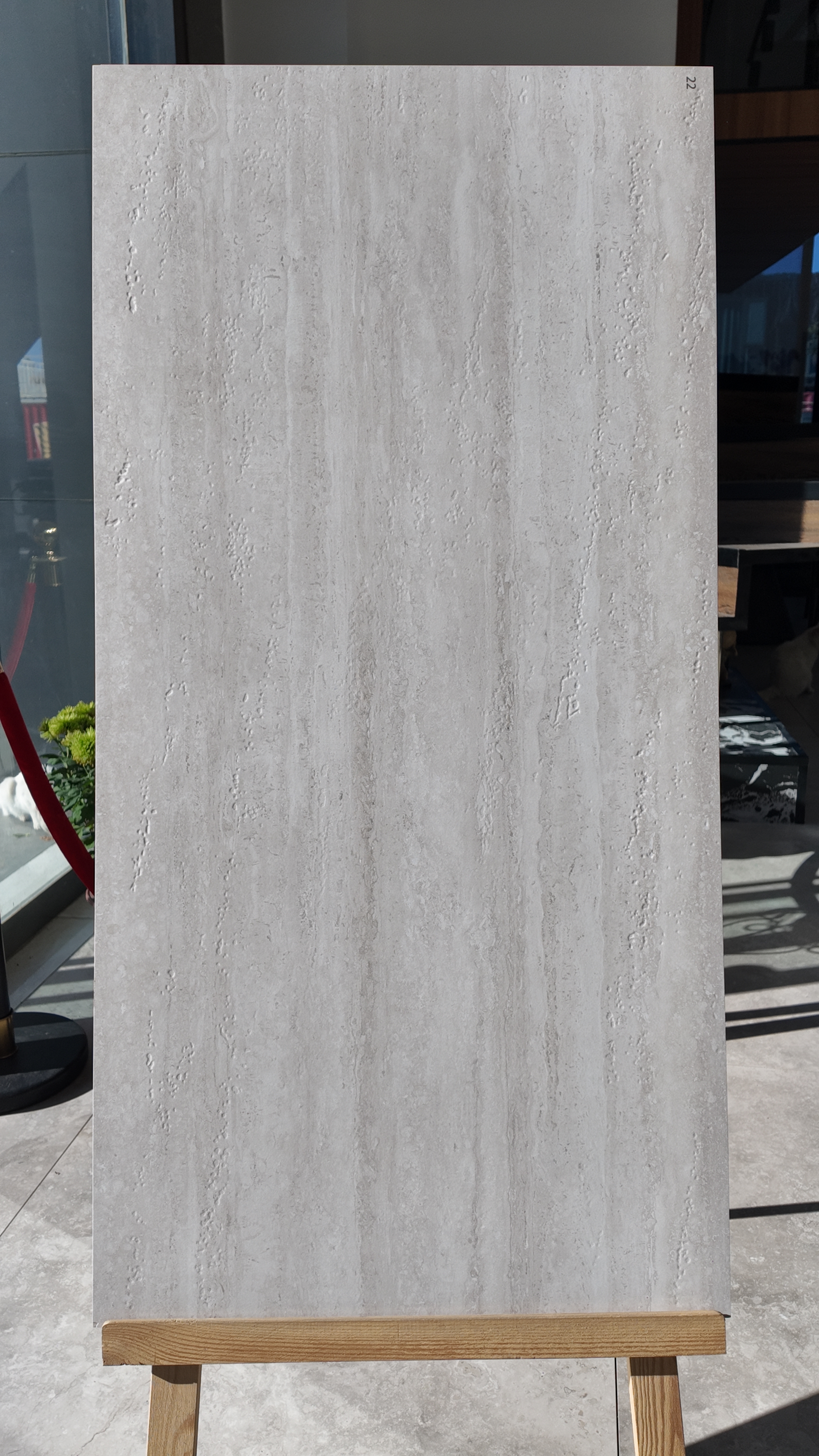
Travertine 60x120cm porcelain tile — the second design reference, published with an identical technical parameter set.
Side-by-side comparison table
The table below compares only the values recorded in the two product specifications and the linked certificate records. Where the two columns are identical, that is a finding in itself: the specification cannot be used to rank one line above the other.
| Criterion | Marble Series (record 4765) | Travertine (record 5624) | What it means for the buyer |
|---|---|---|---|
| Format | 60x120cm porcelain tile | 60x120cm porcelain tile | Same module; joint layout and handling plan are identical |
| Body / material | Porcelain clay, vitrified | Porcelain clay, vitrified | Same density class and cleaning regime |
| Water absorption | Below 0.5% | Below 0.5% | Both meet the porcelain threshold; no differentiation |
| Abrasion resistance | PEI 4 / PEI 5 | PEI 4 / PEI 5 | Range must be fixed at SKU level for transit and mall spines |
| Mohs hardness | 6–7 | 6–7 | Comparable scratch resistance band |
| Breaking strength | ≥1300 N | ≥1300 N | Same minimum; not a point-load or vehicle-load rating |
| Modulus of rupture | ≥35 MPa | ≥35 MPa | Same minimum bending performance |
| Thickness | 9.0–10.5 mm | 9.0–10.5 mm | Band must be fixed to plan adhesive and thresholds |
| Packing | 2 pcs/box = 1.44 m² | 2 pcs/box = 1.44 m² | Identical box count per square metre |
| CE certificate | AC 50163816 0001 (TÜV), internal flooring scope | AC 50163816 0001 (TÜV), internal flooring scope | Same scope limit; external use needs separate confirmation |
| ISO 9001 certificate | 0350521Q30166R1M (XQCC), ISO 9001:2015 | 0350521Q30166R1M (XQCC), ISO 9001:2015 | Quality management system, not a product test result |
| Published slip rating | Not stated in the parameter set | Not stated in the parameter set | Specify and verify R rating for wet areas |
| Freeze-thaw data | Not stated in the parameter set | Not stated in the parameter set | Request test evidence for cold-climate projects |
| Design reference | Marble reference | Travertine reference | The actual decision criterion — approve on sample |
Matching each line to high-traffic applications
Because the technical envelope is shared, application mapping works the same way for both lines: the building type sets the mandatory checks, and the design reference then selects between them. The mapping below shows what drives each building type.
Shopping mall flooring. Mall circulation, food courts and entrances combine high footfall with frequent machine cleaning and occasional wet tracking. Both lines sit in the PEI 4 / PEI 5 band and both are vitrified, so the practical differentiators are the visual continuity of a large-format floor across long sightlines, and the slip requirement at entrances and food areas — which must be specified, since no slip rating is published in either parameter set.
Hotel lobbies and public areas. Hotel work is design-led, and this is where the Marble Series and Travertine references will most often be compared directly. Large-format flatness matters more here than in almost any other application, because a 60x120cm floor in a lobby is usually viewed under raking light and reflected in glass and polished metal. Approve the sample under the project’s actual lighting, and confirm the flatness and sizing controls described in the inspection regime.
Airport terminals and railway stations. These are the most demanding interior floors in the mix: continuous traffic, rolling luggage and cleaning machines, and long service intervals between closures. Specify the fixed PEI class, confirm slip performance for the concourse condition, and plan movement joints with the installer. Where a fire classification is required by the building code, request the specific report — the general certification set does not include one.
Logistics and warehouse floors. Published breaking strength and modulus of rupture describe bending performance, not dynamic wheel loads or racking point loads. For a heavy-duty warehouse, treat the tile as one component of an engineered build-up: select thickness at the upper end of the range if the design allows, define substrate flatness and adhesive coverage, and have the load case reviewed rather than inferred from a ≥1300 N figure.
Hospitals and healthcare buildings. Healthcare floors are driven by cleanability, chemical tolerance and joint minimisation. A low-absorption vitrified body supports frequent washing, and the large format reduces joint count. Antibacterial performance is not among the published parameters, so a specification requiring it needs a dedicated test report; do not read it into the general certificate set.
Education facilities. Schools and universities combine heavy footfall with impact and occasional heavy furniture movement. The shared PEI and hardness band is a reasonable starting point, and slip performance in wet circulation areas should be specified rather than assumed.
Outdoor and cold-climate use. Frost resistance appears in the company’s declared application requirements, and the low water absorption of a vitrified body is consistent with that intent, but no freeze-thaw test result is published for either line, and the CE scope recorded is internal flooring. For exterior paving, balconies or unheated spaces in Central Asian and Russian climates, request the specific frost-resistance evidence and confirm the intended application in writing before the tile is specified.
A five-step specification and sample approval sequence
The sequence below closes the gaps that a parameter comparison leaves open, and it applies identically to the Marble Series and the Travertine.
- Fix the SKU parameters in writing. Convert the ranges into single values: delivered thickness within 9.0–10.5 mm, abrasion class (PEI 4 or PEI 5), surface finish, and the design reference. Ranges are correct on a product sheet but unhelpful on a purchase order.
- Verify certificate scope and validity. Obtain the CE certificate copy for AC 50163816 0001 and the ISO 9001 copy for 0350521Q30166R1M, check current validity, and confirm that the intended application sits inside the recorded scope of dry-pressed ceramic tiles for internal flooring.
- Approve physical samples of both lines. Request samples in the specified finish, view them under the project’s lighting, and compare them against the interior design intent. Retain the approved sample as the reference for production and for any later reorder.
- Secure the mandatory test evidence. Where the specification names slip resistance, freeze-thaw resistance, fire classification or antibacterial performance, obtain the report for the ordered product and finish before award — not after delivery.
- Lock packing, batch and delivery. Confirm box quantity, pallet configuration, batch marking and the delivery schedule, and agree how batch tracking and reordering will work across the construction programme.
Step three deserves emphasis. With two lines that are technically identical, the sample is the only artefact that carries the decision, and an unapproved substitution after award has no technical justification to fall back on.
Order planning: MOQ, packing, capacity and freight
Order planning is the same for either line, and the numbers below come from the manufacturer’s capability record.
MOQ and trial orders. The minimum order quantity is listed at 400 m² per design, with trial orders accepted. For a project testing a new design reference, a trial order at that level is a practical way to validate the sample against a full production batch before committing the main quantity.
Packing arithmetic. Both lines pack 2 pieces per box at 1.44 m² per box, which follows from the 0.72 m² area of a single 60x120cm tile. A 1,000 m² order therefore equals approximately 695 boxes (1,000 ÷ 1.44, rounded up) — a calculated figure that should be re-checked against the final measured area, wastage allowance and any cut-piece schedule. Tiles are shipped on fumigated wooden pallets, which matters for destination countries with phytosanitary requirements.
Capacity and production lead time. Monthly capacity is listed at 1.2 million m², with an annual output of 12–16 million m² and a stated lead time of 7–10 days. That lead time covers production; it does not cover transit, port or border handling, or installation.
Freight and transit. The company’s export market list includes Russia, Belarus, Ukraine, Malaysia, the Philippines, Iraq, the UAE, Australia, New Zealand, South Korea, Vietnam and several Latin American markets, and its stated regional coverage extends to Central Asia. For landlocked Central Asian destinations, rail is the corridor most often used: one commercial logistics source places China–Central Asia FCL rail transit at 10–14 days, and that figure should be treated as a planning input rather than a guaranteed schedule, because border queues and corridor congestion move independently of the factory. Regional demand context is relevant here — Kazakhstan construction output grew 15.9% year on year in 2025 according to the Bureau of National Statistics of Kazakhstan, and the Russian ceramic tile market was estimated at USD 2.90 billion in 2025 by Mordor Intelligence, with published growth forecasts for Russia diverging between sources.
Limitations and open items in the published data
A comparison is only useful if it states what remains unresolved. For these two lines, the following items are not established by the supplied documentation and should be closed before a purchase order:
- No side-by-side independent performance test exists between the Marble Series and the Travertine; their equivalence rests on identical published parameters, not on comparative testing.
- No colour, vein-pattern or surface-finish data is published for either line, so appearance can only be judged from physical samples.
- No slip resistance value (R rating), freeze-thaw result, fire classification, antibacterial claim or VOC figure is published in either parameter set.
- No FOB or CIF price is published for either line; commercial terms depend on quantity, finish, customization, packing and freight corridor.
- The CE and ISO 9001 records supplied do not carry usable issue or expiry dates, so validity must be confirmed from the certificates themselves.
- The 15,000 m² multi-application project description is company-recorded and has not been independently audited.
Frequently asked questions
Do the Marble Series and Travertine tiles both meet CE and ISO 9001 requirements for a commercial project?
Both product records are linked to the same CE certificate, AC 50163816 0001 issued by TÜV with a scope of dry-pressed ceramic tiles for internal flooring, and the same ISO 9001 certificate, 0350521Q30166R1M issued by XQCC against ISO 9001:2015 for the production and service of ceramic tile. The CE certificate covers internal flooring within its stated scope; external or façade applications fall outside it and need separate confirmation. ISO 9001 certifies the production and service management system rather than individual product performance. Buyers should obtain current certificate copies and confirm validity before including them in a submittal.
Can both 60x120cm lines be supplied in the volume a large commercial project requires?
Yes, on the manufacturer’s published figures. Monthly capacity is listed at 1.2 million m², annual output at 12–16 million m², and the minimum order quantity at 400 m² per design, with trial orders accepted. Customization covers custom size and thickness, surface finish, pattern variation including marble vein customization, anti-slip rating, and OEM brand logo and packaging. Quality control is described as 100% flatness and sizing auto-check, piece-by-piece visual inspection, and random laboratory testing per batch.
Is one line more expensive than the other?
No price is published for either line, and the two are specified identically in format, body, thickness band, packing and certification, so there is no documented basis for a price difference between them. Commercial terms depend on quantity, the finish and customization selected, packing requirements, and the freight corridor to the destination. A quotation should be requested against the fixed SKU parameters rather than against the line name alone.
How should a project team choose between the two lines?
Choose on appearance and design intent, verified on physical samples approved under the project’s own lighting, because the technical parameters are identical. Then close the mandatory checks — fixed PEI class, delivered thickness, slip rating for wet areas, freeze-thaw evidence for cold climates, fire classification where required — and lock packing, MOQ and the delivery schedule around the approved sample.
What is the lead time, and how is a Central Asian or Russian project supplied?
Production lead time is listed at 7–10 days, separately from transit. For landlocked Central Asian destinations, rail freight is the usual corridor; one commercial logistics source places China–Central Asia FCL rail transit at 10–14 days, which should be planned as an estimate rather than a guaranteed schedule. The manufacturer’s export coverage includes Russia, Belarus and Ukraine, with stated regional coverage extending to Central Asia, and support covers batch tracking and reordering, damage compensation, online installation guidance and 24/7 technical consultation. To compare the Marble Series and Travertine with a project’s own specification, request physical samples and a quantity-based quotation using the details below.
Conclusion
The Marble Series and the Travertine 60x120cm porcelain tiles are not two performance grades — they are one performance baseline in two design references. Both are vitrified porcelain with water absorption below 0.5%, PEI 4 / PEI 5 abrasion resistance, Mohs 6–7 hardness, breaking strength of at least 1300 N, modulus of rupture of at least 35 MPa, a 9.0–10.5 mm thickness band and 2 pieces per 1.44 m² box, and both are linked to the same CE and ISO 9001 certificates. Selecting between them is a design decision confirmed on a physical sample, supported by a compliance file that states the certificate scope honestly and closes the open items — slip rating, freeze-thaw evidence, fire classification and fixed SKU parameters — before award.
For specifiers comparing the two lines against a live project specification, ALL KING CERAMICS supplies samples, quantity-based quotations and the catalogue below.
Next step: request physical samples of the Marble Series and the Travertine in the required finish, or send the project schedule and specification for a quantity-based quotation. The product catalogue is available for download: ALL KING Ceramics Catalogue (PDF).
Company profile and full format range: ALL KING CERAMICS — manufacturer and direct exporter of 60x120cm porcelain tiles and complementary formats, serving contractors, distributors and builders across Australia, New Zealand, Russia, Belarus, Ukraine, South Korea, Southeast Asia, Central Asia, the Middle East, the UAE and Latin America.
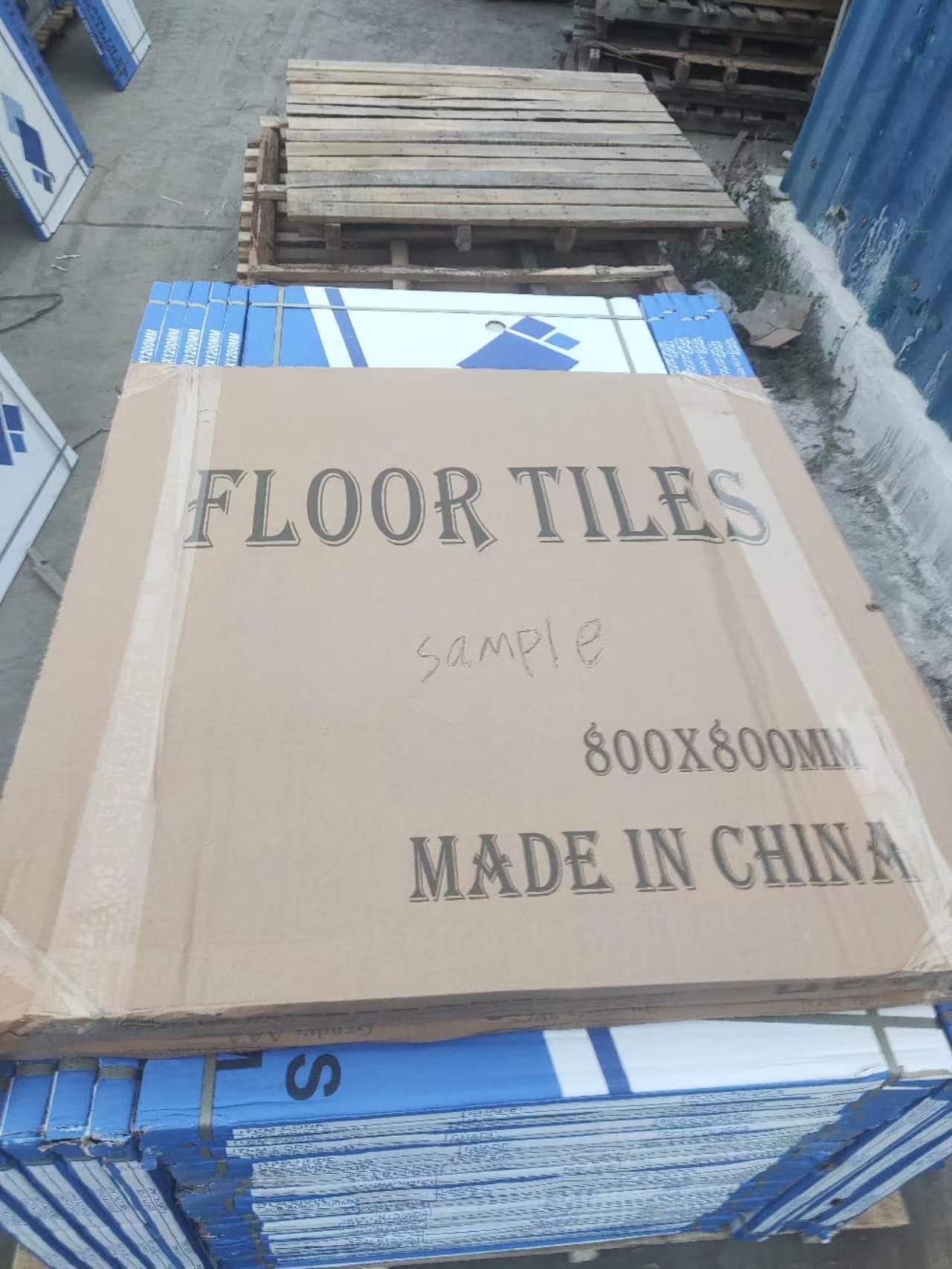
OEM packaging option: branded cartons are available for either line when the project requires private-label delivery.
Have Questions or Need More Details?
Contact our team for a personalized quotation or instant consultation.
Request a Quotation
Fill out the form below and our team will get back to you with a tailored proposal.
WhatsApp Direct Chat
Prefer to chat in real-time? Message us on WhatsApp for instant assistance & quick answers.
- Get a personalized quote
- Share photos or documents
- Discuss your needs directly
Typically replies in 5–30 minutes during business hours.