
Commercial Tile Solutions by Region: Central Asia, Russia & Southeast Asia
Commercial Tile Solutions by Region: Central Asia, Russia & Southeast Asia
Selecting commercial tile solutions for a construction project is rarely a matter of picking a color. A shopping mall in Manila, a hotel in Almaty, a residential tower in Moscow, and a logistics hub in Tashkent all place different demands on porcelain tile: climate, traffic load, slip resistance, frost performance, supply logistics, and compliance. This guide explains how commercial tile requirements vary across Central Asia, Russia, and Southeast Asia—and how ZIBO ALL-KING CERAMICS CO., LTD (trading as ALL KING CERAMICS) meets those requirements as a direct factory supplier and exporter.
Defining Commercial Tile Solutions: What Buyers Are Actually Asking For
In procurement terms, a commercial tile solution is not a single SKU. It is a combination of product specification, compliance evidence, packaging, load planning, and after-sales support tailored to a specific building type and operating environment. For global projects, buyers increasingly ask suppliers four questions before anything else:
- Is the tile physically suitable for the traffic and climate? High-traffic public areas such as airports and railway stations generally require a slip resistance rating of R10 or R11 under DIN 51130.
- Does the product meet recognized standards? Porcelain tiles for commercial use are classified under ISO 13006 / EN 14411 (Group BIa) when water absorption is ≤ 0.5%.
- Can the factory supply project volumes on schedule? This depends on production capacity, packing line capacity, and freight experience.
- What happens after the container ships? Documentation, quality claims, and reordering need a responsive manufacturer.
ALL KING CERAMICS addresses these questions as a manufacturer and direct exporter, with 70% of revenue coming from export sales.
Regional Demand Drivers for Commercial Porcelain Tiles
Central Asia: Frost Resistance and Large-Format Aesthetics
Central Asia—particularly Kazakhstan and Uzbekistan—is one of the fastest-growing construction markets for porcelain tile imports. The application scenario for commercial real estate is common in Australia, Canada, Kazakhstan, the Philippines, and other countries, according to ALL KING CERAMICS' project records. For Kazakhstan developments, winter temperatures create repeated freeze-thaw cycles. Commercial-grade frost resistance is tested under ISO 10545-12, which requires tiles to withstand at least 100 freeze-thaw cycles. Buyers specifying porcelain tile supplier Uzbekistan or commercial flooring tiles for Kazakhstan developments should verify this test data before approving a product.
In 2024, Uzbekistan imported USD 125 million of ceramic products, with China the top supplier at USD 75.1 million (OEC). That trade flow reflects a broader pattern: Central Asian developers increasingly source from Chinese manufacturers who can combine frost-resistant porcelain bodies with modern large-format finishes, such as 60x120cm and 75x150cm porcelain tiles.
Russia: Large Project Volumes and Reliable Documentation
The Russia ceramic tiles market was valued at approximately USD 3.2 billion in 2024, with projected growth to USD 5.10 billion by 2032 (Verified Market Research). For real estate projects in Russia, buyers typically need commercial tiles that can survive both heavy indoor traffic and cold exterior conditions. They also need a supplier with logistics experience, because rail freight and border clearance influence whether a project stays on schedule.
ALL KING CERAMICS lists Russia and Belarus among its major export markets, alongside Australia, New Zealand, South Korea, Vietnam, Malaysia, the Philippines, Peru, Panama, Colombia, Chile, Bolivia, Guatemala, Palestine, Iraq, Ukraine, and the United Arab Emirates.
Southeast Asia: High Traffic, Humidity, and Hotel Retail Aesthetics
The Southeast Asia ceramic tiles market is valued at approximately USD 11.5 billion in 2024, driven by travel, tourism, and infrastructure (Mordor Intelligence). For shopping mall flooring tiles in Malaysia and apartment project tiles in the Philippines, the operating conditions are different from Central Asia: heat, humidity, wet-floor areas, and continuous foot traffic. Slip resistance becomes a safety requirement, not an option.
China's ceramic tile exports to the Philippines grew 77.5% year-on-year in March 2025, reaching USD 29.6 million, according to Cerambath Organization / customs data. Filipino developers are actively sourcing large-format porcelain tiles from China, especially for apartment towers and mixed-use projects.
How ALL KING CERAMICS Structures Its Commercial Tile Offer
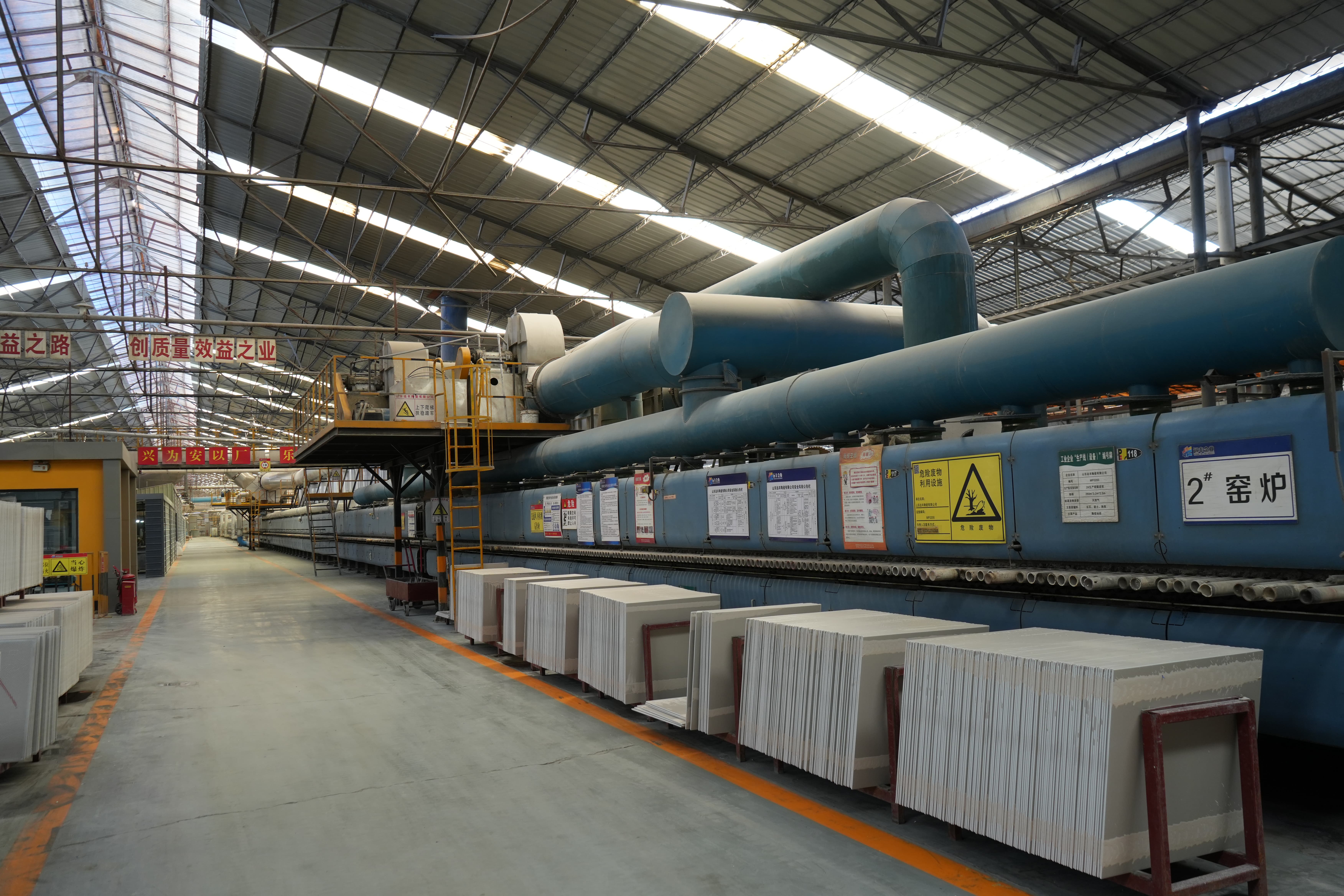
ALL KING CERAMICS operates a 60,000 m² manufacturing facility with an annual production capacity of 12 to 16 million square meters, and employs approximately 320 staff. The company, established in 2011, manufactures and directly exports premium architectural ceramics. Its R&D team includes 25 engineers. For buyers, this means one counterparty controls production, quality testing, and export documentation.
Core Product Range
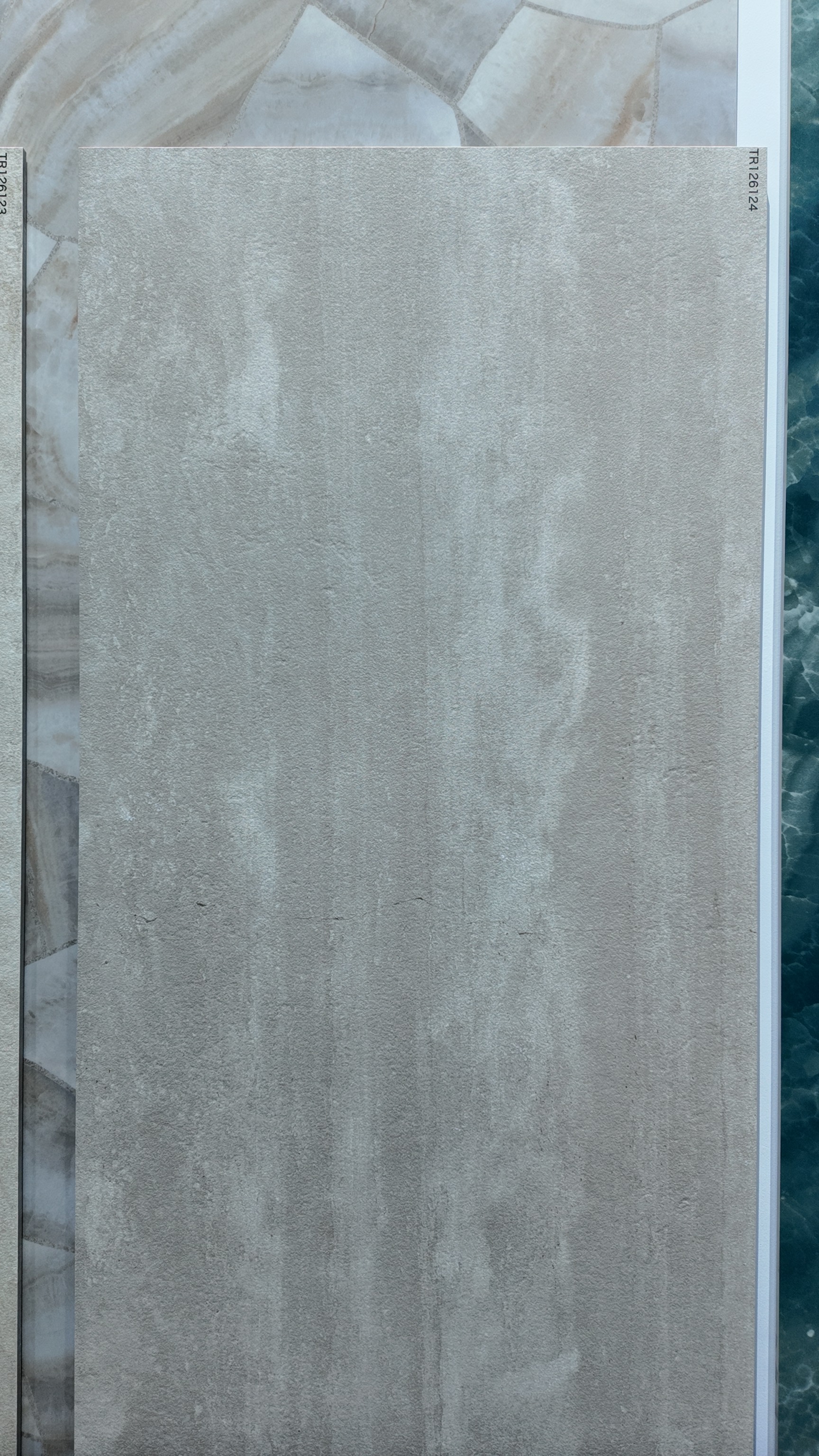
- 60x120cm porcelain tiles — flagship format, including Marble Series and Travertine models
- 75x150cm porcelain tiles — large-format for lobbies, hotel floors, and facade cladding
- 80x80cm porcelain tiles — standard commercial floor format
- 60x60cm ceramic tiles — versatile commercial specification
- 100x100cm floor tiles — large-format floor solution
Flagship Product Technical Profile
Both the Marble Series and Travertine models are 60x120cm porcelain tiles made of porcelain clay with a vitrified structure. Technical specifications include:
| Property | Value |
|---|---|
| Dimensions | 60 cm × 120 cm |
| Thickness | 9.0–10.5 mm |
| Water absorption | < 0.5% (Vitrified) |
| Abrasion resistance | PEI 4 / PEI 5 |
| Mohs hardness | 6–7 |
| Breaking strength | ≥ 1300 N |
| Modulus of rupture | ≥ 35 MPa |
| Packing | 2 pcs/box (1.44 m²/box) |
Water absorption below 0.5% places these tiles in the porcelain/vitrified category, which aligns with the ISO 13006 / EN 14411 Group BIa classification used for commercial porcelain tiles.
Matching Tile Solutions to Project Types
Different project types require different combinations of performance properties. ALL KING CERAMICS' commercial real estate application data covers flooring and wall cladding, commercial fit-out, interior decoration, facade engineering, and hotel renovation. The operating conditions include high traffic, frost and freeze-thaw, wet and slippery surfaces, thermal shock, and heavy surface load.
Hotel Flooring Solutions in Eastern Europe
Hotel corridors and lobbies combine wheeled luggage traffic, frequent cleaning, and design sensitivity. Large-format 60x120cm porcelain tiles reduce grout lines, which simplifies maintenance and creates a more premium visual. For Eastern European hotel projects, frost resistance is also relevant for entrances and outdoor terraces.
Railway Stations and Airport Terminals
Railway station flooring and airport terminal porcelain tiles must handle non-stop foot traffic, rolling luggage, and frequent mechanical cleaning. High-traffic public areas require slip resistance of R10 or R11, and the tile body must resist staining and abrasion. A PEI 4 / PEI 5 abrasion rating and low water absorption make vitrified porcelain tile a practical choice for these environments.
Shopping Malls in Malaysia and the Philippines
Shopping mall flooring tiles in Malaysia and apartment project tiles in the Philippines face humidity, wet cleaning, and dense foot traffic. Anti-slip surface performance and stain resistance are critical. The same 60x120cm porcelain tile format works across both applications because it combines durability with a wide choice of stone and marble visual designs.
Logistics Warehouses and Industrial Facilities
Logistics warehouse heavy duty tiles and full body porcelain tiles for industrial use need high breaking strength, impact resistance, and low water absorption. The 60x120cm porcelain tile with ≥ 1300 N breaking strength and ≤ 0.5% water absorption is better suited to these conditions than standard ceramic wall tile. For forklift-heavy zones, a project engineer should verify the full body thickness and recommend appropriate joint and adhesive systems.
Hospitals and Educational Facilities
Hospital antibacterial wall tiles and educational facility flooring tiles are being specified more often in healthcare and institutional real estate. Antibacterial porcelain tiles are increasingly specified for healthcare real estate, and low VOC emissions are a growing requirement for enclosed public spaces. ALL KING CERAMICS' commercial real estate scenario includes low VOC emissions, acid and alkali resistance, and zero water penetration as special requirements.
Exterior and Special Conditions
Fire rated porcelain flooring and frost resistant outdoor porcelain tiles are often requested for transit hubs, commercial plazas, and mixed-use developments. The combination of frost resistance, slip resistance, and freeze-thaw durability is what separates a commercial-grade porcelain tile from a purely interior product.
Step-by-Step Process for Specifying and Purchasing Commercial Tiles
- Define the operating environment. Indoor or outdoor? Freeze-thaw? Wet areas? Heavy loads? This determines whether you need frost resistance, R10/R11 slip resistance, PEI 4/5 abrasion rating, or a thicker body.
- Select the tile category. For projects where water absorption must be very low, specify porcelain tile with ≤ 0.5% water absorption (vitrified), consistent with ISO 13006 / EN 14411 Group BIa.
- Verify compliance evidence. For frost-prone regions, check ISO 10545-12 freeze-thaw test data. For public floors, check slip resistance per DIN 51130.
- Choose a format. 60x120cm is widely stocked and cost-efficient; 75x150cm and 100x100cm suit large lobbies and open spaces.
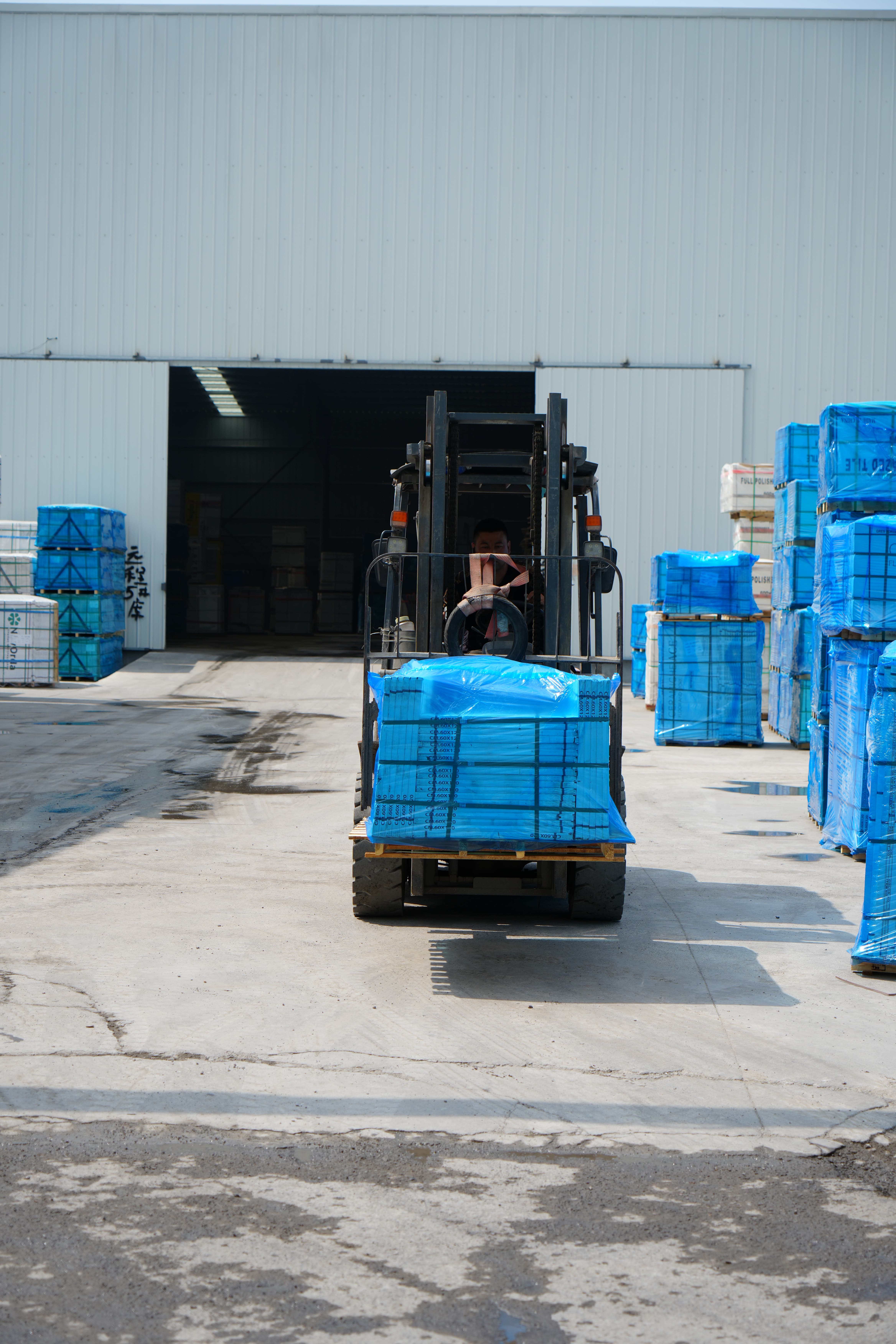
- Confirm packaging and freight. Ask for packing details: ALL KING CERAMICS packs 60x120cm porcelain tiles at 2 pcs/box (1.44 m²/box). If rail freight is required, confirm the supplier’s export experience with the destination country.
- Request samples and technical documents. Evaluate color, flatness, surface texture, and slip performance before approving production.
- Plan for supporting materials. Tile adhesive and grout, leveling system, tile spacers, diamond cutting tools, and subfloor preparation system are typically required. For facade hanging systems (wall cladding), confirm compatibility with the tile thickness and weight.
Supplying Large Projects: Capacity, Quality Control, and Export Experience
Commercial projects rarely specify a single container. They need a manufacturer who can sustain consistent quality across multiple shipments. ALL KING CERAMICS' production facility covers 60,000 square meters and produces 12 to 16 million square meters annually. The factory performs water absorption tests, slip resistance tests, flatness checks, and online quality control during production. Packaging is another important link: the company uses automatic tile packing and pallet packaging designed for export shipments.
Supplier Comparison: What a Global Commercial Project Buyer Should Evaluate
| Selection Criteria | ALL KING CERAMICS (Manufacturer/Exporter) | Typical Trading Company | Local Distributor |
|---|---|---|---|
| Factory-direct pricing | Yes — production plus direct export | Adds intermediary margin | Adds local warehousing margin |
| Quality control | In-house QC and production-line testing | Depends on factory; less direct control | Limited to stock inspection |
| Customization / OEM | R&D team of 25 engineers; OEM/ODM capability | Often limited to existing orders | Usually not available |
| Project documentation | Export documentation from source | Possible but indirect | May not have full origin docs |
| Large-volume supply | 12–16 million m²/year capacity | Depends on multiple factories | Limited by local stock |
| Freight and packaging expertise | Export packing, pallet packaging, container loading; rail freight experience to Russia / Central Asia | Arranged by third party | Only domestic delivery |
No supplier type is universally best. Trading companies can be flexible for small mixed loads; local distributors provide fast lead times for small quantities. For large infrastructure and commercial projects, a direct manufacturer like ALL KING CERAMICS offers consistency of quality, documentation, and pricing.
Why Supply Chain Reliability Matters for Infrastructure Projects
Railway stations, airport terminals, and logistics warehouses are built on schedules. Any supplier that misses a shipment can delay an entire construction phase. ALL KING CERAMICS has experience exporting to markets across Asia, Europe, the Middle East, and the Americas. For infrastructure projects, buyers should ask about export packing standards, load planning, and the supplier's track record with the destination country. Rail freight solutions to Central Asia and Russia are particularly relevant for projects in Kazakhstan, Uzbekistan, and the Russian Federation.
Commercial Tile Solutions by Region: A Decision Matrix
| Destination / Application | Key Requirement | Recommended Product Direction |
|---|---|---|
| Kazakhstan developments / Central Asia | Frost resistance, freeze-thaw durability | 60x120cm porcelain tile with ISO 10545-12 frost testing |
| Russia real estate projects | Cold-climate durability, large volume, rail freight | Vitrified porcelain tile, project-based supply schedule |
| Uzbekistan commercial buildings | Import compliance, value, large formats | 60x120cm / 80x80cm porcelain tile |
| Malaysia shopping malls | Slip resistance, stain resistance, humidity | R10/R11 rated 60x120cm porcelain tile |
| Philippines apartment projects | Value, durability, design variety | 60x120cm Marble Series / Travertine |
| Eastern Europe hotels | Design, large format, low maintenance | 75x150cm / 60x120cm porcelain tile |
| Railway stations / airports | R10/R11, PEI 4/5, heavy traffic | Vitrified porcelain tile with high abrasion rating |
| Logistics warehouses | Heavy surface load, impact resistance | Porcelain tile with ≥ 1300 N breaking strength |
| Hospitals | Antibacterial surface, low VOC, hygiene | Porcelain tile with zero water penetration, low VOC |
| Educational facilities | Durability, safety, maintenance | PEI 4/5 porcelain tile, anti-slip options |
| Exterior public spaces | Frost, slip, thermal shock | Frost resistant full body porcelain tile |
Specifying Commercial Tiles: A Buyer's Checklist
- Water absorption ≤ 0.5% for true porcelain/vitrified tile
- Abrasion resistance PEI 4 or PEI 5 for high-traffic floors
- Slip resistance R10/R11 for wet or heavy-traffic public areas
- Frost resistance verified per ISO 10545-12 for cold climates
- Breaking strength and modulus of rupture suitable for the load
- Thickness 9.0–10.5 mm for 60x120cm large format
- Low VOC emissions for enclosed public buildings
- Acid and alkali resistance for cleaning chemicals
- ISO 13006 / EN 14411 compliance documentation
- Export packing and container loading plan
FAQ
Do your porcelain tiles meet ISO 13006 standards?
ALL KING CERAMICS' 60x120cm porcelain tiles (Marble Series and Travertine) are vitrified porcelain products with water absorption below 0.5%, which places them in the commercial porcelain tile category consistent with ISO 13006 / EN 14411 Group BIa. For project-specific compliance documentation, contact the company directly with your required standard.
Can ALL KING CERAMICS supply tiles for railway station and airport projects?
Anyone evaluating commercial tile suppliers should ask whether the factory can sustain large-volume production and consistent quality across multiple shipments. ALL KING CERAMICS operates a 60,000 m² facility with annual production capacity of 12 to 16 million square meters and export experience to global markets. For high-traffic transit environments, the product specification includes PEI 4/5 abrasion resistance and R10/R11 slip resistance options.
What are the lead times and minimum order quantities?
Lead time and MOQ depend on the product, quantity, and production schedule. As a direct manufacturer, ALL KING CERAMICS can coordinate production planning with project deadlines. Contact the export team with your confirmed specifications and destination to receive a schedule-specific quotation.
Can I request samples before making a bulk order?
Sample requests are a standard part of the supplier evaluation process. Request samples of the Marble Series and Travertine 60x120cm porcelain tiles, and evaluate color, flatness, surface texture, and slip performance before finalizing specifications. Samples also help verify that the visual matches the project design intent.
Can ALL KING CERAMICS support rail freight to Kazakhstan, Uzbekistan, and Russia?
ALL KING CERAMICS exports to Russia, Belarus, and Central Asian markets and provides export packing designed for long-distance freight. Rail freight is one of the logistics options for the region; a formal quote can be prepared once the destination city and shipment schedule are known.
Can you produce imported-size or customized tile formats?
The company's R&D team includes 25 engineers, and ALL KING CERAMICS positions itself as an OEM/ODM partner for contractors, distributors, and builders. Customization options such as size, surface finish, and packaging can be discussed directly with the factory.
Next step: Request samples or a project quotation for your current development. Email tyceramic2@all-king.com or call/WhatsApp +86-156-5336-9360.
Download the ALL KING CERAMICS Catalog
View the full product range, specifications, and company profile.
Download Catalog (PDF)Conclusion
Commercial tile solutions are defined by regional conditions, project type, and supply chain reliability as much as by design. Central Asia and Russia demand frost-resistant, freeze-thaw-tested porcelain; Southeast Asia demands slip resistance and humidity performance; transit hubs and logistics facilities demand heavy-duty abrasion resistance. ALL KING CERAMICS, a Chinese porcelain tile manufacturer established in 2011, supplies these markets directly from a 60,000 m² factory with 12 to 16 million m² annual capacity, 60x120cm porcelain tile as its core format, and export experience across 18+ countries. By matching the product specification to the operating environment—and verifying compliance, packaging, and freight—buyers can reduce project risk and lifecycle cost.