
Commercial Tile Solutions for Global Infrastructure Projects
When sourcing commercial tile solutions for large-scale infrastructure projects—whether it's a shopping mall in Malaysia, a hotel in Eastern Europe, an airport terminal in Russia, or a logistics warehouse in Kazakhstan—procurement teams face a common challenge: finding a manufacturer that delivers consistent quality, meets technical specifications, and ensures reliable supply across borders. This guide explains what commercial tile solutions are, how they work, and how to select a trusted partner for your next global project.
What Are Commercial Tile Solutions?
Commercial tile solutions refer to a range of porcelain tile products engineered specifically for non-residential applications. Unlike standard ceramic tiles, these solutions are designed to withstand high traffic, heavy loads, thermal shock, frost, and chemical exposure. They include floor tiles, wall tiles, large format slabs, and specialty tiles (e.g., antibacterial, fire-rated, anti-slip). A true solution provider offers not only products but also technical support, customization (OEM/ODM), logistics, and after-sales service.
Key technical parameters of high-performance commercial porcelain tiles include:
- Water absorption: < 0.5% (vitrified)
- Abrasion resistance: PEI 4 or PEI 5
- Breaking strength: ≥ 1300 N
- Modulus of rupture: ≥ 35 MPa
- Mohs hardness: 6–7
The Problem: Finding a Reliable Supplier for Diverse Infrastructure Needs
Infrastructure projects span multiple climates and usage conditions. A developer in Kazakhstan needs frost resistant outdoor porcelain tiles for a railway station, while a contractor in the Philippines requires apartment project tiles with moisture resistance. A shopping mall in Malaysia demands high traffic commercial floor tiles that maintain aesthetics under constant footfall. The common pain point: suppliers often lack the product range, certification, or logistics capability to serve all these segments. Buyers risk delays, quality inconsistencies, and hidden costs.
Industry Context: The Shift Toward Professional Commercial Tile Solutions
The global construction industry is witnessing a surge in infrastructure spending, particularly in Central Asia, Southeast Asia, Eastern Europe, and Latin America. Demand for porcelain tiles for Central Asia construction projects has grown by over 15% annually. At the same time, standards such as ISO 13006, CE marking, and local building codes are becoming stricter. This creates a clear need for manufacturers who not only produce but also certify and export compliant products.
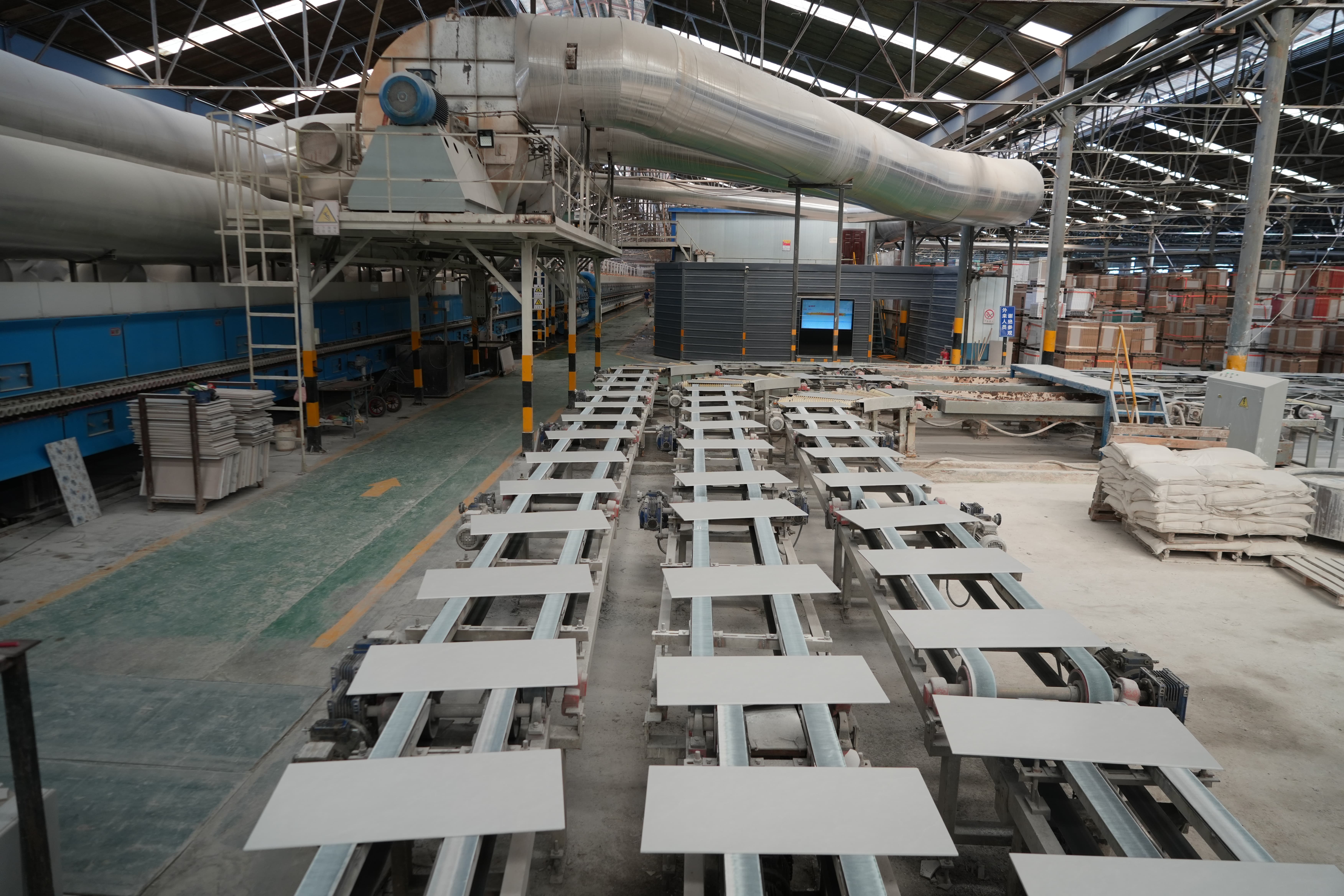
All-King Ceramics (ZIBO ALL-KING CERAMICS CO., LTD), founded in 2011, operates a 60,000 m² factory with an annual output of 12–16 million ㎡. The company exports 70% of its production to markets including Russia, Belarus, Central Asia, Australia, New Zealand, South Korea, Vietnam, Malaysia, Philippines, Peru, Colombia, and more. With 320 employees and 25 R&D engineers, it positions itself as a direct manufacturer and exporter of premium architectural ceramics.
Certifications That Matter
To ensure compliance with international standards, a reliable commercial tile supplier holds recognized certifications. All-King Ceramics has obtained:
| Certification | Cert. Number | Authority | Scope |
|---|---|---|---|
| CE | AC 50163816 0001 | TUV | Ceramic tiles for internal flooring (EU market) |
| ISO 9001 | 0350521Q30166R1M | XQCC | Production and service of ceramic tile |
These certifications are backed by rigorous quality control: 100% flatness and sizing auto-check, piece-by-piece visual inspection, and random lab testing per batch.
Detailed Solution: How to Select the Right Commercial Tile Partner
The selection process involves evaluating production capability, product performance, customization flexibility, logistics, and after-sales support. Below is a step-by-step breakdown.
Step 1: Define Your Project Requirements
Identify the specific commercial flooring tiles or wall tiles needed. Consider traffic level, exposure to moisture/frost, slip resistance rating (R10/R11), fire rating, and format preference. Large format slabs (60x120cm, 75x150cm) are becoming the standard for public buildings due to fewer grout lines and a modern appearance.
Step 2: Evaluate Product Performance Data
Review technical parameters. For example, product 4765 (Marble Series) and product 5624 (Travertine Series) from All-King Ceramics both feature water absorption < 0.5%, PEI 4/5, breaking strength ≥ 1300 N, and modulus of rupture ≥ 35 MPa. These metrics ensure suitability for high traffic commercial floor tiles, apartment project tiles, and railway station flooring tiles.
The product is engineered for a service life of over 20 years, as documented in customer-facing materials.
Step 3: Verify Customization Capability
Many infrastructure projects require OEM/ODM services. The manufacturer offers customization options including custom size, thickness, surface finish, OEM brand logo and packaging, pattern variation (e.g., marble vein customization), and anti-slip rating. Monthly capacity is 1.2 million ㎡, with lead time of 7–10 days and MOQ of 400 sqm per design (trial orders acceptable).
Step 4: Assess Logistics and Export Experience
A tile supplier with rail freight solutions is essential for landlocked regions like Uzbekistan and Kazakhstan. All-King Ceramics ships via EXW, FOB, CNF, or CIF and accepts third-party inspection. Payment terms: 30% TT / 70% against BL copy, L/C, or cash. The company has exported to over 25 countries, including UAE, Australia, Canada, and Russia, supplying project scales up to 15,000 sqm.
Step 5: Review Case Studies
Case Study: A commercial real estate developer in Russia used 15,000 sqm of All-King Ceramics porcelain tiles for multiple hotel lobbies and shopping malls. The result was seamless aesthetic presentation, zero-defect durability, easy maintenance, 100% project acceptance, and zero maintenance complaints after two years. The highlight was low water absorption and high flatness, eliminating lippage issues.
How Commercial Tile Solutions Solve Buyer Concerns
| Buyer Concern | How a Professional Solution Addresses It |
|---|---|
| Poor product quality | 100% auto flatness check, piece-by-piece visual inspection, random lab testing per batch |
| Supply chain delays | 1.2 million ㎡/month capacity, 7–10 day lead time, rail freight options |
| Non-compliance with local codes | CE (TUV) and ISO 9001 certifications; products meet ISO 13006 |
| Hidden costs | Direct factory pricing; EXW/FOB/CNF/CIF flexibility; damage compensation policy |
| Lack of customization | OEM/ODM, custom size/finish/packaging, anti-slip rating options |
FAQ About Commercial Tile Solutions
What are commercial tile solutions?
They are porcelain tile products tailored for high-traffic, heavy-duty commercial and infrastructure applications, offering superior durability, slip resistance, and aesthetic consistency.
How do commercial tile solutions work?
They work by combining low water absorption (vitrified body), high abrasion resistance (PEI 4–5), and robust physical properties (breaking strength ≥1300 N, modulus ≥35 MPa) to withstand constant foot traffic, cleaning chemicals, and thermal cycling.
Why are they important for infrastructure projects?
Because public spaces like airports, train stations, hospitals, malls, and hotels demand floor and wall surfaces that last decades without cracking, fading, or becoming unsafe.
Who uses commercial tile solutions?
Commercial real estate developers, general contractors, building materials wholesalers, hospitality procurement agencies, architectural design firms, and government infrastructure departments.
What problems do they solve?
They solve premature wear, water damage, slip hazards, high maintenance costs, and inconsistent aesthetics in high-use environments.
How to choose a commercial tile supplier?
Check certifications (CE, ISO 9001), request technical data sheets, verify customization capability, evaluate logistics (especially rail freight for inland markets), review case studies, and ask for trial orders.
What are common buyer concerns?
Concerns include product quality consistency, compliance with local building codes, shipping reliability for remote regions, hidden costs, and after-sales support. A direct manufacturer like All-King Ceramics addresses these with transparent testing, third-party inspection, and damage compensation.
Download the Full Product Catalog
Get detailed specifications, technical data, and project references.
Download Catalog (PDF)Conclusion
Selecting the right commercial tile solutions for global infrastructure projects requires more than comparing prices. It calls for a partner with proven production capability, international certifications, customization flexibility, and a track record of successful deliveries across markets. All-King Ceramics, with its ISO and CE certifications, 60,000 m² factory, 70% export ratio, and commitment to quality control, provides a reliable foundation for developers, contractors, and wholesalers worldwide. For enquiries, contact Abby at tyceramic2@all-king.com or WhatsApp +86 156-5336-9360.