
Commercial Tile TCO: Porcelain vs Low-Grade Tiles Compared
Commercial Tile TCO: Porcelain vs Low-Grade Tiles Compared
Published: August 6, 2026 · Buyer stage: Decision
Commercial tile selection is not a unit-price decision. When specifying flooring for shopping centers, hotels, airports, railway stations, or residential towers, project owners and procurement teams must compare the full cost of ownership, not just the price per square meter. Low-grade ceramic tiles may look attractive upfront, but the documented performance gap with porcelain tiles changes the calculation.
ALL KING CERAMICS (ZIBO ALL-KING CERAMICS CO., LTD) is a porcelain and ceramic tile manufacturer and direct exporter operating from a 60,000 m² factory in Zibo, China, founded in 2011. This article compares its commercial porcelain tile range against low-grade ceramic tiles using documented performance, maintenance, and cost data, so procurement teams can make a specification decision on measurable differences.
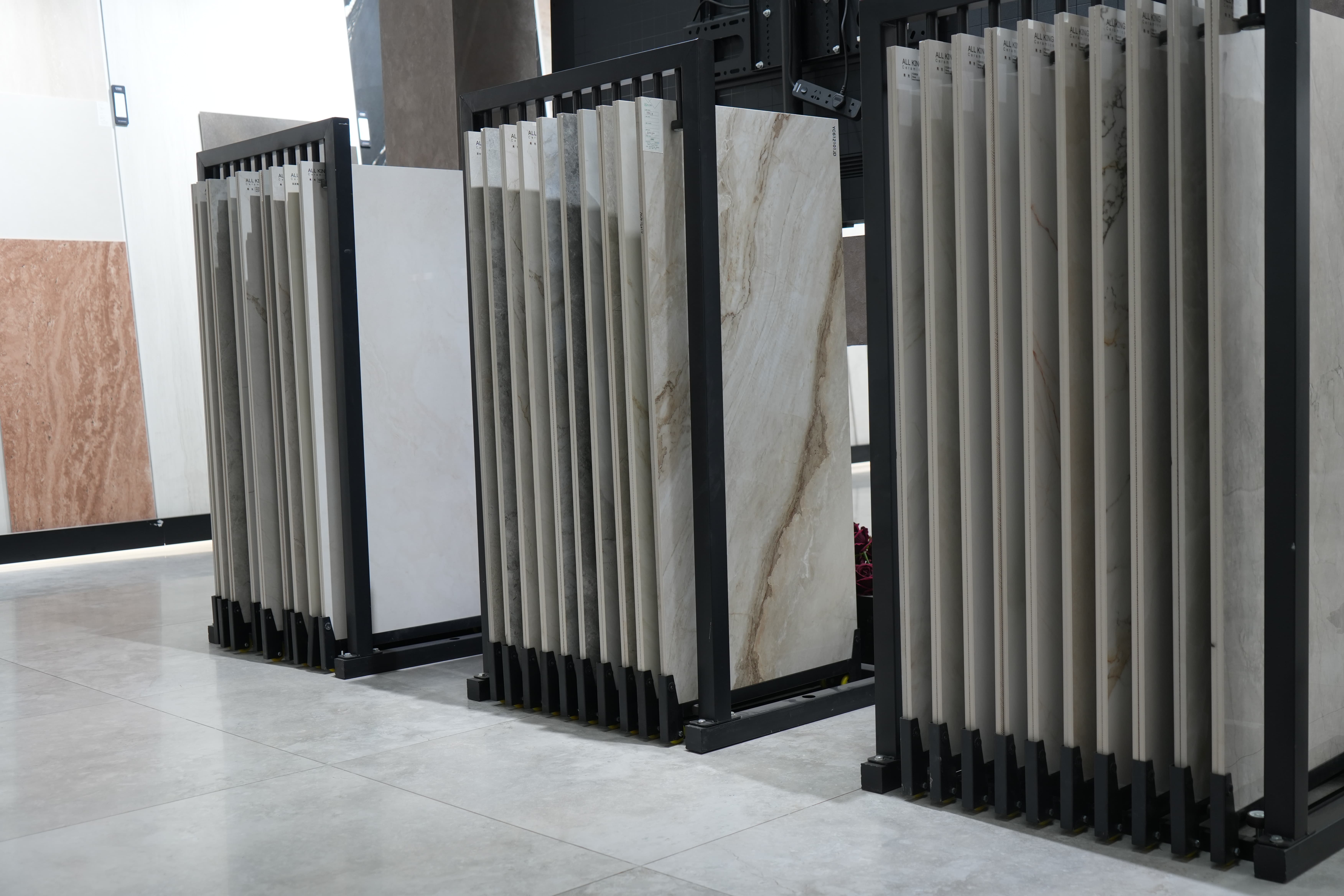
ALL KING CERAMICS porcelain tile samples used in commercial projects worldwide
Defining the Problem: The Hidden Cost of Low-Grade Ceramic Tiles
Low-grade ceramic tiles carry a lower purchase price, but they also carry documented cost penalties in installation, maintenance, and replacement. In commercial environments, these penalties compound quickly because floors are continuously exposed to foot traffic, cleaning chemicals, and heavy loads.
Common risk factors in low-grade tiles include warping, cracking, delaying, fading, and staining. These problems can lead to callbacks, partial replacement, and in some cases full reinstallation, costs that are rarely included in the initial budget.
The comparison data in this article is based on the porcelain tile products manufactured and exported by ALL KING CERAMICS, measured against low-grade ceramic tile alternatives available in the market.
Industry Background: Why Commercial Projects Are Re-Evaluating Tile Specifications
The global ceramic and porcelain tiles market is valued at USD 423.90 billion in 2024 and is projected to reach USD 845.80 billion by 2034 (Custom Market Insights). Within this market, commercial and infrastructure projects are a significant driver of demand for higher-performance products.
Regional demand patterns help explain why the porcelain-versus-low-grade decision matters:
- Russia's ceramic tiles market was valued at USD 3.2 billion in 2024, with projected growth to USD 5.10 billion by 2032 (Verified Market Research).
- Southeast Asia's ceramic tiles market is valued at approximately USD 11.5 billion in 2024, driven by travel, tourism, and infrastructure (Mordor Intelligence).
- Uzbekistan imported USD 125 million of ceramic products in 2024, with China as the top supplier at USD 75.1 million (The Observatory of Economic Complexity).
- China's ceramic tile exports to the Philippines grew 77.5% year-on-year in March 2025, reaching USD 29.6 million (Cerambath Organization / Customs Data).
International standards define the minimum performance expectations for these projects. Porcelain tiles for commercial use are classified under ISO 13006 / EN 14411 (Group BIa) with water absorption equal to or below 0.5%. Commercial-grade frost resistance is tested under ISO 10545-12, requiring tiles to withstand at least 100 freeze-thaw cycles. High-traffic public areas such as airports and railway stations require a slip resistance rating of R10 or R11 per DIN 51130.
Against this backdrop, the economic comparison between porcelain and low-grade ceramic tiles becomes a core decision factor rather than a secondary consideration.
Detailed Solution: ALL KING CERAMICS Commercial Porcelain Tiles
ALL KING CERAMICS is a manufacturer and direct exporter of architectural ceramics headquartered in Zibo, China. The company operates a 60,000 m² factory with 320 employees and maintains an annual output of 12 to 16 million square meters. A dedicated R&D team of 25 engineers supports product development and quality control.
The company's flagship product is the 60x120cm porcelain tile. The factory maintains a format matrix that includes 60x60cm, 80x80cm, and 100x100cm floor tiles, plus 75x150cm porcelain tiles, in a range of textures and styles. Export sales account for approximately 70% of production, with primary markets spanning Australia, New Zealand, Russia, Belarus, Central Asia, South Korea, Vietnam, Malaysia, the Philippines, Peru, Panama, Colombia, Chile, Bolivia, Guatemala, Palestine, Iraq, Ukraine, and the United Arab Emirates.
Performance Comparison vs. Low-Grade Ceramic Tiles
ALL KING CERAMICS porcelain tiles are designed to exceed the physical limits of low-grade ceramic tiles in the areas that matter most to commercial projects:
- Lower water absorption — reduces moisture damage, efflorescence, and frost risk.
- +15 MPa breaking strength — measured increase over low-grade ceramic tiles.
- +3 Mohs hardness — measured increase on the mineral hardness scale.
- Higher wear resistance — for daily foot traffic and equipment movement.
- Better breakage resistance — fewer damaged tiles during installation and service.
- Higher density — stronger physical structure per unit volume.
- Better flatness — fewer lippage issues, faster installation, cleaner appearance.
These physical properties translate directly into measurable project outcomes.
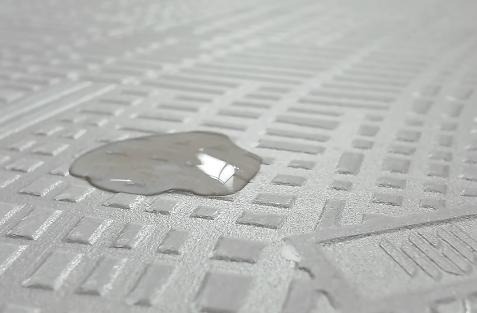
Low water absorption is a defining property of commercial porcelain tiles
Cost Differences: Installation, Maintenance, and Factory Price
The cost comparison is based on documented data from ALL KING CERAMICS commercial porcelain tile range versus low-grade ceramic tile alternatives:
- 20% lower installation cost — flatter, denser tiles install faster with less waste.
- 30% lower maintenance cost — fewer repairs, replacements, and refurbishment cycles.
- 10% lower direct factory price — direct-from-factory pricing removes intermediary margins.
The direct factory price point is critical. Because ALL KING CERAMICS is both the manufacturer and the exporter, buyers compare the porcelain tile at factory-direct pricing, not at a price that includes distributor markups.
Maintenance Advantages
Maintenance requirements are another documented differentiator:
- Easier cleaning — denser surface resists penetration by dirt and liquids.
- Less tile replacement — fewer damaged units over the service life.
- Zero sealing required — porcelain body does not need periodic sealer application.
- Lower refurbishment frequency — surface wear appears later.
- Minimal grout upkeep — flatter edges keep grout lines intact longer.

Bending strength testing verifies the documented +15 MPa breaking strength advantage
Thermal Efficiency
ALL KING CERAMICS porcelain tiles also demonstrate better thermal efficiency and higher energy savings, attributed to improved insulation performance and higher heating conduction. In heated commercial buildings, floor covering thermal properties affect both HVAC loads and underfloor heating performance.
How to Evaluate Commercial Tile Suppliers: A 5-Step Comparison Framework
For procurement teams at the decision stage, structure the evaluation around the following five steps.
Step 1: Verify Compliance With International Standards
Check that the product meets ISO 13006 / EN 14411 (Group BIa, water absorption ≤ 0.5%) for porcelain classification. For exterior or cold-climate projects, require ISO 10545-12 frost resistance data, meaning at least 100 freeze-thaw cycles. For public floors, confirm the slip resistance rating meets R10 or R11 per DIN 51130.
Step 2: Compare Physical Properties Side by Side
Request the actual test values for water absorption, breaking strength, Mohs hardness, wear resistance, density, and flatness. Compare these numbers against low-grade tile baselines to quantify the real difference.
Step 3: Calculate Total Cost of Ownership
Use the documented data: installation cost 20% lower, maintenance cost 30% lower, and factory price 10% lower for direct manufacturing. Add the cost of sealing, grout upkeep, and anticipated replacement cycles. Upfront tile price is normally a small fraction of lifecycle cost.
Step 4: Audit the Supplier's Production and Quality Control
A manufacturer's quality system is a predictor of batch consistency. ALL KING CERAMICS employs laser detectors, SACMI presses, automatic sorters, CNC testing instruments, and laboratory kilns, and holds ISO 9001 certificates. Digital weight monitoring and automated temperature control in the kiln reduce warping and firing defects.
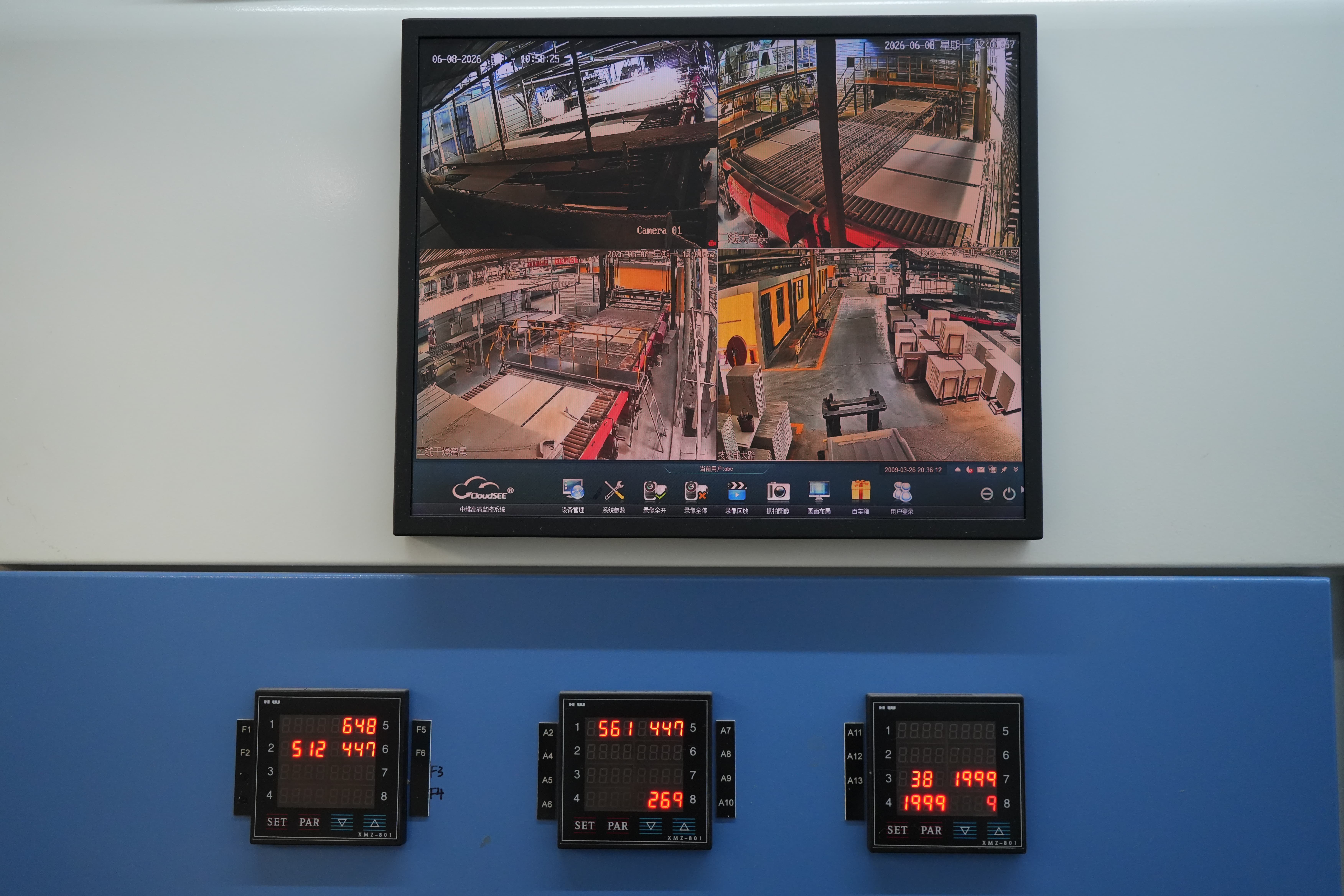
Automated kiln temperature control is part of the production process for consistent tile quality
Step 5: Request Samples and Test Reports
Before committing to a container order, obtain physical samples and batch test reports. Samples verify visual appearance; test reports verify mechanical properties. ALL KING CERAMICS provides tile samples and can supply relevant technical documentation.
Use Cases Across Commercial and Infrastructure Projects
The physical properties of ALL KING CERAMICS porcelain tiles map directly to specific project types:
Shopping Malls and Retail Centers
Shopping malls see continuous foot traffic, rolling cart loads, and frequent cleaning. Higher wear resistance, better breakage resistance, and easier cleaning make porcelain tiles suitable for mall flooring. Southeast Asia's ceramic tile market, valued at approximately USD 11.5 billion in 2024, reflects this infrastructure-driven demand.
Hotels and Hospitality
Hotel lobbies, corridors, and guest bathrooms require surfaces that stay visually consistent for years. Flatness and density reduce lippage, and zero sealing simplifies housekeeping. Eastern European hotel projects benefit from the documented 30% lower maintenance cost over the service life.
Airports, Railway Stations, and Transit Hubs
Transit hubs are among the most demanding public floor applications. Slip resistance in the R10-R11 range per DIN 51130 supports passenger safety. Higher breakage resistance and density handle luggage carts and heavy pedestrian flows.
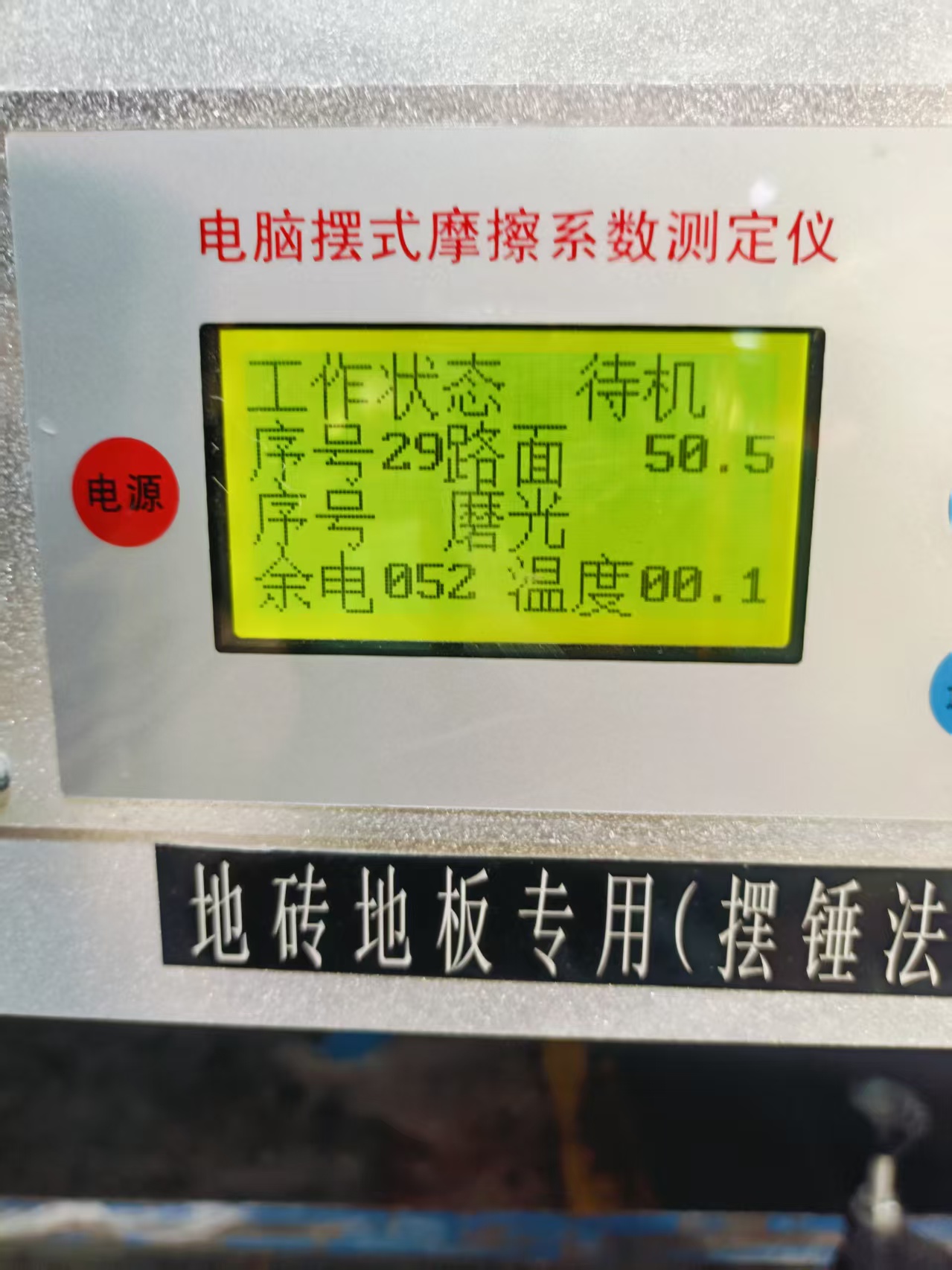
Slip resistance testing supports R10/R11 compliance for public high-traffic floors
Healthcare Facilities
Antibacterial porcelain tiles are increasingly specified for healthcare real estate, and the sector was valued at approximately USD 36.5 billion in Italy alone in 2024 (Real Granito). Non-porous porcelain surfaces support hygiene protocols because they are easier to clean and maintain than lower-grade surfaces.
Logistics and Industrial Facilities
Warehouses and distribution centers subject floors to forklift traffic and heavy point loads. Higher density and higher breaking strength reduce cracking risk under operational loads, and the wear-resistant surface supports long service intervals.
Residential Towers and Apartment Projects
Apartment construction in markets such as the Philippines illustrates this demand: China's ceramic tile exports to the Philippines reached USD 29.6 million in March 2025, a 77.5% year-on-year increase. High-rise residential projects benefit from the flatness and breakage resistance that reduce installation labor and replacement costs.
Cold-Climate and Infrastructure Projects in Central Asia and Russia
Russia's ceramic tiles market is valued at USD 3.2 billion in 2024, with projected growth to USD 5.10 billion by 2032. Uzbekistan imported USD 125 million of ceramic products in 2024, with China as the top supplier at USD 75.1 million. Exterior applications in these regions require frost resistance tested to ISO 10545-12, a minimum of 100 freeze-thaw cycles. ALL KING CERAMICS exports to Russia, Belarus, and Central Asian markets as part of its main market coverage.
Side-by-Side Comparison: Porcelain vs. Low-Grade Ceramic Tiles
| Comparison Metric | ALL KING CERAMICS Porcelain Tiles | Low-Grade Ceramic Tiles |
|---|---|---|
| Water absorption | Lower | Higher |
| Breaking strength | +15 MPa vs. low-grade | Baseline |
| Hardness | +3 Mohs vs. low-grade | Baseline |
| Wear resistance | Higher | Lower |
| Breakage resistance | Better | Lower |
| Density | Higher | Lower |
| Flatness | Better | Poorer |
| Sealing required | Zero | Required |
| Installation cost | 20% lower | Baseline |
| Maintenance cost | 30% lower | Baseline |
| Direct factory price | 10% lower | Baseline |
| Refurbishment frequency | Lower | Higher |
| Grout upkeep | Minimal | Frequent |
| Thermal efficiency | Better insulation and heating conduction | Lower |
Frequently Asked Questions
1. What international standards should commercial porcelain tiles meet for global projects?
Commercial porcelain tiles should meet ISO 13006 / EN 14411 (Group BIa) with water absorption of 0.5% or less. For exterior or cold-climate projects, ISO 10545-12 requires tiles to withstand at least 100 freeze-thaw cycles. For high-traffic public floors such as airports and railway stations, a slip resistance rating of R10 or R11 per DIN 51130 is the industry benchmark. ALL KING CERAMICS operates an ISO 9001-certified quality system.
2. How do ALL KING CERAMICS porcelain tiles compare physically with low-grade ceramic tiles?
ALL KING CERAMICS porcelain tiles provide a 15 MPa increase in breaking strength and a 3 Mohs increase in hardness over low-grade ceramic tile alternatives. They also offer lower water absorption, higher wear resistance, better breakage resistance, higher density, better flatness, and improved thermal efficiency with higher heating conduction.
3. What are the documented cost differences between ALL KING CERAMICS porcelain and low-grade tiles?
The documented differences are 20% lower installation cost, 30% lower maintenance cost, and 10% lower direct factory price. Maintenance is further reduced by zero sealing requirements, easier cleaning, less tile replacement, lower refurbishment frequency, and minimal grout upkeep.
4. How can I verify quality or request samples before ordering commercial tiles?
Request physical samples and batch test reports covering water absorption, bending strength, slip resistance, and flatness. ALL KING CERAMICS performs quality checks including water absorption tests, slip resistance tests, bending strength tests, and flatness measurements. Production controls include laser flatness sorting, automatic temperature control, digital weight monitoring, high-pressure compaction, and random stress testing. Contact the company directly to request samples.
5. Can ALL KING CERAMICS handle large commercial project volumes and export logistics?
ALL KING CERAMICS maintains an annual output of 12 to 16 million square meters and exports approximately 70% of production to markets including Australia, New Zealand, Russia, Belarus, Central Asia, South Korea, Vietnam, Malaysia, the Philippines, Latin America, the Middle East, and Ukraine. The factory produces 60x120cm, 75x150cm, 80x80cm, 60x60cm, and 100x100cm formats, with export packaging prepared on fumigated wooden pallets. For a project-specific quote, samples, or the full catalog, contact Abby at tyceramic2@all-king.com or +86 156-5336-9360 (WhatsApp).
Conclusion
For commercial projects at the decision stage, the comparison between porcelain and low-grade ceramic tiles is not about aesthetics. It is about measurable performance and lifecycle cost. The documented data from ALL KING CERAMICS shows a 15 MPa breaking strength advantage, a 3 Mohs hardness advantage, 20% lower installation cost, 30% lower maintenance cost, and 10% lower direct factory price compared to low-grade alternatives.
Procurement teams that structure their evaluation around compliance, physical performance, total cost of ownership, supplier quality control, and sample verification can make a specification decision they can defend before the first container is ordered.
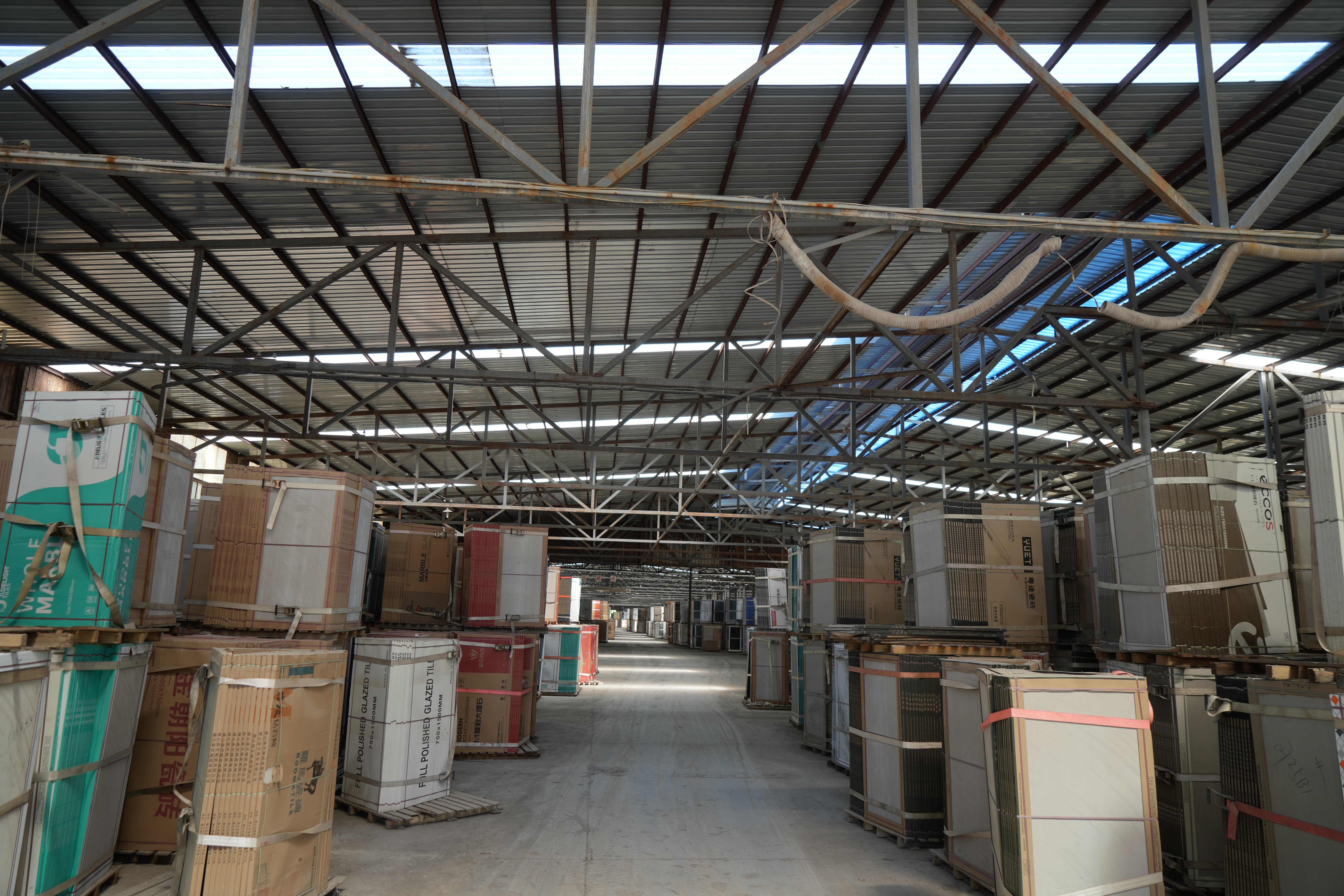
Palletized porcelain tile inventory at the ALL KING CERAMICS factory warehouse
Request a Quote, Samples, or the Commercial Tile Catalog
ALL KING CERAMICS · ZIBO ALL-KING CERAMICS CO., LTD
Email: tyceramic2@all-king.com · WhatsApp: +86 156-5336-9360
Download the ALL KING Ceramics Catalog (PDF)
ZIBO ALL-KING CERAMICS CO., LTD · No.6, 8th building, 6th district, China Fortune Ceramic City, Zibo, China