
Hotel Bathroom Flooring: Anti-Slip Porcelain Tile Solutions for Wet Zones
Short answer: For hotel bathroom flooring inside commercial real estate projects, the working specification is a porcelain tile with R10/R11 anti-slip suitability, water absorption below 0.5% (vitrified), ISO 13006 compliance, and an installation set built from a leveling system, tile spacers, tile adhesive and grout. All-King Ceramics (ZIBO ALL-KING CERAMICS CO., LTD) produces 60x120cm porcelain tiles — including the Travertine and Marble Series — as the core format for wet-zone hotel bathroom packages, with anti-slip rating, size, thickness, surface finish and packaging available as customization parameters.
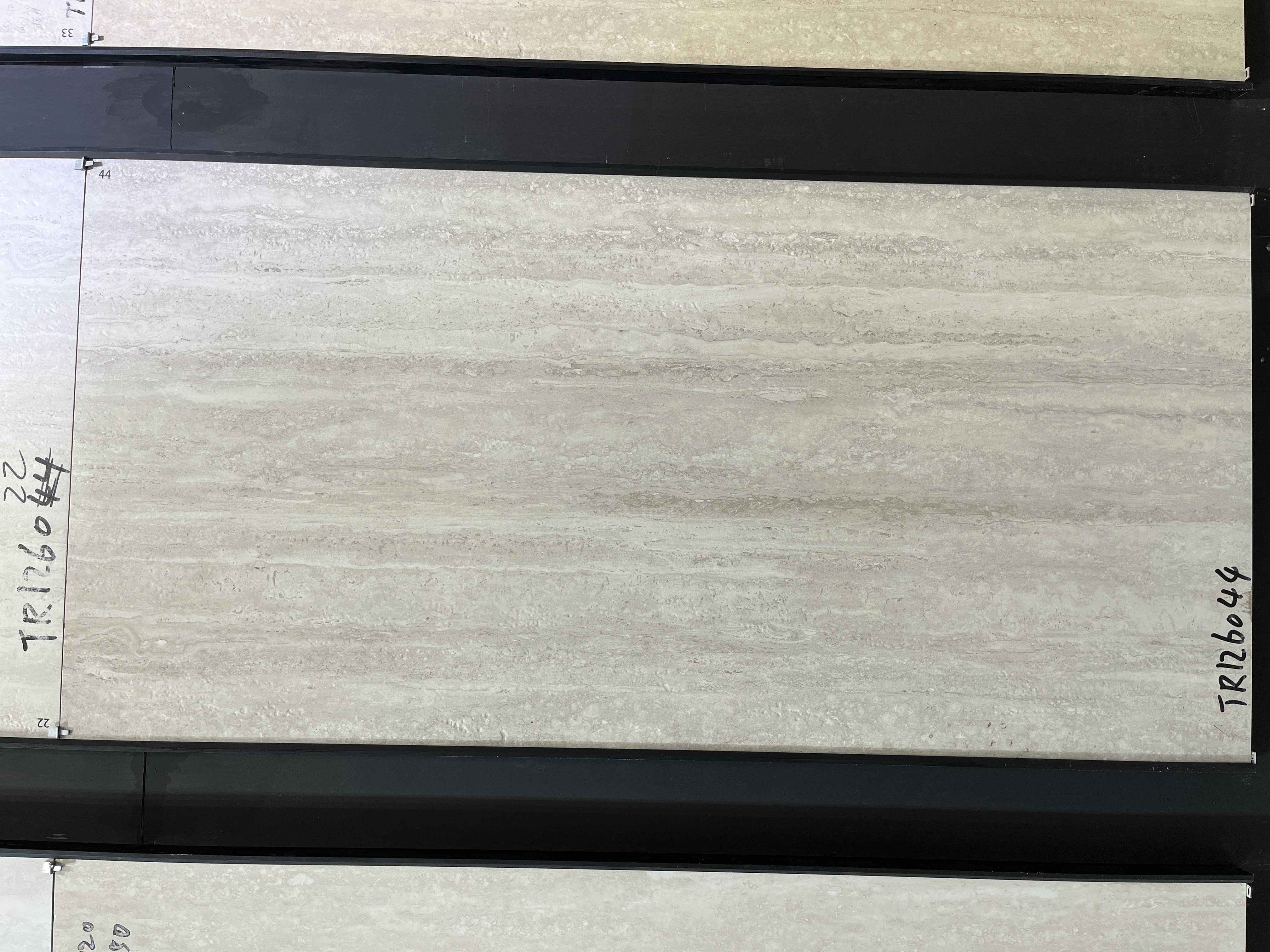
Cover: 60x120cm Travertine Series porcelain tile — the flagship wet-zone format supplied for hotel bathroom flooring projects.
The Problem: Wet Zones Fail Differently From Dry Floors
A hotel bathroom is not a single floor surface. It is a sequence of micro-zones that behave differently: the shower floor, the wet-room floor, the bathtub surround, the vanity splash area, and the doorway transition where water is carried out on shoes and towels. Each zone sits in near-continuous contact with water, cleaning chemicals and foot traffic, and each has its own failure mode.
The operating conditions for this application are well defined in commercial real estate: high traffic, wet and slippery surfaces, thermal shock, heavy surface load, and — in cold markets — frost and freeze-thaw exposure at thresholds and service areas. Continuous heavy-duty use and high-frequency commercial traffic are the design baseline, not the exception.
The consequences of a wrong choice are commercial rather than cosmetic. A slippery bathroom floor creates liability exposure for the operator. A tile that stains, holds moisture or loses its bond can take a room out of inventory for rework, and where moisture reaches the slab the repair usually multiplies across the room stack.
That is why the requirement set for hotel bathroom wet zones is explicit rather than aesthetic: ISO 13006 compliance, anti-slip R10/R11 ratings, zero water penetration, acid and alkali resistance, and low VOC emissions. A tile only qualifies for the specification when it satisfies all five at the same time.
Industry Background: Wet-Zone Flooring Is Now a Porcelain Decision
The global ceramic and porcelain tile market was valued at USD 226.4 billion in 2025 and is projected to reach USD 380.6 billion by 2033, according to Grand View Research. Porcelain accounted for 52.4% of ceramic tile revenue in that year, and commercial end-use — the segment that includes hotel bathrooms and other hospitality wet zones — held the largest revenue share of the market.
Two structural facts sit behind that number. First, porcelain is the material class project teams reach for when a specification combines water, traffic and load, because the tile body can be engineered to absorb almost no water. Second, hospitality fit-outs are typically specified before they are priced, which shifts the decision toward documented performance rather than the lowest offer.
For international sourcing, export-market context matters. China's ceramic tile export value reached USD 3.21 billion in 2024 across 599 million sqm, with an average export price of USD 5.36 per square meter (China Customs data via CeramBath). That average is a useful reference when testing whether a quotation is realistic — and it also shows why specification documents, not price lists, should drive the shortlist.
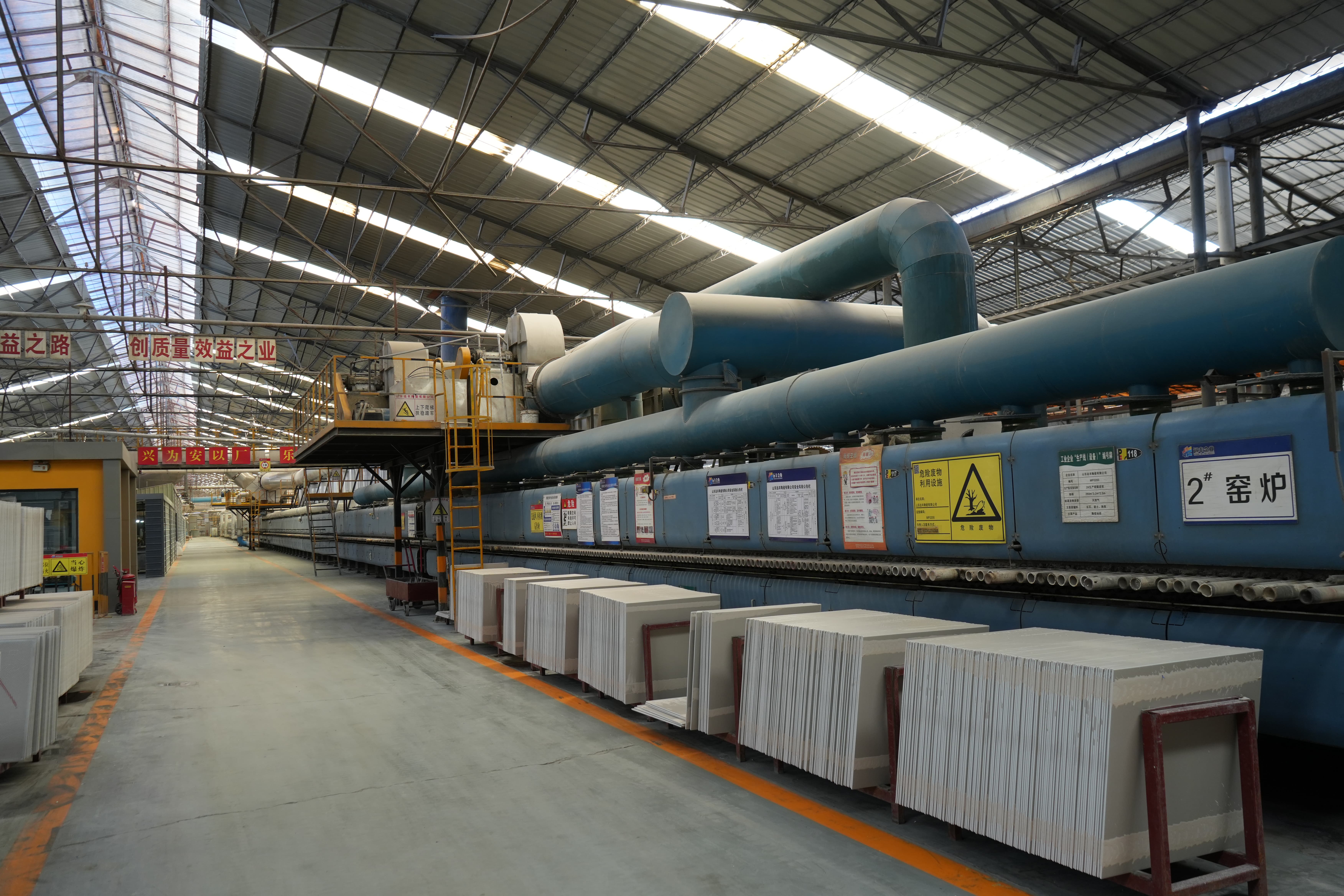
Firing is where vitrification begins: porcelain bodies fired at high temperature develop the low-absorption structure that wet zones require.
Sustainability requirements are converging on the same wet zones. Mineral-based tiles fired at temperatures of 1200°C and above are inherently low-emitting and are exempt from FloorScore VOC requirements under LEED v4.1 (IEQc4.3), which matters for hotel projects that must document indoor air quality for green building certification.
The Solution: R10/R11 Anti-Slip Porcelain With Vitrified Water Absorption
Three specification levers decide whether a porcelain tile is suitable for a hotel bathroom wet zone: the anti-slip class, the water absorption rate, and the mechanical strength behind the format. Aesthetic choice comes after all three are satisfied, because none of them can be corrected on site.
Anti-Slip Ratings Are Incline-Test Results, Not Surface Labels
Anti-slip performance is measured, not described. Under DIN 51130, tiles are tested on an inclined ramp and assigned an R class: the R11 class corresponds to a 19°–27° slope and the R12 class to a 27°–35° slope, with R11 typically associated with kitchens and food production areas and R12 with dairy and industrial environments.
For commercial real estate wet and slippery environments, the anti-slip requirement applied to this product family is R10/R11. Practically, that means a project team should require the rating class and the test standard to appear in the specification document, rather than accepting anti-slip as a finish description — a finish name alone does not tell a facility manager whether the floor still performs after years of cleaning cycles.
Water Absorption Below 0.5%: What Vitrification Changes in a Bathroom
The 60x120cm porcelain tiles supplied for this application are vitrified, with water absorption below 0.5%. That single number drives most wet-zone behaviour: with almost no open porosity in the body, water has no meaningful path into the tile, so the surface resists staining and the stated requirement of zero water penetration becomes achievable at tile level.
Low absorption also stabilizes the edges. It supports frost resistance in cold markets, keeps the tile dimensionally stable under thermal shock, and reduces the risk of moisture migrating toward the substrate — where correction is far more expensive than the tile itself. Acid and alkali resistance matters for the same reason: bathroom cleaning is chemical, repetitive and aggressive.
Strength and Wear: The Parts of the Specification Nobody Photographs
Underneath the finish, the same 60x120cm porcelain tile carries an abrasion resistance of PEI 4 / PEI 5, a Mohs hardness of 6–7, a breaking strength of ≥ 1300 N and a modulus of rupture of ≥ 35 MPa, in a thickness range of 9.0–10.5 mm. Those values support continuous heavy-duty use and heavy surface load. The real wear agents in a hotel bathroom are rarely guests — they are housekeeping carts, cleaning machines and maintenance trolleys.
The 60x120cm Format as the Wet-Zone Workhorse
Format is a wet-zone decision as much as a design decision. A 60x120cm tile reduces the number of joints compared with smaller modules, and fewer joints mean less grout, which is the most moisture-exposed element of any bathroom floor. The format also packs efficiently at 2 pcs per box (1.44 m² per box), which helps contractors estimate coverage and plan site logistics.
All-King Ceramics — the export brand of ZIBO ALL-KING CERAMICS CO., LTD — is a manufacturer and direct exporter of architectural ceramics founded in 2011, operating a 60,000 m² factory with 320 employees, an annual output of 12–16 million m², a 25-engineer R&D team and a 70% export ratio. Its product matrix covers 60x120cm and 75x150cm porcelain tiles, 80x80cm porcelain tiles, 60x60cm ceramic tiles and 100x100cm floor tiles, with 60x120cm porcelain as the flagship core product for project work.
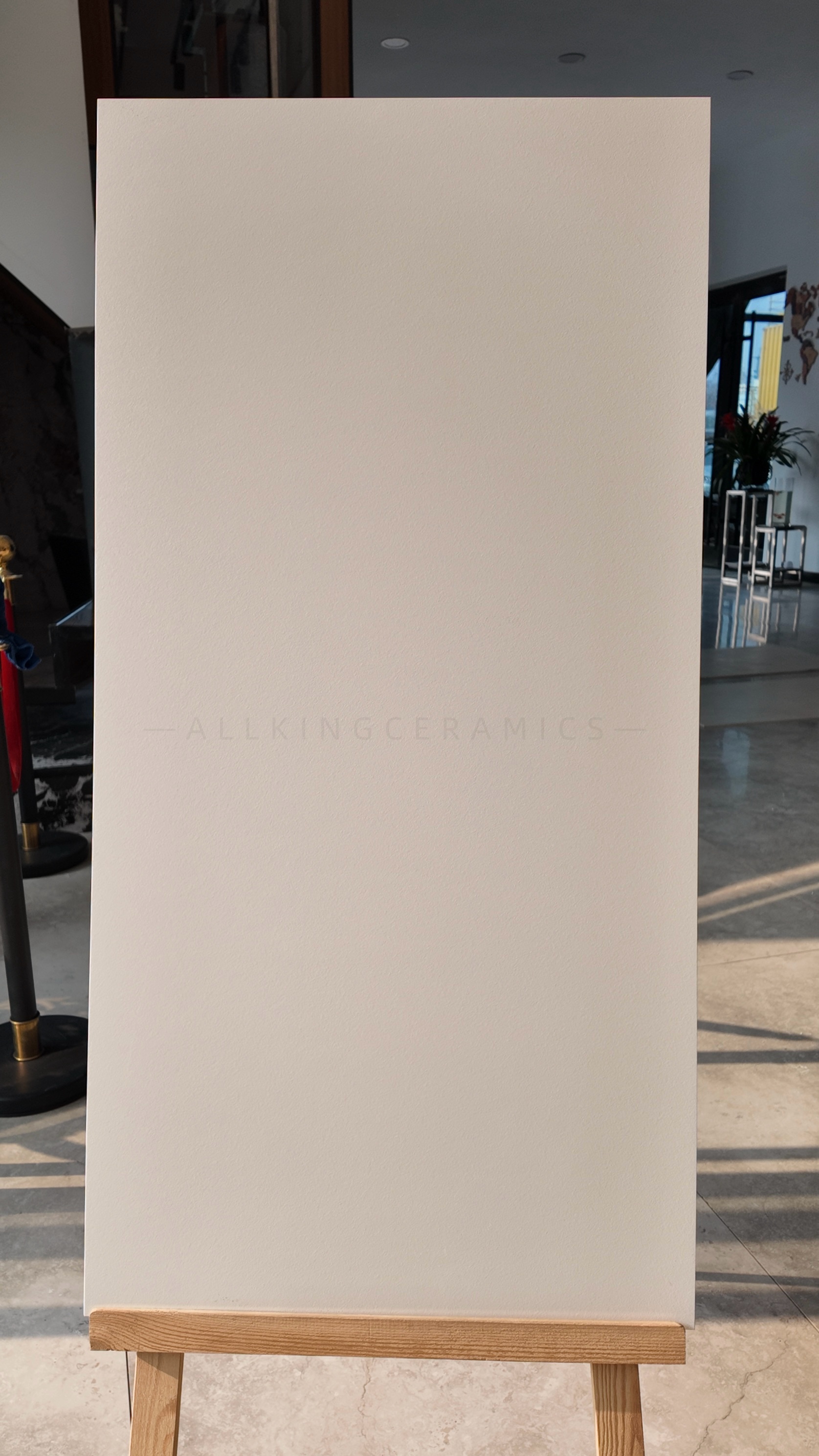
Pattern families for wet zones: the Marble Series is supplied in the 60x120cm format for hotel and hospitality bathroom packages.
For hotel bathrooms specifically, the relevant pattern families are the Travertine and Marble Series, both supplied in the 60x120cm format with the specification above. Random marble veining is a documented highlight of these programmes, which allows a hospitality bathroom floor to read as natural stone without the obvious repeat pattern that signals a budget installation.
Step-by-Step: Building the Anti-Slip Porcelain Specification for a Hotel Bathroom Package
The sequence below follows how a hotel renovation package is normally specified and released, from zone map to shipment.
- Map the wet zones and their traffic class. Separate shower floors, wet-room floors, tub surrounds, vanity splash zones and doorway transitions, then note where continuous heavy-duty use applies. The zone map — not the room count — determines where the highest anti-slip requirement sits.
- Fix the anti-slip requirement in writing. For commercial real estate wet and slippery environments, specify R10/R11 anti-slip ratings alongside the finish description, and record the rating class in the tender documents so it can be verified at delivery.
- Anchor compliance before aesthetics. ISO 13006 compliance is the baseline. Add zero water penetration, acid and alkali resistance and low VOC emissions so the tile supports both durability and indoor air quality. For LEED-tracked hotels, note that mineral-based tiles fired at 1200°C and above are exempt from FloorScore VOC requirements under LEED v4.1 (IEQc4.3).
- Set format, thickness and finish. 60x120cm remains the practical wet-zone format, with a 9.0–10.5 mm thickness range and water absorption below 0.5%. Where a project needs something different, size, thickness, surface finish, marble vein variation and anti-slip rating can all be handled as customization parameters under OEM/ODM production.
- Specify the installation system, not just the tile. Wet-zone performance depends on what holds the tile: a leveling system, tile spacers, tile adhesive and grout, plus proper subfloor preparation and diamond cutting tools. Leaving this to site preference is one of the most common ways a good tile becomes a failed bathroom.
- Validate with a physical sample or trial order. The minimum order quantity is 400 sqm per design, and trial orders are acceptable — which lets a project team evaluate the actual surface, edge and shade variation before releasing the full hotel package.
- Confirm quality control and batch traceability. Production is controlled through 100% flatness and sizing auto-check, piece-by-piece visual inspection and random lab testing per batch. Ask how batches are tracked: hotel renovations are usually delivered in phases, and re-orders must match the original shade.
- Plan lead time and delivery. Production lead time is 7–10 days against a monthly capacity of 1.2 million m². Tiles are pallet-packed for export, and after-sales support covers damage compensation, online installation guidance, 24/7 technical consultation, and batch tracking and reordering support.
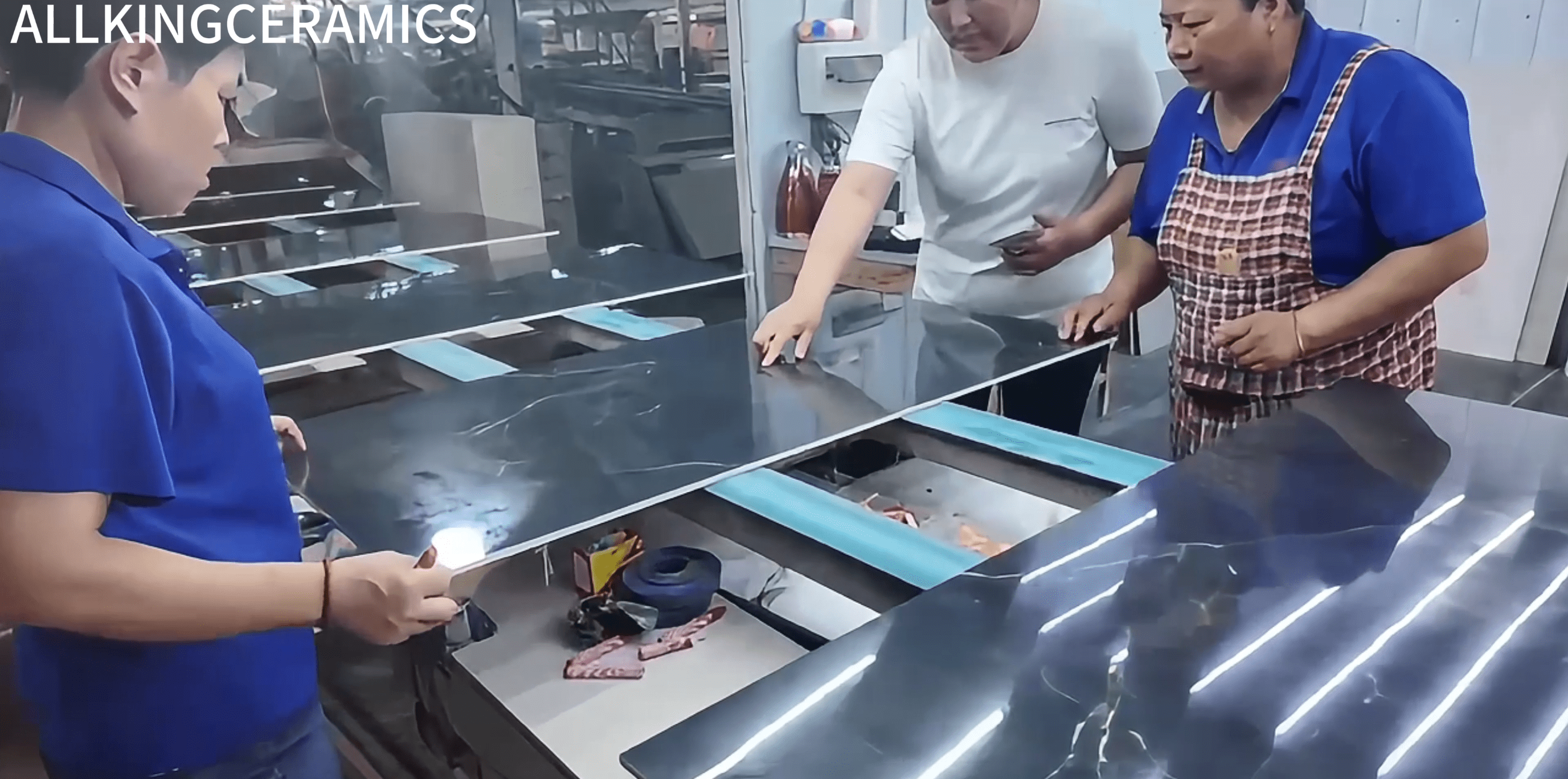
On-line quality control: flatness and sizing are auto-checked across production, with piece-by-piece visual inspection and random lab testing per batch.
Where These Solutions Fit: Hotel and Wet-Zone Use Cases
The clearest reference case is hotel renovation in Canada. In that application the product is used in wet and slippery environments, complies with ISO 13006, provides heavy-wear flooring protection under high-frequency commercial traffic, and is installed using a leveling system and tile spacers. Bathroom floors and adjoining wet areas are the primary exposure; the same specification logic extends to the transition zones where a bathroom meets a guestroom corridor.
High-end apartment bathrooms follow the same requirement set at a smaller scale, and they are one of the documented applications for this material in residential-commercial mixed developments. The driver is identical: sustained moisture plus daily cleaning plus a floor that must not need replacing mid-cycle.
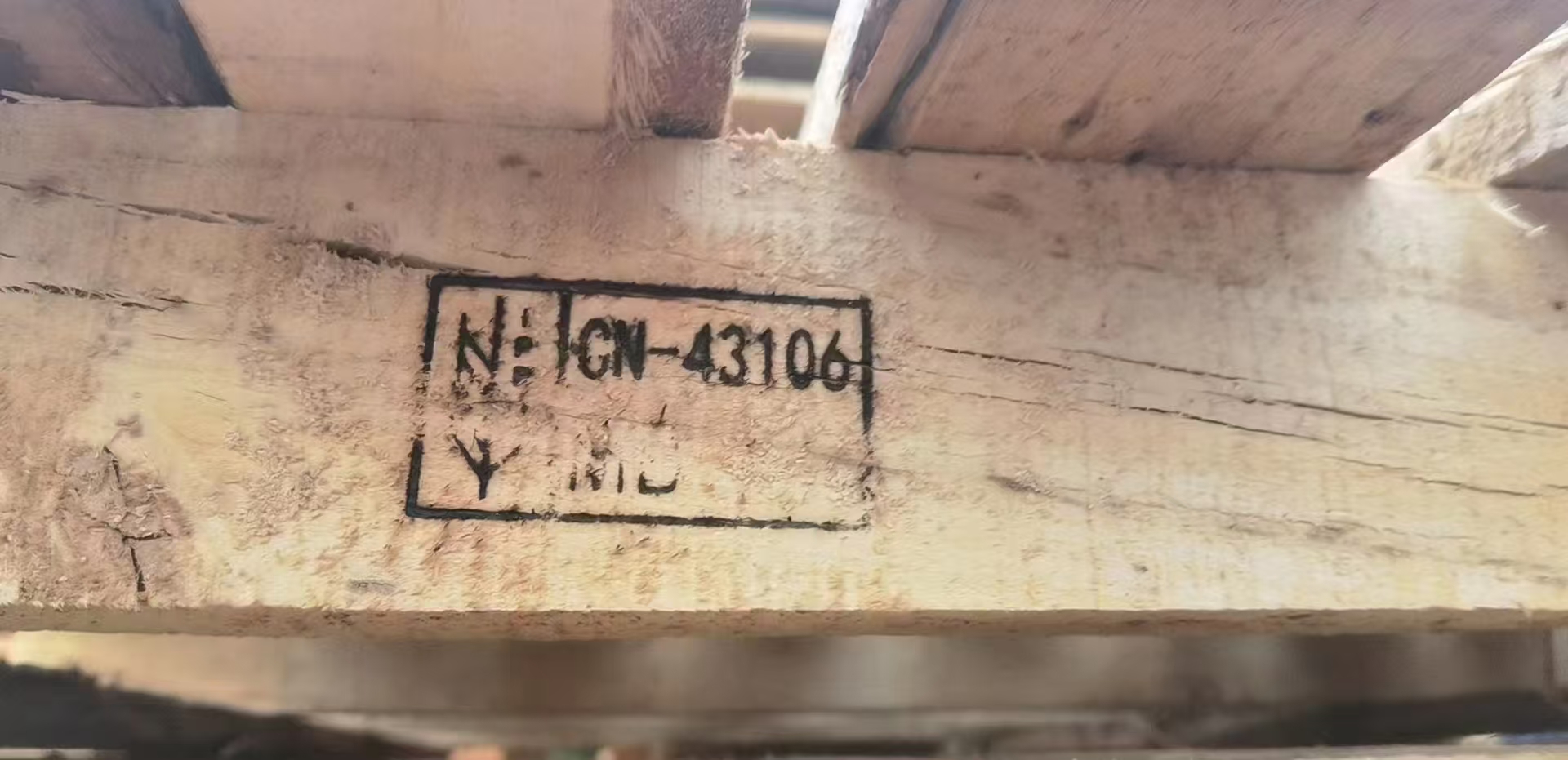
Export packing: palletized, fumigated wooden pallets protect tiles through the shipping stage of a hotel renovation programme.
The largest documented programme of this type covers 15,000 sqm across hotel lobby flooring, commercial mall flooring, office building facade work, high-end apartment bathrooms and an airport departure hall. The reported outcomes are seamless aesthetic presentation, zero-defect durability, easy maintenance with stain-free surfaces, 100% project acceptance and zero maintenance complaints. The supply relationship behind that programme has continued for more than 20 years, with commercial real estate developers, general contractors, tier-1 building materials wholesalers, hospitality procurement agencies and architectural design firms as the client types involved. The documented highlights of the material in that context are low water absorption, high flatness, high wear resistance and random marble veins.
Comparison Table: Anti-Slip Classes and Wet-Zone Specification Requirements
The first table sets out what the anti-slip classes mean under the incline test standard; the second compares the wet-zone requirement set against the documented specification of the 60x120cm porcelain tile used for this application.
| Rating class | Test slope range under DIN 51130 | Commercial context associated with the class |
|---|---|---|
| R11 | 19°–27° | Kitchens and food production areas |
| R12 | 27°–35° | Dairy and industrial environments |
The anti-slip requirement applied to hotel bathroom wet zones within commercial real estate under this specification is R10/R11. Each class is a test result for a specific floor condition, so the decision is matching the class to the zone rather than ranking the classes.
| Specification point | Requirement for hotel bathroom wet zones | All-King 60x120cm porcelain tile (Travertine / Marble Series) |
|---|---|---|
| Anti-slip class | R10/R11 for wet and slippery commercial environments | R10/R11 anti-slip suitability; anti-slip rating available as a customization parameter |
| Water absorption | Zero water penetration under sustained moisture | Below 0.5% (vitrified) |
| Surface wear | Continuous heavy-duty use and high-frequency commercial traffic | PEI 4 / PEI 5 abrasion resistance |
| Load resistance | Heavy surface load | Breaking strength ≥ 1300 N; modulus of rupture ≥ 35 MPa |
| Hardness | Resistance to daily cleaning and foot traffic | Mohs 6–7 |
| Thickness | Format-dependent substrate and leveling plan | 9.0–10.5 mm |
| Chemical exposure | Acid and alkali resistance | Vitrified body below 0.5% water absorption limits chemical penetration |
| Compliance | ISO 13006; low VOC emissions | ISO 13006 compliant; mineral-based body fired at 1200°C+ exempt from FloorScore VOC requirements (LEED v4.1 / IEQc4.3) |
| Packing | Site logistics and coverage estimating | 2 pcs/box (1.44 m² per box) |
Read together, the two tables show why hotel bathroom flooring is specified rather than selected from a display wall: the anti-slip class answers the safety requirement, the absorption rate answers the moisture requirement, and the strength values answer the traffic requirement. A 60x120cm vitrified porcelain tile in the Travertine or Marble Series is documented against all three.
FAQ: Anti-Slip Porcelain for Hotel Bathrooms
What compliance and safety requirements apply to anti-slip porcelain tile in hotel bathroom wet zones?
Hotel bathroom wet zones in commercial real estate sit under a combined requirement set: ISO 13006 compliance, anti-slip R10/R11 ratings for wet and slippery conditions, zero water penetration, acid and alkali resistance, and low VOC emissions. The 60x120cm porcelain tiles used for this application are vitrified with water absorption below 0.5%, comply with ISO 13006, and are specified with R10/R11 anti-slip suitability for wet and slippery environments. Because mineral-based tiles fired at 1200°C and above are exempt from FloorScore VOC requirements under LEED v4.1 (IEQc4.3), the same specification can support hotel projects that document indoor air quality for green building certification.
Can the anti-slip rating, size and finish be customized for a hotel renovation project?
Yes. Production is organized under OEM/ODM arrangements, and the customization scope covers custom size and thickness, surface finish, OEM brand logo and packaging, pattern variation including marble vein customization, and anti-slip rating. The core project format is 60x120cm porcelain tile, supported by a wider matrix of 75x150cm porcelain tiles, 80x80cm porcelain tiles, 100x100cm floor tiles and 60x60cm ceramic tiles. Monthly capacity is 1.2 million m², and the minimum order quantity is 400 sqm per design, with trial orders acceptable.
What drives the budget for anti-slip porcelain tile in hotel bathroom projects?
Budget in this category is driven by specifiable variables rather than one figure per square meter: the anti-slip rating and finish selected, size and thickness, pattern and surface, packaging requirements, and order volume relative to the 400 sqm per design minimum. For international reference, China's ceramic tile exports averaged USD 5.36 per square meter in 2024 across 599 million sqm of volume, and commercial end-use held the largest revenue share of the global tile market in 2025. Those figures describe market conditions rather than project pricing; the practical way to control bathroom flooring cost is to specify once, correctly, and avoid rework and phased re-ordering.
Can samples or a trial order be arranged before committing to the full package?
Trial orders are acceptable, and the standard minimum order quantity is 400 sqm per design. That structure lets a project team validate the surface, edge quality and shade variation of the 60x120cm format — and confirm the anti-slip rating and finish against the bathroom specification — before the full hotel package is released. Sample and trial-order requests are coordinated directly with the manufacturer's export team.
What is the production lead time and delivery support for a hotel bathroom order?
Production lead time is 7–10 days, against a monthly capacity of 1.2 million m², which allows a phased hotel renovation to be supplied in stages. Tiles are pallet-packed for export, including fumigated wooden pallets, and the recorded export markets include AUS, NZL, RUS, BLR, CAF, KOR, VNM, MYS, PHL, PER, PAN, COL, CHL, BOL, GTM, PSE, IRQ, UKR and ARE. After-sales support covers damage compensation, online installation guidance, 24/7 technical consultation, and batch tracking and reordering support. To start a hotel bathroom package, send your zone list and specification directly to the export team.
Conclusion: The Wet-Zone Floor Is a Documented Decision
Hotel bathroom flooring is decided by documentation, not by appearance. A porcelain tile qualifies for wet zones when it carries R10/R11 anti-slip suitability for wet and slippery conditions, keeps water absorption below 0.5% through vitrification, complies with ISO 13006, and is installed with a specified system — leveling system, tile spacers, tile adhesive and grout, on a properly prepared subfloor. Everything else, including the pattern, is a design choice made on top of those four conditions.
For project teams in the research and evaluation stage, the useful next step is to convert the bathroom layout into a zone list with traffic classes, then test candidate tiles against the requirement set above. All-King Ceramics supplies the 60x120cm format in the Travertine and Marble Series for hotel and hospitality wet zones, supports OEM/ODM customization for size, thickness, finish, marble vein variation and anti-slip rating, works to a 400 sqm per design minimum with trial orders accepted, and quotes a 7–10 day production lead time against a 1.2 million m² monthly capacity.
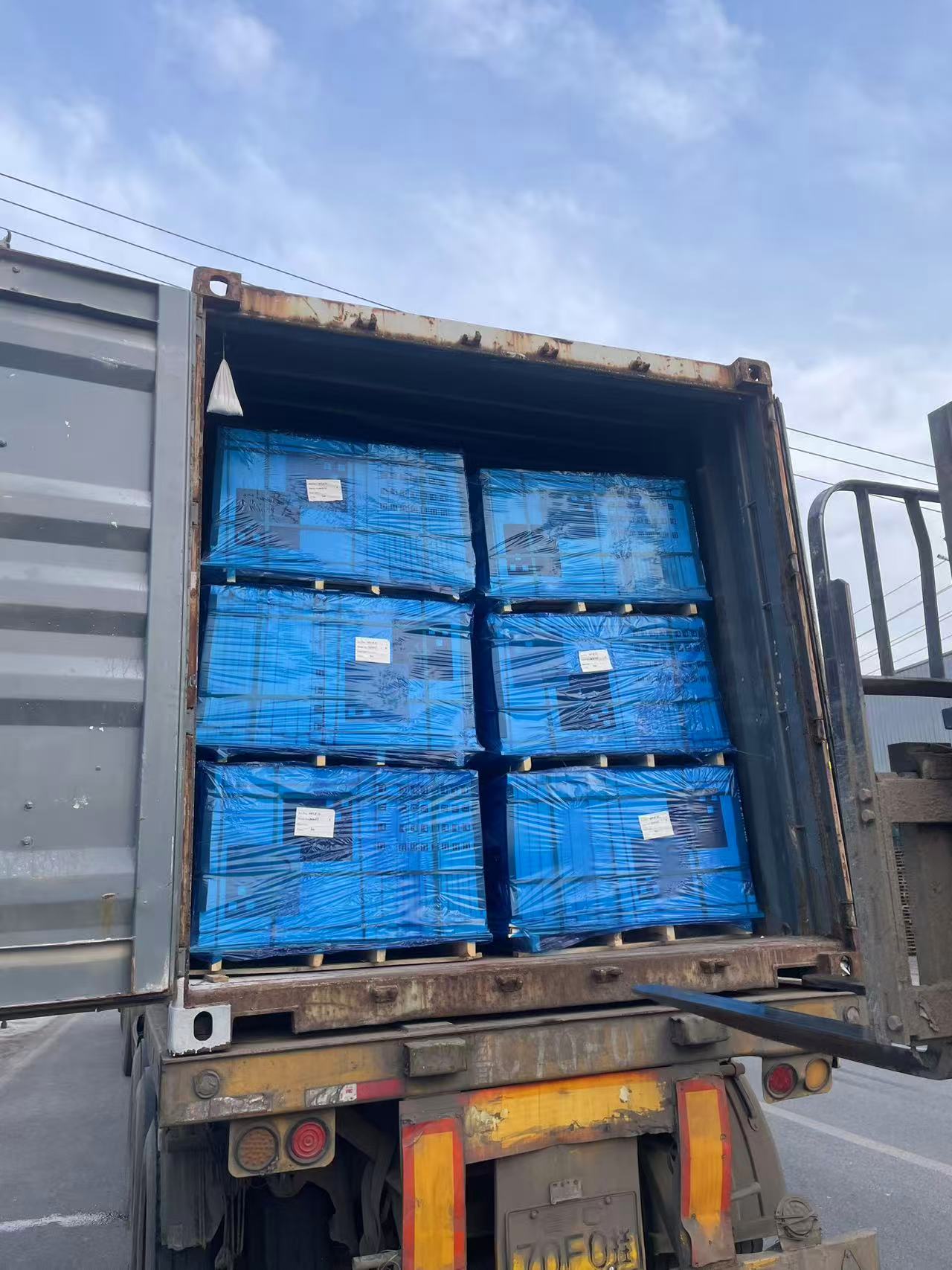
Shipment-ready: project orders are pallet-packed and tracked by batch for phased hotel renovation deliveries.
Next Step: Samples, Specifications and Project Quotes
Send your hotel bathroom zone list, required anti-slip rating and preferred surface finish, and the export team will respond with format recommendations for the 60x120cm range, packing data (2 pcs/box, 1.44 m² per box) and a project quote.
Email: tyceramic2@all-king.com | Tel / WhatsApp: +86 156-5336-9360 | Website: www.all-king.com | Blog: blog.all-king.com
Address: No.6, 8th building, 6th district, China Fortune Ceramic City, Zibo, China
Download the ALLKING Ceramics Catalog (PDF) for the full 60x120cm, 75x150cm, 80x80cm, 100x100cm and 60x60cm range.