
Hotel Bathroom Renovation Woes: How 60x120 Porcelain Tiles Solve Slippery, Heavy-Wear Floors
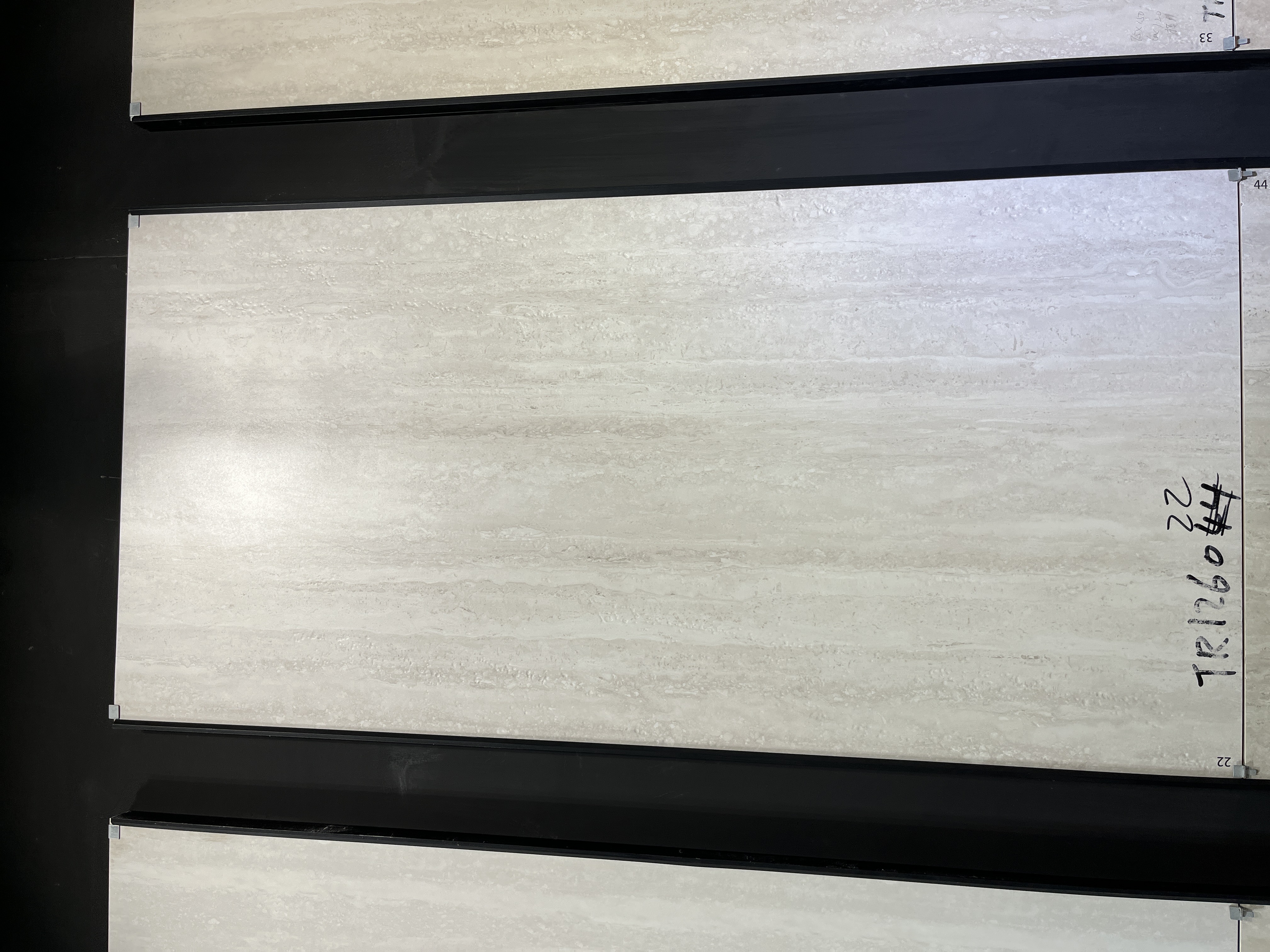
Hotel bathroom renovations rarely fail on the wall. They fail on the floor. A guest bathroom floor is wet several times a day, cleaned with chemicals, walked on barefoot, and expected to look presentable for the rest of the building's life. Get the surface wrong and the renovation budget comes back as a maintenance line item for years.
Applied to hotel renovation projects in Canada and comparable markets, a 60x120 cm vitrified porcelain tile addresses the two failures that matter most in these rooms: slipperiness in wet zones and surface wear under high-frequency commercial traffic. The product's stated application includes hotel renovation projects in Canada, where wet, high-traffic bathrooms and long heating seasons put the floor under continuous load.
This guide answers the specification question directly: what does the datasheet have to prove, what do the numbers actually mean for the operator, and what has to happen on site for the floor to hold up.
The specification at a glance (60x120 cm vitrified porcelain, as stated by ALL KING CERAMICS):
- Format: 60x120 cm, 0.72 m² per piece
- Water absorption: below 0.5% (vitrified)
- Abrasion resistance: PEI 4 / PEI 5
- Mohs hardness: 6–7
- Breaking strength: at least 1300 N; modulus of rupture at least 35 MPa
- Thickness range: 9.0–10.5 mm
- Slip rating: R10/R11, with R12 available through customization
- Compliance: ISO 13006, as stated by the manufacturer
- Installation requirement: leveling system and tile spacers
Why hotel bathroom floors fail first
The floor is the only surface in a guest bathroom that takes the full load of every failure mode at once. Water, soap and shampoo form a film that reduces grip on any smooth surface. Housekeeping applies a cleaning regime that a residential floor never sees. Guests stand on it barefoot, which removes the tread pattern that would protect a shod foot. Luggage wheels, housekeeping carts and dropped items concentrate point loads on a small area.
Four problems recur across renovation projects:
- Slip risk in the wet zone. A polished or insufficiently textured surface loses grip fastest exactly where water collects — around the shower, the bath edge and the basin.
- Surface wear and dulling. Abrasion from grit and cleaning dulls a weak glaze, and a dull floor reads as an old floor regardless of when it was installed.
- Joint deterioration. Grout lines are where stains, mould and water ingress begin. The more joints a floor has, the more maintenance it carries.
- Programme disruption. A hotel renovation runs while rooms are out of inventory. Slow trades, wet screeds and rework all convert directly into lost room nights.
In Canada, the cycle is slightly harsher than in mild climates. Long heating seasons alternate with high humidity inside wet rooms, which stresses grout and sealants. Grit and de-icing residue are tracked in from the corridor even into guest bathrooms. A floor specified for a Canadian hotel therefore has to be judged on moisture stability and abrasion, not only on appearance.
What the specification has to prove
Three documents usually decide whether a hotel bathroom floor is approved: the product standard, the slip test and, on green-building projects, the VOC documentation.
ISO 13006 is the product standard for ceramic tiles and groups them by water absorption. The vitrified group sits at 0.5% or below. ALL KING CERAMICS states that its porcelain tiles comply with ISO 13006, and the stated absorption figure of below 0.5% is consistent with the vitrified classification. Compliance statements should still be matched against the certificate supplied with the order.
DIN 51130 is the ramp test normally used to report slip resistance for wet areas. It produces an R class rather than a single friction number. R11 corresponds to a grip band of 19° to 27° on an oil-wet inclined plane, according to a technical reference published by Rock Unique based on DIN 51130. R10 sits below that band and R12 above it.
Which class a bathroom needs is a project decision, not a product decision. Hotel operators, insurers and local building codes can each set a minimum. What the supplier must provide is the test report for the specific tile being delivered — not for a sibling product in the same catalogue, and not a generic statement of compliance.
On sustainability, USGBC and WhyTile guidance notes that porcelain tiles are inherently exempt from LEED v4 VOC "FloorScore" requirements because kiln firing destroys organic matter. That is a useful starting position for eco-friendly porcelain tile specifications, but the credit language should always be checked against the project's own registration rather than assumed. As directional market context, one 2026 commercial research estimate puts commercial construction at roughly 37% of global tile demand — an estimate, not a measured project statistic, but it explains why commercial-grade specifications dominate the category.
What a 60x120 vitrified porcelain tile delivers
The datasheet only becomes useful once each value is read against the room it has to survive. The table below pairs the manufacturer's stated values with their practical meaning in a hotel bathroom.
| Parameter | Stated value (60x120 vitrified porcelain) | What it means in a hotel bathroom |
|---|---|---|
| Water absorption | Below 0.5% (vitrified) | Stains from soap, shampoo and cleaning agents stay near the surface instead of soaking in; the body stays dimensionally stable in a permanently damp room, and low absorption is the prerequisite for frost resistance where the tile is used in semi-outdoor areas. |
| Abrasion resistance | PEI 4 / PEI 5 | The upper end of the glazed-surface abrasion scale, which is why these classes appear in commercial floor specifications; it addresses the dulling caused by grit and repeated cleaning. |
| Mohs hardness | 6–7 | Surface scratch resistance against tracked grit, cart wheels and furniture legs — the failure that makes a new floor look worn before its time. |
| Breaking strength | At least 1300 N | Mechanical strength for handling, point loads and the occasional impact that a busy bathroom produces. |
| Modulus of rupture | At least 35 MPa | Bending strength under load; relevant to substrate quality and to long-term performance over a suspended floor. |
| Thickness | 9.0–10.5 mm | Drives floor build-up height, door clearance, transition profiles and the load placed on the existing substrate. |
| Slip rating | R10 / R11 standard; R12 by customization | Allows the wet-zone floor to be matched to the class the project or insurer requires, rather than accepting a single fixed finish. |
| Packing | 2 pcs per box, 1.44 m² per box | Matches the 0.72 m² piece size; simplifies ordering, waste calculation and site logistics for a phased renovation. |
Two readings matter more than the others. Water absorption below 0.5% is the property that separates a vitrified tile from an ordinary ceramic floor in a wet room, because it determines how the body behaves after years of moisture. Abrasion class is the property that decides whether the floor still looks like a renovated floor in year five — the visible outcome hotel guests actually judge.
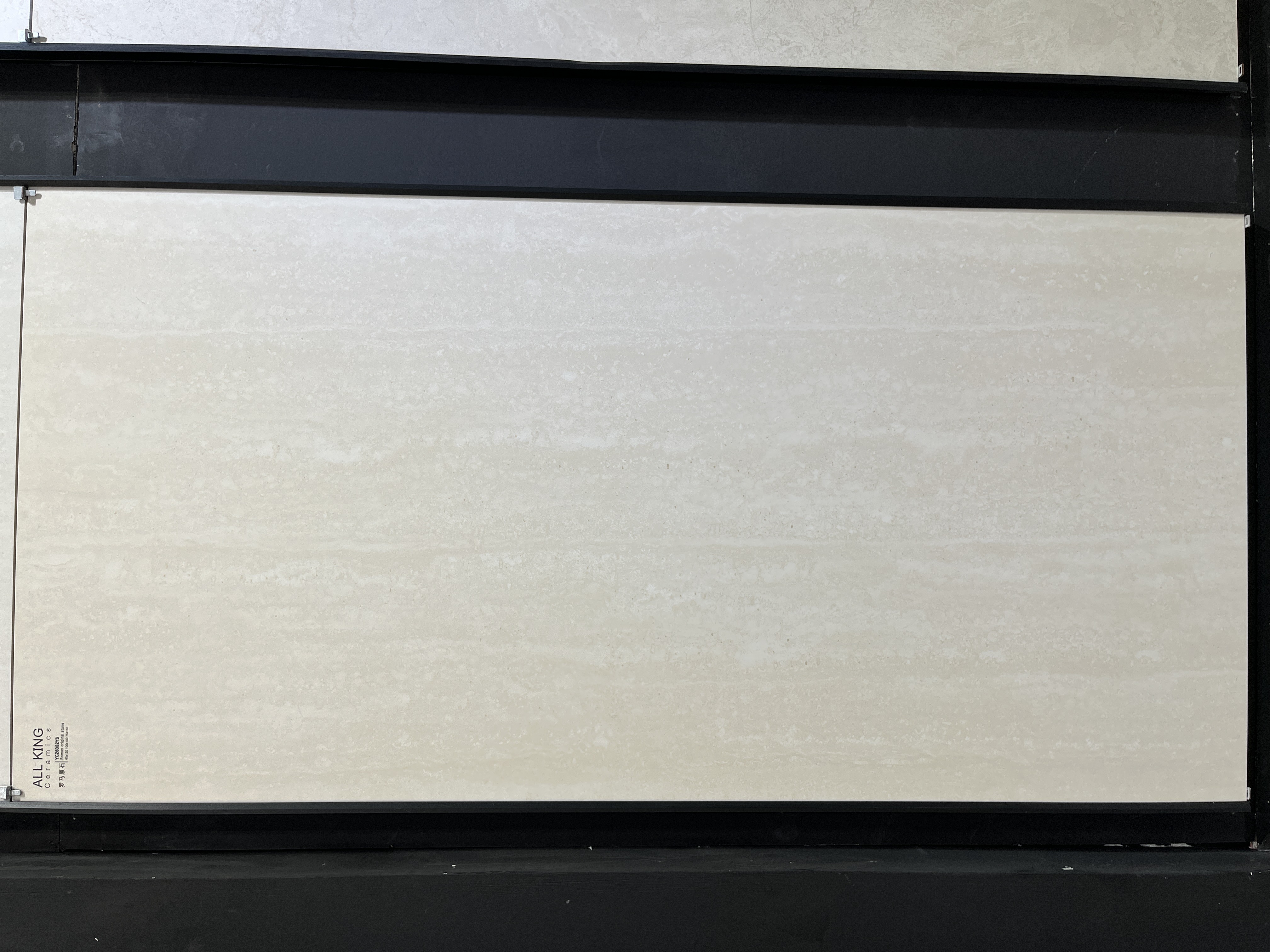
Why the 60x120 format, specifically
The size is not a stylistic preference. It changes the maintenance load of the room. A simple geometry check — joint length per square metre equals 2 × (1/a + 1/b) for a tile with sides a and b — puts 600×1200 mm at about 5.0 metres of joint per square metre, against about 6.7 metres for 600×600 mm. That is roughly a quarter less joint to clean, seal and keep dry (calculated from nominal tile dimensions, ignoring offcuts and joint width).
Fewer joints means fewer places for mould to start, fewer linear metres of grout to re-seal in a maintenance cycle, and a floor that reads as continuous rather than tiled. In a compact guest bathroom, fewer visible lines also make the room feel larger — a side benefit that shows up in guest perception rather than in the datasheet.
The format has real limits, and a specifier should plan around them:
- Substrate flatness matters more. A leveling system corrects lippage between adjacent tiles; it cannot flatten a wavy screed. Large format amplifies a bad substrate.
- Cut waste rises in small rooms. A 60x120 cm piece produces more offcut in a tight shower enclosure than in a full bathroom floor.
- Handling needs two people. Larger pieces are heavier and less forgiving to place, which affects labour planning and programme.
- Falls to drain must be built below the tile. The slope belongs in the substrate, not in adhesive thickness.
For a typical hotel guest bathroom of roughly five to eight square metres, the format works well on the floor and as a wall-cladding module, keeping a single material family across the room. In unusually small shower cubicles, the floor may be better served by a cut-down module of the same tile so the finish stays consistent.
Installation: seven steps that decide whether the floor performs
A correct tile installed badly is a failed floor. The manufacturer's stated installation requirement for this product is a leveling system and tile spacers, together with tile adhesive and grout — a requirement that exists because large-format porcelain leaves little tolerance for lippage.
- Survey and set out. Measure the room, note the drain position, door swing and any existing screed level. Set the starting line so that no sliver cut lands at the threshold or on the most visible wall.
- Prepare the substrate. Strip old tile and adhesive, check flatness and prime as required. This is the step most often compressed in a fast renovation, and the one most often paid for later.
- Tank and form falls. Waterproof the wet zone and build the slope to the drain before any tile is laid. Confirm the finished fall is continuous and does not pond.
- Use the right adhesive and back-butter. Low-absorption porcelain needs an adhesive suited to vitrified tile, applied with full coverage; back-buttering supports the transfer that large format demands.
- Clip, level and space. A clip-and-wedge leveling system holds adjacent tiles at the same plane while the adhesive cures, and spacers keep the joint width consistent across the field.
- Grout and seal the junctions. Use a grout suited to wet areas and keep joint width uniform. Movement and sanitary junctions take flexible sealant, not cement grout.
- Verify before handover. Check flatness, listen for hollow spots, inspect joint uniformity, and file the slip test report and cleaning instructions with the operating team. A neutral-pH cleaning regime protects both grout and surface.
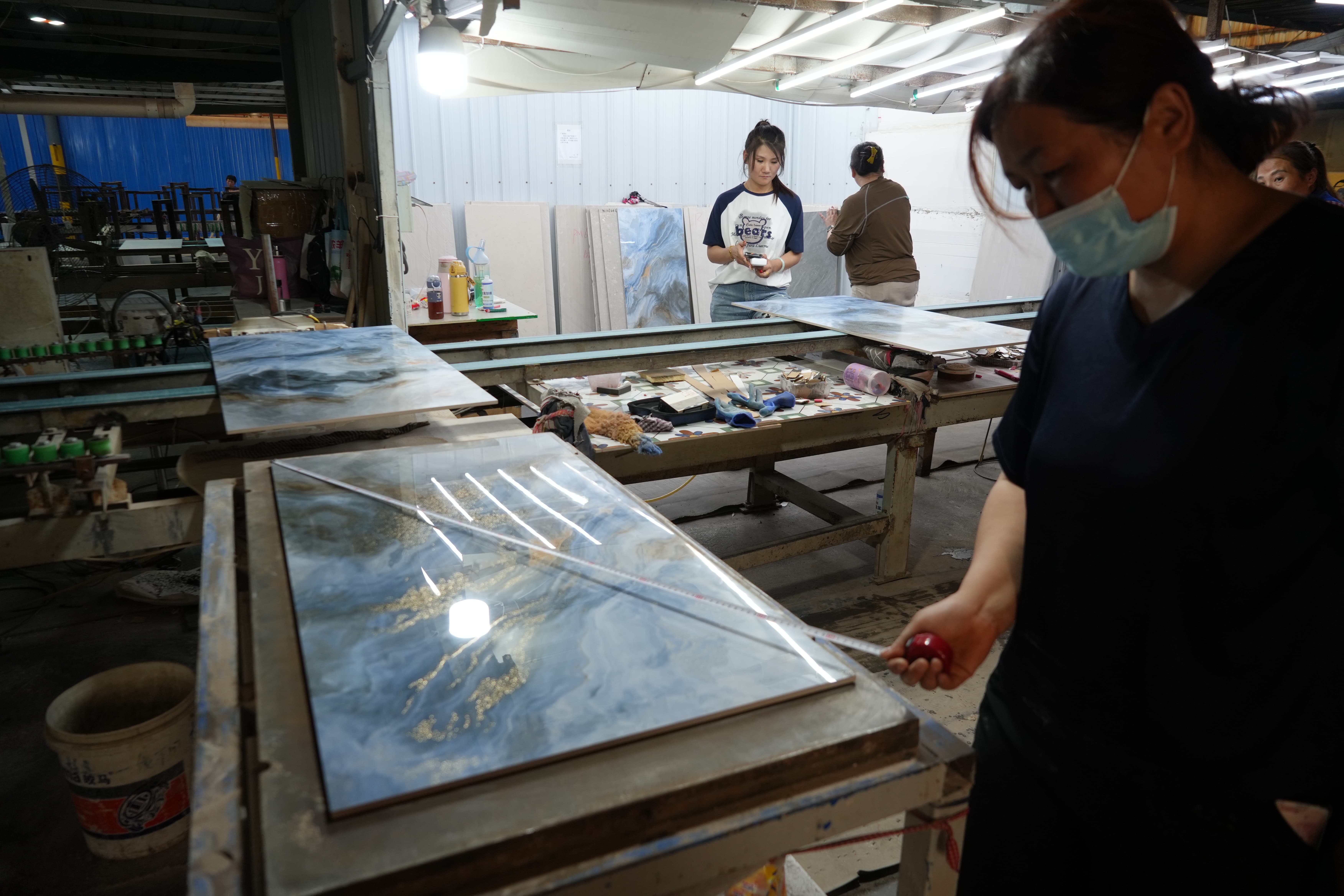
Because a hotel renovation runs in phases, the practical schedule is per floor or per block: complete one group of rooms, hand it back, and move the same crew and the same batch forward. That keeps joint colour and surface batch consistent within each room set and shortens the period a floor is out of service.
Where the same specification travels
Hotel bathrooms are the hardest wet-room case, but the same tile logic applies across a commercial real estate portfolio. The zone matrix below shows how the specification shifts with the risk profile.
| Zone | Dominant risk | What to specify |
|---|---|---|
| Guest bathroom floor | Water film plus bare feet | Vitrified body below 0.5% absorption, R10/R11 minimum, tight joint control, leveling system |
| Shower and wet zone | Standing water, cleaning chemicals | Highest R class the project accepts; falls built into the substrate; flexible sealant at junctions |
| Hotel lobby and circulation | High footfall, luggage wheels | PEI 4/5 abrasion class, Mohs 6–7 surface, large format for fewer joints |
| Commercial kitchen and back-of-house | Grease, water, frequent washing | Low absorption, acid and alkali resistance, R11 or higher, slip test report on file |
| Healthcare and education buildings | Continuous cleaning cycles, trolley traffic | Vitrified body, high abrasion class, joint design that withstands routine disinfection |
| Shopping malls and mixed-use floors | Sustained traffic and design continuity | Same format family across retail, circulation and washrooms to hold visual consistency |
| Outdoor terraces and entrances | Frost, rain, grit | A separate, thicker paver format with its own slip and frost requirements — not the indoor tile described here |
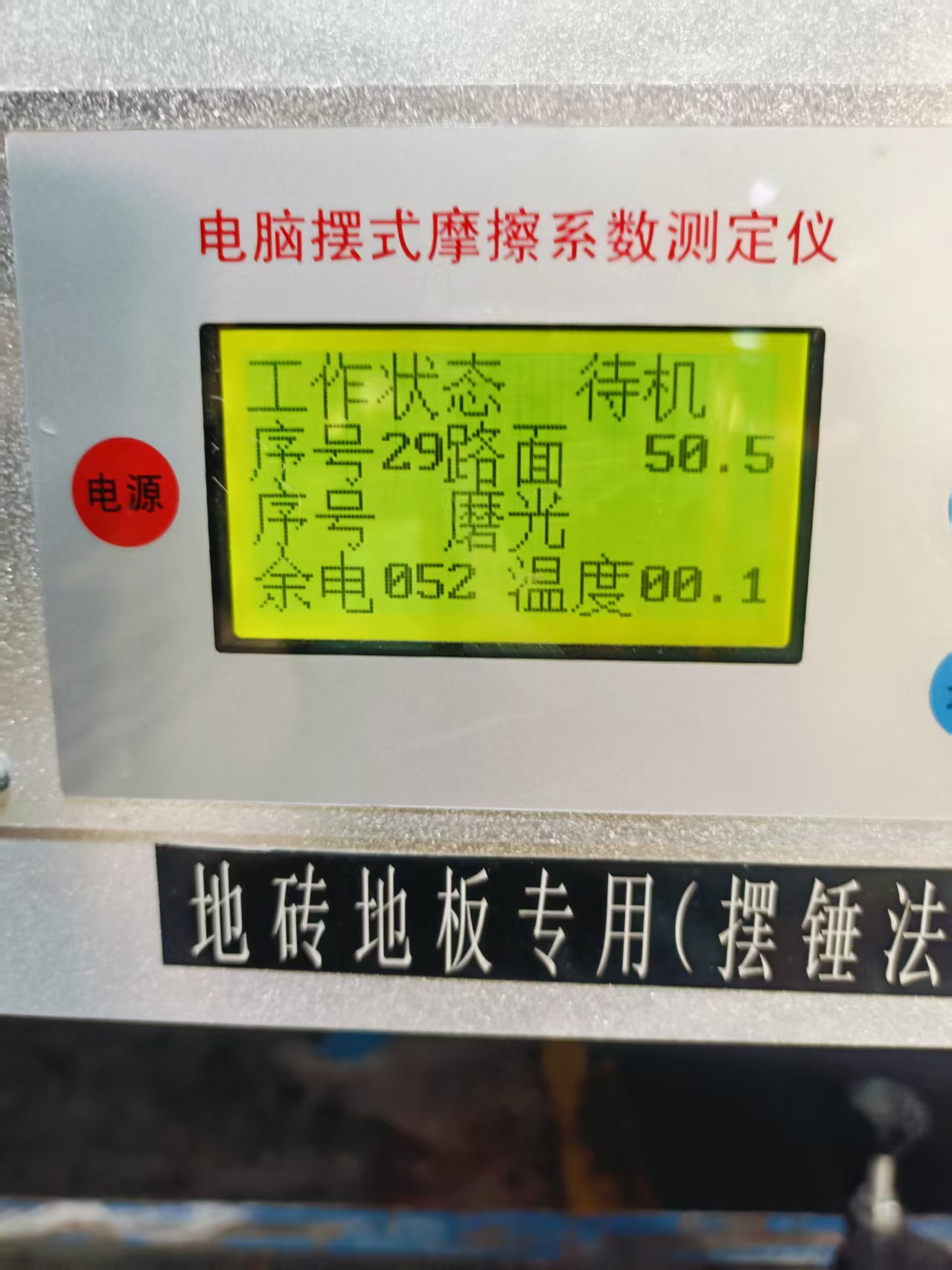
The commercial logic is straightforward. Where a project already uses vitrified floor tiles for high-traffic areas, extending the same specification family into bathrooms, corridors and back-of-house reduces the number of distinct products on site, simplifies spare stock and keeps maintenance crews working with one cleaning regime. For apartment developments and luxury villas, the same format serves both the shared wet areas and the private bathrooms.
OEM/ODM, capacity and programme supply
Specification is only half of a renovation decision; the other half is whether the supplier can deliver the same tile, in the same batch quality, at the pace the programme requires.
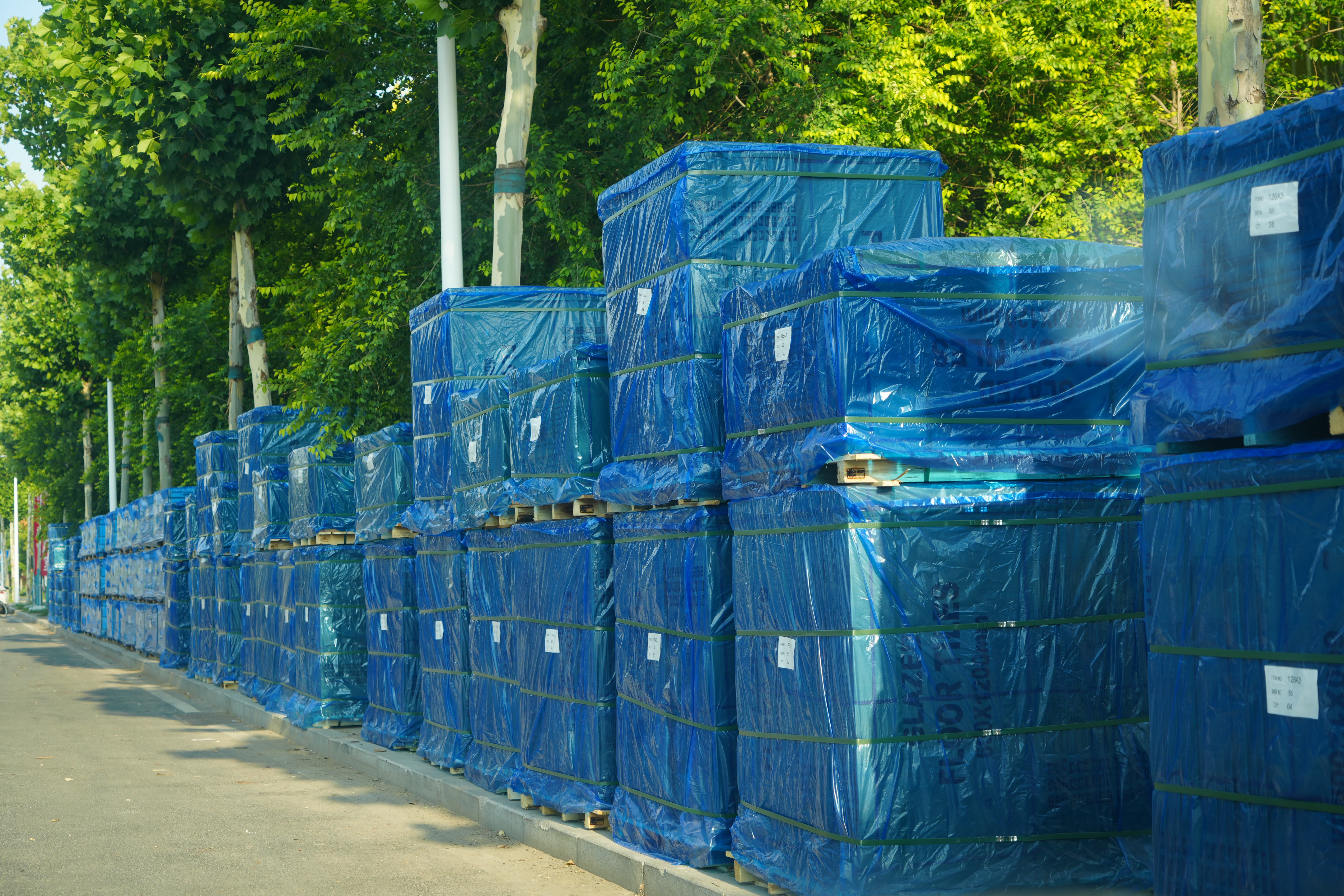
ALL KING CERAMICS (ZIBO ALL-KING CERAMICS CO., LTD) is a manufacturer and direct exporter of architectural ceramics, founded in 2011, operating a 60,000 m² factory with 320 employees, 25 engineers and an annual output stated at 12–16 million m². Monthly capacity is stated at 1.2 million m², and export accounts for about 70% of output across markets including Australia, New Zealand, Russia, South Korea, Vietnam, Malaysia, the Philippines, Peru, Panama, Colombia, Chile, Bolivia, Guatemala, Iraq, Ukraine and the UAE.
For renovation programmes, four supply facts matter:
- Customization. OEM/ODM support covers custom size and thickness, surface finish, brand logo and packaging, marble vein variation, and anti-slip rating — the last being how an R12 requirement is met without changing the visual family.
- Order threshold. MOQ is 400 m² per design, with trial orders accepted, which lets a hotel test a finish on one floor before committing the full programme.
- Production lead time. Stated at 7–10 days; ocean freight and customs clearance sit on top of that and should be planned per delivery phase.
- Quality control and after-sales. 100% flatness and sizing auto-check, piece-by-piece visual inspection and random laboratory testing per batch, backed by damage compensation, online installation guidance, 24/7 technical consultation and batch tracking for reordering.
Project records supplied by the manufacturer reference deliveries of 15,000 m² across hotel lobbies, commercial mall flooring, office facades, high-end apartment bathrooms and airport departure halls. These are company-reported figures; during supplier qualification they should be matched against references and batch documentation for the specific project.
Frequently asked questions
Does a 60x120 cm porcelain tile meet hotel bathroom slip requirements?
Slip performance is defined by the tested R class, not by tile size alone. ALL KING CERAMICS states that its porcelain tiles carry R10/R11 anti-slip ratings and can be customized to R12. Under DIN 51130, R11 covers a grip band of 19° to 27° on an oil-wet ramp. Before approval, request the test report for the specific tile, confirm the class matches what the hotel operator, insurer or local code requires, and verify that the delivered batch matches the tested specification.
Can the tile be customized for a specific hotel renovation design?
Yes, within the manufacturer's stated OEM/ODM scope: custom size and thickness, surface finish, OEM brand logo and packaging, marble vein variation, and anti-slip rating. That means a project can hold one visual family across guest bathrooms, corridors and lobby areas while adjusting the slip class for each zone. Customization is confirmed against drawings and a sample before production.
What drives the cost of a 60x120 porcelain bathroom floor?
Cost is driven by the specification and the site, not by the tile alone. The main variables are the required slip class and finish, the quantity per design against the 400 m² MOQ, cut waste from the room layout, substrate preparation and waterproofing, the leveling system and spacers, grout selection, and freight with clearance. A phased hotel programme also carries scheduling cost. Because these vary by project, pricing should be quoted against drawings and a measured bill of quantities rather than a per-square-metre list figure.
Can we get samples before committing the full order?
Samples are the sensible first step, and trial orders are accepted. A physical sample confirms colour, vein pattern and surface texture against the design intent; a site mock-up on a representative substrate then confirms how the tile handles the leveling system, joint width and fall to drain. Keep the approved sample and the production batch reference together, so later deliveries can be checked against the approved standard.
What lead time should a hotel renovation programme plan for?
The manufacturer states a production lead time of 7–10 days, with ocean freight and customs clearance additional and dependent on destination. For a phased renovation, the workable approach is to split the order by floor or block, keep batch tracking on file, and hold a small attic stock for damage replacement so a single broken tile does not stall a room handover. To move from specification to a sample or a project quotation, the practical next step is to send room drawings, the required slip class and the target delivery schedule.
Conclusion
Hotel bathroom renovations go wrong at the floor because the floor carries every risk at once: water, bare feet, cleaning chemicals, abrasive grit and continuous traffic. A 60x120 cm vitrified porcelain tile answers those risks with a specific set of properties — water absorption below 0.5%, PEI 4/5 abrasion resistance, Mohs hardness 6–7, breaking strength of at least 1300 N, and R10/R11 slip ratings with R12 available through customization — supported by ISO 13006 compliance as stated by the manufacturer. The large format then reduces the joint length that has to be cleaned and maintained, provided the substrate is flat and the leveling system and spacers are used as specified.
For projects moving from research into evaluation, the decision path is short: confirm the R class against the test report, confirm the absorption and abrasion values against the certificate, check the installation method against the site conditions, and check the supplier against the programme. ALL KING CERAMICS supports that evaluation with OEM/ODM customization, a 400 m² per-design MOQ with trial orders accepted, stated 7–10 day production lead time and batch tracking for reordering, alongside a product range that includes 60x120 cm, 75x150 cm, 80x80 cm, 60x60 cm and 100x100 cm formats.
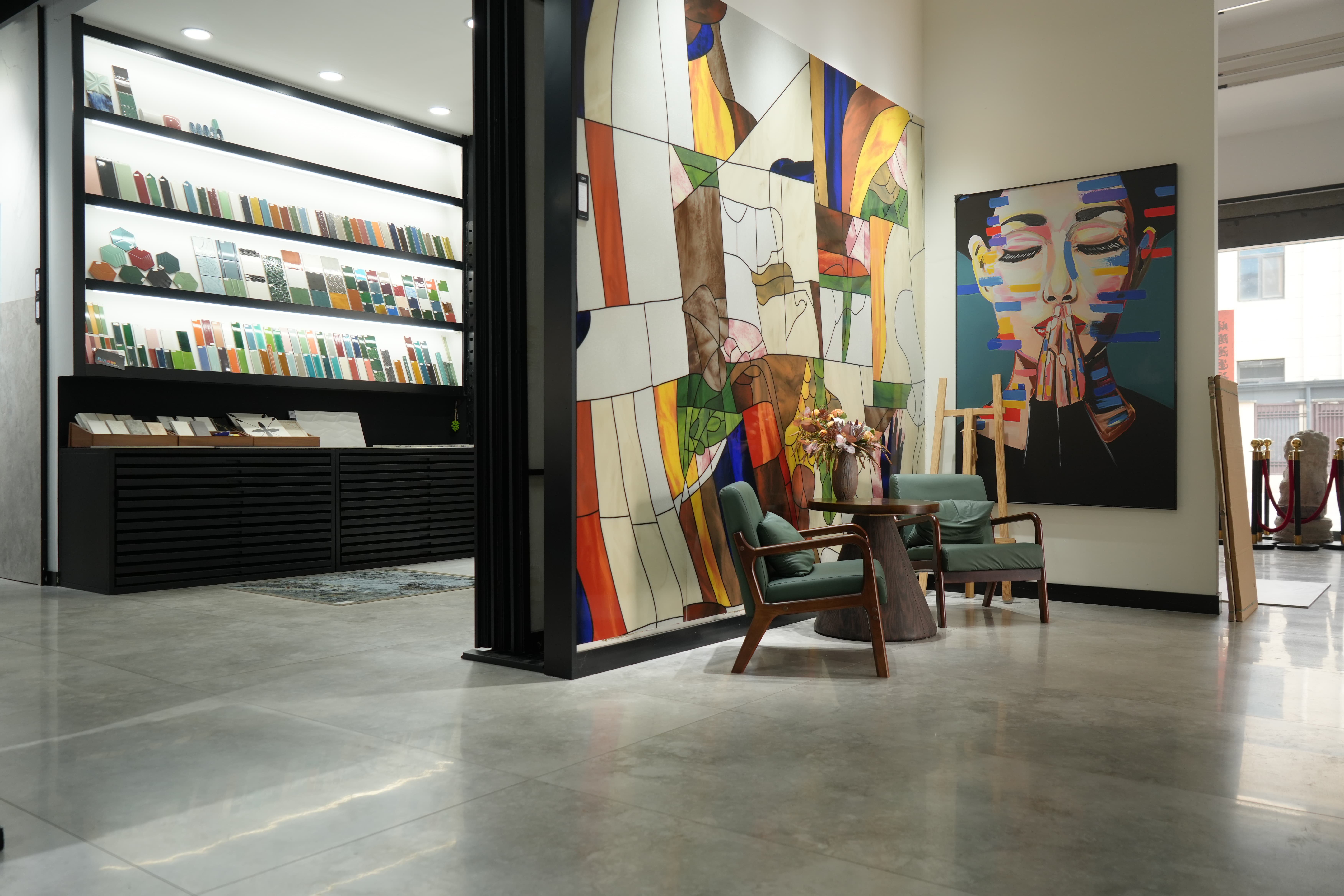
Full specifications, format options and packing details are available in the ALL KING Ceramics catalogue, and company and product information is published at ALL KING CERAMICS. Project teams comparing porcelain tile project solutions for a Canadian or international hotel renovation can request a sample and a drawing-based quotation before the specification is frozen.
Have Questions or Need More Details?
Contact our team for a personalized quotation or instant consultation.
Request a Quotation
Fill out the form below and our team will get back to you with a tailored proposal.
WhatsApp Direct Chat
Prefer to chat in real-time? Message us on WhatsApp for instant assistance & quick answers.
- Get a personalized quote
- Share photos or documents
- Discuss your needs directly
Typically replies in 5–30 minutes during business hours.