ISO 9001 vs CE Certification: What EU Porcelain Tile Importers Must Verify Before Ordering
Two documents, two completely different questions. For buyers moving porcelain tile into the European Union, an ISO 9001:2015 certificate and a CE marking are not interchangeable — and treating them as the same thing is one of the most common gaps in a project submittal package.
One document describes how a factory is managed. The other describes what a product is legally allowed to do once it reaches the EU market. Get them mixed up and you either overpay for paperwork you didn't need, or clear a container that customs will not release.
Why Buyers Keep Confusing the Two
Both documents arrive as formal PDFs. Both carry a certificate number, an issuing body's stamp, and a validity statement. Both are routinely requested by consultants in the same sentence: "Please send your certificates." That surface similarity is exactly why procurement teams, specifiers and importers frequently end up holding only one of the two — usually whichever the supplier happened to attach first.
The problem is that the two certificates sit on opposite sides of the same transaction. ISO 9001:2015 certifies a management system. CE marking certifies a product's market access. A supplier can hold a perfectly valid ISO 9001:2015 certificate and still be unable to place a specific tile product on the European market without the correct CE documentation. Equally, a product can be CE-marked while the factory behind it has never been audited for its quality management system at all.
For a European construction project, the practical consequence is simple: buying on one document alone leaves a hole. The two certificates answer different questions, and a complete procurement file needs both answers.
The Commercial Context Behind the Paperwork
Porcelain tile is one of the most heavily specified finishes in commercial construction, and the volumes involved make documentation errors expensive at scale.
According to Market Research Future, the global tile market was estimated at USD 265.21 billion in 2024 and is projected to reach USD 587.72 billion by 2035. The same research notes that commercial construction accounts for roughly 37% of total global tile demand. That 37% is where the certification question actually bites, because commercial projects are the ones that go through formal submittal review, consultant sign-off and building-control inspection.
On the supply side, the Observatory of Economic Complexity reports that China was the leading exporter of ceramic products in 2024, with an export value of USD 18.3 billion (HS 69). For European buyers, this means most of the quotes arriving in a tender folder originate outside the European Economic Area — and each one has to be measured against EU market-access rules, not against the supplier's own quality paperwork.
What ISO 9001:2015 Actually Certifies
ISO 9001:2015 is a quality management system (QMS) standard. It certifies the organisation, not the tile. When a factory holds a valid certificate, it means an accredited certification body has audited how that factory plans, controls and improves its processes — from incoming raw-material checks through in-line testing to final inspection and corrective action.
Three characteristics matter most to an importer evaluating a supplier:
- It is voluntary. No EU regulation requires an ISO 9001:2015 certificate for tile to cross the border. It is requested by buyers and consultants; it is not imposed by EU law.
- It is international in scope. The same standard applies in China, Italy, Spain, Turkey or Vietnam. It says nothing about which market a product was designed and tested for.
- It covers a defined scope. Every certificate states which activities, sites and product categories were audited. A certificate covering a trading division is not automatically the same thing as one covering a production line.
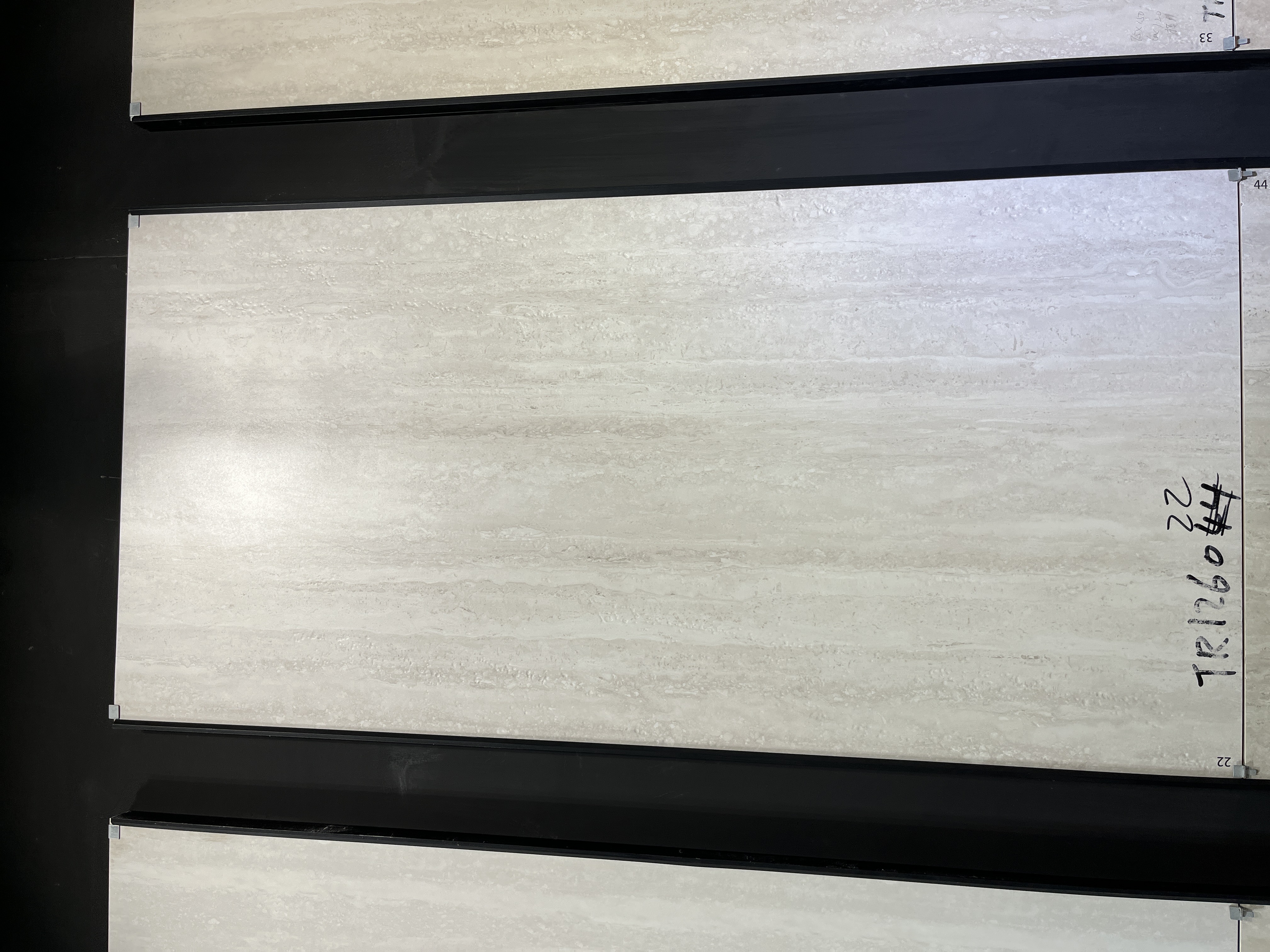
For the supplier referenced throughout this article, ALL KING CERAMICS — a Zibo-based manufacturer and direct exporter of architectural ceramics operating a 60,000 m² facility — holds ISO 9001:2015 certificate number 0350521Q30166R1M, issued by XQCC. That certificate covers product codes 5624 (Travertine, 60x120 cm) and 4765 (Marble Series, 60x120 cm).
What CE Marking Actually Certifies
CE marking is the opposite of voluntary. It is the manufacturer's declaration that a product meets the applicable EU health, safety and environmental legislation, and it is a legal precondition for placing that product on the market inside the European Economic Area.
Where ISO 9001 describes a management system, CE describes a product outcome. The supporting documentation generally includes a declaration of conformity, test data against the relevant harmonised standards, and — where the applicable rules require it — the involvement of a notified body.
Attributes that EU-facing tile buyers typically need to see evidenced in the technical file include:
- water absorption classification (vitrified porcelain tile is defined as below 0.5%)
- breaking strength and modulus of rupture
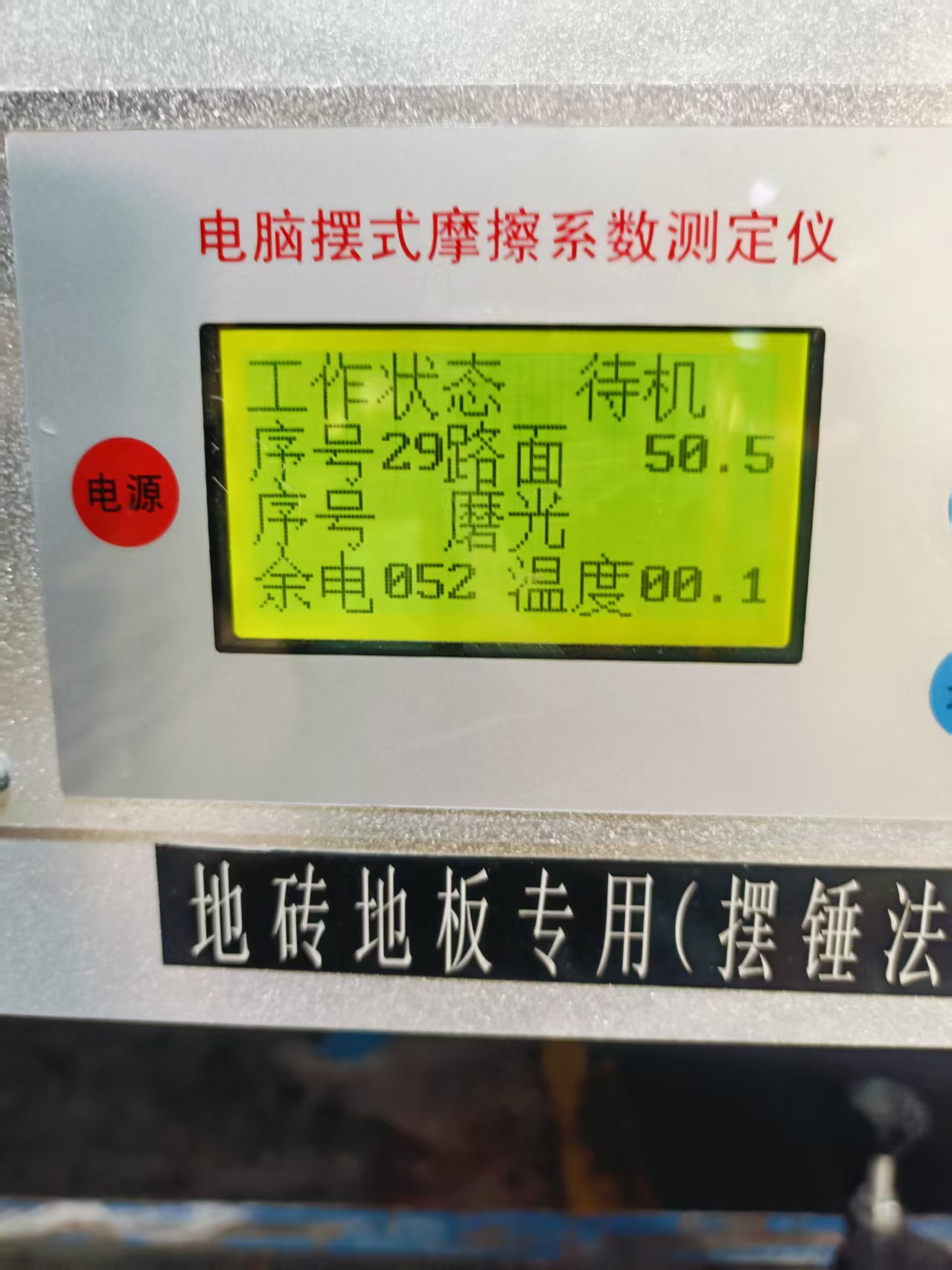
- slip resistance classification — under DIN 51130, an R11 rating corresponds to a grip range on an oil-wet inclined ramp of approximately 19° to 27°
- frost resistance, dimensional tolerance and surface flatness
For product codes 5624 and 4765, the CE conformity documentation is issued under certificate AC 50163816 0001 by TUV.
ISO 9001:2015 vs CE: A Side-by-Side Comparison
| Dimension | ISO 9001:2015 | CE Marking / Conformity |
|---|---|---|
| What it governs | The organisation's quality management system | Conformity of the product with applicable EU legislation |
| Subject of the certificate | The factory, its sites and its processes | The specific product placed on the market |
| Geographic relevance | Internationally applicable | European Economic Area market access |
| Legal status in the EU | Voluntary — a buyer or consultant requirement | Mandatory for lawful market placement |
| Issuing party | Accredited certification body (here: XQCC) | Manufacturer declaration with notified-body involvement where applicable (here: TUV) |
| Certificate reference used here | 0350521Q30166R1M | AC 50163816 0001 |
| Product codes covered | 5624, 4765 | 5624, 4765 |
| What it demonstrates | Consistent process control and traceability | The product may lawfully be placed on the EU market |
| What it does not demonstrate | Product conformity with EU market rules | Long-term process discipline or factory governance |
Read the table as a checklist rather than a ranking. Neither document is "stronger." They cover different risk categories, and a European tender file normally needs evidence from both columns.
Step-by-Step: Verifying Both Certificates Before You Commit
The verification workflow below is written for importers, procurement managers and specifiers preparing a commercial porcelain tile order destined for an EU market. It takes about as long as reading two specification sheets — provided you ask for the right things in the right order.
Step 1 — Ask for certificate numbers, not attached PDFs
A scanned PDF is trivially editable. A certificate number combined with the issuing body's name is a claim you can check independently. Request the number, the issuing organisation, the issue date and the expiry date in writing, and cross-reference them against the issuer's public register.
Step 2 — Match the certificate scope to the product code
Confirm that the ISO 9001:2015 scope explicitly names the product categories you are buying. In this case, product codes 5624 and 4765 fall under certificate 0350521Q30166R1M. If a supplier presents a certificate that covers a different site or a different product family, treat it as unverified for your order until corrected.
Step 3 — Confirm the CE conformity document, not just the CE logo
The CE mark on a box means nothing without the declaration behind it. Request the conformity document covering product codes 5624 and 4765 — here, AC 50163816 0001 issued by TUV — and check that the declared performance values match the specification you specified.
Step 4 — Cross-check the technical values against the declaration
For 60x120 cm vitrified porcelain tile in this range, the declared technical values are thickness 9.0–10.5 mm, water absorption below 0.5%, PEI 4 / PEI 5 abrasion resistance, Mohs hardness 6–7, breaking strength at least 1300 N, modulus of rupture at least 35 MPa, and packing of 2 pieces per box (1.44 m² per box). Any mismatch between the marketing datasheet and the conformity document is a red flag worth resolving before deposit.
Step 5 — Verify the issuing bodies themselves
XQCC and TUV are the issuing organisations named on the two certificates covering codes 5624 and 4765. Both should be traceable through their own public records. This step is what separates a checked supplier from one that simply sent a nice-looking PDF.
Where the Two Certificates Matter Most
Not every project exposes the same risk. These are the scenarios where the ISO 9001 / CE distinction shows up most often in practice.
Commercial real estate and mixed-use developments
Large mixed-use schemes run formal submittal review. Consultants there typically want the CE conformity document for the specified product family, plus a QMS certificate as an indicator of supply consistency across a multi-phase delivery. A 60x120 cm vitrified porcelain format is a common specification in lobbies and circulation areas precisely because it absorbs heavy wear while holding a consistent surface appearance across large floors.
High-traffic interiors: malls, hotel lobbies, healthcare and education
These are the interiors where PEI 4 / PEI 5 abrasion resistance and low water absorption stop being datasheet footnotes and start being maintenance-budget items. The ISO 9001:2015 certificate matters here because it speaks to batch-to-batch consistency over a long delivery schedule, while the CE file confirms the product is cleared for the market it is being installed in.
Outdoor terraces, wet zones and anti-slip areas
Where slip resistance is specified, the CE technical file is the document that carries the classification. An R11 rating under DIN 51130 corresponds to a defined performance range, and for projects requiring a higher classification, R12 can be achieved through customisation on request. Specifying the correct class without the supporting testing documentation attached creates a verification gap that a site inspector can flag.
Green-building and LEED-oriented projects
Porcelain tile has a structural advantage in green-building specifications: because it is fired at high temperature, organic matter is destroyed in the kiln, which is why the LEED v4 framework treats fired tile as exempt from the FloorScore VOC requirements applied to many flooring categories (LEED v4 IEQc4.3, as referenced by the U.S. Green Building Council / WhyTile). If a project credits are being claimed, the supporting conformity documentation should be gathered at the same time as the CE file.
Common Mistakes That Cost EU Importers Time
- Accepting a QMS certificate as proof of market access. ISO 9001:2015 does not authorise a product for the EU market. It never has.
- Accepting a CE logo without the declaration. The logo is the summary; the conformity document — in this case AC 50163816 0001 — is the evidence.
- Not checking the scope statement. A certificate that does not name your product family proves nothing about your order.
- Verifying after the deposit, not before. Certificate checks are cheapest at quotation stage and most expensive after the container is loaded.
- Treating supplier claims as verification. A manufacturer statement is a claim. A certificate number checked against an issuing body's register is verification.
Frequently Asked Questions
Is ISO 9001:2015 sufficient for importing porcelain tile into the EU?
No. ISO 9001:2015 is a voluntary quality management system standard that certifies an organisation's processes. It does not grant market access. To place porcelain tile on the EU market, the product itself must carry CE conformity documentation. European project files typically require both: the QMS certificate as an indicator of supply consistency, and the CE conformity document as proof of lawful market placement.
Can a single supplier provide both certificates for the same product code?
Yes. ALL KING CERAMICS holds ISO 9001:2015 certificate 0350521Q30166R1M issued by XQCC, and CE conformity documentation under certificate AC 50163816 0001 issued by TUV. Both cover the same product codes, 5624 (Travertine) and 4765 (Marble Series), in the 60x120 cm vitrified porcelain format.
What does certification verification actually cost a buyer?
The direct cost of verification is time, not money. Certificate numbers can be cross-referenced against the issuing body's register at no charge, and the main expense is the internal hours spent matching scope statements to product codes and comparing declared performance values against the project specification. The far larger cost sits on the other side: a container held at an EU border, or a specified product failing submittal review, is significantly more expensive than the hour it takes to check a certificate number.
How should certification be checked at the sample stage?
Match the sample to the certificate. Ask the supplier to identify which product code the sample belongs to, then confirm that code appears in both the ISO 9001:2015 scope and the CE conformity document. For 60x120 cm vitrified porcelain in this range, the sample should correspond to declared values of sub-0.5% water absorption, PEI 4 / PEI 5 abrasion resistance, breaking strength of at least 1300 N and modulus of rupture of at least 35 MPa. If the sample and the declared values do not line up, resolve the discrepancy before moving to production.
How long does verification take, and how does it affect delivery planning?
Certificate verification is a quotation-stage activity, not a production-stage one. It can and should be completed while commercial terms, format mix and quantity are still being negotiated, so that nothing in the paperwork chain delays the loading schedule. Suppliers who maintain current certification and can produce both documents on request remove a common source of pre-production delay — for European buyers, the cleanest approach is to request the full certificate set together with the standard technical datasheet and samples in a single exchange at the start of the evaluation.
Conclusion
ISO 9001:2015 and CE certification are not competing credentials, and they are not substitutes. One certifies how your supplier's organisation is managed; the other certifies that the product may lawfully enter the European market. For porcelain tile destined for an EU commercial project, the practical answer is not "which one" but "both, for different reasons."
The verification burden is small when it is handled correctly: request certificate numbers rather than PDFs, match scope statements to product codes, confirm the conformity document behind the CE mark, and cross-check declared technical values against the specification. Suppliers who maintain both documents — as ALL KING CERAMICS does for product codes 5624 and 4765 — make that check a single email rather than a multi-week investigation.
Request the Certificate Set and Project Samples
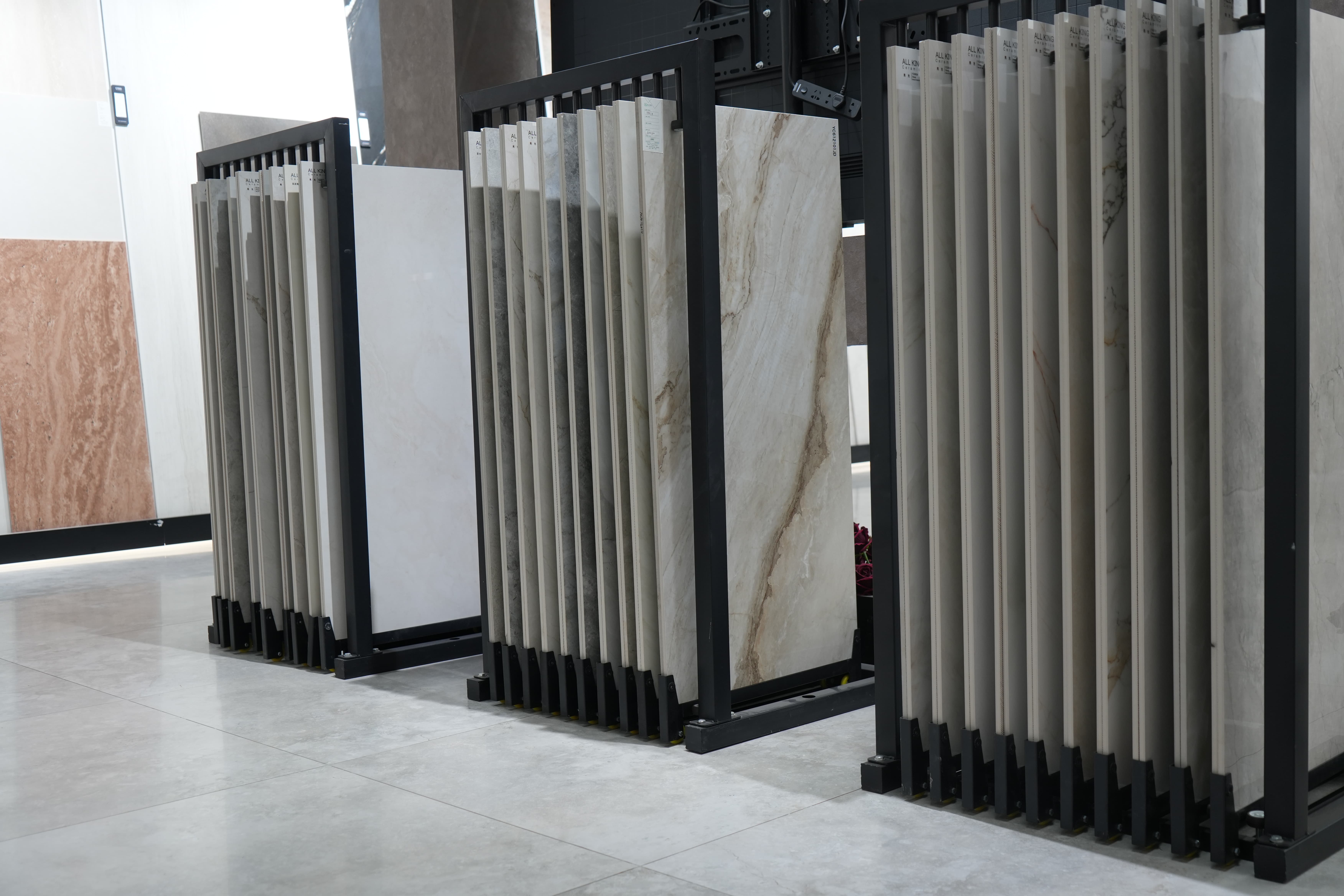
For EU-bound commercial projects, All-King Ceramics can provide the ISO 9001:2015 certificate (0350521Q30166R1M, issued by XQCC), the CE conformity documentation (AC 50163816 0001, issued by TUV) and matching physical samples for product codes 5624 and 4765 in a single exchange.
Contact Abby — Email: tyceramic2@all-king.com · WhatsApp/Tel: +86 156-5336-9360 · Website: www.all-king.com
Download the full product range: All-King Ceramics Product Catalog (PDF)
Have Questions or Need More Details?
Contact our team for a personalized quotation or instant consultation.
Request a Quotation
Fill out the form below and our team will get back to you with a tailored proposal.
WhatsApp Direct Chat
Prefer to chat in real-time? Message us on WhatsApp for instant assistance & quick answers.
- Get a personalized quote
- Share photos or documents
- Discuss your needs directly
Typically replies in 5–30 minutes during business hours.