
Marble Series vs OEM/ODM Porcelain Tile: Which Fits Your Commercial Project?
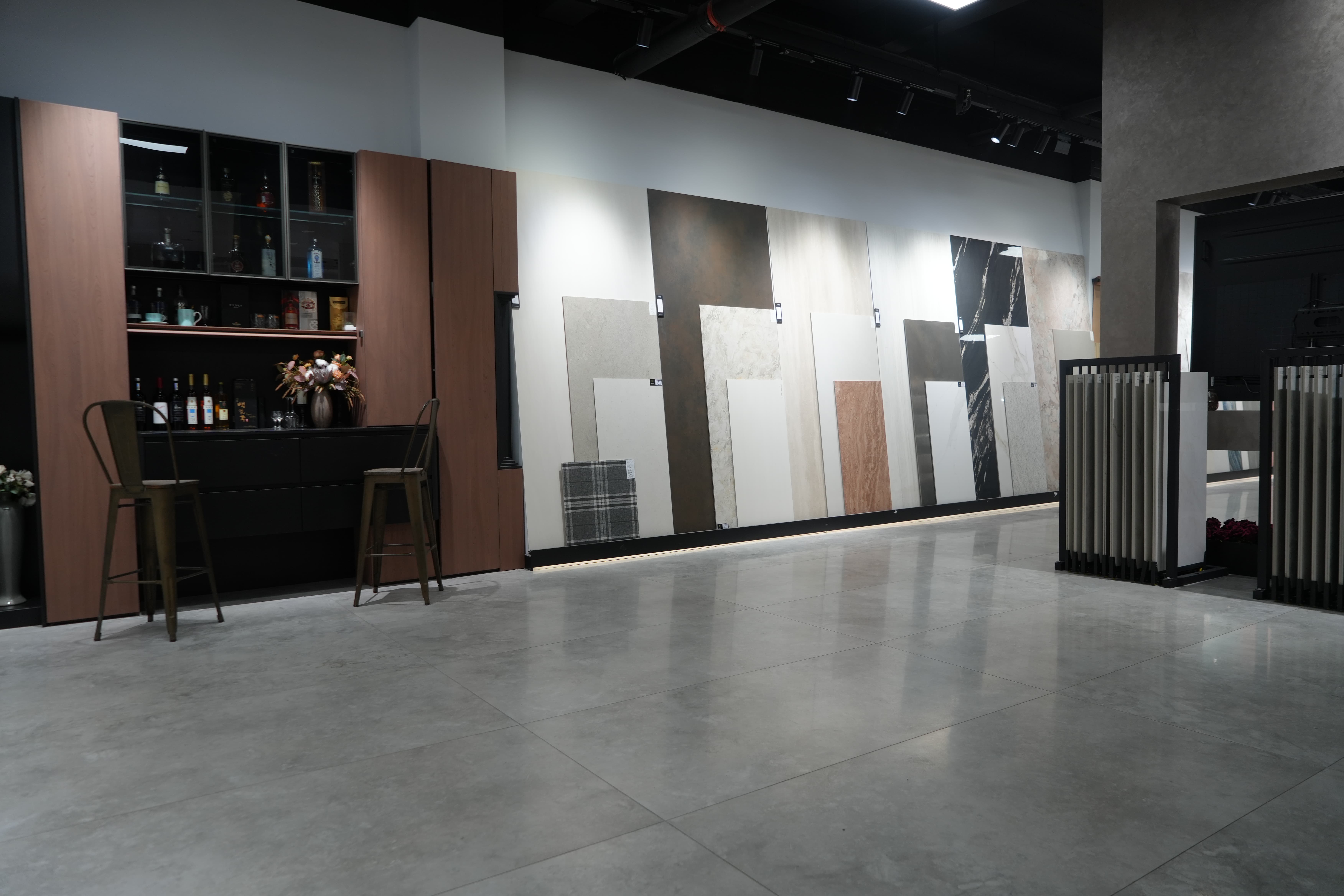
For a commercial project, the faster route to a compliant floor is usually the one with the shorter verification chain. The standard Marble Series 60x120 cm porcelain tile arrives with documented performance—water absorption below 0.5%, PEI 4/5 abrasion resistance, Mohs 6–7 hardness, and a factory holding ISO 9001:2015 certificate 0350521Q30166R1M and CE certificate AC 50163816 0001—so the buyer's main task is checking whether those values match the project specification, not generating new test data. OEM/ODM customization becomes the better fit when the project needs a non-standard format, a different slip rating such as R12, a bespoke surface, or project-specific packaging. The trade-off is that each customized variable introduces a separate validation step before the tile can be safely specified at scale.
This guide compares the two routes on the criteria that actually decide commercial tile procurement: certification readiness, specification match, time-to-site, and the verification work each route demands. It uses documented facts from the Marble Series specification and the factory's production context, not general claims about customization.
Why This Decision Matters More Than the Tile Itself
Commercial construction accounts for an estimated 37% of global tile demand, according to a commercial research estimate, and China remained the leading ceramic products exporter in 2024 with $18.3 billion in export value, based on Observatory of Economic Complexity data. For a project buyer, those numbers describe a crowded supplier landscape, not a simple choice.
The real procurement risk is rarely finding a factory that can produce porcelain tile. It is specifying a product whose performance is documented, tested, and compatible with the project's compliance file. Commercial projects—shopping malls, hotel lobbies, healthcare facilities, educational buildings, mixed-use developments—typically require the tile supplier to provide a performance record that a specifier, contractor, or authority can check. The standard-versus-custom decision is therefore a risk-allocation decision: standard supply transfers less verification burden to the buyer; custom supply transfers more design freedom but also more verification responsibility.
That framing matters because customization is often marketed as the more professional choice. In practice, a customized tile without a test report for its customized parameter is a specification risk, not a design upgrade. The question is not whether custom is better than standard. The question is which route gives the project the performance it needs with a verification record the project can defend.
What the Standard Marble Series 60x120 cm Tile Delivers
The Marble Series 60x120 cm porcelain tile is a documented standard product, not a generic category. Its published specification covers the values a commercial specifier usually needs to check.
| Parameter | Documented value | What it means for a project |
|---|---|---|
| Water absorption | Below 0.5% (vitrified) | Low porosity supports dimensional stability and frost resistance in suitable applications |
| Abrasion resistance | PEI 4 / PEI 5 | Rated for high-traffic floor use under the PEI classification |
| Mohs hardness | 6–7 | Surface hardness that resists scratching from routine commercial use |
| Breaking strength | ≥1300 N | Structural strength for large-format handling and installation |
| Modulus of rupture | ≥35 MPa | Bending strength relevant to large-format durability |
| Thickness | 9.0–10.5 mm | Standard indoor commercial floor range |
| Packing | 2 pcs/box, 1.44 m²/box | Format and coverage that simplify quantity planning |
| Quality management | ISO 9001:2015 certificate 0350521Q30166R1M | Documented quality management system |
| EU conformity | CE certificate AC 50163816 0001 | Product conformity documentation for applicable EU requirements |
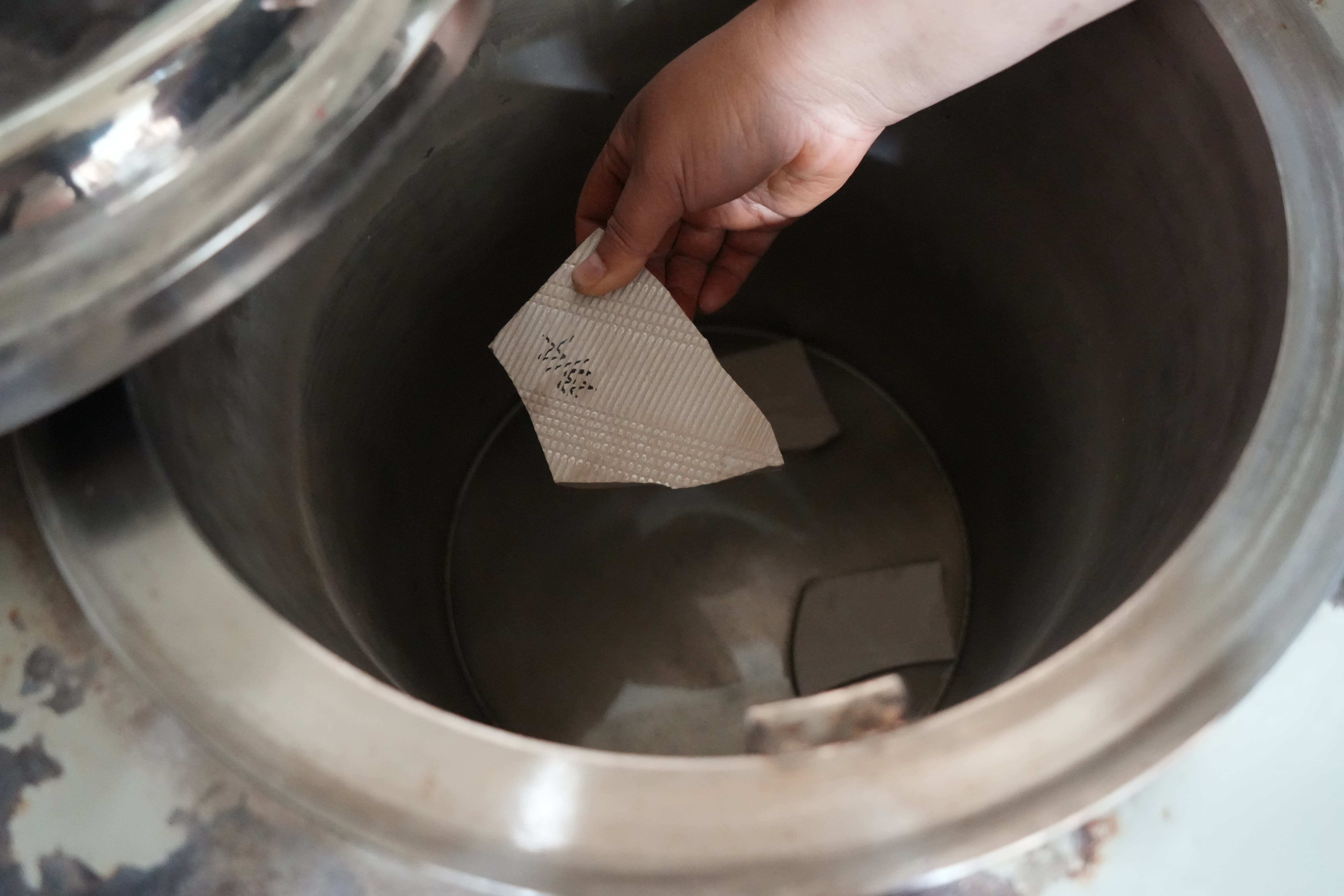
Each value answers a specific procurement question. Water absorption below 0.5% is the threshold that places the tile in the vitrified porcelain category; it matters most in wet areas and in climates with freeze-thaw cycles, where porosity affects long-term performance. PEI 4/5 indicates abrasion resistance suitable for commercial floors with sustained foot traffic. Mohs 6–7 describes surface hardness relative to common scratch sources such as grit tracked in from outside. Breaking strength and modulus of rupture are the values an installer or structural reviewer checks when handling large-format tiles.
The two certificates serve different functions and should not be treated as interchangeable. ISO 9001:2015 is a quality management system certificate: it tells the buyer that the factory operates documented process controls. CE certificate AC 50163816 0001 is a product conformity document: it addresses whether the product meets applicable requirements for the EU market. A project in the EU usually needs the CE document; a project outside the EU may use ISO 9001 as a supplier qualification baseline. Many commercial tenders ask for both because they answer different questions.
The practical advantage of this documented baseline is that the buyer does not need to commission new tests for the standard performance values. The verification work shifts from generating data to matching data to the specification. That is a smaller and faster task.
OEM/ODM Customization: Flexibility With a Verification Step
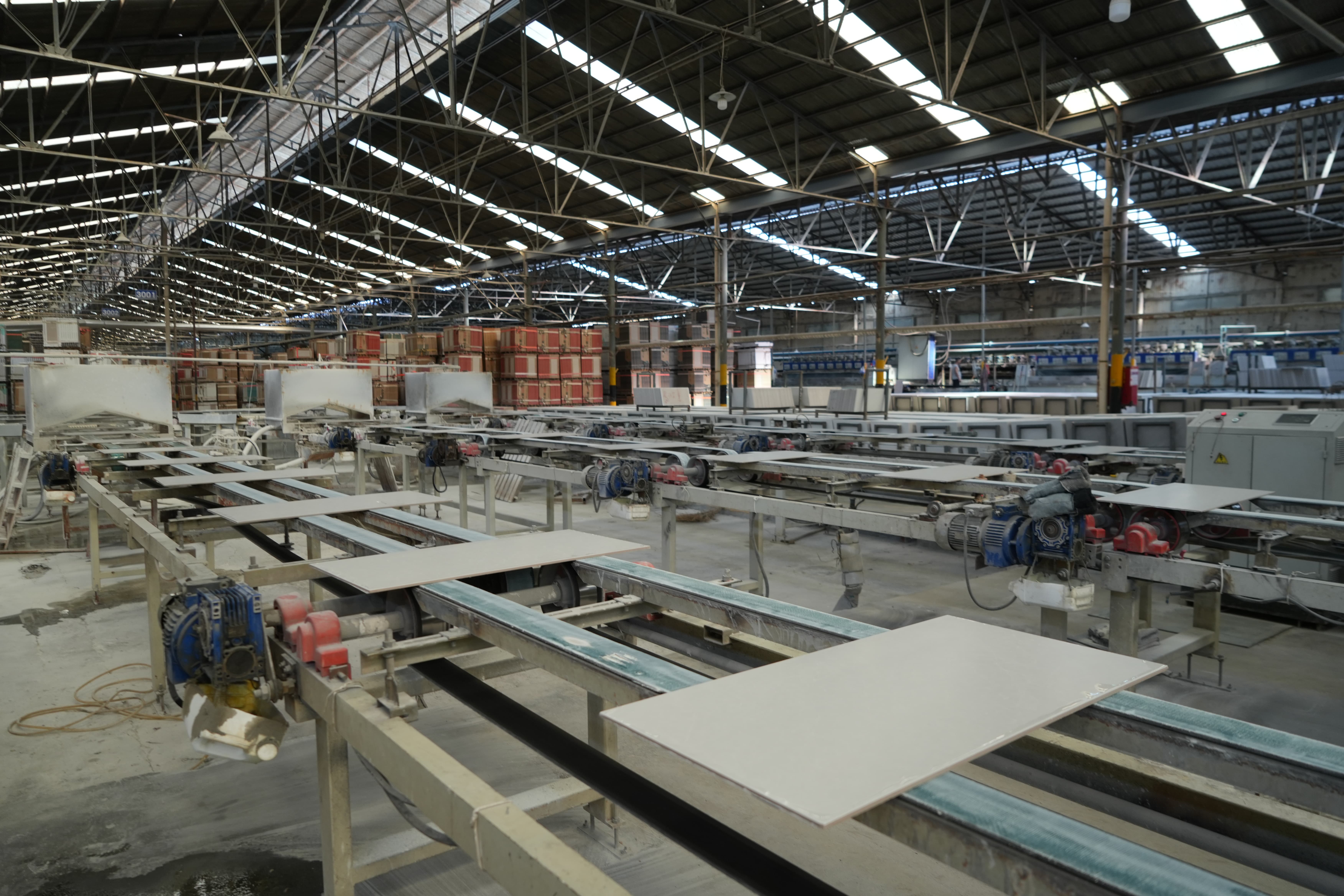
OEM/ODM customization changes the sequence. Instead of matching a fixed specification to the project, the project defines a new specification, and the factory develops a product to meet it. All-King Ceramics operates with a 25-engineer R&D team, a 60,000 m² factory, 320 employees, and an annual output of 12–16 million m², and it exports to more than 15 markets including Australia, New Zealand, South Korea, Southeast Asia, Russia, the Middle East, and Latin America. That context shows the production depth available for custom work. It does not remove the need to validate the specific custom parameter.
Customization can cover several dimensions:
- Format and thickness: a project may need a size outside the standard matrix (60x60, 80x80, 100x100, 75x150 cm, with 60x120 cm as the flagship format) or a thicker paver for outdoor use. Standard indoor thickness is 9.0–10.5 mm; outdoor 20mm pavers are a different specification that requires its own validation.
- Slip resistance: the standard range covers R10/R11, and R12 can be achieved through customization. R12 is a different DIN 51130 test result and needs its own test report.
- Surface and glaze: a project-specific marble-look, texture, or finish is a new surface variable. Abrasion, stain resistance, and color consistency need to be checked for that surface.
- Packaging and branding: private-label boxes, project-specific pallet configurations, and custom labeling are usually the least technically demanding customization, but they still require confirmation that the packaging protects the tile through the intended shipping route.
Each of these changes the verification burden. A new slip rating requires a new ramp test under DIN 51130, which defines R11 as a grip range on an oil-wet inclined plane between 19° and 27°. A new thickness requires new flatness and breaking-strength checks. A new surface requires its own abrasion and stain data. The factory's quality-control system—laser flatness sorting, automatic temperature control, digital weight monitoring, high-pressure compaction, and random stress testing—supports consistency, but the buyer should still request the specific test data for the customized parameter.

Standard vs OEM/ODM: Side-by-Side
| Decision factor | Standard Marble Series 60x120 cm | OEM/ODM customization |
|---|---|---|
| Certification status | ISO 9001:2015 and CE documented | Depends on the customized specification; new documents may be needed |
| Water absorption | Below 0.5%, documented | Depends on body formulation; requires confirmation |
| Slip resistance | R10/R11 standard range; R12 available through customization | R12 and other ratings possible, but require separate DIN 51130 testing |
| Format | 60x120 cm flagship; other standard formats available | Non-standard sizes and thicknesses possible |
| Packing | 2 pcs/box, 1.44 m²/box | Can be adapted; needs confirmation |
| Verification burden | Lower: match documented values to specification | Higher: validate each customized parameter |
| Time-to-site | Follows established production sequence | Adds sampling, testing, and potential tooling steps |
| Design flexibility | Limited to standard range | Higher, within engineering and testing limits |
| Risk profile | Lower specification risk if values match | Manageable with a defined validation plan |
When Standard Supply Reduces Project Risk
Standard supply is the lower-risk route when three conditions hold: the project specification falls within the documented performance range, the compliance file accepts ISO 9001:2015 and CE documentation, and the design does not depend on a surface or format outside the standard range.
In that situation, the buyer's checklist is short:
- Confirm that water absorption below 0.5%, PEI 4/5, and Mohs 6–7 meet the project's performance requirements.
- Confirm that R10/R11 slip resistance matches the area classification—for example, whether the project requires R11 in wet zones.
- Confirm that the 60x120 cm format and 1.44 m²/box packing fit the installation plan and wastage allowance.
- Confirm that ISO 9001:2015 certificate 0350521Q30166R1M and CE certificate AC 50163816 0001 satisfy the project's compliance requirements.
- Confirm that the factory's production schedule can meet the required delivery window.
When those five items align, standard supply avoids the sampling and testing cycle that custom development requires. That time saving is often more valuable to a commercial project than the design flexibility of customization.
When OEM/ODM Justifies the Extra Verification
Customization is the better choice when the project cannot be built to the standard specification without compromise. Typical triggers include:
- The project requires R12 slip resistance for a specific area, and the standard R10/R11 range is not sufficient.
- The design calls for a format or thickness outside the standard matrix, such as a 20mm outdoor paver.
- The project needs a proprietary surface, glaze, or branding that the standard range does not offer.
- The procurement team has the time and budget to run a proper sample and test cycle before the full order.
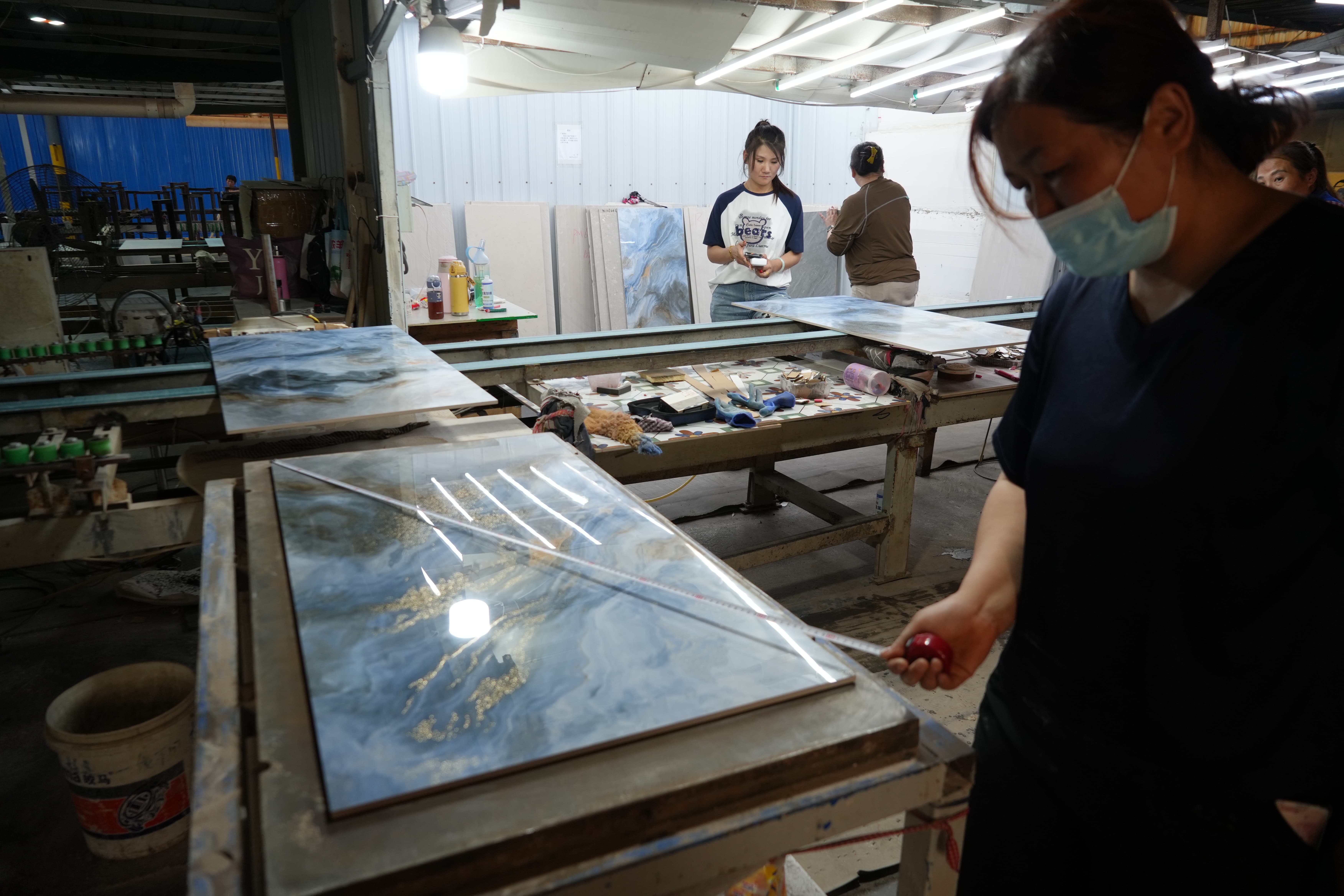
In these cases, the extra verification is not a cost to avoid; it is the cost of getting a product that fits. The mistake is to treat customization as a way to skip verification. A custom tile without a test report for its customized parameter is a specification risk, not a design upgrade.
A practical validation sequence for OEM/ODM:
- Define the customized parameter in writing—slip rating, thickness, surface, format, or packaging.
- Request test data for that parameter, not for the standard product.
- Review a production-representative sample against the proposed specification.
- Confirm the certification and labeling documents for the custom order.
- Agree on the inspection and acceptance criteria before production begins.
Application Notes: Where Each Route Fits
Different commercial settings pull the decision in different directions.
Shopping malls and mixed-use developments usually combine large standard floor areas with feature zones. The standard 60x120 cm Marble Series can cover main circulation and retail floors where the documented performance meets the specification, while customized R11/R12 or feature surfaces can be reserved for entrances, food courts, and feature walls. This mixed approach keeps most of the order on the faster standard route.
Hotel lobbies and luxury villas often prioritize surface appearance and design continuity. The standard marble-look range can provide consistency across large areas; customization becomes relevant when the design calls for a unique surface or a format that the standard matrix does not cover.
Healthcare facilities and educational buildings place a higher weight on slip resistance and cleanability. R11 is a common baseline for wet or high-risk zones; if the project requires R12, that moves the specification into the customization path. The standard R10/R11 range should be checked against the actual area classification before assuming it is sufficient.
Outdoor applications are a separate case. Standard indoor thickness is 9.0–10.5 mm; outdoor 20mm porcelain pavers are a different product specification. A project that needs 20mm pavers should treat that as a custom or separate product line and validate it accordingly, rather than assuming that an indoor tile can be substituted.
Commercial kitchens and high-traffic back-of-house areas combine grease, moisture, and abrasion. The standard PEI 4/5 and low water absorption are relevant, but the slip rating and cleaning protocol should be checked for the specific area.
Frequently Asked Questions
Do I need both ISO 9001:2015 and CE certification for a commercial porcelain tile project?
They answer different questions. ISO 9001:2015 (certificate 0350521Q30166R1M) confirms that the factory operates a documented quality management system. CE certificate AC 50163816 0001 addresses product conformity for applicable EU requirements. EU projects typically require the CE document; projects outside the EU often use ISO 9001 as a supplier qualification baseline. Many commercial tenders request both because process control and product conformity are separate checks.
What can OEM/ODM customization provide that the standard Marble Series 60x120 cm tile does not?
Customization can address non-standard formats, thickness adjustments such as 20mm outdoor pavers, alternative surface textures, R12 slip resistance (the standard range covers R10/R11), and project-specific packaging or branding. Each is a separate engineering and testing variable. The factory's 25-engineer R&D team and 12–16 million m² annual capacity provide the production context, but the buyer should request test data for the specific customized parameter rather than relying on the standard product's data.
Does OEM/ODM customization change the cost structure compared with standard supply?
Customization typically introduces cost drivers that standard supply does not: tooling or mold adjustments, separate test runs, minimum order quantities for the custom batch, and longer production planning. The standard Marble Series benefits from an established production flow and existing certification coverage. The exact cost difference depends on the customization scope and order volume, so it should be quoted per project rather than assumed.
How should a buyer validate a custom OEM/ODM porcelain tile before full production?
Request test reports for the specific customized parameter—slip resistance under DIN 51130, water absorption, breaking strength, or surface abrasion—rather than relying on the standard product's data. Compare a production-representative sample against the proposed specification. Confirm that packaging, labeling, and certification documents match the custom order. A sample that looks correct is not the same as a sample that passes the required test standard.
What is the lead time difference between standard Marble Series supply and OEM/ODM production?
Standard supply follows an established production and packing sequence for the 60x120 cm format. OEM/ODM production adds sampling, testing, and potential tooling or glaze adjustment steps before the full run. The actual difference depends on the customization scope and the factory's current schedule, so it should be confirmed in the project quotation rather than estimated from general assumptions.
Conclusion: Match the Route to the Specification
The choice between the standard Marble Series 60x120 cm porcelain tile and OEM/ODM customization is not a choice between good and better. It is a choice between two risk profiles.
Standard supply fits projects whose specifications match the documented values: water absorption below 0.5%, PEI 4/5, Mohs 6–7, 2 pcs/box covering 1.44 m², ISO 9001:2015 certificate 0350521Q30166R1M, and CE certificate AC 50163816 0001. When those values satisfy the project, the buyer gets a shorter verification path and a lower specification risk.
OEM/ODM fits projects that need something the standard range does not provide: R12 slip resistance, a non-standard format or thickness, a proprietary surface, or project-specific packaging. The factory's 25-engineer R&D team, 12–16 million m² annual capacity, and export experience across more than 15 markets support that work. The buyer's responsibility is to budget the validation step—test data for the customized parameter, a production-representative sample, and confirmed documentation—before committing the full order.
A practical rule: start with the standard specification and move to customization only when a specific project requirement cannot be met within it. That sequence keeps most of the order on the faster, documented route and reserves the verification effort for the parameters that genuinely need it.

For the full product range, format matrix, and technical specifications, the All-King Ceramics catalog is available for download. For project-specific questions, visit All-King Ceramics.
Have Questions or Need More Details?
Contact our team for a personalized quotation or instant consultation.
Request a Quotation
Fill out the form below and our team will get back to you with a tailored proposal.
WhatsApp Direct Chat
Prefer to chat in real-time? Message us on WhatsApp for instant assistance & quick answers.
- Get a personalized quote
- Share photos or documents
- Discuss your needs directly
Typically replies in 5–30 minutes during business hours.