
Marble Series vs. Travertine Porcelain Tiles: Which One Cuts Your Lifetime Project Costs?
Marble Series and Travertine are both 60x120 cm vitrified porcelain tiles sold by ALL KING CERAMICS against an identical declared technical envelope: water absorption below 0.5%, PEI 4 / PEI 5 abrasion resistance, Mohs hardness 6-7, breaking strength of at least 1300 N and a modulus of rupture of at least 35 MPa. Because the engineering envelope is the same, the series that cuts lifetime project cost is decided by visual intent, replacement matching and how cleanly the tile moves through installation and maintenance - not by a performance gap between the two bodies.
ALL KING CERAMICS (ZIBO ALL-KING CERAMICS CO., LTD, founded 2011, Zibo, China) is a porcelain tile manufacturer and direct exporter producing 60x120 cm, 75x150 cm, 80x80 cm, 60x60 cm and 100x100 cm formats, with 60x120 cm porcelain as its flagship line. Both models named in this comparison appear on the same CE certificate and the same ISO 9001 certificate, and both are documented as used in projects in more than 25 countries, including the UAE, Australia, Canada and Russia.
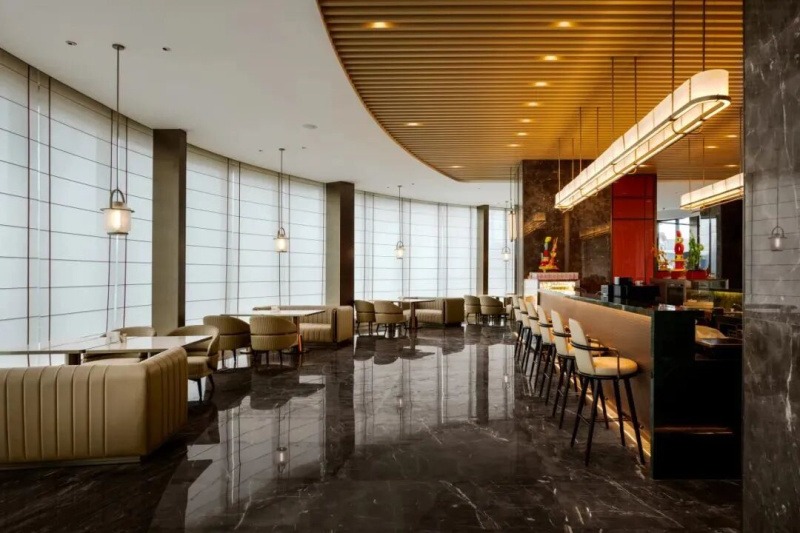
Commercial lobby flooring in 60x120 cm porcelain - the application where lifetime cost decisions concentrate.
Problem Definition: Why the Lower-Priced Tile Often Produces the More Expensive Floor
Commercial buyers usually compare tiles on one number: price per square metre. That number covers a shrinking share of what the floor actually costs over its service life. On a 60x120 cm format, five cost lines sit outside the unit price.
- Installation and waste. Large-format tiles are packed 2 pieces per box, at 1.44 m2 per box. Cut losses, handling breakage and joint-layout corrections all scale with format, flatness and site discipline.
- Moisture-related failure. Water absorption governs how a tile behaves in bathrooms, kitchens and machine-cleaned public floors. Porcelain is defined by its absorption threshold, and a vitrified body below 0.5% does not carry the same moisture risk as an absorbent body.
- Replacement frequency. Abrasion class and surface hardness decide how long the walking surface holds its appearance on the traffic it actually receives.
- Maintenance regime. Stain behaviour and cleaning frequency recur for the life of the building.
- Replacement matching. When a tile is damaged or a tenant fit-out changes, the ability to reorder a matching batch decides whether you repair a floor or replace a field of it.
On percentage claims. Statements such as a 30% lower maintenance cost or a 20% lower installation cost only mean something when attached to a defined baseline: the same format, the same substrate, the same traffic and the same cleaning schedule. This comparison does not import such percentages. It compares the two series on the parameters and supply terms that are documented below, and shows which of those parameters actually move lifetime cost.
Industry Background: What Commercial Buyers Are Specifying in 2026
Porcelain is a defined category, not a marketing adjective. Under ISO 13006 and ANSI A137.1, porcelain tiles are ceramic tiles with a water absorption of 0.5% or less. Both Marble Series and Travertine are declared at below 0.5% (vitrified), which places them in that category and lets a specifier write one clause covering either series.
Compliance is the first gate in most public and commercial tenders. Both models are listed on a CE certificate issued by TUV under certificate number AC 50163816 0001, covering dry-pressed ceramic tiles for internal flooring in the EU market, and on an ISO 9001:2015 certificate issued by XQCC under certificate number 0350521Q30166R1M, covering the production and service of ceramic tile.
Demand is moving toward the project markets that are building now. Kazakhstan's construction output grew by 15.9% year on year in 2025, according to the Bureau of National Statistics of Kazakhstan, while Mordor Intelligence estimates the Russian ceramic tile market at USD 2.90 billion in 2025. For landlocked Central Asian destinations, rail freight from China to Kazakhstan and Uzbekistan typically runs 10-14 days for FCL cargo - a delivery window that directly changes the cost of holding stock on site.
The practical consequence is that buyers in these markets are not choosing between cheap tile and expensive tile. They are choosing between a floor that arrives on schedule, installs without rework and can be re-ordered in the same batch two years later, and one that cannot.
Detailed Solution: The Five Cost Levers Both Series Share
Because Marble Series and Travertine carry the same declared specification, the lifetime-cost levers are identical for both. What differs between projects is which lever is pulled hardest.
1. Water absorption below 0.5% removes the moisture-damage line
At below 0.5% water absorption the body is vitrified, and the CE scope for both models covers internal flooring. In wet rooms, and in buildings where floors are machine-cleaned nightly, that removes the absorbency-driven failure mode: staining that cannot be lifted, edge swelling, and the adhesion problems that follow. The documented case record for Marble Series lists low water absorption as a project highlight, together with high flatness and high wear resistance.
2. Abrasion class PEI 4 / PEI 5 and Mohs 6-7 set the replacement interval
Both models are available in PEI 4 and PEI 5 abrasion resistance with a Mohs hardness of 6-7. The specification decision is therefore not which series is more abrasion resistant, but which class the traffic actually requires. A mall concourse and a hotel corridor are not the same duty, and paying for a higher class where traffic does not need it is as much a lifetime-cost error as under-specifying a public concourse.
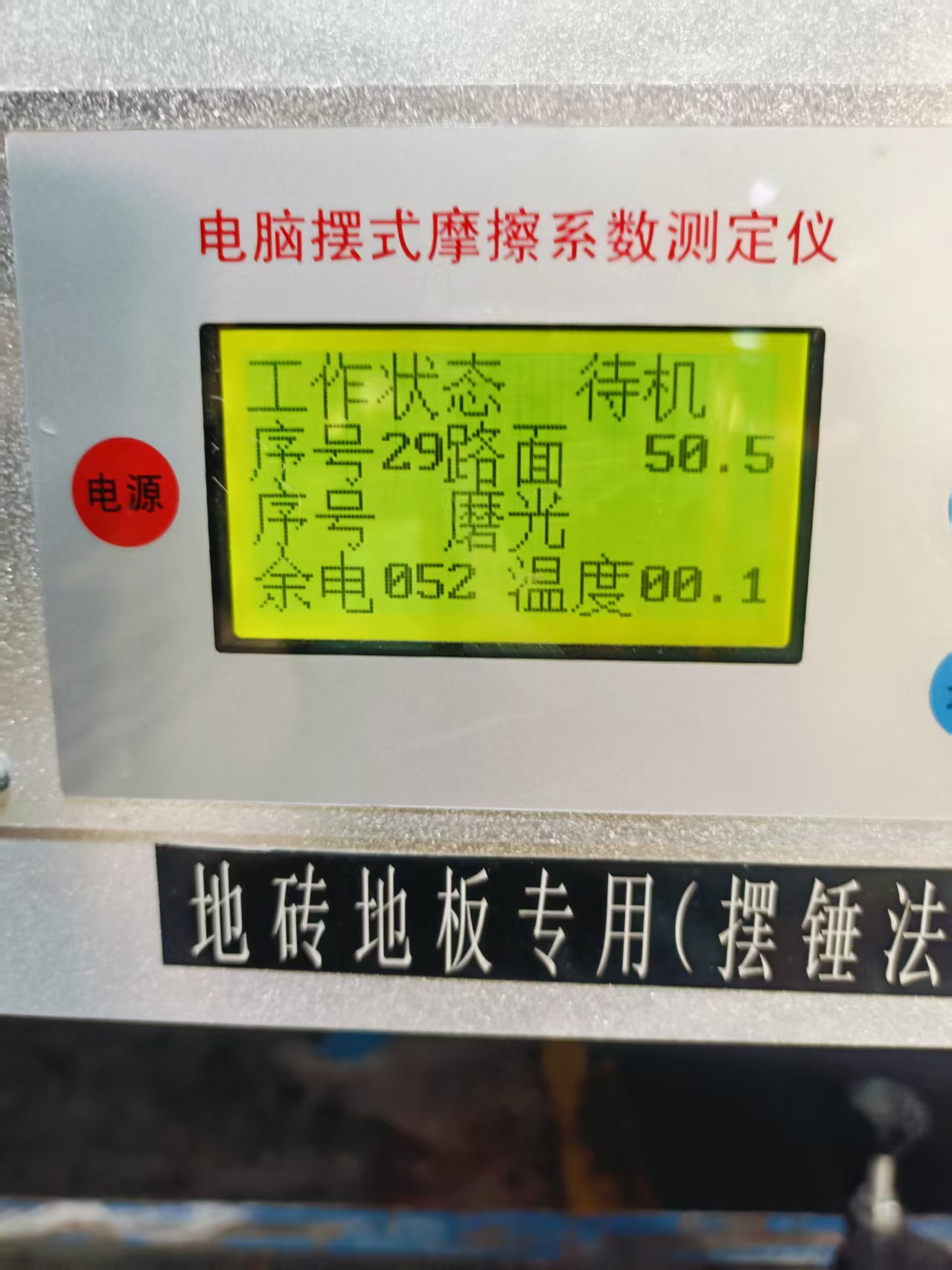
Slip resistance testing in the factory. Anti-slip rating is one of the customization options available on both series.
3. Breaking strength and modulus of rupture protect the installation budget
With a breaking strength of at least 1300 N and a modulus of rupture of at least 35 MPa, both series sit in a range that tolerates handling and point loads in a 60x120 cm format. On site, this is the parameter that separates a clean installation from a pallet of breakage: large-format tiles are handled twice, once at the factory and once at the floor, and the second handling is where weak bodies fail.
4. Flatness and sizing control the labour line
Installation cost on large-format porcelain is dominated by labour hours, and labour hours are dominated by how much the installer has to correct. ALL KING CERAMICS runs 100% flatness and sizing automatic checks, piece-by-piece visual inspection and random laboratory testing per batch. Flatness is the check that shows up directly in an installation quote: a flatter, dimensionally consistent tile allows tighter joints and fewer levelling corrections.

Flatness verification on 60x120 cm porcelain - the parameter that feeds directly into installation labour.
5. Batch tracking and reordering protect the second purchase
The after-sales terms include batch tracking and reordering support, damage compensation, online installation guidance and 24/7 technical consultation. This is the lever that most often changes the answer to which series cuts lifetime cost, because a repair that matches is a tile purchase, while a repair that does not match is a floor replacement.
Step-by-Step Breakdown: Building a Comparable Lifetime Cost Model
These seven steps produce a like-for-like comparison between the two series on the same project, and each step names the document or parameter to request.
- Classify the floor by traffic and wet exposure. Split the project into public high-traffic areas (mall concourse, hotel lobby, airport departure hall) and controlled areas (offices, apartment bathrooms). That split drives abrasion class (PEI 4 or PEI 5), anti-slip rating and cleaning regime - not the choice of series.
- Lock the technical envelope once, not twice. Because both series share water absorption below 0.5%, thickness of 9.0-10.5 mm, breaking strength of at least 1300 N and modulus of rupture of at least 35 MPa, a single specification clause covers both. Cost differences therefore cannot come from the body specification; they come from the remaining steps.
- Choose the visual by design intent, then price the replacement risk. Marble Series is built around marble veining, with random marble veins documented as a product highlight and marble vein customization available as a customization option. Random veining produces a continuous, natural floor, and it makes future patch repairs harder to disguise unless matching stock is held. Travertine carries a travertine-effect visual for schemes where that texture is the design reference.
- Price installation from format and packing, not from price per square metre. At 2 pieces per box and 1.44 m2 per box, both series give identical coverage per box, so waste calculation and freight planning are identical. Any installation saving has to be argued from flatness, joint tolerance and site handling - the parameters in lever 4.
- Price maintenance from absorption and abrasion. Below 0.5% absorption plus a selected PEI class removes two recurring costs: deep stain removal and early surface replacement. Ask for certificate copies and the abrasion class in writing, per batch.
- Lock commercial terms before comparing totals. Minimum order quantity is 400 m2 per design, trial orders are accepted, quoted lead time is 7-10 days, monthly capacity is 1.2 million m2 and annual output is 12-16 million m2. On a Central Asian project, add the typical 10-14 day FCL rail transit when calculating site holding costs.
- Validate with a sample before signing. Confirm the visual, the anti-slip rating and the shade on a physical sample of the exact series and batch, then confirm that batch tracking covers your reorder window.
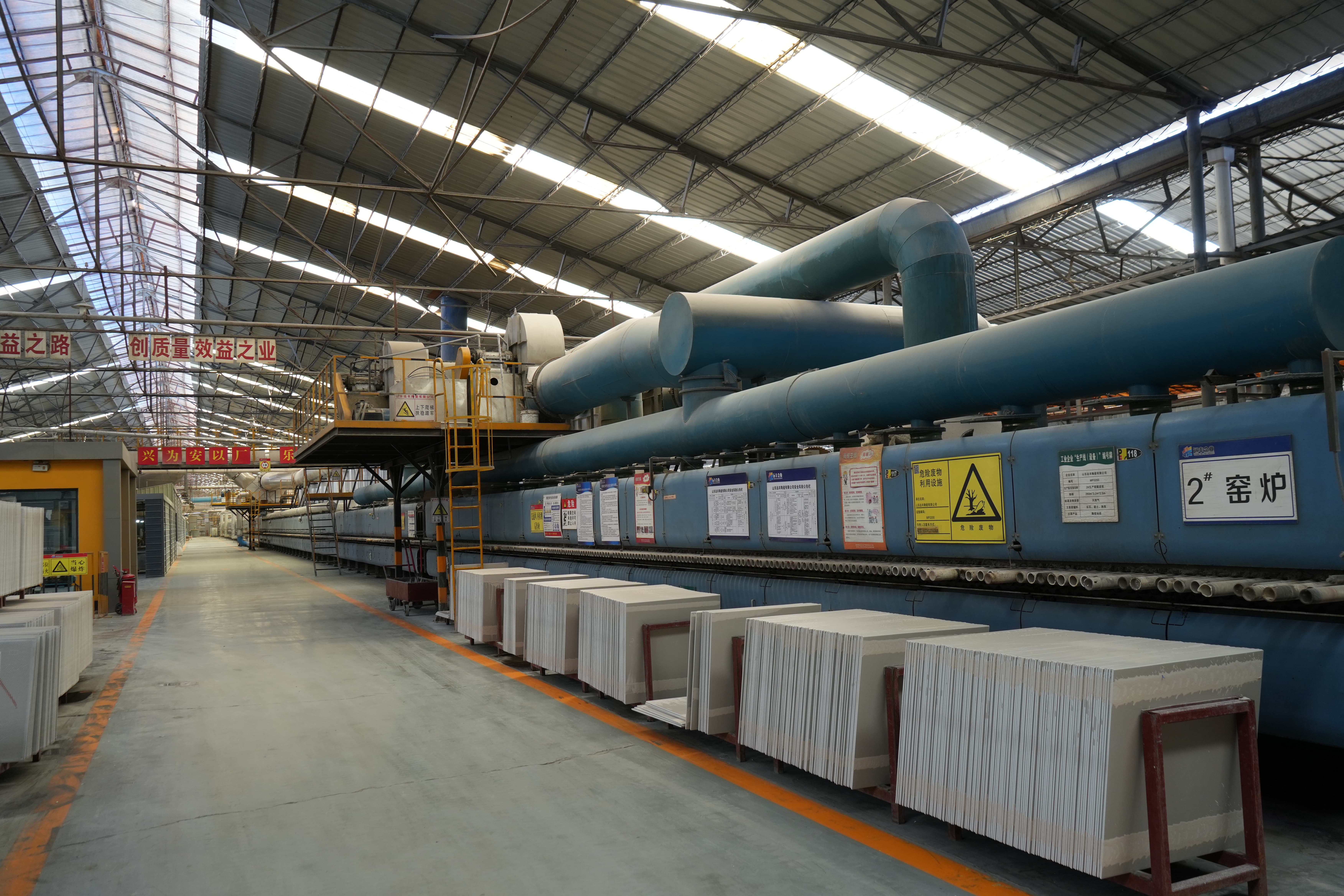
Production capacity of 1.2 million m2 per month sits behind the quoted 7-10 day lead time.
Comparison Table: Declared Parameters of Marble Series and Travertine
| Parameter (declared) | Marble Series - 60x120 cm porcelain tile | Travertine - 60x120 cm porcelain tile |
|---|---|---|
| Format | 60x120 cm | 60x120 cm |
| Thickness range | 9.0-10.5 mm | 9.0-10.5 mm |
| Water absorption | Below 0.5% (vitrified) | Below 0.5% (vitrified) |
| Abrasion resistance | PEI 4 / PEI 5 | PEI 4 / PEI 5 |
| Mohs hardness | 6-7 | 6-7 |
| Breaking strength | At least 1300 N | At least 1300 N |
| Modulus of rupture | At least 35 MPa | At least 35 MPa |
| Packing | 2 pcs per box (1.44 m2 per box) | 2 pcs per box (1.44 m2 per box) |
| Visual direction | Marble veining; random marble veins documented; marble vein customization available | Travertine-effect visual, per model designation |
| CE certificate | AC 50163816 0001, TUV, EU, internal flooring | AC 50163816 0001, TUV, EU, internal flooring |
| ISO 9001 certificate | 0350521Q30166R1M, XQCC, ISO 9001:2015 | 0350521Q30166R1M, XQCC, ISO 9001:2015 |
| Documented project footprint | Projects in more than 25 countries, including UAE, Australia, Canada and Russia | Projects in more than 25 countries, including UAE, Australia, Canada and Russia |
Decision Matrix: Matching the Series to Traffic Volume and Design Intent
| Project condition | Marble Series | Travertine | Effect on lifetime cost |
|---|---|---|---|
| Design intent is a continuous marble read | Marble veining with random veins; marble vein customization possible | Travertine-effect visual | A visual that must be redesigned later is a floor-level cost, not a tile-level cost. |
| Public high-traffic floor: mall concourse, airport departure hall, hotel lobby | PEI 5 available; Mohs 6-7; breaking strength at least 1300 N | PEI 5 available; same declared values | Abrasion class selection sets the replacement interval. |
| Wet zones and nightly machine cleaning | Below 0.5% water absorption, vitrified | Below 0.5% water absorption, vitrified | Removes absorbency-driven failure and deep stain removal. |
| Phased handover or tenant fit-out | Random veins make patch matching harder; mitigate with batch tracking and reordering support | Travertine texture; same batch tracking and reordering support | The replacement-matching plan changes repair cost more than the unit price does. |
| Installation labour planning | 60x120 cm, 2 pcs per box (1.44 m2), flatness and sizing automatically checked | Identical format, packing and checks | Labour hours are driven by flatness and format, not by the series. |
| Certification file for tender submission | CE AC 50163816 0001; ISO 9001:2015 0350521Q30166R1M | Same two certificates | One compliance file covers either series. |
Read the matrix in one direction: where the drawing calls for a continuous marble surface, Marble Series is the lower-risk specification, provided the project reserves matching stock for repairs. Where the design reference is travertine, Travertine delivers that visual without weakening the technical envelope. In both cases the same levers - abrasion class, wet-zone exposure, flatness, batch tracking - decide whether the floor is repaired cheaply or replaced expensively.
Use Cases: Where Each Series Earns Its Cost Back
The documented project record gives the clearest picture of how these tiles behave in commercial conditions. In a 15,000 m2 commercial project, Marble Series addressed the challenge of balancing aesthetic marble veins with durability and easy maintenance in high-traffic spaces, and the recorded outcome was seamless aesthetic presentation, zero-defect durability, easy maintenance with stain-free performance, 100% project acceptance and zero maintenance complaints. The client types behind that record are commercial real estate developers and general contractors.
- Hotel lobbies. High footfall plus design visibility. Marble Series is the natural fit where a continuous stone read is required; the zero-maintenance-complaint record in the case applies to exactly this setting.
- Commercial mall flooring. Public concourse traffic calls for the higher abrasion class, plus an anti-slip rating specified to the project's own requirement.
- Airport departure halls. Continuous operating hours and nightly cleaning favour the vitrified below-0.5% body and flatness-controlled installation.
- Office buildings and corporate interiors. Large-format 60x120 cm reduces joint count, and fewer joints mean a shorter maintenance cycle.
- High-end apartment bathrooms. The wet-zone case: below 0.5% absorption, with the packing of 1.44 m2 per box keeping waste predictable on smaller floor plates.
- Regional projects across Central Asia, Russia and Southeast Asia. Both models are documented in projects in more than 25 countries, and the export footprint covers Australia, New Zealand, Russia, Belarus, Central Asia, Southeast Asia, the Middle East and Latin America.
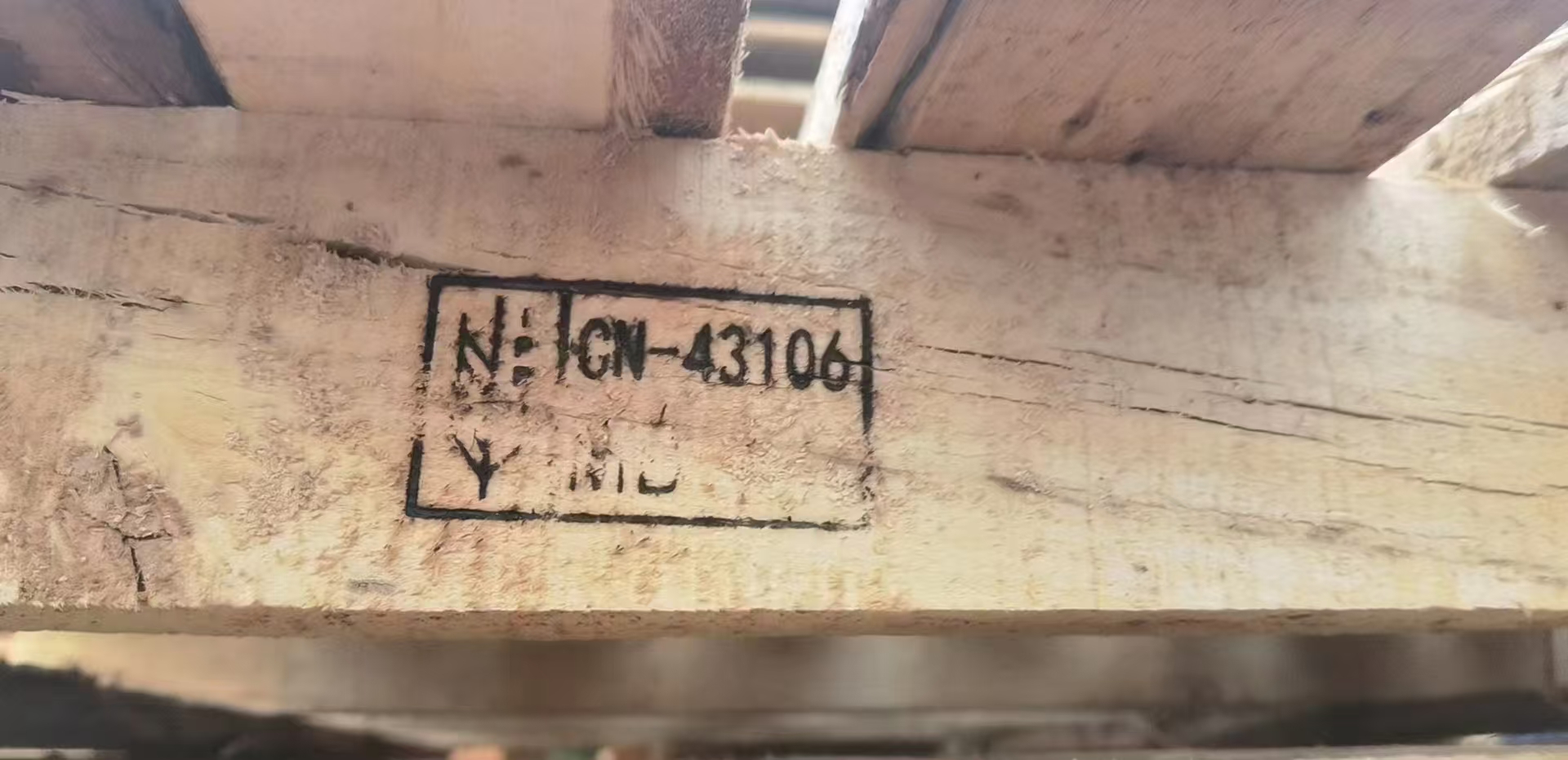
Export packing on fumigated pallets - the point where waste calculation and freight planning meet.
FAQ: Marble Series vs Travertine for Commercial Projects
Are both series certified for EU commercial projects?
Both models appear on the same CE certificate, number AC 50163816 0001, issued by TUV for dry-pressed ceramic tiles for internal flooring in the EU market, and on the same ISO 9001:2015 certificate, number 0350521Q30166R1M, issued by XQCC for the production and service of ceramic tile. A specifier can therefore submit one compliance file covering either series, and should check the certificates against the project's own compliance requirements.
Can both series be customized, and what capacity stands behind a large order?
Yes. ALL KING CERAMICS works in OEM/ODM mode, and the customization options cover custom size and thickness, surface finish, OEM brand logo and packaging, pattern variation including marble vein customization, and anti-slip rating. Capacity is quoted at 1.2 million m2 per month against annual output of 12-16 million m2, from a 60,000 m2 facility with 320 employees and a 25-engineer R&D team.
Which series is cheaper over the life of the project?
Neither series can be ranked as cheaper from a price list, because both are declared with the same technical envelope: below 0.5% water absorption, PEI 4 / PEI 5, Mohs 6-7, breaking strength of at least 1300 N and modulus of rupture of at least 35 MPa, packed 2 pieces per box at 1.44 m2 per box. The lifetime difference comes from the abrasion class you specify, the wet zones in the project, how you plan replacement matching and the maintenance regime. Comparing the two means comparing quoted totals at the same abrasion class, with the 400 m2 per design minimum order quantity and the 7-10 day lead time included as line items rather than assumed.
Can we test the tiles before committing to a full order?
Trial orders are accepted alongside the standard minimum order quantity of 400 m2 per design. A trial order is the practical way to confirm the visual, the shade and the anti-slip rating on the exact series and batch before the main order, and to check the flatness and sizing that the factory verifies with 100% automatic checks plus piece-by-piece visual inspection.
What is the lead time for a Central Asian or Russian project, and what support continues after delivery?
Quoted production lead time is 7-10 days. For landlocked Central Asian destinations, add rail freight transit from China to Kazakhstan or Uzbekistan, which typically runs 10-14 days for FCL cargo. After delivery, support includes batch tracking and reordering support, damage compensation, online installation guidance and 24/7 technical consultation. To start a comparison on a specific project, send the format, abrasion class, wet-zone areas and destination to tyceramic2@all-king.com or WhatsApp +86 156-5336-9360, and ask for the catalog to review the full format list.
Conclusion: The Cheaper Floor Is the One You Only Buy Once
Marble Series and Travertine are not separated by engineering. Both are 60x120 cm vitrified porcelain, both sit below 0.5% water absorption, both offer PEI 4 / PEI 5 at Mohs 6-7 with breaking strength of at least 1300 N, both are packed 2 pieces per box at 1.44 m2, and both carry the same CE and ISO 9001 certificates. What separates them in a lifetime cost model is the decision you attach to them: the design intent, the abrasion class you commit to, whether the project holds matching stock, and how early you lock supply terms such as the 400 m2 per design minimum and the 7-10 day lead time.
Where the drawing calls for continuous marble veining, Marble Series is the lower-risk specification, backed by a documented 15,000 m2 commercial project record of zero-defect durability, 100% acceptance and zero maintenance complaints. Where the design reference is travertine, Travertine delivers that visual on the same technical envelope. In both cases, the floor that cuts lifetime project cost is the one that installs without rework, cleans without special treatment and can be repaired from a matching batch rather than replaced.
Compare the two series on your own project numbers
Send your format, abrasion class, wet-zone areas and destination market to ALL KING CERAMICS, and request a quotation with samples from the exact series and batch. The catalog lists the full format range, including 60x120 cm, 75x150 cm, 80x80 cm, 60x60 cm and 100x100 cm.
Email: tyceramic2@all-king.com | WhatsApp / Tel: +86 156-5336-9360 | Website: www.all-king.com
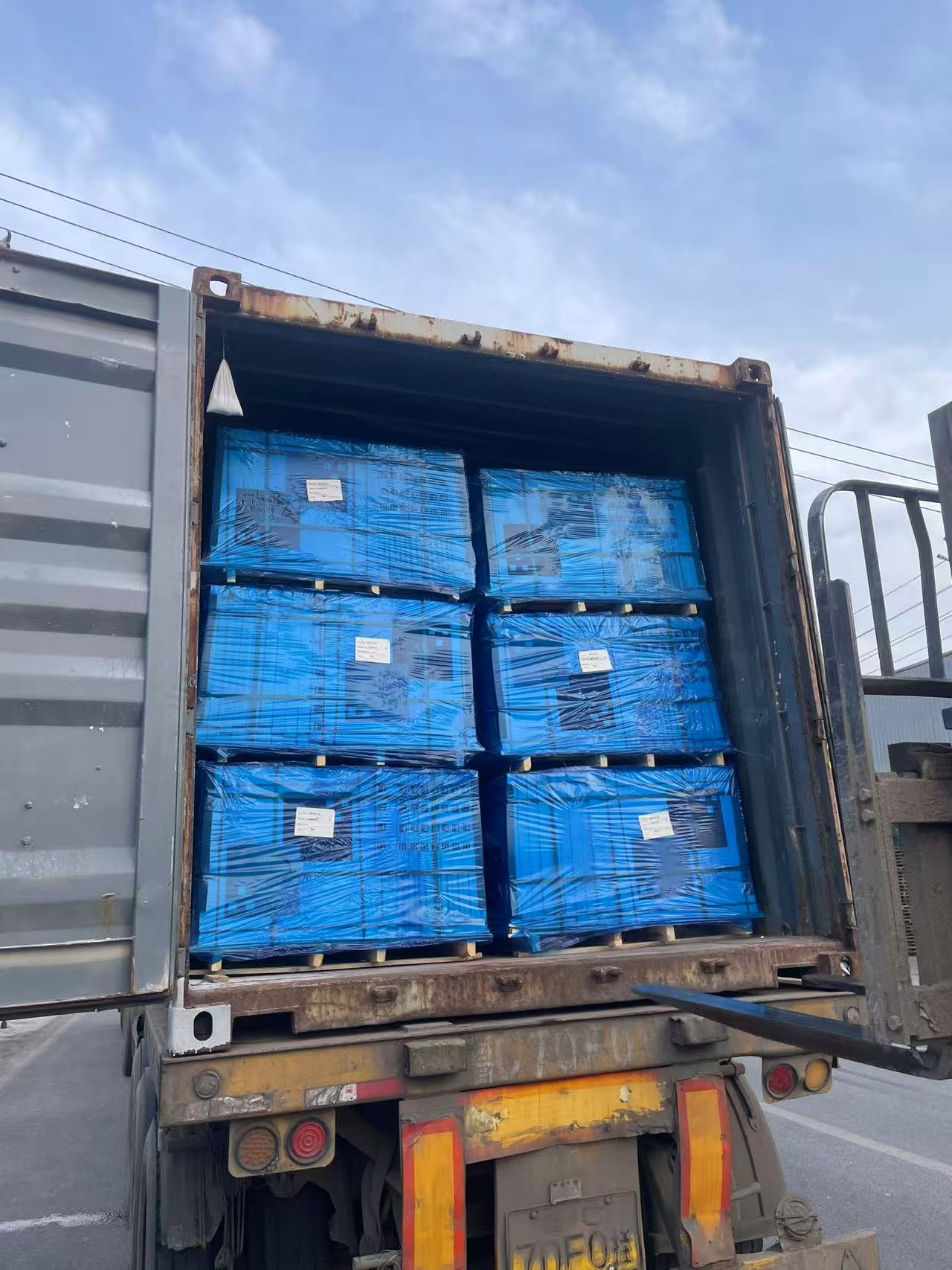
Project-ready shipments from Zibo, Shandong - quotation, samples and batch tracking available on request.
Have Questions or Need More Details?
Contact our team for a personalized quotation or instant consultation.
Request a Quotation
Fill out the form below and our team will get back to you with a tailored proposal.
WhatsApp Direct Chat
Prefer to chat in real-time? Message us on WhatsApp for instant assistance & quick answers.
- Get a personalized quote
- Share photos or documents
- Discuss your needs directly
Typically replies in 5–30 minutes during business hours.