PEI 4 vs PEI 5 Abrasion Ratings for Commercial Flooring: A Technical Guide
PEI 4 vs PEI 5 Abrasion Ratings for Commercial Flooring: A Technical Guide
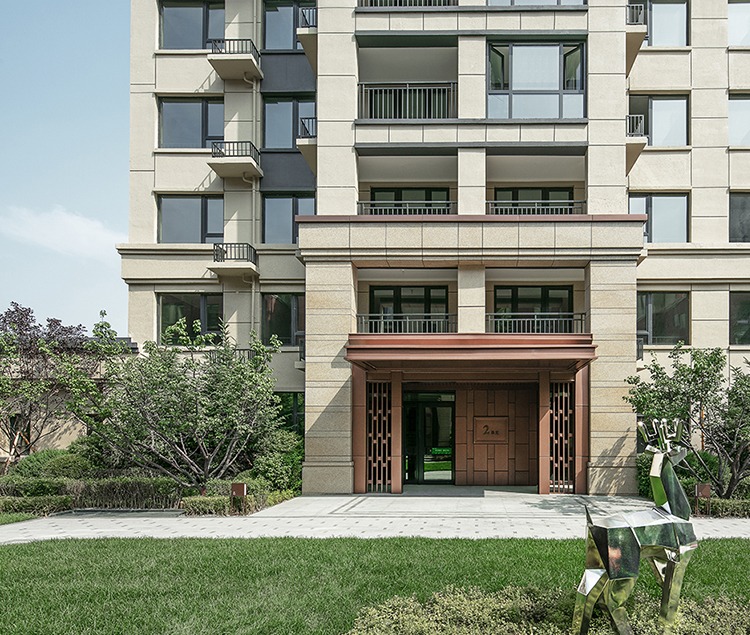
PEI 4 and PEI 5 describe how well the glazed surface of a porcelain tile resists visible abrasion under foot traffic. PEI 4 is classified for moderate to heavy commercial traffic; PEI 5 is classified for extra heavy traffic. In a commercial flooring schedule, that single class value determines how long the surface pattern, texture and gloss survive in the busiest circulation zones of a building — mall concourses, hotel lobbies, airport departure halls and hospital corridors — rather than whether the tile body is strong enough to carry the load.
This technical guide compares the two classes on the evidence that matters to specifiers and procurement teams: what each class actually measures, which certified values the All-King Ceramics 60x120cm porcelain tile ranges (Marble Series and Travertine) publish alongside their abrasion rating, how the ISO 10545 test framework supports a water absorption figure below 0.5% (vitrified), and how to convert all of that into a zone-by-zone flooring schedule instead of one building-wide number.
Why Abrasion Class Is a Specification Decision, Not a Marketing Detail
A commercial floor rarely fails because the tile breaks. It fails because the walking surface changes: a printed or pressed pattern wears through, gloss disappears along a walking path, and a floor that looked uniform at handover develops visible traffic lanes. Abrasion-resistance class is the specification value that predicts this behaviour, and it applies to the glazed surface layer of the tile — not to the tile body.
That distinction matters because commercial buyers often evaluate tiles using body-performance numbers only. Water absorption, breaking strength and modulus of rupture confirm that a tile can withstand structural, thermal and moisture stress, but they say nothing about surface wear. A tile with a modulus of rupture of at least 35 MPa and a breaking strength of at least 1300 N can still show surface abrasion if its glazed layer is not matched to the traffic it receives.
Three technical boundaries keep PEI ratings honest inside a specification document:
- PEI classes describe glazed tiles. Fully unglazed or full-body porcelain is normally not PEI-classified, so a PEI value should not be requested from suppliers of unglazed product, and a missing PEI value is not automatically a defect.
- PEI class is not a slip rating. Slip resistance for wet commercial areas is specified separately, typically through the DIN 51130 ramp test and its R-values.
- PEI class is not a stain, frost or chemical rating. Those depend on body porosity and surface finish, which is why vitrified porcelain at below 0.5% water absorption is normally specified together with the abrasion class rather than instead of it.
The commercial risk of under-specifying is concentrated rather than evenly distributed. In most buildings a minority of the floor area — entrances, corridors, food courts, lift lobbies and checkout runs — absorbs the majority of foot traffic and abrasive grit. That is where an abrasion-class decision surfaces first, and where replacement, polishing or premature refurbishment costs land.
Industry Background: Commercial Demand Is Scaling, and So Are Wear Requirements
The global ceramic and porcelain tile market was valued at USD 226.4 billion in 2025 and is projected to reach USD 380.6 billion by 2033 (Grand View Research). Porcelain tiles held a 52.4% revenue share of that market in 2025, and commercial end-use accounted for the largest revenue share of the global ceramic tile market that same year (Grand View Research). Commercial flooring is therefore not a niche application of porcelain — it is the segment driving volume.
Supply-side context shapes how buyers should read quotations. China’s ceramic tile export value reached USD 3.21 billion in 2024 on a volume of 599 million sqm, at an average export price of USD 5.36 per square meter (China Customs). A market with that much volume and that wide a price range means visually similar tiles are not necessarily comparable in surface performance, which is precisely why abrasion class, water absorption and mechanical strength are increasingly requested in writing rather than inferred from a sample image.
Two further standards trends push specification in the same direction:
- Slip safety. Under DIN 51130, R11 covers slopes of 19°–27° and applies to areas such as kitchens and food production, while R12 covers 27°–35° and applies to dairy and industrial environments. Commercial flooring schedules increasingly list an abrasion class and an R-value side by side.
- Green building credits. For LEED projects, porcelain tiles are inherently low-emitting: mineral-based tiles fired at high temperatures (1200°C and above) are exempt from FloorScore VOC requirements under LEED v4.1 / IEQc4.3 (U.S. Green Building Council). This raises, rather than lowers, the importance of abrasion class, because a floor chosen for environmental compliance is expected to stay in service without early replacement.
What PEI 4 and PEI 5 Actually Measure
The PEI rating originates from the Porcelain Enamel Institute abrasion classification for glazed tile surfaces. It is expressed as five classes, commonly summarised as follows:
| PEI class | Traffic level | Typical use |
|---|---|---|
| Class 1 | No foot traffic | Wall applications only |
| Class 2 | Light residential traffic | Bathrooms and bedrooms |
| Class 3 | Residential and light commercial | Apartments and light-duty commercial interiors |
| Class 4 | Moderate to heavy commercial traffic | Commercial interiors with sustained footfall |
| Class 5 | Extra heavy commercial traffic | High-traffic commercial and institutional floors |
The classification answers one question only: after sustained abrasive contact, how visible is the change in the tile surface? It is a surface-wear measurement, and it is deliberately narrow. It does not describe body density, load capacity, chemical resistance or slip behaviour. Those properties require separate values, which is why a complete porcelain tile specification uses at least four data points together:
- Abrasion resistance class (PEI 4 / PEI 5) — the surface layer’s resistance to visible wear.
- Mohs hardness (6–7) — scratch hardness of the surface minerals, relevant to dragged loads, trolley wheels and tracked-in grit.
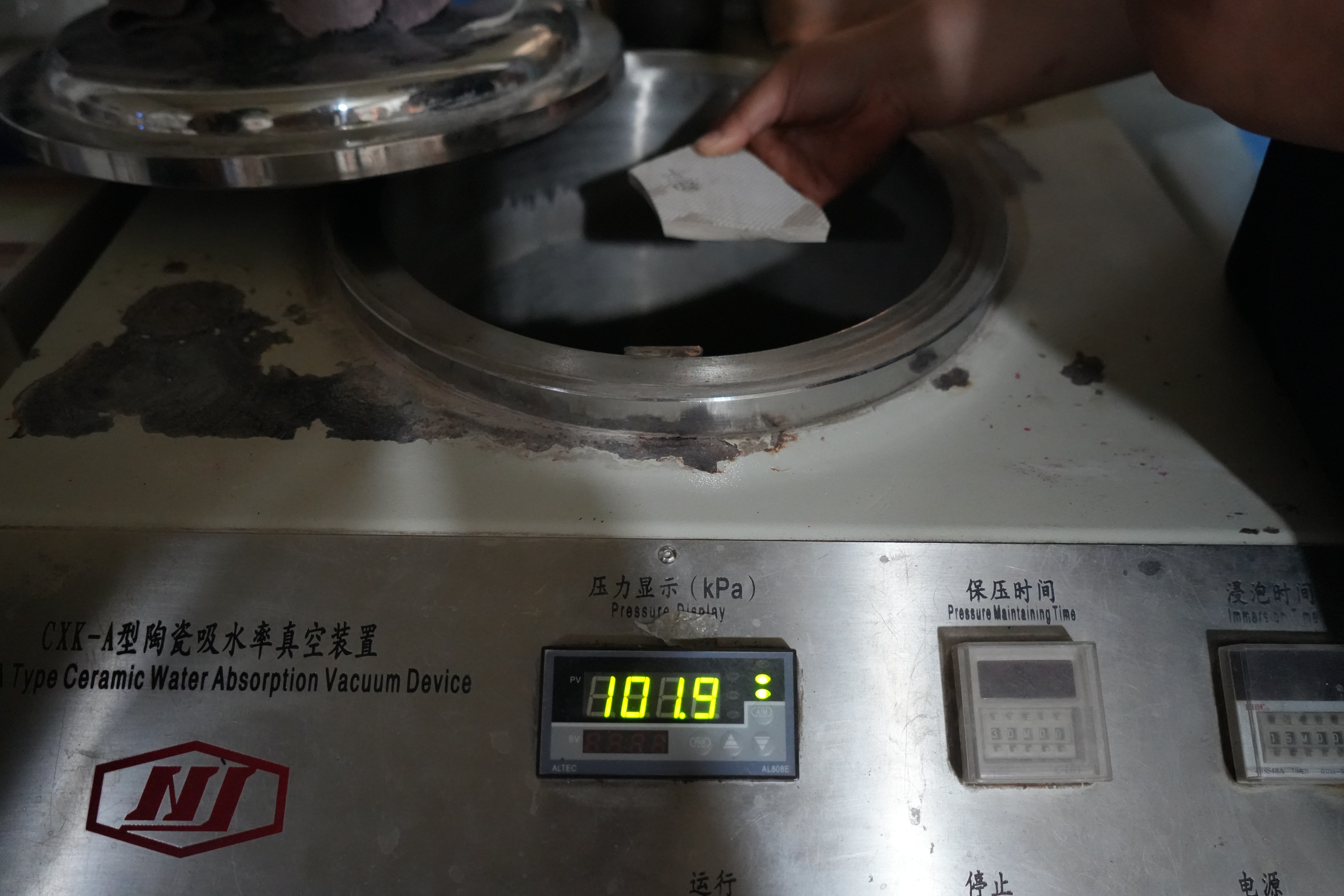
- Water absorption (< 0.5%, vitrified) — tested within the ISO 10545 series, whose Part 3 covers the determination of water absorption, apparent porosity, apparent relative density and bulk density.
- Mechanical strength (breaking strength ≥ 1300 N; modulus of rupture ≥ 35 MPa) — body resistance to load and bending, relevant to large-format installation and heavy footfall zones.
Read as a set, these values define a specification envelope rather than a single claim: abrasion class governs the surface, Mohs hardness governs scratch behaviour, and water absorption plus mechanical strength govern the body. A commercial specification that uses only one of the four leaves a predictable gap, usually discovered during the first refurbishment cycle.
Certified Specification Data: All-King Ceramics 60x120cm Porcelain Tiles
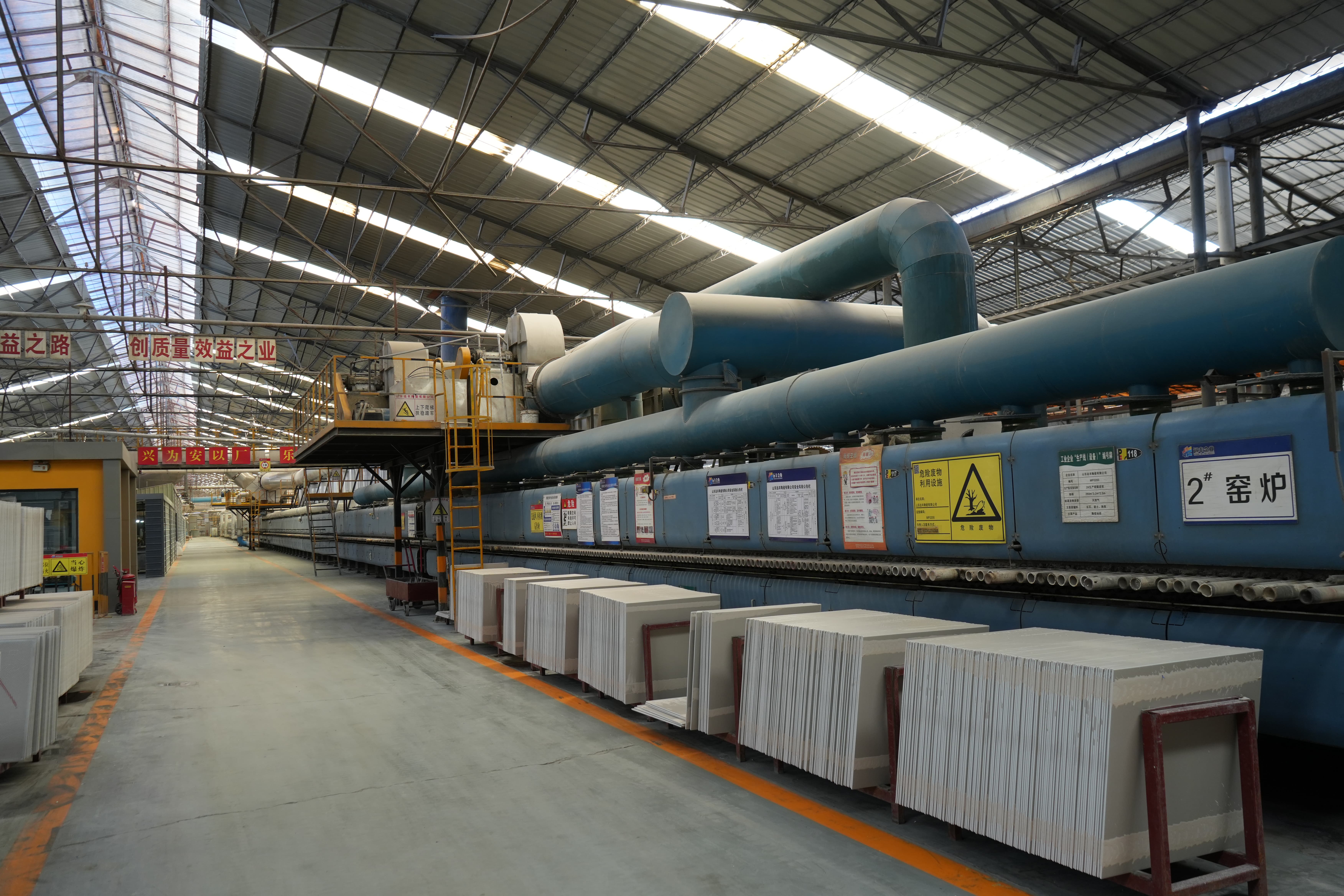
ALL KING CERAMICS, operated by ZIBO ALL-KING CERAMICS CO., LTD, is a manufacturer and direct exporter of architectural ceramics based in Zibo, China. Founded in 2011, the company runs a 60,000 m² factory with 320 employees, an annual output of 12–16 million m², a 25-engineer R&D team and an export ratio of 70%, serving markets including Australia, New Zealand, Russia, Belarus, South Korea, Vietnam, Malaysia, the Philippines, Peru, Panama, Colombia, Chile, Bolivia, Guatemala, Iraq, Ukraine and the United Arab Emirates.
Its flagship core product is the 60x120cm porcelain tile, supported by a format matrix that includes 60x60cm ceramic tiles, 80x80cm porcelain tiles, 100x100cm floor tiles and 75x150cm porcelain tiles. Both the Marble Series and Travertine models of the 60x120cm range are certified with the following verified values.
| Certified parameter | Published value |
|---|---|
| Format | 60x120cm porcelain tiles |
| Material | Porcelain clay |
| Thickness range | 9.0–10.5 mm |
| Water absorption | < 0.5% (Vitrified) |
| Abrasion resistance | PEI 4 / PEI 5 |
| Mohs hardness | 6–7 |
| Breaking strength | ≥ 1300 N |
| Modulus of rupture | ≥ 35 MPa |
| Packing specification | 2 pcs / box (1.44 m² / box) |
| Certified models | Marble Series; Travertine |
For a project buyer, the practical meaning of this table is that abrasion class is not published in isolation. The PEI 4 / PEI 5 rating sits beside the body values a specification needs anyway, so the same document supports the surface decision, the wet-area decision and the mechanical check. That reduces the number of supplier clarifications a specification team has to chase.
PEI 4 vs PEI 5: Side-by-Side Specification Table
The two classes are not competing products; they are two positions on the same scale, and the correct choice is made per zone. The table below compares them using the certified 60x120cm porcelain tile data and the standard class definitions.
| Comparison point | PEI 4 | PEI 5 |
|---|---|---|
| Abrasion class definition | Class 4 — moderate to heavy traffic | Class 5 — extra heavy traffic |
| Availability in the All-King Ceramics range | Listed on 60x120cm porcelain tiles, Marble Series and Travertine | Listed on 60x120cm porcelain tiles, Marble Series and Travertine |
| Water absorption | < 0.5% (Vitrified) | < 0.5% (Vitrified) |
| Mohs hardness | 6–7 | 6–7 |
| Breaking strength | ≥ 1300 N | ≥ 1300 N |
| Modulus of rupture | ≥ 35 MPa | ≥ 35 MPa |
| Zones specifiers typically assign to it | Sustained commercial footfall: retail floors, offices, guestroom corridors, apartment common areas | Extra heavy circulation: mall concourses, airport departure halls, hotel lobbies, institutional corridors |
| Specification risk if under-specified | Visible surface wear and pattern loss in the busiest walking paths | Low risk on standard commercial traffic; the class exceeds most interior requirements |
Decision rule: assign abrasion class to the zone, not to the building. Where a floor plan mixes a high-traffic concourse with low-traffic offices or guestrooms, specifying one class everywhere either over-spends on the quiet zones or under-protects the busy ones. Both PEI 4 and PEI 5 are available in the same 60x120cm certified range, which allows a single visual language to be maintained across classes.
Step-by-Step: How to Specify Abrasion Class for a Commercial Floor Plan
Applied in sequence, these six steps convert a traffic plan into a defensible abrasion specification.
- Map traffic zones before choosing products. Separate the plan into extra heavy circulation, moderate to heavy use and light use. Entrances, concourses, lift lobbies and food-court approaches belong in the first group.
- Confirm the body requirements. Set water absorption, breaking strength and modulus of rupture first, since these are driven by installation method, format and exposure rather than by traffic. The 60x120cm All-King range publishes below 0.5% water absorption (vitrified), breaking strength of at least 1300 N and modulus of rupture of at least 35 MPa.
- Match abrasion class to zone. Specify PEI 5 for extra heavy circulation and PEI 4 for moderate to heavy commercial interiors. Record the reason for each assignment, because that note is what protects the specification during value engineering.
- Add slip resistance separately. For kitchens and food production areas, DIN 51130 R11 (19°–27°) is the relevant reference; for dairy and industrial environments, R12 (27°–35°). Anti-slip rating is one of the customizable surface parameters available on OEM / ODM orders, so it should be stated in the enquiry rather than assumed.
- Fix format, thickness and finish. On the 60x120cm flagship format, thickness is specified between 9.0 and 10.5 mm. For outdoor applications such as terraces, pool surrounds and paved approaches, the relevant product family is 20 mm outdoor porcelain pavers rather than an indoor 9–10.5 mm tile.
- Confirm QC and supply terms in writing. Agree the inspection regime, the MOQ and the delivery window before sample approval, not after.
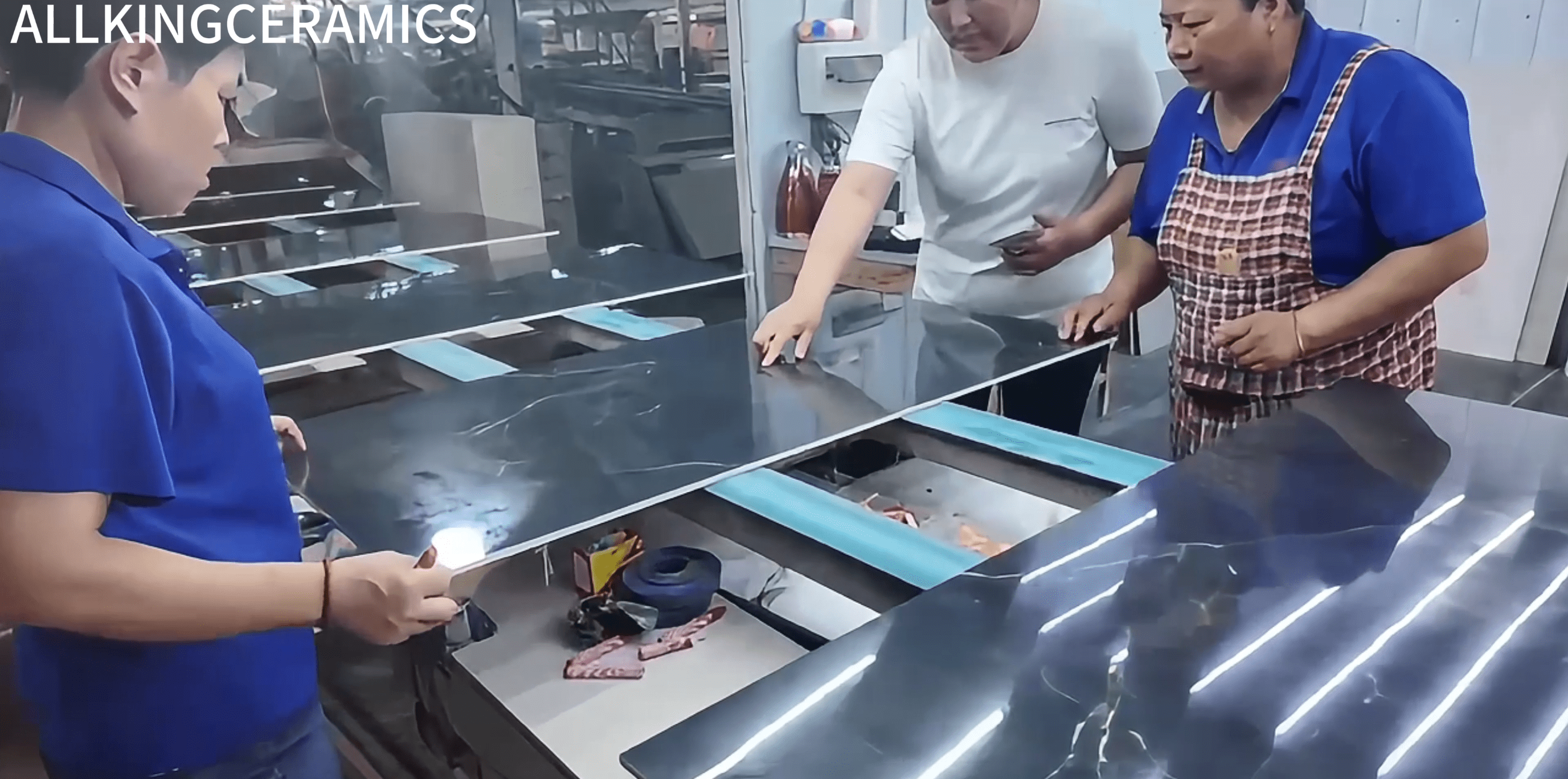
On the supply side, ALL KING CERAMICS operates an OEM / ODM programme with customization across custom size and thickness, surface finish, OEM brand logo and packaging, marble vein pattern variation and anti-slip rating. Monthly capacity is 1.2 million m², standard lead time is 7–10 days, and the MOQ is 400 sqm per design with trial orders accepted. Quality control combines 100% flatness and sizing auto-check, piece-by-piece visual inspection and random laboratory testing per batch.
Use Cases: Where PEI 4 Is Sufficient and Where PEI 5 Is the Safer Specification
Traffic pattern, cleaning regime and grit exposure decide the class. The applications below are drawn from the certified application scope of the 60x120cm porcelain tile range and from reported project use.
Shopping malls and mixed-use developments
Mall concourses and mixed-use circulation combine the highest footfall with the highest grit exposure, since entrances bring in outdoor abrasive particles. PEI 5 is the safer specification for concourses, while PEI 4 remains appropriate for back-of-house offices and staff areas within the same development.
Hotel lobbies and hospitality interiors
Hotel lobby flooring carries luggage wheels, trolleys and continuous footfall, and is usually the most photographed surface in the building. Where the same visual language must run from lobby to guestroom corridor, specifying PEI 5 for the lobby and PEI 4 for corridors keeps the aesthetic consistent while matching the wear class to actual traffic.
Healthcare facilities and educational buildings
Hospitals, clinics and schools combine high footfall with frequent cleaning. A vitrified body at below 0.5% water absorption supports stain-free maintenance, and abrasion class determines whether that surface integrity survives years of trolley traffic and daily mopping. For educational corridors and healthcare circulation, PEI 5 is the conservative specification.
Commercial kitchens and food service
These areas are governed jointly by abrasion and slip requirements. DIN 51130 R11 (19°–27°) is the reference for kitchens and food production, applied together with an abrasion class suited to constant trolley movement.
Apartment developments and luxury villas
In residential-adjacent projects, PEI 4 covers lift lobbies, common corridors and living areas where traffic is sustained but not extreme. Large-format porcelain slabs in 60x120cm, 75x150cm and 100x100cm formats reduce joint count and support the seamless visual result that these projects specify.
Outdoor areas and 20 mm pavers
For anti-slip outdoor porcelain pavers on terraces, pool surrounds and approaches, the specification driver shifts to 20 mm thickness and anti-slip rating rather than PEI class alone. These areas should be scheduled as a separate product family even when the surface colour matches the interior range.
Reported project outcome
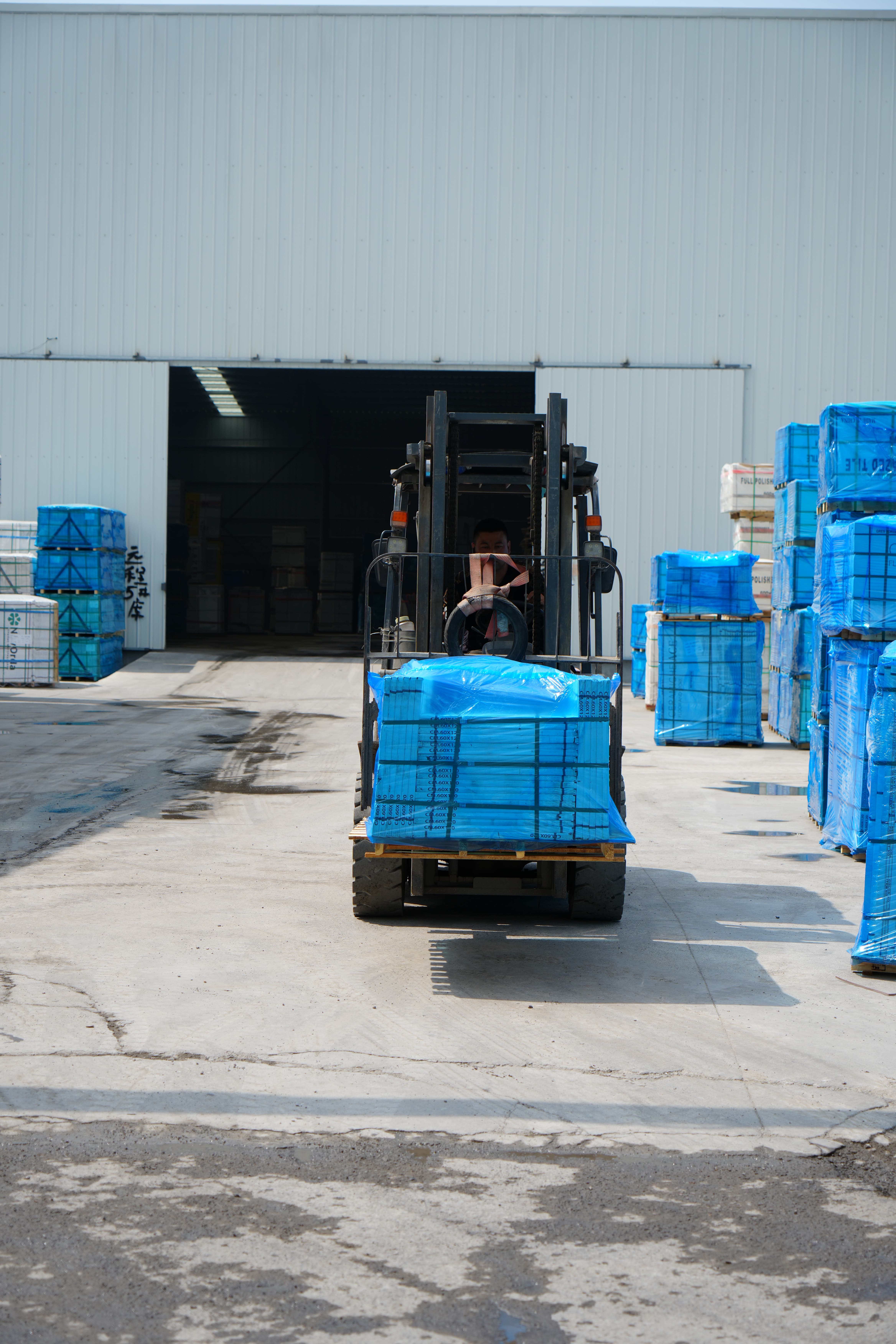
In a 15,000 sqm project supply for commercial real estate developers, general contractors, tier-1 building materials wholesalers, hospitality procurement agencies and architectural design firms, the porcelain tile range was applied to hotel lobby, commercial mall flooring, office building facade, high-end apartment bathroom and airport departure hall applications. The reported project results include seamless aesthetic presentation, zero-defect durability, easy maintenance and stain-free performance, 100% project acceptance and zero maintenance complaints, with a designed service life exceeding 20 years. Project references span multiple countries including the UAE, Canada, Australia and Russia.
Certification and Compliance Evidence Behind the Rating
An abrasion class is only as useful as the certification framework that surrounds it. The 60x120cm porcelain tiles are covered by two certifications relevant to commercial procurement:
- CE certification issued by TUV under certificate number AC 50163816 0001, for dry-pressed ceramic tiles for internal flooring in the EU market.
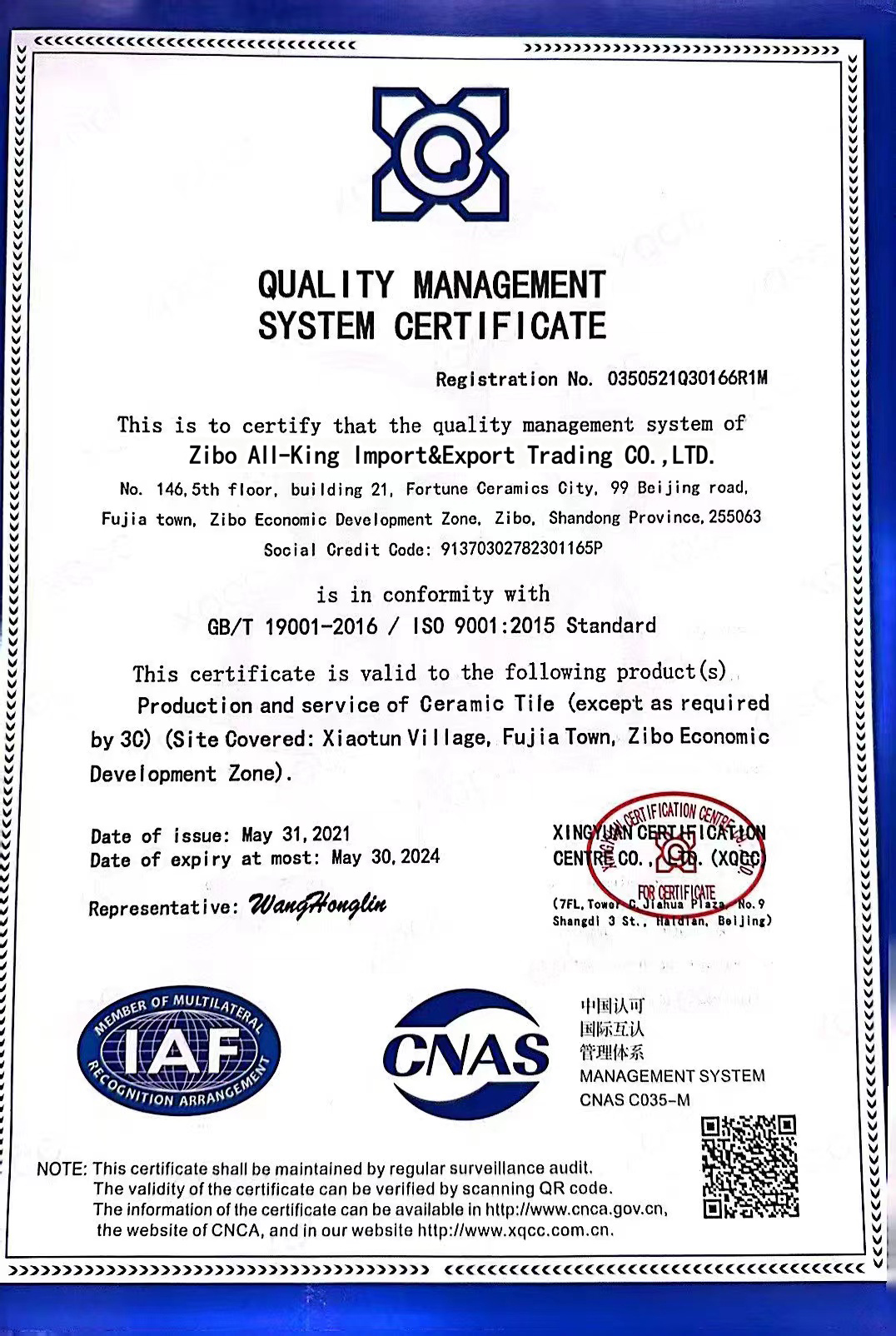
- ISO 9001 certification under certificate number 0350521Q30166R1M, issued by XQCC to the ISO 9001:2015 standard, covering the production and service of ceramic tile for global markets.
Alongside certification, the batch-level inspection routine determines whether the certified value holds in the delivered container. The published regime covers 100% flatness and sizing auto-check, piece-by-piece visual inspection and random laboratory testing per batch. For buyers, the practical check is to require that the abrasion class, water absorption, Mohs hardness, breaking strength and modulus of rupture appear together on the same specification sheet as the certificate numbers, so that compliance review does not depend on separate documents that may be revised at different times.
Frequently Asked Questions: PEI 4 and PEI 5 in Commercial Projects
Do PEI 4 and PEI 5 porcelain tiles carry the certification required for commercial projects?
The 60x120cm porcelain tiles supplied by ALL KING CERAMICS under the Marble Series and Travertine models carry CE certification issued by TUV under certificate number AC 50163816 0001, covering dry-pressed ceramic tiles for internal flooring in the EU market, and ISO 9001 certification under certificate number 0350521Q30166R1M, issued by XQCC to the ISO 9001:2015 standard for the production and service of ceramic tile in global markets. The abrasion rating of PEI 4 / PEI 5 is published on the same specification sheet as water absorption below 0.5% (vitrified), Mohs hardness of 6–7, breaking strength of at least 1300 N and modulus of rupture of at least 35 MPa. Slip resistance remains a separate requirement: under DIN 51130, R11 covers 19°–27° for kitchens and food production, and R12 covers 27°–35° for dairy and industrial environments, so an anti-slip rating should be specified in addition to the abrasion class.
Can abrasion class, format and surface finish be customized for a specific project?
Yes. ALL KING CERAMICS runs an OEM / ODM programme with customization of custom size and thickness, surface finish, OEM brand logo and packaging, marble vein pattern variation and anti-slip rating. Production capacity is 1.2 million m² per month from a 60,000 m² factory with 320 employees, an annual output of 12–16 million m² and a 25-engineer R&D team. Quality control combines 100% flatness and sizing auto-check, piece-by-piece visual inspection and random laboratory testing per batch, which is what allows a customized specification to be verified against the approved sample before shipment.
How should buyers evaluate the cost difference between PEI 4 and PEI 5?
No single price gap applies, because the commercial value of the tile depends on a combination of format, thickness, surface finish, abrasion class, anti-slip rating, packaging and order volume. As a market reference point, the average export price of Chinese ceramic tiles in 2024 was USD 5.36 per square meter at a total export value of USD 3.21 billion on 599 million sqm (China Customs) — useful for benchmarking, not for quoting a specific project. The more reliable commercial measure is total cost of ownership: the specified tile range is designed for a service life exceeding 20 years and is reported as easy to maintain and stain-free, which reduces the cost of premature replacement. The MOQ is 400 sqm per design, with trial orders accepted, so the commercial exposure of testing a specification is limited.
Can we validate PEI 4 or PEI 5 tiles with samples before placing a project order?
Samples can be requested and trial orders are accepted on the 60x120cm porcelain tile range, with an MOQ of 400 sqm per design for full production. Sample validation is the stage at which pattern variation is confirmed: the range uses random marble veins, so the approved sample establishes the acceptable visual range for the batch rather than a single fixed print. Buyers typically use this stage to check surface finish, edge condition, thickness tolerance within the 9.0–10.5 mm range and anti-slip rating where the project requires it.
What lead time and after-sales support apply to a commercial order?
Standard lead time is 7–10 days, supported by a monthly capacity of 1.2 million m². After-sales support covers damage compensation, online installation guidance, 24/7 technical consultation and batch tracking with reordering support, which matters on phased projects where later phases must match the earlier delivered batch. To move a specification forward, the full product catalog covering formats, finishes and certified parameters is available for download at ALL KING Ceramics Catalog, and project-specific samples, quotations or technical clarification can be requested directly from the export team at tyceramic2@all-king.com or via WhatsApp at +86 156-5336-9360.
Conclusion: Specify the Zone, Not the Whole Building
The choice between PEI 4 and PEI 5 is a zone-level decision inside a body-level specification. PEI 4 covers moderate to heavy commercial traffic; PEI 5 covers extra heavy traffic. Neither class replaces the values that describe the tile body, and the two are most reliable when they appear together on one specification sheet with water absorption below 0.5% (vitrified), Mohs hardness of 6–7, breaking strength of at least 1300 N and modulus of rupture of at least 35 MPa.
For Porcelain Tile Project Solutions, the working method is straightforward: map traffic zones, assign abrasion class per zone, add the DIN 51130 R-value where the area is wet, confirm format and thickness, and verify the certification and batch-inspection regime before approving the sample. Done in that order, the abrasion rating stops being a catalogue line and becomes part of a floor that holds its appearance for the service life of the building.
Start With a Sample and a Certified Specification Sheet
ALL KING CERAMICS (ZIBO ALL-KING CERAMICS CO., LTD) supplies 60x120cm porcelain tiles in PEI 4 and PEI 5, plus 60x60cm, 80x80cm, 75x150cm and 100x100cm formats, for commercial, hospitality, healthcare, educational, mixed-use and residential-adjacent projects worldwide.
Request samples, a project quotation or the full catalog — and confirm abrasion class, anti-slip rating, format and MOQ for your specific floor plan.
Catalog: ALL KING Ceramics Catalog (PDF)
Website: www.all-king.com
Contact: Abby | Email: tyceramic2@all-king.com | Tel / WhatsApp: +86 156-5336-9360
Address: No.6, 8th building, 6th district, China Fortune Ceramic City, Zibo, China