
PEI 4 vs. PEI 5 Porcelain Tiles: Abrasion Resistance Comparison for Commercial Projects
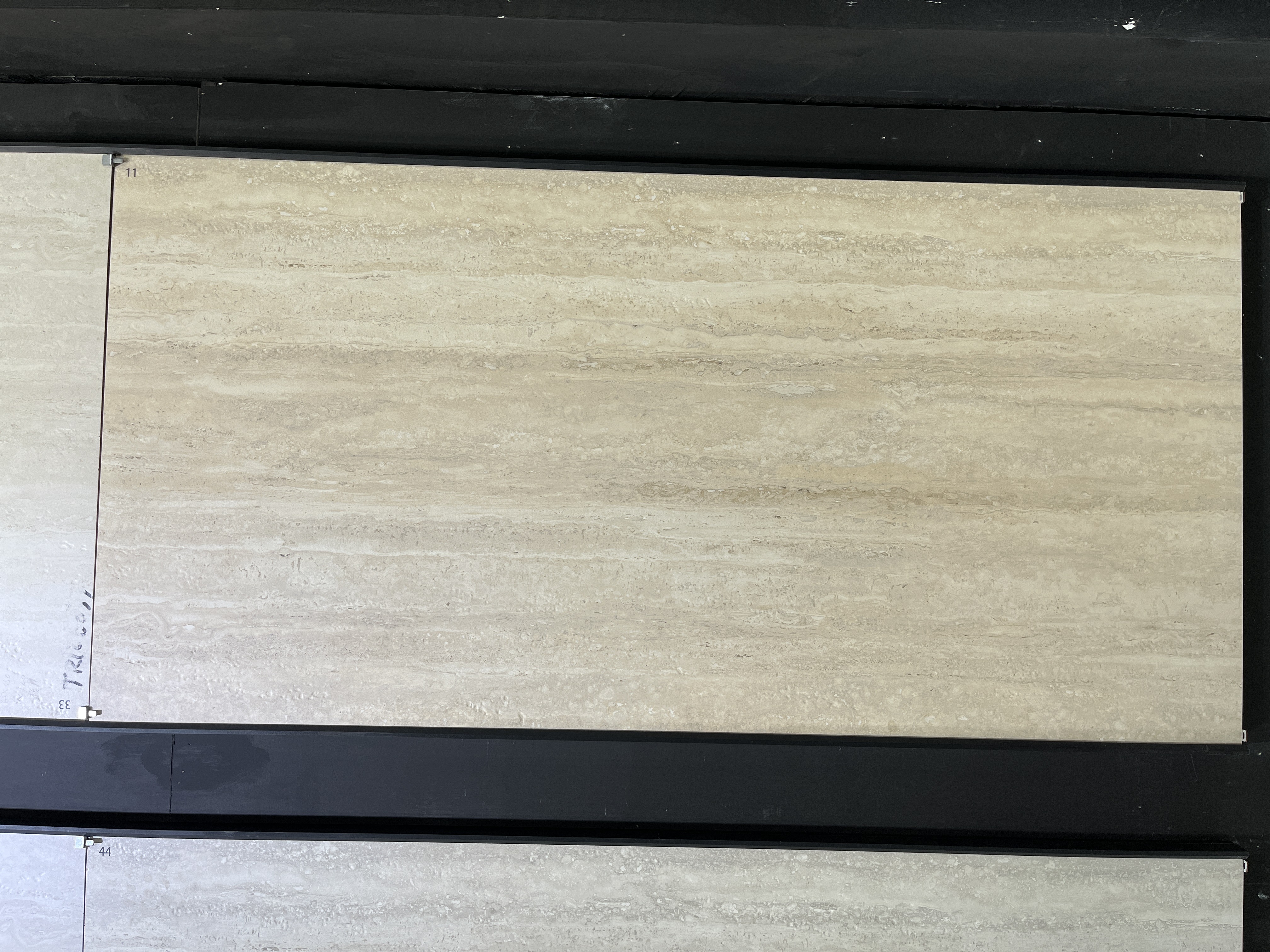
All-King Ceramics Travertine 60x120 cm porcelain tile — supplied with either PEI 4 or PEI 5 abrasion resistance on the same body and format.
PEI 4 porcelain tile is the correct specification for most commercial interiors — corporate offices, hotel guest floors, high-end residences and general commercial fit-out. PEI 5 is the correct specification where abrasive grit meets continuous footfall: shopping mall concourses, airport departure halls, railway station halls and heavy-duty logistics floors. All-King Ceramics produces both abrasion ratings on the same 60x120 cm porcelain platform, covering the Marble Series and Travertine ranges, with water absorption below 0.5%, Mohs hardness of 6–7 and breaking strength of at least 1300 N.
What PEI 4 and PEI 5 Actually Measure — and Where Specification Goes Wrong
The PEI (Porcelain Enamel Institute) scale classifies the surface wear resistance of glazed tile: PEI 4 sits at the commercial level, and PEI 5 sits at the extra-heavy commercial level. The class describes how the tile face resists abrasive wear under foot traffic — it does not describe slip resistance, frost behaviour, dimensional accuracy or breaking strength.
Commercial flooring failures rarely come from a tile that looked wrong at handover. They surface later, once the floor has been walked on for a few seasons, and they usually trace back to one of three specification errors:
- Under-specification. A wear class intended for lighter residential or light-commercial use is installed in a concourse or terminal hall. The surface dulls, glaze wear paths appear along the dominant circulation route, and the floor loses its visual consistency long before the structure fails.
- Over-specification. An extra-heavy class is applied across an entire building, including back-of-house offices and low-traffic rooms, so the project pays a premium where the floor will never see abrasive grit.
- Single-parameter specification. The abrasion class is written into the bill of quantities, but water absorption, breaking strength, modulus of rupture, thickness tolerance and slip rating are left open. The result is a floor that resists abrasion but stains, chips, or becomes slippery when wet.
A commercial floor is therefore a set of requirements, not a single label. PEI 4 versus PEI 5 is the first filter — and the decision only becomes reliable when it is read together with the material standard and the project environment.
Industry Background: How Abrasion Ratings Sit Inside Commercial Tile Specification
In international practice, a tile is classified as porcelain by its water absorption: porcelain tiles are defined as ceramic tiles with water absorption of 0.5% or less, under ISO 13006 and ANSI A137.1. Abrasion resistance is specified on top of that material classification, not instead of it. A project specification therefore normally carries three layers: the material standard (water absorption and strength), the wear class (PEI 4 or PEI 5), and the environment-driven requirements (slip resistance, frost resistance, chemical resistance, VOC emissions).
The scale of commercial demand behind this specification logic is substantial in the markets All-King Ceramics serves. Kazakhstan's construction output grew by 15.9% year-on-year in 2025, according to the Bureau of National Statistics of Kazakhstan — a market signal that retail, hospitality, office and public infrastructure floors continue to enter the pipeline across Central Asia. Similar project-driven demand runs through Russia, the Middle East, Southeast Asia, Australia and Latin America, where the same specification layers are applied.
Commercial environments also impose more than abrasion. Project floors in these markets typically operate under high traffic, frost and freeze-thaw cycling, wet and slippery conditions, thermal shock and heavy surface loads. That combination is why the environment — not the catalogue — should decide the wear class.
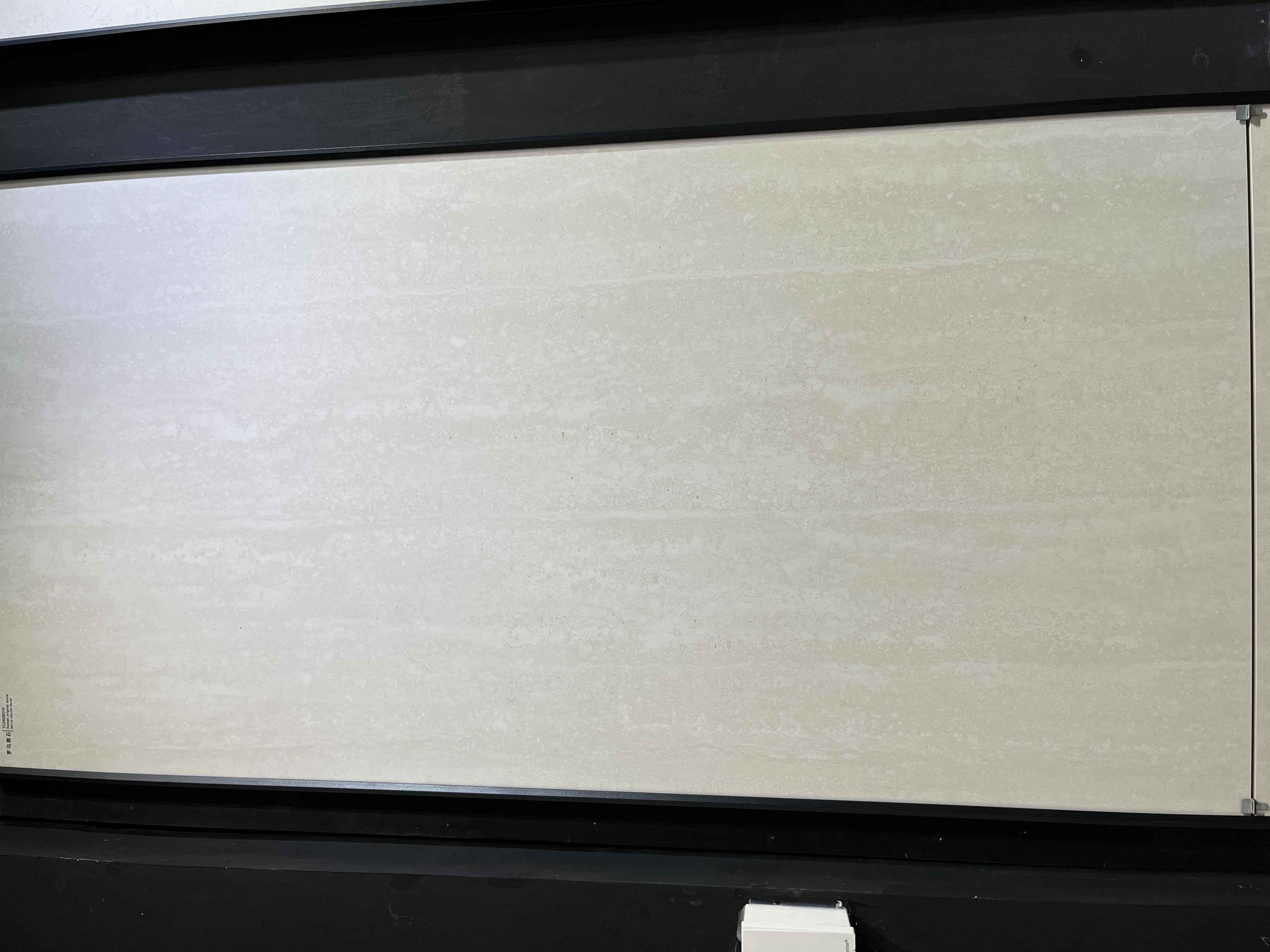
Surface character is what the PEI class protects. Both All-King Ceramics Travertine and Marble Series 60x120 cm tiles carry the same declared technical parameters.
Detailed Solution: What All-King Ceramics Supplies Across PEI 4 and PEI 5
All-King Ceramics — ZIBO ALL-KING CERAMICS CO., LTD, founded in 2011 with a 60,000 m² manufacturing facility in Zibo, Shandong — is a manufacturer and direct exporter of porcelain and ceramic tiles for commercial and residential projects. The company exports approximately 70% of its output and supplies contractors, distributors and builders across Australia, New Zealand, Russia, Belarus, South Korea, Vietnam, Malaysia, the Philippines, Peru, Panama, Colombia, Chile, Bolivia, Guatemala, Palestine, Iraq, Ukraine, the United Arab Emirates and Central Asia.
The commercial workhorse is the 60x120 cm porcelain tile, available in two visual families that share the same technical body:
- Travertine (product 5624) — a 60x120 cm porcelain tile in porcelain clay, offered with abrasion resistance PEI 4 / PEI 5.
- Marble Series (product 4765) — a 60x120 cm porcelain tile with the same body and the same PEI 4 / PEI 5 abrasion resistance options, with random marble vein character.
Because both models are built on the same body, a project can split wear classes between zones without splitting the visual language: PEI 5 on the concourse and PEI 4 in the offices or guest corridors, using one format and one surface family. That is a practical advantage for buildings that need to control specification cost without creating a visible break in the floor.
The shared technical platform
| Parameter | Declared value |
|---|---|
| Format | 60x120 cm porcelain tile |
| Material | Porcelain clay |
| Thickness range | 9.0–10.5 mm |
| Water absorption | < 0.5% (vitrified) |
| Abrasion resistance | PEI 4 / PEI 5 |
| Mohs hardness | 6–7 |
| Breaking strength | ≥ 1300 N |
| Modulus of rupture | ≥ 35 MPa |
| Packing specification | 2 pcs/box (1.44 m²/box) |
Read as a set, these values explain why the platform behaves well in commercial interiors: water absorption below 0.5% places the tile in the vitrified porcelain class, Mohs hardness of 6–7 gives the surface a hard mineral scratch profile, and a breaking strength of at least 1300 N with a modulus of rupture of at least 35 MPa addresses the structural loads that heavy foot traffic and equipment impose on large-format floors.
Environment-driven requirements that sit alongside the PEI class
For commercial real estate applications, All-King Ceramics porcelain tiles are specified against a further set of conditions: anti-slip R10 / R11, frost resistance, low VOC emissions, acid and alkali resistance, zero water penetration and ISO 13006 compliance. The associated working conditions are high traffic, frost and freeze-thaw, wet and slippery surfaces, thermal shock and heavy surface load. Typical project uses include flooring and wall cladding, commercial fit-out, interior decoration, facade engineering and hotel renovation.
Quality control behind both ratings
All-King Ceramics applies 100% flatness and sizing auto-check, piece-by-piece visual inspection and random lab testing per batch across production. Flatness and sizing control matter on large-format floors because they drive lippage and joint uniformity across long sightlines; batch-level lab testing matters for project acceptance because it produces the evidence a consultant or contractor needs at handover. The factory runs a 25-engineer R&D team, and customization covers custom size and thickness, surface finish, OEM brand logo and packaging, pattern variation including marble vein customization, and anti-slip rating.
Comparison Table: PEI 4 vs. PEI 5 for Commercial Projects
The table below compares the two ratings on the criteria a commercial buyer actually evaluates. Product availability, technical values and environment requirements reflect the All-King Ceramics 60x120 cm porcelain platform; the traffic-level description follows the standard commercial interpretation of the PEI classes.
| Comparison criterion | PEI 4 | PEI 5 |
|---|---|---|
| Class level | Commercial-grade wear resistance | Extra-heavy commercial wear resistance |
| Best-fit floor zones | Corporate offices, hotel guest rooms and upper corridors, high-end residences, general commercial fit-out | Shopping mall concourses, luxury hotel lobbies, airport departure halls, railway station halls, logistics and industrial floors |
| Traffic character | Sustained commercial footfall without heavy abrasive grit | Continuous heavy-duty use and high-frequency commercial traffic, including grit tracked in from outside |
| Availability at All-King Ceramics | Offered on Marble Series (4765) and Travertine (5624), 60x120 cm | Offered on Marble Series (4765) and Travertine (5624), 60x120 cm |
| Body water absorption (both ratings) | < 0.5% (vitrified) | < 0.5% (vitrified) |
| Mohs hardness (both ratings) | 6–7 | 6–7 |
| Breaking strength (both ratings) | ≥ 1300 N | ≥ 1300 N |
| Modulus of rupture (both ratings) | ≥ 35 MPa | ≥ 35 MPa |
| Thickness range (both ratings) | 9.0–10.5 mm | 9.0–10.5 mm |
| Slip requirement for the project floor | Anti-slip R10 / R11 where the zone is wet | Anti-slip R10 / R11, typically mandatory for public circulation |
| Frost resistance | Available for frost and freeze-thaw conditions | Available for frost and freeze-thaw conditions |
| Compliance layer | ISO 13006 compliance stated for the porcelain range | ISO 13006 compliance stated for the porcelain range |
The pattern worth noting is that water absorption, hardness, breaking strength and modulus of rupture do not change between the two ratings — they are properties of the 60x120 cm porcelain body, shared by Marble Series and Travertine. What changes between PEI 4 and PEI 5 is the surface wear class that the floor is specified against. That makes the choice a zoning decision rather than a product-family decision.
Step-by-Step Breakdown: Specifying PEI 4 or PEI 5 in Six Steps
Use Cases: Where Each Rating Earns Its Place
Shopping malls and retail
Mall concourses, entrances and food-court circulation are the classic PEI 5 zone: abrasive grit from streets and car parks is tracked across the floor all day, and the surface is expected to keep its appearance across very long sightlines. Tenants' interiors and back-of-house offices within the same building can drop to PEI 4.
Luxury hotels
Hotel flooring solutions split across the building. Lobbies, arrival areas, ballroom foyers and other high-frequency public floors justify PEI 5. Guest rooms and upper-floor corridors, where traffic is sustained but cleaner, are normally served by PEI 4 — which is where a single 60x120 cm format across both classes keeps the hotel's visual language consistent.
Transit hubs: airports and railway stations
Airport terminal porcelain tiles and railway station flooring tiles sit at the top of the wear scale. Continuous traffic, rolling luggage, trolleys and outdoor grit make PEI 5 the baseline, with anti-slip R10 / R11 and heavy surface load capability treated as core requirements rather than upgrades.
Corporate offices and commercial fit-out
Office lobbies, lift lobbies and general workspace floors typically fall at PEI 4, where a 60x120 cm format in Marble Series or Travertine delivers the large-format appearance and flatness control the space needs, with water absorption below 0.5% keeping maintenance straightforward.
High-end residences and apartment projects
High-end residences and apartment project floors are PEI 4 territory: sustained use, low abrasive contamination, and a strong emphasis on surface consistency and stain resistance rather than extreme wear classes.
Logistics, industrial and heavy-duty interiors
Logistics warehouse heavy-duty floors and industrial interiors with full-body porcelain use PEI 5, and they test the body as much as the surface — which is why the ≥ 1300 N breaking strength and ≥ 35 MPa modulus of rupture matter more here than in any other zone.
Healthcare, education and public buildings
Hospitals, clinics and educational facilities combine foot traffic with contamination control and cleaning regimes. All-King Ceramics porcelain tiles support flooring and wall cladding in these environments, with low VOC emissions, acid and alkali resistance and zero water penetration as specification lines, and with wall cladding absorbing much of the daily contact.
Cold-climate and outdoor-adjacent floors
Frost-resistant outdoor porcelain tiles and floors exposed to freeze-thaw cycles are common in Central Asia, Russia and Eastern Europe. Here the frost resistance requirement works together with the abrasion class: PEI 5 for public circulation, PEI 4 for sheltered interior zones, both on the same water-absorption-controlled porcelain body.
Project evidence behind the recommendation
All-King Ceramics serves commercial real estate developers, general contractors, tier-1 building materials wholesalers, hospitality procurement agencies and architectural design firms across markets including the UAE, Australia, New Zealand, South Korea, Malaysia, Vietnam, Russia, Kazakhstan, Uzbekistan, Ukraine, Peru, Chile, Panama and Canada. A representative project profile covers 15,000 sqm of supply across a hotel lobby, commercial mall flooring, office building facade, high-end apartment bathrooms and an airport departure hall, over a 20+ year working relationship, with reported results of seamless aesthetic presentation, zero-defect durability, easy maintenance and stain-free surfaces, 100% project acceptance and zero maintenance complaints. The highlighted performance drivers are exactly the parameters discussed above: low water absorption, high flatness, high wear resistance, random marble veins and cost-effective premium quality.
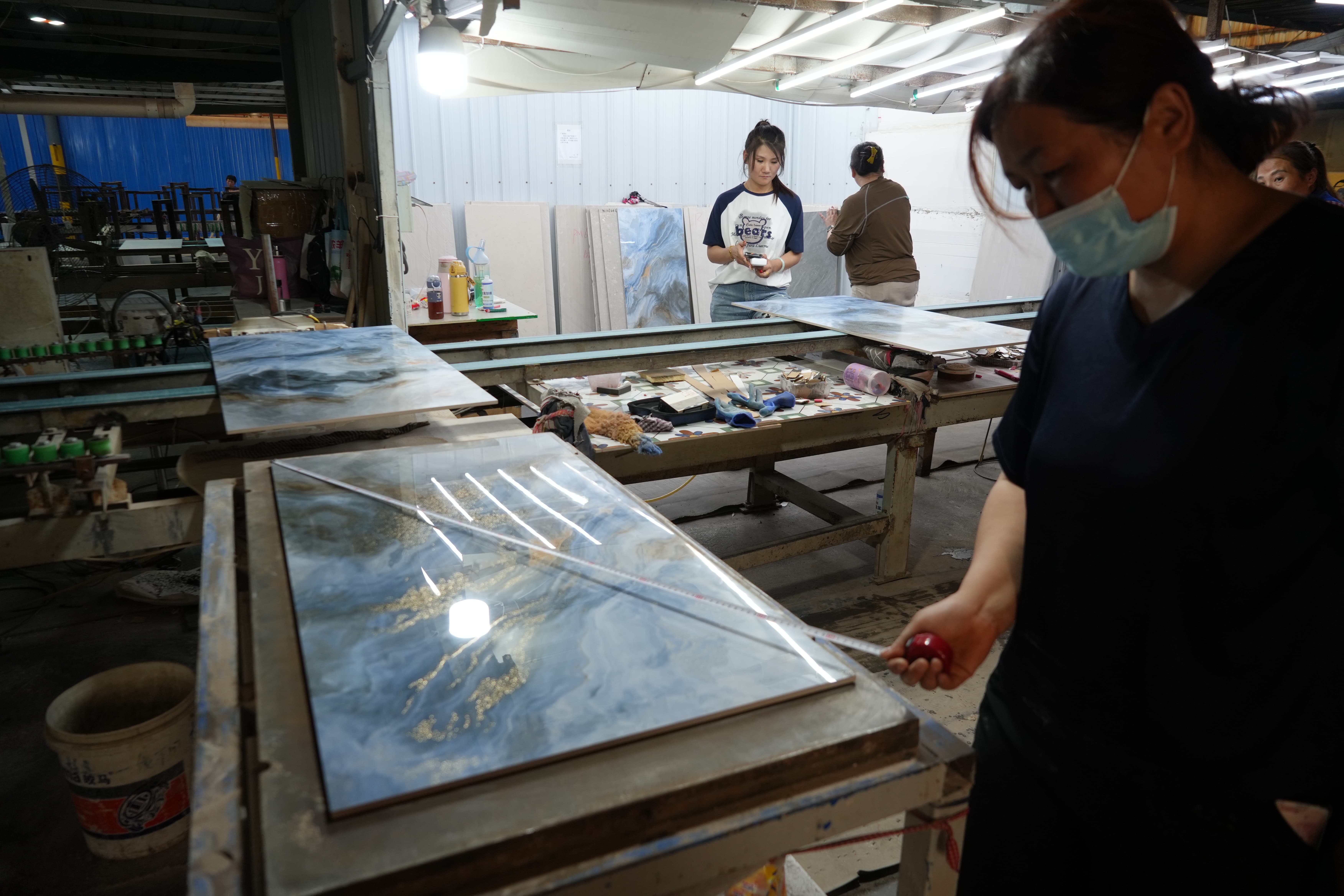
Flatness and sizing control on large-format 60x120 cm porcelain tile — the check that determines lippage and joint uniformity on long commercial sightlines.
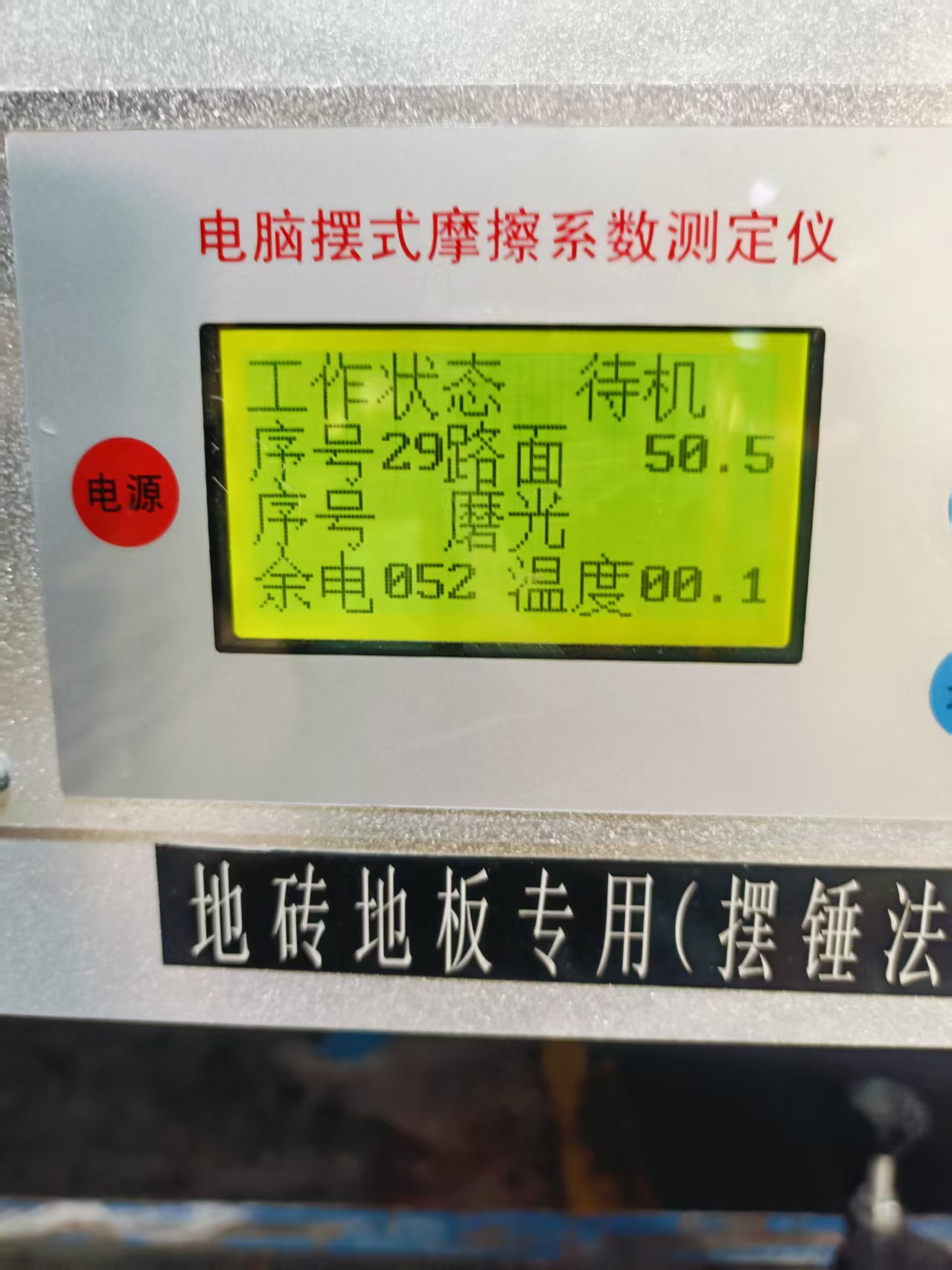
Slip resistance sits alongside the abrasion class in commercial specification: mall, airport, railway and hospital floors are specified with anti-slip R10 / R11 requirements.
Frequently Asked Questions
Does a PEI 4 or PEI 5 rating replace ISO 13006 compliance?
No. PEI 4 and PEI 5 describe surface wear resistance only. Porcelain classification depends on the material standard: porcelain tiles are defined as ceramic tiles with water absorption of 0.5% or less under ISO 13006 and ANSI A137.1, which is why the All-King Ceramics 60x120 cm Marble Series and Travertine tiles are declared at below 0.5% water absorption on a vitrified body regardless of wear class. Commercial specifications normally add further compliance lines alongside the standard — anti-slip R10 / R11, frost resistance, low VOC emissions, acid and alkali resistance and zero water penetration — and project submittals commonly also require quality management documentation such as ISO 9001, plus CE marking for European-facing work. Buyers should always verify certificates and test documentation directly against the project's jurisdiction and specification, because a wear class alone is not a compliance package.
Can All-King Ceramics supply both PEI 4 and PEI 5 in 60x120 cm porcelain tile?
Yes. Both the Marble Series (product 4765) and Travertine (product 5624) are 60x120 cm porcelain tiles offered with abrasion resistance PEI 4 / PEI 5, on the same body with water absorption below 0.5%, Mohs hardness 6–7, breaking strength of at least 1300 N and modulus of rupture of at least 35 MPa. Customization capability covers custom size and thickness, surface finish, OEM brand logo and packaging, pattern variation including marble vein customization, and anti-slip rating. Production supports this at scale through a 25-engineer R&D team and a monthly capacity of 1.2 million m².
How does choosing between PEI 4 and PEI 5 affect the commercial terms of an order?
The commercial terms are quoted per project rather than published as a price list, but the structure of the decision is straightforward. Both ratings are produced on the same 60x120 cm format from the same two surface families, so a project can restrict PEI 5 to the zones that genuinely need extra-heavy wear resistance — concourses, lobby floors, terminal halls, warehouse floors — and use PEI 4 for offices, guest floors and residences. The order terms apply to the project as a whole: MOQ of 400 sqm per design, trial orders accepted, production lead time of 7–10 days, monthly capacity of 1.2 million m² and annual output of 12–16 million m². Sending the floor plan with zone-by-zone traffic notes is the fastest way to receive a properly structured quotation.
How should a buyer validate abrasion resistance and the rest of the specification before ordering?
Start with physical samples of the exact model and wear class, and review surface finish, shade and vein character against the design intent. Then verify the quality-control route behind the batch: All-King Ceramics applies 100% flatness and sizing auto-check, piece-by-piece visual inspection, and random lab testing per batch, which is the evidence base for project acceptance on parameters such as flatness, sizing and body performance. Trial orders are accepted, so a buyer can confirm packing — 2 pcs per box at 1.44 m² per box — handling and shade consistency before releasing full project quantities. Where the specification requires independent verification, arrange third-party testing in parallel with the sample review.
What lead time and after-sales support apply to a commercial tile order?
Production lead time is 7–10 days, backed by a monthly capacity of 1.2 million m². After-sales support covers damage compensation, online installation guidance, 24/7 technical consultation, and batch tracking with reordering support — the last of these matters most on multi-phase projects where a later phase must match an earlier delivery. If you are weighing PEI 4 against PEI 5 for a specific project, send the floor zones and traffic notes to All-King Ceramics for a sample pack and a project-specific quotation: email tyceramic2@all-king.com, WhatsApp or telephone +86 156-5336-9360, or download the full product catalogue below.
Conclusion: Match the Rating to the Zone, Not the Catalogue
PEI 4 and PEI 5 are not competing products — they are two wear classes applied to one porcelain platform. PEI 4 carries the commercial interiors where footfall is sustained but contamination is limited: corporate offices, hotel guest floors, high-end residences and general commercial fit-out. PEI 5 carries the floors where abrasive grit and continuous heavy traffic combine: shopping mall concourses, luxury hotel lobbies, airport departure halls, railway station halls, logistics and industrial floors.
What makes the decision reliable is everything that surrounds the class. At All-King Ceramics, both ratings are available on the 60x120 cm Marble Series and Travertine porcelain tiles, with water absorption below 0.5% on a vitrified body, Mohs hardness of 6–7, breaking strength of at least 1300 N, modulus of rupture of at least 35 MPa, thickness of 9.0–10.5 mm and packing of 2 pcs per box at 1.44 m² per box. The same platform supports anti-slip R10 / R11, frost resistance, low VOC emissions, acid and alkali resistance, zero water penetration and ISO 13006 compliance — the requirement set that commercial real estate, hotel renovation, facade engineering and public infrastructure projects actually test at handover.
For commercial buyers in Central Asia, Russia, Eastern Europe, Southeast Asia, the Middle East, Australia and Latin America, the practical path is to zone the building, assign PEI 4 or PEI 5 to each zone, lock the parallel parameters, validate with samples and batch testing, and then confirm the commercial terms. That sequence keeps the premium wear class where it earns its place, and keeps the rest of the floor on a specification that will still look right after years of traffic.
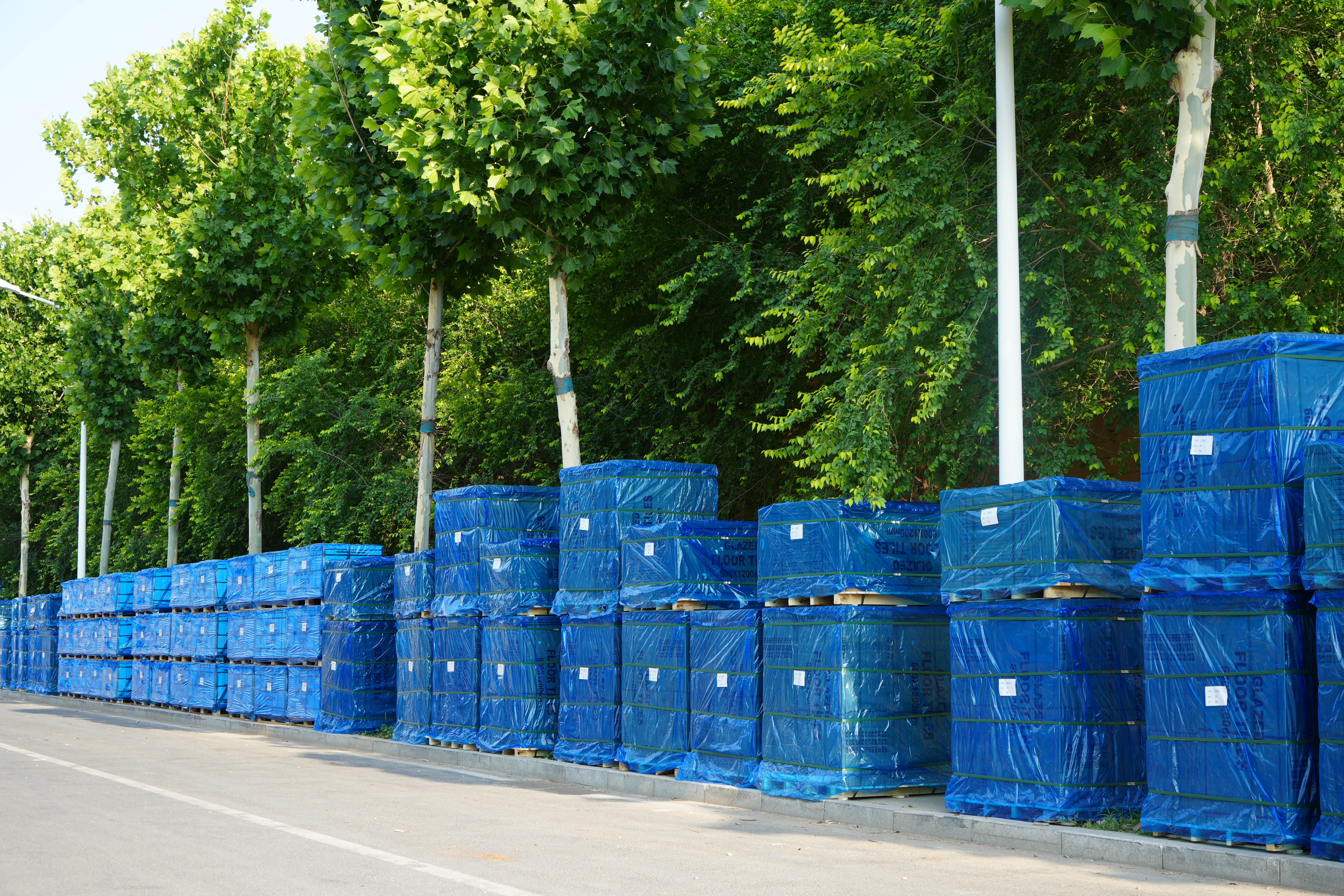
Project-ready packing: 2 pcs per box at 1.44 m² per box, palletised for export, with 7–10 day production lead time and batch tracking for multi-phase projects.
Specify the right wear class for your next commercial floor
All-King Ceramics supplies 60x120 cm porcelain tiles in PEI 4 and PEI 5 for shopping malls, hotels, transit hubs, offices, healthcare and residential projects — with samples, project quotations and full technical documentation. Visit all-king.com to review the commercial range.
Download the All-King Ceramics Catalogue (PDF)Email: tyceramic2@all-king.com | Tel / WhatsApp: +86 156-5336-9360 | Contact: Abby
Have Questions or Need More Details?
Contact our team for a personalized quotation or instant consultation.
Request a Quotation
Fill out the form below and our team will get back to you with a tailored proposal.
WhatsApp Direct Chat
Prefer to chat in real-time? Message us on WhatsApp for instant assistance & quick answers.
- Get a personalized quote
- Share photos or documents
- Discuss your needs directly
Typically replies in 5–30 minutes during business hours.