
Porcelain Tile Project Solutions: Vitrification & PEI Explained
Porcelain Tile Project Solutions: Vitrification & PEI Explained
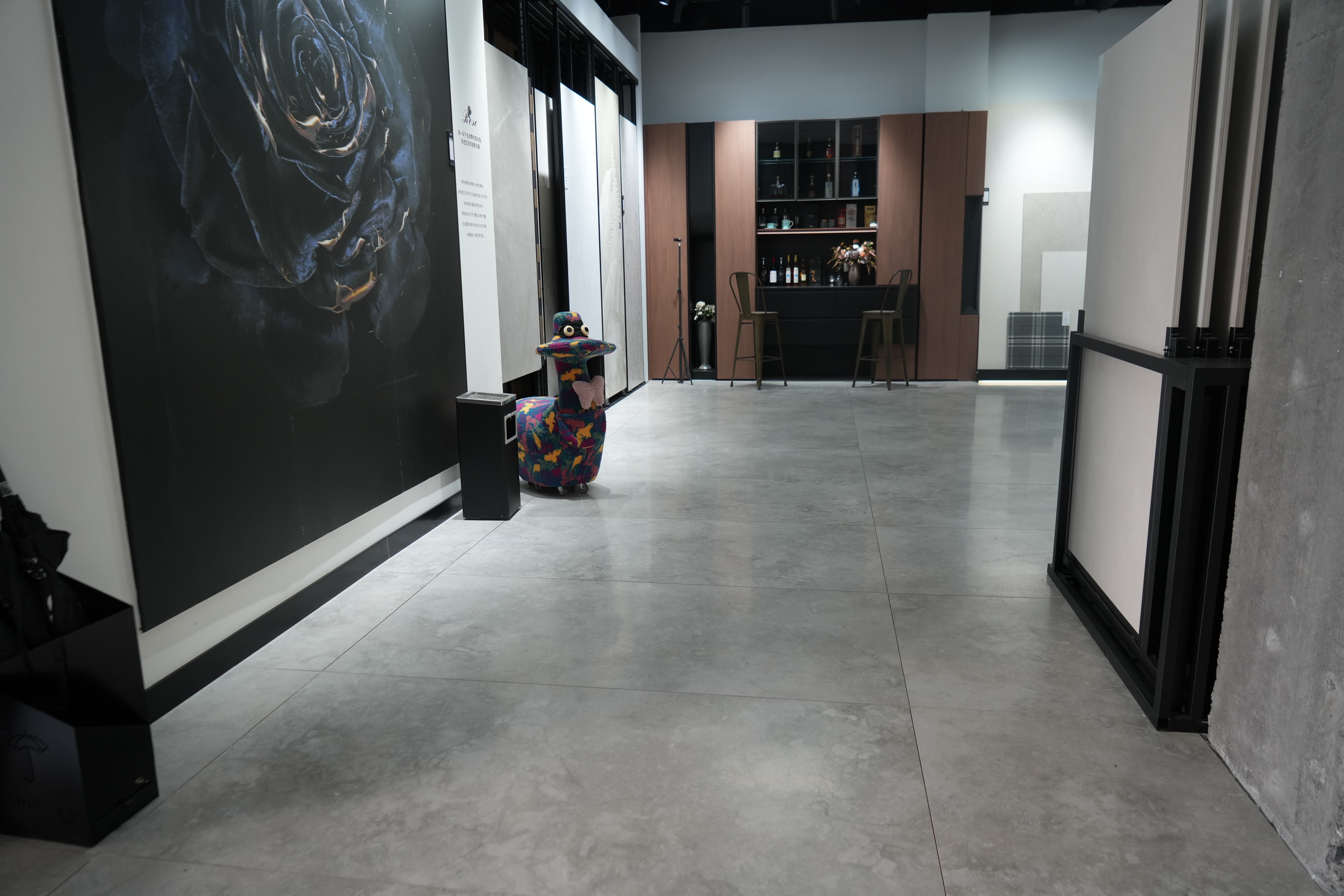
Three figures decide most of the flooring risk on a porcelain project: how much water the body absorbs, how the surface resists abrasion, and how much bending stress the tile carries before it fails. Read together, and traced back to the test methods behind them, those figures let a project team separate a genuine specification from a copied one before the first container is loaded. Read loosely, they produce comparisons between numbers that were never measuring the same thing.
ALL KING CERAMICS is a manufacturer and direct exporter of architectural ceramics, founded in 2011 and operating a 60,000 m² factory in Zibo, China, with 320 employees and annual output of 12–16 million m². This page explains the technical figures published for its porcelain tile range — water absorption below 0.5% under ISO 10545-3, the 60x120 cm format at 9.0–10.5 mm thickness and 1.44 m² per box, PEI 4/PEI 5 abrasion resistance, Mohs hardness 6–7, modulus of rupture ≥35 MPa and breaking strength ≥1300 N — and the two certificates that sit behind them.
Why one number cannot describe a project floor
Project floors fail in different ways, and each way has its own test. A body that takes up water stains, moves dimensionally and, in frost-exposed locations, spalls. A surface that wears loses pattern and gloss long before the tile breaks. A tile that is under-strength cracks under a point load or over an uneven substrate. Water absorption, abrasion class and flexural strength each report on one of those mechanisms, and none of them reports on the others.
Commercial construction is where those distinctions carry the most weight. A commercial research estimate places commercial construction at 37% of global tile demand (Market Research Future), and commercial specifications tend to be inherited: a PEI class or an absorption figure is copied from a previous tender into the next one, often without the test method or the application conditions that made it appropriate. The result is a submittal that looks complete and answers the wrong question.
The practical rule is to attach every figure to the failure mode you are trying to control, then confirm two things: the test method behind the figure, and whether the manufacturer's stated scope actually covers your application.
What a vitrified porcelain body actually is
A vitrified porcelain tile is a dry-pressed tile made from a porcelain clay body and fired until that body densifies into a glassy, low-porosity matrix, with water absorption below 0.5% when measured by the ISO 10545-3 method. Vitrification describes the result inside the body, not a coating or a surface treatment.
Porcelain clay is a refined clay body containing mineral fluxes that melt during high-temperature firing and close the open pore structure that ordinary ceramic bodies retain. The visible consequences are a dense, homogeneous body, a low capacity to hold water, and a surface that can be given different finishes without exposing a porous core. The measurable consequence is the absorption figure.
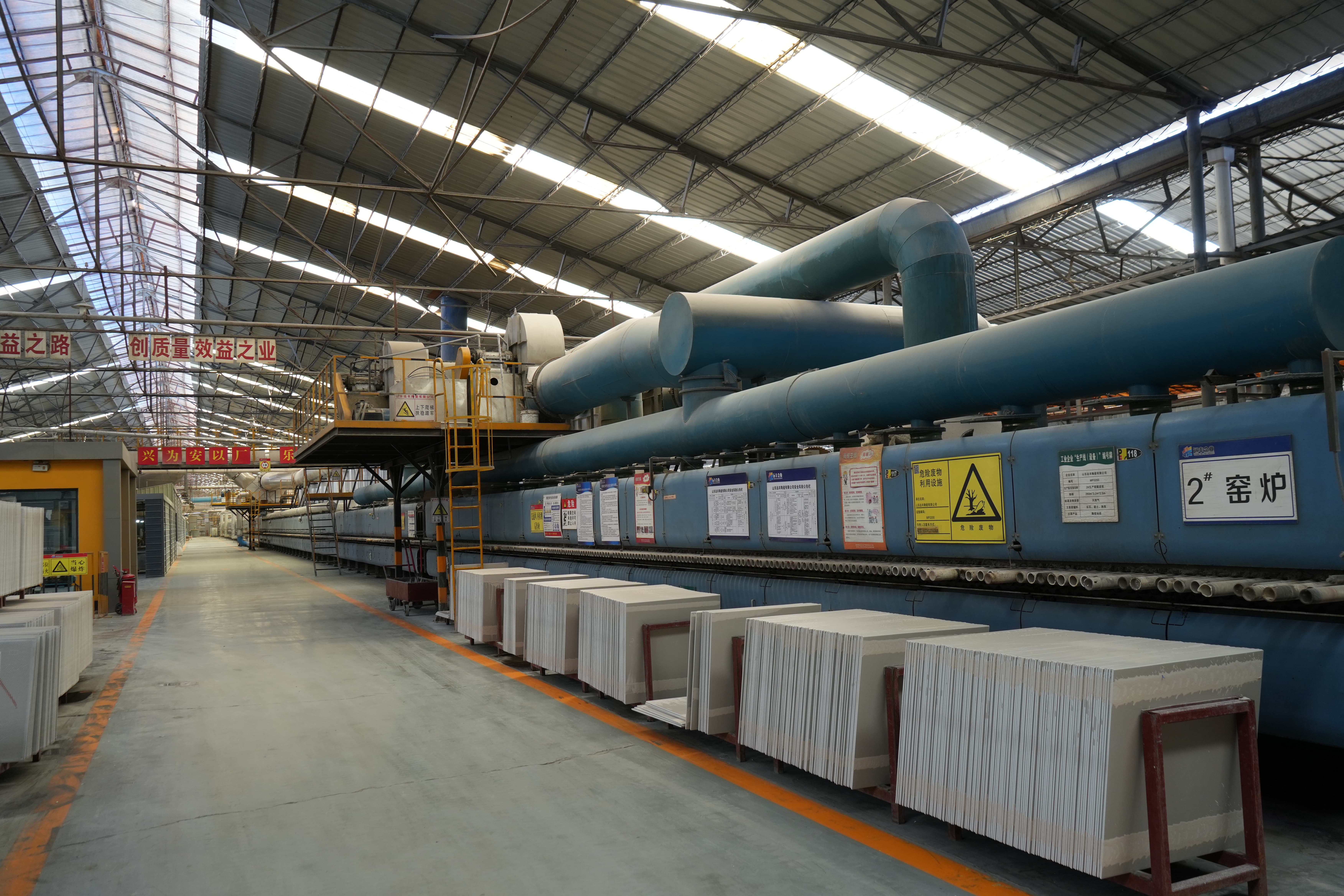
ISO 10545-3 is the test method used to determine water absorption. A dried specimen is weighed, saturated under the conditions the method specifies, then weighed again; absorption is the mass gained, expressed as a percentage of the dry mass. When a datasheet states below 0.5%, that number is a body property, and it remains a body property regardless of colour, pattern or surface finish.
For project teams, a sub-0.5% body is the reason a porcelain floor can be specified into wet areas, commercial kitchens and frost-prone locations without a separate argument about the body itself. ALL KING CERAMICS states that its porcelain line is engineered for high-traffic, frost-prone and wet environments, and the absorption figure is the part of that statement which can be tested directly.
What absorption does not tell you is how the surface resists abrasion, how the tile behaves under point loading, or how slippery it is when wet. Those are three separate questions with three separate readings.
The 60x120 cm format in project terms
60x120 cm is the flagship format in the ALL KING CERAMICS porcelain range and sits alongside 60x60 cm, 80x80 cm, 100x100 cm and 75x150 cm in the company format matrix. For specification purposes, three published values matter: thickness of 9.0–10.5 mm, packing of 2 pieces per box, and 1.44 m² per box.
The packing is internally consistent with the format. At 60 x 120 cm, one piece covers 0.72 m² (0.60 m x 1.20 m, calculated); two pieces therefore cover 1.44 m², which is exactly the stated box coverage.
Thickness is published as a range rather than a single value, which is normal across a product family with different finishes. The practical point is to confirm the exact thickness for the specific design being supplied before fixing door thresholds, floor transitions, skirting details and substrate build-ups. A 9.0 mm tile and a 10.5 mm tile do not sit at the same finished floor level, and across a large floor plate that difference accumulates at every transition in the building.
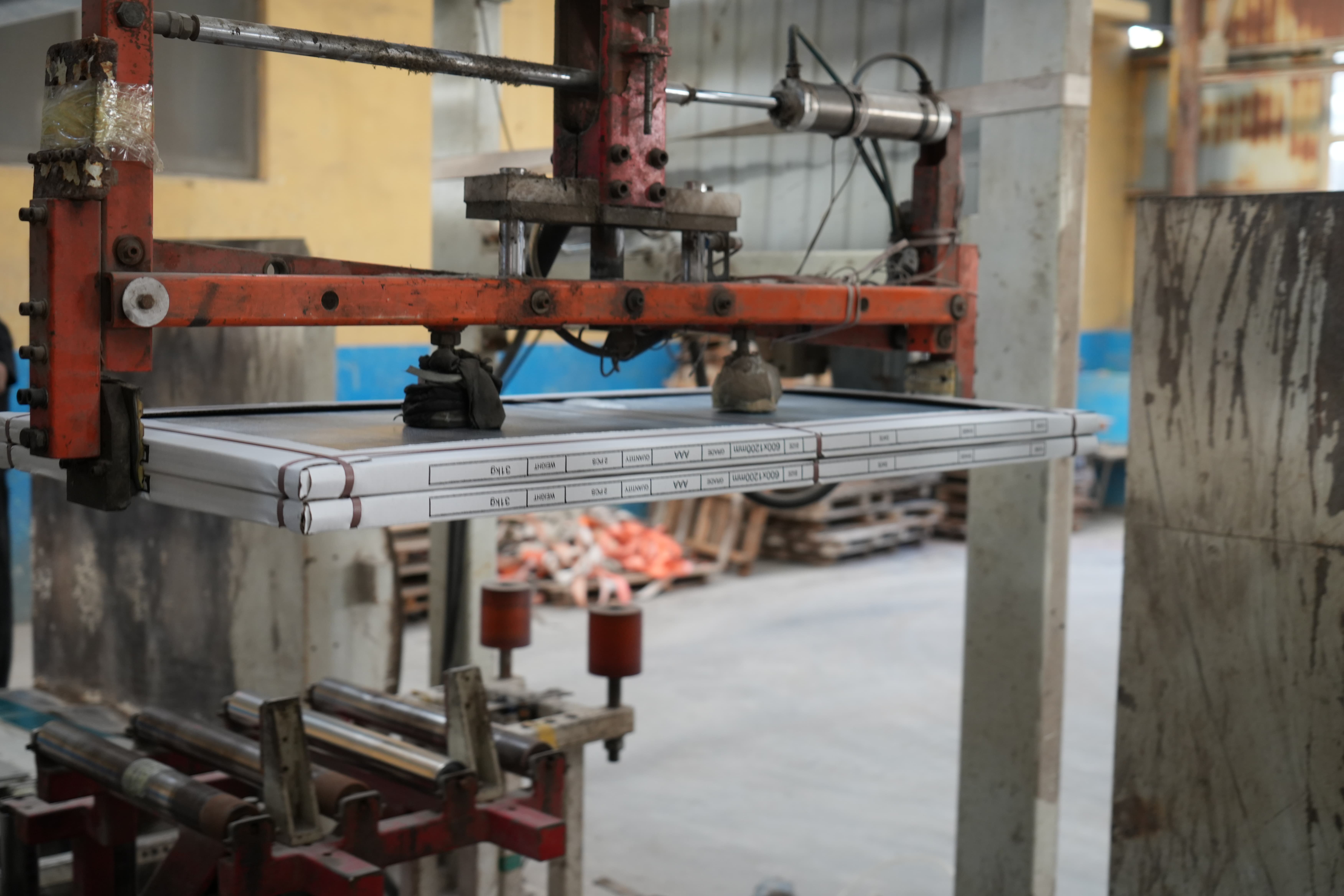
Packing also governs ordering. At 1.44 m² per box, the company minimum of 400 m² per design corresponds to about 278 boxes (400 ÷ 1.44, rounded up), and a 15,000 m² phase corresponds to about 10,417 boxes on the same calculation. Order quantities should be converted through box coverage rather than estimated, because wastage allowances, attic stock and phased deliveries are all managed in boxes at the loading stage.
The 60x120 cm module reduces the number of joints per square metre compared with smaller formats, which is why it is used on mall concourses, hotel lobbies and other large continuous floors. Fewer joints means fewer places for dirt to collect and a more continuous visual surface, but it also raises the requirement on substrate flatness, because a large rigid module cannot follow an uneven base.
PEI 4 and PEI 5: reading the abrasion class correctly
The PEI abrasion class comes from the Porcelain Enamel Institute test for glazed tile surfaces. Classes run from 0 to 5, and a higher class means the glazed surface withstands more abrasion in that test before wear becomes visible. A product carrying PEI 4/PEI 5 sits at the upper end of that scale.
The error to avoid is treating PEI as a general durability grade. The test measures wear of the glazed surface. It does not measure slip resistance, impact resistance, point-load capacity, chemical resistance, or the strength of the body beneath the glaze. A tile can be PEI 5 and still fail a wet-area specification, because wet slip is measured by an entirely different method.
There is a second boundary. PEI classification is a glazed-surface test. Applying a PEI class to an unglazed or through-body product asks a question the test was not designed to answer, so a specification that copies a PEI class onto such a surface should be rewritten around the property that actually governs that surface.
On a commercial floor, the abrasion class should be read together with the cleaning regime. Abrasive grit at an entrance, a matting strategy and the maintenance programme change the wear a surface sees far more than one class step does. PEI 4/PEI 5 is the correct part of the specification to hold when a floor is specified for sustained foot traffic; the rest of the specification should cover slip, flatness and cleaning.
Strength: modulus of rupture ≥35 MPa and breaking strength ≥1300 N
Two strength values appear on the datasheet, and they are not interchangeable. Modulus of rupture is the flexural stress at which the specimen fails, expressed as a pressure in MPa; breaking strength is the load at which the specimen fractures in the test setup, expressed as a force in N. The published minimums for the ALL KING CERAMICS porcelain range are ≥35 MPa and ≥1300 N.
The difference matters when comparing products. Modulus of rupture normalises the failure stress and allows tiles of different thickness to be compared on a like-for-like basis, which makes it the value to place in a specification table. Breaking strength is a direct force reading and is easier to relate to handling, installation and structural coordination: 1300 N is approximately 132 kgf under standard gravity (calculated conversion), which gives a project team an intuitive sense of the test specimen's capacity.
Neither value is a floor load rating. A tile bonded to a flat, rigid substrate acts as part of a floor assembly, and load is distributed through the bedding and substrate rather than applied to a free-spanning specimen. Using 1300 N as though it were the permitted point load on a finished floor would misread the test. The correct use of both figures is as minimums to verify and compare, with substrate, bedding and joint design specified separately.
The second reason to keep both figures visible is batch consistency. A minimum value is only meaningful if it is tested per batch, and the company states random lab testing per batch as part of its quality control — which is what allows a project team to treat the minimum as a continuing commitment rather than a one-off sample result.

Mohs hardness 6–7: what it does and does not predict
Mohs hardness 6–7 places the tile surface in the range occupied by feldspar at 6 and quartz at 7 on the mineral hardness scale. In practice it describes resistance to scratching by mineral particles — sand, grit and similar debris tracked onto a floor.
Two cautions apply. The Mohs scale is ordinal, not linear: the step from 6 to 7 represents a larger change in real hardness than the step from 5 to 6, so a range should be read as a range and not as a tolerance band. And scratch resistance is not abrasion resistance. A surface can resist scratching by mineral grit and still lose gloss under sustained abrasive wear, which is the property the PEI class describes. Both readings belong in a specification, and neither replaces the other.
Specification decode table
| Published figure | What it measures | Question it answers for a project team | What it does not establish |
|---|---|---|---|
| Water absorption below 0.5% (ISO 10545-3) | Porosity of the fired body | Whether the body is vitrified and suited to wet or frost-exposed service | Surface abrasion, slip, or flexural strength |
| PEI 4 / PEI 5 | Abrasion resistance of the glazed surface in the PEI test | Whether the surface is rated at the upper end of the abrasion scale | Wet slip, impact, point load, chemical resistance |
| Modulus of rupture ≥35 MPa | Flexural stress at failure, normalised | Whether the body meets a stated flexural minimum, comparable across thicknesses | Permitted floor load, or behaviour on a flexible substrate |
| Breaking strength ≥1300 N | Force at fracture in the test setup | Handling and structural coordination context; a minimum to verify | A design load for the installed floor |
| Mohs hardness 6–7 | Scratch resistance on an ordinal mineral scale | Resistance to scratching by mineral grit | Abrasion rate, slip, impact resistance |
| Slip R10 / R11, R12 by customization | Ramp test classification (DIN 51130) | Wet-area and outdoor slip specification | Abrasion, strength, or flatness |
| ISO 9001:2015, 0350521Q30166R1M (XQCC) | Producer quality management system | Whether production and service are managed under a certified system | Any product performance value |
| CE, AC 50163816 0001 (TUV) | Conformity for dry-pressed ceramic tiles, internal flooring, EU market | Whether the product can be placed on the EU market for internal flooring | Outdoor paving, wall use, or a project-specific slip class |
Certification: ISO 9001:2015 and CE, and what each one covers
The two certificates answer different questions, and neither one substitutes for the other. ISO 9001:2015 certificate 0350521Q30166R1M is issued by XQCC with a global market scope, covering the production and service of ceramic tile (except as required by 3C). It certifies the producer's quality management system — the way production, inspection and service are controlled. It does not certify a water absorption value, an abrasion class or a flexural strength figure.
CE certificate AC 50163816 0001 is issued by TUV for the EU market. Its scope is specific — dry-pressed ceramic tiles for internal flooring — and that wording is the part a project team should read most carefully. It supports placing the product on the EU market for that application; it does not automatically extend to outdoor paving, to wall applications, or to a customized variant produced outside the certified scope.
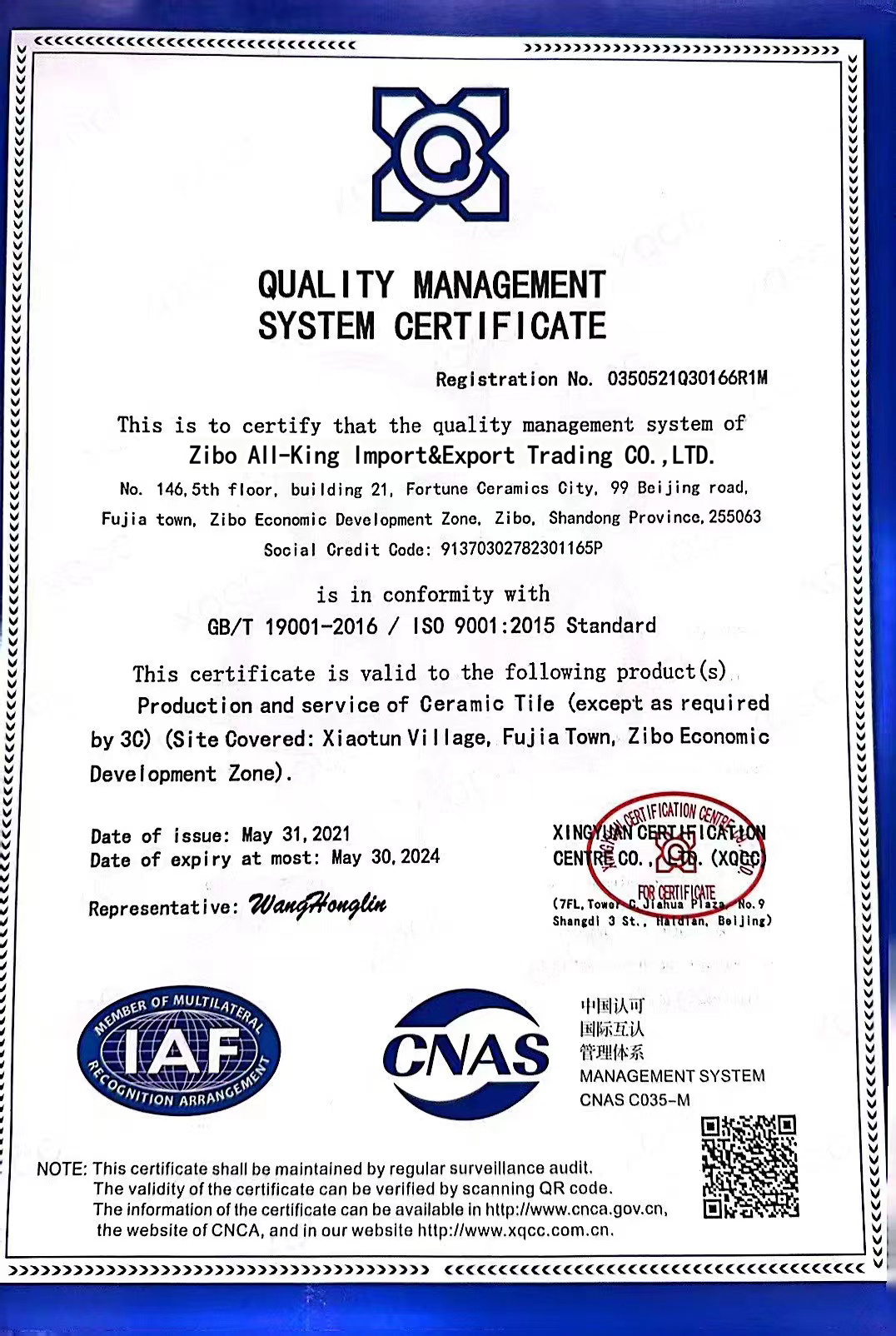
A submittal check normally covers five points:
- Verify each certificate number with the issuing body, not only with the supplier's PDF.
- Confirm the certificate holder's legal name matches the contracting entity: ZIBO ALL-KING CERAMICS CO., LTD.
- Read the scope wording and match it against the actual application on the project.
- Confirm the specific product, model and finish being supplied fall inside that scope.
- Keep the verified copies in the project file, not only in the tender response.
On sustainability documentation, published guidance aligned with LEED v4 (WhyTile, with reference to USGBC) notes that fired ceramic and porcelain tile is inherently exempt from VOC-content requirements because kiln firing destroys organic matter. That is a useful starting point for a LEED submittal, but the applicable credit version and the project's own green-building consultant should confirm how it is documented.
Slip resistance, wet areas and outdoor use
Slip resistance is the figure most often confused with abrasion class. It is measured on a ramp, not on an abrasion machine. Under DIN 51130, the R11 class corresponds to an acceptance angle of 19° to 27° in the oil-wet ramp test, and R12 sits above it. ALL KING CERAMICS lists R10/R11 as standard anti-slip ratings, with R12 achievable through customization.
For specification, the sequence is: establish the wet-area or outdoor requirement from the application, match it to the ramp class, then confirm that the supplied batch carries that class with test data. Do not infer a ramp class from a PEI class, and do not infer either one from the water absorption figure.
One boundary deserves explicit attention on outdoor work. The CE certificate scope covers internal flooring. An outdoor scheme — terraces, pool surrounds, plazas — therefore needs its own evidence trail: the ramp classification of the specified surface, plus confirmation of the exact product and thickness being supplied. Thickness and size customization are available through the company OEM/ODM service, and any custom variant should be evaluated on its own test documentation rather than on the standard range figures.
From evaluation to execution: what the factory check should cover
Moving from evaluation into execution means converting datasheet figures into a delivery commitment. Three control points do that.
Quality control. The company states 100% flatness and sizing auto-check, piece-by-piece visual inspection, and random lab testing per batch. Flatness and sizing are the two variables that most directly affect installation of a 60x120 cm module, because a large rigid tile has little tolerance for dimensional variation.
Capacity. Monthly capacity is stated at 1.2 million m², with annual output of 12–16 million m² from a 60,000 m² factory employing 320 people, including a 25-engineer R&D team. Export accounts for 70% of output, across markets including Australia, New Zealand, Russia, South Korea, Vietnam, Malaysia, the Philippines, the Middle East and Latin America.
Continuity. Batch tracking and reordering support matter on phased projects, where a later phase installed two years after the first must match the approved batch. Damage compensation, online installation guidance and 24/7 technical consultation complete the after-sales scope.
Where the figures are applied: project types
The 15,000 m² commercial project in the company reference case covered hotel lobby, mall flooring, office building facade, high-end apartment bathrooms and an airport departure hall, and was delivered to commercial real estate developers, general contractors and tier-1 building materials wholesalers. Reported outcome: seamless aesthetic presentation, zero-defect durability, easy maintenance and stain-free performance, 100% project acceptance and zero maintenance complaints.
That combination maps onto the ratings predictably. Hotel lobbies and mall concourses depend on the 60x120 cm format for joint reduction and on PEI 4/PEI 5 for surface wear under sustained traffic. Healthcare and education buildings add cleaning frequency and, in wet zones, a ramp-class slip requirement. Commercial kitchens combine wet slip, aggressive cleaning and abrasion on the same floor. Luxury villas and apartment developments depend more on pattern consistency and vein matching, which is where marble-vein customization and batch control carry the quality of the finished installation. Mixed-use developments usually need more than one of those profiles in the same building, which is the practical argument for specifying per zone rather than per project.
Frequently asked questions
Does water absorption below 0.5% replace CE or ISO 9001 certification?
No. The three documents answer different questions. Water absorption below 0.5% is a product test result obtained with the ISO 10545-3 method and reported on the manufacturer datasheet. CE certificate AC 50163816 0001, issued by TUV for the EU market, covers dry-pressed ceramic tiles for internal flooring. ISO 9001:2015 certificate 0350521Q30166R1M, issued by XQCC with a global market scope, covers the production and service of ceramic tile as a quality management system. A project submittal usually needs all three rather than any one in place of the others.
Can ALL KING CERAMICS supply 60x120 cm porcelain at PEI 4/PEI 5 with a customized surface or anti-slip rating?
Yes. ALL KING CERAMICS operates in OEM/ODM mode and lists customization of size and thickness, surface finish, OEM brand logo and packaging, pattern variation including marble vein customization, and anti-slip rating. The standard 60x120 cm body is published at 9.0–10.5 mm thickness, water absorption below 0.5%, PEI 4/PEI 5, Mohs hardness 6–7, modulus of rupture ≥35 MPa and breaking strength ≥1300 N. Anti-slip is offered at R10/R11, with R12 achievable through customization. Each customized variant should be confirmed on its own test documentation rather than on the standard range figures.
What are the order terms for a project trial?
The minimum order is 400 m² per design, and trial orders are acceptable. Delivery terms are EXW, FOB, CNF or CIF. Payment terms are 30% TT with 70% against BL copy, L/C, or cash. Acceptance can be handled through third-party inspection. At 1.44 m² per box for the 60x120 cm format, 400 m² corresponds to about 278 boxes (calculated as 400 ÷ 1.44 and rounded up), which is the unit the loading plan will use.
How can a project team verify the ratings before ordering?
Request the batch test data behind each figure: water absorption by ISO 10545-3, PEI abrasion class, and flexural strength for modulus of rupture and breaking strength. Ask for the certificate copies, verify the numbers with XQCC and TUV rather than with the supplier PDF alone, and check that the scope wording matches the application — the CE certificate covers dry-pressed ceramic tiles for internal flooring. Request samples for finish and vein matching, and use third-party inspection at acceptance. Batch tracking then keeps later phases aligned with the approved batch.
What capacity and lead time apply to a large phased order?
Stated monthly capacity is 1.2 million m², with annual output of 12–16 million m² from a 60,000 m² factory, and stated lead time is 7–10 days. On phased projects, batch tracking and reordering support keep a later phase matched to the batch approved at the start. The full format, finish and packing range is documented in the ALL KING Ceramics catalog, and sample requests for the 60x120 cm range can be raised through the company website.
Conclusion
A porcelain specification is a chain of separate readings: body, surface, strength, scratch resistance, slip and certification. Each is answerable, each has a test method behind it, and none substitutes for another. The ALL KING CERAMICS figures — water absorption below 0.5% under ISO 10545-3, 9.0–10.5 mm thickness at 1.44 m² per box in the 60x120 cm format, PEI 4/PEI 5, Mohs hardness 6–7, ≥35 MPa and ≥1300 N, backed by ISO 9001:2015 certificate 0350521Q30166R1M and CE certificate AC 50163816 0001 — give a project team a complete set of verifiable checkpoints, provided each is read against the application for which it was tested.

Moving from evaluation into execution? The complete format, finish and packing range is set out in the ALL KING Ceramics catalog (PDF). Sample requests for the 60x120 cm range and specification questions can be raised directly with ALL KING CERAMICS.
Have Questions or Need More Details?
Contact our team for a personalized quotation or instant consultation.
Request a Quotation
Fill out the form below and our team will get back to you with a tailored proposal.
WhatsApp Direct Chat
Prefer to chat in real-time? Message us on WhatsApp for instant assistance & quick answers.
- Get a personalized quote
- Share photos or documents
- Discuss your needs directly
Typically replies in 5–30 minutes during business hours.