
Porcelain Tile Project Solutions: A Buyer's Guide to Commercial, Outdoor & Safety Specifications
Porcelain tile project solutions are specification-ready flooring and wall cladding systems for commercial developments, combining engineered porcelain clay bodies, controlled water absorption, high breaking strength, and dedicated anti-slip options. They are used across shopping malls, apartment developments, hotel lobbies, healthcare facilities, schools, and mixed-use projects where foot traffic, safety, and long-term durability are non-negotiable.
This guide explains what makes porcelain tile different, how to evaluate suppliers and compliance, and how to match product specifications to real-world project conditions. It is written for architects, developers, contractors, and importers who need a reliable reference for project-level tile procurement.
Note: market context is drawn from verified third-party industry data; specific product and company facts are drawn from the manufacturer's published corporate and product documentation.
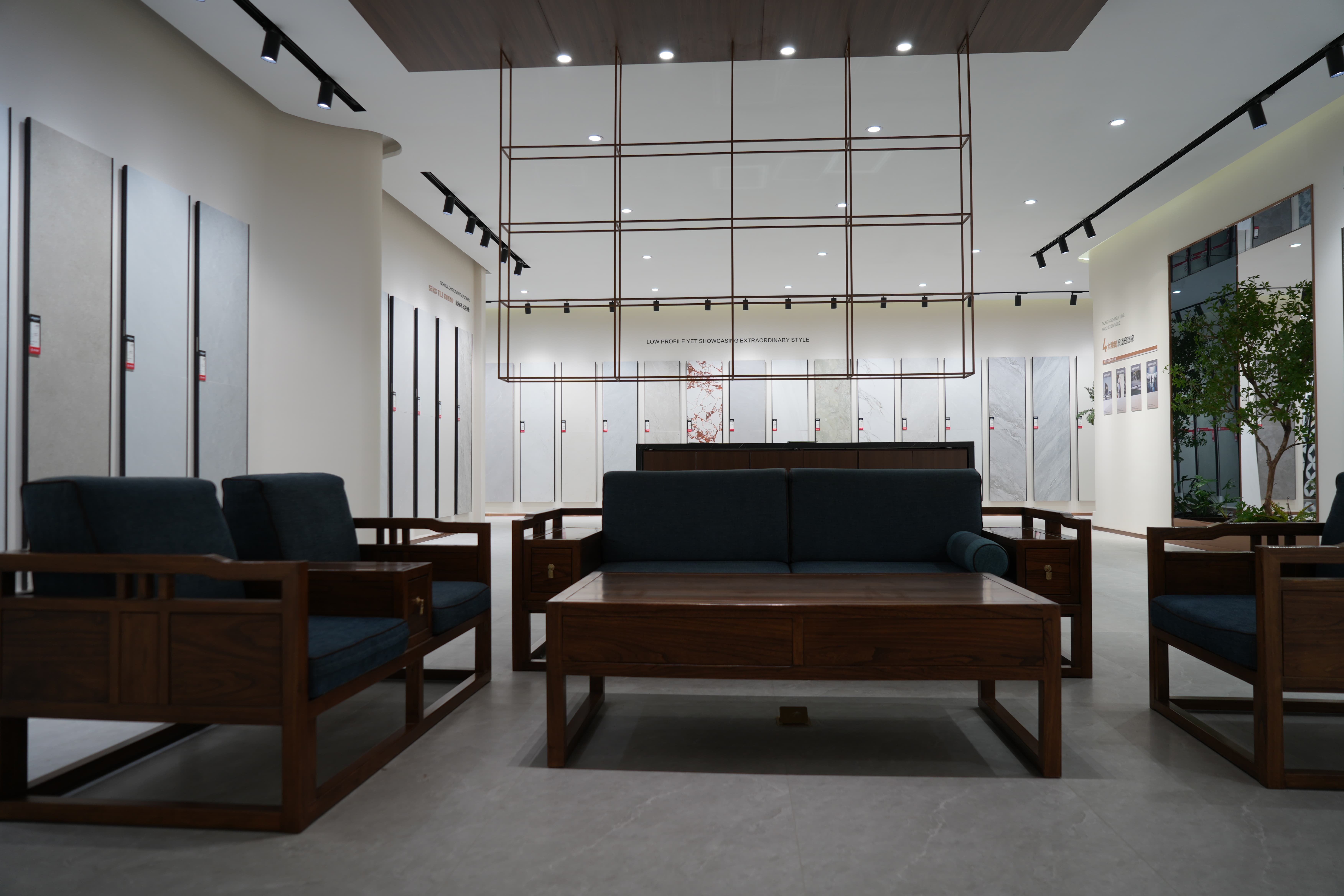
What Counts as a Porcelain Tile Project Solution?
A porcelain tile project solution is more than a material purchase. It is a defined combination of tile format, body properties, surface texture, safety rating, packaging, and supply capacity that can be specified for a building project and delivered at scale.
For procurement purposes, the solution should be describable in measurable terms. For example, a 60x120 cm vitrified porcelain tile made of porcelain clay with water absorption below 0.5% is a specific, verifiable category of product. Because water absorption is directly linked to stain resistance, frost resistance, and mechanical strength, this single parameter is often the starting point for specification.
Why Water Absorption Below 0.5% Matters
Porcelain tiles are classified as vitrified when water absorption remains below 0.5%, tested under ISO 10545-3. This low absorption is the technical reason porcelain outperforms many other ceramic products in wet, high-traffic, and freeze-thaw environments. It also supports use in cladding and flooring where moisture protection and long-term stability are critical.
From a buyer's perspective, water absorption below 0.5% is not just a quality claim; it is a measurable specification that can be verified and compared across suppliers.
The Commercial Tile Market: Context for Project Buyers
According to Grand View Research, the global ceramic and porcelain tiles market was valued at USD 226.4 billion in 2025 and is projected to reach USD 380.6 billion by 2033. Porcelain tiles accounted for 52.4% of the ceramic tiles market in 2025. Commercial end-use represented the largest revenue share in the global ceramic tile market in the same year.
For project buyers, this market context helps explain why commercial-grade porcelain consistency is in demand. Consistent sizing, flatness, calibrated thickness, uniform rectification, and reliable packaging become as important as surface design.
In China, ceramic tile export value reached USD 3.21 billion in 2024, with total export volume of 599 million sqm and an average export price of USD 5.36 per sqm, according to China Customs data reported by CeramBath. This price context matters: direct-from-factory sourcing can be commercially significant for large-scale construction budgets, but only if the supplier can maintain production quality and international delivery standards at scale.
Key Specifications for Commercial Porcelain Tiles
Project specifications should be evaluated against a clear technical baseline. The following parameters are common for the 60x120 cm porcelain tile category and are useful for comparison.
| Parameter | Typical Specification | Why It Matters |
|---|---|---|
| Format | 60x120 cm | Large-format visual continuity; fewer grout joints; suits lobbies, walls, and retail. |
| Thickness | 9.0–10.5 mm | Balance between handling weight, strength, and installation tolerance. |
| Water absorption | < 0.5% (Vitrified) | Low moisture intake; supports frost resistance and stain resistance. |
| Abrasion resistance | PEI 4 / PEI 5 | Suitable for high foot traffic areas such as malls, lobbies, and corridors. |
| Mohs hardness | 6–7 | Surface resistance to scratching and abrasion. |
| Breaking strength | ≥ 1300 N | Mechanical capacity to handle heavy surface loads. |
| Modulus of rupture | ≥ 35 MPa | Resistance to bending and cracking under load. |
| Slip resistance | R10 / R11 / R12 where specified | Safety in wet, foodservice, or industrial zones. |
| Packing | 2 pcs/box (1.44 m²/box) | Predictable logistics planning and safe transport. |
Table source: ALL KING CERAMICS published product specifications for 60x120 cm porcelain tiles (Travertine and Marble Series); anti-slip definitions per DIN 51130 as reported in verified industry references.
Porcelain Tile Applications Across Building Types
Different building types create different demands. The same porcelain tile family can serve many of them, but the selection logic changes by zone.
Shopping Malls and Mixed-Use Developments
High-frequency foot traffic, constant cleaning cycles, and aesthetic expectations make commercial porcelain tiles for shopping malls a core category. Low water absorption and PEI 4/PEI 5 abrasion resistance help flooring maintain appearance in open circulation areas, retail entrances, and food courts.
Hotels and Hospitality
Hotel lobby porcelain flooring must balance first-impression aesthetics with heavy luggage traffic, wet entry conditions, and continuous use. Large-format 60x120 cm and 75x150 cm porcelain slabs reduce grout lines and create a more seamless visual effect.
Apartment Developments and Luxury Villas
Porcelain tiles for apartment developments prioritize repeatability. A supplier that can maintain consistent shade, size, and quality across multiple buildings is essential for phased construction. For luxury villas, large format slabs and natural stone-effect surfaces are frequently specified for their clean, continuous appearance.
Healthcare and Educational Buildings
Hygiene, low-maintenance cleaning, and slip resistance are leading criteria. Mineral-based porcelain tiles fired at high temperatures are inherently low-emitting, which supports their use in environmentally sensitive projects. Anti-slip R10/R11 surfaces are often specified for bathrooms, kitchens, and circulation areas.
Outdoor Paving and Commercial Kitchens
Anti-slip outdoor porcelain pavers and R11/R12 safety flooring address the two extremes of commercial specification. For outdoor 20mm porcelain pavers, the increased thickness is selected for raised pedestal systems, terraces, and plaza areas. For commercial kitchens and food production areas, R11 (19°–27° slope) is the common reference range; for dairy and heavier industrial use, R12 (27°–35°) may be required.
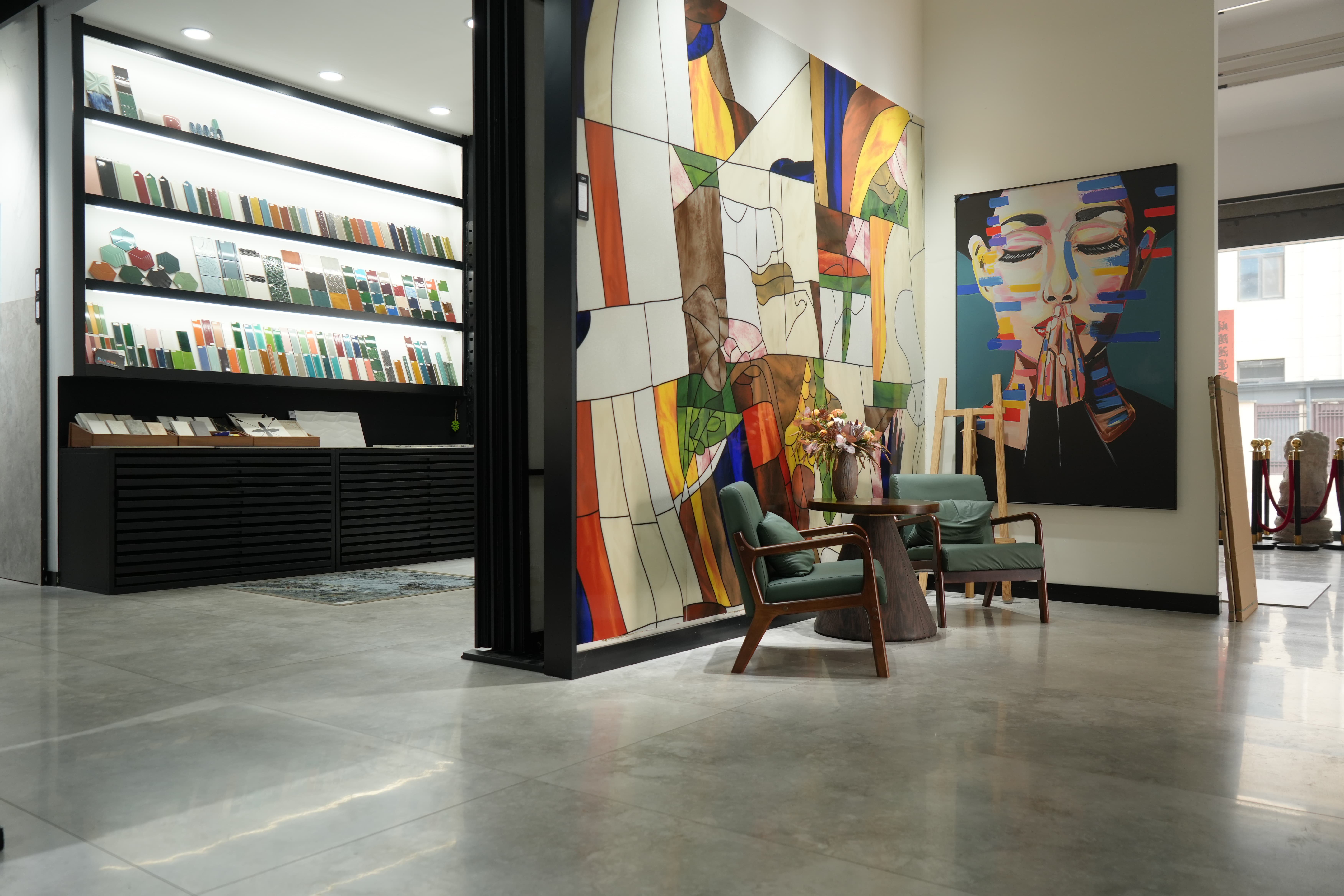
Compliance, Standards, and Project Documentation
For international projects, compliance is not limited to tile quality. Buyers also need clarity on testing standards, emission properties, and project documentation before placing large orders.
ISO 13006 and ISO 10545
ISO 13006 establishes classification requirements for ceramic tiles, while ISO 10545-3 specifically covers water absorption testing. For commercial procurement, these standards provide a shared technical language between buyer and supplier.
DIN 51130 Anti-Slip Ratings
DIN 51130 is a widely recognized standard for slip resistance in commercial spaces. R10, R11, and R12 indicate increasing resistance: R10 is generally suitable for normal commercial flooring, R11 covers kitchens and food production areas, and R12 is used in industrial or dairy environments. These ratings help specifiers choose a product for the actual walking conditions of each zone.
LEED and Low-Emitting Materials
Porcelain tiles are relevant for LEED projects because mineral-based tiles fired at high temperatures (above 1200°C) are exempt from FloorScore VOC requirements under LEED v4.1 IEQc4.3. This makes them a practical choice for eco-friendly porcelain tiles for LEED projects, especially when combined with low-VOC adhesives and grouts.
Supplier Evaluation Framework for Large Projects
When evaluating a large-scale construction tile supplier, use the same rigor you would apply to any engineered building material. The checklist below converts company-level claims into project-level decision criteria.
- Manufacturing stability: Does the supplier own its production lines? How large is the facility, and can they handle phased delivery schedules?
- Consistent product parameters: Are water absorption, thickness, breaking strength, and abrasion resistance documented for each series?
- Export experience: Does the supplier have a track record of exporting to your region, with packaging and logistics processes suited to long-distance freight?
- OEM capabilities: Can the supplier produce custom porcelain tile solutions, including shade adjustment, size programs, and project-specific packaging?
- Quality control evidence: Are there visible testing and QC processes for water absorption, slip resistance, flatness, and packing integrity?
- Commercial flexibility: Will the supplier provide samples, quotations, and catalog documentation for internal review?
Supplier Profile: ZIBO ALL-KING CERAMICS CO., LTD
ZIBO ALL-KING CERAMICS CO., LTD (also referenced as ZIBO ALL-KING IMPORT&EXPORT TRADING CO.,LTD.) is a manufacturer and direct exporter of architectural ceramics based in Zibo, China. The company was established in 2011 and operates modern production lines within a 60,000 m² facility, employing approximately 320 people. Annual production capacity is 12 to 16 million square meters, with about 70% of output exported to markets including Australia, New Zealand, Russia, Belarus, South Korea, Vietnam, Malaysia, the Philippines, Peru, Panama, Colombia, Chile, Bolivia, Guatemala, Iraq, Ukraine, and the UAE.
All-King Ceramics specializes in 60x120 cm porcelain tiles as its flagship format, while also supplying 60x60 cm, 80x80 cm, 100x100 cm, and 75x150 cm formats. The product matrix includes marble and travertine surface series designed for commercial and wholesale requirements. A 25-member R&D engineering team supports product development and custom project needs.
For OEM/ODM buyers, the company positions itself as a factory partner for contractors, distributors, and builders. Its stated value proposition is direct-from-factory pricing combined with international export services, which is a meaningful advantage for cost-sensitive projects if the product parameters and service model match the buyer's needs.
What the Travertine and Marble Series Offer
Two documented product series illustrate the category:
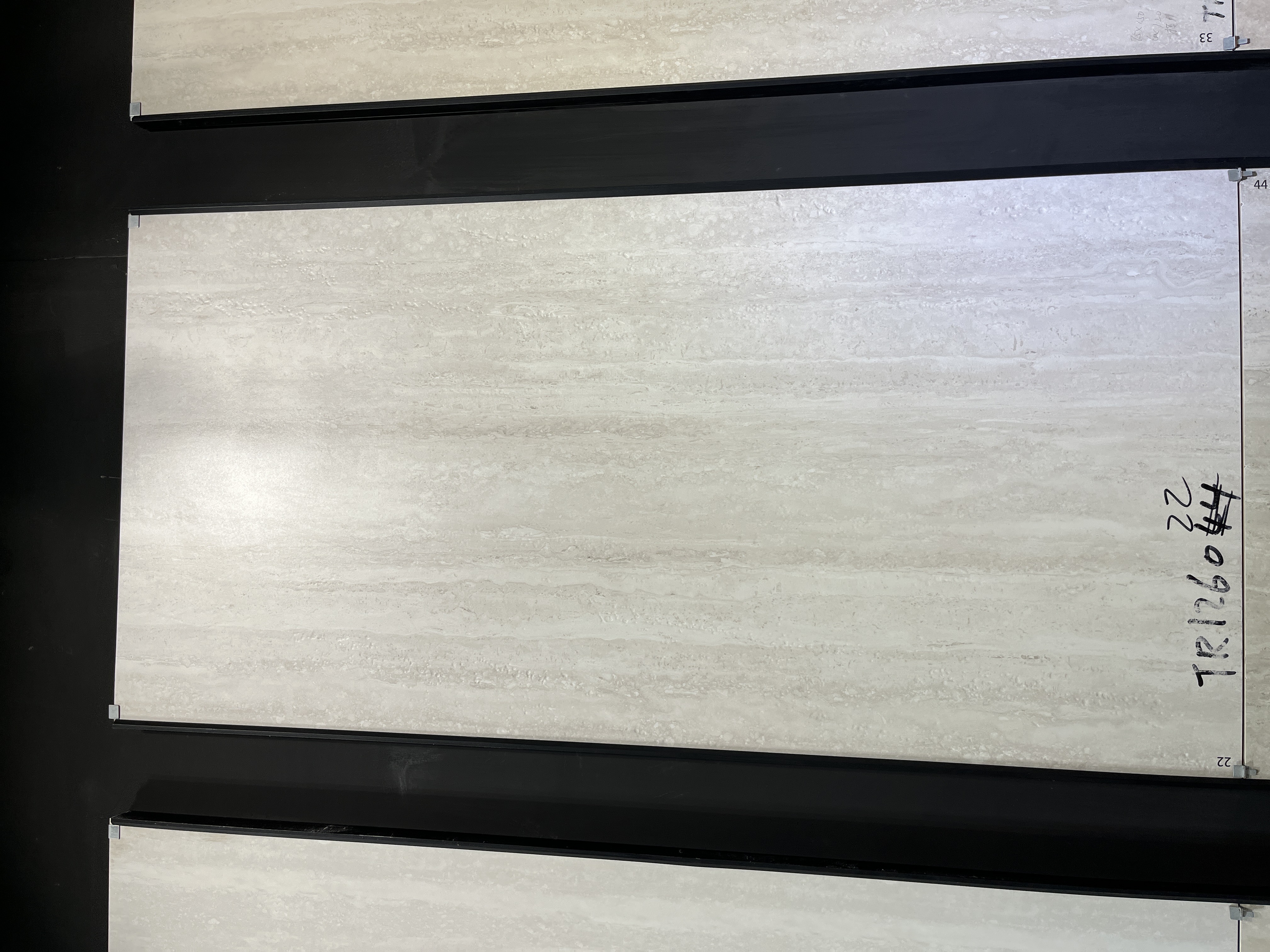
Travertine Series (60x120 cm porcelain tiles): A porcelain clay product with 9.0–10.5 mm thickness, water absorption below 0.5%, PEI 4/PEI 5 abrasion resistance, Mohs hardness 6–7, breaking strength ≥ 1300 N, modulus of rupture ≥ 35 MPa, and packing of 2 pieces per box (1.44 m²/box). The travertine aesthetic is commonly specified for interior feature walls, hotel lobbies, and residential spaces seeking a natural stone effect.
Marble Series (60x120 cm porcelain tiles): The same technical baseline, with a polished marble visual. This series suits commercial flooring and wall cladding where a high-end appearance must coexist with wear resistance and easy maintenance.
Step-by-Step: From Project Requirement to Tile Specification
Step 1: Define Traffic and Safety Conditions
Identify foot traffic intensity, wet or dry conditions, cleaning methods, and whether the area is indoors or outdoors. For wet or foodservice zones, define the required anti-slip rating early.
Step 2: Select Format and Technical Grade
Choose a format that matches the architectural vision and installation cost. For high-traffic commercial zones, use a vitrified porcelain tile with documented abrasion resistance (PEI 4/PEI 5) and breaking strength (≥ 1300 N).
Step 3: Verify Standards and Compliance
Check water absorption testing (ISO 10545-3), product classification (ISO 13006), and safety standards such as DIN 51130. For green building projects, confirm the low-emitting characteristics of mineral-based porcelain and coordinate with the project's LEED documentation plan.
Step 4: Request Samples and Technical Data
Before purchase, request physical samples alongside written parameter sheets. Verify shade, flatness, and rectification in person, since these affect installation quality and final appearance.
Step 5: Assess Supply and Packaging
Large-scale projects depend on consistent supply. Confirm the supplier's production capacity, pallet packaging method, and ability to maintain shade consistency across production batches.
Step 6: Align on Documentation and Logistics
For export orders, align on packing lists, invoices, fumigated pallets where required, and delivery timelines. A supplier with established export experience reduces customs and freight uncertainty.
Use Cases: How Project Teams Apply These Solutions
Use Case 1: Mid-sized Commercial Fit-Out in Australia
In Australia, 60x120 cm porcelain tiles are commonly applied in commercial real estate projects. Operating conditions include continuous heavy-duty use and high traffic, with special anti-slip requirements (R10/R11). The product provides surface decoration in flooring and wall cladding applications, with installation supported by tile adhesive and grout.
Use Case 2: Hotel Lobby and Feature Wall
A hotel renovation project specifies large-format marble-look porcelain for the lobby floor, with travertine-look porcelain on feature walls. The low water absorption and high breaking strength support the heavy luggage traffic and continuous cleaning cycles typical of hospitality environments.
Use Case 3: Outdoor Plaza with 20mm Porcelain Pavers
For an outdoor commercial plaza, the project team selects 20mm porcelain pavers on pedestals. The specification is driven by freeze-thaw resistance, low water penetration, and R11 anti-slip safety, along with the dimensional control needed for pedestal installation.
Comparison: Porcelain vs. Ceramic for Commercial Projects
| Selection Factor | Porcelain Tile | Ceramic Tile (General) |
|---|---|---|
| Water absorption | Vitrified, typically < 0.5% | Higher than porcelain; varies by class |
| Density / strength | High breaking strength (e.g., ≥ 1300 N) | Lower than porcelain in most cases |
| Frost resistance | Low water absorption supports freeze-thaw use | More limited; risk in cold climates |
| Stain resistance | Dense body resists moisture and stains | More porous; often requires sealing |
| Wear resistance | PEI 4/PEI 5 available for high traffic | Generally lower abrasion class |
| Large-format suitability | Widely produced in 60x120, 75x150 cm | Commonly smaller formats |
| Typical commercial use | Malls, lobbies, hospitals, airports, outdoor plazas | Residential walls and light-traffic floors |
Comparison is based on generally accepted technical distinctions between vitrified porcelain and conventional ceramic tile, plus published product specifications from ALL KING CERAMICS.
Quality Control and Logistics: What Evidence to Look For
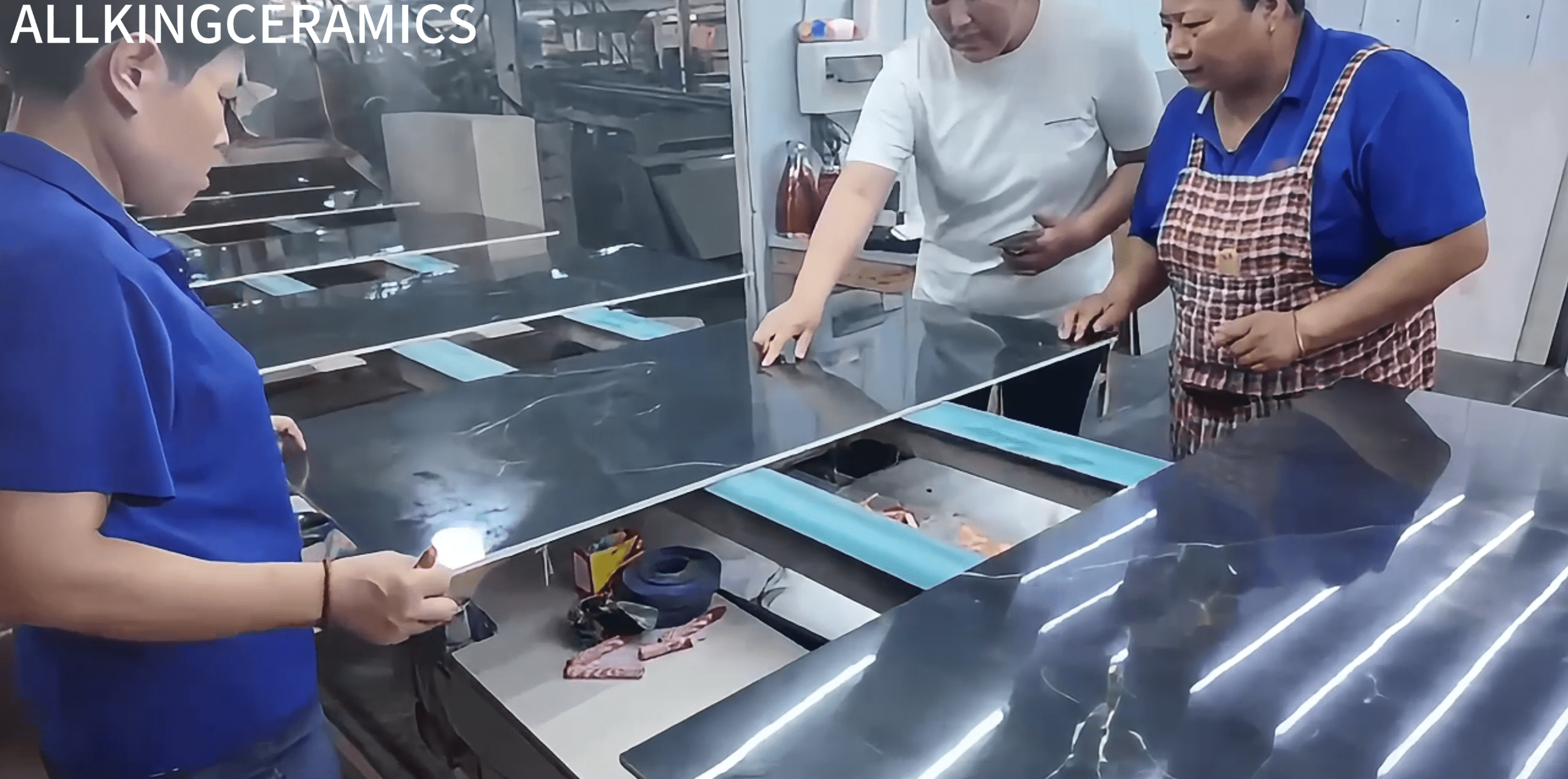
Factories that can demonstrate physical quality control are easier to audit than those that only publish marketing imagery. Useful verification points include water absorption testing, slip resistance testing, flatness measurement, automatic packing lines, warehouse management, and load-secured pallet packaging.
For export deliveries, packaging quality directly affects breakage rates. Pallet packaging must be designed for the transport mode and destination, with protection against moisture and impact. In international trade, fumigated wooden pallets are commonly required for customs compliance.
Cost Considerations Without Guessing
Because Chinese ceramic tile export prices in 2024 averaged USD 5.36 per sqm, according to China Customs, it is reasonable to expect meaningful variation by format, finish, glaze, and order volume. For large projects, the commercial model matters as much as the unit price: direct-from-factory supply, sample approval, consistent quality control, and logistics coordination determine the full landed cost.
Rather than asking which supplier is "cheapest," professional buyers should ask: what is the cost per square meter for the specified parameters, and what is included in the delivery condition?
FAQ
1. Are porcelain tile project solutions compliant with ISO and LEED requirements?
Porcelain tile project solutions can be documented against ISO 10545-3 water absorption testing and ISO 13006 classification. Mineral-based porcelain tiles fired at high temperatures are exempt from FloorScore VOC requirements under LEED v4.1 IEQc4.3, which supports their use in low-emitting building programs. The specific compliance package depends on the product series, the testing documentation provided by the supplier, and the requirements of the project.
2. Can suppliers provide non-slip porcelain tiles for commercial kitchens and wet areas?
Yes. Anti-slip ratings based on DIN 51130 define suitability for commercial spaces: R11 (19°–27° slope) is commonly used for kitchens and food production, while R12 (27°–35°) is specified for dairy or industrial use. For project procurement, buyers should request the anti-slip test report in writing rather than relying on surface appearance alone.
3. What formats should a project team specify for a hotel lobby or large retail space?
Large-format porcelain tiles reduce grout joints and create a more continuous visual field. Common options include 60x120 cm, 75x150 cm, and larger slabs. For high-traffic areas, the selected series should combine large format with PEI 4/PEI 5 abrasion resistance, high breaking strength, and water absorption below 0.5% for easier maintenance.
4. Can a global project exporter provide OEM or custom porcelain tile solutions?
OEM and custom programs depend on the manufacturer's engineering and production flexibility. ZIBO ALL-KING CERAMICS CO., LTD states that it operates with a 25-member R&D engineering team, supports OEM/ODM partnerships for contractors, distributors, and builders, and maintains a format matrix from 60x60 cm up to 75x150 cm. Buyers should request a written capability statement, sample approvals, and customization scope before committing.
5. How should a buyer request samples and move to quotation?
The normal next step is to request the company catalog and physical samples for the specific series under evaluation, then submit project quantities and delivery port for a formal quotation. As a reference, ALL KING CERAMICS provides a publicly downloadable catalog and direct contact channels for sample and quotation requests. A sample-first process helps confirm shade, surface texture, rectification, and packaging before large-scale ordering.
Conclusion: Building a Project-Ready Tile Specification
Porcelain tile project solutions are not one-size-fits-all products. The most reliable specifications combine measurable technical parameters—water absorption below 0.5%, breaking strength, abrasion class, anti-slip rating—with an equally rigorous assessment of the supplier's manufacturing capacity, export experience, QC evidence, and willingness to document compliance.
For organizations planning commercial projects, the practical approach is: define the use zones, confirm the technical parameters, verify the compliance framework, evaluate supply and logistics, and then request samples before quotation.
If you are evaluating a porcelain tile project supplier, download the ALL KING CERAMICS Catalog to review available formats and series, then contact the export team for current specifications and sample availability.
Get project-specific samples and a direct-from-factory quotation.
Email: tyceramic2@all-king.com
Tel / WhatsApp: +86 156-5336-9360
Have Questions or Need More Details?
Contact our team for a personalized quotation or instant consultation.
Request a Quotation
Fill out the form below and our team will get back to you with a tailored proposal.
WhatsApp Direct Chat
Prefer to chat in real-time? Message us on WhatsApp for instant assistance & quick answers.
- Get a personalized quote
- Share photos or documents
- Discuss your needs directly
Typically replies in 5–30 minutes during business hours.