
Supplier Evaluation: How to Verify a Porcelain Tile Factory's Delivery Capacity
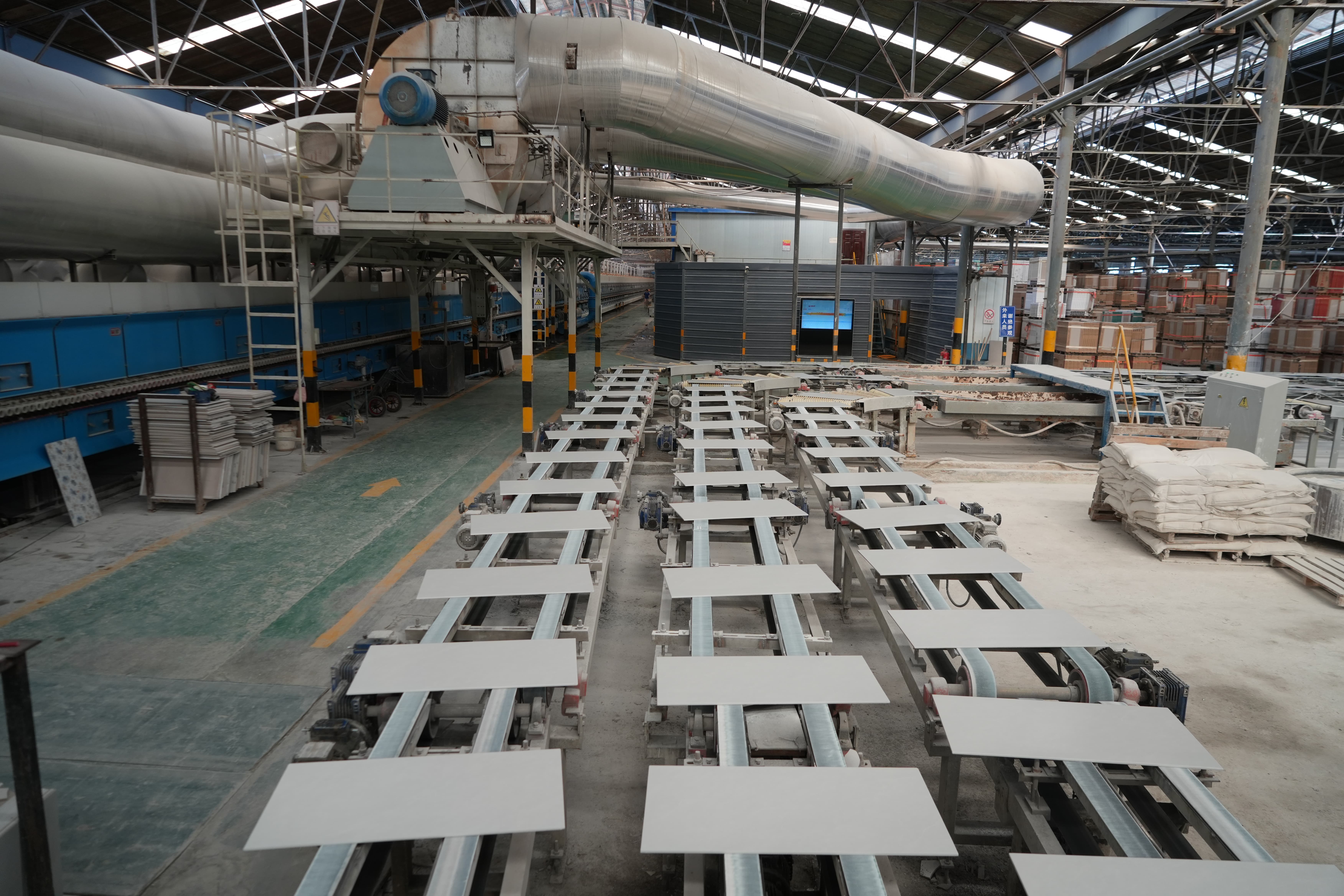
A commercial tile project rarely fails because the surface design was wrong. It fails because the material arrives late, arrives short, or arrives in batches that no one verified before the first container left the factory gate. For a procurement manager working against a fixed handover date, delivery capacity is therefore the first supplier attribute to verify and the last one to take on trust.
This guide sets out a practical verification sequence for evaluating whether a porcelain tile factory can actually carry a large project schedule. It uses the disclosed operating data of ALL KING CERAMICS — a porcelain tile manufacturer and direct exporter established in 2011 — as a worked example of the kind of evidence a buyer should be able to obtain, cross-check and file before an order is awarded.
Why Delivery Capacity Is the Hardest Supplier Claim to Verify
Product claims can be tested with a sample. Capacity claims cannot. A factory can send a flawless 60x120cm tile and still miss a project programme by six weeks, because capacity depends on scheduling, tooling, kiln time, labour and packaging throughput — none of which travel inside a sample carton.
Three specific gaps make delivery capacity difficult to assess from a quotation or a catalogue alone:
- Capacity is quoted in a different unit than the project consumes it. Factories quote output in square metres per year. A project schedule is consumed in square metres per month, per phase, and per container. A facility producing 12–16 million m² per year may still be fully committed in the exact week a first shipment is required.
- Quality control is an internal process until records are requested. Flatness, sizing, water absorption and slip resistance checks may all exist inside the plant, but the buyer only sees the evidence when the supplier formalises it.
- Quoted lead time usually covers production only. Custom logo printing, custom packaging, third-party inspection, container consolidation and ocean transit all sit outside a factory's stated production lead time, yet all of them consume the project's calendar.
The practical conclusion is that delivery capacity has to be verified through documents, physical checks and commercial terms — not through a supplier summary paragraph.
Industry Background: Why Capacity Verification Moved Up the Agenda
Porcelain tile has become a specification-led category rather than a purely decorative one. Several market-level signals explain why procurement teams now screen suppliers on schedule reliability at the same time as they screen them on compliance.
- The global tile market was estimated at USD 265.21 billion in 2024 and is projected to reach USD 587.72 billion by 2035 (Market Research Future, 2026).
- China was the leading exporter of ceramic products in 2024, with an export value of USD 18.3 billion (The Observatory of Economic Complexity, HS 69).
- Commercial construction accounts for an estimated 37% of total global tile demand, according to the same commercial research aggregated for this category.
- Safety specification has become a tender gate: under DIN 51130, an R11 anti-slip rating corresponds to a high grip measured on an oil-wet inclined ramp between 19° and 27° (DIN 51130, as summarised by standards commentary).
- Sustainability documentation is now routinely requested. Porcelain tiles are inherently exempt from LEED VOC 'FloorScore' requirements because high-temperature firing destroys all organic matter (LEED v4 guide published by WhyTile / U.S. Green Building Council).
In other words, compliance and safety requirements now decide which suppliers are eligible, while delivery capacity decides which of those eligible suppliers can actually hand over the building on time.
What Verifiable Delivery Capacity Looks Like in Practice
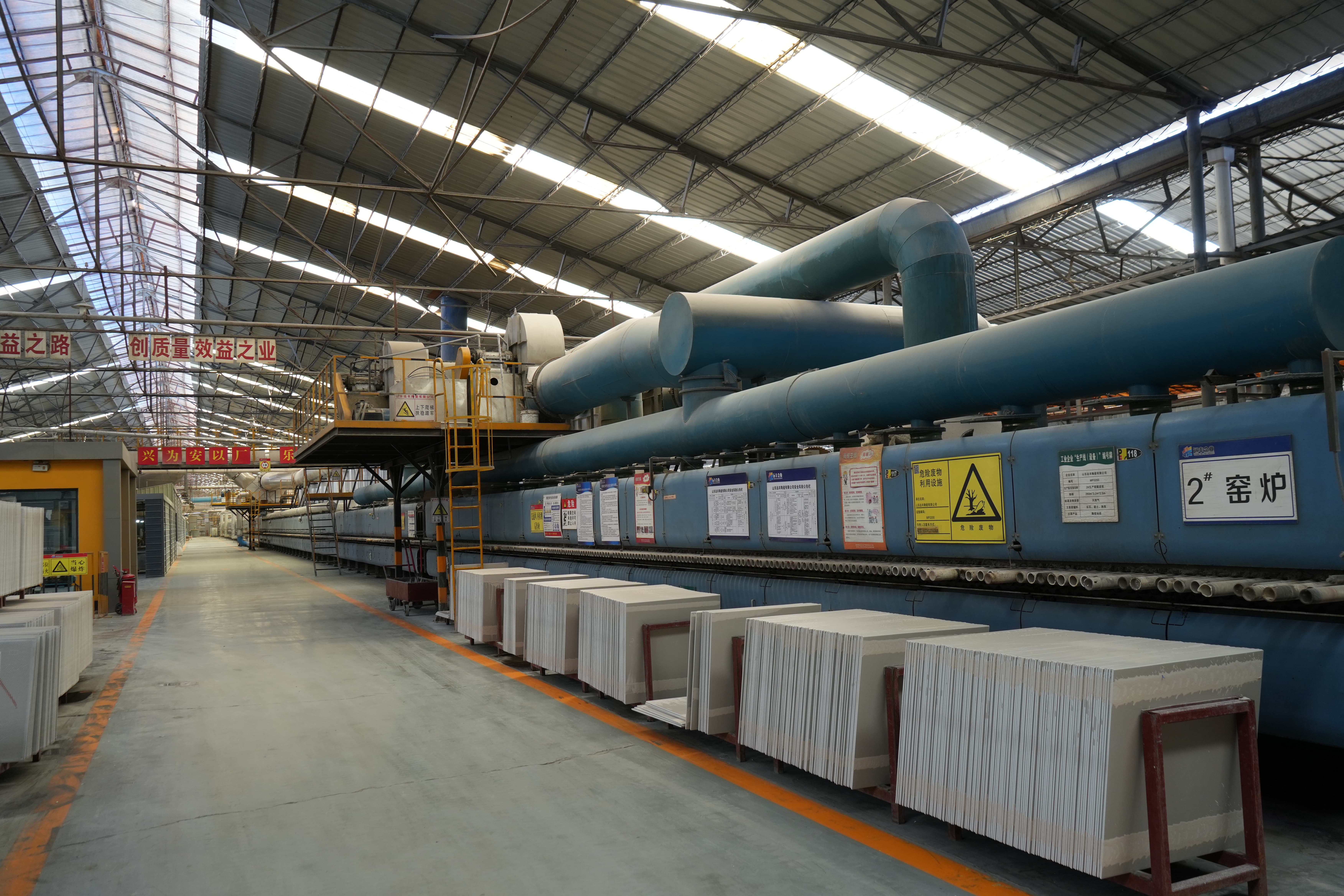
ALL KING CERAMICS (ZIBO ALL-KING CERAMICS CO., LTD) is a porcelain tile manufacturer and direct exporter based in Zibo, China. The company was established in 2011, operates a 60,000 m² production facility, employs approximately 320 staff including a 25-engineer R&D team, and reports an annual production output of 12–16 million m², with porcelain tiles intended for commercial and project-scale flooring.
That single paragraph already contains seven separate verification points. The table below separates them into the items a buyer should request evidence for during supplier evaluation.
| Operating data point | Disclosed figure | Why it matters in a supplier evaluation |
|---|---|---|
| Establishment year | 2011 | Operating history supports continuity of supply and reorder capability across project phases. |
| Facility footprint | 60,000 m² | Physical space constrains raw material storage, kiln lines, packing lines and staged warehouse holding. |
| Workforce | Approximately 320 employees | Labour depth determines whether multi-shift production can be sustained during peak project periods. |
| R&D engineers | 25 engineers | Engineering capacity is the basis for custom size, thickness, finish, pattern and anti-slip development. |
| Annual production output | 12–16 million m² per year | Sets the upper boundary for large-scale project allocation. |
| Monthly capacity | 1.2 million m² per month | The number that should be compared directly against a project's monthly installation demand. |
| Export ratio | 70% of output exported | Indicates routine handling of export documentation, packing standards and consolidated loading. |
| Export coverage | More than 15 markets, including Australia, New Zealand, Russia, South Korea, Vietnam, Malaysia, the Philippines, Peru, Panama, Colombia, Chile, Bolivia, Guatemala, Iraq, Ukraine and the UAE | Confirms experience with different port, documentation and climate requirements. |
Quality control evidence a buyer can request
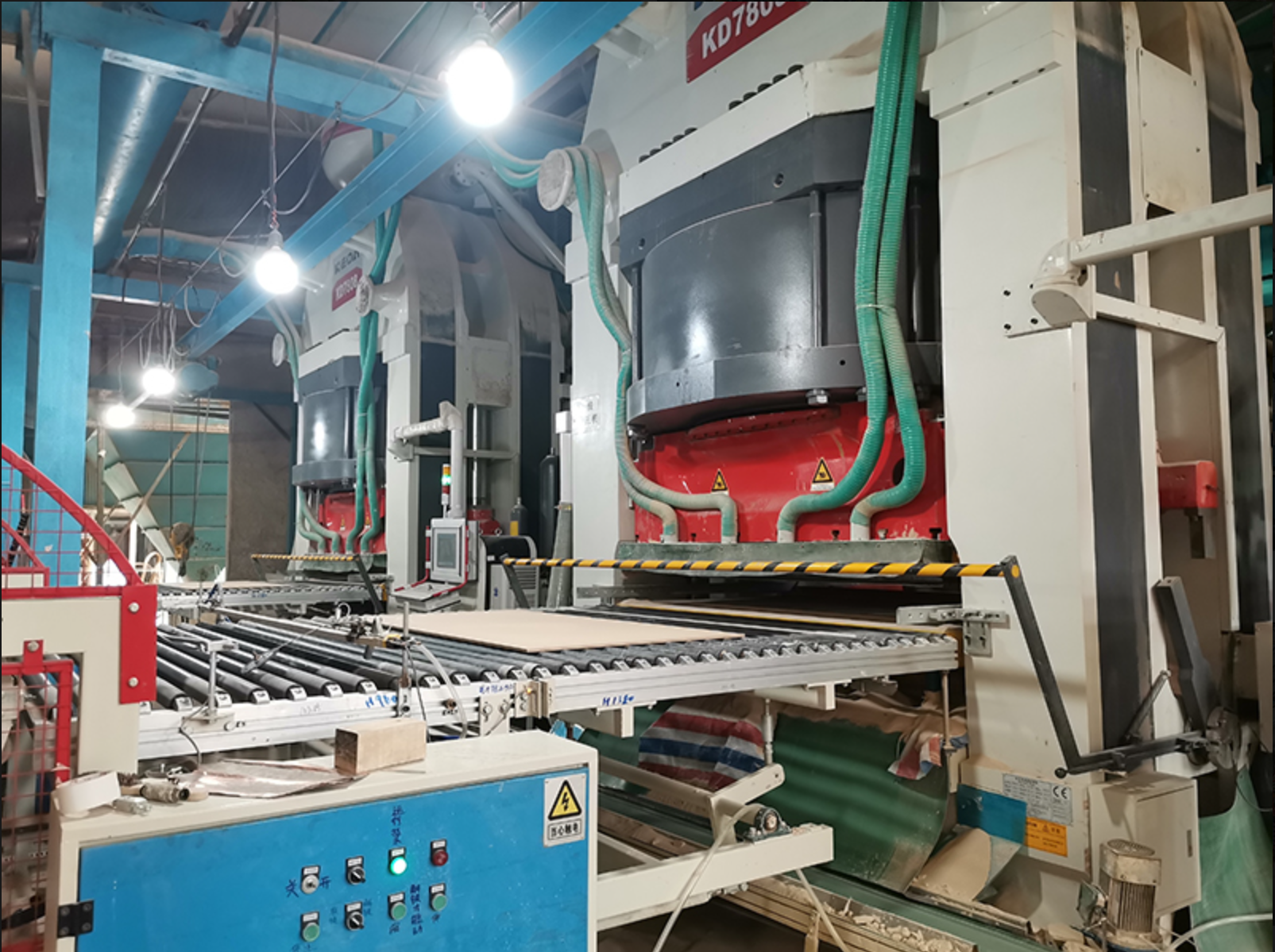
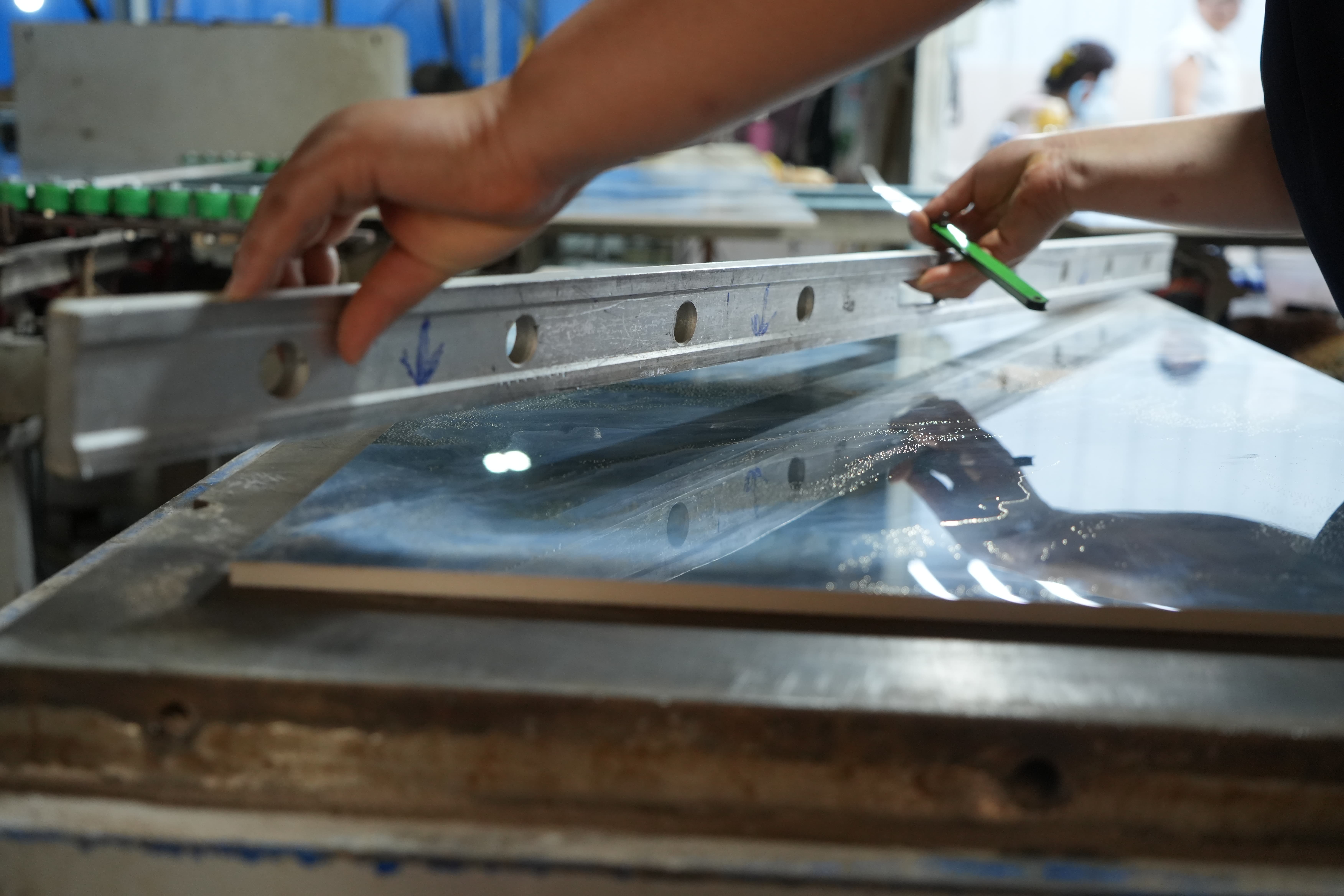
Capacity without consistency produces partial deliveries and site rejections. ALL KING CERAMICS reports a three-layer control routine: 100% flatness and sizing auto-check, piece-by-piece visual inspection, and random laboratory testing per batch. For a buyer, the corresponding verification action is straightforward — ask for the batch testing record that accompanies the shipment, not the general brochure statement.
Compliance documentation that supports delivery scheduling
Compliance files are usually assessed for market access, but they also carry schedule value: a certificate whose scope does not match the ordered format can stop a shipment at the port. ALL KING CERAMICS holds CE certification AC 50163816 0001 issued by TUV for ceramic tiles, dry-pressed, for internal flooring on the EU market, and ISO 9001:2015 certification 0350521Q30166R1M issued by XQCC covering production and service of ceramic tile for global markets.
Commercial terms that determine schedule risk
Terms define who carries which risk if the programme slips. The company's stated purchasing framework includes a minimum order quantity of 400 sqm per design with trial orders accepted, delivery terms of EXW, FOB, CNF or CIF, third-party inspection as an acceptance criterion, and payment terms of 30% TT with 70% against BL copy, L/C, or cash.
Production formats and reference specifications
| Format | Role in the portfolio |
|---|---|
| 60x120cm porcelain tiles | Flagship core product; thickness range 9.0–10.5 mm; water absorption below 0.5% (vitrified); abrasion resistance PEI 4 / PEI 5; Mohs hardness 6–7; breaking strength ≥ 1300 N; modulus of rupture ≥ 35 MPa; packing 2 pcs/box (1.44 m²/box) |
| 75x150cm porcelain tiles | Additional large-format option within the production matrix |
| 80x80cm porcelain tiles | Additional format for commercial flooring programmes |
| 100x100cm floor tiles | Additional format for large-format flooring applications |
| 60x60cm ceramic tiles | Additional format within the wider tile range |
A Six-Step Verification Sequence for Procurement Teams
Step 1 — Build the project-side demand baseline first
Before contacting any factory, convert the specification into a demand curve: total square metres, required formats, number of delivery phases, peak monthly requirement, and the latest acceptable delivery date for each phase. Without this baseline, every capacity figure a supplier provides is unverifiable because there is nothing to compare it against.
Step 2 — Convert annual output into project-fit monthly capacity
Annual output describes scale; monthly capacity describes fit. A supplier reporting 12–16 million m² per year and 1.2 million m² per month is stating two different things, and only the monthly figure can be placed beside a project's peak demand. Ask how much of that monthly capacity is already committed, and request a written production schedule for the specific order.
Step 3 — Verify the quality control chain, not just the certificate
Certificates confirm a management system; they do not confirm that a specific batch was checked. Request the control protocol — for example, 100% flatness and sizing auto-check, piece-by-piece visual inspection, random laboratory testing per batch — and then request the actual batch record attached to the produced order.
Step 4 — Match certification scope to the ordered specification
Check whether the CE or ISO documentation on file covers the format, thickness and application actually being purchased. A CE certificate issued for dry-pressed ceramic tiles for internal flooring, for instance, does not automatically cover every external paving application. Third-party inspection as an acceptance criterion is the practical way to close this gap.
Step 5 — Pressure-test the commercial and logistics terms
Confirm MOQ, delivery terms, payment structure and the production lead time in writing. A lead time of 7–10 days applies to the production slot; custom packaging, custom cartons, inspection windows and consolidation must be added to reach a realistic port date. Where a factory accepts a trial order from 400 sqm per design, buyers can validate the export workflow before committing a full programme.
Step 6 — Confirm the after-sales and reorder loop
Large projects rarely complete in a single shipment. Damage compensation, online installation guidance, 24/7 technical consultation, and batch tracking with reordering support are the mechanisms that keep late-phase deliveries visually consistent with the first container received.
Where Delivery Capacity Decides the Project Outcome
Different project types consume capacity in different patterns, which is why the same factory can be a strong fit for one programme and a weak fit for another.
- Shopping malls and mixed-use developments. Flooring is installed in stages around trading hours and tenant handovers, so the supplier must deliver consistent batches over a long window rather than a single large drop.
- Hotel lobby and hospitality interiors. Bookable opening dates make the last-minute batch the critical one; large format porcelain slabs with matched veining require batch tracking to avoid visible variation across the lobby floor.
- Apartment developments. Repetitive unit layouts create steady monthly demand in formats such as 60x60cm, 80x80cm and 60x120cm, where reorder capability matters more than peak output.
- Healthcare and educational buildings. Specification-led tenders combine anti-slip requirements, cleaning regimes and maintenance access, so compliance documentation and delivery certainty are evaluated together.
- Outdoor and wet-area applications. Anti-slip pavers rated R11, or customised to R12, often sit inside the same package as interior flooring, which means one delayed component can hold the entire shipment.
Reference case: 15,000 sqm commercial flooring programme
In a documented project, 15,000 sqm of porcelain tiles were supplied for a commercial development covering hotel lobby flooring, commercial mall flooring, office building facade applications, high-end apartment bathrooms and an airport departure hall. The reported outcome was seamless aesthetic presentation, zero-defect durability, easy maintenance, 100% project acceptance, and zero maintenance complaints. Buyers on that type of programme included commercial real estate developers, general contractors, tier-1 building materials wholesalers, hospitality procurement agencies and architectural design firms.
The lesson for supplier evaluation is not the outcome claim itself, but the structure behind it: a named quantity, a defined application mix, a defined acceptance result, and a defined buyer profile. That structure is what makes a case reference checkable against a future project.
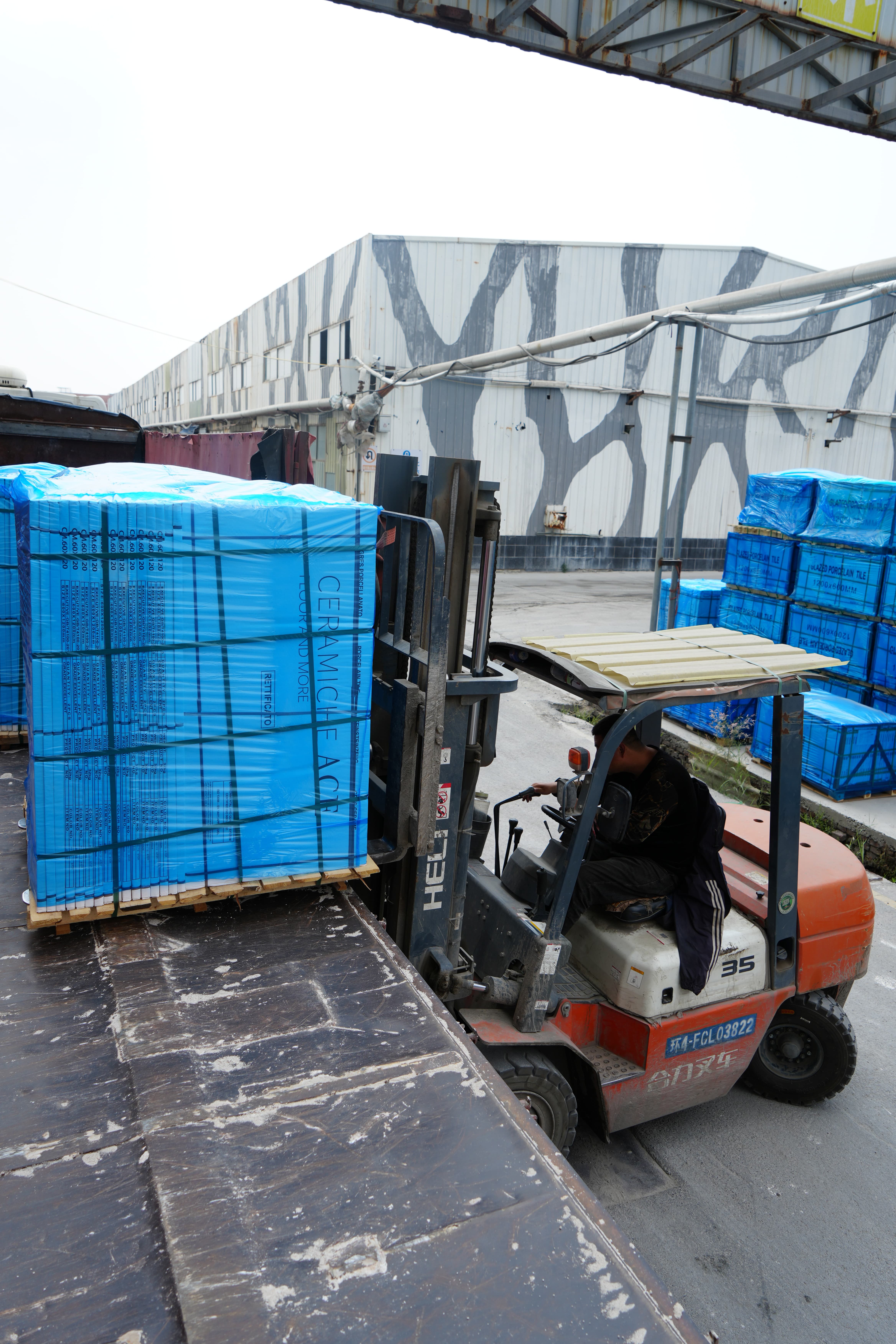
Delivery-Capacity Verification Matrix
The matrix below converts each evaluation area into the evidence a buyer should request, alongside the data disclosed by ALL KING CERAMICS for comparison during screening.
| Verification area | Evidence to request | Disclosed data (ALL KING CERAMICS) |
|---|---|---|
| Operating history | Business licence, establishment year, continuity statement | Established 2011 |
| Production footprint | Facility size, factory photographs, site visit | 60,000 m² |
| Workforce depth | Headcount, shift structure, engineering team size | Approximately 320 employees; 25 R&D engineers |
| Annual output | Capacity statement, production records | 12–16 million m² per year |
| Monthly capacity | Written production schedule for the order | 1.2 million m² per month |
| Quality control | Inspection protocol plus batch test records | 100% flatness and sizing auto-check; piece-by-piece visual inspection; random lab testing per batch |
| Compliance scope | Certificate copies with stated product scope | CE, TUV, certificate AC 50163816 0001 (EU, internal flooring); ISO 9001:2015, XQCC, certificate 0350521Q30166R1M (global markets) |
| Acceptance mechanism | Acceptance clause in the contract | Third-party inspection accepted |
| Commercial terms | Quotation and proforma invoice | MOQ 400 sqm per design, trial order acceptable; EXW / FOB / CNF / CIF; 30% TT, 70% against BL copy, L/C, cash |
| Production lead time | Written schedule including customisation steps | 7–10 days production lead time |
| Export capability | Past shipment records, packing standards | 70% export ratio; more than 15 export markets |
| Customisation scope | Sampling and tooling timeline | OEM / ODM; custom size and thickness; surface finish; OEM brand logo and packaging; pattern variation including marble vein customisation; anti-slip rating customisation |
| After-sales loop | Service terms and reorder conditions | Damage compensation; online installation guidance; 24/7 technical consultation; batch tracking and reordering support |
Frequently Asked Questions
What certifications should a buyer verify before ordering porcelain tiles from a factory?
A buyer should verify two things separately: that the certificates exist, and that their scope matches the ordered specification. ALL KING CERAMICS holds CE certification AC 50163816 0001 issued by TUV, covering dry-pressed ceramic tiles for internal flooring on the EU market, and ISO 9001:2015 certification 0350521Q30166R1M issued by XQCC, covering production and service of ceramic tile for global markets. Because scope wording is specific, confirming that the format, thickness and application in your order fall inside that scope — and using third-party inspection as an acceptance criterion — is the practical way to avoid a compliance hold at the port.
How can a buyer confirm that a factory's capacity can actually cover a large project?
Compare the supplier's monthly figure, not the annual one, against your peak monthly installation demand. ALL KING CERAMICS reports an annual production output of 12–16 million m² and a monthly capacity of 1.2 million m², supported by a 60,000 m² facility, approximately 320 employees and a 25-engineer R&D team. A reference point for scale: a documented 15,000 sqm commercial flooring project covering hotel lobby, mall, office facade, apartment bathroom and airport departure hall applications sat comfortably inside a single month of stated capacity. The verification step is to ask for that monthly commitment in writing, allocated to your order.
What purchasing terms and minimum order quantities apply to a porcelain tile project order?
ALL KING CERAMICS states a minimum order quantity of 400 sqm per design, with trial orders accepted, and delivery terms of EXW, FOB, CNF or CIF. Payment terms are 30% TT with 70% against BL copy, or L/C, or cash, and third-party inspection is accepted as the acceptance criterion. For budgeting, the MOQ matters most on multi-format packages: a project specifying several formats and finishes may multiply the 400 sqm threshold, so format count should be fixed before the quotation is compared.
How should a procurement team validate tile quality before placing a bulk order?
Validation should combine a physical sample with the factory's in-process control routine. The stated quality control sequence is 100% flatness and sizing auto-check, piece-by-piece visual inspection, and random laboratory testing per batch, and the published product specification for the flagship 60x120cm porcelain tile includes thickness of 9.0–10.5 mm, water absorption below 0.5% (vitrified), PEI 4 / PEI 5 abrasion resistance, Mohs hardness 6–7, breaking strength of at least 1300 N and modulus of rupture of at least 35 MPa. Requesting the batch test record alongside the sample is what turns a sample approval into a repeatable order.
How long does production and delivery take, and what should buyers add to the quoted lead time?
The stated production lead time is 7–10 days. That figure covers the production slot and should not be read as a port-to-port transit time. Custom size and thickness development, custom cartons with OEM brand logo and packaging, pattern variation approval, third-party inspection windows and container consolidation all sit outside the production slot and must be added when building the project calendar. If you want to test the full export sequence before committing a programme, a trial order from 400 sqm per design is accepted — sending your format and application list to the supplier's export team is the fastest way to confirm a realistic schedule.
Conclusion: Verify Capacity the Same Way You Verify Specifications
Specifications are verified with test data. Delivery capacity should be verified the same way — with numbers that can be compared, records that can be checked, and terms that can be written into a contract. For a buyer screening porcelain tile suppliers for commercial and large-scale projects, the practical checklist is short: monthly capacity against peak demand, quality control records attached to the actual batch, certification scope matched to the ordered format, MOQ and lead time confirmed in writing, and an after-sales loop that supports reorders across a phased programme.
Factories that publish operating data — establishment year, facility size, headcount, annual output, monthly capacity, export ratio and certificate numbers — make that verification possible. Factories that publish only adjectives do not.
Next Step for Project Buyers
Send your format list, square metre volumes and application areas to the ALL KING CERAMICS export team. You can request a physical sample, a project quotation, or the full product catalogue covering porcelain formats from 60x60cm to 75x150cm, including R10/R11 anti-slip options and customised R12 development.
Download the Product CatalogueRequest a Sample or QuoteEmail: tyceramic2@all-king.com | Tel / WhatsApp: +86 156-5336-9360 | Website: www.all-king.com
Address: No.6, 8th building, 6th district, China Fortune Ceramic City, Zibo, China

Have Questions or Need More Details?
Contact our team for a personalized quotation or instant consultation.
Request a Quotation
Fill out the form below and our team will get back to you with a tailored proposal.
WhatsApp Direct Chat
Prefer to chat in real-time? Message us on WhatsApp for instant assistance & quick answers.
- Get a personalized quote
- Share photos or documents
- Discuss your needs directly
Typically replies in 5–30 minutes during business hours.