
What Are Vitrified Porcelain Tiles? A Guide to Density, Strength, and Commercial Use
TECHNICAL EXPLAINER · COMMERCIAL SPECIFICATION
Vitrified porcelain tiles are ceramic tiles with a water absorption rate of 0.5% or less — a threshold defined by ISO 13006 and ANSI A137.1. That single number is the practical dividing line between a tile that can carry a shopping mall concourse or an airport departure hall for years, and one that stains, chips or debonds under the same traffic.
For buyers in the research and evaluation stage, the difficulty is rarely a shortage of product options. It is that "porcelain", "vitrified", "full body" and "ceramic" are used loosely across catalogues, while the figures that actually predict site performance — water absorption, Mohs hardness, breaking strength, abrasion class, thickness — are printed without explanation. This guide explains what each figure does, where it maps to commercial applications, and where it stops being useful.
The Problem: "Porcelain" on a Datasheet Is Not a Specification
Two tiles can both be sold as porcelain and behave differently in service. One may sit inside the ISO 13006 porcelain class; another may carry a higher absorption rate and still be described as porcelain in everyday trade language. Without the measured value on the datasheet, the buyer is comparing words rather than materials.
The second problem is application mismatch. A 9 mm tile with PEI 4 abrasion resistance is a reasonable choice for a hotel lobby and a poor choice for a logistics warehouse where pallet trucks turn. The same tile laid on a frost-exposed external terrace raises a different question again — freeze–thaw resistance rather than surface wear. In commercial projects, failures are more often specification failures than manufacturing failures.
The third problem is supply-side verification. Density and strength values only matter if they repeat batch after batch, and if the supplier can document them alongside flatness, sizing and packaging data. That is why this guide treats technical parameters and supply checks as one subject rather than two.
What Are Vitrified Porcelain Tiles?
Vitrification is the stage in firing where the clay body fuses and open porosity closes. A vitrified porcelain tile is therefore a tile whose body has been fired to the point where it absorbs almost no water — in practice 0.5% or less, which is the porcelain definition used in ISO 13006 and ANSI A137.1.
Three consequences follow directly from that density, and they explain most of the commercial value:
- Stain and moisture resistance. With very little open porosity, there is minimal pathway for water, oils or cleaning chemicals to enter the body. Soiling stays at the surface, where it can be removed.
- Strength per millimetre. A dense body distributes load more evenly, which is why vitrified porcelain can be produced at 9.0–10.5 mm thickness and still reach a breaking strength of ≥1300 N.
- Stable behaviour under moisture and thermal cycling. Low absorption reduces the volume change that drives freeze–thaw damage and thermal shock cracking in exposed surfaces.
ALL KING CERAMICS (ZIBO ALL-KING CERAMICS CO., LTD) is a porcelain tile manufacturer and direct exporter based in Zibo, Shandong, China, founded in 2011, producing a format matrix built around 60x120cm porcelain tiles, with 60x60cm, 80x80cm, 100x100cm and 75x150cm formats also in production. Its vitrified 60x120cm products — the Marble Series and Travertine — are specified with water absorption below 0.5%.
Why Density Decides Commercial Performance
Water absorption below 0.5%: what the standard actually defines
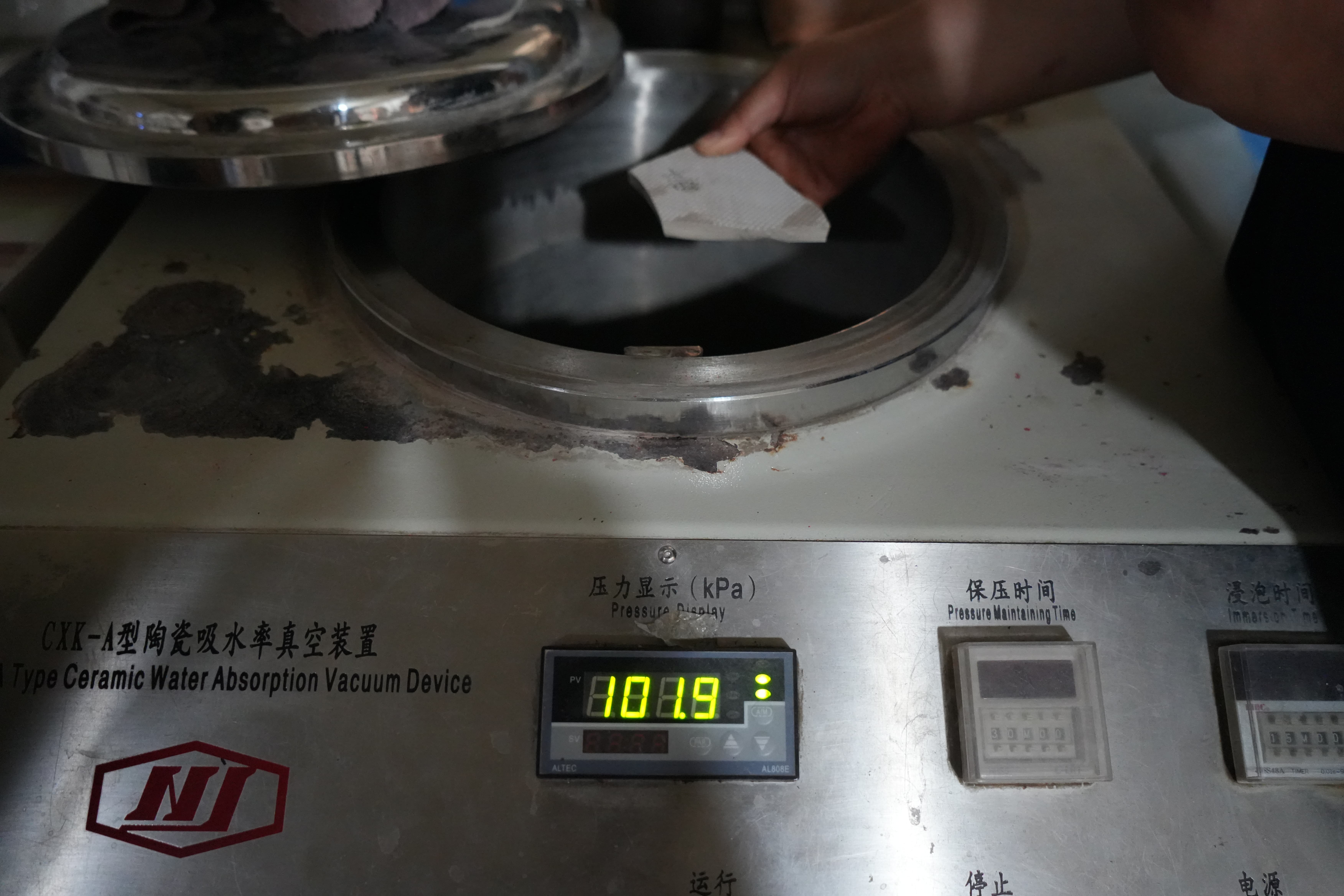
ISO 13006 and ANSI A137.1 place porcelain at 0.5% water absorption or lower. The figure is not a marketing grade; it is a measured material property obtained by drying, weighing, saturating and re-weighing a tile sample. When a supplier states "< 0.5% (Vitrified)", the buyer should be able to match that statement to a batch test report.
Why the decimal matters on site: absorption drives dimensional movement. A body that takes in water expands; a body that dries out contracts. On a large floor plane — a mall concourse of several thousand square metres, for example — repeated moisture cycles work on the joints and on the tile edges. Low absorption removes most of that movement, which is one reason a dense porcelain floor holds flatness and joint alignment over long service periods.
What high density changes in a project
- Cleaning regimes become simpler: less penetration means less aggressive chemistry is required, and grout lines stay cleaner for longer.
- Edge chipping during handling and installation falls, because a dense body resists point loads better than a porous one.
- Large formats become practical: 60x120cm and 75x150cm tiles need a body stiff enough not to deflect or bow across its own span during laying.
Industry Background: Why Dense Tile Specification Is Rising
Commercial flooring demand tracks construction activity, and construction activity in several of ALL KING CERAMICS' export regions is expanding. Kazakhstan's construction output grew 15.9% year on year in 2025, according to the Bureau of National Statistics of Kazakhstan — a growth rate that puts pressure on project schedules and on the reliability of material supply.
The category itself is large. Custom Market Insights projects the global ceramic and porcelain tiles market at USD 449.86 billion in 2025, while Mordor Intelligence estimates the Russian ceramic tiles market at USD 2.90 billion in 2025. Inside those totals, the commercial segment — malls, offices, hotels, transit and healthcare — is where performance specifications are written and enforced, because the cost of premature replacement is measured in closures and disruption rather than in tile price per square metre.
Supply geography matters as much as product properties. Rail freight from China to Central Asia (Kazakhstan, Uzbekistan) typically takes 10 to 14 days for FCL shipments, which allows a project programme to absorb a re-order that sea freight could not. ALL KING CERAMICS exports to markets including Australia, New Zealand, Russia, Belarus, the Central African Republic, South Korea, Vietnam, Malaysia, the Philippines, Peru, Panama, Colombia, Chile, Bolivia, Guatemala, Palestine, Iraq, Ukraine and the UAE, with exports representing 70% of output.
The Numbers That Decide a Specification
The table below lists the parameters that should appear on any vitrified porcelain datasheet, the published values for ALL KING CERAMICS 60x120cm vitrified porcelain tiles, and what each value means at the point of installation.
| Parameter | Published value (60x120cm vitrified porcelain) | What it means in a commercial project |
|---|---|---|
| Water absorption | < 0.5% (Vitrified), porcelain class per ISO 13006 | Minimal moisture uptake; limits staining and dimensional movement across large floor planes |
| Thickness | 9.0–10.5 mm | Standard installation systems and adhesives remain usable; adequate stiffness for large formats |
| Mohs hardness | 6–7 | Resists scratching from footwear and routine abrasives in entrance and retail zones |
| Breaking strength | ≥ 1300 N | Load capacity of a single tile; supports spanning minor substrate irregularities |
| Modulus of rupture | ≥ 35 MPa | Bending strength normalised across the section; indicator of crack resistance under flexure |
| Abrasion resistance | PEI 4 / PEI 5 | Zone-by-zone selection: PEI 4 for offices and guest areas, PEI 5 for transit and heavy circulation |
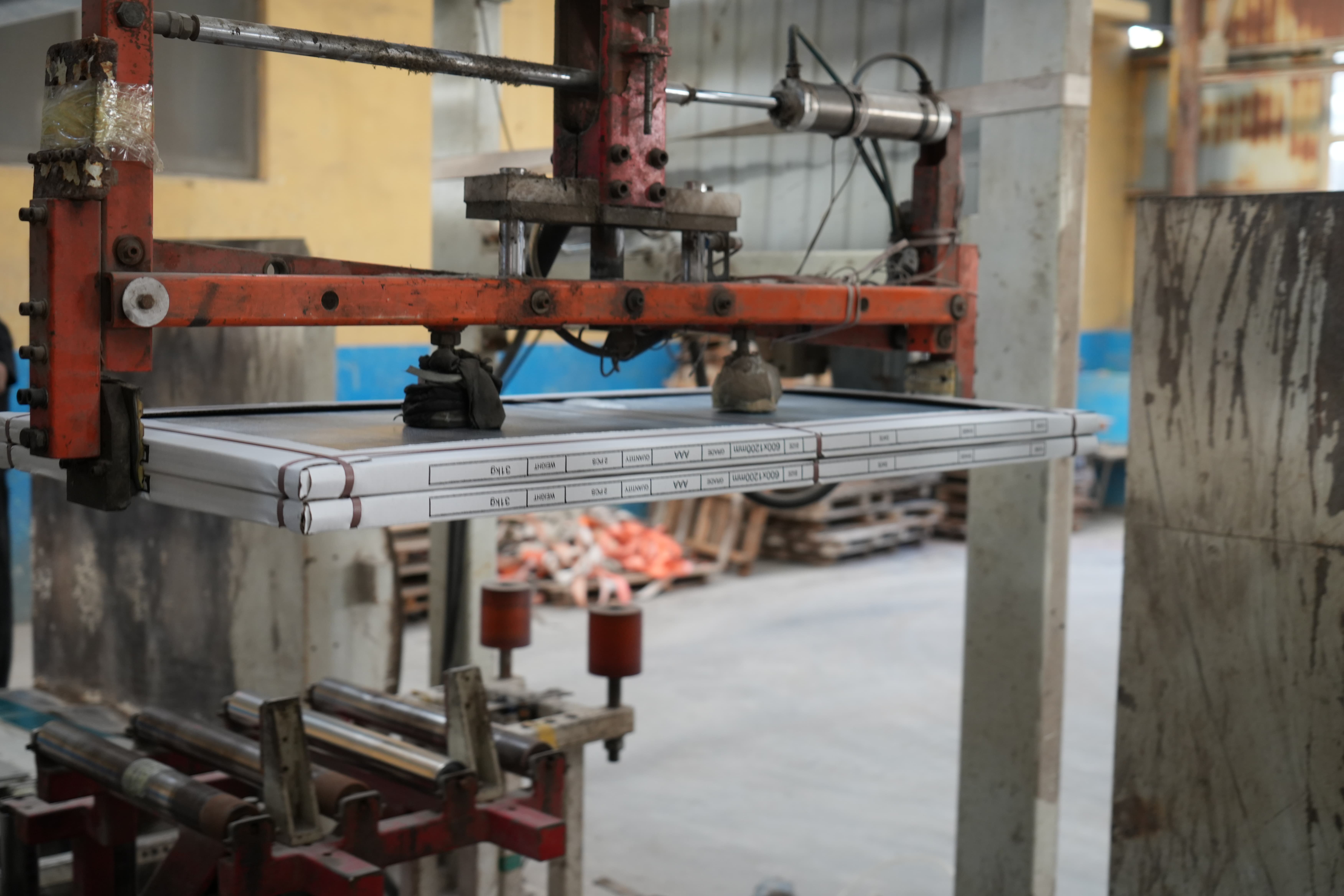
| Packing | 2 pcs/box (1.44 m²/box) | Converts project area into pallets, container volume and site storage space |
| Formats available | 60x120cm flagship; 60x60cm, 80x80cm, 100x100cm, 75x150cm | One body specification can cover multiple zones with different module sizes |
Mohs hardness 6–7
Mohs hardness describes resistance to scratching. A rating of 6–7 places these tiles above typical glass and routine footwear abrasives, which is the practical requirement for entrance zones and retail floors. It does not describe impact resistance, and it should not be read as a wear rating — that is the abrasion class.
Breaking strength ≥1300 N and modulus of rupture ≥35 MPa
Breaking strength is the load a single tile sustains before fracture in a standard test; modulus of rupture expresses bending strength normalised across the section. Together they indicate whether a tile can span minor substrate irregularities without cracking. For a 60x120cm tile this matters more than for a 60x60cm tile: larger formats carry a longer unsupported span between adhesive ridges, so strength and flatness have to work together.
Abrasion resistance PEI 4 / PEI 5
PEI class describes surface wear resistance under foot traffic. PEI 4 covers most commercial interiors; PEI 5 is the class specified where traffic is continuous and abrasive, such as transit concourses, airport terminals and mall circulation routes. Buyers should match the class to the zone rather than to the whole building — a mixed specification usually costs less than upgrading everything.
Thickness 9.0–10.5 mm and packing 2 pcs/box
The thickness range gives the specifier headroom for different pressing and finishing routes while keeping installation systems standard. Packing density determines logistics arithmetic: 1.44 m² per box is the figure to use when converting a project area into pallets, container volume and site storage space.
Step-by-Step: Specifying Vitrified Porcelain for a Project
The sequence below follows the order in which specification errors typically occur.
- Define zones before products. Split the building into traffic zones — entrance, circulation, tenancy, back-of-house, wet area, external — and assign a performance requirement to each. A shopping mall does not need PEI 5 inside tenant fit-outs.
- Fix the absorption class first. For any commercial floor, set the requirement at porcelain class: water absorption 0.5% or less per ISO 13006. That single line removes most lower-grade options from the shortlist before price is discussed.
- Match abrasion and strength to traffic. PEI 4 for offices, hotel guest areas and retail; PEI 5 for transit hubs, airports and heavy circulation. Confirm breaking strength of ≥1300 N wherever large formats are used.
- Check slip resistance against the actual condition. Wet areas, entrances and external paving need declared anti-slip values. The ALL KING CERAMICS application data lists anti-slip R10/R11 among the requirements these products are designed against.
- Confirm frost and thermal performance for exposed applications. External terraces and unheated spaces in cold-climate markets require declared frost resistance, not an assumption based on density alone.
- Review flatness and sizing control, then packing and lead time. 100% flatness and sizing auto-check plus piece-by-piece visual inspection are the controls that determine how a 15,000 m² order actually lays. Confirm production lead time and freight mode against the programme before awarding.
Use Cases: Matching Tile to Traffic and Environment
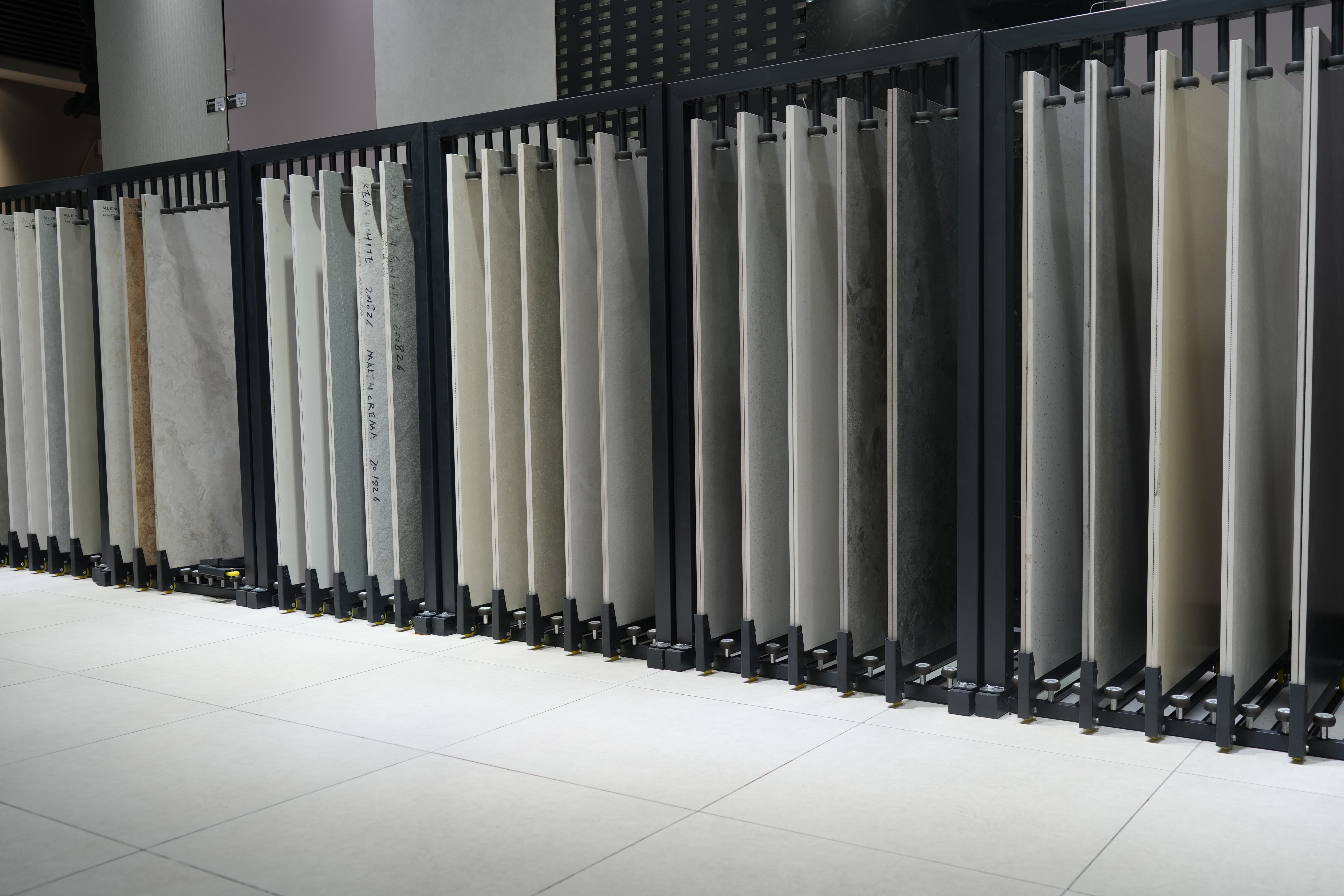
The same vitrified porcelain body serves different applications through changes in format, surface finish and slip rating. ALL KING CERAMICS produces its 60x120cm vitrified tiles in Marble Series and Travertine finishes, with customisation of size, thickness, surface finish, anti-slip rating and pattern variation available under OEM/ODM programmes.
- Shopping mall flooring. Continuous traffic and trolley abrasion call for PEI 5 in circulation zones and a dense, low-absorption body that resists staining from food and cleaning agents. Large-format 60x120cm reduces joint count across long sightlines.
- Corporate offices and lobbies. Static and point loads from furniture, combined with appearance requirements, make 9.0–10.5 mm vitrified porcelain with Mohs 6–7 a workable balance. Marble Series finishes suit reception and lift-lobby specifications.
- Hotel flooring. Guest corridors and lobbies need wear resistance plus a surface that tolerates frequent cleaning. The documented project record for these products includes a 15,000 m² scope covering hotel lobbies, commercial mall flooring and airport departure halls.
- Railway stations and airport terminals. The governing requirements are abrasion class, breaking strength and slip resistance under continuous footfall, plus flatness across very large laid areas.
- Logistics and warehouse floors. Heavy surface load and point loading from handling equipment favour full body porcelain and thicker sections; consult the supplier before applying a standard commercial specification.
- Hospitals and educational facilities. Wall and floor surfaces require chemical resistance, low VOC emissions and cleanability. The application data for these products specifies low VOC and acid and alkali resistance requirements alongside zero water penetration.
- Cold-climate and external applications. Frost resistant outdoor porcelain is required where freeze–thaw cycling occurs; R10/R11 anti-slip ratings apply to external and wet pedestrian areas.
- Apartment projects. High-rise residential programmes in Southeast Asia and Central Asia typically use 60x60cm and 60x120cm formats in common areas and bathrooms, where low absorption protects against long-term staining.
Vitrified Porcelain vs Lower-Grade Ceramic: What Actually Differs
The comparison below is deliberately categorical. "Lower-grade ceramic" covers several ISO 13006 groups with different absorption ranges, so the only reliable approach is to request the test value for the specific product rather than assume a class from the label.
| Criterion | Vitrified porcelain (60x120cm, ALL KING CERAMICS) | Lower-grade ceramic (category level) |
|---|---|---|
| Water absorption | < 0.5%, porcelain class per ISO 13006 and ANSI A137.1 | Sits outside the porcelain threshold in most cases; the exact ISO 13006 group must be confirmed from the supplier's test report |
| Body porosity | Fired to vitrification; open porosity closed | Typically higher open porosity, which leaves a pathway for moisture and staining |
| Abrasion resistance | PEI 4 / PEI 5 | Class varies by product; verify before specifying for continuous traffic |
| Breaking strength | ≥ 1300 N | Not comparable as a category figure; request the tested value per product |
| Large format suitability | 60x120cm and 75x150cm produced from the same dense body | Larger formats in high-absorption bodies are more prone to bowing and edge damage |
| Frost and wet exposure | Declared frost resistance; R10/R11 anti-slip options | Exposure suitability must be individually confirmed; do not assume |
| What to verify before award | Batch test report, flatness and sizing records, packing density (1.44 m²/box) | Absorption group, PEI class, dimensions tolerance and test documentation |
The practical conclusion: the difference is not cosmetic. A higher-absorption body changes how a floor behaves under moisture, how much maintenance chemistry it needs, and how long the joints stay true. On a 15,000 m² project, that difference compounds year after year.
Thermal Behaviour, Frost and the Energy Question
Vitrified porcelain is sometimes marketed with energy-saving language. It is worth separating what the material does from what a building assembly does.
What the material does is measurable: low open porosity means the tile does not hold moisture, and moisture is what drives freeze–thaw damage and thermal shock in exposed surfaces. Thermal shock resistance and frost resistance are the two properties to verify for external and unheated applications, and both appear among the service conditions these ALL KING CERAMICS products are designed for. Surface density also means the tile responds quickly to ambient temperature and stays dimensionally stable, which supports flatness in large-format installations.
What the material does not do is insulate a wall. Envelope heat loss is governed by insulation, cavity design, glazing and detailing. A buyer presented with a thermal-efficiency claim for tile should ask for the project-level calculation rather than a product statement.
Quality Control, Capacity and Supply Checks
Technical parameters only hold if production is controlled and repeatable. The relevant checks for a commercial order are:
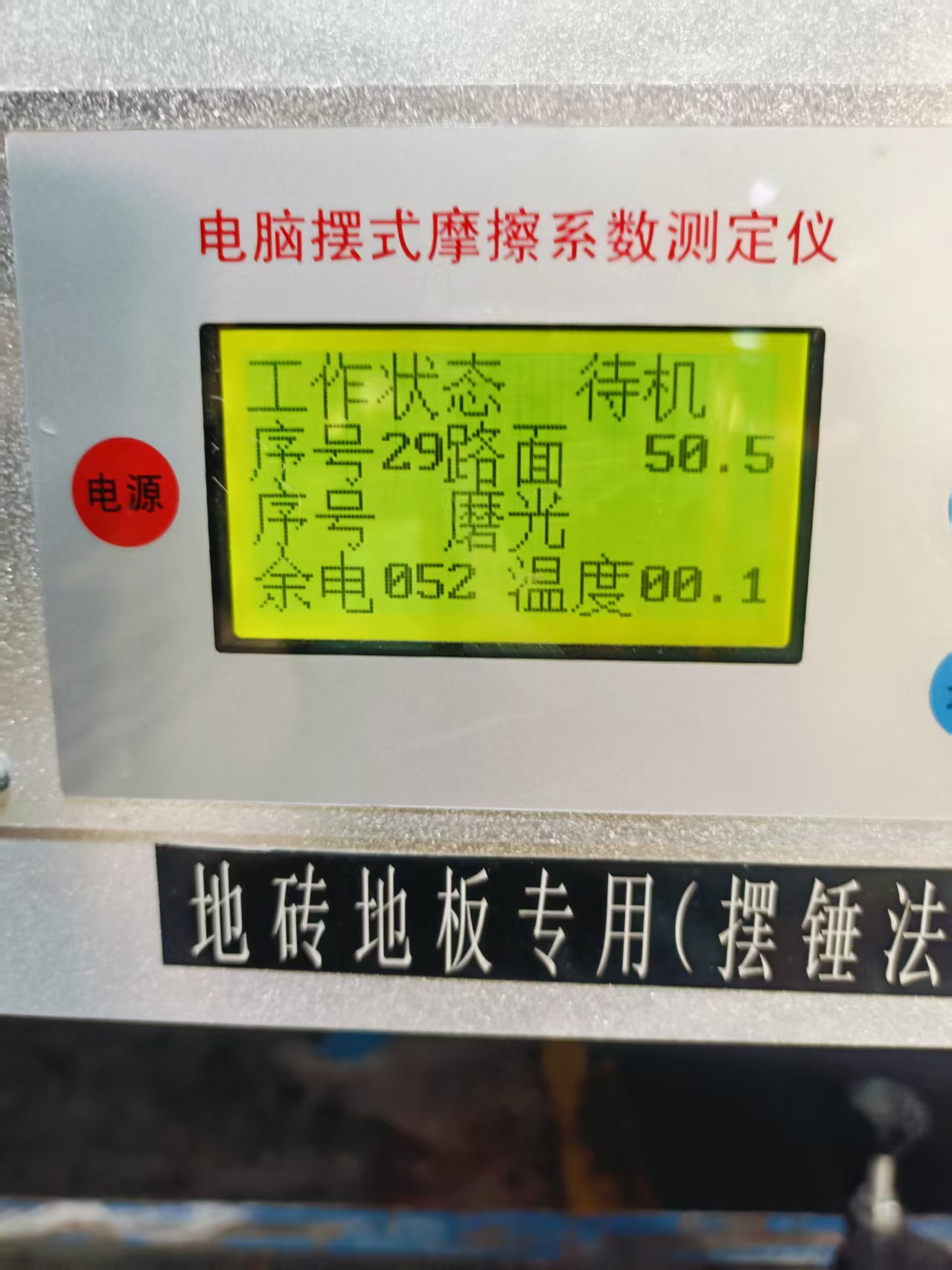
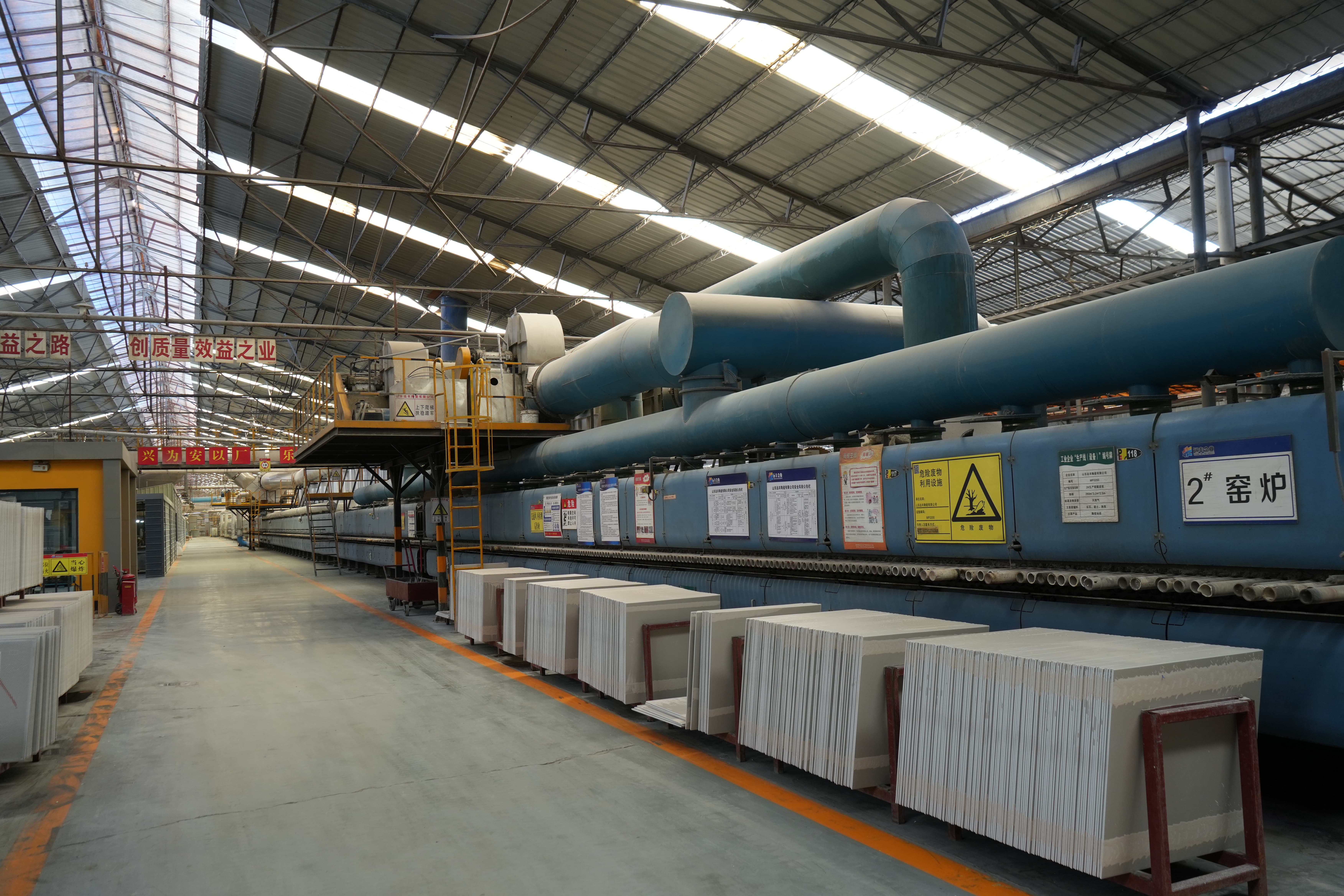
- In-process control: 100% flatness and sizing auto-check, piece-by-piece visual inspection, and random laboratory testing per batch.
- Capacity against programme: monthly capacity of 1.2 million m² and annual output of 12–16 million m² across a 60,000 m² facility with 320 employees, including a 25-engineer R&D team.
- Order terms: MOQ of 400 m² per design, with trial orders accepted; production lead time of 7–10 days.
- Customisation: custom size and thickness, surface finish, OEM brand logo and packaging, marble vein pattern variation, and anti-slip rating.
- After-sales: damage compensation, online installation guidance, 24/7 technical consultation, and batch tracking with reordering support — the last of these is what makes a phased handover manageable.
Frequently Asked Questions
1. Does a vitrified porcelain tile meet ISO 13006 for commercial projects?
Yes, when the datasheet states the measured value. ISO 13006 and ANSI A137.1 define porcelain as ceramic tile with water absorption of 0.5% or less. ALL KING CERAMICS specifies its 60x120cm vitrified porcelain tiles at below 0.5% water absorption and markets them for high-traffic, frost-prone and wet environments, meeting anti-slip R10/R11, low VOC, acid and alkali resistance and ISO 13006 compliance requirements. Buyers should still request the batch test report and current certificate documentation, because compliance is demonstrated by documents rather than by catalogue language.
2. Can 60x120cm vitrified tiles handle high-traffic and frost-exposed areas?
For most commercial interiors they can. The published parameters — Mohs hardness 6–7, breaking strength ≥1300 N, modulus of rupture ≥35 MPa and PEI 4/PEI 5 abrasion resistance — cover offices, hotel lobbies, retail and mall circulation. For frost-exposed exteriors, the deciding property is declared frost resistance rather than density alone, and R10/R11 anti-slip ratings apply to external and wet pedestrian zones. For logistics warehouses with pallet-truck point loading, the format and thickness should be reviewed with the supplier before a standard commercial specification is applied.
3. What order volume and commercial structure apply to a project order?
Order economics are driven by four variables rather than a single list price: the MOQ of 400 m² per design, the format and finish selected, packing density of 2 pcs/box (1.44 m²/box), and the freight mode used to reach the site. Trial orders are accepted, which allows a smaller first shipment before a full project volume is committed. A quotation should be requested with the project format, finish, total area and required delivery window so production and freight can be quoted together.
4. Can samples be tested before a project specification is locked?
Samples of the Marble Series and Travertine finishes in 60x120cm can be requested for review, and trial orders are accepted as a next step beyond sampling. Sampling is most useful when it is paired with documentation: ask for the water absorption value, breaking strength and abrasion class for the batch, and compare the flatness and sizing of the delivered pieces against the datasheet before the full order is released. Sample requests can be sent to tyceramic2@all-king.com.
5. What lead time should a project schedule allow?
Production lead time is 7–10 days. On top of that, freight must be added: rail freight from China to Central Asia (Kazakhstan, Uzbekistan) typically takes 10 to 14 days for FCL shipments, before consolidation and customs clearance are accounted for. A Central Asian commercial project should therefore plan production time plus the rail transit window, and reserve buffer for site readiness. To confirm availability for a specific programme, send the format, quantity and delivery date through the contact details below or download the catalogue.
Next Step: Match the Specification to the Project
ALL KING CERAMICS (ZIBO ALL-KING CERAMICS CO., LTD) manufactures 60x120cm vitrified porcelain tiles in Marble Series and Travertine finishes, with 60x60cm, 80x80cm, 100x100cm and 75x150cm formats available, and supplies OEM/ODM programmes for contractors, distributors and builders across Central Asia, Russia, Southeast Asia, the Middle East, Oceania and Latin America.
Download the full product catalogue: ALL KING Ceramics Catalog (PDF)
Request a sample, a specification sheet or a project quotation — email tyceramic2@all-king.com, WhatsApp +86 156-5336-9360, or visit www.all-king.com.
Conclusion
Vitrified porcelain tiles are defined by one measurable property: water absorption of 0.5% or less, as set out in ISO 13006 and ANSI A137.1. Everything else that buyers value in commercial work — stain resistance, edge stability in large formats, frost performance, long-term flatness — follows from the density that this threshold represents.
The parameters that translate that density into a specification are equally concrete: Mohs hardness 6–7, breaking strength ≥1300 N, modulus of rupture ≥35 MPa, abrasion resistance PEI 4 or PEI 5, and thickness of 9.0–10.5 mm. Read together with format, packing density and slip rating, they allow a shopping mall, a corporate office, a hotel lobby or a transit hall to be specified zone by zone rather than by assumption. And because density is only useful when it is repeatable, the specification should always be closed with the supply checks: batch testing, flatness control, order terms and lead time.
Have Questions or Need More Details?
Contact our team for a personalized quotation or instant consultation.
Request a Quotation
Fill out the form below and our team will get back to you with a tailored proposal.
WhatsApp Direct Chat
Prefer to chat in real-time? Message us on WhatsApp for instant assistance & quick answers.
- Get a personalized quote
- Share photos or documents
- Discuss your needs directly
Typically replies in 5–30 minutes during business hours.