
What Is a Vitrified Porcelain Tile? Key Properties and Manufacturing Basics
A vitrified porcelain tile is a porcelain tile whose fired body is dense enough that water absorption stays below 0.5%. That number — not the surface pattern, not the word 'premium' on the carton, and not the name of the series — is the practical dividing line between a vitrified porcelain body and a lower-grade ceramic body. Vitrification is the outcome of the entire production chain: a porcelain clay body, high-pressure compaction, and high-temperature firing. It is also the reason a 60x120 cm tile can be specified for a mall concourse, a hotel lobby or a hospital corridor instead of being limited to decorative wall use.
ALL KING CERAMICS (ZIBO ALL-KING CERAMICS CO., LTD) is a porcelain tile manufacturer and direct exporter based in Zibo, China, founded in 2011. The company operates a 60,000 m² factory with 320 employees, a 25-engineer R&D team and an annual output of 12 to 16 million m², and exports roughly 70% of production to markets including Australia, New Zealand, Russia, South Korea, Southeast Asia, the Middle East and Latin America. Its flagship core product is the 60x120 cm porcelain tile, supported by 60x60 cm, 80x80 cm, 100x100 cm and 75x150 cm formats.
This explainer covers the four things a buyer actually needs before approving a tile: what the body is made of, why the 0.5% threshold matters in service, what the 60x120 cm format and its packing (2 pieces per box, 1.44 m² per box) mean for ordering and site logistics, and what a series designation such as 'Marble Series' does and does not tell you about performance.
Why 'Vitrified Porcelain' Gets Misread in Specifications
Most flooring problems on commercial projects do not begin with a defective tile. They begin with an imprecise one. Three documentation errors account for a large share of the confusion around vitrified porcelain:
- 'Vitrified' is treated as a marketing adjective rather than a body classification. Buyers compare brochures instead of comparing water absorption, breaking strength, abrasion resistance and thickness. Two tiles can both be described as 'vitrified porcelain' in conversation while sitting in different performance classes on paper.
- A series name is read as a performance grade. A design name describes appearance. It does not describe body density, abrasion resistance or slip rating. When a design label is used as the approval criterion, the technical data sheet is checked after the order instead of before it.
- Packing arithmetic is done in pieces instead of square metres. A 60x120 cm tile is not ordered in the same mental unit as a 60x60 cm tile. When the box-to-square-metre conversion is not fixed at quotation stage, site quantities drift and re-orders are placed against incomplete information.
Each of these is a documentation problem, not a manufacturing problem — and each becomes more expensive the longer a project runs. A specification that was written loosely at tender stage is the specification that gets substituted at phase two, when a visually similar tile from a different body arrives on site. For projects delivered in multiple phases, or for distributors building a repeatable catalogue, the definition of the tile matters more than the category label attached to it.
Industry Background: Why Body Density Became a Commercial Requirement
Commercial construction accounts for approximately 37% of total global tile demand, according to a 2026 commercial research estimate published by Market Research Future. The same source estimates the global tile market at USD 265.21 billion in 2024, projected to reach USD 587.72 billion by 2035. On the supply side, the Observatory of Economic Complexity reports that China was the leading exporter of ceramic products in 2024, with an export value of USD 18.3 billion.
Two practical consequences follow from that structure. First, a very large share of tile volume is now specified against commercial performance expectations — traffic load, cleaning regimes, frost exposure, wet-area safety — rather than residential aesthetics alone. Second, because supply is global and highly competitive, the ability to compare one offer against another depends entirely on how precisely the body has been defined in the enquiry.
None of this makes the word 'porcelain' meaningful by itself. What makes it meaningful is the measurable outcome behind it: water absorption, breaking strength, abrasion resistance and slip rating, each stated as a value rather than an adjective.
What Actually Makes a Tile Vitrified
1. The body begins with porcelain clay
A vitrified body is a mineral body. Porcelain clay, prepared and blended to a controlled recipe, forms the base; the density that follows is created by how that body is compacted and fired, not by what is printed on the surface. This is the first reason a series name cannot substitute for a specification: the design layer sits on top of the body, while the body determines how the tile behaves under load, moisture and temperature cycling.
2. Density is created by compaction and firing
High-pressure compaction reduces porosity in the green body before firing, and controlled kiln temperature completes the densification. At ALL KING CERAMICS, production uses SACMI presses for high-pressure compaction, automated temperature control in firing, and laboratory kilns for supporting test work. Company guidance on green-building projects notes that porcelain tiles fired at 1200°C or higher can be treated as exempt from FloorScore VOC requirements under LEED v4.1 — a consequence of high-temperature firing rather than a coating or additive.
3. Water absorption below 0.5% is the measurable result
Water absorption is where vitrification becomes checkable. The ALL KING CERAMICS porcelain range is specified at below 0.5% water absorption, which places the body in the vitrified category rather than the ceramic category. In service, that low open porosity translates into several behaviours that project teams care about:
- Moisture and stain resistance. A dense body absorbs very little liquid at the surface, which supports easier cleaning and reduces the risk of staining in food service, healthcare and public circulation areas.
- Frost and wet-environment suitability. ALL KING CERAMICS states that its porcelain tiles are engineered for high-traffic, frost-prone and wet environments, with frost resistance addressed at body level.
- Dimensional stability and flatness. Company comparison data against low-grade ceramic cites better flatness and higher density as body-level differences, which matters most when large formats are laid over long sight lines.
- Lower maintenance intensity over the life of the floor. The same comparison data cites easier cleaning, zero sealing required, minimal grout upkeep and lower refurbishment frequency.
A boundary worth stating clearly
Low water absorption does not describe slip resistance. Water absorption, abrasion resistance and slip rating are three separate properties measured by three separate methods. A tile can be fully vitrified and still be the wrong choice for a wet ramp if the surface finish and slip class do not match the application. Treat the 0.5% figure as proof of body density, and treat the slip rating as a separate decision.
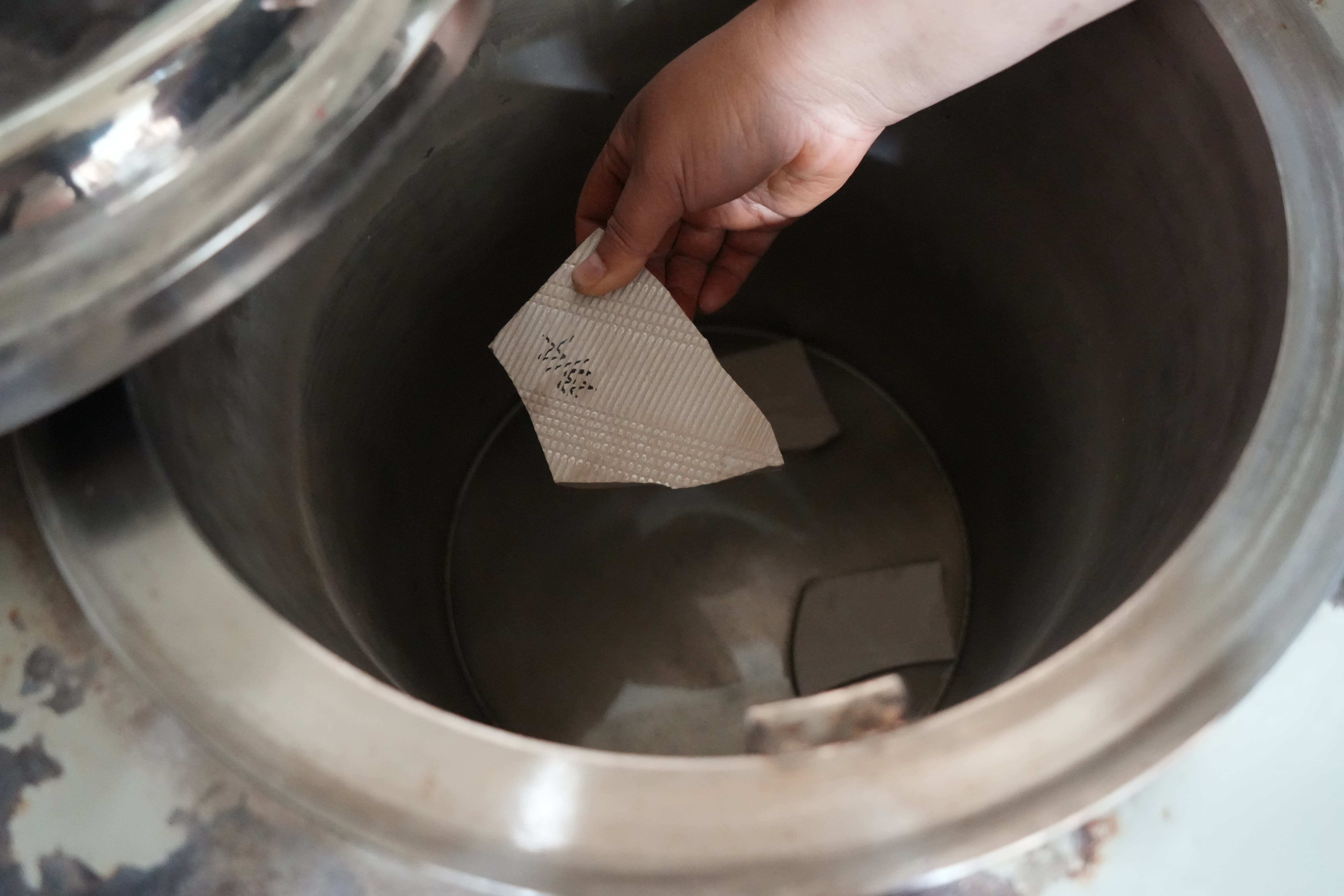
Published body specification for the vitrified porcelain range
| Property | Specification (ALL KING CERAMICS porcelain tiles) |
|---|---|
| Thickness | 9.0 – 10.5 mm |
| Water absorption | Below 0.5% (vitrified) |
| Abrasion resistance | PEI 4 / PEI 5 |
| Mohs hardness | 6 – 7 |
| Breaking strength | At least 1300 N |
| Modulus of rupture | At least 35 MPa |
| Packing | 2 pieces per box (1.44 m² per box) |
| Flagship format | 60x120 cm; also 60x60 cm, 80x80 cm, 100x100 cm, 75x150 cm |
| Slip rating | R10 / R11 as standard; R12 achievable through customization (company-stated) |
| Standard compliance | ISO 13006 (company-stated; request current certificates and batch test reports) |
The 60x120 cm format and what the packing figure actually means
The 60x120 cm format is the flagship core product at ALL KING CERAMICS, and its packing logic is worth understanding because it drives both budget and site logistics. Packing is 2 pieces per box at 1.44 m² per box, which means a single 60x120 cm tile covers 0.72 m². Every box therefore carries 1.44 m² of finished floor area in two pieces.
That conversion is the basis of every downstream calculation. A 1,000 m² area equals approximately 694 boxes at 1.44 m² per box before any allowance for cutting, breakage or attic stock. When a buyer and a supplier agree quantities in square metres but ship in boxes, the box count should be stated in the quotation — otherwise the difference between 690 and 700 boxes only becomes visible on site.
Large format also changes installation economics. Fewer pieces per square metre means fewer joints, faster coverage per installer hour, and a quieter visual field on long sight lines such as hotel lobbies, retail concourses and corporate reception areas. The company's comparison data against low-grade ceramic cites 20% lower installation cost, 30% lower maintenance cost and 10% lower direct factory price — figures that should be re-checked against each project's own labour rates rather than assumed.
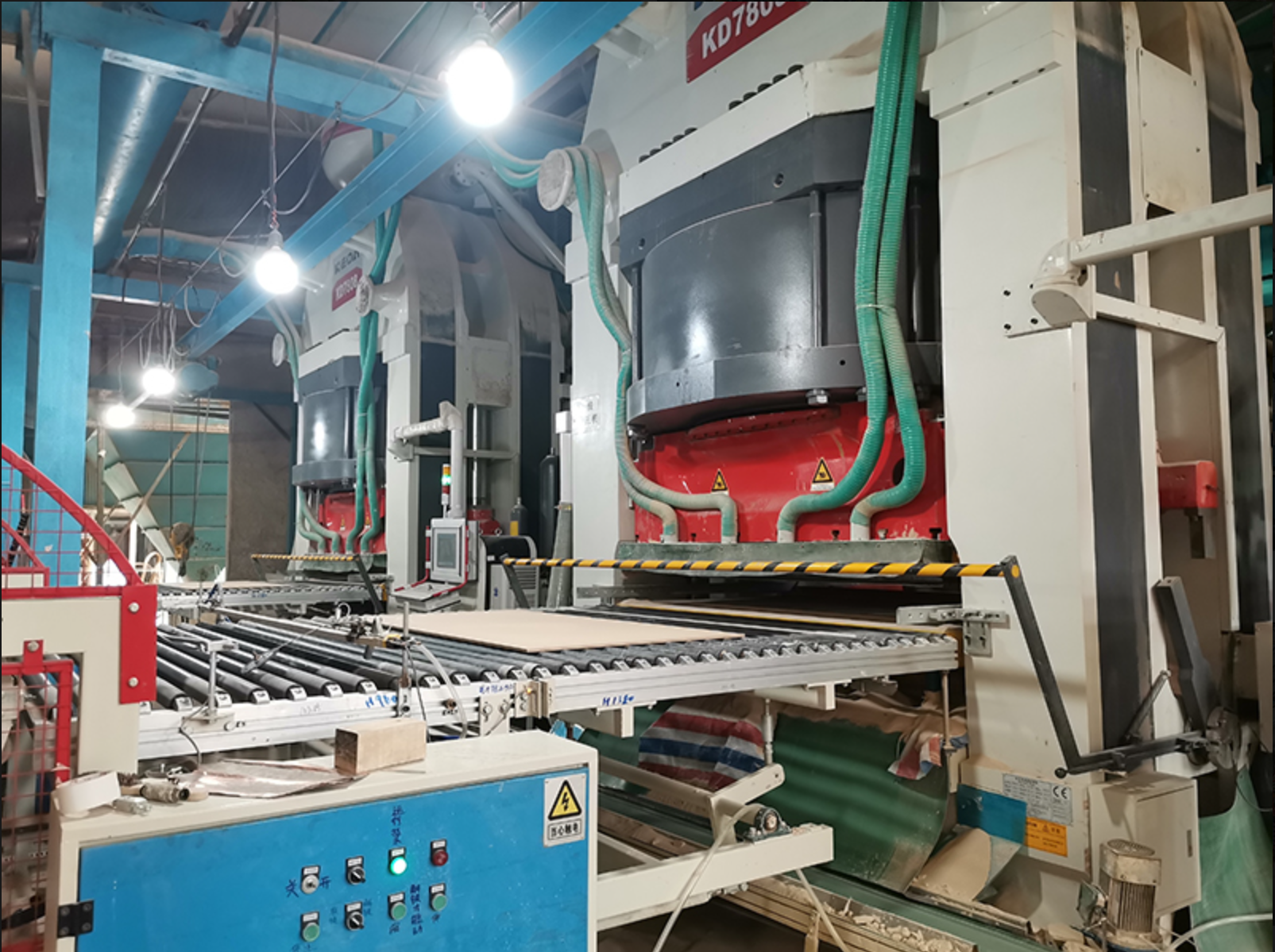
How vitrified porcelain differs from lower-grade ceramic
The difference is easiest to explain as a set of measurable gaps rather than a claim about quality. Company comparison data between vitrified porcelain and low-grade ceramic tiles records lower water absorption, higher wear resistance, better breakage resistance, higher density and better flatness on the porcelain side, expressed as a 10% reduction in water absorption, a 15 MPa increase in breaking strength and a 3-point increase in Mohs hardness. In service, that gap shows up as fewer replacements, less sealing and fewer refurbishment cycles — the full comparison is set out in the table further down this page.
What the 'Marble Series' model designation actually means
In a tile catalogue, a designation such as 'Marble Series' identifies the decorative design of the surface — the graphic and texture intended to read like natural marble. It is a design label. It is not a material grade, and it is not a performance class.
Two tiles from the same series share a visual intent, but what governs their behaviour on a floor is the body specification printed on the data sheet: water absorption, abrasion resistance, breaking strength, thickness and slip rating. Buyers who reverse the order — choosing by series name first and reading the data sheet later — are the buyers who end up with an under-specified tile in a high-traffic corridor. The working rule is simple: use the series name to shortlist appearance, and use the technical data to approve the tile.
Manufacturing and Verification, Step by Step
The properties above are not accidental. They are the output of a sequence in which each step exists to remove a specific failure mode — warping, cracking, shade variation, dimensional drift, delayed delivery, fading or staining.
Step 1 — Body preparation
Porcelain clay is prepared and blended to a controlled recipe. Consistency at this stage is what allows a specification to be repeated on a second order, which matters more to distributors and multi-phase projects than to a single-purchase buyer.
Step 2 — High-pressure compaction
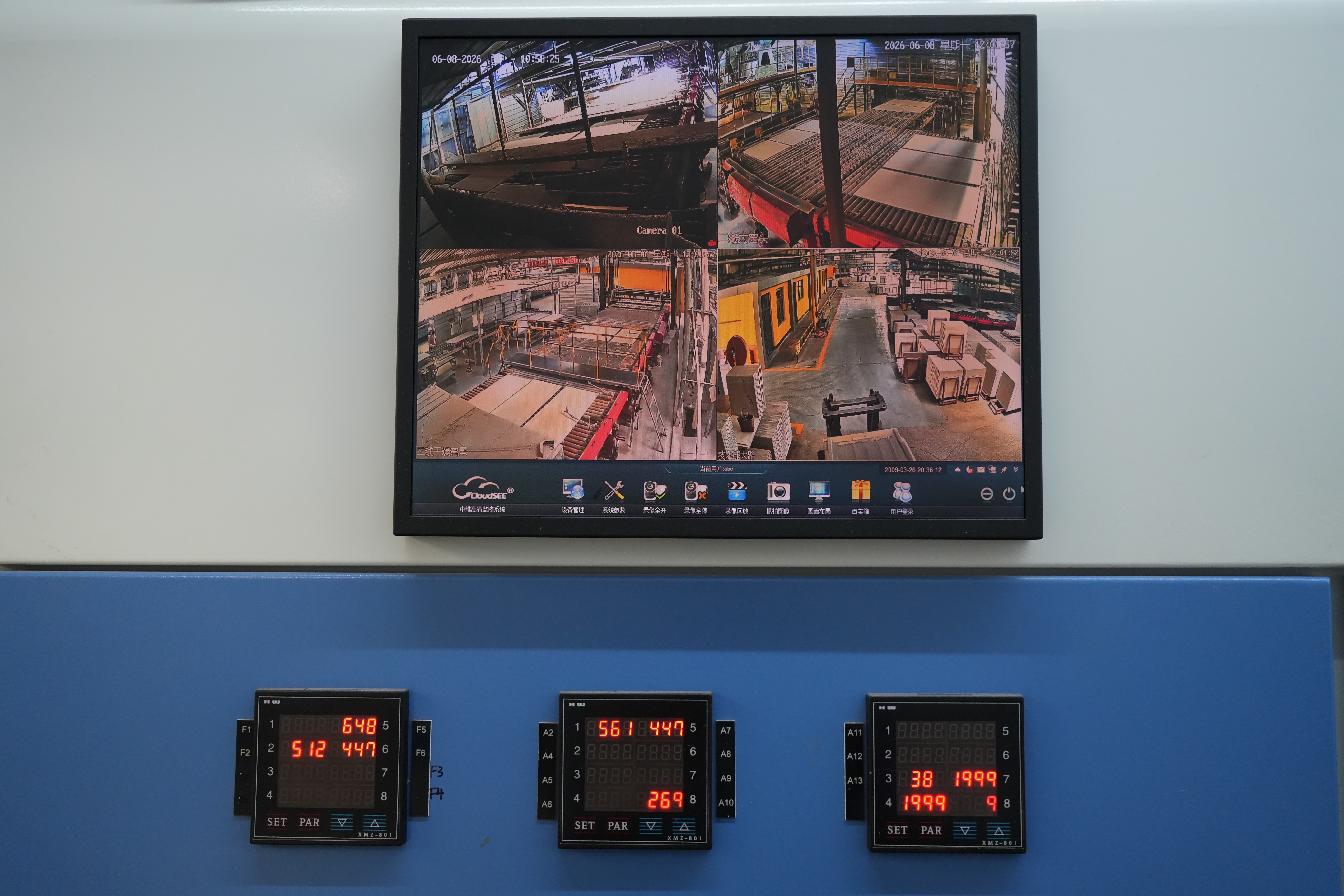
SACMI presses compact the body under high pressure, reducing internal porosity before firing. The company's risk-control measures pair this with random stress testing, because compaction quality is the upstream cause of downstream warping and cracking.
Step 3 — Firing under automated temperature control
Firing is where the body densifies. Automated temperature control and laboratory kilns are used to keep the firing curve stable, since temperature drift is the classic source of shade variation and dimensional inconsistency across a batch.
Step 4 — Digital weight monitoring
Each piece is monitored digitally by weight as an indirect density check. A weight deviation is an early signal that the body or the firing cycle has moved out of tolerance, and it is caught before packing rather than after delivery.
Step 5 — Laser flatness sorting and automatic sorting
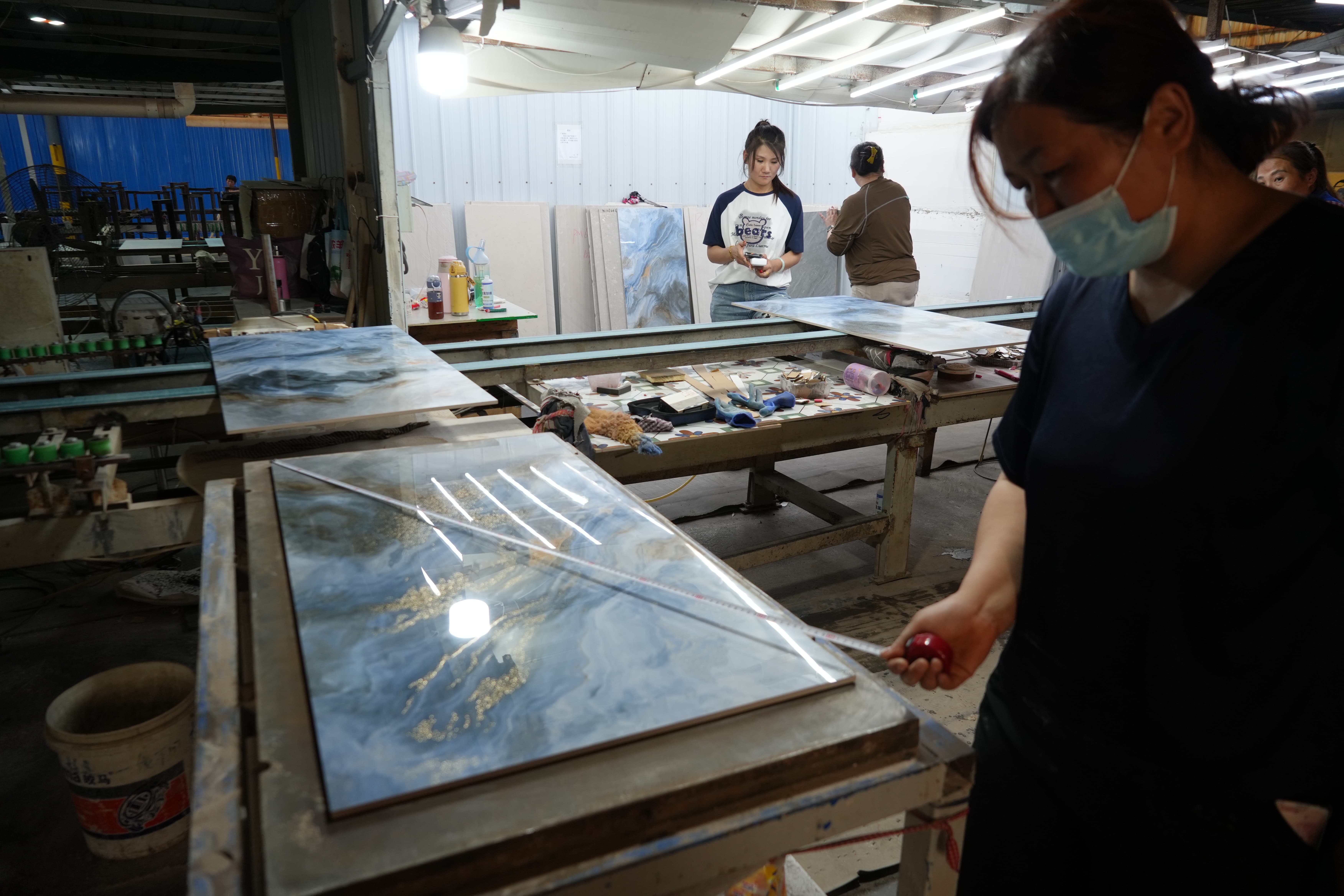
Laser detectors and automatic sorters classify pieces by flatness and size. This is the step that decides whether a 60x120 cm tile can be laid over a long sight line without lippage, and it is why flatness appears in the comparison data as a body-level differentiator rather than a finishing detail.
Step 6 — Quality control: 100% flatness and sizing auto-check, piece-by-piece visual inspection, random lab testing
Quality control combines a 100% flatness and sizing auto-check, piece-by-piece visual inspection, and random laboratory testing per batch. In practice, that means three different kinds of check operating at three different frequencies: every piece is measured, every piece is looked at, and a sample from every batch goes to the laboratory.
Step 7 — Packing and loading
Packing is 2 pieces per box at 1.44 m² per box, stacked on fumigated wooden pallets and loaded in containers. For export orders, acceptance can be set against third-party inspection, which converts the internal QC described above into a contractually checkable milestone.
Where a Vitrified Porcelain Body Fits — and Where It Does Not
A vitrified body is a general-purpose commercial floor body, not a universal one. The useful question is not 'is this the best tile' but 'does this body, in this format, with this finish and this slip class, match this space'.
- Shopping malls and transit areas. High point loads and continuous cleaning favour a dense body with PEI 4 or PEI 5 abrasion resistance and a 60x120 cm format that reduces joint count across large areas.
- Hotel lobbies and luxury villas. Large formats and marble-look designs carry the visual load here, while the body specification still has to survive baggage trolleys and lobby cleaning equipment.
- Healthcare facilities and educational buildings. Low absorption supports repeated disinfection regimes; slip class is decided zone by zone rather than for the building as a whole.
- Commercial kitchens and wet zones. Here the slip rating leads. DIN 51130 defines R11 as grip tested on an oil-wet inclined ramp between 19° and 27°; ALL KING CERAMICS lists R10 and R11 as standard and states that R12 can be achieved through customization.
- Outdoor paving on frost-prone sites. Vitrified porcelain is stated by the manufacturer as suitable for frost-prone and wet environments, but the surface finish and slip class must be specified for the exposure, not inherited from an interior specification.
- Apartment developments and mixed-use builds delivered in phases. Repeatability is the deciding factor: the same body specification and packing must be available for the second and third phase, otherwise the specification quietly changes between handovers.
- LEED-targeted projects. Published LEED guidance for tile notes that porcelain tiles are inherently exempt from FloorScore VOC requirements because high-temperature firing destroys organic matter. Any exemption claim should still be documented against the project's registered credit version.
Limits worth knowing before approval
A vitrified body does not replace an anti-slip specification; it sits alongside it. Higher abrasion classes increase cost and are not required in low-traffic zones. Very large formats demand higher substrate flatness during installation than small formats, so the format decision is also an installation decision. And all performance figures in this article are body specifications — they should be confirmed against current certificates, batch test reports and, where the contract requires it, third-party inspection.
Comparison Table: Vitrified Porcelain vs Lower-Grade Ceramic
The table below uses the company's own comparison data between vitrified porcelain and low-grade ceramic tiles. It is intended as a decision aid for specification, not as a substitute for project-level test reports.
| Decision area | Vitrified porcelain | Low-grade ceramic |
|---|---|---|
| Water absorption | Lower — below 0.5% on the ALL KING CERAMICS porcelain range | Higher (reported as a 10% gap in water absorption) |
| Breaking strength | Reported +15 MPa versus low-grade ceramic; at least 1300 N on the published specification | Lower breaking strength |
| Surface hardness | Mohs 6 – 7; reported +3 Mohs versus low-grade ceramic | Lower hardness |
| Density and flatness | Higher density, better flatness | Lower density, less consistent flatness |
| Maintenance regime | Easier cleaning, zero sealing required, less tile replacement, lower refurbishment frequency, minimal grout upkeep | More frequent replacement and upkeep |
| Cost profile (company comparison data) | 20% lower installation cost, 30% lower maintenance cost, 10% lower direct factory price | Higher lifetime cost in the same comparison |
| Best-fit applications | Commercial centres, luxury hotels, transit hubs, corporate offices, high-end residences | Lower-traffic decorative use |
| Thermal behaviour | Better thermal efficiency, higher heating conduction, better insulation performance | Lower thermal performance in the same comparison |
Frequently Asked Questions
1. Does a vitrified porcelain tile meet ISO 13006 and slip-resistance requirements for commercial projects?
ALL KING CERAMICS states that its porcelain tiles comply with ISO 13006, and lists R10 and R11 anti-slip ratings as standard, with R12 achievable through customization. Under DIN 51130, an R11 rating corresponds to grip tested on an oil-wet inclined ramp between 19° and 27°. Because compliance claims must be evidenced per project, buyers should request the current certificate and the batch test report, and can specify third-party inspection as the acceptance criterion in the purchase contract.
2. What can be customized on a 60x120 cm vitrified porcelain tile?
Customization covers custom size and thickness, surface finish, OEM brand logo and packaging, pattern variation, and anti-slip rating. The standard format matrix also includes 60x60 cm, 80x80 cm, 100x100 cm and 75x150 cm, supported by a 25-engineer R&D team. For distributors and brand owners, OEM logo and packaging customization is typically the point at which a supplier relationship changes from transactional to a long-term catalogue arrangement.
3. What is the minimum order quantity and how is the budget structured?
The minimum order quantity is 400 m² per design, and trial orders are acceptable — which matters on a first project where the body and finish still need validation. Budget should be assessed on landed cost rather than unit price: packing at 1.44 m² per box, thickness of 9.0 to 10.5 mm, and the abrasion or slip class selected all change freight weight and installation labour. Company comparison data against low-grade ceramic cites 20% lower installation cost and 30% lower maintenance cost, which is where most of the lifetime difference sits rather than in the factory price.
4. How can batch consistency and samples be verified before a full order?
Quality control combines 100% flatness and sizing auto-check, piece-by-piece visual inspection, and random laboratory testing per batch, supported by laser flatness sorting, digital weight monitoring and random stress testing. A sample allows the body, finish and slip feel to be checked physically; the batch test report confirms the numbers behind it. Packing is 2 pieces per box at 1.44 m² on fumigated wooden pallets, so sample approval and packing approval can be handled in the same round.
5. What are the delivery and payment terms for a repeat project order?
Delivery terms are quoted as EXW, FOB, CNF or CIF, and payment terms are 30% TT with 70% against BL copy, L/C or cash, with third-party inspection available as the acceptance criterion. Shipment scheduling is confirmed order by order against the confirmed quantity in square metres and the resulting box count, which keeps a phased project supplied against the same body specification from first delivery to final handover. To start, request a sample or a project quotation — the current catalogue is available for download, and the export team can quote against your format, finish and slip requirement.
Conclusion: Define the Body, Then the Design
A vitrified porcelain tile is defined by its body, not by its name. Below 0.5% water absorption, a porcelain clay body compacted under high pressure and fired under controlled temperature produces a tile that resists moisture, holds its dimensions, and carries commercial traffic without the maintenance intensity of a lower-grade ceramic floor. The 60x120 cm format, packed 2 pieces per box at 1.44 m², is the practical unit in which that body is supplied to projects.
The order of operations matters. Series designations such as 'Marble Series' shortlist appearance; the data sheet — thickness 9.0 to 10.5 mm, PEI 4 or PEI 5, Mohs 6 to 7, breaking strength of at least 1300 N, modulus of rupture of at least 35 MPa, and the appropriate DIN 51130 slip class — approves the tile. Buyers who keep those two decisions separate avoid the most common and most expensive specification error in commercial tile procurement: approving a look instead of a body.
For projects delivered in phases, or for distributors building a catalogue that must be repeatable across years, that discipline is also what makes a long-term supply arrangement work. ALL KING CERAMICS supplies porcelain tile project solutions from a 60,000 m² factory in Zibo, with a documented format matrix, OEM customization and batch-level quality control behind each order.
Request a sample, quotation or the 2026 catalogue
Send your project format, finish and slip requirement and the export team will respond with a specification-matched offer. Trial orders are acceptable from 400 m² per design.
Contact: Abby | Email: tyceramic2@all-king.com | Tel / WhatsApp: +86 156-5336-9360
Download the catalogue: ALL KING Ceramics Catalog (PDF) | Website: www.all-king.com

Have Questions or Need More Details?
Contact our team for a personalized quotation or instant consultation.
Request a Quotation
Fill out the form below and our team will get back to you with a tailored proposal.
WhatsApp Direct Chat
Prefer to chat in real-time? Message us on WhatsApp for instant assistance & quick answers.
- Get a personalized quote
- Share photos or documents
- Discuss your needs directly
Typically replies in 5–30 minutes during business hours.