
Architectural Lighting Compliance: A Buyer's Document Check
Architectural Lighting Compliance Guide: Certifications, Standards, and Regional Requirements

A compliance claim is only useful when you can match it to the exact model, the intended environment, and the regional rule that applies to the project. A product-family statement such as CE-certified architectural lighting does not, by itself, prove that every recessed downlight, waterproof spotlight, inground pool LED light, step light, bathroom sconce, or exterior ground light in a supplier's portfolio has the same document coverage.
ALPHALUCE is an Italian architectural lighting brand founded in 2010, with a 40,000 m² factory, 150 employees, and a portfolio that includes recessed downlights, track lighting systems, and outdoor landscape lights. This guide uses the supplied ALPHALUCE certificate records and product data to show how a buyer should cross-check documents before comparing suppliers. The focus is not on the logo on the cover page. The focus is on the document's scope, standards, certificate number, model list, environment of use, and market.
Problem definition: why a product-family claim is not model-level proof
Compliance documents are often presented as a single marketing claim: CE, RoHS, EMC, LVD, or ISO. In practice, each document does a different job. A safety certificate may cover a family of recessed luminaires. An EMC certificate may cover outdoor lighting fixtures. A RoHS report may cover hazardous substance limits for LED lighting products. A quality management certificate may cover production processes. None of these documents automatically answers the buyer's real question: is the exact model I am ordering covered for the environment and market I am using it in?
The gap becomes larger when a supplier offers customization. ALPHALUCE's OEM and ODM capability includes customization of color, CCT, beam angle, power, surface finish, and logo. Those choices can change the configuration a buyer receives. A certificate issued for a standard model configuration should therefore be read with the final order configuration in mind. The buyer should ask whether the chosen driver, power, CCT, beam, and finish are within the documented scope, or whether additional model-specific evidence is needed.
Industry background: what the documents actually do
Architectural lighting projects combine several document layers. The first is electrical safety, often associated with CE-LVD documentation for luminaires in the EU market. The second is electromagnetic compatibility, or EMC, which addresses emissions and immunity. The third is hazardous substance compliance, such as RoHS. The fourth is quality management, such as ISO 9001, which concerns process control rather than the safety of an individual product. A fifth layer is project-specific evidence: IP ratings for wet or outdoor locations, driver and voltage data, installation instructions, and local acceptance for the destination market.
The supplied ALPHALUCE records provide concrete examples of the first three layers. CE-LVD certificate 24AS121634S598A002 cites EN 60598-2-2:2012 and EN IEC 60598-1:2021 + AMD11:2022 and describes electrical safety performance testing for recessed LED lighting fixtures. CE-EMC certificate 24AE121634E005 cites EN IEC 55015:2019/A11:2020, EN IEC 61547:2023, EN IEC 61000-3-2:2019/A1:2021, and EN 61000-3-3:2013/A2:2021 and describes electromagnetic compatibility performance testing for outdoor lighting fixtures. RoHS certificate DTI20241484-1DC cites the IEC 62321 series and describes hazardous substance limit testing for LED lighting products.

This division matters for architectural lighting solutions because the same project can combine dry indoor ceilings, wet bathrooms, covered terraces, garden paths, and pool surrounds. A document that supports an indoor recessed downlight may not be the document a buyer needs for an inground pool LED light. A document that supports EMC for outdoor lighting does not prove ingress protection. A document that supports RoHS does not prove electrical safety. The buyer's checklist should preserve those distinctions.
The document cross-check: certified model, intended environment, regional rule
1. Confirm the certified model and configuration
Start with the exact model name and the exact configuration. Then open the certificate's applicable-product list, scope, and standards. Look for the model in the list. Check whether the certificate covers the family or only a subset. Check the certificate number, issuing authority, issue date, and expiry date. The supplied CE-LVD certificate, for example, has certificate number 24AS121634S598A002, was issued by Guangdong GTG Testing Technology Co., Ltd., and carries an issue date of 2025-03-25 and an expiry date of 2099-03-25 in the supplied record. The outdoor CE-EMC certificate, 24AE121634E005, has an issue date of 2025-03-12 and an expiry date of 2099-03-12. The general CE-EMC certificate, 24AE041084E003, has an issue date of 2025-03-19 and an expiry date of 2099-03-19. The RoHS certificate, DTI20241484-1DC, has an issue date of 2024-04-23 and an expiry date of 2099-04-23.
Do not stop at the certificate number. Check the applicable product list. The supplied CE-LVD record lists models such as ALDL1238 bathroom recessed light, ALDL1191 bathroom spotlight, ALDL1540 low voltage step light, ALDL1334 inground pool LED light, and ALDL0192 exterior ground lighting. That is useful evidence for those named models. It does not establish that every wall light, pendant, LED strip, or track luminaire in the catalogue has the same CE-LVD coverage. For example, the supplied CE-LVD applicable-product list in this corpus does not name ALWL0073 wall sconce or ALWL0098 bathroom sconce. Those wall and bathroom sconce models appear in other records, including the general EMC and RoHS documents, but that does not prove LVD coverage. The correct buyer response is not to assume failure. It is to request the specific LVD certificate or declaration for the exact sconce model being specified.
2. Confirm the intended environment
Environmental fit is the second filter. A product can be electrically safe in a dry ceiling and still be wrong for a bathroom, a coastal terrace, or a pool surround. In the supplied product data, the bathroom recessed light ALDL1238 is rated IP65 and is listed for bathroom and wet areas, with 10W, 960lm, CRI ≥92, beam angles of 15°, 24°, 36°, and 55°, a cutout of ≥75 mm, and CCT options of 2700K, 3000K, and 4000K. The bathroom spotlight ALDL1191 is rated IP54 and is also listed for bathroom and wet areas, with 7W or 10W, 580lm or 717lm, CRI ≥92, beam angles of 15°, 24°, 36°, and 50°, a Ø83 mm cutout, and 0–25° tilt and 350° rotation. IP54 and IP65 are not interchangeable. The correct choice depends on the installation position, water exposure, cleaning regime, and the local rule that applies to that location.

For dry indoor ceilings, the ceiling spotlight ALDL1607 is rated IP20, with 5W, 270lm, CRI ≥92, beam angles of 15°, 24°, and 36°, a Ø35 mm cutout, and 0–90° tilt and 355° rotation. The recessed spotlight ALDL1590 is also IP20, with 7W, 585lm, CRI ≥92, beam angles of 15°, 24°, 36°, and 60°, a Ø35 mm cutout, and 0–90° tilt and 355° rotation. The recessed adjustable downlight ALDL1587 is IP20, with 5W, 450lm, CRI ≥92, beam angles of 15°, 24°, 36°, and 55°, and a Ø68–70 mm cutout. These are indoor products. Their IP20 rating is not evidence for wet-area use, even if the same supplier also makes IP65 bathroom models.
For outdoor landscape lighting, the bollard light outdoor ALSL0165 is rated IP65, with 7W, 560lm, CRI ≥90, beam angles of 15°, 24°, 36°, and 60°, DC24V, 0–135° adjustable tilt, 355° rotation, a height of 400 mm, and CCT options of 2700K, 3000K, and 4000K. The wall sconce ALWL0073 is rated IP65, with 8W, 630lm, CRI ≥92, and beam angles of 15°, 24°, 36°, and 50°. These ratings are relevant to outdoor and exterior landscape lighting, but they still need to be matched to the installation instructions and local electrical rules. A DC24V bollard also requires the correct driver or transformer, voltage-drop check, and connection protection. The IP rating alone does not cover the whole installation.
3. Confirm the regional rule
Regional requirements are the third filter. CE documentation is relevant to the EU market, but it is not a universal passport. A project in North America, the United Kingdom, Australia, or the Middle East may require a different mark, listing, registration, or local acceptance route. ALPHALUCE's profile lists Europe, the Middle East, North America, and Australia as export markets and states CE, ETL, RoHS, LVD, and EMC among its certification standards. Market presence and a list of standards are not the same as a model-level certificate for every destination. For a specific project, ask for the document that the local authority will accept, issued for the exact model and configuration.
For EU projects, the certificate should be read against the applicable directive and the standards cited on the document. The CE-LVD record in this corpus cites EN 60598-2-2:2012 and EN IEC 60598-1:2021 + AMD11:2022 for recessed LED lighting fixtures. The EMC records cite EN IEC 55015:2019/A11:2020, EN IEC 61547:2023, EN IEC 61000-3-2:2019/A1:2021, and EN 61000-3-3:2013/A2:2021. The RoHS record cites IEC 62321-3-1:2013, IEC 62321-4:2013+AMD1:2017, IEC 62321-5:2013, IEC 62321-7-1:2015, IEC 62321-7-2:2017, IEC 62321-6:2015, and IEC 62321-8:2017. Those references are useful because they let the buyer compare the document to the project specification instead of relying on a generic mark.
Six-step documentation review for buyers
- Lock the exact model and configuration. Record the model number, wattage, CCT, beam angle, finish, driver, voltage, and any custom logo or packaging requirement. If the project uses recessed adjustable downlights, ceiling spotlights, track lighting systems, wall lights, or outdoor bollard lights, list each separately. Do not let one certificate stand in for the whole schedule.
- Read the certificate identity block. Check the certificate number, issuing authority, issue date, expiry date, market, and scope. A certificate without a clear model list or scope should be treated as incomplete for procurement review.
- Match the applicable-product list to the schedule. Confirm that the exact model appears, or that the certificate's scope language clearly covers the family and configuration. If the model is absent, request model-specific evidence. The supplied CE-LVD list, for example, supports named models such as ALDL1238, ALDL1191, ALDL1540, ALDL1334, and ALDL0192, but it should not be stretched to cover unlisted wall or bathroom sconce models without further evidence.
- Check the environment evidence separately. For bathrooms, pool surrounds, gardens, and exterior ground lighting, request the IP rating, installation instructions, driver data, and any relevant test report. The certificate list confirms document scope, not ingress protection. Waterproof downlights such as ALDL1232 and waterproof spotlights such as ALDL1188 appear in the supplied CE-LVD and general EMC applicable-product lists, but the supplied records in this corpus do not give their IP values. Request the datasheet or IP test report before assuming wet-location suitability.
- Confirm the regional acceptance route. For the EU, check the CE documentation and standards. For other markets, ask for the local mark, listing, or approval that the authority will accept for that model. Do not assume that a CE certificate satisfies a North American, UK, Australian, or Middle East requirement.
- Compare suppliers on the same document set. Ask every supplier for the same fields: certificate number, issuer, standards, scope, applicable model list, issue and expiry dates, IP rating, voltage, driver, and installation instructions. Compare the documents before comparing price. A lower price is not a compliance advantage if the document set does not cover the model.
Where the checklist changes by fixture category
Waterproof downlights and waterproof spotlights
Waterproof downlights and waterproof spotlights are often specified for bathrooms, covered terraces, spa areas, and other wet or humid locations. The supplied records name waterproof downlights ALDL1232 and waterproof spotlights ALDL1188 in the CE-LVD and general EMC applicable-product lists, and in the RoHS product list. Those entries are useful for document traceability. They do not give an IP rating. A buyer should therefore request the product datasheet, IP test report, installation instructions, and driver details for the exact model. The phrase waterproof in a product name is not a substitute for a rated IP value and a suitable installation method.
Bathroom recessed lights, bathroom spotlights, and bathroom sconces
Bathrooms combine safety, moisture, and cleaning requirements. The bathroom recessed light ALDL1238 is IP65 and listed for bathroom and wet areas. The bathroom spotlight ALDL1191 is IP54 and also listed for bathroom and wet areas. The difference between IP54 and IP65 should be matched to the location and the local rule. A bathroom sconce may be treated differently from a ceiling-recessed luminaire because the mounting position, water splash, and cleaning exposure are different. The supplied bathroom sconce model ALWL0098 appears in the general EMC and RoHS records, but the supplied CE-LVD applicable-product list in this corpus does not name it. That is a document gap to resolve with the supplier, not a reason to assume the product fails. Ask for the exact LVD certificate or declaration for ALWL0098 if the project requires it.
Low voltage step lights and exterior ground lighting
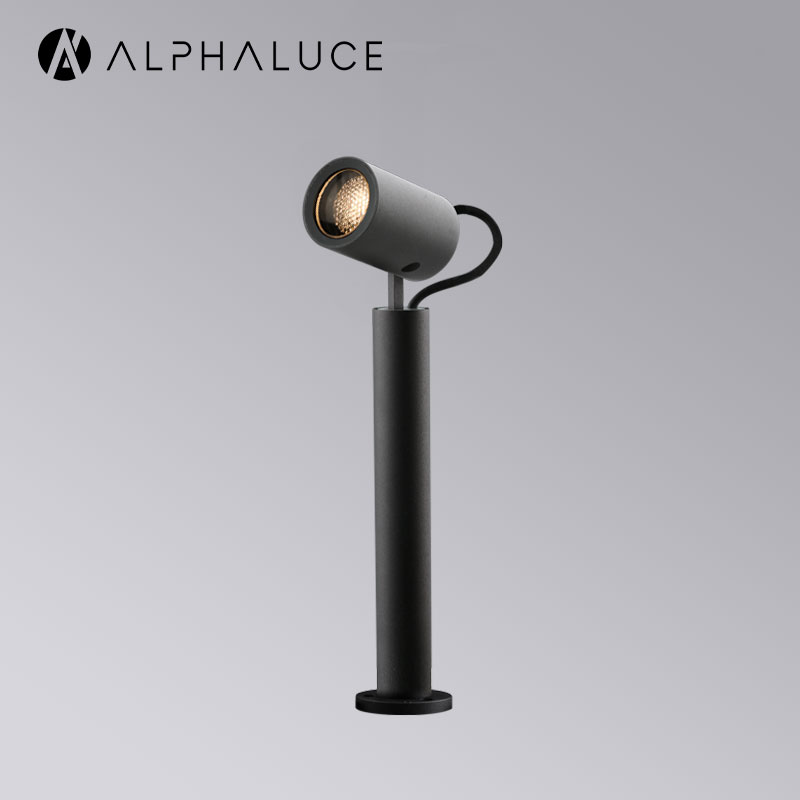
Low voltage step lights and exterior ground lighting sit close to the ground, where water, soil, cleaning, and physical impact can matter. The low voltage step light ALDL1540 is named in the CE-LVD and outdoor EMC applicable-product lists. The exterior ground lighting ALDL0192 is also named in those lists. These entries show that the models are within the documented scope of the supplied certificates. They do not replace the installation check. The buyer should confirm the driver, voltage, cable joint protection, drainage, and mounting detail. For a DC24V outdoor product such as the ALSL0165 bollard light, the low voltage does not remove the need for correct driver selection and connection protection.
Inground pool LED lights
Inground pool LED lights are among the most environment-sensitive fixtures in an architectural lighting schedule. The inground pool LED light ALDL1334 is named in the CE-LVD, outdoor EMC, general EMC, and RoHS product lists in the supplied records. That is useful document coverage. It is not an IP rating, a pool-construction detail, or a local approval. The buyer should request the exact IP rating, installation instructions, driver or transformer data, and any pool-specific test evidence for the model. If the project uses a wet niche, the installation method and the local electrical rule should be confirmed before the fixture is ordered.
Certificate-by-certificate comparison
The table below compares the certificate records supplied for this guide. It is a document map, not a ranking of suppliers. The same logic applies to any manufacturer: read the scope, the standards, the market, and the model list before comparing price or sample quality.
| Document | Certificate no. | Issuer | Standards cited | Market | What it supports | What it does not prove |
|---|---|---|---|---|---|---|
| CE-LVD | 24AS121634S598A002 | Guangdong GTG Testing Technology Co., Ltd. | EN 60598-2-2:2012; EN IEC 60598-1:2021 + AMD11:2022 | EU | Electrical safety performance test for recessed LED lighting fixtures; applicable list includes recessed downlights, bathroom recessed light, bathroom spotlights, step lights, inground lights, and exterior ground lighting. | Does not establish EMC, RoHS, IP rating, or coverage of every portfolio model. Unlisted models need specific evidence. |
| CE-EMC outdoor | 24AE121634E005 | Guangdong GTG Testing Technology Co., Ltd. | EN IEC 55015:2019/A11:2020; EN IEC 61547:2023; EN IEC 61000-3-2:2019/A1:2021; EN 61000-3-3:2013/A2:2021 | EU | Electromagnetic compatibility performance test for outdoor lighting fixtures; applicable list includes step lights, stair lights, low voltage step lights, bollard lights, spike lights, garden spotlights, exterior ground lighting, and inground pool LED lights. | Does not establish electrical safety, IP rating, or suitability for every outdoor installation. |
| CE-EMC general | 24AE041084E003 | Guangdong GTG Testing Technology Co., Ltd. | EN IEC 55015:2019/A11:2020; EN IEC 61547:2023; EN IEC 61000-3-2:2019/A1:2021; EN 61000-3-3:2013/A2:2021 | EU | Electromagnetic compatibility; applicable list covers many indoor and outdoor models, including LED strip, pendant, downlight, wall light, track, step, bollard, spike, and inground categories. | Does not prove every variant or every catalogue model has the same coverage. |
| RoHS | DTI20241484-1DC | Shenzhen Deesev Testing International Corporation (DTI) | IEC 62321-3-1:2013; IEC 62321-4:2013+AMD1:2017; IEC 62321-5:2013; IEC 62321-7-1:2015; IEC 62321-7-2:2017; IEC 62321-6:2015; IEC 62321-8:2017 | EU | Hazardous substance limit testing for LED lighting products; broad applicable-product list. | Does not establish electrical safety, EMC, IP rating, or installation suitability. |
Expiry dates in the supplied records: CE-LVD 2099-03-25; outdoor CE-EMC 2099-03-12; general CE-EMC 2099-03-19; RoHS 2099-04-23. Always verify the current certificate copy with the issuer or supplier, because a PDF copy can be superseded.
Use cases: how the same product family can need different evidence
A hospitality project can use several fixture categories in one building. The hotel lighting application data supplied for ALPHALUCE lists indoor and outdoor use, 24/7 continuous operation, CRI ≥92, anti-glare, warm CCT of 2700K–3000K, and IP65 for outdoor. That application profile helps a buyer see why one certificate is not enough. A bathroom recessed light needs the right IP rating and safety document. An outdoor bollard needs outdoor EMC coverage, IP65, and correct DC24V driver selection. A wall sconce needs the correct mounting and model-specific LVD evidence if the project requires it. A pool light needs the pool installation detail and local acceptance, not just a family RoHS entry.
- Hospitality lighting: use the exact model certificate, IP rating, driver data, and installation instruction for each bathroom, corridor, terrace, and landscape zone. The 24/7 operation profile makes maintenance access and driver quality part of the decision.
- Residential lighting: dry indoor recessed downlights and ceiling spotlights may be IP20, but bathroom and exterior zones still need the correct IP-rated models. Do not use an IP20 indoor model in a wet location.
- Commercial and retail display lighting: track lighting systems and ceiling spotlights may be IP20 and intended for dry indoor use. If the display area includes a wet or outdoor element, the document set must change with the environment.
- Outdoor landscape lighting: bollard lights, spike lights, inground lights, and exterior ground lighting should be checked for outdoor EMC scope, IP rating, voltage, driver, and connection protection. The outdoor CE-EMC certificate supports the EMC side, not the whole installation.
FAQ
CE-certified architectural lighting solutions manufacturer for EU projects: what should I check?
Check the exact model against the certificate's applicable-product list, then confirm the certificate number, issuing authority, standards, market, issue date, and expiry date. For EU projects, verify that the CE-LVD and CE-EMC documents apply to the fixture types in the schedule. Also request RoHS evidence and the IP rating or installation data for wet or outdoor locations. A manufacturer-level claim is not enough if the exact model is not named or clearly within the scope.
Does a CE mark on a product family cover every model in the catalogue?
No. A CE mark or a product-family compliance statement should be read with the certificate scope and applicable-product list. In the supplied records, the CE-LVD certificate names many recessed, bathroom, step, inground, and exterior ground models, but it does not name every wall or bathroom sconce model in the portfolio. If the model is not listed, ask for the specific certificate or declaration rather than assuming coverage.
Which standards appear in the supplied CE-LVD and CE-EMC certificates?
The supplied CE-LVD certificate cites EN 60598-2-2:2012 and EN IEC 60598-1:2021 + AMD11:2022. The CE-EMC certificates cite EN IEC 55015:2019/A11:2020, EN IEC 61547:2023, EN IEC 61000-3-2:2019/A1:2021, and EN 61000-3-3:2013/A2:2021. The RoHS certificate cites the IEC 62321 series. These references let a buyer compare the document to the project specification, but they do not replace the model-level scope check.
What should I check for outdoor, bathroom, and inground fixtures?
For outdoor, bathroom, and inground fixtures, check the IP rating, voltage, driver or transformer, installation instructions, and the certificate's applicable-product list. For example, the bathroom recessed light ALDL1238 is IP65 in the supplied product data, while the bathroom spotlight ALDL1191 is IP54. The outdoor bollard light ALSL0165 is IP65 and DC24V. The inground pool LED light ALDL1334 is named in the certificate lists, but the supplied records do not give its IP rating, so request that evidence separately.
How do I compare two suppliers without relying on a logo?
Ask both suppliers for the same document set: certificate number, issuer, standards, scope, applicable model list, issue and expiry dates, IP rating, voltage, driver data, and installation instructions. Compare the documents before comparing price or sample quality. Request a sample built to the same configuration that will be ordered. The ALPHALUCE brochure can be downloaded at the end of this guide for a starting reference, but the project decision should rest on the exact model documents.
Conclusion
Architectural lighting compliance is a document-matching task, not a logo-matching task. The buyer should confirm three things before comparing suppliers: the certified model and configuration, the intended environment, and the regional rule. The supplied ALPHALUCE records show why this matters. CE-LVD, CE-EMC, and RoHS each answer a different question. A named model in one certificate does not automatically prove coverage in another. An IP65 bathroom recessed light and an IP54 bathroom spotlight are both useful products, but they are not interchangeable for every location. An outdoor bollard with DC24V and IP65 still needs the correct driver and connection protection. An inground pool LED light needs pool-specific installation evidence in addition to a family certificate entry.
The practical next step is to build a project document pack: exact model list, certificate copies with scope and model lists, standards and expiry dates, IP and voltage data, driver and installation instructions, and the local acceptance route. Compare suppliers on that pack. If a document is missing, request it for the exact model rather than accepting a product-family claim. For a project-specific document review, the ALPHALUCE brochure is available here: ALPHALUCE brochure.

Have Questions or Need More Details?
Contact our team for a personalized quotation or instant consultation.
Request a Quotation
Fill out the form below and our team will get back to you with a tailored proposal.
WhatsApp Direct Chat
Prefer to chat in real-time? Message us on WhatsApp for instant assistance & quick answers.
- Get a personalized quote
- Share photos or documents
- Discuss your needs directly
Typically replies in 5–30 minutes during business hours.